Gyudon
The dish in context
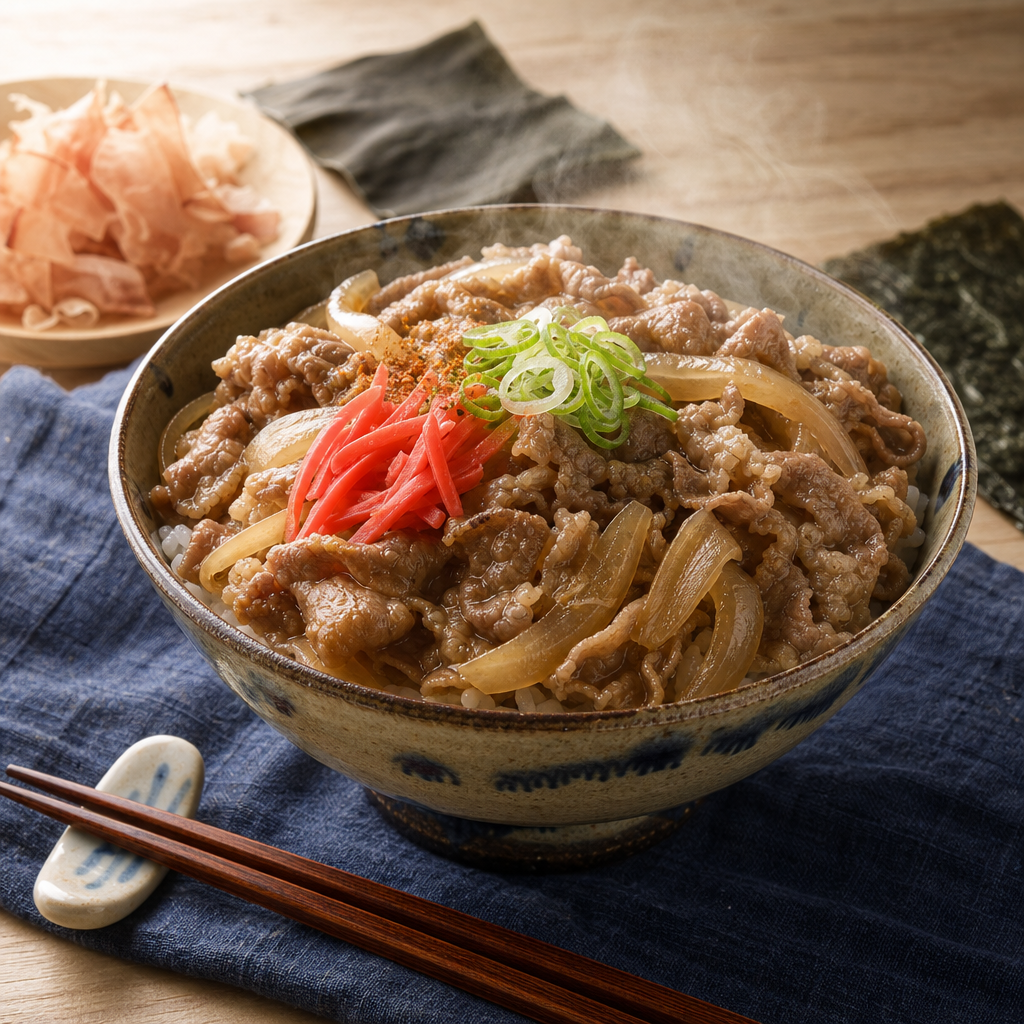
Gyudon (牛丼) is a modern Japanese donburi built from thin-sliced beef and onion simmered in a sweet-salty shoyu broth, then laid directly over rice. Its grammar comes out of the late-19th-century spread of beef eating in Japan, especially gyūnabe-style simmered beef, then was standardized by fast-service beef-bowl shops in the 20th century. Yoshinoya became the international reference point: pale simmered beef, onion, rice, and optional beni shōga rather than a wok-fried beef dish. The early-2000s disruption to U.S. beef imports was culturally visible in Japan because major gyudon chains depended heavily on fatty short-plate beef cut thin enough to simmer in minutes.
Method 8 steps · 45 min
Wash, soak, and cook the rice
Wash the short-grain rice 3-5 times until the water turns almost clear. Soak in cold water for 30 minutes, drain, then cook with the measured water in a rice cooker or covered pot. Rest 10 minutes after cooking, then fluff with a shamoji or rice paddle using cutting motions.
Slice the onion and separate the beef
Slice the onion into 8 mm arcs and loosen the beef slices with fingers or chopsticks. If the beef is frozen in a block, thaw until pliable but still cold before separating.
Build the simmering broth
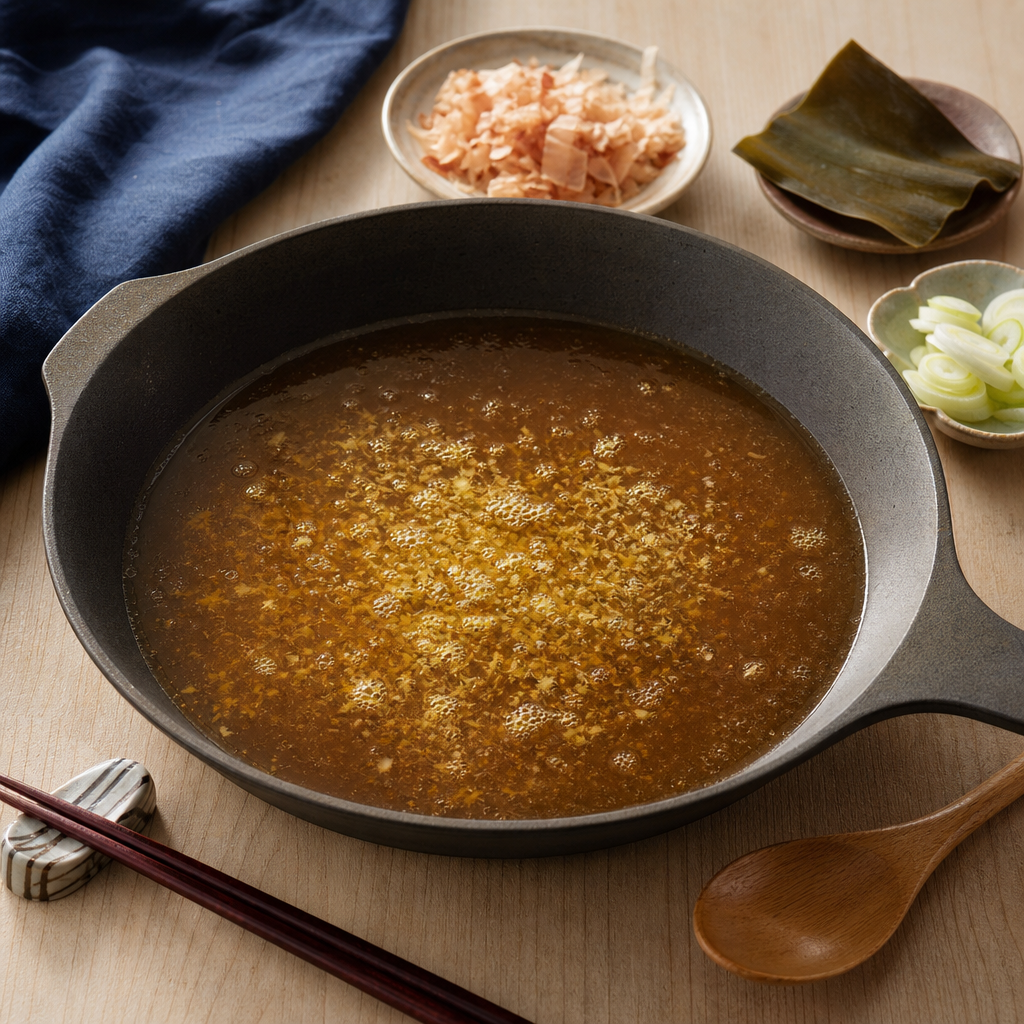
Combine dashi, shoyu, mirin, sake, sugar, and grated ginger in a wide pan. Bring to a steady simmer over medium heat and stir until the sugar dissolves.
Simmer the onion first
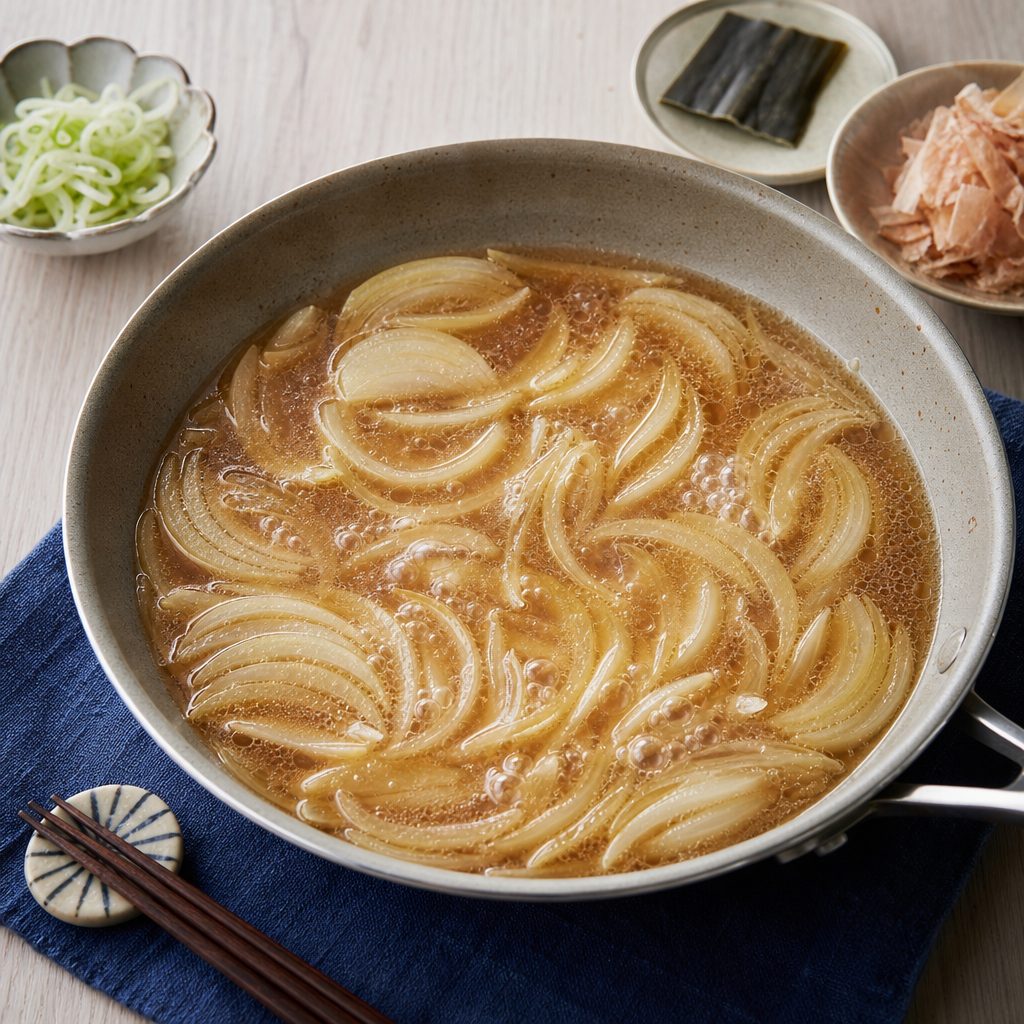
Add the onion, spread it into an even layer, and simmer 5-7 minutes until the edges turn translucent but the slices still hold their arc.
Add the beef without browning
Lay the beef over the onion in loose sheets. Simmer 2-4 minutes, nudging the slices apart with chopsticks, until no red patches remain and the fat looks glossy.
Set the broth level
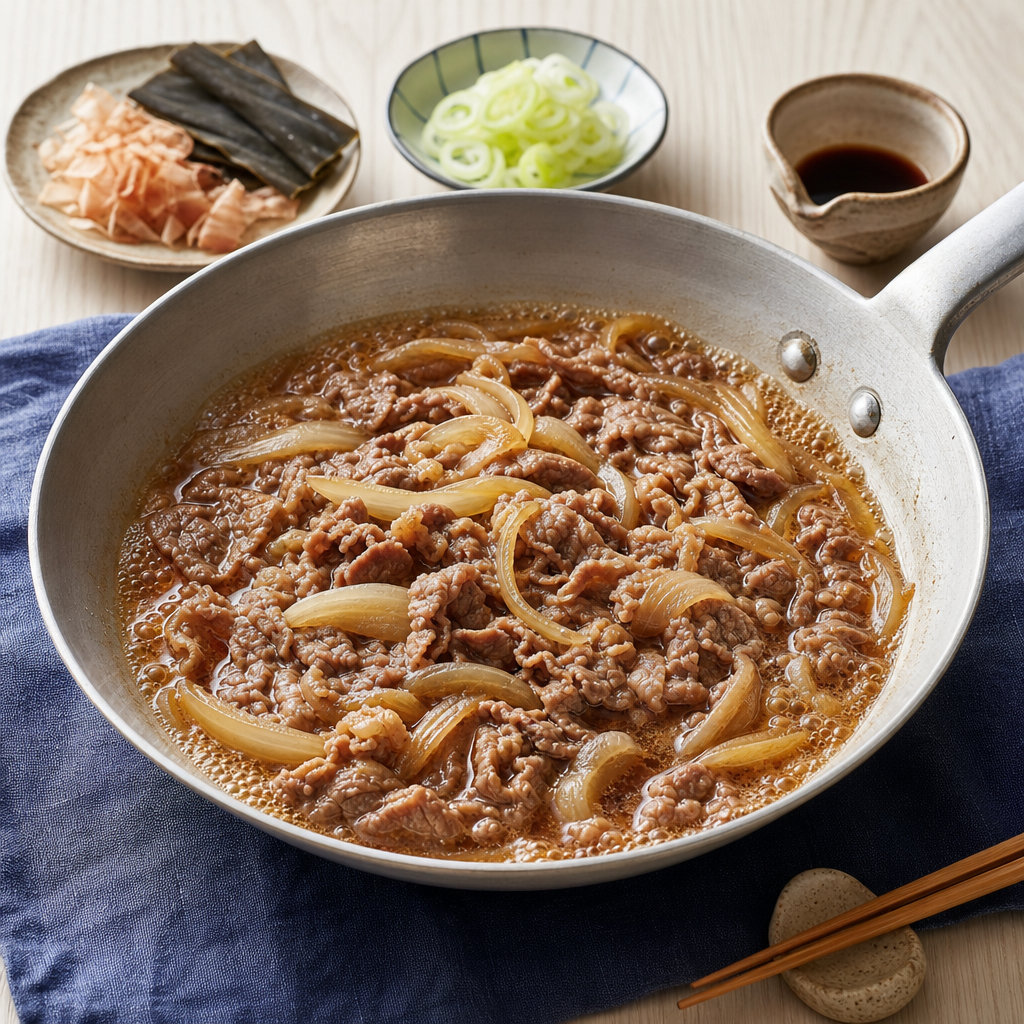
Taste the broth. If it tastes flat, add 5 ml shoyu; if it tastes harsh, add 30 ml water and simmer 30 seconds. The liquid should be salty-sweet enough to season plain rice but not syrupy.
Assemble the bowls
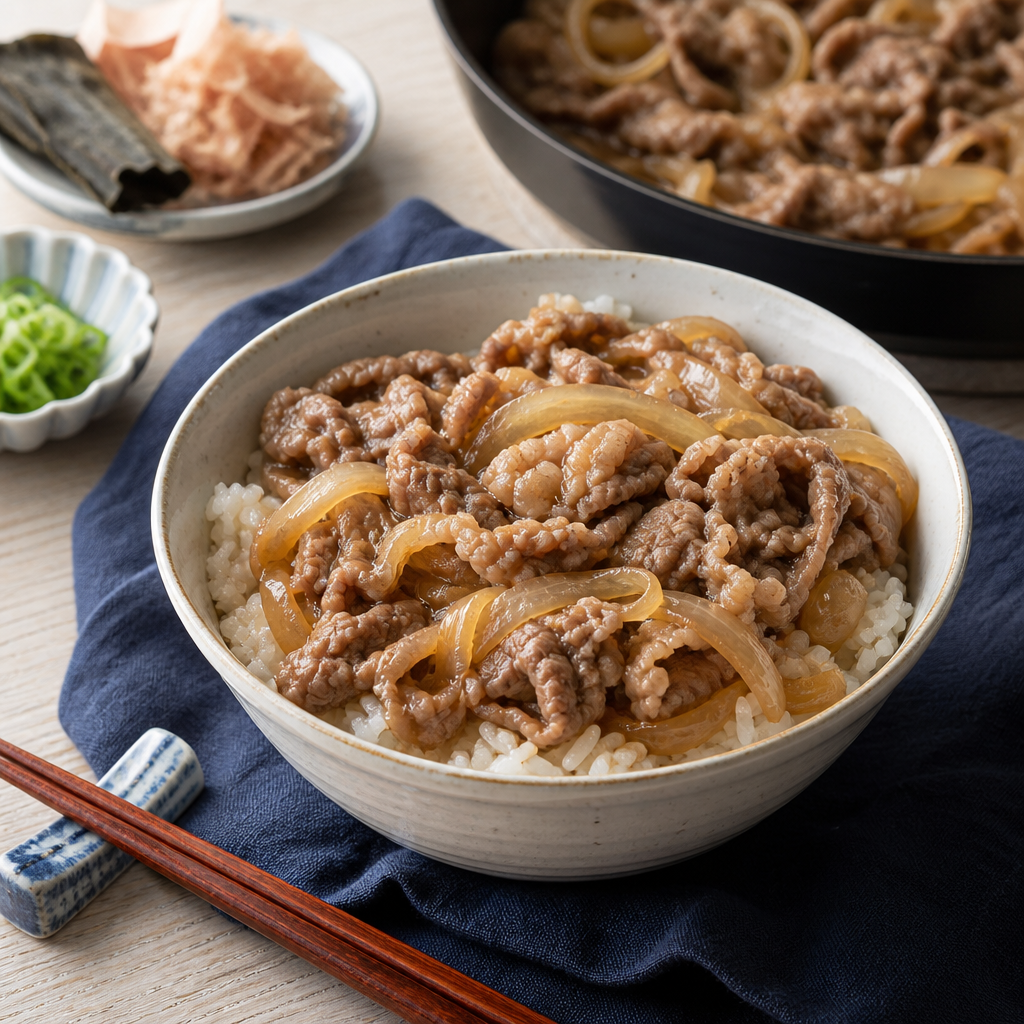
Fill each donburi with hot rice. Spoon beef and onion over the rice, then add 2-3 tablespoons of broth per bowl so the top grains are seasoned and the bottom is not soupy.
Finish at the table
Top with beni shōga, scallion, shichimi, or an onsen egg if using. Serve immediately while the beef fat is still soft and the rice is hot.
Common mistakes
- {'mistake': 'Using thick beef strips', 'fix': 'Use beef shaved 1-2 mm. Thick strips turn this into a simmered beef stew and need a different cooking time.'}
- {'mistake': 'Browning the beef first', 'fix': 'Do not sear. Gyudon beef should be pale brown, tender, and glossy from broth.'}
- {'mistake': 'Flooding the rice', 'fix': 'Add a few spoonfuls of broth per bowl. The rice should be seasoned, not submerged.'}
- {'mistake': 'Using long-grain rice', 'fix': 'Use Japanese short-grain rice. The soft stickiness is structural, not cosmetic.'}
- {'mistake': 'Cooking onion and beef for the same length of time', 'fix': 'Simmer onion first, then add beef at the end. The timing gap protects the thin slices.'}
What does not belong
- {'item': 'Teriyaki sauce', 'reason': 'Commercial American teriyaki sauce does not belong. It is too thick, too sweet, and turns gyudon into a glaze bowl.'}
- {'item': 'Garlic-heavy stir-fry seasoning', 'reason': 'Garlic is not the defining profile here. Gyudon is built on dashi, shoyu, mirin, sake, onion, and beef fat.'}
- {'item': 'Long-grain rice, jasmine rice, or basmati', 'reason': 'These grains do not hold gyudon broth correctly. Use Japanese short-grain rice.'}
- {'item': 'Cornstarch slurry', 'reason': 'Gyudon broth is loose. Thickening it makes a Chinese-American beef sauce, not a Japanese donburi topping.'}
- {'item': 'Butter or cream', 'reason': 'Dairy does not belong in standard gyudon. It mutes the soy-mirin broth and coats the rice.'}
Adaptations
Use tamari or Japanese soy sauce verified vegan. Add 5 ml neutral oil to mimic some of the missing fat.
Many mirin products contain alcohol. Check labels; the adaptation is straightforward only with verified halal seasonings.
Start with less tamari because it can taste denser than Japanese shoyu.
Standard gyudon contains no dairy.
Kombu-katsuobushi dashi is normally fish-based, not shellfish-based.