Oyakodon
The dish in context
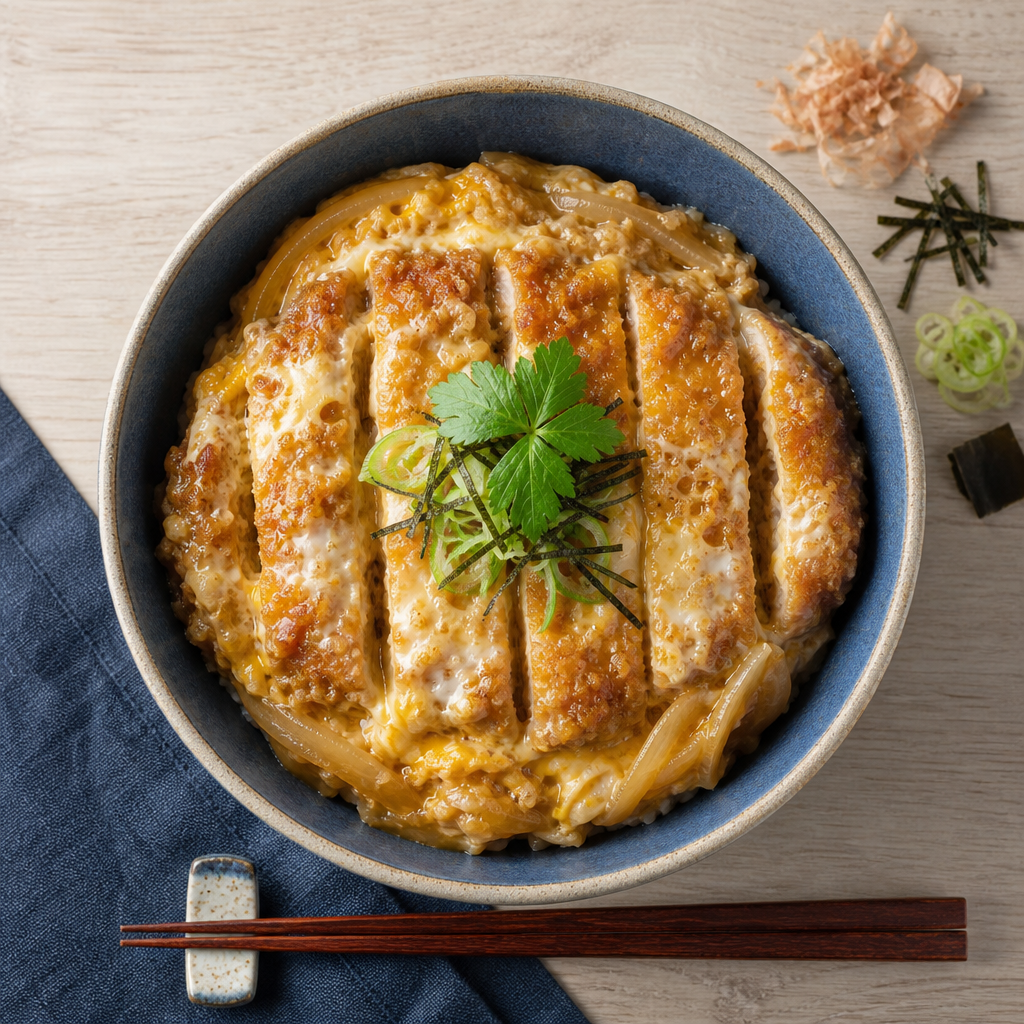
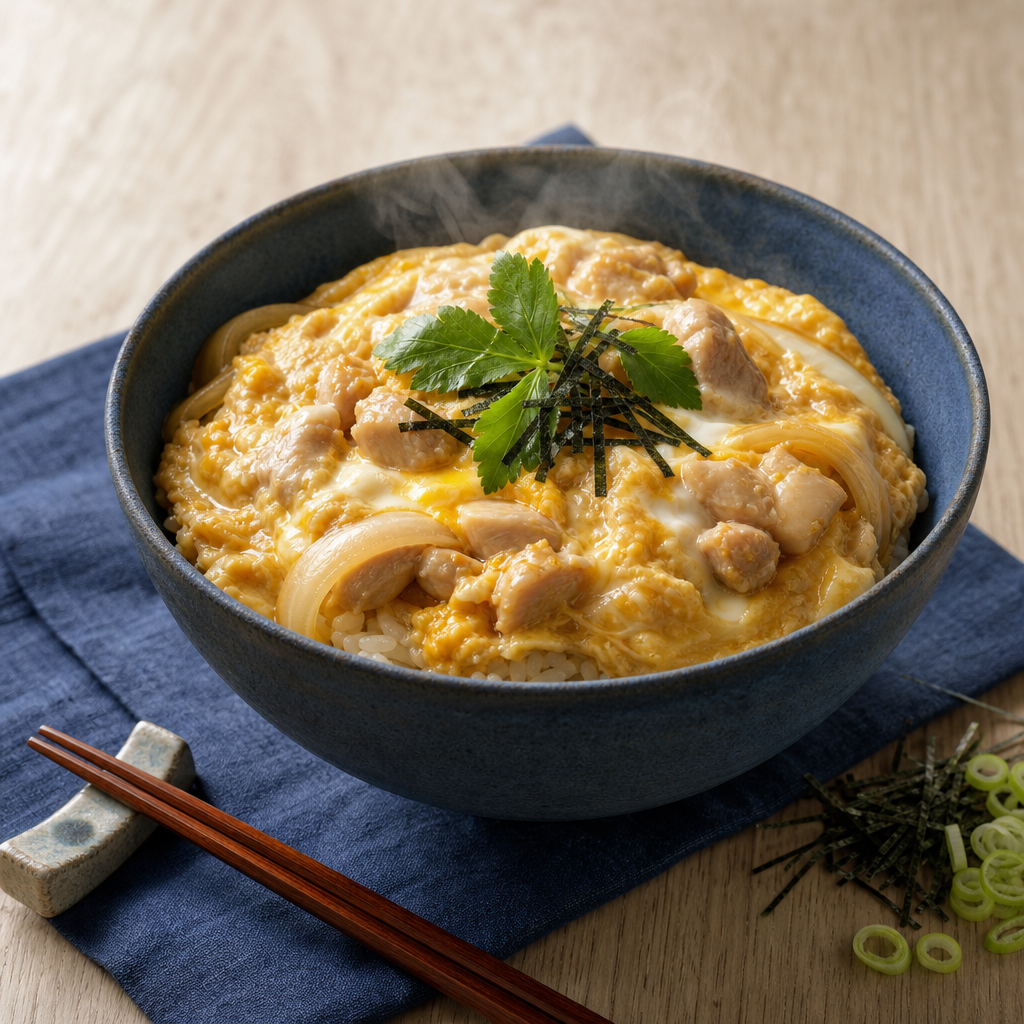
Oyakodon is a Tokyo-born donburi associated with late Meiji-period chicken restaurants, especially the Nihonbashi shop Tamahide, where chicken sukiyaki scraps and warishita-style seasoning were bound with egg and served over rice. The name means “parent-and-child bowl”: chicken and egg in the same dish. Modern household versions usually add onion and sometimes mitsuba or nori, while older restaurant versions may keep the topping tighter around chicken, egg, soy sauce, and mirin. The non-negotiable grammar is rice covered by chicken simmered in dashi-seasoned soy-mirin broth and finished with softly set egg.
Method 8 steps · 45 min
Cook or reheat the rice
Use hot Japanese short-grain rice, about 180 g per bowl. If cooking from raw rice, wash until the water runs nearly clear, soak 30 minutes, cook, then rest covered 10 minutes before fluffing with a shamoji.
Mix the simmering broth
Combine dashi, shoyu, mirin, sake, and sugar in a small bowl. Stir until the sugar dissolves.
Beat the eggs lightly
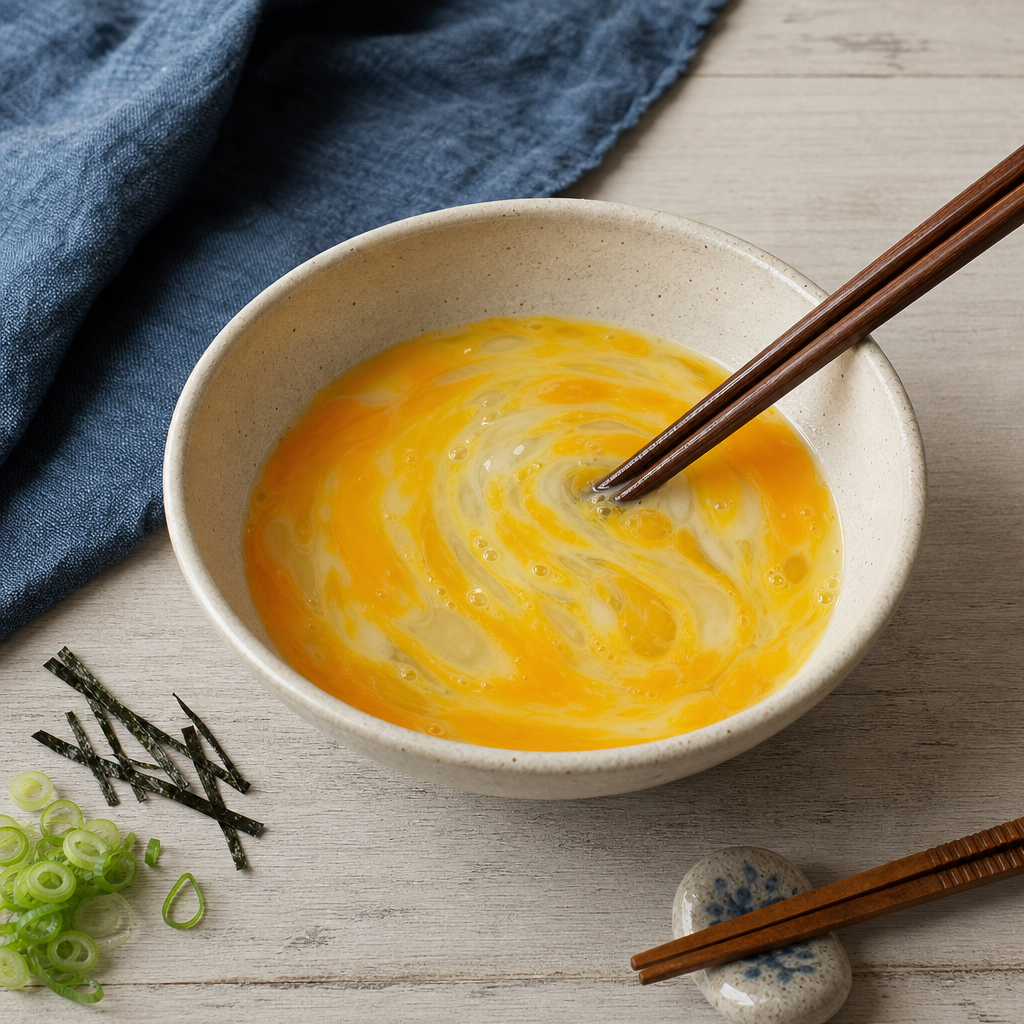
Crack the eggs into a bowl and break them with chopsticks or a fork 8 to 10 strokes. Leave streaks of yolk and white visible.
Simmer the onion
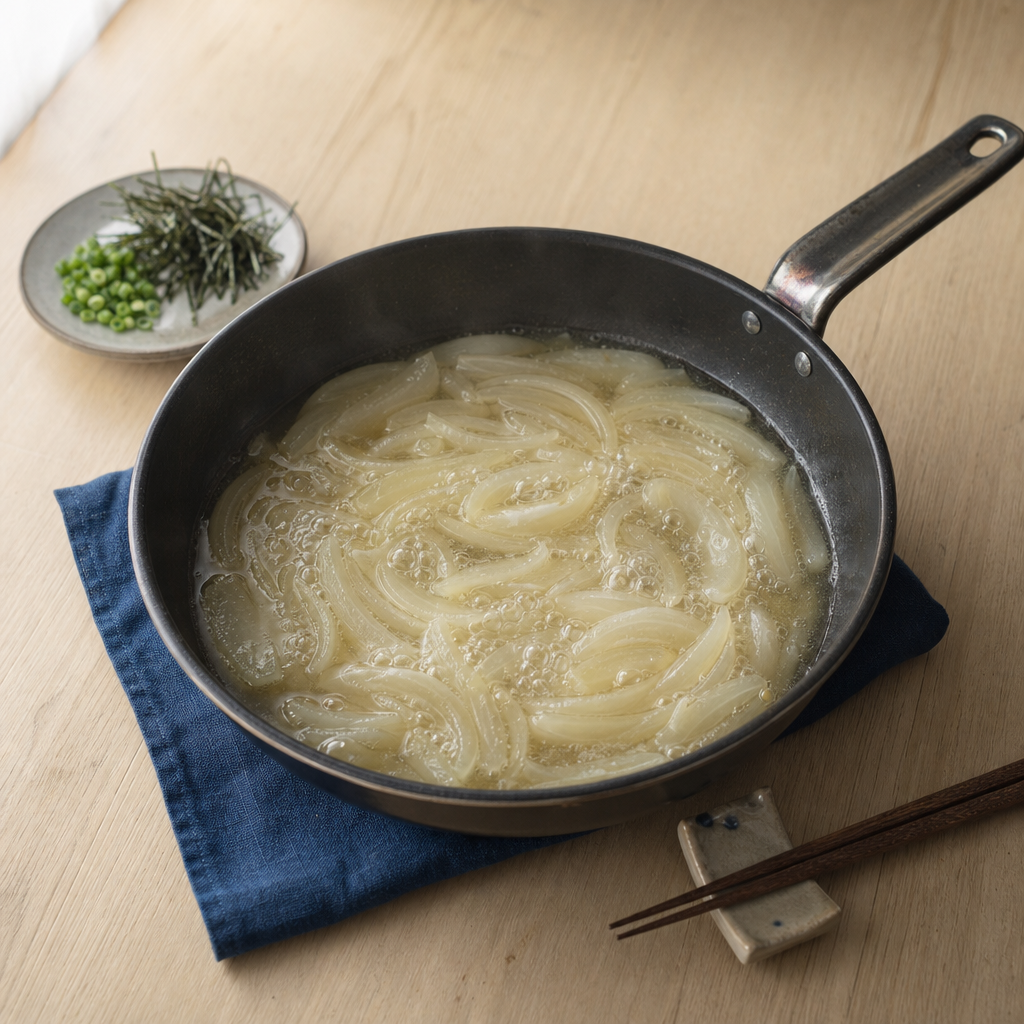
Put the onion and broth in a 20-22 cm skillet. Bring to a steady simmer over medium heat and cook until the onion bends easily but still has shape, 2 to 3 minutes.
Cook the chicken
Add the chicken in a single layer and simmer, turning once, until the pieces are opaque outside and cooked through, 3 to 4 minutes. The broth should bubble at the edges, not boil violently.
Add the first egg pour
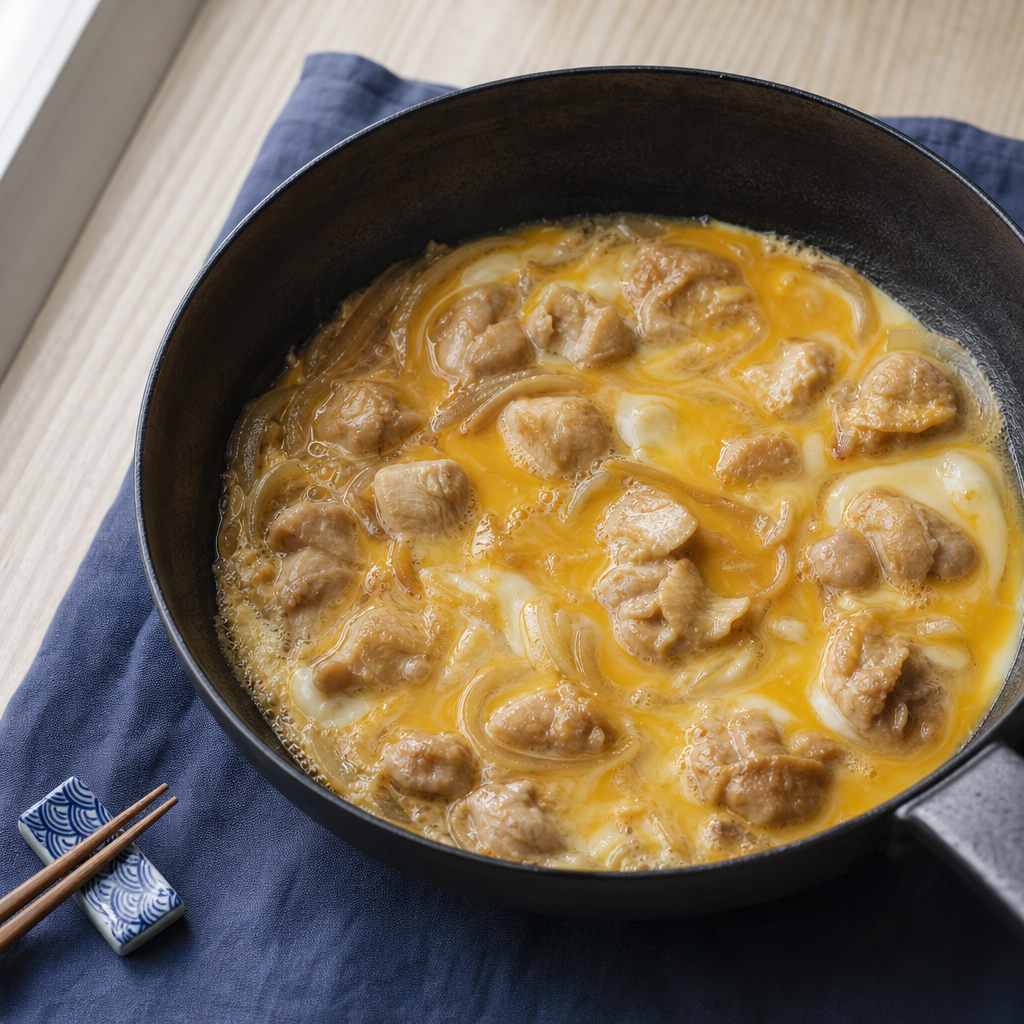
Pour about two-thirds of the egg over the chicken and onion in a spiral, aiming for gaps as well as the surface. Cover and cook 45 to 60 seconds, until the egg turns pale at the edges but still jiggles in the center.
Finish with the second egg pour
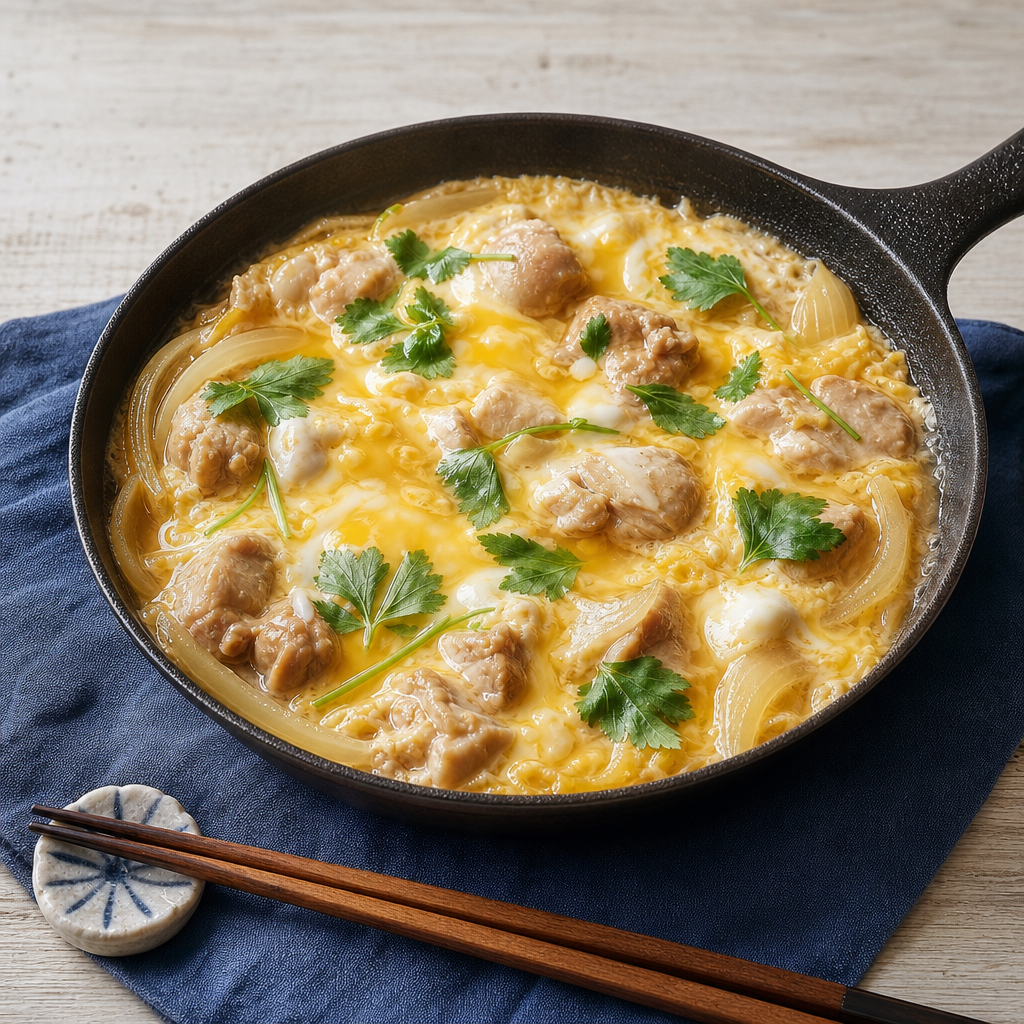
Pour the remaining egg over the top, scatter mitsuba if using, cover again, and cook 15 to 25 seconds. Turn off the heat while the top still looks loose and glossy.
Slide over rice
Divide hot rice between two donburi bowls. Slide the chicken, egg, and broth over the rice without breaking the egg layer into small curds.
Common mistakes
- {'mistake': 'Cooking the egg until fully set in the pan.', 'fix': 'Stop while the surface is still glossy and barely loose. Carryover heat from the pan and rice finishes it.'}
- {'mistake': 'Beating the eggs completely smooth.', 'fix': 'Mix only until the yolks break. Visible streaks are the target, not a uniform yellow liquid.'}
- {'mistake': 'Using too much broth.', 'fix': 'The rice should be seasoned, not submerged. If the pan looks soupy before adding egg, simmer uncovered for 30 to 60 seconds.'}
- {'mistake': 'Using chicken breast cut into thick chunks.', 'fix': 'Use thigh, or slice breast thinly across the grain. Thick breast overcooks before the center catches up.'}
- {'mistake': 'Cooking all servings in one crowded pan.', 'fix': 'Cook in small batches. Oyakodon depends on a shallow, even layer so the egg sets at the same rate.'}
What does not belong
- {'item': 'Bottled American teriyaki sauce', 'reason': 'It is too thick and too sweet. Oyakodon uses a loose dashi-soy-mirin broth, not a glaze.'}
- {'item': 'Cream or milk', 'reason': 'Dairy does not belong. The softness comes from undercooked egg, not enrichment.'}
- {'item': 'Long-grain rice, jasmine rice, or basmati', 'reason': 'These grains separate under the broth and change the structure of the bowl.'}
- {'item': 'Garlic-heavy stir-fry seasoning', 'reason': 'Oyakodon is a simmered donburi, not a wok dish. Garlic pushes it into a different flavor system.'}
- {'item': 'Bell pepper, broccoli, or mixed frozen vegetables', 'reason': 'They turn the dish into a chicken-and-egg rice topping. Onion or naganegi is the vegetable grammar here.'}