Pork Gyoza
The dish in context
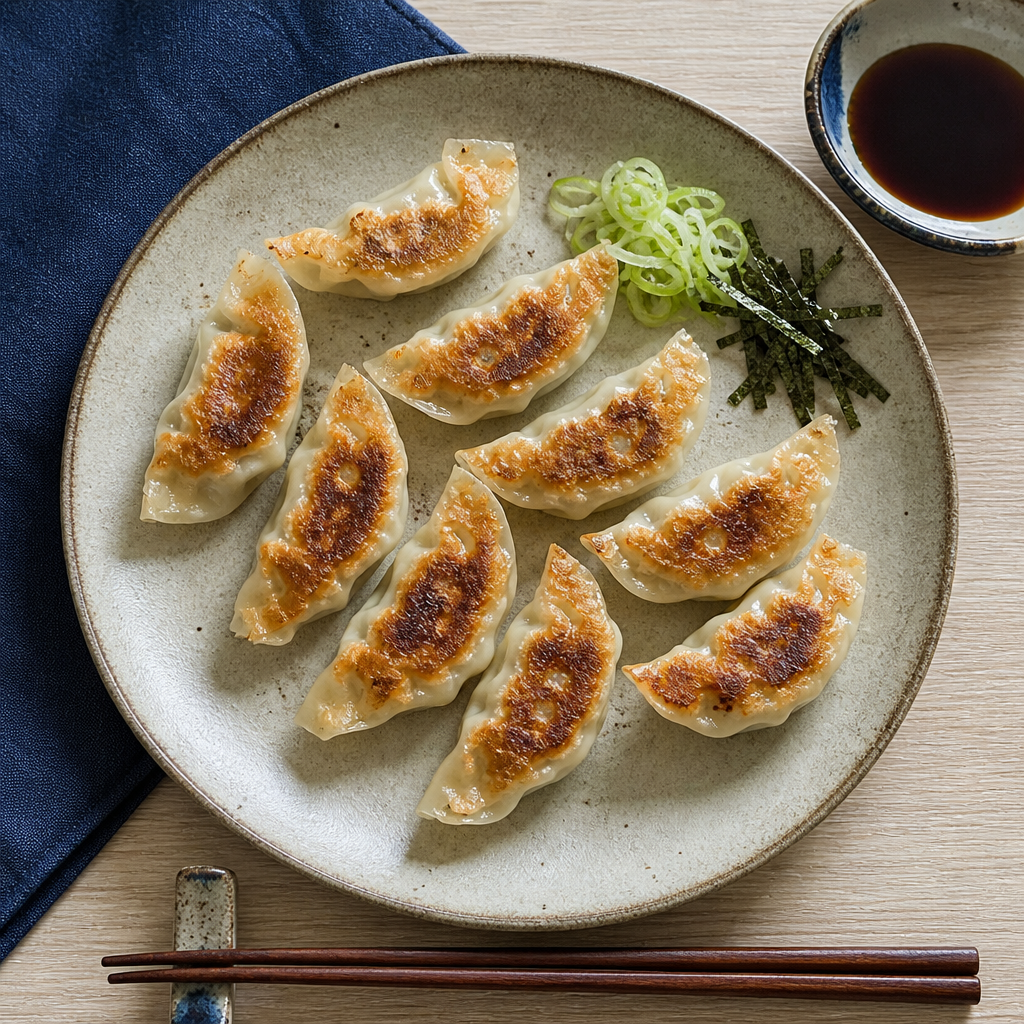
Gyoza (餃子) is Japan’s adaptation of Chinese jiaozi, widely established after Japanese returnees brought dumpling-making habits back from northeastern China in the mid-20th century. The Japan-domestic standard became thinner-skinned, more garlicky, and usually pan-fried rather than boiled. Pork with cabbage or hakusai, nira (ニラ), garlic, ginger, soy sauce, and sesame oil is the baseline filling. Restaurant and household versions diverge on cabbage treatment, stock or water in the filling, and whether to cook with a starch slurry for hanetsuki gyoza (羽根つき餃子), the lacy-wing style.
Method 8 steps · 65 min
Salt and squeeze the cabbage
Toss the chopped cabbage with 3 g salt and rest 10 minutes. Squeeze hard in a clean towel until the cabbage feels damp rather than wet; it should clump but not drip.
Knead the pork base
Combine pork, soy sauce, sake, sesame oil, garlic, ginger, and white pepper. Knead with one hand until the mixture turns sticky and smears against the bowl, about 2 minutes.
Fold in the vegetables
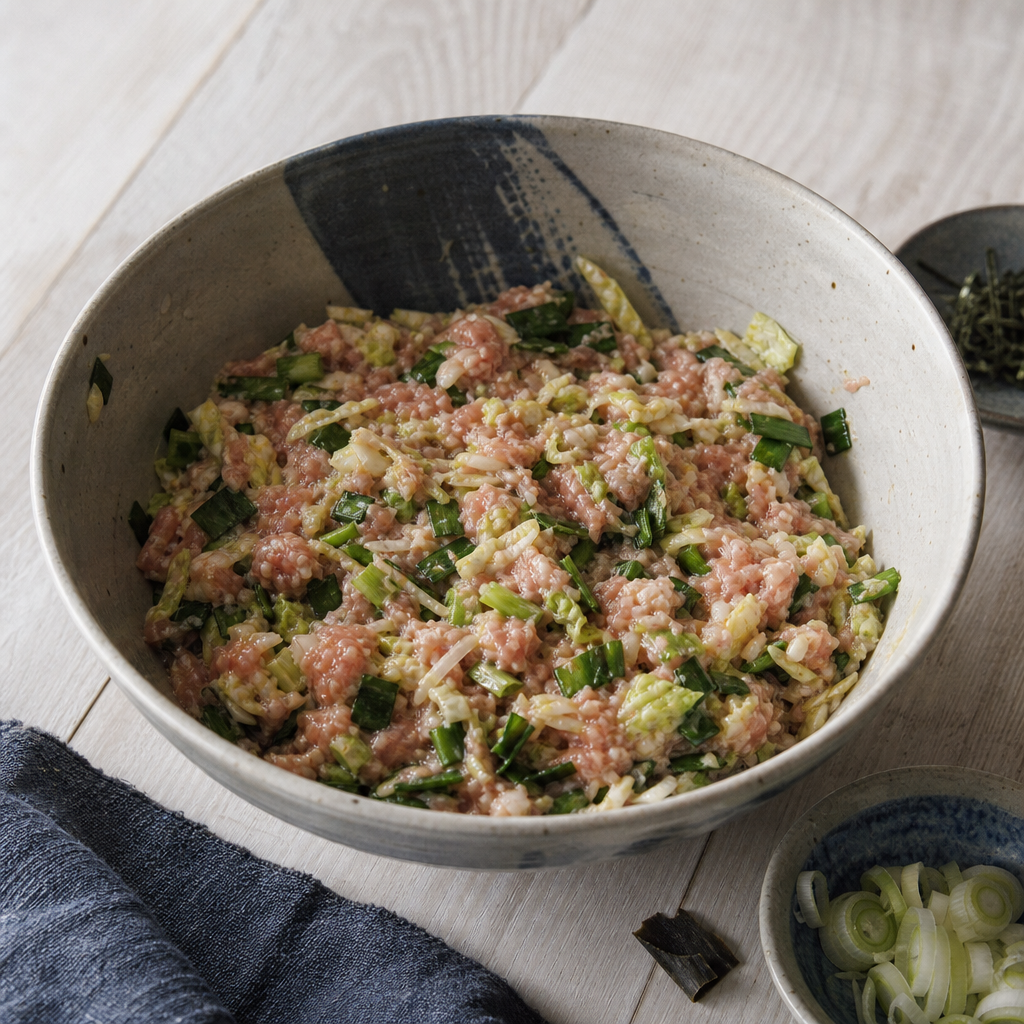
Add the squeezed cabbage, nira, and scallion. Mix until evenly distributed, then chill 15 minutes if the filling feels loose.
Pleat the gyoza
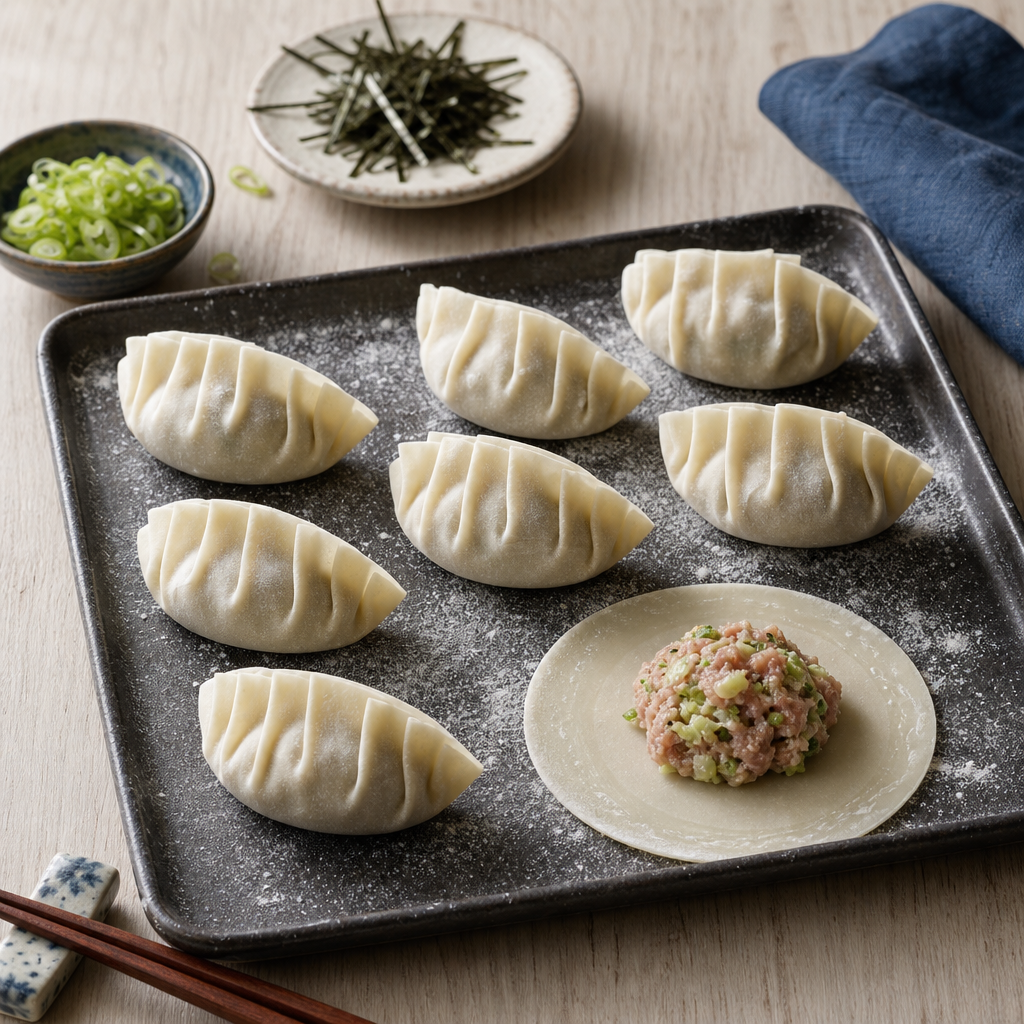
Dust a tray lightly with potato starch. Place 2 level teaspoons filling in the center of one wrapper, wet half the rim with water, then pleat only the front edge against the flat back edge to form a crescent with a flat base.
Set the first crust
Heat a nonstick or well-seasoned skillet over medium-high heat. Add 1 tablespoon oil, arrange 12-15 gyoza flat-side down with small gaps, and fry until the bottoms show pale gold patches, 2-3 minutes.
Steam without turning
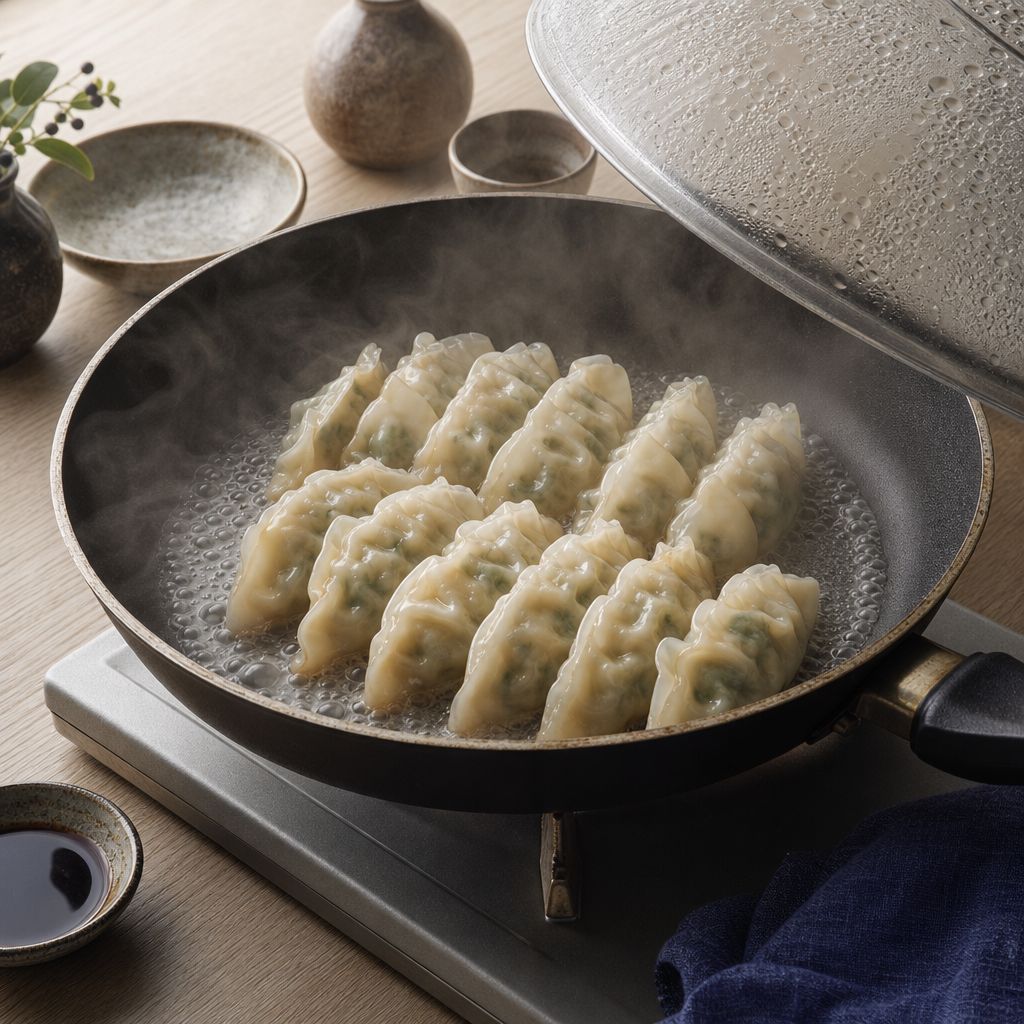
Add 60 ml water to the pan and cover immediately. Steam 4-5 minutes, until the wrappers turn slightly translucent and the filling feels firm when pressed through the top.
Re-crisp the base
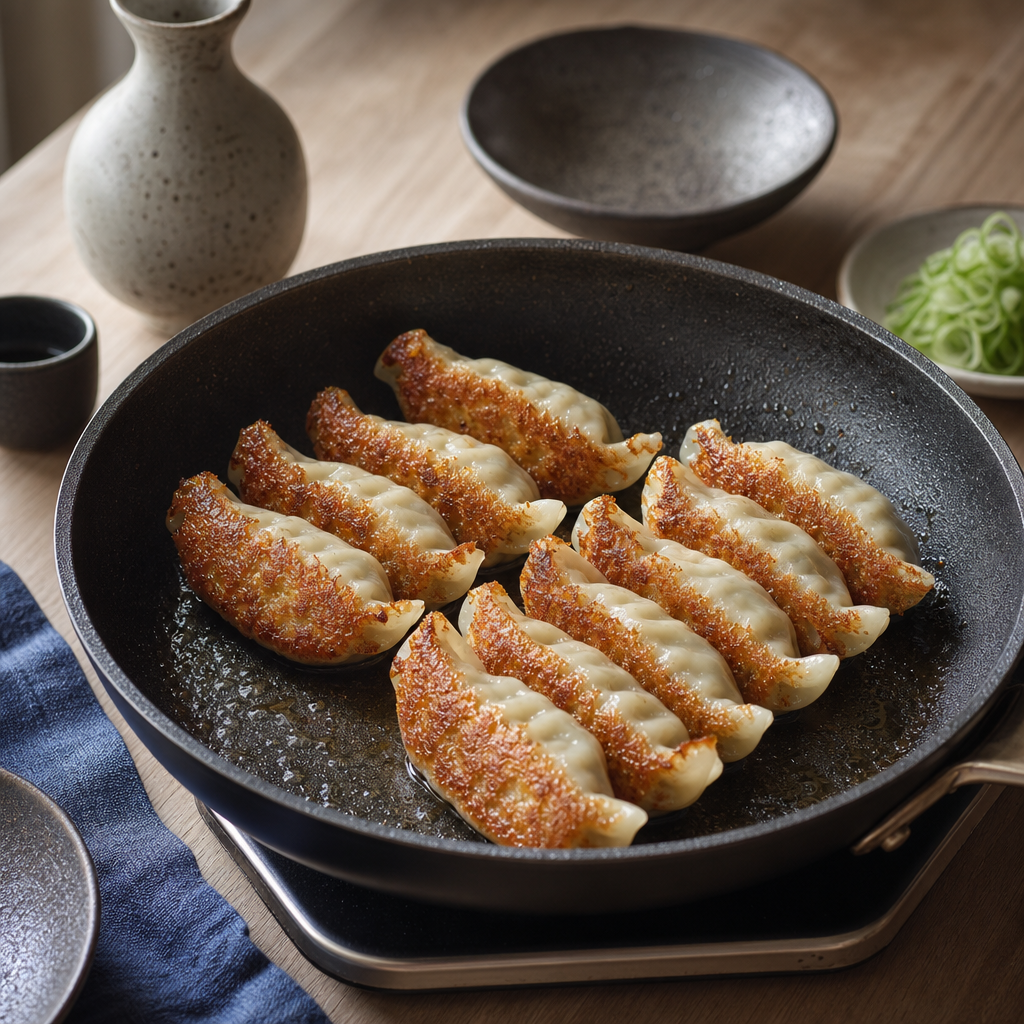
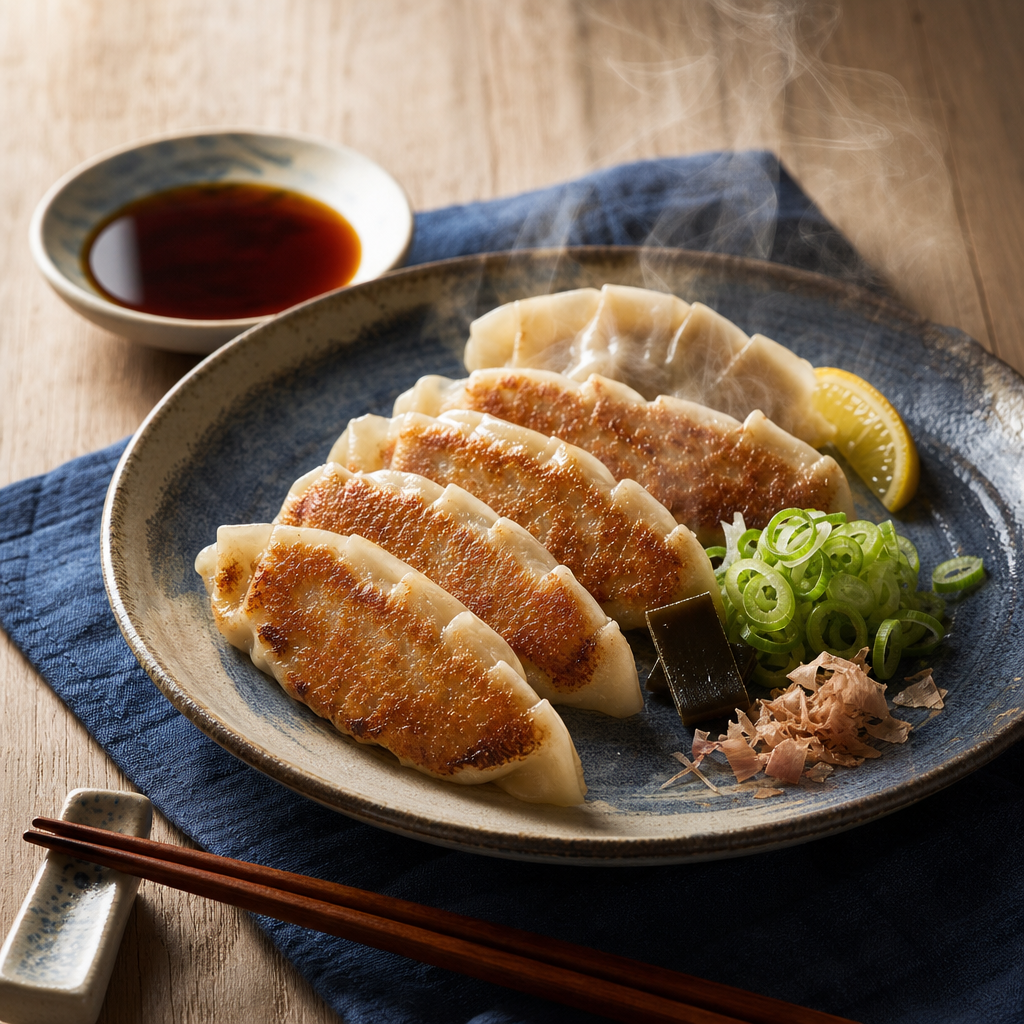
Uncover and let the water boil off completely. Drizzle in another teaspoon of oil around the pan edge and fry 1-2 minutes, until the bottoms are deep golden and release cleanly with a thin spatula.
Serve browned-side up
Lift or invert the gyoza onto a plate with the crisp bottoms visible. Mix rice vinegar and soy sauce 1:1 for dipping, with rayu added at the table.
Common mistakes
- {'mistake': 'Using wet cabbage straight from the cutting board.', 'fix': 'Salt and squeeze it until no liquid runs. Wet filling steams the wrapper from the inside and causes splits.'}
- {'mistake': 'Mixing the filling lightly like a burger.', 'fix': 'Knead until sticky. Gyoza filling needs protein extraction, not loose ground meat.'}
- {'mistake': 'Overfilling the wrapper.', 'fix': 'Use 2 level teaspoons for an 8-9 cm wrapper. A bulging dumpling tears at the pleats and leaks fat.'}
- {'mistake': 'Turning the dumplings during cooking.', 'fix': 'Cook one side only. The bottom should be crisp; the pleated side should be steamed and tender.'}
- {'mistake': 'Leaving the lid on after the water evaporates.', 'fix': 'Uncover for the final fry. Trapped steam turns the crust leathery.'}
What does not belong
- {'item': 'Cheese', 'reason': 'Cheese does not belong in standard pork gyoza. It melts into the seams, leaks, and changes the filling into a novelty dumpling.'}
- {'item': 'Sweet teriyaki sauce', 'reason': 'Sweet teriyaki sauce does not belong as a gyoza dip. The standard dip is soy sauce, rice vinegar, and optionally rayu.'}
- {'item': 'Breadcrumbs', 'reason': 'Breadcrumbs do not belong in the filling. They make the interior taste like a pork patty instead of a juicy dumpling.'}
- {'item': 'Long-cooked caramelized onion', 'reason': 'Caramelized onion does not belong in this version. Its sweetness fights the garlic-chive profile.'}
- {'item': 'Thick American-style dumpling skins', 'reason': 'Thick skins do not give the thin crisp-bottom, tender-top contrast that defines Japanese yaki gyoza.'}
Adaptations
Replace pork with finely chopped firm tofu, shiitake, cabbage, and nira, bound with potato starch and a little miso. That is vegetable gyoza, not pork gyoza.
Use halal ground chicken thigh or beef instead of pork, replace sake with water plus a pinch of sugar, and confirm wrappers contain no alcohol-derived additives. The result is not buta gyoza because pork is removed.
Use gluten-free round dumpling wrappers and gluten-free tamari. Standard gyoza wrappers are wheat-based, so the wrapper is the main constraint.
The recipe is dairy-free as written.
The recipe is shellfish-free as written. Check commercial rayu and wrappers for cross-contact if cooking for a severe allergy.