Thai Fried Spring Rolls
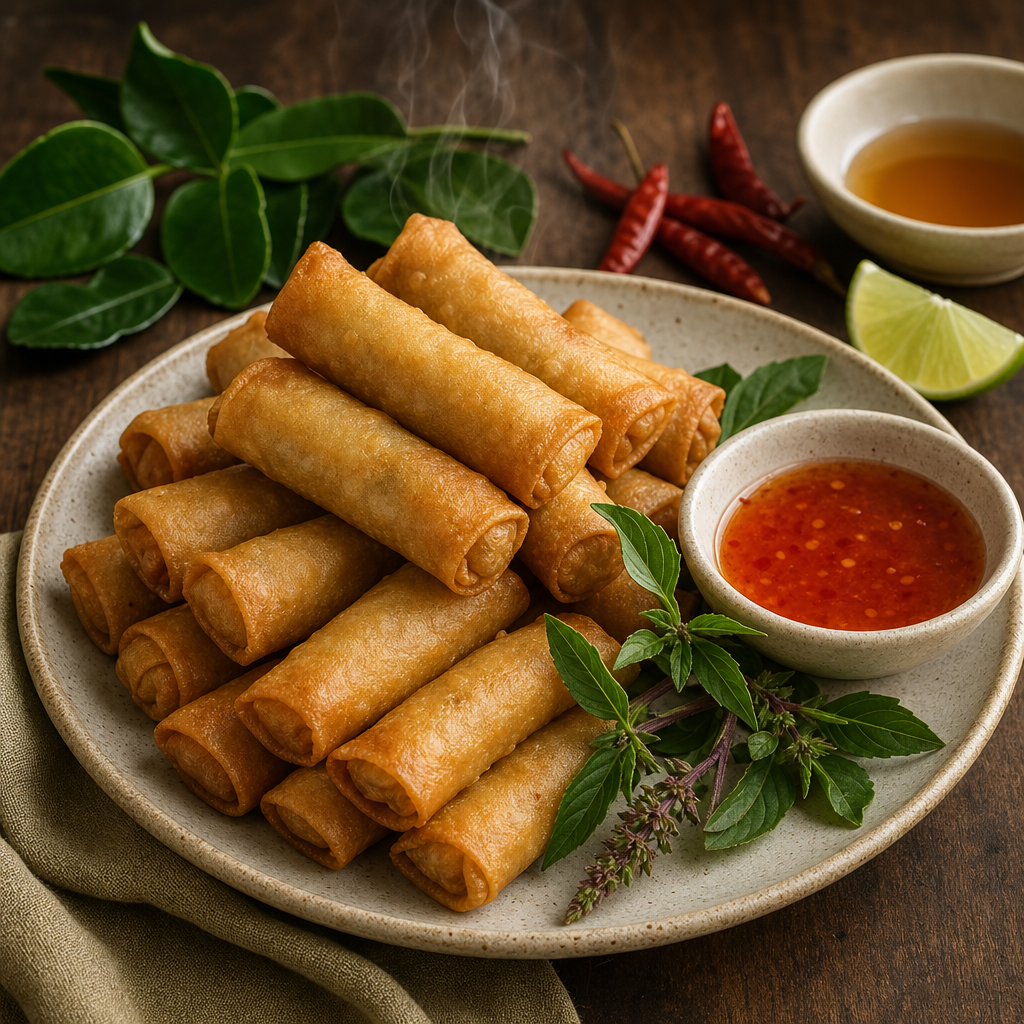
The dish in context
Po pia thot (ปอเปี๊ยะทอด) sits in the Thai-Chinese snack family: wheat wrappers, noodle-and-vegetable filling, and a sweet-sour dipping sauce calibrated for fried food. In central Thailand it is common as school-front food, market food, and a party tray item rather than a formal main dish. Thai community-standard recipes converge on glass noodles, cabbage or bean sprouts, carrot, garlic, light soy sauce, white pepper, and often minced pork. The filling changes by household and vendor, but the technique does not: the filling must be cooked dry before wrapping, or the rolls steam themselves soft from the inside.
Method 8 steps · 65 min
Soak and cut the noodles
Cover the dried glass noodles with room-temperature water until pliable, 10-15 minutes. Drain hard, then cut into 5 cm lengths.
Cook the aromatics and pork
Heat 20 ml oil in a wok or wide skillet over medium-high heat. Fry garlic and cilantro root for 20-30 seconds until the raw edge is gone, then add pork and break it into fine grains until no pink remains.
Cook the filling dry
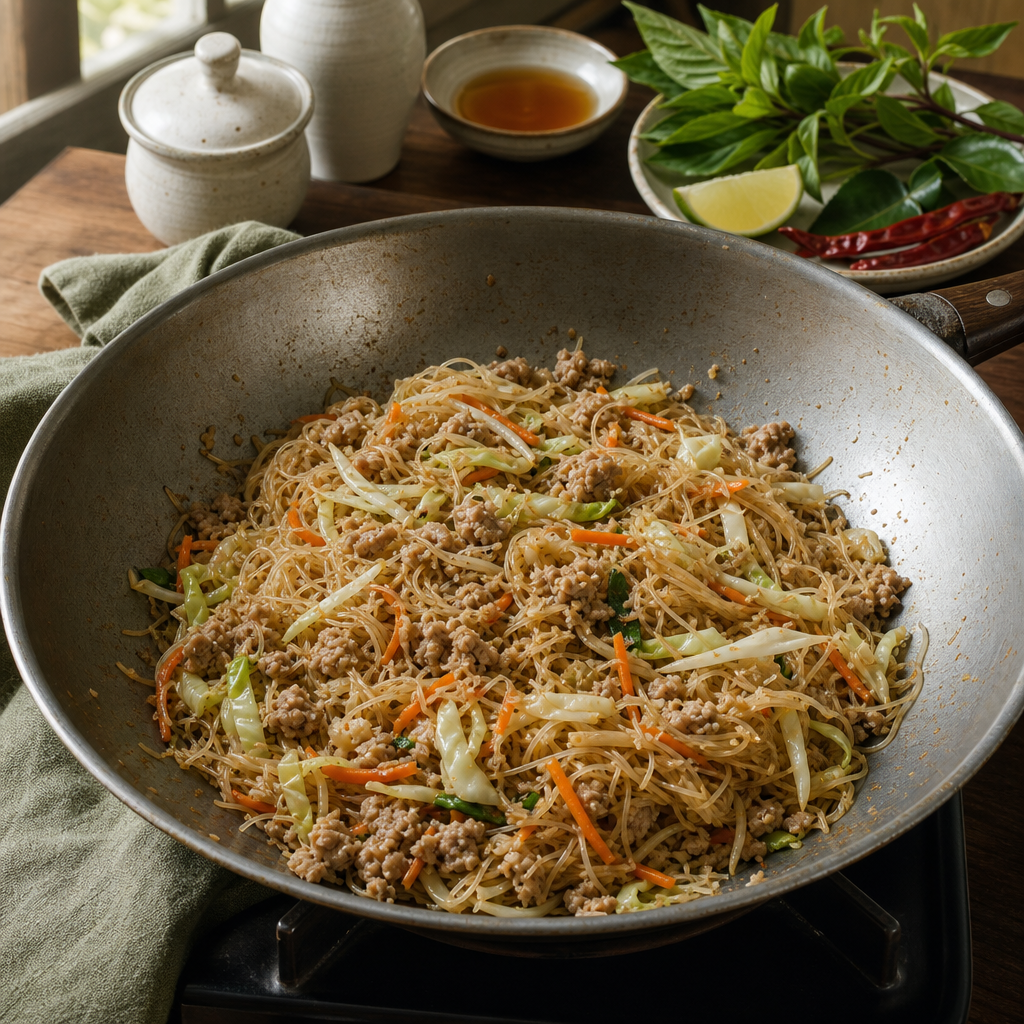
Add cabbage, carrot, bean sprouts, soaked noodles, light soy sauce, oyster sauce, sugar, and white pepper. Stir-fry until the vegetables soften and the pan looks dry, 4-6 minutes; no puddle should remain when the filling is pushed aside.
Cool the filling
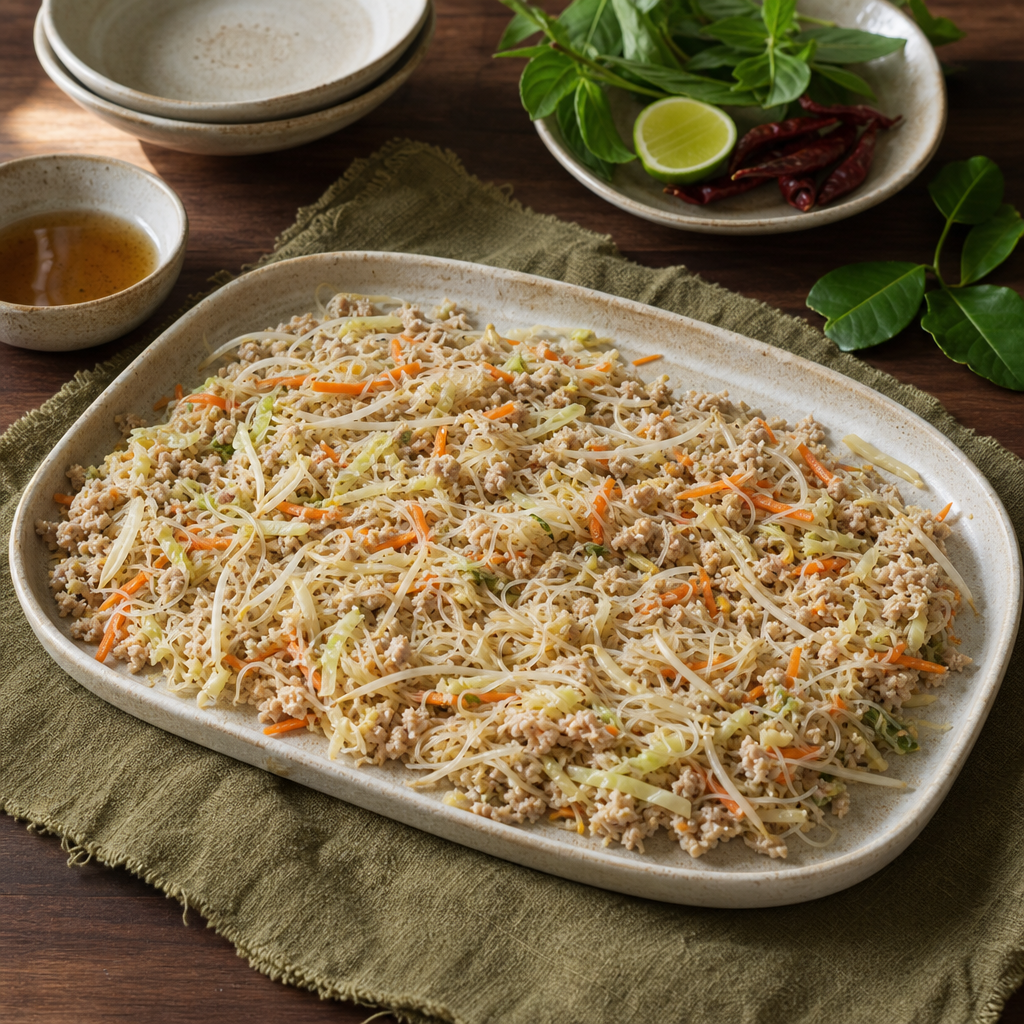
Spread the filling on a tray and cool until no longer steaming, about 15 minutes. If liquid gathers on the tray, tilt and drain it off.
Make the sealing paste
Mix flour and water into a thick paste that drags from the spoon like glue. Add water a few drops at a time if it is too stiff to spread.
Roll tight, not fat
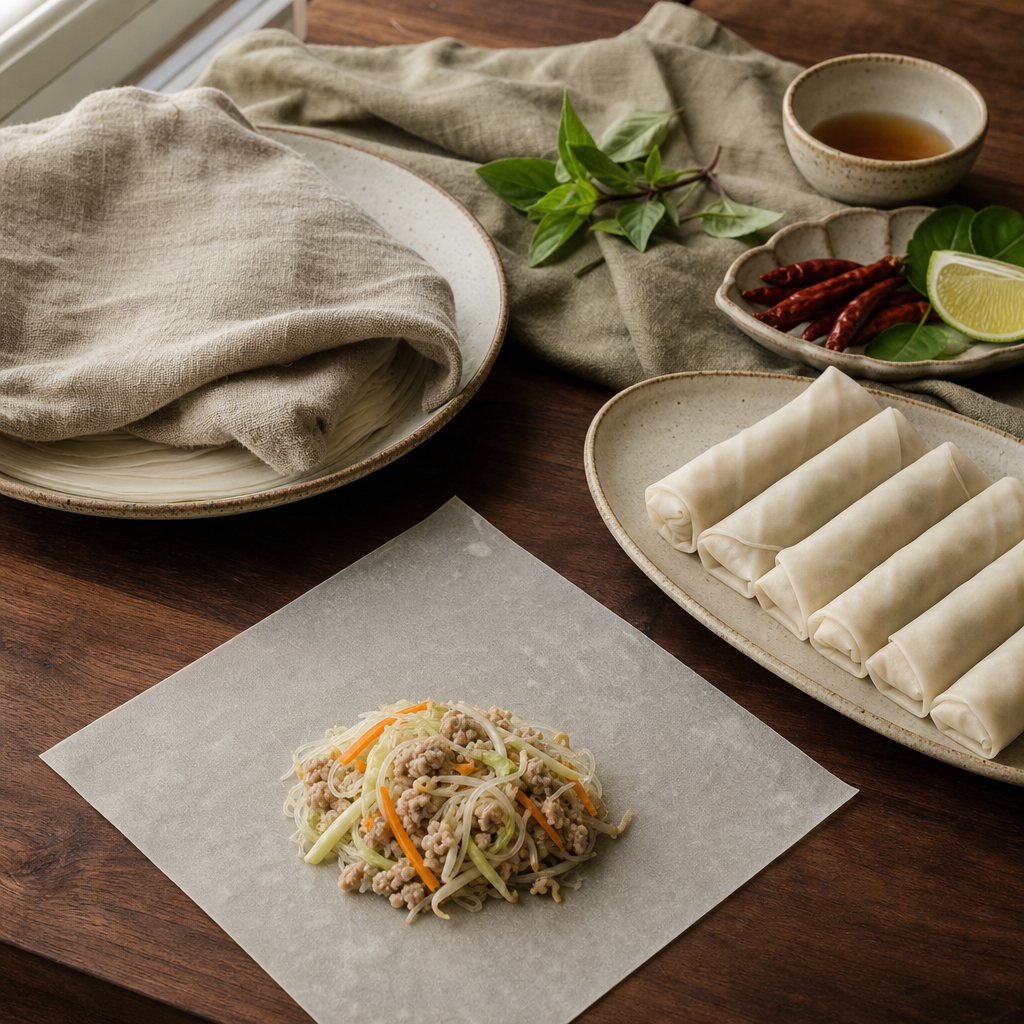
Keep wrappers covered with a barely damp towel. Place one wrapper as a diamond, add about 2 tablespoons cooled filling below center, fold the near corner over, tuck once, fold in both sides, then roll tightly and seal the far corner with paste.
Fry in controlled batches
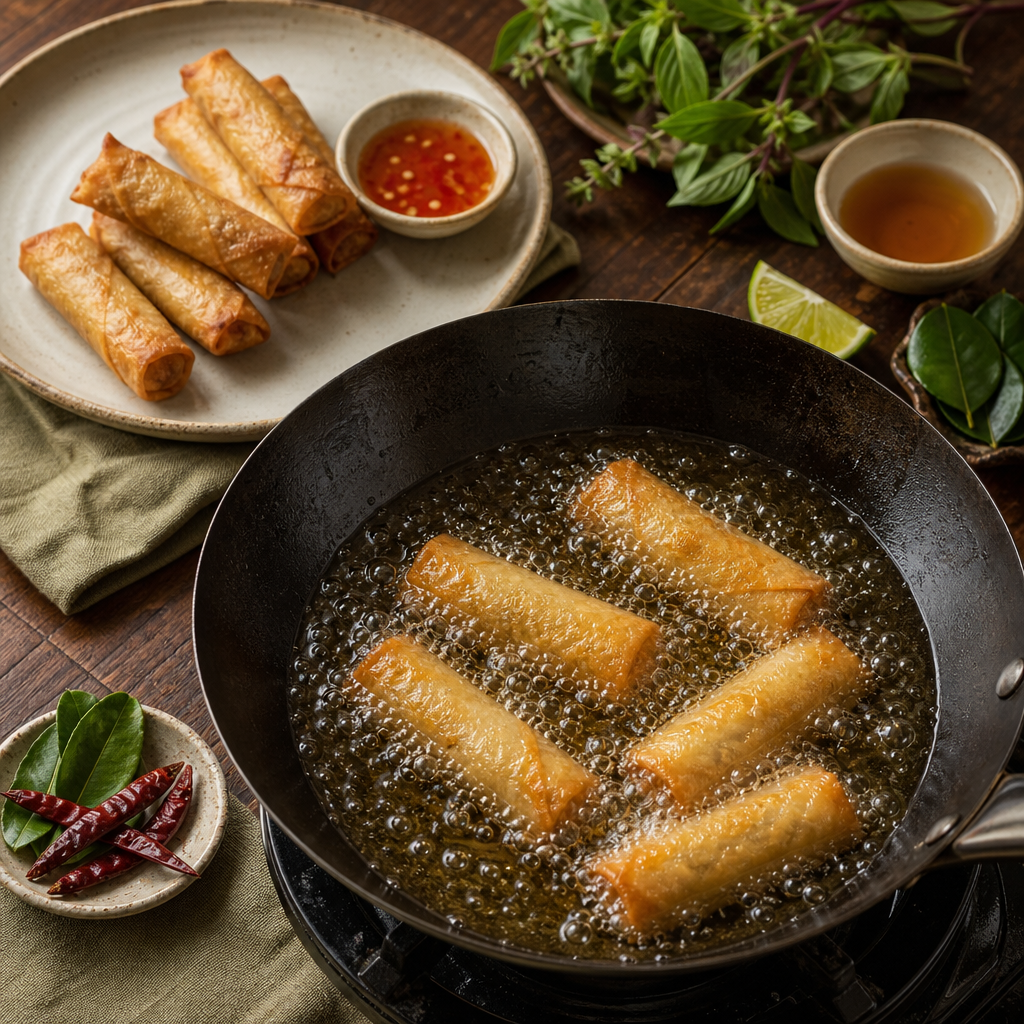
Heat frying oil to 175-180°C. Fry 5-6 rolls at a time, turning as needed, until evenly golden and audibly crisp, 4-5 minutes per batch.
Drain and serve
Drain the rolls on a rack, not a flat stack of paper towels. Serve hot with nam jim gai (น้ำจิ้มไก่) on the side.
Common mistakes
- {'mistake': 'Wrapping hot filling', 'why_it_fails': 'Steam condenses inside the wrapper, weakening the seams before frying starts.', 'fix': 'Cool the filling in a thin layer until it stops steaming.'}
- {'mistake': 'Leaving the filling wet', 'why_it_fails': 'Excess water turns to steam, ruptures the wrapper, and spits oil.', 'fix': 'Stir-fry until the pan is dry when the filling is pushed aside.'}
- {'mistake': 'Overfilling the rolls', 'why_it_fails': 'Fat rolls do not seal cleanly and have less wrapper overlap to contain expansion.', 'fix': 'Use about 2 tablespoons filling for a 15-17 cm wrapper.'}
- {'mistake': 'Frying too many at once', 'why_it_fails': 'The oil temperature drops, the wrappers absorb oil, and the surface turns dull rather than brittle.', 'fix': 'Fry in small batches and let the oil return to 175-180°C between batches.'}
- {'mistake': 'Using rice paper and expecting the same result', 'why_it_fails': 'Rice paper fries bubbly and chewy; wheat spring roll wrappers fry flaky and crisp.', 'fix': 'Use wheat spring roll wrappers for Thai po pia thot.'}
What does not belong
- {'item': 'Coconut milk', 'reason': 'Coconut milk does not belong in po pia thot filling. It makes the filling wet and moves the dish into no recognizable Thai fried spring roll pattern.'}
- {'item': 'Curry paste', 'reason': 'Curry paste does not belong here. Po pia thot is Thai-Chinese in seasoning: garlic, white pepper, soy sauce, and sometimes oyster sauce.'}
- {'item': 'Raw filling', 'reason': 'Raw filling does not belong in this roll. The wrapper browns before raw pork and wet vegetables cook safely and dry properly.'}
- {'item': 'Cheese', 'reason': 'Cheese turns the roll into a fusion snack. It melts, leaks, and erases the clean noodle-vegetable structure.'}
- {'item': 'Thick bottled teriyaki sauce', 'reason': 'Teriyaki-style sweetness does not belong in the filling. A small amount of sugar can round the soy sauce; sweetness should come from the dipping sauce.'}