Vegetable Gyoza
The dish in context
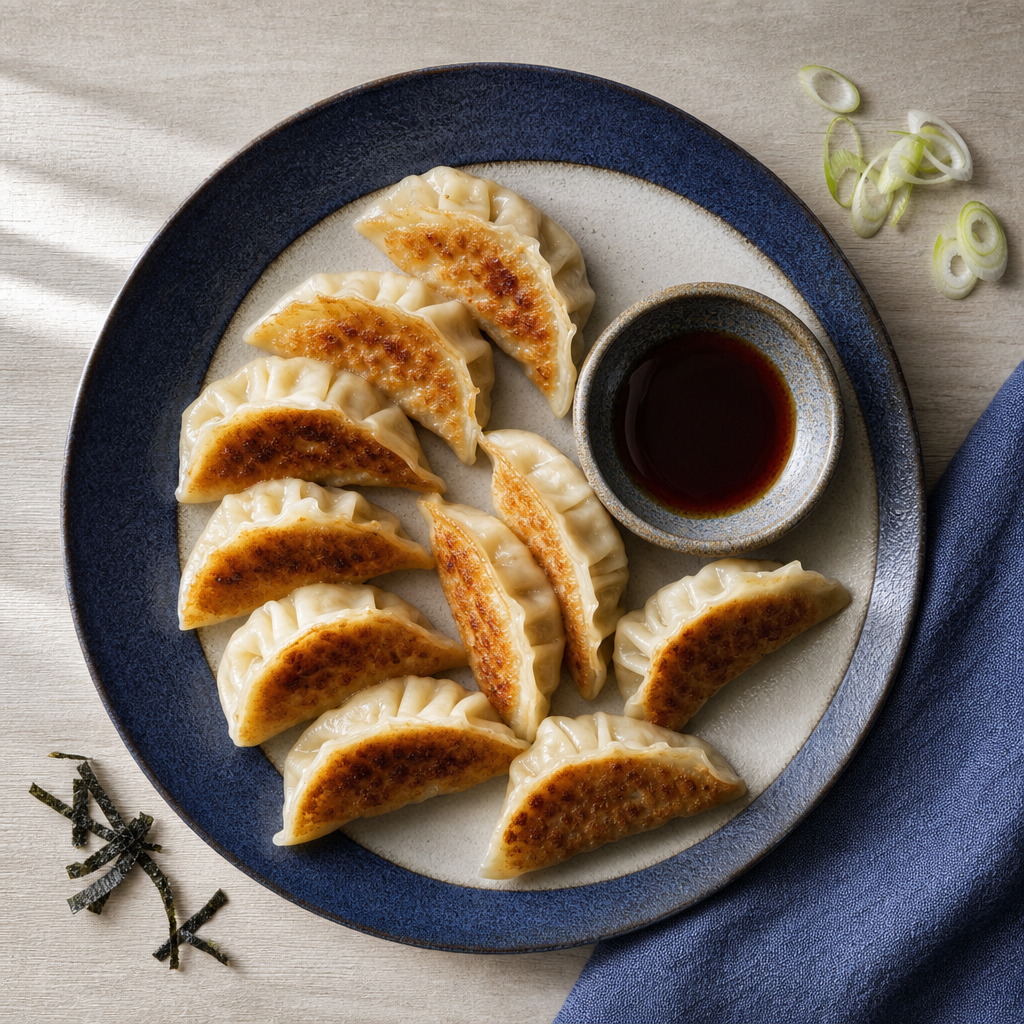
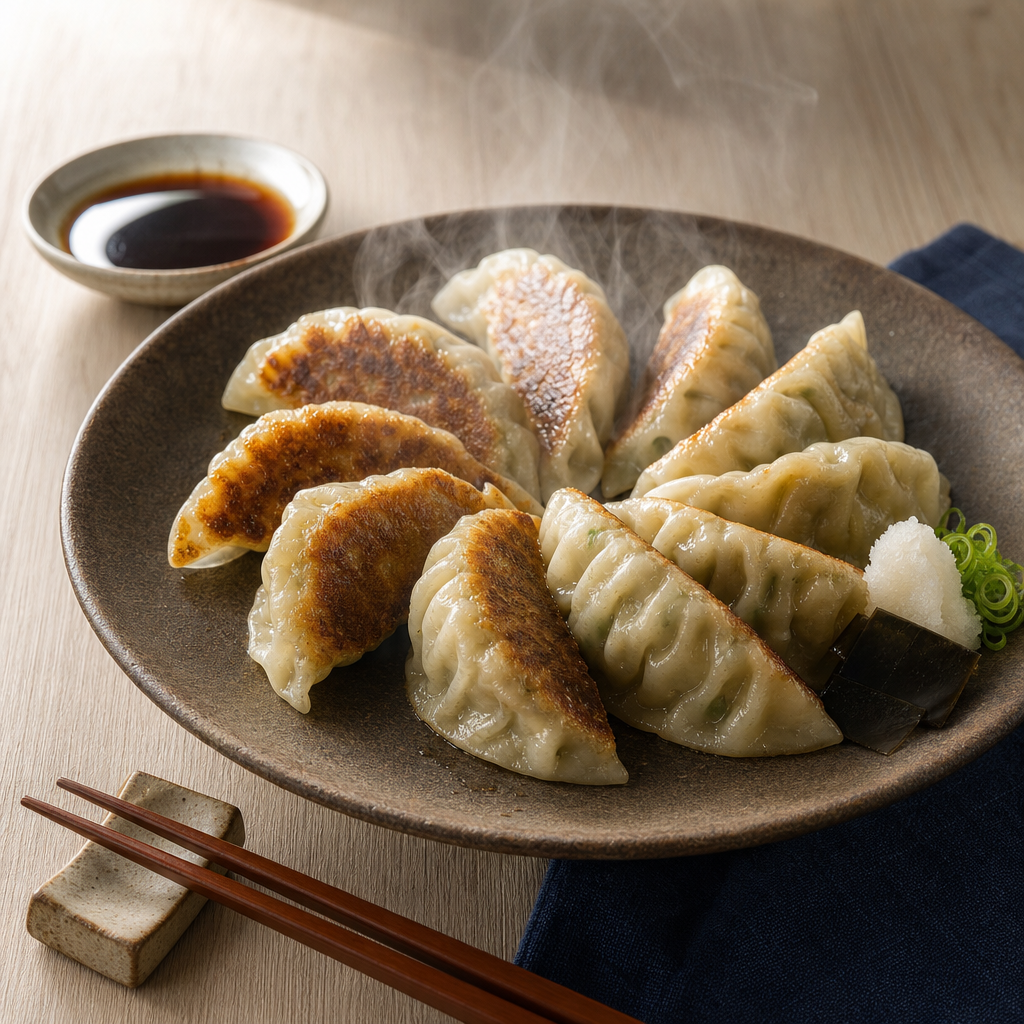
Gyoza is the Japanese domestic form of Chinese jiaozi, adapted into a thinner-skinned, garlic-forward, pan-fried dumpling after the early twentieth century and especially after World War II. In Japan, the standard restaurant image is yaki gyoza (焼き餃子): browned on the base, steamed under a lid, then uncovered to re-crisp. Vegetable gyoza, or yasai gyoza (野菜餃子), follows the same structure but replaces the usual pork with cabbage, nira, mushrooms, and aromatics. The filling has to be drier and more tightly seasoned than a meat filling because vegetables release water and have less fat to carry seasoning.
Method 8 steps · 55 min
Salt and squeeze the cabbage
Toss the chopped cabbage with 4 g salt and rest 10 minutes. Squeeze hard in a towel or with both hands until the cabbage drops visible liquid and feels compact, not fluffy.
Cook down the mushrooms
Heat 5 ml neutral oil in a skillet over medium-high heat. Add the shiitake and cook 3-4 minutes, stirring, until the pieces darken and the pan looks dry. Cool before mixing.
Mix the filling
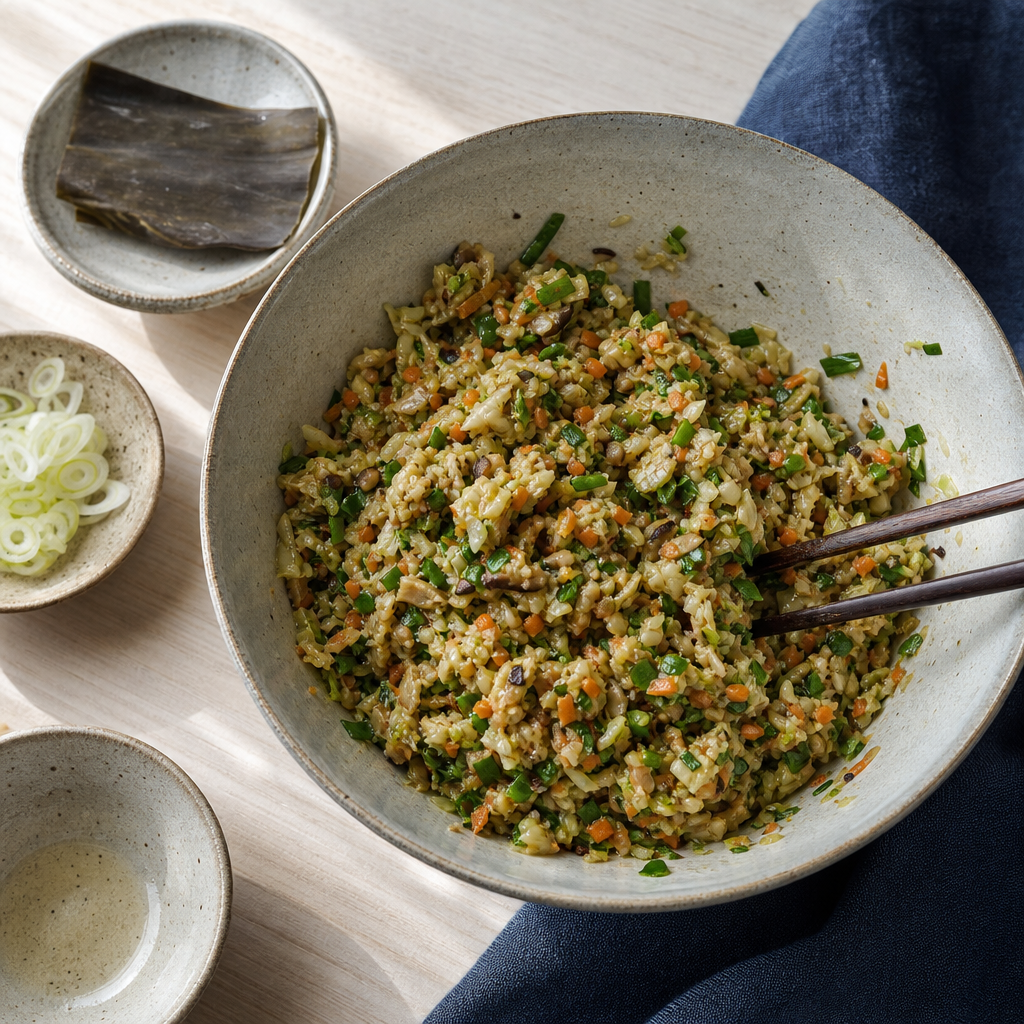
Combine squeezed cabbage, cooled mushrooms, nira, carrot, ginger, garlic, shoyu, sesame oil, sake, white pepper, and potato starch. Mix until the vegetables look glossy and lightly tacky, about 1 minute.
Pleat the gyoza
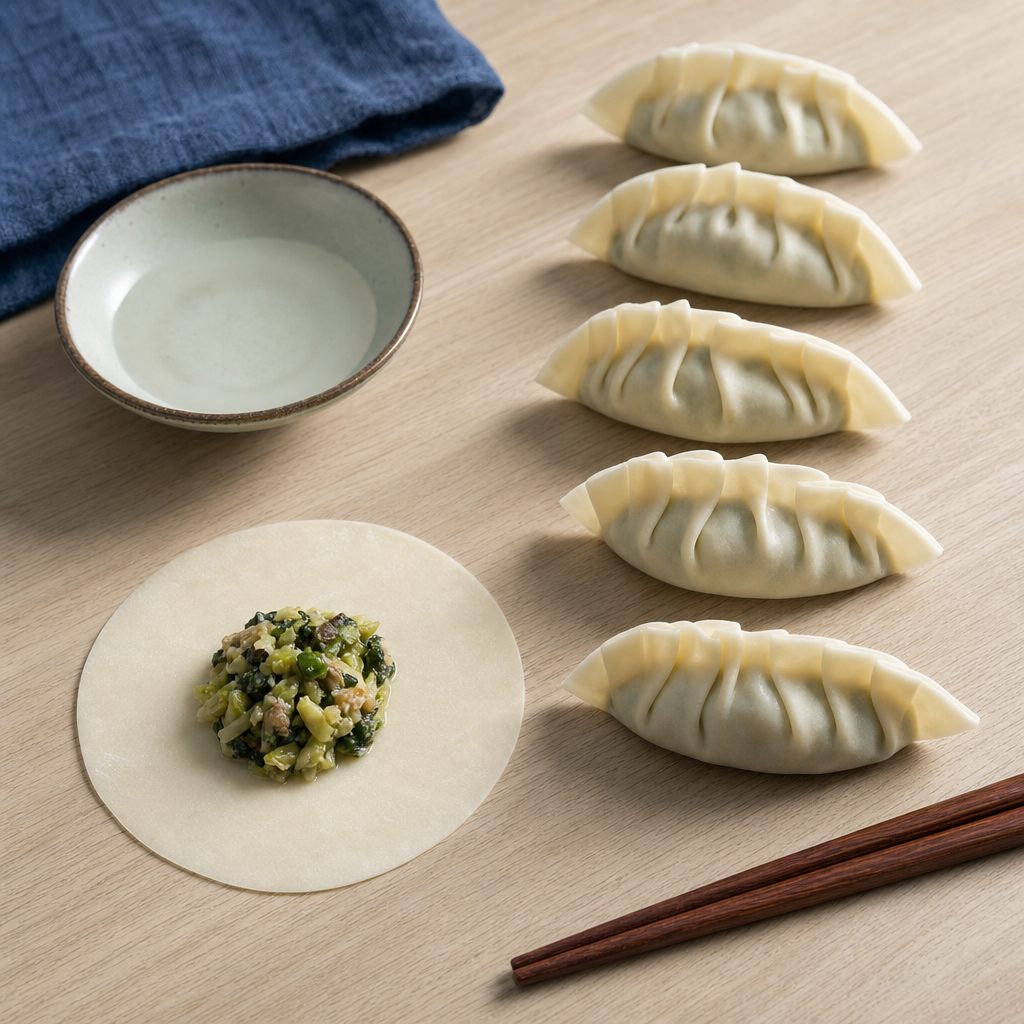
Place 2 level teaspoons filling in the center of one wrapper. Wet half the rim, fold into a half-moon, and pleat one side against the flat side, pressing out trapped air. Set each gyoza flat-side down on a starch-dusted tray and cover with a towel while shaping the rest.
Fry the base
Heat 12-15 ml neutral oil in a nonstick skillet over medium-high heat. Arrange 12 gyoza flat-side down with space between them and fry 2-3 minutes, until the bases are golden with darker spots.
Steam under a lid
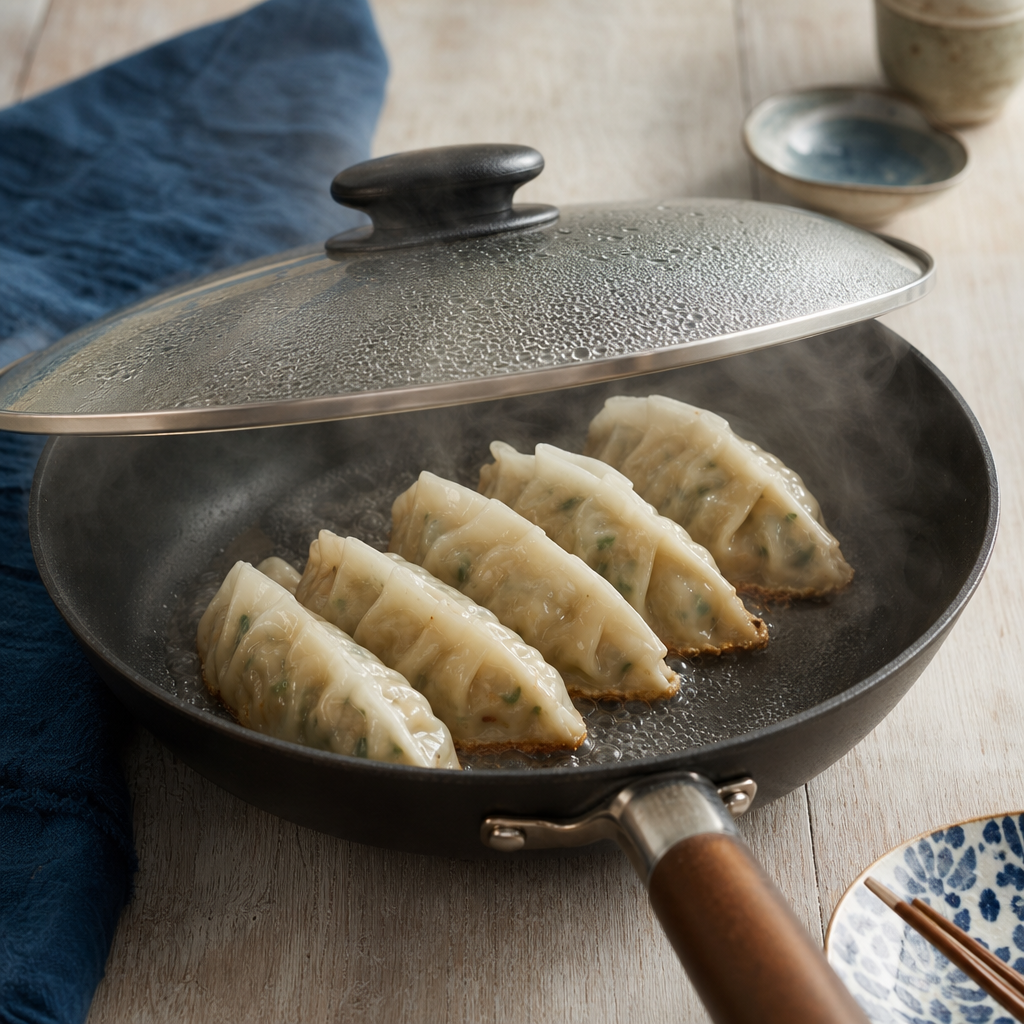
Add 60 ml hot water to the skillet and cover immediately. Cook 4-5 minutes, until the wrapper turns slightly translucent and the filling feels hot through the center.
Re-crisp uncovered
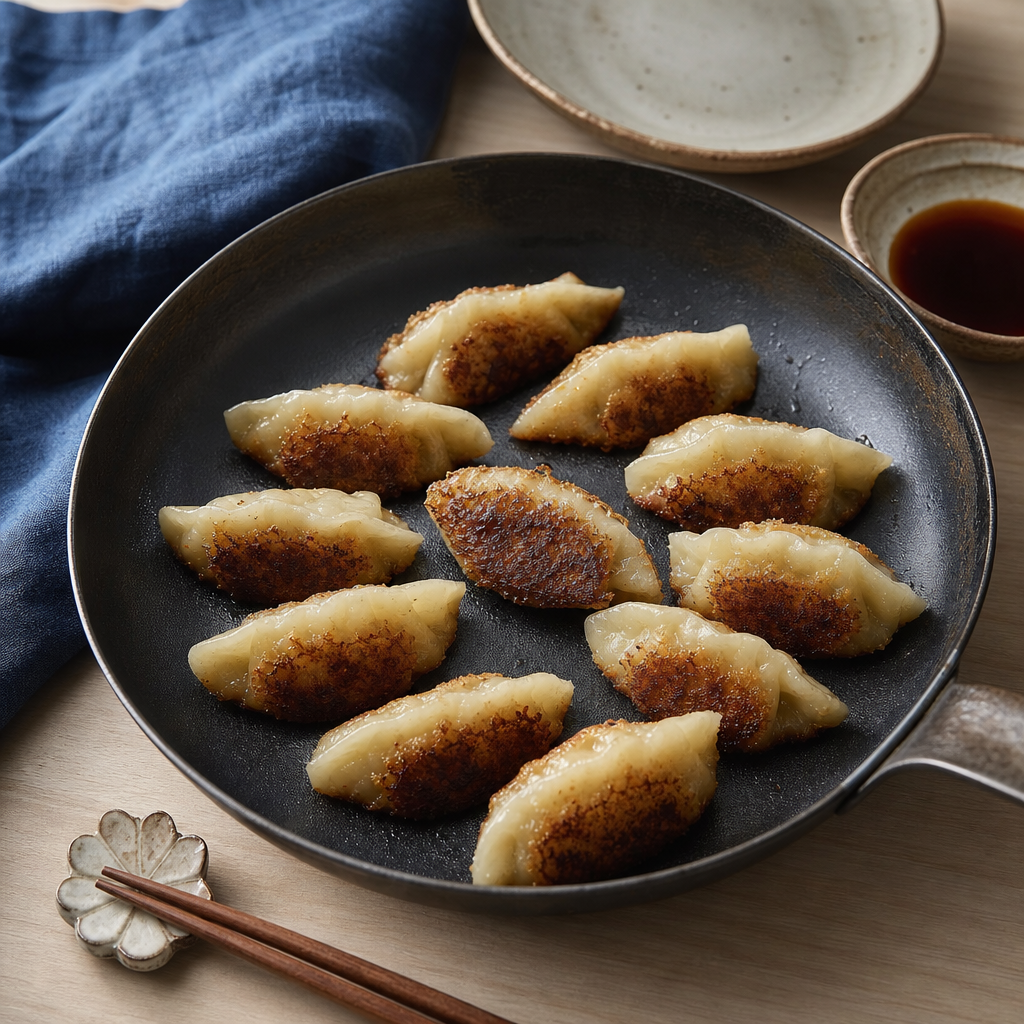
Remove the lid and cook 1-2 minutes more, shaking the skillet once the water has evaporated. Stop when the bottoms sound faintly scratchy against the pan and release cleanly.
Serve with dipping sauce
Stir rice vinegar and shoyu together in a small dish; add rayu if using. Transfer gyoza browned-side up or on their sides so the crisp base does not sit in steam.
Common mistakes
- {'mistake': 'Using wet cabbage straight from the cutting board.', 'fix': 'Salt it, rest it, then squeeze until the mass visibly shrinks. The extracted liquid should be discarded.'}
- {'mistake': 'Overfilling the wrappers.', 'fix': 'Use 2 level teaspoons for an 8-9 cm wrapper. A tight seam matters more than a bulging dumpling.'}
- {'mistake': 'Adding cold water to the hot pan.', 'fix': 'Use hot water. Cold water drops the pan temperature and lengthens steaming, which softens the crust.'}
- {'mistake': 'Serving the gyoza flat-side down on a plate.', 'fix': 'Serve browned-side up or tilted. Steam trapped underneath softens the base in minutes.'}
- {'mistake': 'Treating vegetable filling like pork filling.', 'fix': 'Pre-manage water with salt, squeezing, mushroom cooking, and starch. Vegetables do not bind themselves.'}
What does not belong
- {'item': 'Pork, chicken, or shrimp', 'reason': 'Meat does not belong in this vegetable gyoza version. It becomes a different gyoza.'}
- {'item': 'Cream cheese', 'reason': 'Cream cheese turns the filling heavy and dairy-sour. It is not part of Japanese yaki gyoza structure.'}
- {'item': 'Sweet teriyaki sauce', 'reason': 'Commercial sweet teriyaki sauce does not belong in the filling or dipping sauce. Gyoza seasoning is soy-salty, aromatic, and lightly acidic at the table.'}
- {'item': 'Olive oil for frying', 'reason': 'Olive oil brings the wrong aroma and can obscure the sesame, ginger, and nira. Use neutral oil for the pan.'}
- {'item': 'A thick sweet dipping glaze', 'reason': 'Gyoza sauce should be thin enough to cut through the fried base. Thick glaze coats the wrapper and softens it.'}
Adaptations
Check the wrapper label; some contain egg. The filling contains no animal products when using standard plant-based wrappers.
Replace sake with water plus a pinch of sugar. Use halal-certified soy sauce if required.
Use gluten-free dumpling wrappers and tamari instead of shoyu. Standard gyoza wrappers are wheat-based, so gluten-free is not a small substitution.
No dairy is used. Dairy does not belong in this dish.
No shellfish is used. Check commercial rayu or prepared wrappers only if allergen cross-contact is a concern.