Takikomi Gohan
The dish in context
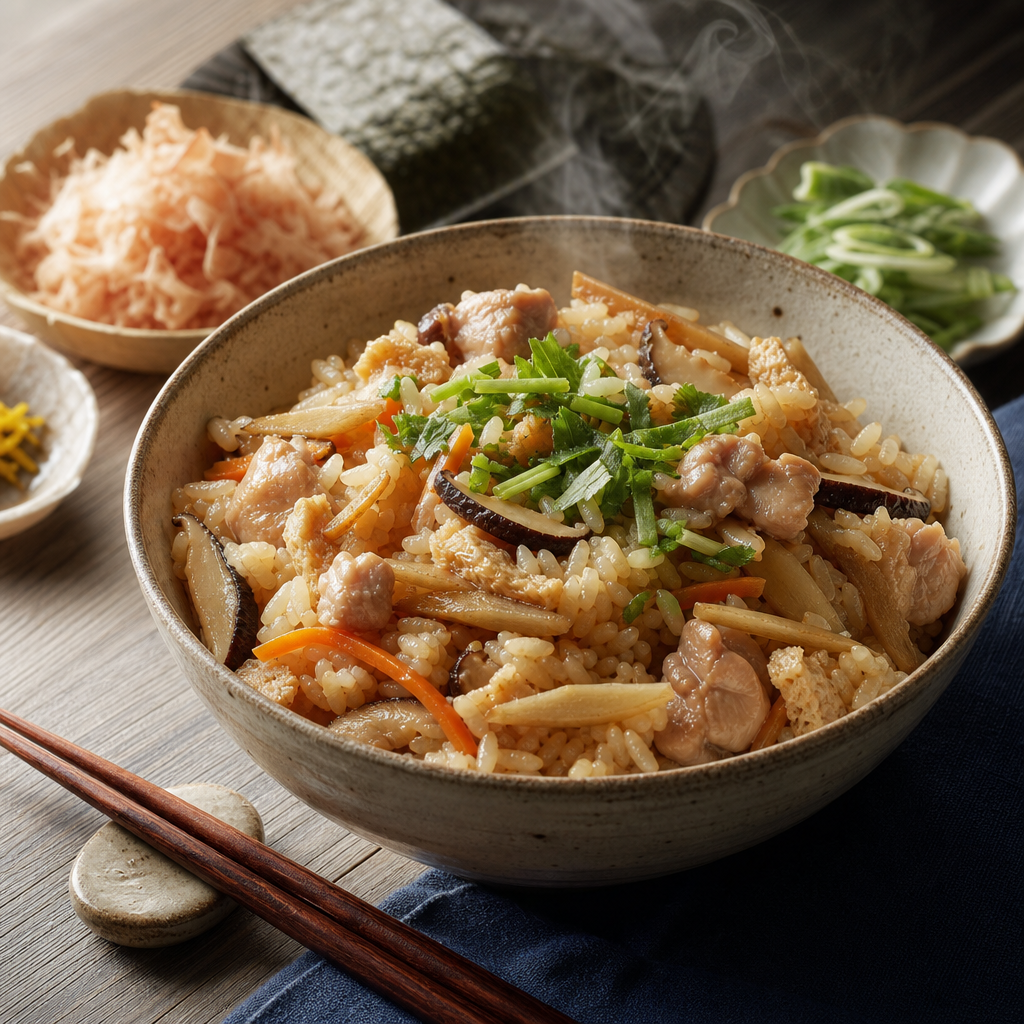
Takikomi gohan (炊き込みご飯) is the broad Japanese category of rice cooked together with seasoning and ingredients, not rice cooked plain and mixed afterward. Regional names exist: in Nara, MAFF documents a soy-seasoned version called iro-gohan (色ご飯), commonly made with carrot, burdock, shiitake, thin fried tofu, konnyaku, and chicken. The format is older than modern rice cookers; it grew from stretching and seasoning rice with available vegetables, grains, and preserved ingredients. Modern household versions follow the same grammar: washed short-grain rice, dashi, soy sauce, sake, and seasonal additions layered on top before cooking.
Method 8 steps · 75 min
Wash and soak the rice
Wash the rice in several changes of cold water until the water is nearly clear, then soak in fresh cold water for 30 minutes. Drain in a sieve for 10 minutes.
Cut the ingredients small
Cut carrot, burdock, shiitake, aburaage, konnyaku, and chicken into small, even pieces. Rinse burdock briefly in cold water, then drain; do not soak it until all aroma is gone.
Season the chicken
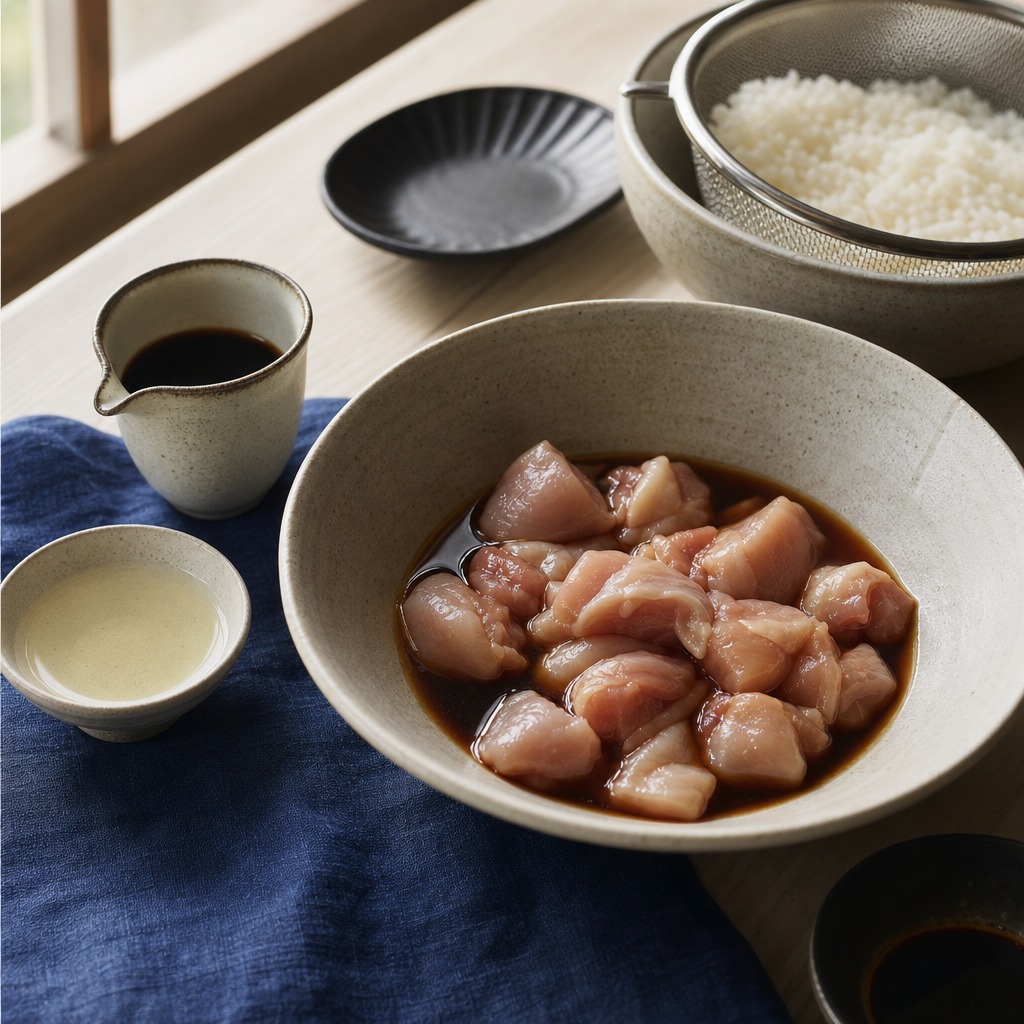
Toss the chicken with 1 teaspoon of the measured soy sauce and 1 teaspoon of the measured sake. Hold it while the rice drains.
Build the cooking liquid
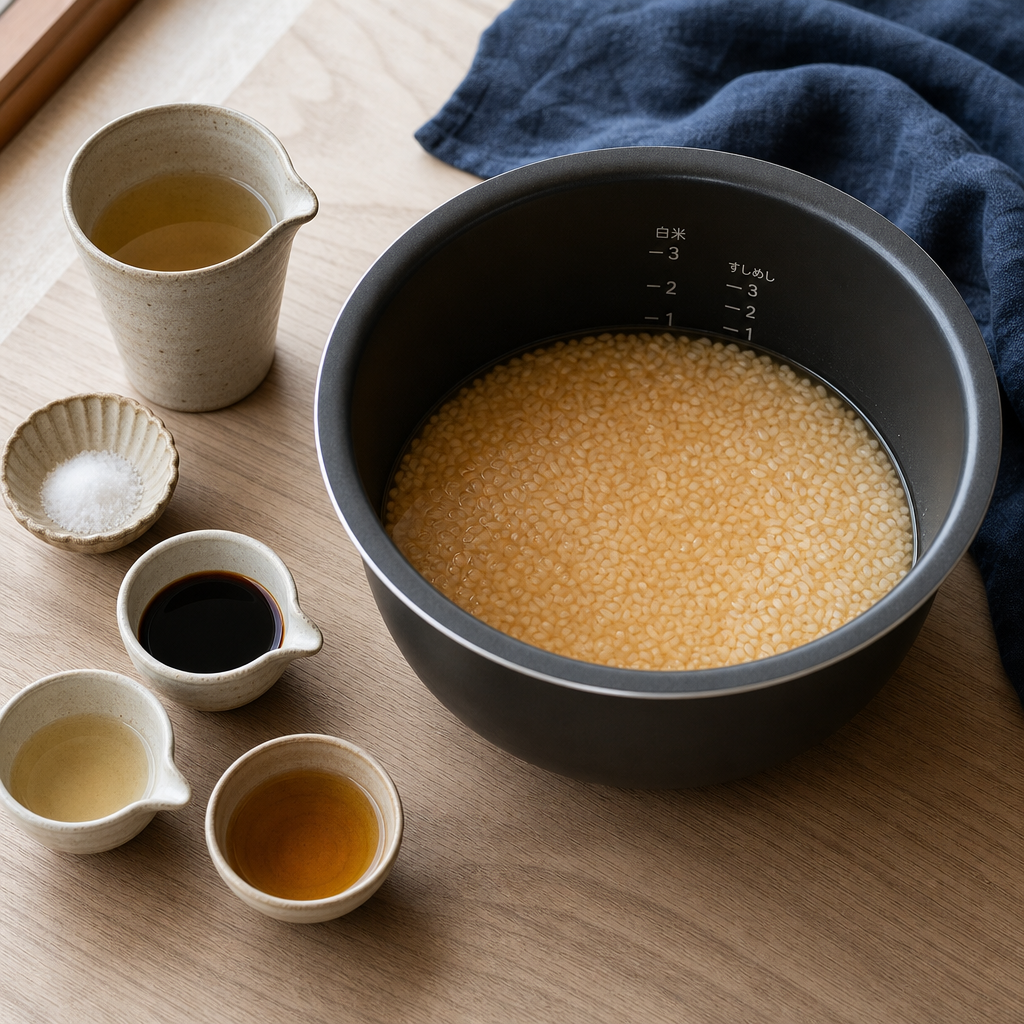
Add drained rice to the rice-cooker bowl. Add the remaining soy sauce, remaining sake, mirin, and salt, then add dashi to the 2-cup rice-cooker line; if cooking in a pot, use 320 ml dashi as listed. Stir the rice and liquid once to distribute seasoning.
Layer, do not mix
Scatter burdock, carrot, shiitake, aburaage, konnyaku, and chicken evenly over the rice. Do not stir them into the grains.
Cook
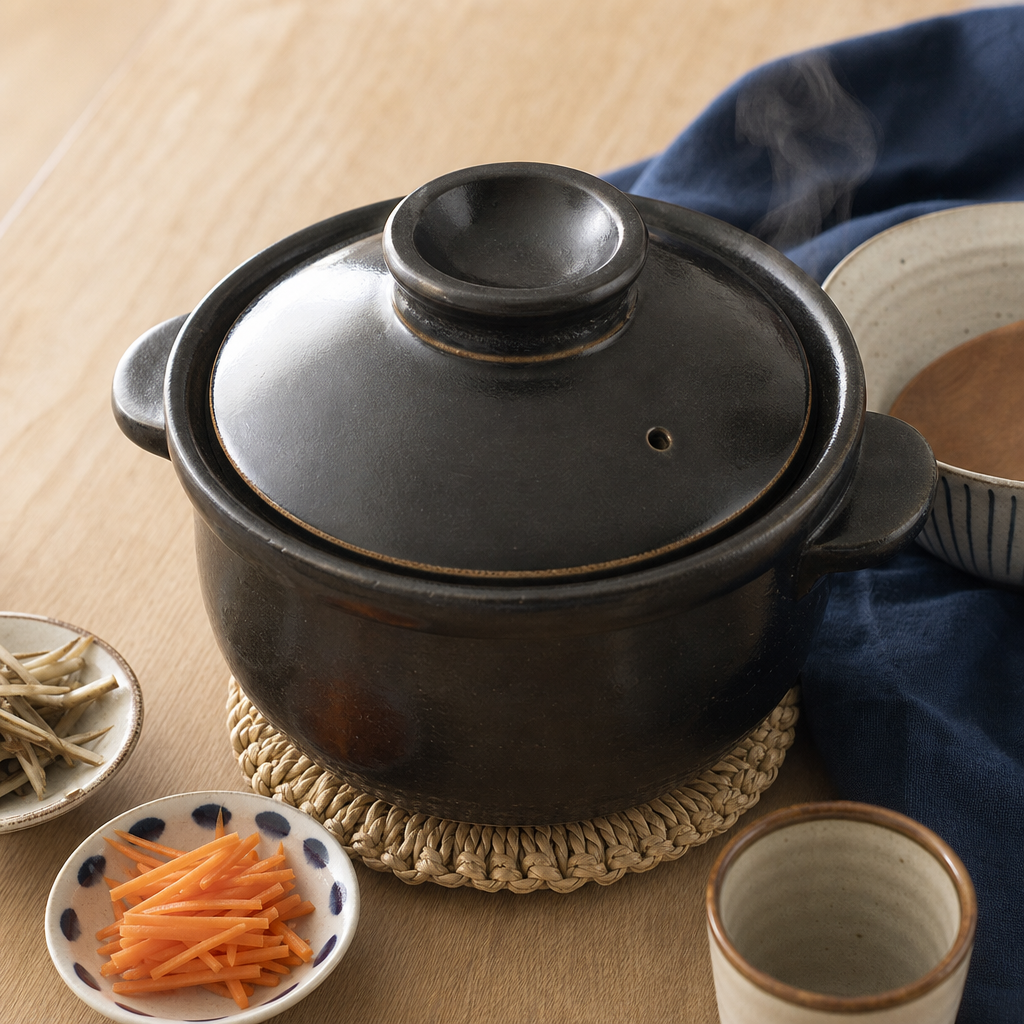
Cook on the standard white-rice setting. For stovetop cooking, bring the covered pot to a brief boil over medium heat, reduce to low for 13 minutes, then turn off the heat without opening the lid.
Rest with the lid closed
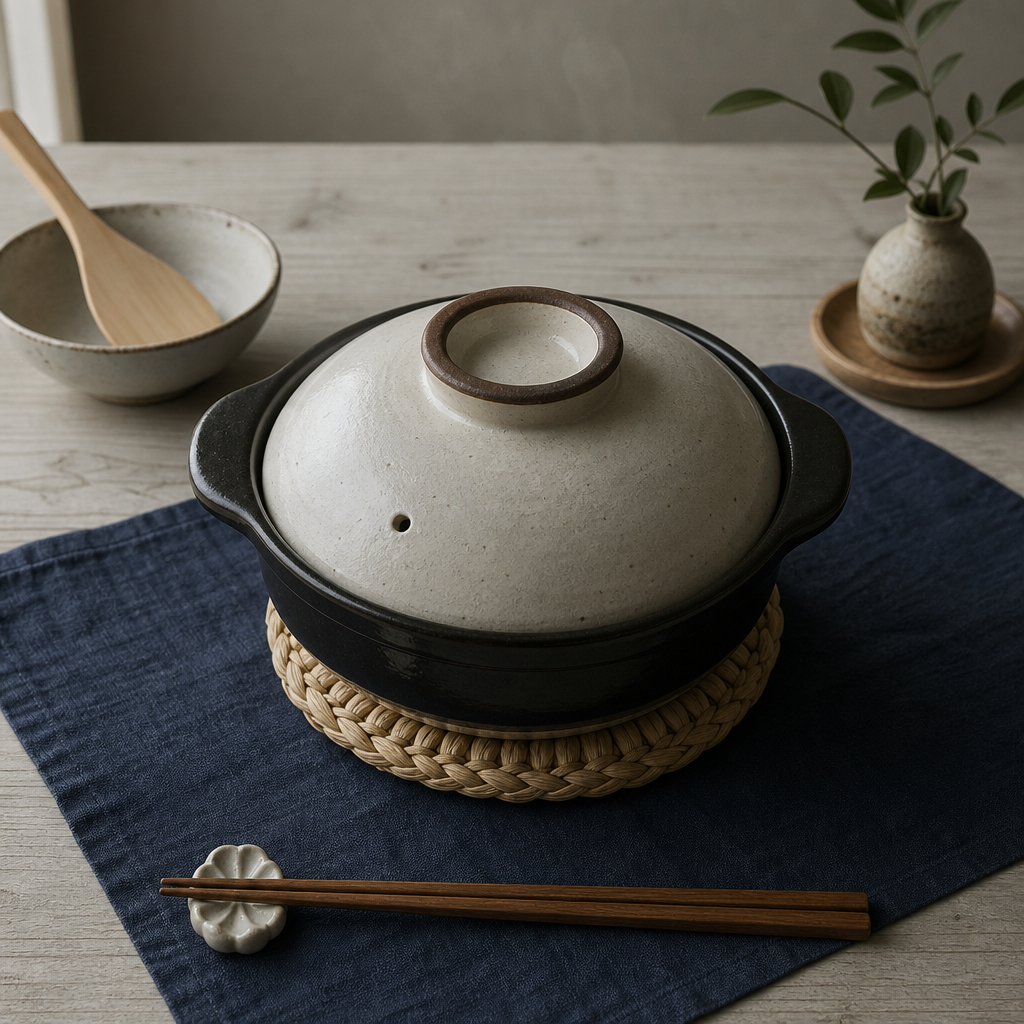
Let the rice rest, covered, for 10 minutes after cooking ends.
Fold and serve
Use a shamoji or rice paddle to cut down through the rice, lift from the bottom, and fold gently until the ingredients are distributed. Serve in bowls and finish with mitsuba if using.
Common mistakes
- {'mistake': 'Using long-grain rice.', 'fix': 'Use Japanese short-grain rice. Takikomi gohan depends on short-grain starch and cling; basmati, jasmine, and parboiled rice produce the wrong texture.'}
- {'mistake': 'Mixing raw toppings through the rice before cooking.', 'fix': 'Season the liquid, then layer the toppings on top. Stir only after the rice has rested.'}
- {'mistake': 'Adding plain water first, then pouring seasonings on top.', 'fix': 'Add soy sauce, sake, and mirin before topping up with dashi. The rice needs one evenly seasoned cooking liquid.'}
- {'mistake': 'Using too many wet ingredients.', 'fix': 'Keep vegetables cut small and avoid watery additions. Excess moisture turns the top layer heavy and dull.'}
- {'mistake': 'Skipping the rice soak.', 'fix': 'Soak for 30 minutes and drain. Soy-seasoned liquid penetrates more slowly than plain water.'}
- {'mistake': 'Fluffing like fried rice.', 'fix': 'Cut and fold with a rice paddle. The grains should remain intact and softly clumped.'}
What does not belong
- {'item': 'long-grain rice', 'reason': 'Long-grain rice does not belong in takikomi gohan. It cooks into separate dry grains instead of cohesive Japanese rice.'}
- {'item': 'butter or cream', 'reason': 'Dairy does not belong here. The richness should come from dashi, aburaage, and chicken fat, not a Western pilaf profile.'}
- {'item': 'sesame oil for frying', 'reason': 'This is not fried rice. Oil-frying the ingredients before cooking pushes the dish away from the clean dashi-soy structure.'}
- {'item': 'teriyaki sauce', 'reason': 'Commercial teriyaki sauce is too thick and sweet. Takikomi gohan needs measured shoyu, sake, and mirin, not glaze.'}
- {'item': 'raw garlic', 'reason': 'Garlic does not belong in this household-standard version. It overwhelms the dashi and burdock.'}
- {'item': 'Chinese dark soy sauce as a 1:1 swap', 'reason': 'Chinese dark soy is built for color and molasses depth. It makes the rice muddy and too dark before it is properly seasoned.'}