Chawanmushi
The dish in context
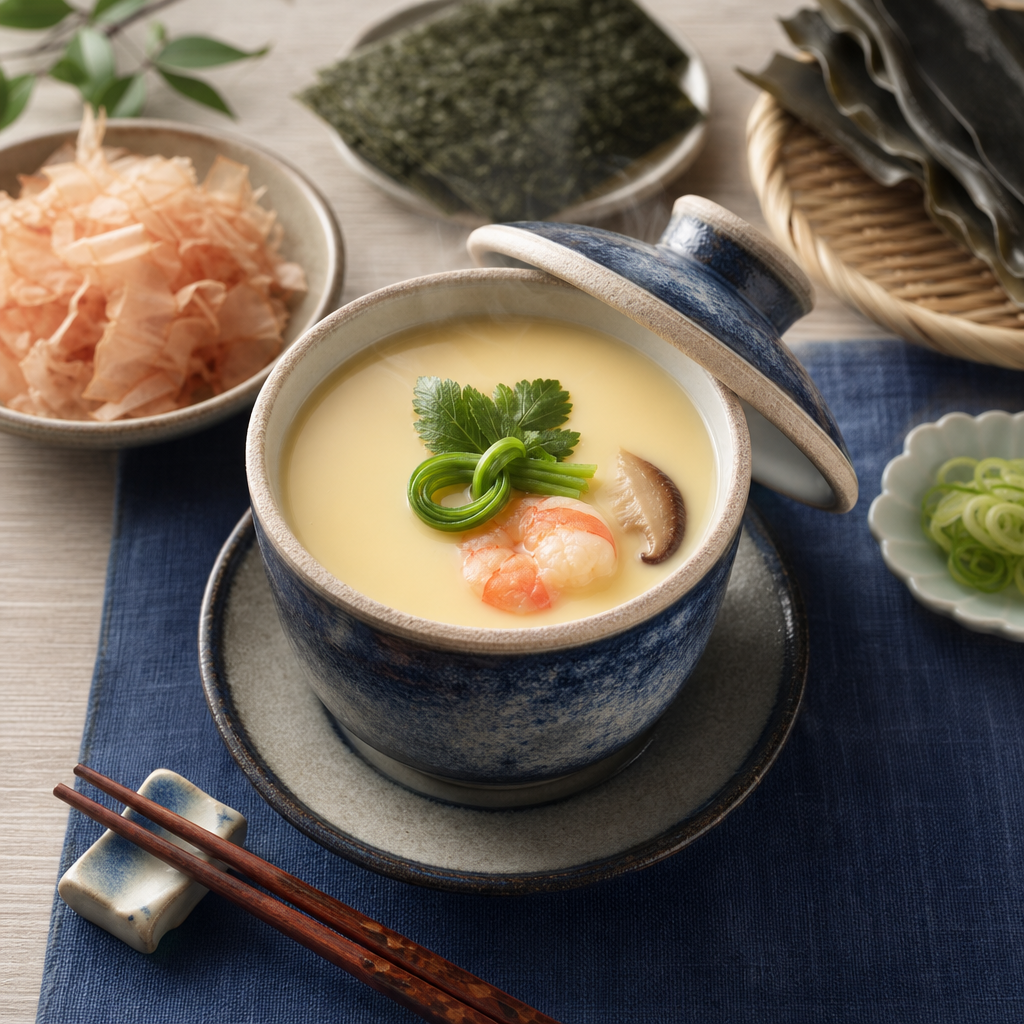
Chawanmushi (茶碗蒸し) means “steamed in a tea bowl,” which describes the vessel and method rather than a decorative style. In modern Japanese cooking it refers specifically to a savory egg custard loosened with dashi, seasoned lightly with soy sauce, salt, and often mirin, then steamed with small pieces of chicken, seafood, mushrooms, ginkgo nuts, and mitsuba. It is common in home cooking, kaiseki meals, sushi restaurants, and set menus, usually served as a small hot course rather than a large main. The dish lives or dies on heat control: too much heat makes a pocked, spongy custard instead of a smooth gel.
Method 7 steps · 50 min
Make the dashi
Soak the kombu in 600 ml water for 20 minutes. Heat over medium-low until small bubbles collect at the edge, then remove the kombu before the water boils. Bring the liquid just under a boil, turn off the heat, add katsuobushi, steep 60 seconds, then strain without pressing hard.
Cool and season the custard base
Measure 450 ml dashi and cool it to room temperature. Stir in usukuchi shoyu, mirin, and salt until dissolved.
Prepare the cups
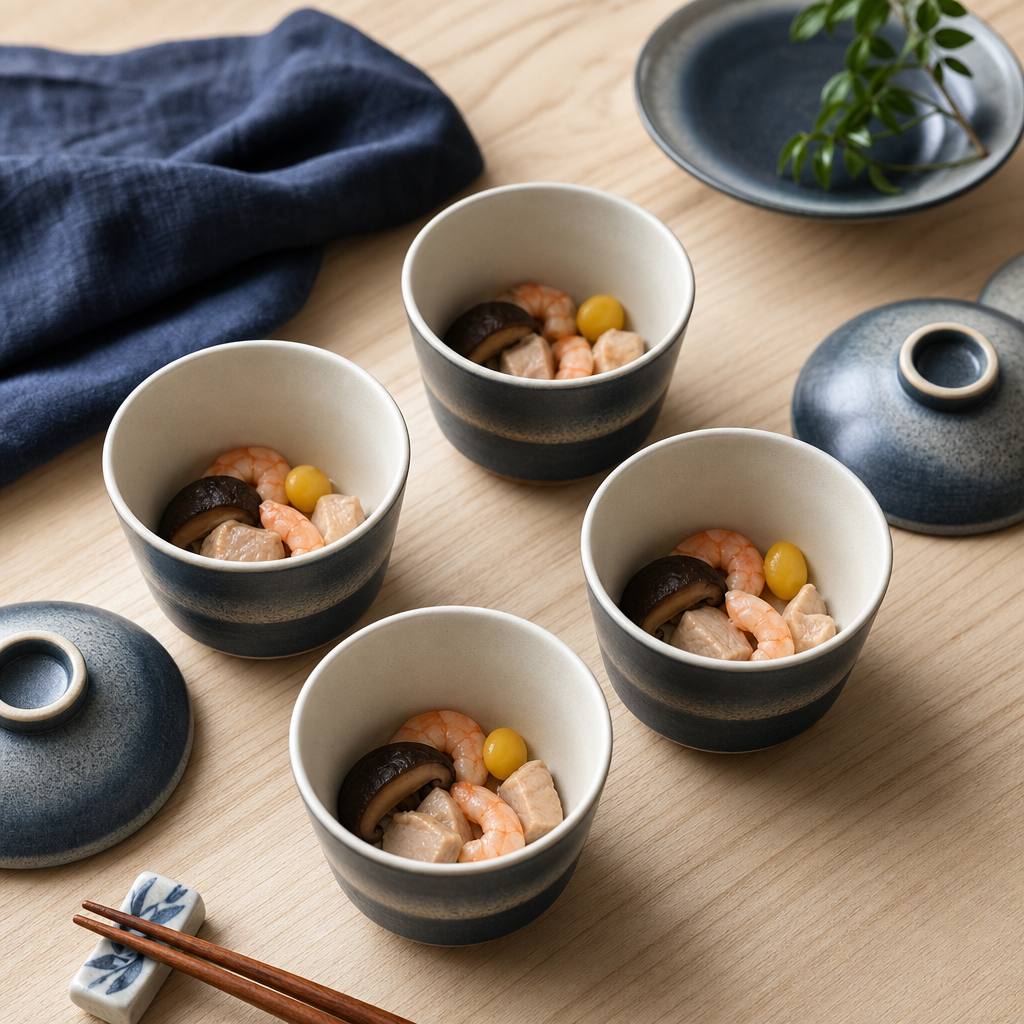
Divide chicken, shrimp, shiitake, and ginkgo among 4 heatproof chawanmushi cups or 180-200 ml ramekins. Keep the pieces small and below the eventual custard line.
Mix without foam
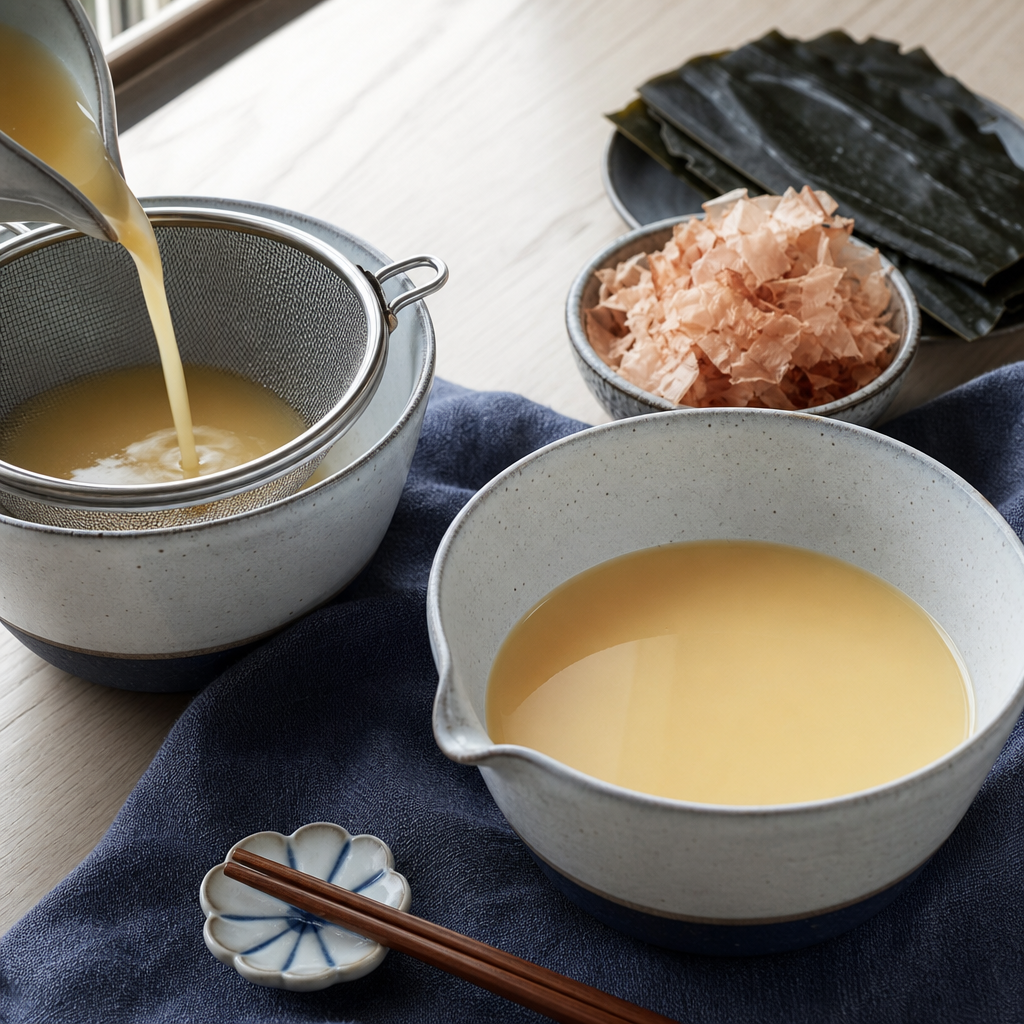
Beat the eggs with chopsticks or a fork until the whites are broken but the surface is not frothy. Stir in the seasoned dashi, then strain the mixture through a fine sieve into a jug.
Fill and cover
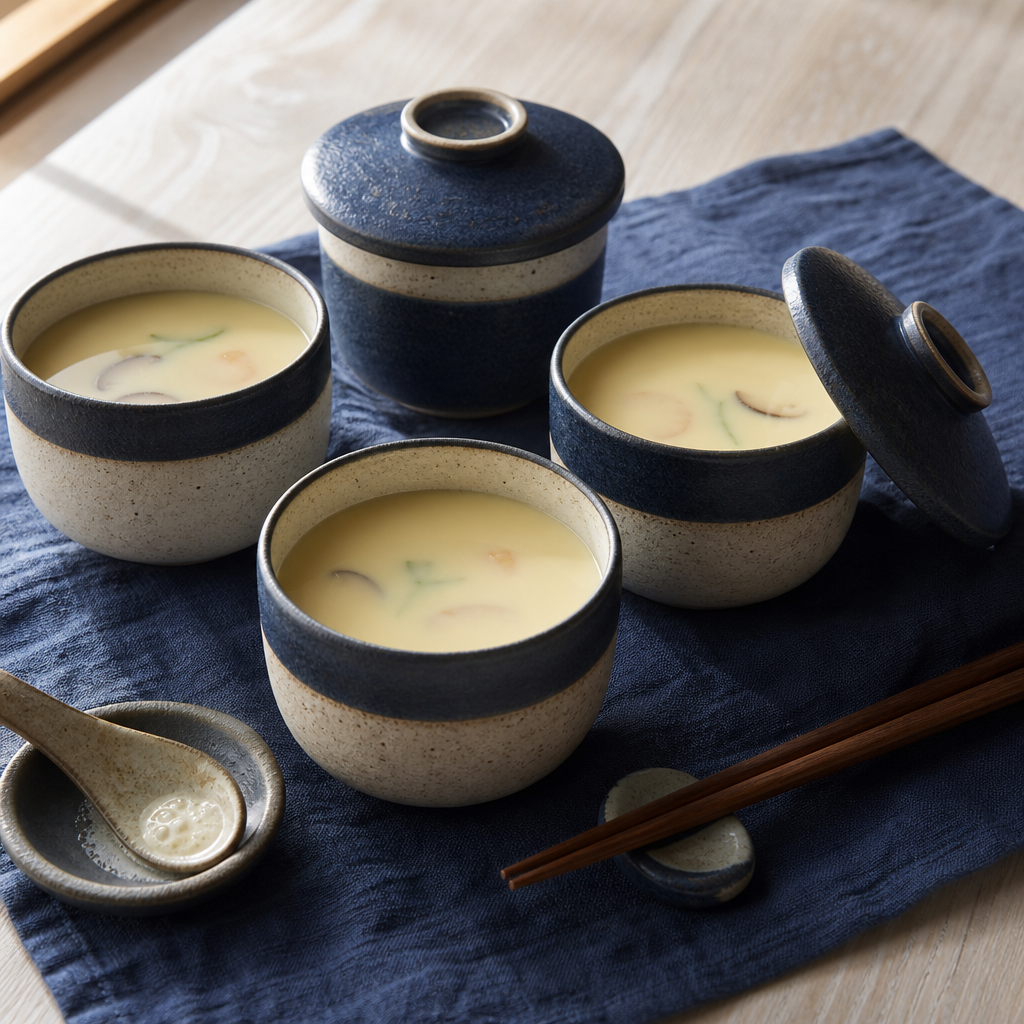
Pour the custard base into the cups, leaving about 1 cm headspace. Skim visible bubbles with a spoon or touch them with the edge of paper towel. Cover each cup with a lid, foil, or heatproof plastic wrap.
Steam gently
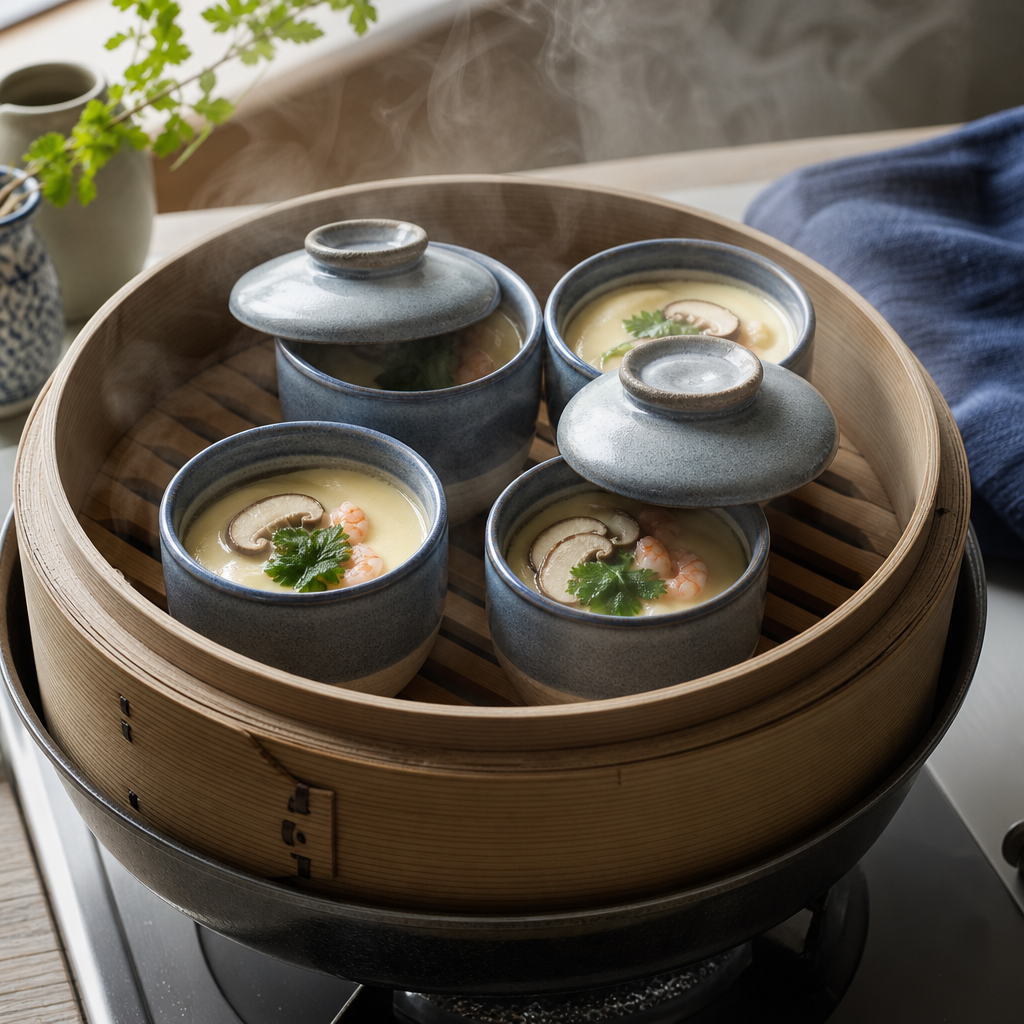
Set the cups in a steamer over gently simmering water, not a rolling boil. Steam 2 minutes over medium heat, then reduce to low and steam 12-15 minutes more, until the edges are set and the center trembles when the cup is nudged.
Finish with mitsuba
Place mitsuba on top during the final 60 seconds of steaming, or add it after steaming and cover the cups for 1 minute. Serve hot, warm, or room temperature.
Common mistakes
- {'mistake': 'Boiling the steamer hard', 'fix': 'Keep the water at a quiet simmer. A violent boil makes a cratered top and a spongy interior.'}
- {'mistake': 'Using hot dashi with raw egg', 'fix': 'Cool the dashi first. If the bowl feels warm to the palm, it is too warm for mixing.'}
- {'mistake': 'Skipping the sieve', 'fix': 'Strain the egg mixture every time. Chawanmushi exposes unbroken egg white strands immediately.'}
- {'mistake': 'Treating the filling like soup ingredients', 'fix': 'Use small amounts. The custard is the dish; fillings are punctuation.'}
- {'mistake': 'Steaming until firm like flan', 'fix': 'Stop when the center still trembles. Carryover heat finishes the set.'}
What does not belong
- {'item': 'cream or milk', 'reason': 'Dairy does not belong in chawanmushi. The softness comes from the dashi-to-egg ratio, not from cream.'}
- {'item': 'sugar-heavy seasoning', 'reason': 'Chawanmushi is savory. Mirin rounds the broth; it should not push the custard toward dessert.'}
- {'item': 'dark soy sauce in full quantity', 'reason': 'Heavy koikuchi or Chinese dark soy turns the custard brown and blunt. Use usukuchi when color and delicacy matter.'}
- {'item': 'garlic, sesame oil, or chili crisp', 'reason': 'Those aromatics overwhelm the dashi structure. They make a different steamed egg dish, not chawanmushi.'}
- {'item': 'boiled kombu dashi', 'reason': 'Boiled kombu brings bitterness and viscosity. Kombu leaves the pot before the boil.'}