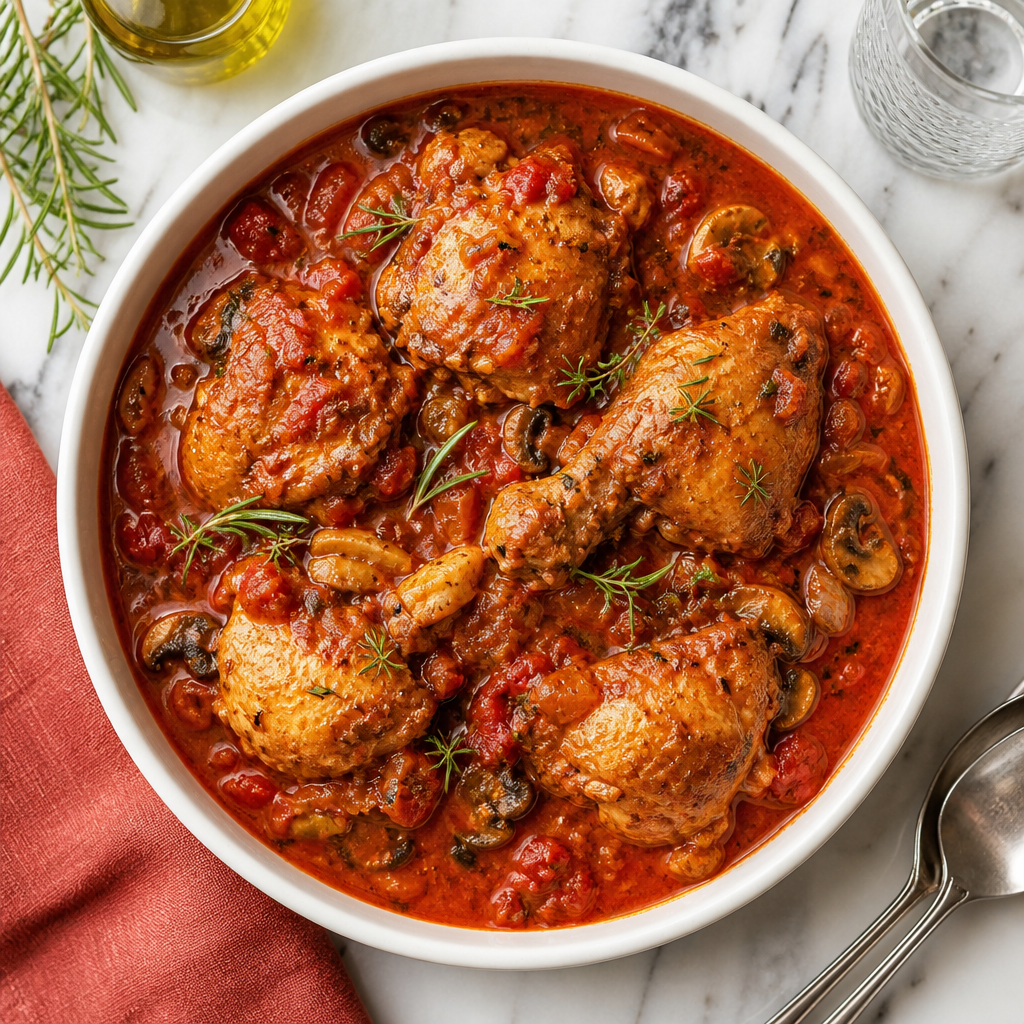
Scaloppine Marsala
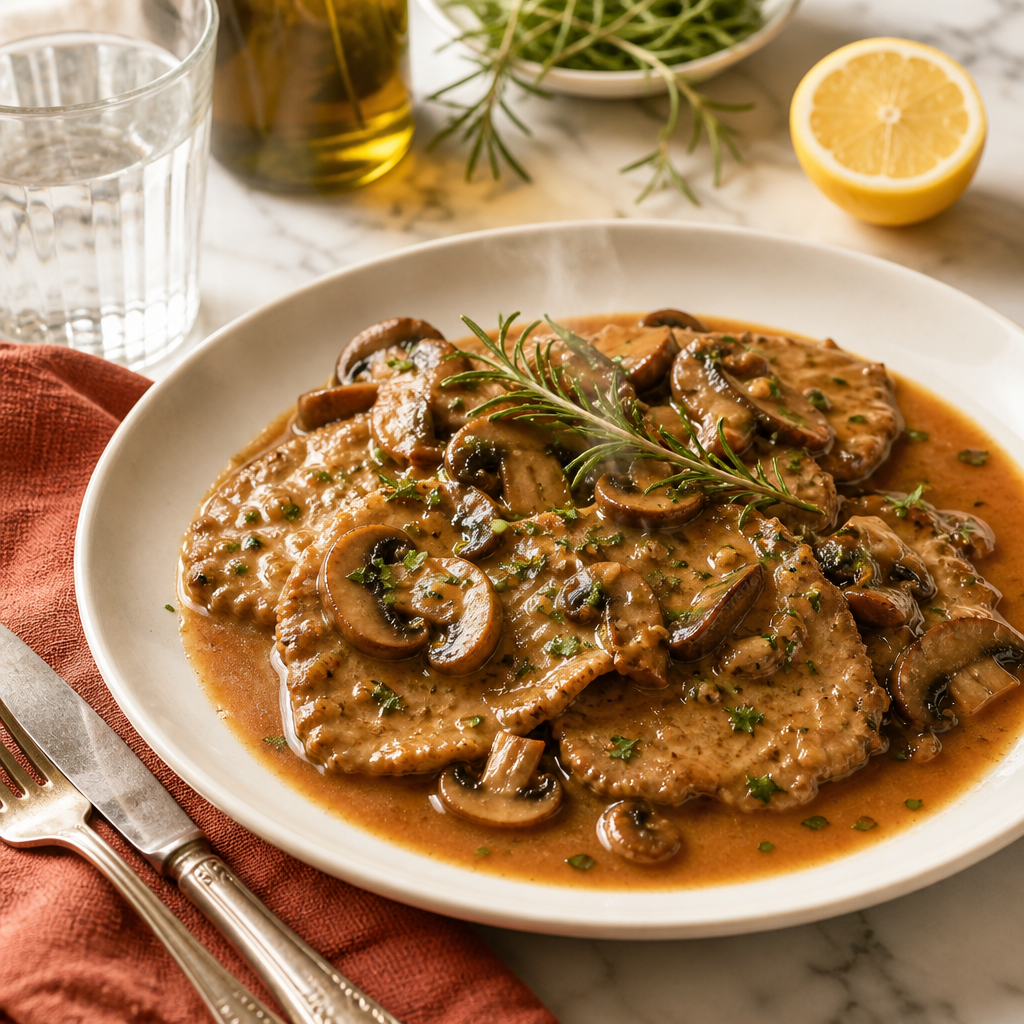
The dish in context
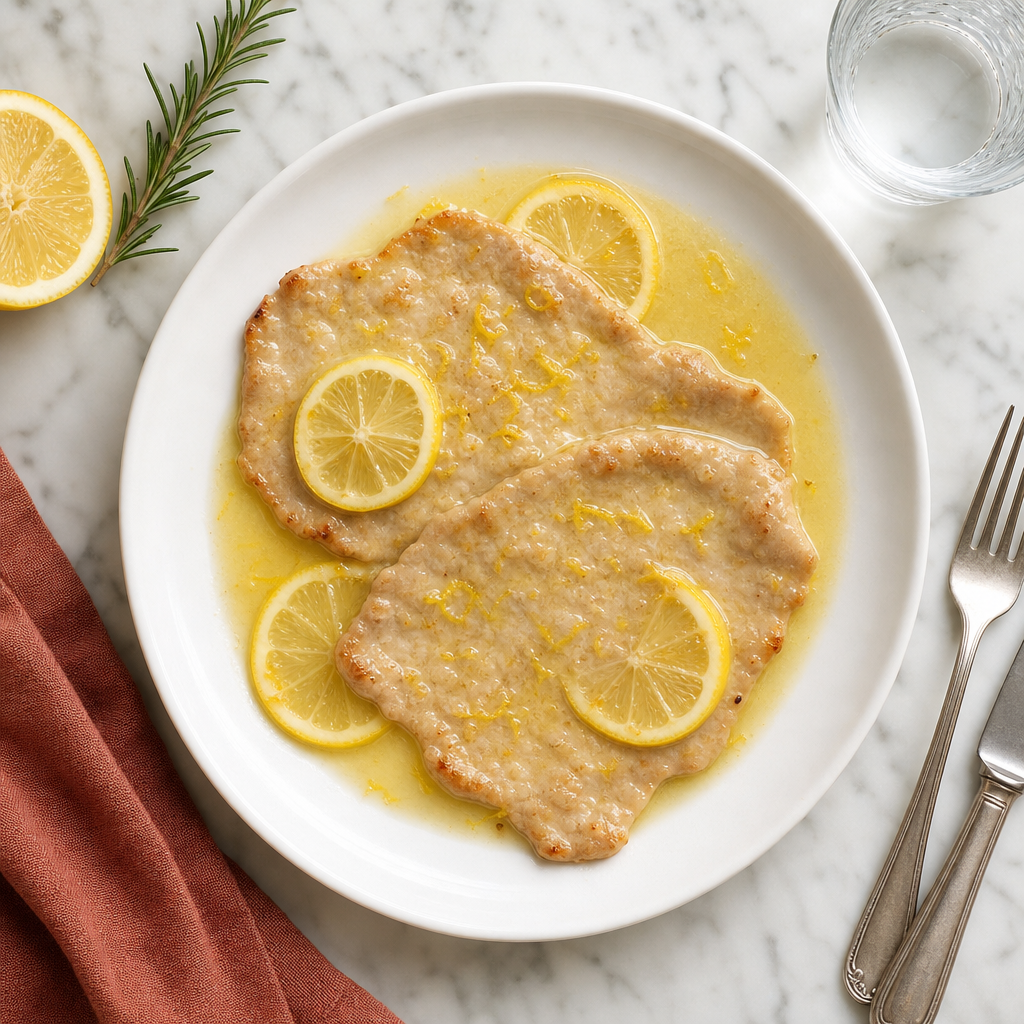
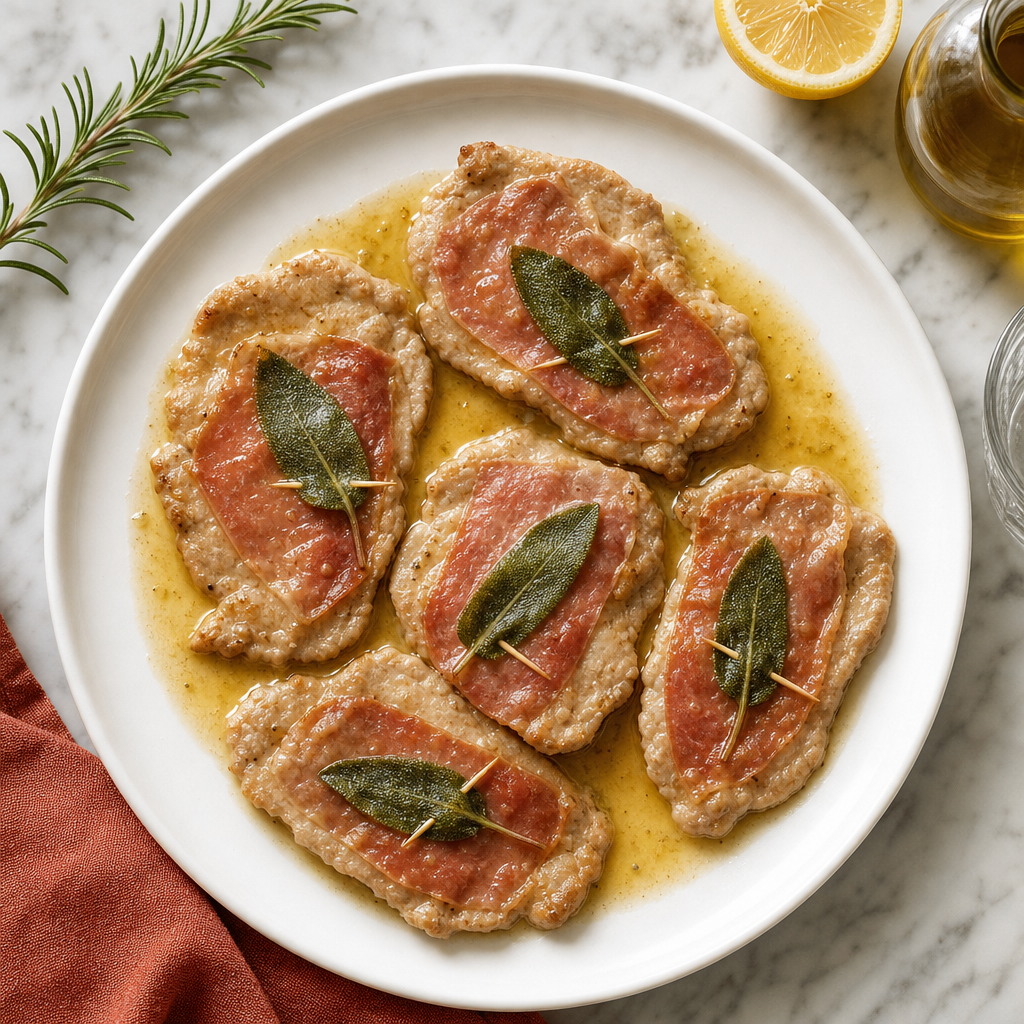
Scaloppine al Marsala belongs to the broad Italian scaloppina family: thin slices of meat, lightly floured, pan-seared, then finished in a short pan sauce. The Sicilian marker is Marsala, the fortified wine from western Sicily, which gives the sauce its amber color and nutty, oxidized aroma. Veal is the cleanest traditional choice for this version, though pork loin appears often in Italian home recipes and chicken dominates the Italian-American branch. Mushrooms are common in Chicken Marsala abroad, but they are not the baseline for Italian scaloppine al Marsala.
Method 7 steps · 30 min
Pound the cutlets
Place the veal between parchment or plastic and pound to 4-5 mm thick. Aim for even thickness, not shredded edges; ragged meat leaks juice and cooks unevenly.
Season and dredge
Season the cutlets with salt and a little black pepper. Dredge in flour, then shake hard until only a thin film remains.
Sear in batches
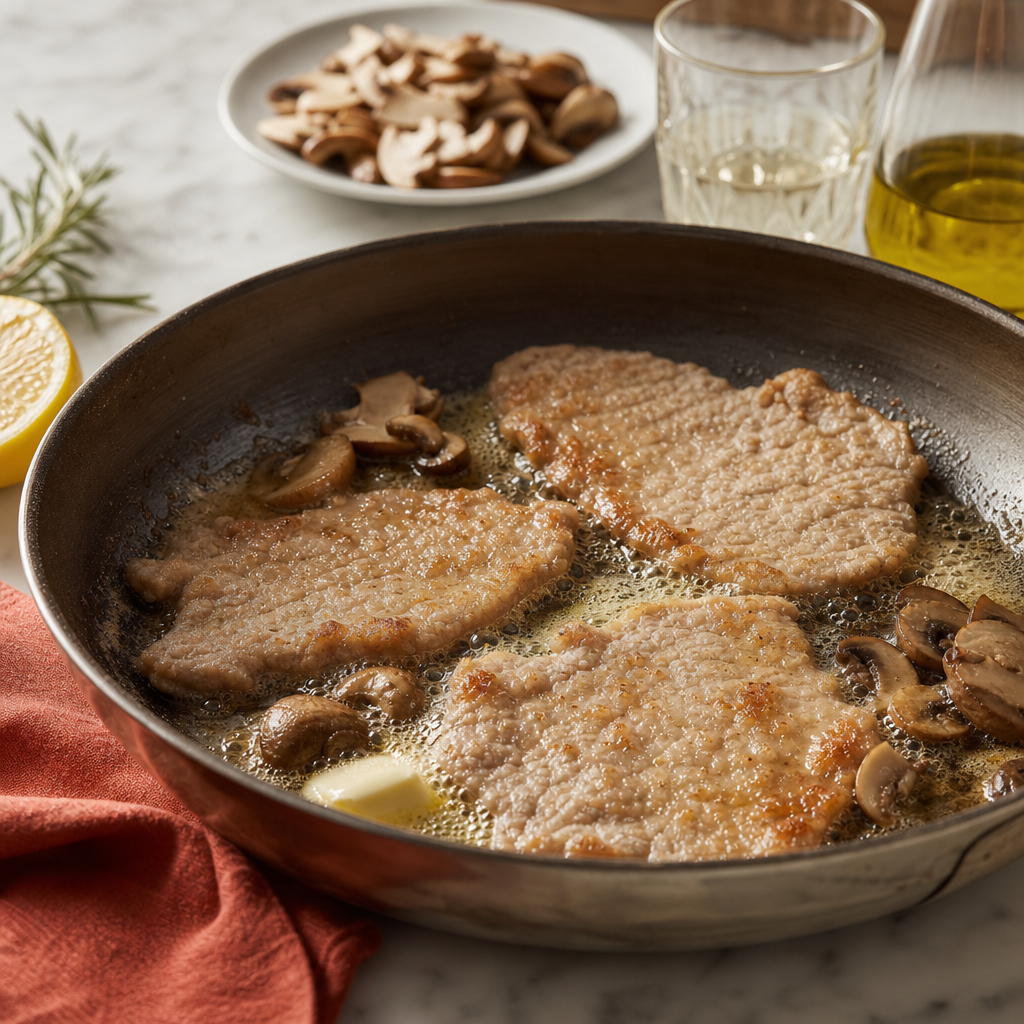
Heat the olive oil with 30 g of the butter in a large skillet over medium-high heat until the butter foams and the foam begins to subside. Sear the cutlets in a single layer, 60-90 seconds per side, until pale gold at the edges. Transfer to a warm plate; do not cook them through hard in the pan.
Deglaze with Marsala
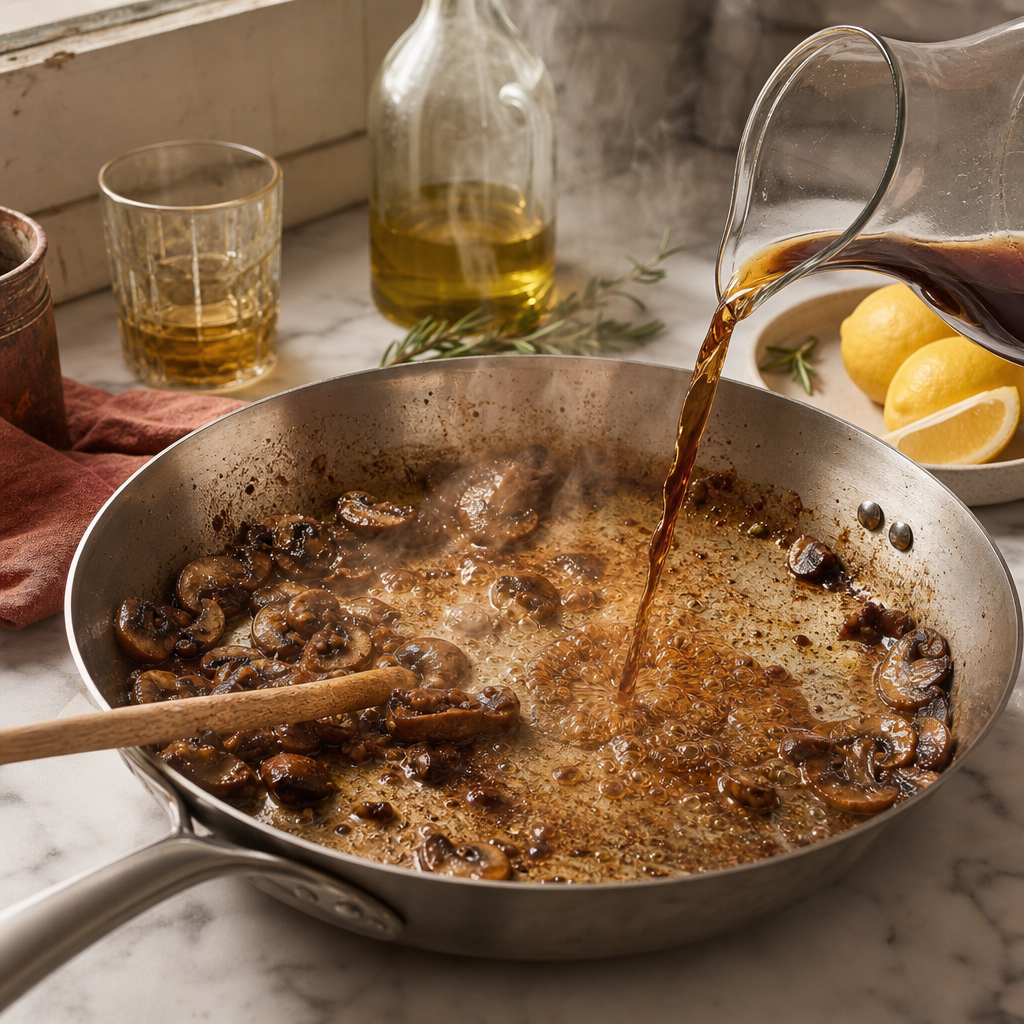
Pour the Marsala into the hot pan and scrape the browned bits from the base with a wooden spoon. Boil for 2-3 minutes, until the sharp alcohol smell fades and the liquid looks syrupy around the bubbles.
Build the sauce
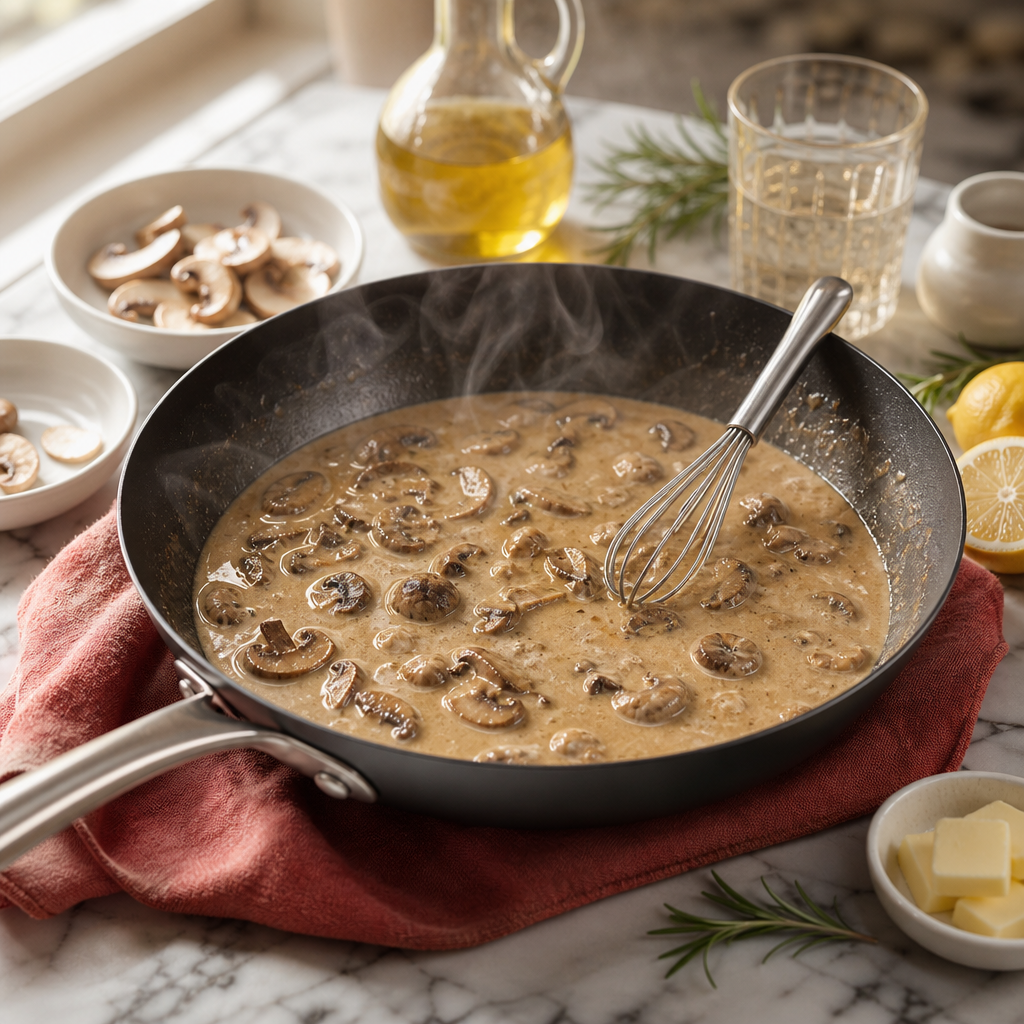
Add the hot stock and simmer for 2 minutes. Lower the heat and whisk in the remaining 25 g butter until the sauce turns glossy and lightly coats a spoon.
Return the meat
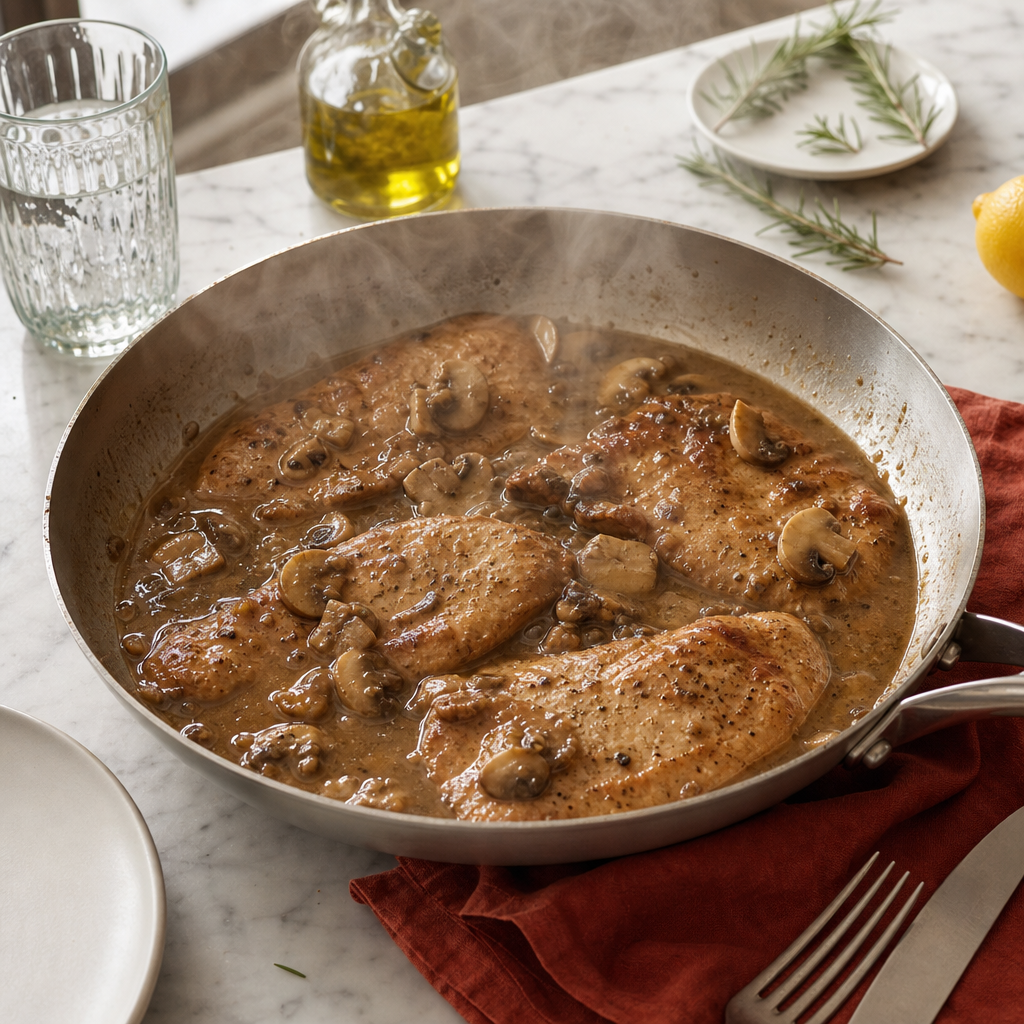
Return the cutlets and any plate juices to the pan. Turn once in the sauce and simmer 30-60 seconds, only until hot through.
Serve immediately
Transfer to warm plates and spoon the amber sauce over the cutlets. Finish with parsley if using. Serve with bread, potatoes, or a plain vegetable side; the sauce should be eaten while glossy.
Common mistakes
- {'mistake': 'Using sweet Marsala by default', 'fix': 'Use Marsala secco. Sweet Marsala makes the sauce heavy and candy-like unless the recipe is built around that sweetness.'}
- {'mistake': 'Leaving too much flour on the meat', 'fix': 'Shake off the dredge until the cutlet looks dusty, not white. Excess flour clumps in the sauce.'}
- {'mistake': 'Crowding the pan', 'fix': 'Cook in batches with space between cutlets. Steam gives gray meat and a gluey coating.'}
- {'mistake': 'Overcooking the veal', 'fix': 'Sear briefly and finish for less than a minute in the sauce. Thin veal has no reserve once it tightens.'}
- {'mistake': 'Boiling the finished butter sauce', 'fix': 'Whisk butter in on lower heat and stop once the sauce is glossy. Hard boiling breaks the emulsion.'}
What does not belong
- {'item': 'Cream', 'reason': 'Cream does not belong in scaloppine al Marsala. The sauce should be a reduction of Marsala, pan fond, stock, and butter, not a cream sauce.'}
- {'item': 'Sugar', 'reason': 'Marsala already brings sweetness through oxidation and fortification. Added sugar flattens the wine and makes the sauce cloying.'}
- {'item': 'Garlic-heavy seasoning', 'reason': 'Garlic dominates the short sauce and pushes it away from the clean Marsala profile. This dish is not an Italian-American garlic-butter preparation.'}
- {'item': 'Mushrooms as a requirement', 'reason': 'Mushrooms do not define Italian scaloppine al Marsala. They belong to a mushroom Marsala variant, especially the Italian-American chicken version.'}
- {'item': 'Parmesan or grated cheese', 'reason': 'Cheese does not belong on this meat-and-wine pan sauce. It muddies the Marsala and makes the sauce salty before it is balanced.'}