Tiramisu
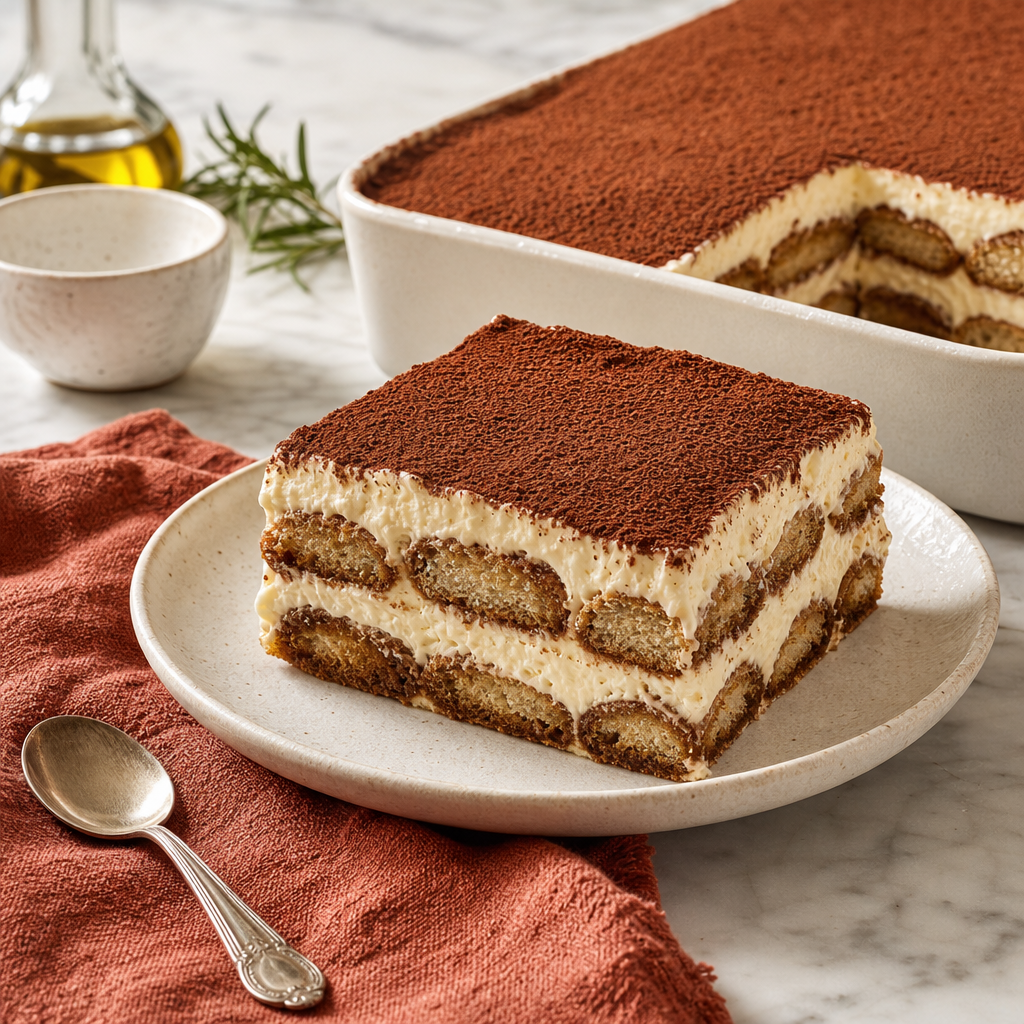
The dish in context
Tiramisù is a modern Italian dessert with disputed northeastern origins, most often argued between Veneto and Friuli-Venezia Giulia. The Treviso claim centers on the late 20th-century restaurant version built from savoiardi, coffee, eggs, mascarpone, sugar, and cocoa. That short ingredient list matters: early canonical versions do not need cream, chocolate shavings, berries, or liqueur to read as tiramisù. Alcohol appears in many restaurant and diaspora versions, but it is an optional variation, not the spine of the dish.
Method 9 steps · 510 min
Cool the coffee
Brew the espresso or strong coffee, stir in the Marsala or rum if using, and let it cool to room temperature. Do not dip savoiardi in hot coffee.
Whip the yolks
Beat the egg yolks with 70 g of the sugar and the salt until pale, thick, and falling from the whisk in ribbons that sit on the surface for 2 seconds before sinking. This takes 4-6 minutes with an electric mixer.
Fold in the mascarpone
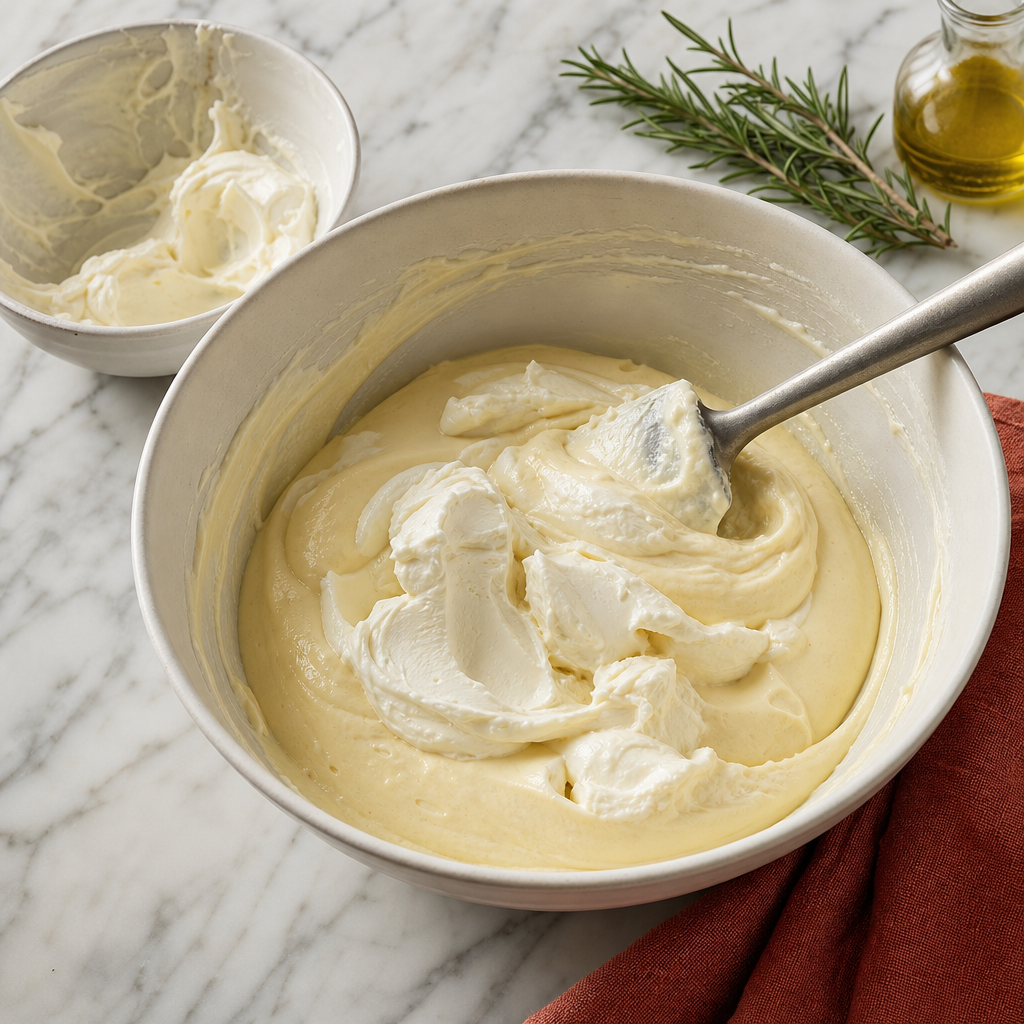
Beat the cold mascarpone briefly in a separate bowl until smooth, 15-20 seconds. Fold it into the yolk mixture in three additions, stopping as soon as no white streaks remain.
Whip the whites
Beat the egg whites until foamy, then stream in the remaining 30 g sugar and whip to glossy medium peaks. The peak should bend at the tip, not stand dry and jagged.
Finish the cream
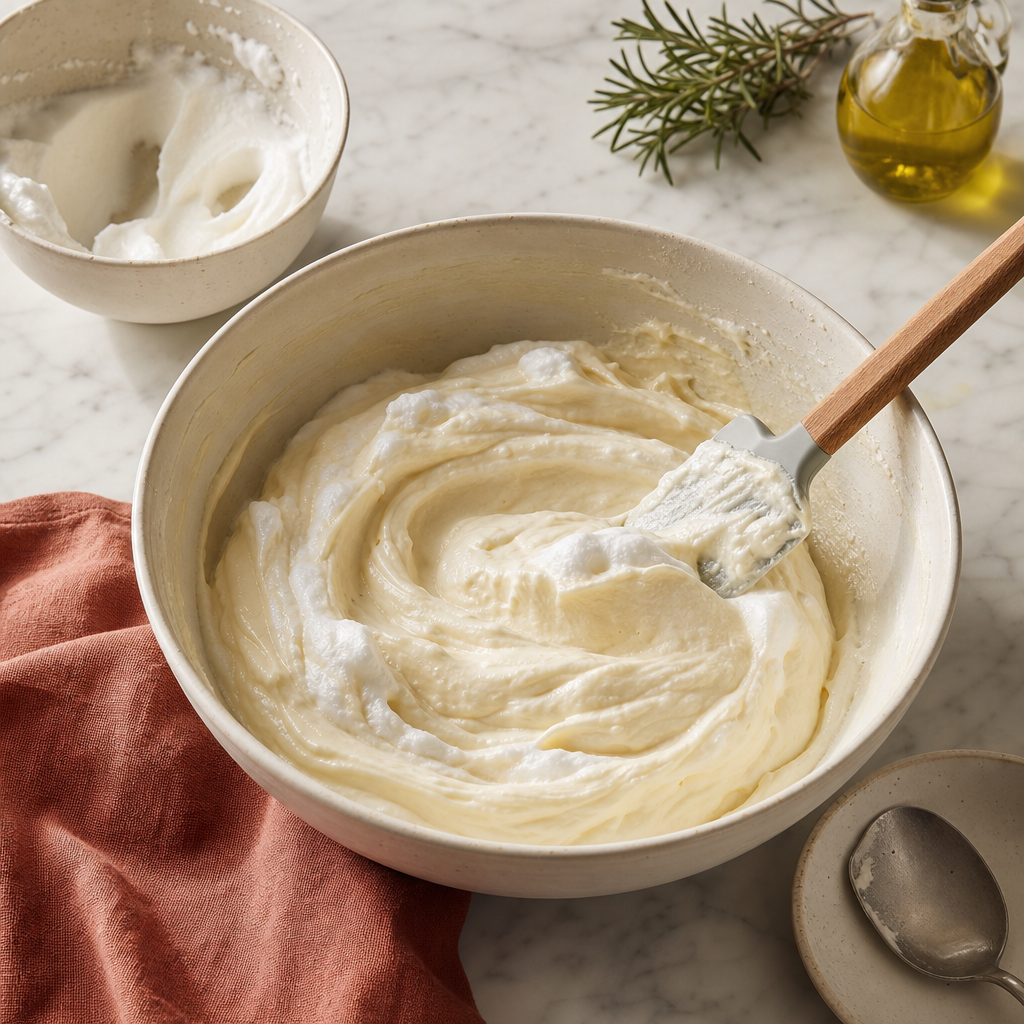
Fold one-third of the whipped whites into the mascarpone base to loosen it, then fold in the rest with broad strokes from the bottom of the bowl. Stop when the cream is uniform and still inflated.
Build the first layer
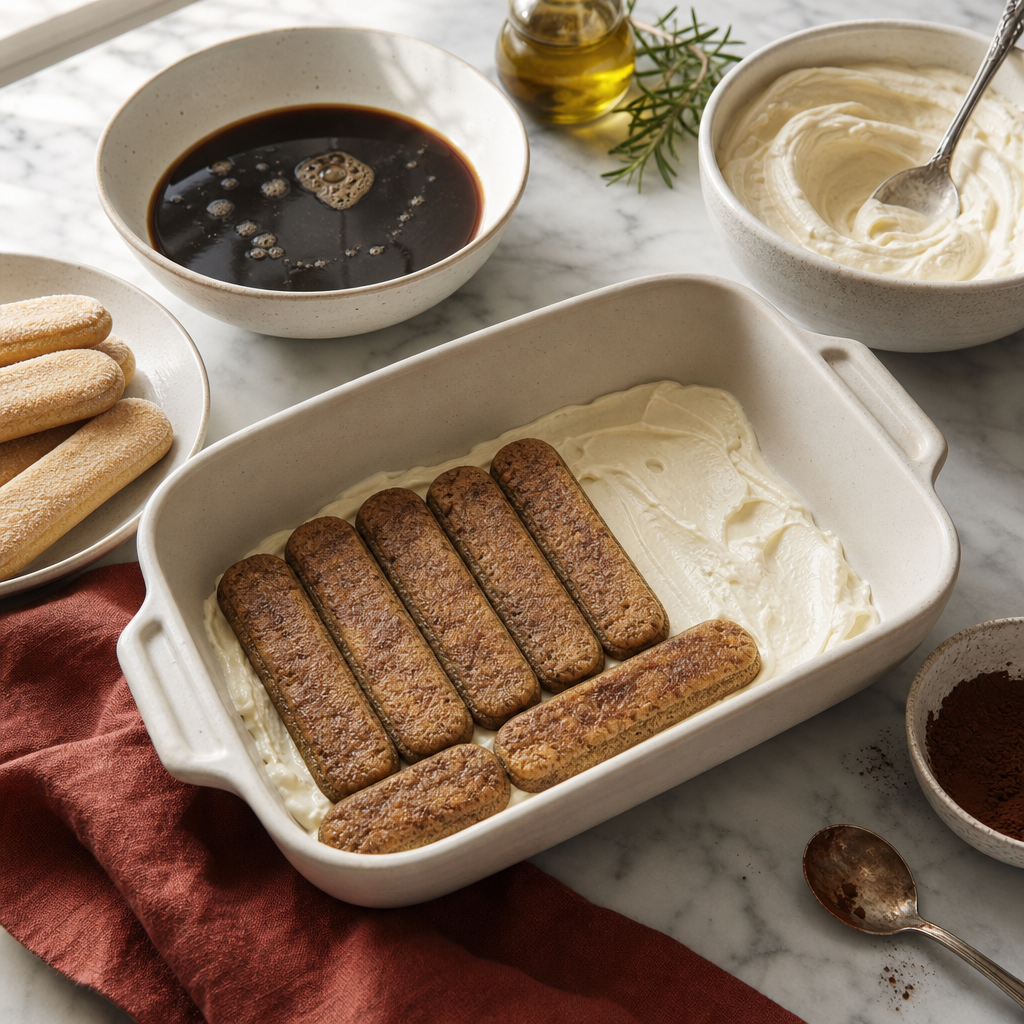
Spread a thin smear of cream over the bottom of the dish. Dip each dry savoiardo in the coffee for about 1 second per side, then arrange in a tight single layer. Break pieces to fill gaps; do not leave wide channels of cream between biscuits.
Layer the cream and repeat
Spread half the mascarpone cream over the first savoiardi layer. Add a second layer of dipped savoiardi, then cover with the remaining cream and level the surface with an offset spatula or spoon.
Chill until set
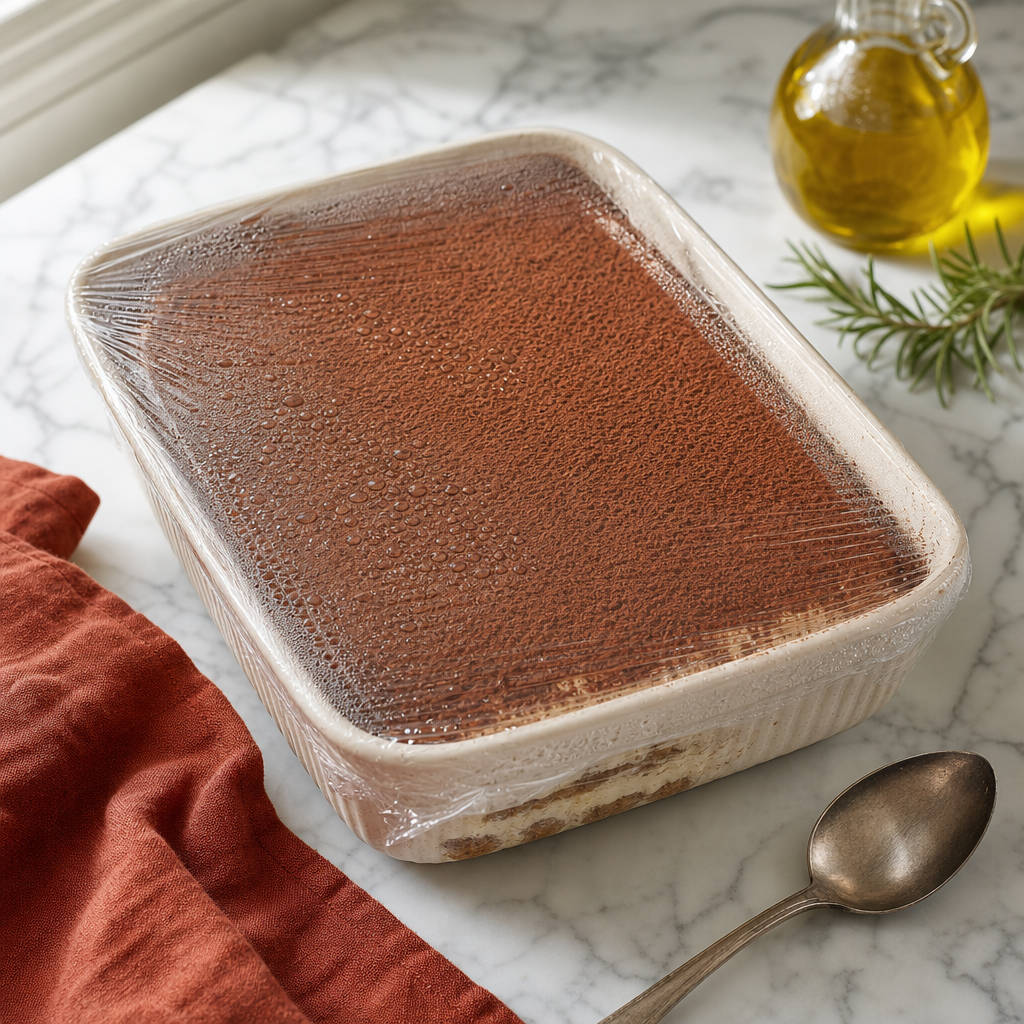
Cover and refrigerate at least 8 hours; 24 hours is better. Keep it cold until serving.
Dust at the end
Dust the top evenly with unsweetened cocoa immediately before serving. Cut with a clean knife or scoop with a large spoon, accepting a soft edge rather than forcing a rigid cake slice.
Common mistakes
- {'mistake': 'Soaking savoiardi until soft in the hand.', 'fix': 'Dip dry savoiardi for about 1 second per side. Soft ladyfingers should be brushed, not dipped.'}
- {'mistake': 'Using weak coffee.', 'fix': 'Use espresso, moka pot coffee, or brewed coffee strong enough to taste bitter. Milk-heavy cream will dull weak coffee completely.'}
- {'mistake': 'Overbeating mascarpone.', 'fix': 'Smooth it briefly, then fold. Grainy mascarpone cream does not recover cleanly.'}
- {'mistake': 'Serving after a short chill.', 'fix': 'Give it at least 8 hours. Tiramisu before the rest tastes like separate coffee biscuits and cream.'}
- {'mistake': 'Dusting cocoa hours ahead.', 'fix': 'Dust right before serving so the top stays dry and even.'}
What does not belong
- {'item': 'Cream cheese', 'reason': 'Cream cheese does not belong in tiramisu. Its acidity and salt push the dessert toward cheesecake.'}
- {'item': 'Whipped topping', 'reason': 'Stabilized non-dairy topping does not belong. It gives a waxy finish and hides the mascarpone.'}
- {'item': 'Berries or fruit layers', 'reason': 'Fruit versions are variants. They are not classic tiramisu and should be named as such.'}
- {'item': 'Chocolate syrup', 'reason': 'Chocolate syrup does not belong. Cocoa should be dry, bitter, and on the surface.'}
- {'item': 'A heavy pour of liqueur', 'reason': 'Alcohol is optional and should not dominate the coffee bath. A solvent burn is the single most identifiable restaurant mistake.'}