Cannoli Siciliani
The dish in context
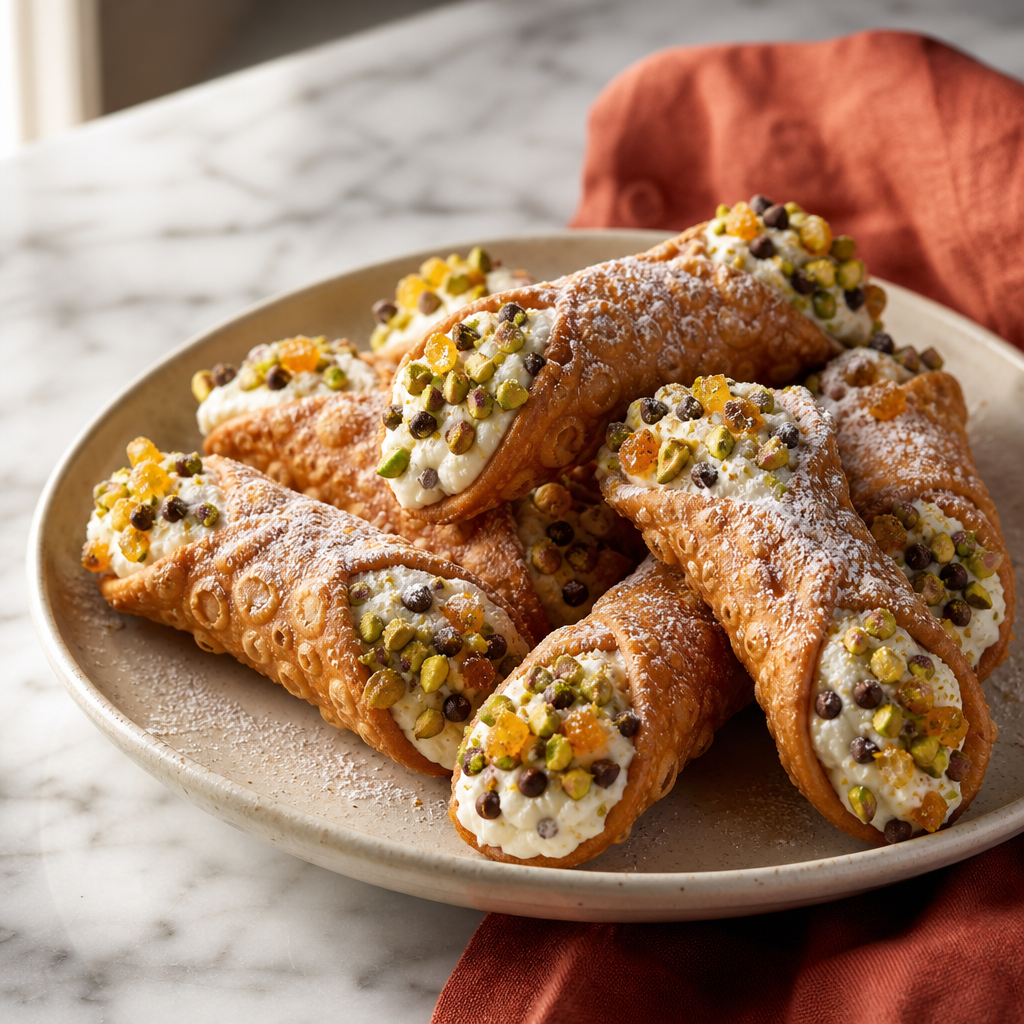
Cannoli are one of Sicily's defining pastries: fried tubes of dough filled with sweetened ricotta, historically tied to Carnival and now made year-round. The name comes from cannolo, a little tube or reed, referring to the form once used to shape the shell before metal molds became standard. Arab influence in Sicily helps explain the pastry's grammar: fried dough, ricotta, sugar, candied fruit, cinnamon, and pistachio all sit comfortably in the island's confectionery tradition. Regional finishes vary — Palermo leans toward candied orange and cherry, western Sicily often shows pistachio, and chocolate is common in modern pastry shops. The non-negotiable point is timing: shells are filled close to serving, or they lose the shatter that defines the pastry.
Method 9 steps · 300 min
Drain the ricotta
Set the ricotta in a fine sieve lined with cheesecloth over a bowl. Cover and refrigerate at least 8 hours, preferably overnight, until it has lost visible whey and holds soft ridges when stirred.
Mix the shell dough
Whisk flour, sugar, cocoa, cinnamon, and salt. Rub in the cold lard until the mixture looks like coarse meal, then add 35 g beaten egg and enough cold Marsala to form a firm dough; hold back the last spoonful until the flour tells you it needs it.
Knead and rest
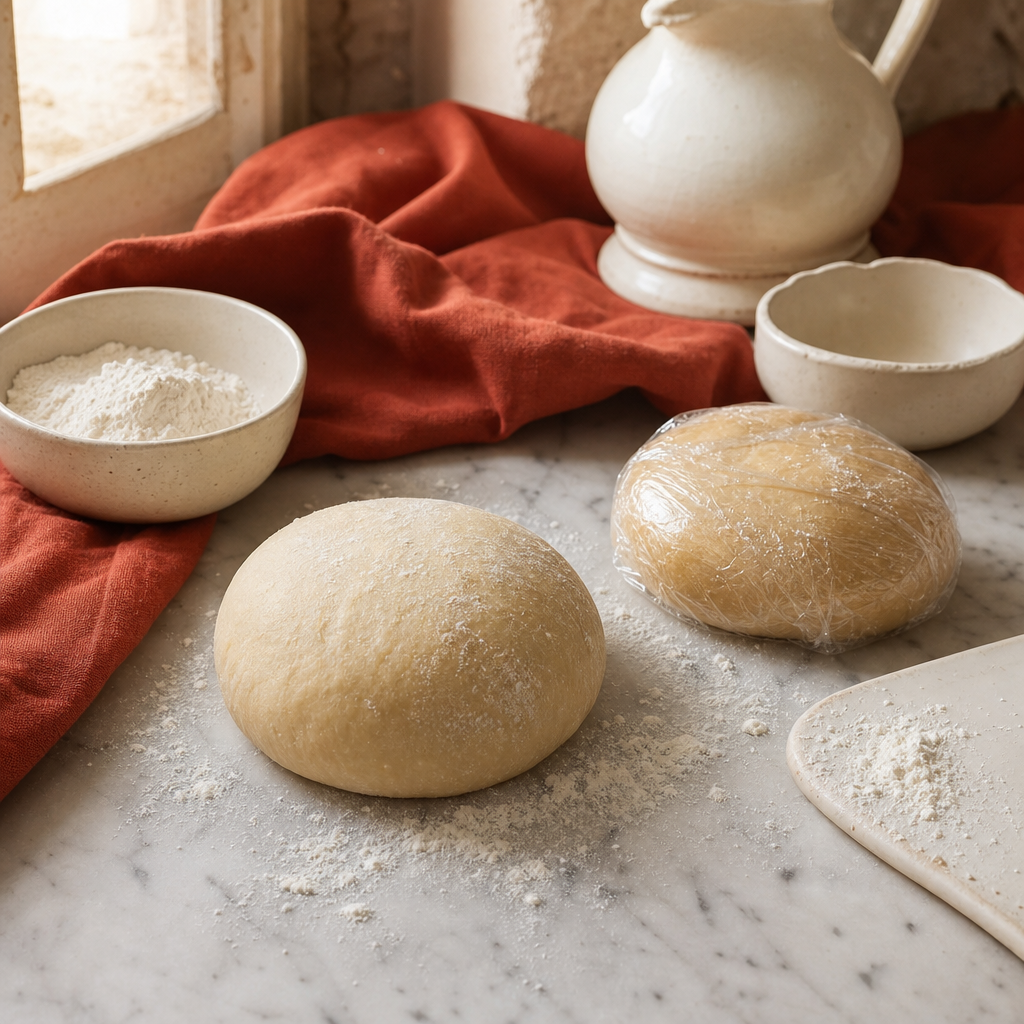
Knead the dough for 3-4 minutes until smooth and elastic. Wrap tightly and refrigerate for 1 hour.
Make the filling
Pass the drained ricotta through a fine sieve once, then fold in powdered sugar, salt, cinnamon, chopped chocolate, and candied orange. Chill the filling until cold and pipeable, at least 1 hour.
Roll the dough thin
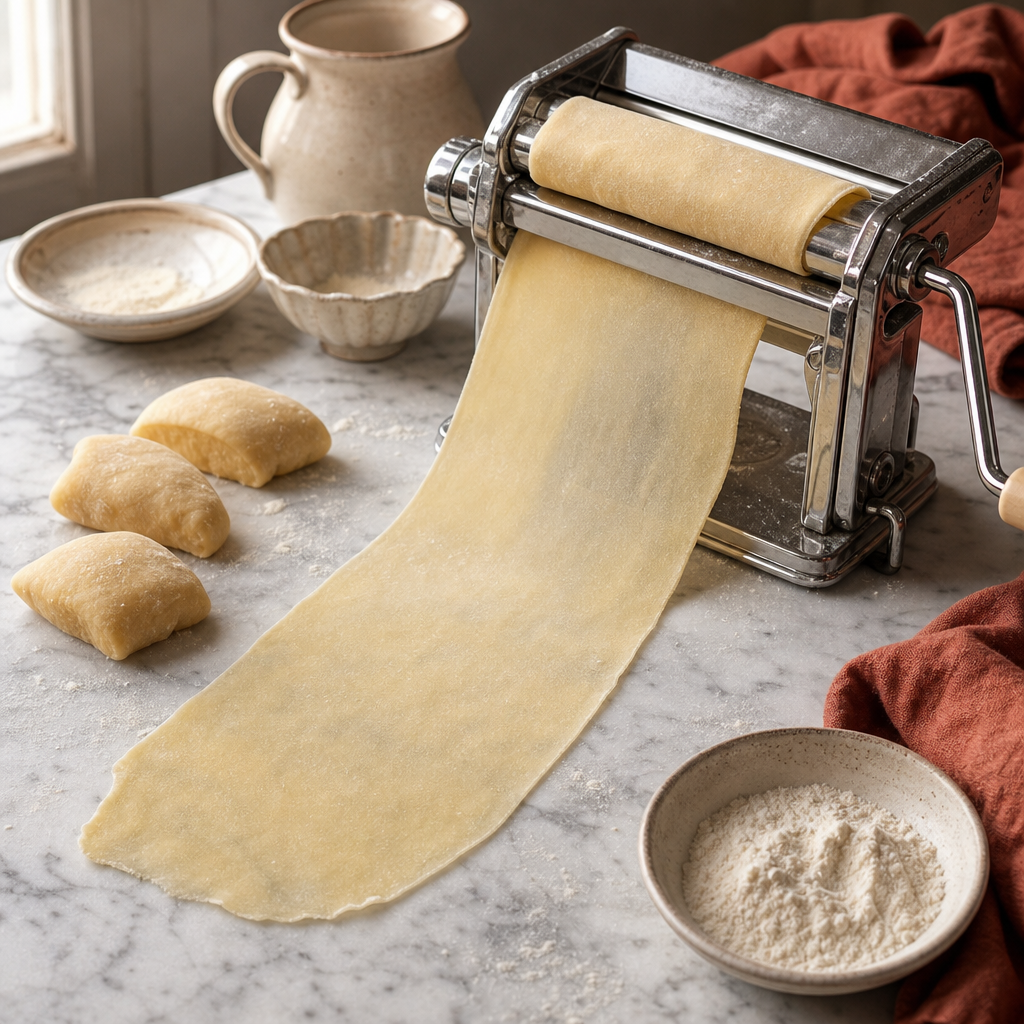
Divide the dough into 4 pieces. Roll each piece through a pasta machine to about 1 mm thick, or by hand until the dough is thin enough that a shadow shows through it.
Cut and wrap the molds
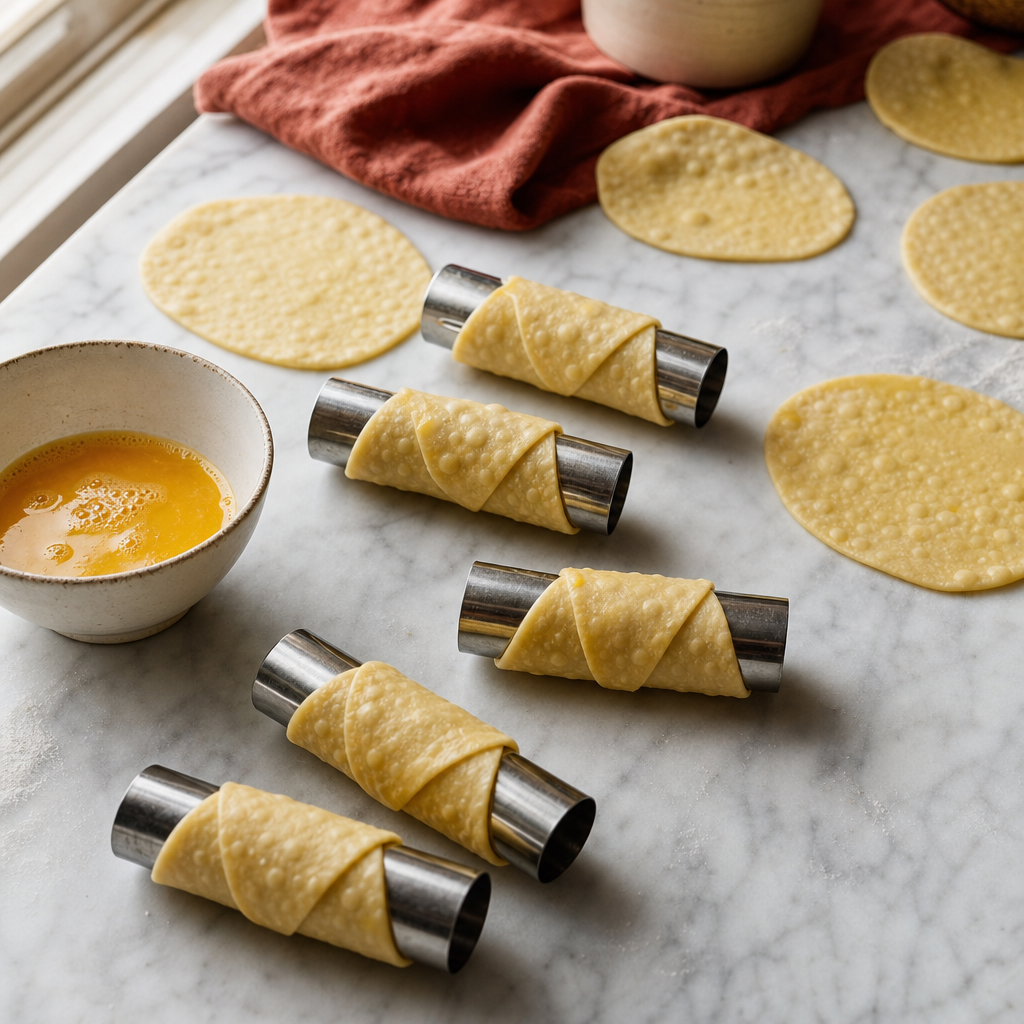
Cut 10-11 cm rounds or ovals. Wrap each piece around a cannoli tube with the seam overlapping by 1.5 cm, brush the overlap with reserved beaten egg, and press firmly to seal without flattening the tube.
Fry the shells
Heat oil to 180°C. Fry 2-3 molds at a time for 60-90 seconds, turning once, until the shells are blistered and deep golden; keep the oil between 175°C and 185°C.
Unmold while warm
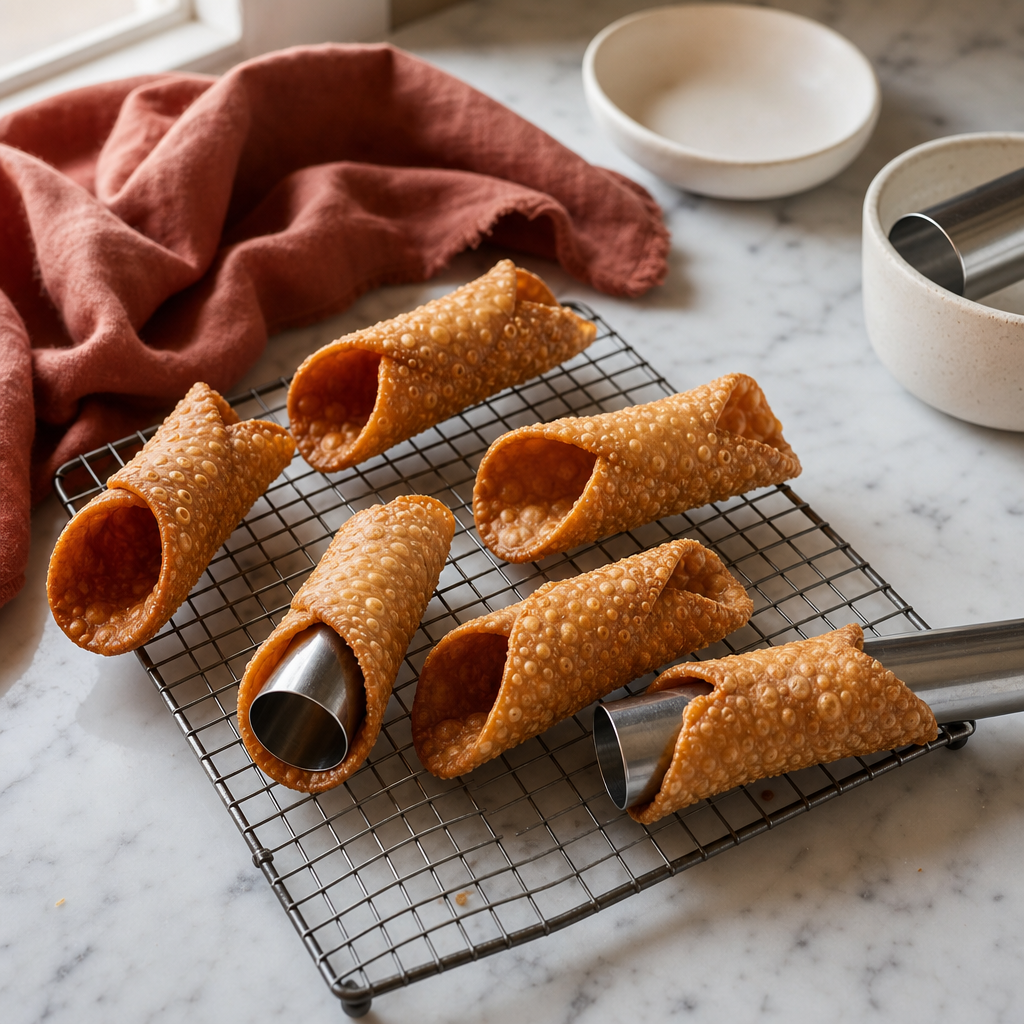
Lift the molds from the oil, drain on a rack, and slide the shells off once they are cool enough to handle but still warm. Let the shells cool completely before filling.
Fill at the last moment
Pipe ricotta filling from both ends so the center is packed. Dip the exposed filling in pistachio, chocolate, or candied orange, then dust lightly with powdered sugar.
Common mistakes
- {'mistake': 'Using undrained ricotta', 'fix': 'Drain overnight until the whey stops pooling. If the filling looks glossy and loose after sugar is added, drain again before piping.'}
- {'mistake': 'Rolling the shell dough too thick', 'fix': 'Roll to about 1 mm. A thick shell tastes fried but not crisp, and the center seam stays doughy.'}
- {'mistake': 'Frying without a thermometer', 'fix': 'Hold 175-185°C. Visual guessing is unreliable because the cocoa and sugar darken the dough before the shell is fully dry.'}
- {'mistake': 'Filling hours ahead', 'fix': 'Store shells airtight and filling cold, then pipe close to serving. Filled cannoli wait badly.'}
- {'mistake': 'Over-sweetening the ricotta', 'fix': 'Keep sugar around 20 percent of the drained ricotta weight. More sugar makes the filling grainy and pulls out water.'}
What does not belong
- {'item': 'pastry cream', 'reason': 'Pastry cream does not belong in cannoli Siciliani. It makes a filled fried tube, not the ricotta-based Sicilian pastry.'}
- {'item': 'whipped cream in the filling', 'reason': 'Whipped cream lightens the texture in the wrong direction and shortens the holding time. The filling should be ricotta-forward, dense, and cold.'}
- {'item': 'cream cheese as the main filling', 'reason': "Cream cheese makes the filling tangy and heavy in an American cheesecake register. If sheep's-milk ricotta is unavailable, use fresh whole-milk cow ricotta with only a small tangy dairy adjustment; cream cheese does not replace ricotta."}
- {'item': 'pre-filled overnight storage', 'reason': 'A pre-filled cannolo is structurally wrong. The shell softens, the seam turns leathery, and the pastry loses its defining contrast.'}
- {'item': 'thick chocolate coating inside the shell', 'reason': 'A thin brushed layer is a modern moisture barrier in some shops, but a thick coating turns the shell into a candy tube and masks the fried pastry.'}