Arancini Siciliani
The dish in context
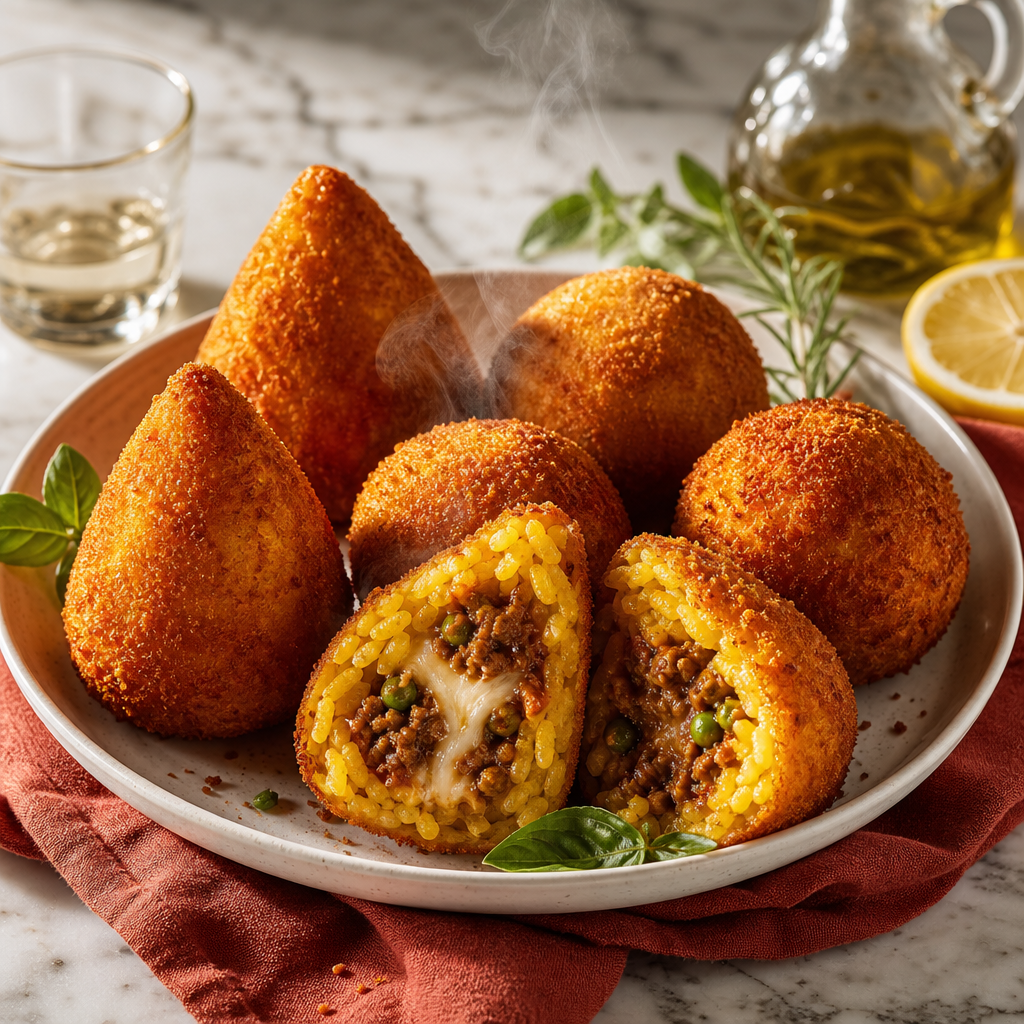
Arancini, also called arancine in parts of western Sicily, are one of the island's defining street foods: cooked rice, filled, breaded, and fried. The name points to oranges, from the color and shape after frying, while the masculine and feminine forms reflect regional usage rather than a single national rule. Palermo and other Sicilian cities traditionally eat arancine for Santa Lucia on 13 December, a day associated with avoiding bread and pasta. Fillings vary across the island, but ragù with peas and cheese is the central version most sources treat as the standard. Eastern Sicilian arancini are often shaped into cones; round arancine dominate in Palermo.
Method 10 steps · 210 min
Cook the saffron rice
Bring the water or light stock, salt, and saffron to a boil. Stir in the rice, reduce to a steady simmer, and cook until the liquid is absorbed and the grains are tender but not soupy, 16-20 minutes. Spread the rice on a tray and stir in the butter and grated caciocavallo while hot.
Chill the rice until firm
Cool the rice to room temperature, then mix in the beaten egg if using. Cover and chill until firm and moldable, at least 60 minutes.
Start the ragù
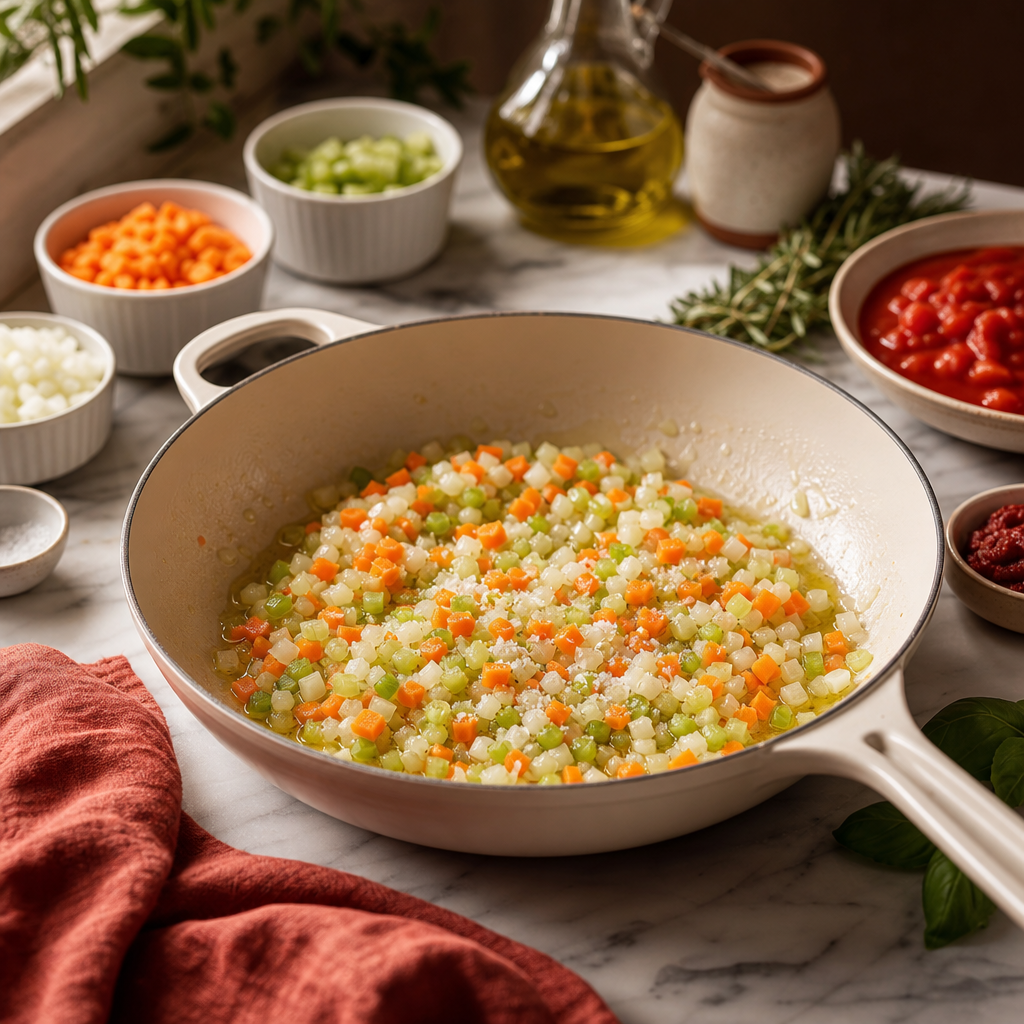
Heat the olive oil in a sauté pan over medium heat. Add onion, carrot, and celery with a pinch of the ragù salt and cook until softened and no longer watery, 8-10 minutes. Add the ground meat and cook until it loses its raw color and begins to brown in small crumbs.
Reduce the filling hard
Stir in the tomato paste and cook for 2 minutes until it darkens slightly. Add the wine and reduce until the pan is nearly dry, then add passata, peas, remaining salt, and pepper. Simmer until the ragù is thick enough to mound on a spoon without running, 25-35 minutes; cool completely.
Portion the components
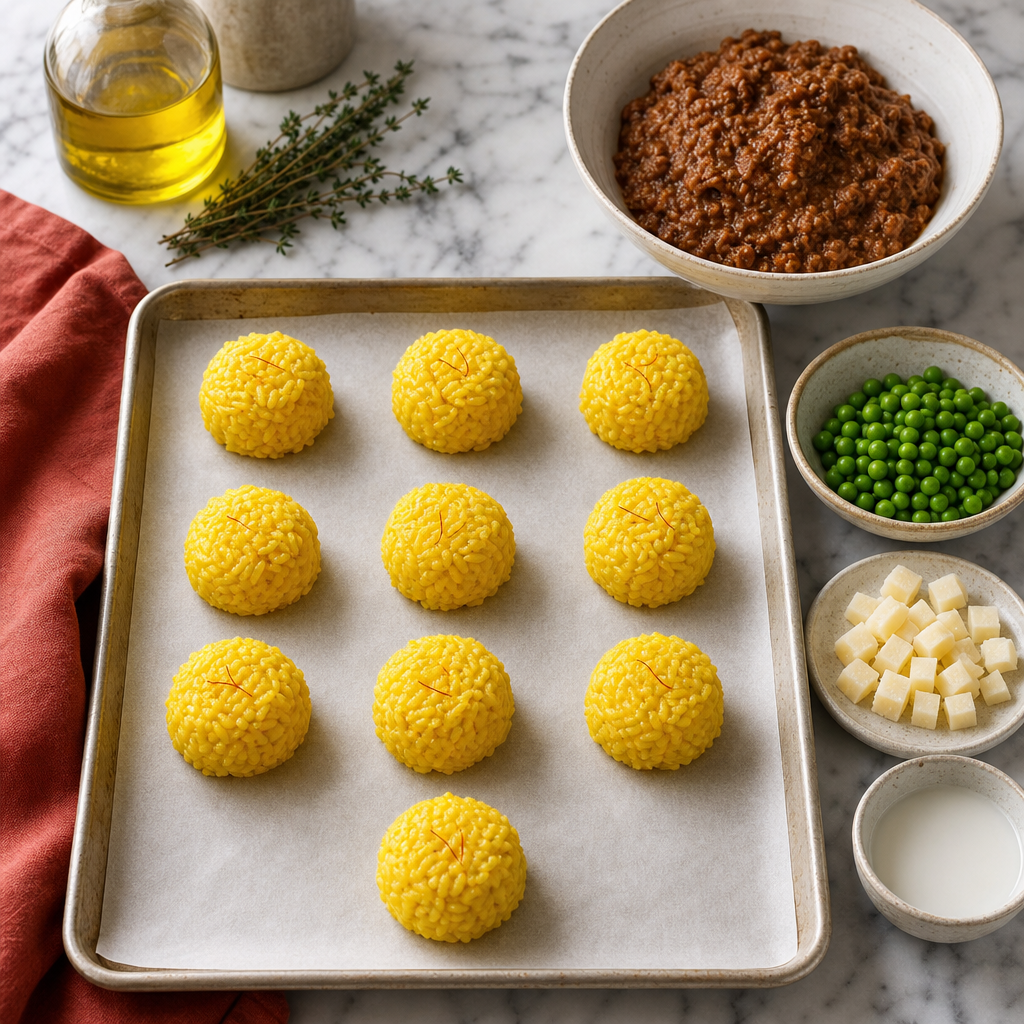
Divide the chilled rice into 10 portions of about 85-90 g each. Keep the ragù cold, and cut the cheese into 10-20 small cubes. Set a bowl of water nearby for dampening hands.
Shape the arancini
Flatten one rice portion in a damp palm into a thick cup. Add about 1 tablespoon cold ragù and 1-2 cubes cheese, then close the rice around the filling with no exposed seam. Shape round for Palermo-style arancine or into a cone for eastern Sicilian arancini.
Chill the shaped arancini
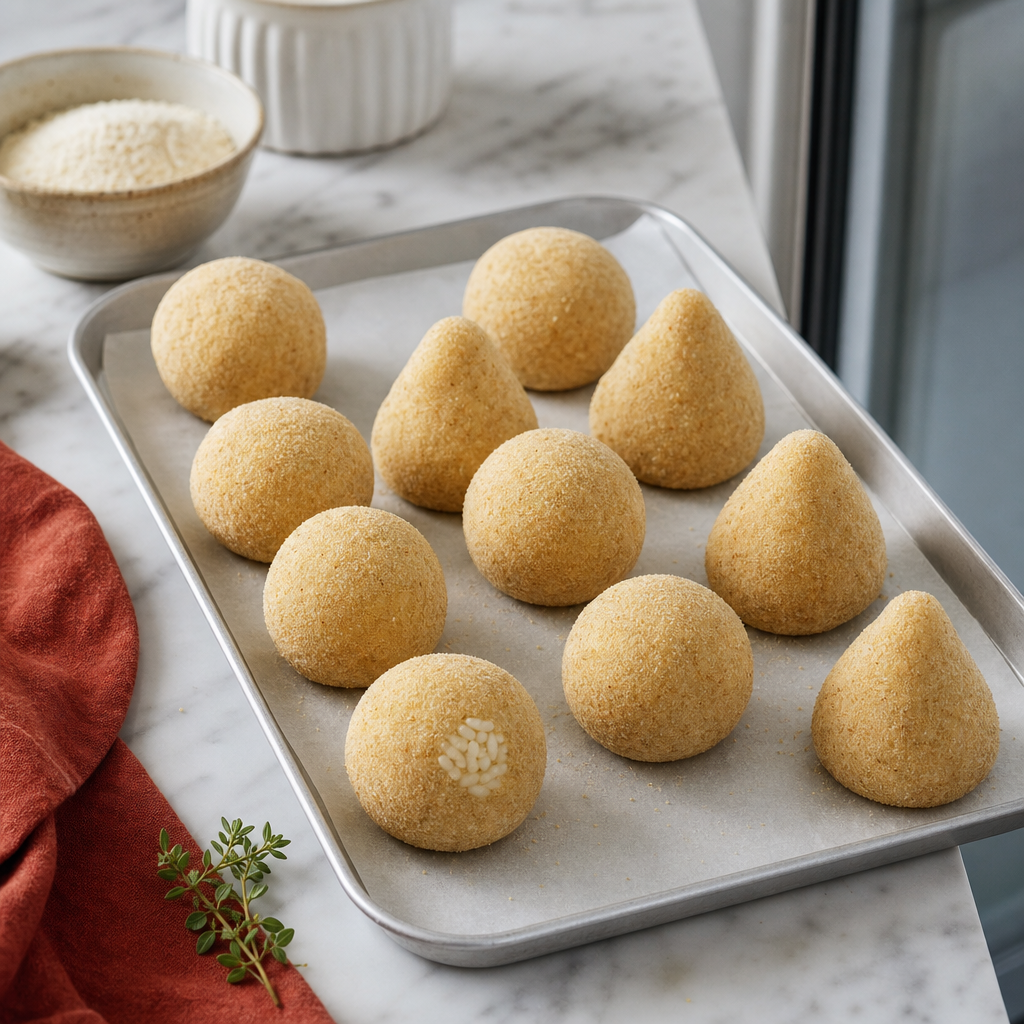
Set the shaped arancini on a tray and refrigerate for at least 30 minutes. If any feel soft or cracked, patch with a thin layer of rice before coating.
Coat with pastella and crumbs
Whisk the flour and water into a smooth, thin paste that coats a spoon but drips freely. Dip each arancino in the pastella, let the excess fall away, then roll in fine breadcrumbs until fully covered. Rest on a tray for 10 minutes while the oil heats.
Fry at 175°C
Heat the oil to 175°C. Fry 2-3 arancini at a time, turning as needed, until the crust is deep golden and rigid, 4-5 minutes. Keep the oil between 170°C and 180°C.
Drain and hold briefly
Drain on a rack, not paper towels, and rest 5 minutes before serving. The center should be hot with melted cheese, while the crust stays dry and audible when tapped.
Common mistakes
- {'mistake': 'Using loose risotto as the casing.', 'fix': "Cook the rice drier than serving risotto and chill it until firm. Arancini need set starch, not all'onda texture."}
- {'mistake': 'Leaving the ragù wet.', 'fix': 'Reduce until it mounds on a spoon and leaves a clean track in the pan. Watery filling splits the rice from the inside.'}
- {'mistake': 'Using long-grain rice.', 'fix': 'Use Arborio, Carnaroli, or another short-grain sticky rice. Long grains separate and make a fragile shell.'}
- {'mistake': 'Skipping the chill after shaping.', 'fix': 'Refrigerate the formed arancini before coating and frying. Cold structure buys time for the crust to seal.'}
- {'mistake': 'Frying too many at once.', 'fix': 'Work in small batches and keep the oil near 175°C. A crowded pot produces pale, greasy crusts.'}
- {'mistake': 'Using wet fresh mozzarella straight from brine.', 'fix': 'Use low-moisture mozzarella or drain fresh cheese thoroughly. Extra water becomes steam and opens the arancino.'}
What does not belong
- {'item': 'Cream', 'reason': 'Cream does not belong in the ragù or rice. It loosens the filling and turns the structure heavy.'}
- {'item': 'Long-grain rice or basmati', 'reason': 'Separate grains cannot form the casing and will make the shell fragile rather than compact.'}
- {'item': 'Panko as the default crumb', 'reason': 'Panko gives a coarse Japanese-style crust. Sicilian arancini use a finer breadcrumb shell.'}
- {'item': 'Watery tomato sauce', 'reason': 'The filling must be tight. Sauce that runs on a plate will run inside the rice.'}
- {'item': 'Air-fryer method as the main technique', 'reason': 'An air fryer can brown crumbs, but it does not reproduce the sealed, immersed crust of deep-fried arancini.'}
- {'item': 'Garlic-heavy Italian-American seasoning blend', 'reason': 'The standard ragù filling is built on soffritto, meat, tomato, peas, and cheese. Dried herb blends push it into a different cuisine.'}