Sfogliatella Napoletana
The dish in context
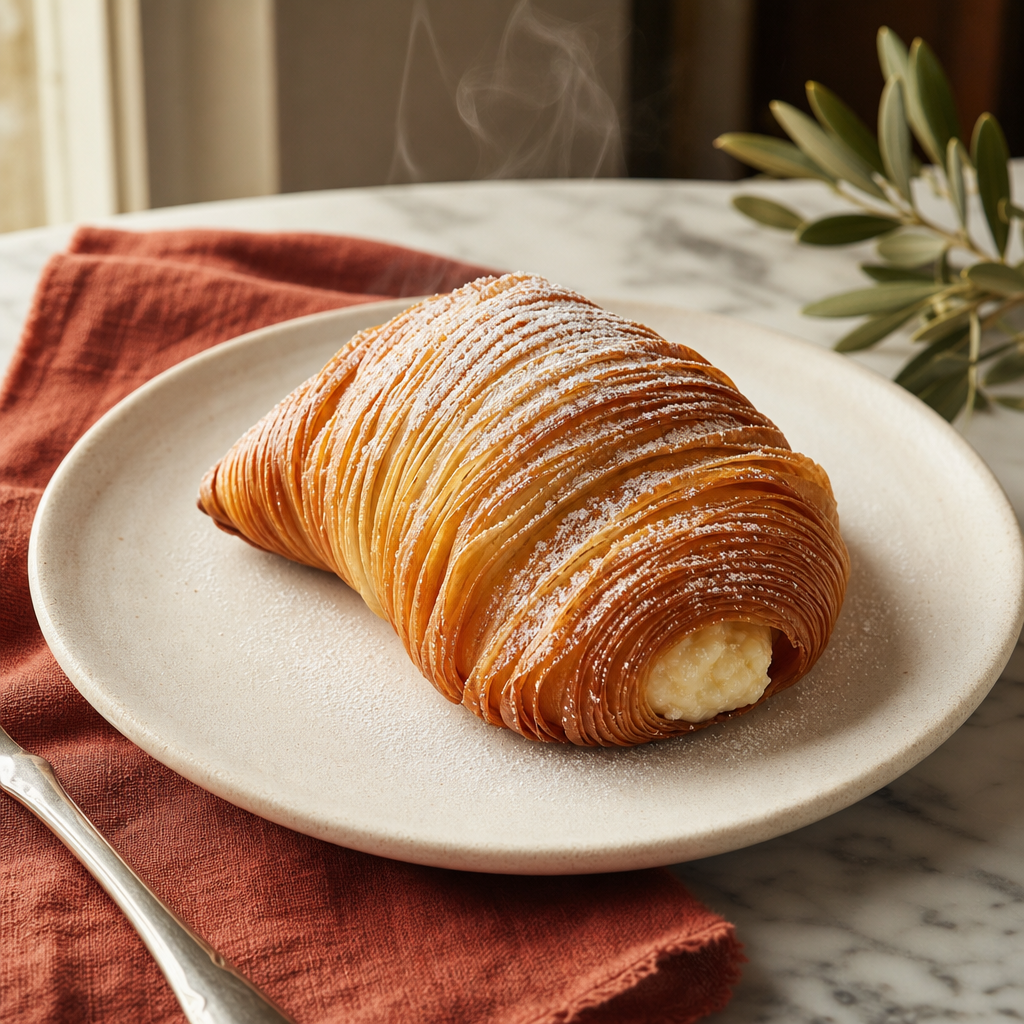
Sfogliatella is a Campanian pastry whose name points to its defining structure: many thin leaves of dough. The shell-shaped sfogliatella riccia is associated with Naples, while the earlier convent pastry often cited in Campanian accounts is the Santa Rosa from the Amalfi Coast. Pasquale Pintauro is widely credited with commercializing the Neapolitan form in the early 19th century. Naples recognizes two main branches: riccia, with a stretched and fat-laminated shell, and frolla, with a shortcrust casing. This recipe is for riccia; frolla is a variant, not a shortcut.
Method 12 steps · 900 min
Mix a stiff dough
Combine flour, salt, honey, and cool water. Knead 8-10 minutes by machine on low speed or 15 minutes by hand until the dough is smooth, dense, and resistant. It should feel closer to pasta dough than bread dough.
Rest the dough
Wrap tightly and rest at room temperature for 2 hours. If the kitchen is hot, refrigerate after the first hour, then bring back to cool room temperature before rolling.
Cook the semolina base
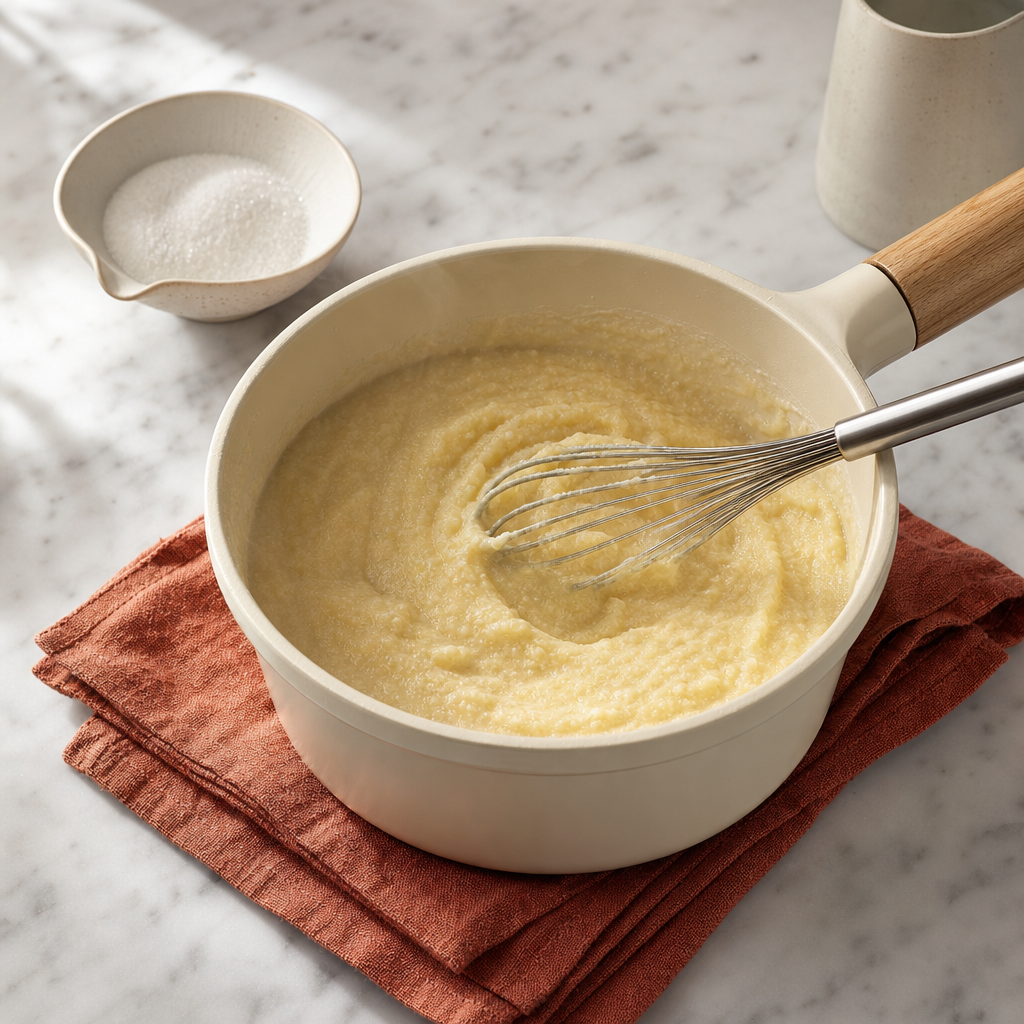
Bring milk to a simmer with a small pinch of the measured sugar if desired. Whisk in semolina in a steady stream and cook 3-4 minutes, stirring hard, until it pulls from the pan in a thick mass. Spread on a tray, cover the surface, and cool completely.
Finish the filling
Beat the cooled semolina until smooth. Mix in drained ricotta, sugar, egg yolks, candied orange, cinnamon, and vanilla. Chill until firm, at least 2 hours and up to overnight.
Roll the dough into sheets
Divide the dough into 3 pieces. Roll each piece through a pasta machine from the widest setting down to about 1 mm thick, resting the sheet if it fights back. Keep unused dough wrapped.
Stretch and grease the sheet
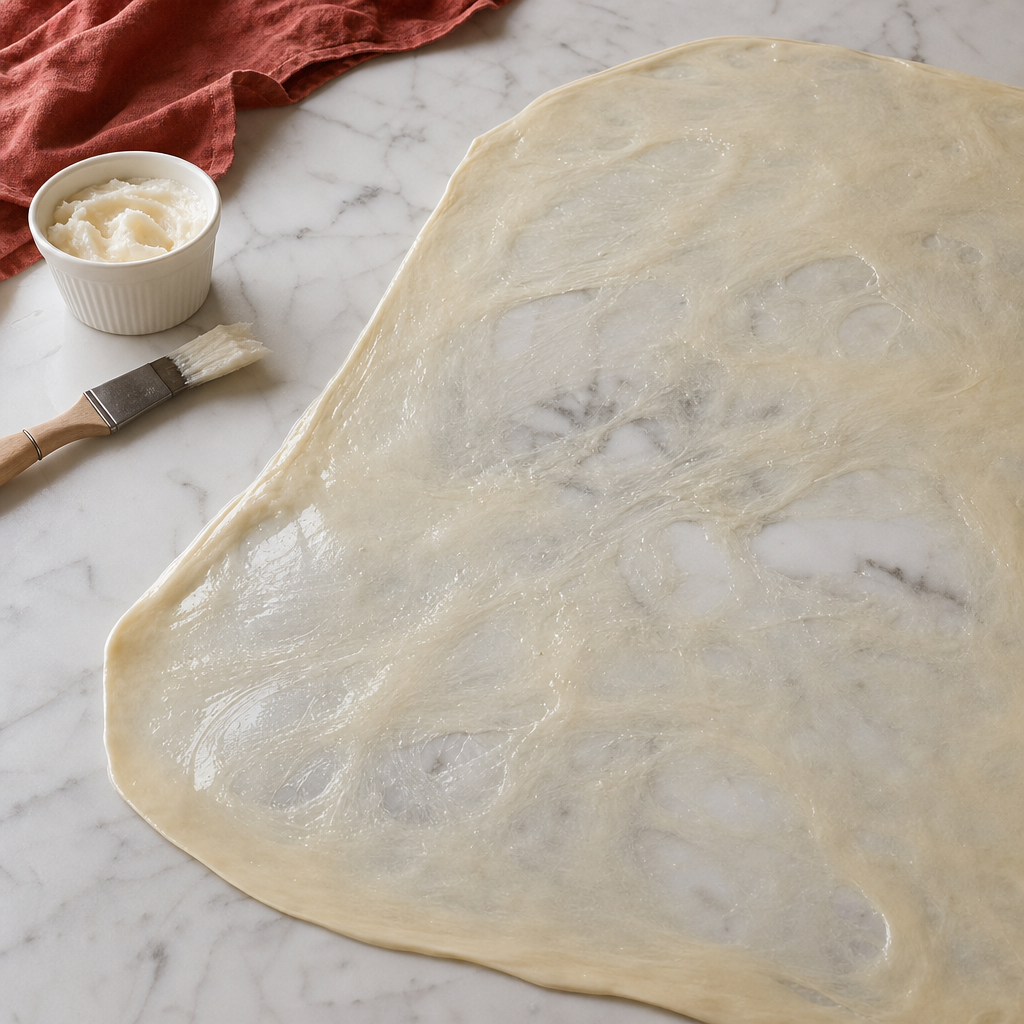
Lay one sheet on a clean work surface. Stretch it gently from the center outward until translucent in patches, then smear the surface with softened lard in a thin, even film. Do not melt the lard.
Build the coil
Roll the greased sheet from the short end into the tightest cylinder possible, pulling gently as you roll. Overlap the next stretched, greased sheet onto the end of the cylinder and continue rolling; repeat with the third sheet. The finished log should be tight, heavy, and about 6-7 cm thick.
Chill the coil
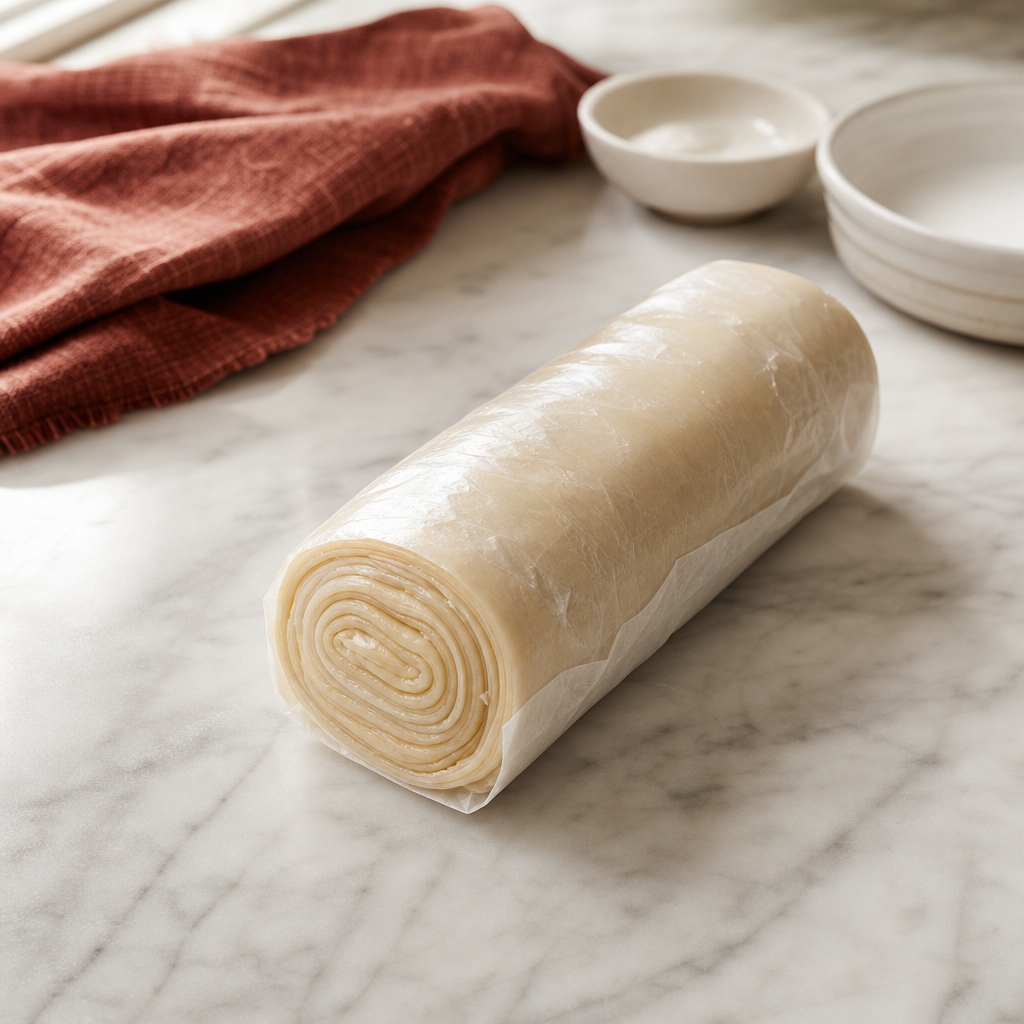
Coat the outside of the coil with a little more lard, wrap tightly, and refrigerate at least 8 hours or overnight. The coil must be firm enough to slice cleanly.
Slice and open the shells
Cut the chilled coil into 12 disks, each about 1.5 cm thick. Grease thumbs lightly with lard and press from the center of each disk outward, rotating as you go, to form a cone with visible stepped layers. Keep the lip thin and the tail pointed.
Fill and seal by pressure
Spoon 35-40 g chilled filling into each shell. Close the lip by pressing the edges together lightly; do not crimp. Set the pastries on a parchment-lined tray with the seam facing slightly upward.
Bake hot, then finish lower
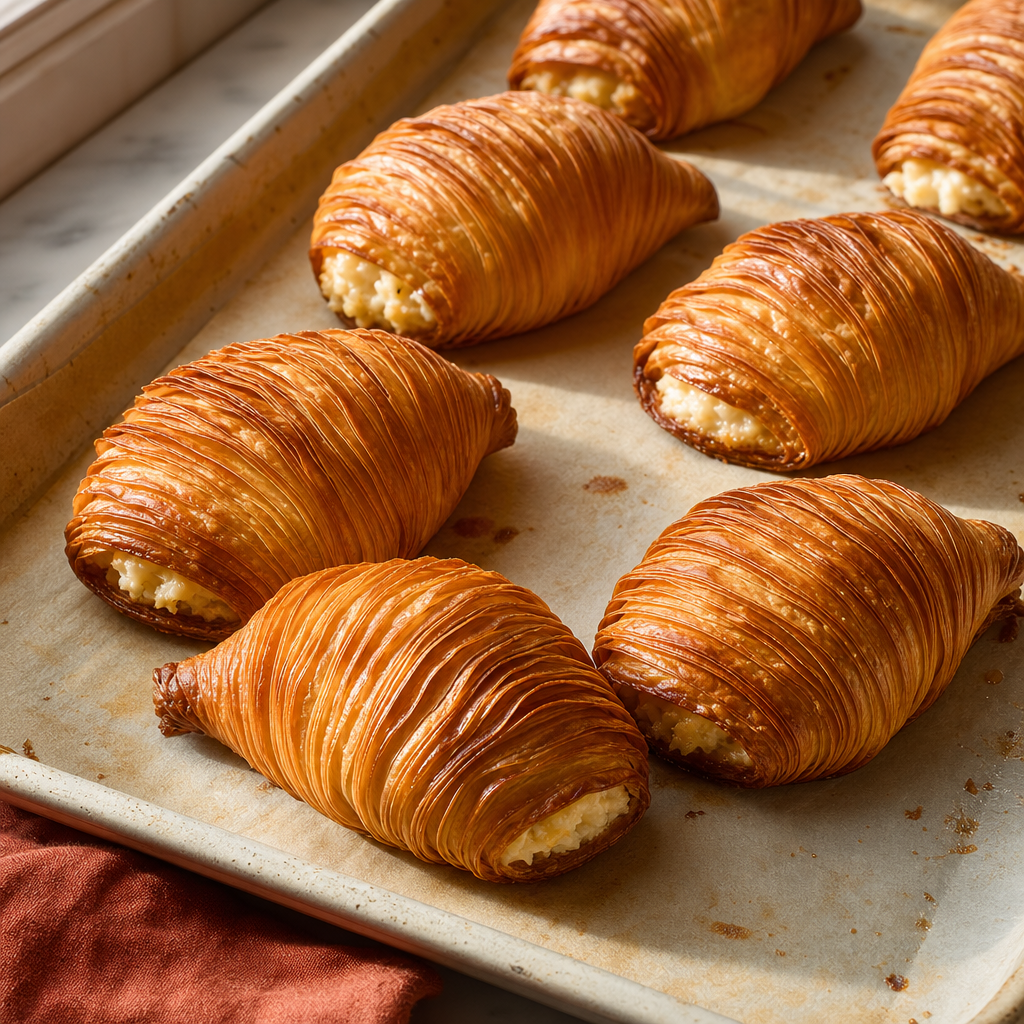
Heat the oven to 220°C. Bake 10 minutes, reduce to 190°C, and bake 18-22 minutes more until the ridges are deep golden and the shell feels dry when lifted. If pale fat pools under the pastries, keep baking; underbaked layers taste waxy.
Cool before dusting
Cool on a rack for at least 20 minutes. Dust lightly with powdered sugar before serving, not while hot.
Common mistakes
- Using store-bought puff pastry. Sfogliatella riccia is not French-style puff pastry; the shell comes from a rolled coil of stretched dough and fat.
- Melting the lard. Liquid fat absorbs into the dough and erases the leaf structure.
- Rolling the sheet too thick. If the dough is opaque and leathery, the finished pastry will be hard at the seams.
- Filling while the semolina is warm. Warm filling loosens, leaks, and steams the layers shut.
- Over-crimping the opening. Crimped edges bake into a hard seam and prevent the shell from flaring.
- Baking too pale. The exterior should be deep golden and dry; blonde sfogliatelle are usually waxy inside.
What does not belong
- Cream does not belong in the filling; ricotta and cooked semolina provide the body.
- Puff pastry does not belong in sfogliatella riccia. That makes a different pastry.
- Icing, glaze, or syrup does not belong on the finished shell. Use a restrained dusting of powdered sugar.
- Chocolate chips do not belong in the canonical Neapolitan filling.
- Mascarpone does not replace ricotta; it makes the filling fatty and slack.
- Margarine does not belong in the lamination. It smears, steams, and leaves a flat industrial finish.