Zeppole San Giuseppe
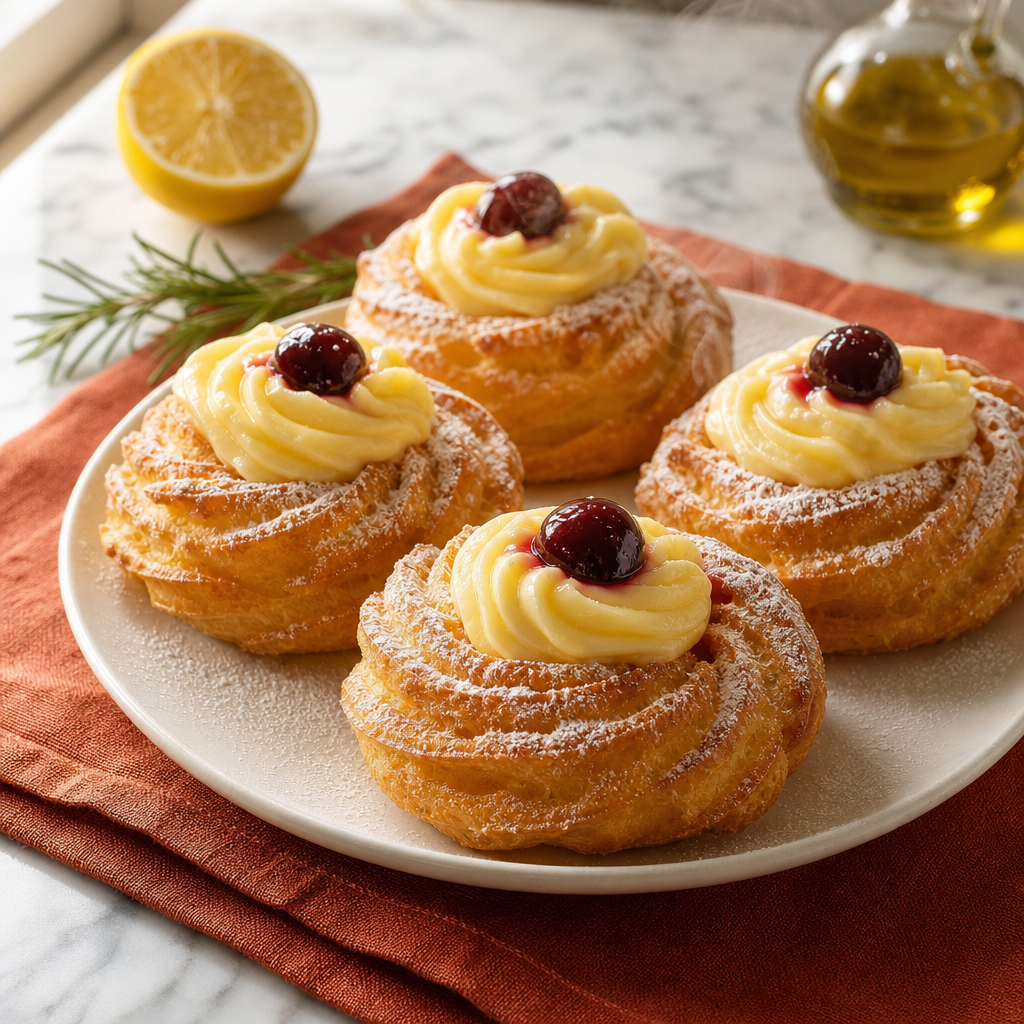
The dish in context
Zeppole di San Giuseppe are tied to 19 March, the Feast of Saint Joseph and Father's Day in Italy. Naples and the wider Campanian pastry tradition treat the canonical form as choux pastry piped into rings, fried or baked, filled or topped with crema pasticcera and finished with amarena cherries. The dish appears in 19th-century Neapolitan culinary writing, including the work associated with Ippolito Cavalcanti, which is why Campania has the strongest claim on this version. Regional relatives exist across southern Italy, but rice fritters, sfince, and plain zeppole balls are different branches, not the Neapolitan Saint Joseph's Day form.
Method 10 steps · 120 min
Infuse the milk
Heat the milk with the vanilla bean and lemon peel until steaming and small bubbles gather at the edge. Do not boil hard. Cover and steep 10 minutes, then remove the peel and bean.
Cook the pastry cream
Whisk the yolks, sugar, and cornstarch until pale and thick. Stream in the hot milk while whisking, return everything to the pan, and cook over medium heat until it boils and holds thick tracks from the whisk, 60-90 seconds after the first bubble.
Chill the cream
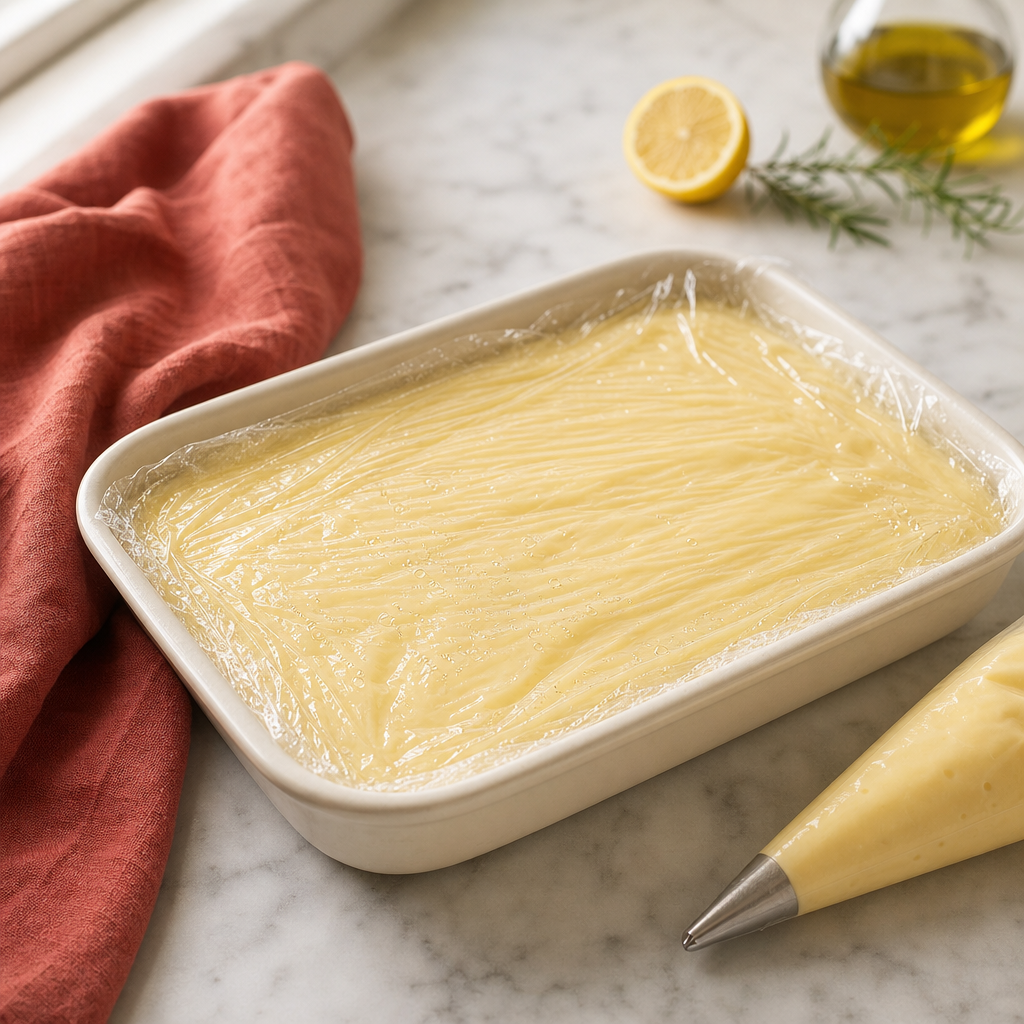
Spread the cream in a shallow tray, press plastic film directly on the surface, and chill until cold and firm. Beat briefly before piping to restore a smooth texture.
Start the choux
Bring the water, butter, salt, and choux sugar to a full boil in a saucepan. Add the flour all at once and stir hard with a wooden spoon until no dry patches remain.
Dry the panade
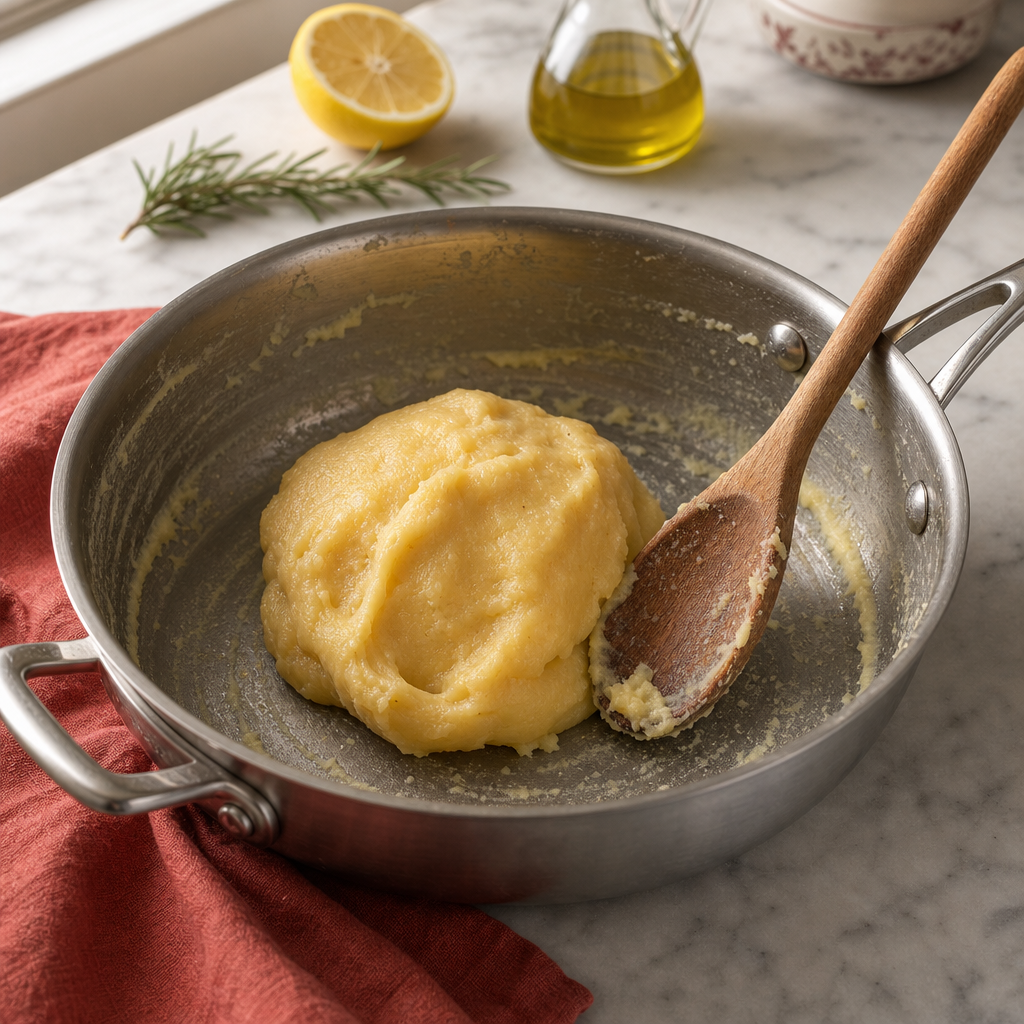
Cook the dough over medium heat, stirring and smearing it against the pan, until it pulls into a ball and leaves a thin film on the bottom, 2-3 minutes. The dough should look satin-matte, not wet and shiny.
Beat in the eggs
Transfer the dough to a bowl and beat 1 minute to release steam. Add beaten egg in 4 additions, mixing fully each time, and stop when the dough falls from the paddle or spoon in a thick V-shaped ribbon.
Pipe the rings
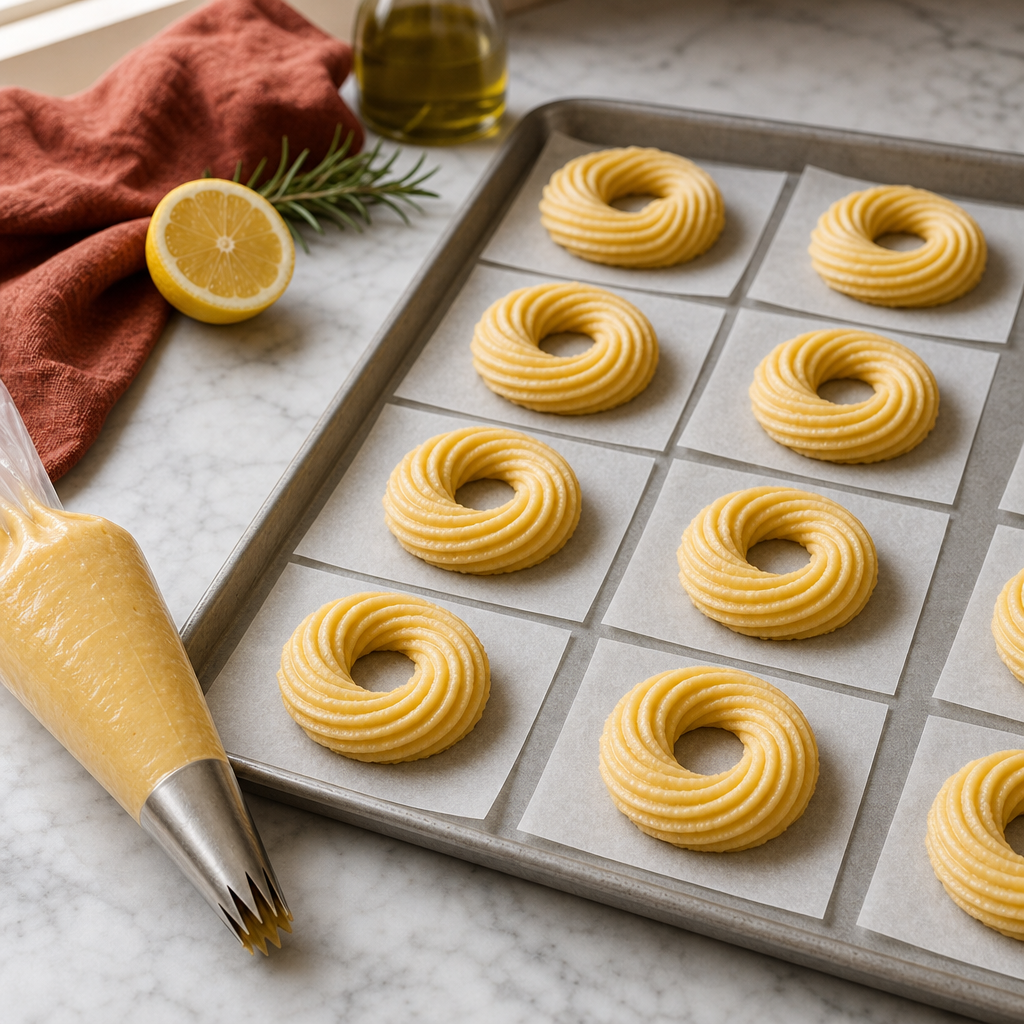
Fit a piping bag with a large open star tip, about 12-14 mm. Pipe 10 rings onto individual parchment squares, each about 8 cm wide, then pipe a second smaller ring on top to build height.
Fry at controlled heat
Heat oil to 170°C / 340°F. Lower 2-3 parchment squares into the oil, dough-side down; after 20-30 seconds, pull away the paper with tongs. Fry, turning occasionally, until deeply golden and dry-looking in the grooves, 6-8 minutes.
Drain and cool
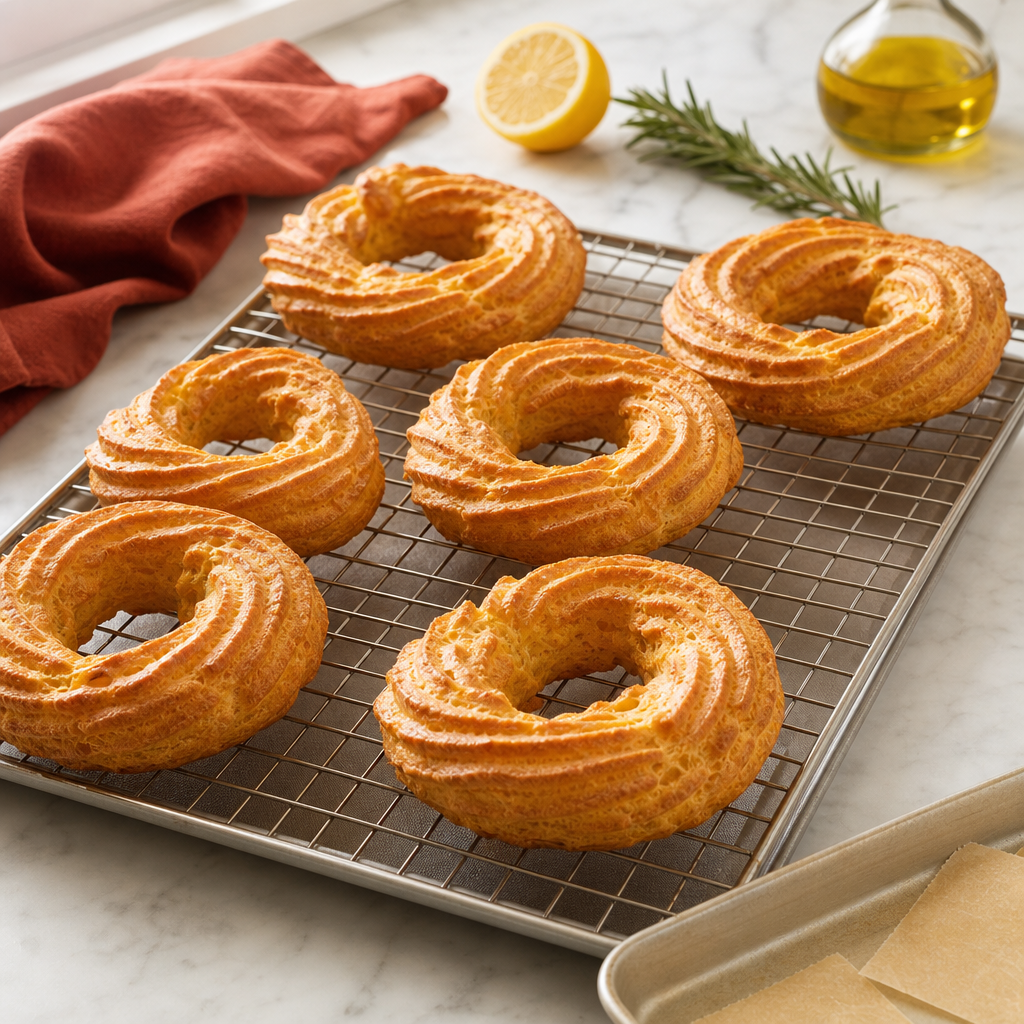
Lift the zeppole to a rack, not a paper-towel pile. Cool completely before filling.
Fill and finish
Cut each zeppola horizontally if the center is closed, or pipe cream into the hollow if it opened cleanly. Pipe a visible rosette of pastry cream on top, dust with powdered sugar, and set one amarena cherry with a little syrup in the center.
Common mistakes
- {'mistake': 'Adding all the eggs because the count says four.', 'fix': 'Stop at the V-shaped ribbon. If the dough turns loose and pourable, it cannot hold the piped ridges.'}
- {'mistake': 'Frying at doughnut temperature above 180°C / 355°F.', 'fix': 'Hold closer to 170°C / 340°F. Choux needs time for internal steam expansion before the outside locks.'}
- {'mistake': 'Using thin pastry cream.', 'fix': 'Boil the starch-thickened cream until it holds whisk tracks. Zeppole need pipeable cream, not crème anglaise.'}
- {'mistake': 'Stacking the fried zeppole while warm.', 'fix': 'Cool on a rack in one layer. Trapped steam turns the crisp shell leathery.'}
- {'mistake': 'Replacing amarene with bright red cocktail cherries.', 'fix': 'Use amarena cherries or sour cherries in syrup. Cocktail cherries taste of almond extract and dye, and the look is wrong.'}
What does not belong
- {'item': 'Whipped cream', 'reason': "Whipped cream does not belong on the Campanian Saint Joseph's Day form. It lacks the weight and egg structure of crema pasticcera."}
- {'item': 'Chocolate drizzle', 'reason': 'Chocolate masks the custard-and-amarena profile and turns the pastry into a bakery novelty.'}
- {'item': 'Sprinkles', 'reason': 'Sprinkles do not belong. The finish is powdered sugar, pastry cream, and amarena cherry.'}
- {'item': 'Ricotta filling for this version', 'reason': 'Ricotta is valid in some southern and diaspora variants, but the Neapolitan-Campanian Zeppola di San Giuseppe is built around pastry cream.'}
- {'item': 'Baking powder or yeast', 'reason': 'The lift comes from steam in choux pastry. Chemical leavening or yeast changes the dough into a different fritter.'}