Gelato Vaniglia
The dish in context
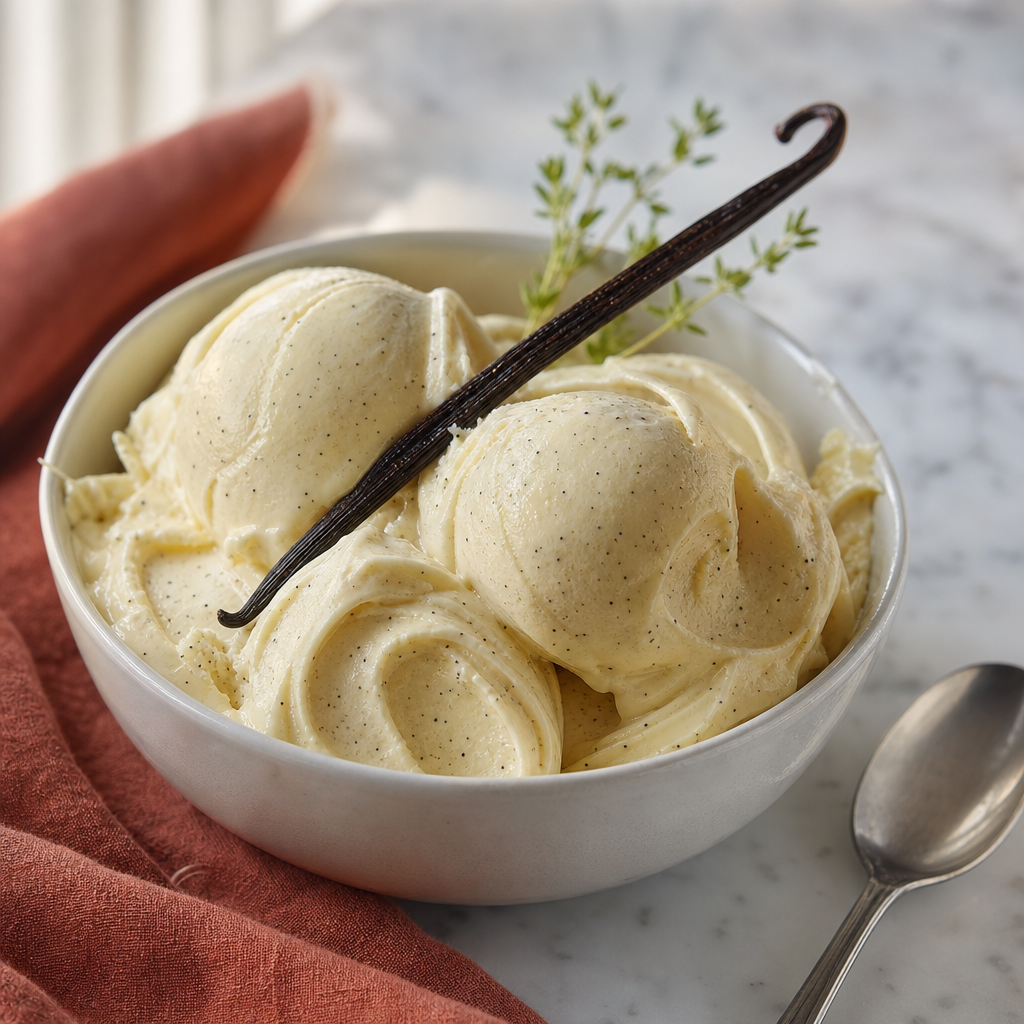
Gelato is Italy's milk-forward frozen dessert tradition, distinct from American ice cream by lower fat, less air, and a serving temperature that is slightly warmer and softer. Vanilla gelato sits close to gelato alla crema: a dairy base often enriched with egg yolk, then perfumed with vanilla rather than built around heavy cream. Regional and shop formulas vary; Sicilian versions often lean on starch for body, while northern and modern gelateria formulas may use yolk, milk powder, dextrose, or stabilizers. This home version uses egg yolks plus a small amount of cornstarch, a practical bridge between custard gelato and Sicilian-style thickening without requiring professional stabilizer blends.
Method 7 steps · 540 min
Infuse the dairy
Combine the milk, cream, vanilla seeds, and scraped vanilla pod in a saucepan. Heat to 80-85°C, where steam rises and small bubbles gather at the edge, then cover off heat for 30 minutes.
Mix the dry phase
Whisk the sugar, dextrose, skim milk powder, cornstarch, and salt in a bowl until no clumps remain. Add the yolks and whisk until thick, pale, and smooth.
Temper the yolks
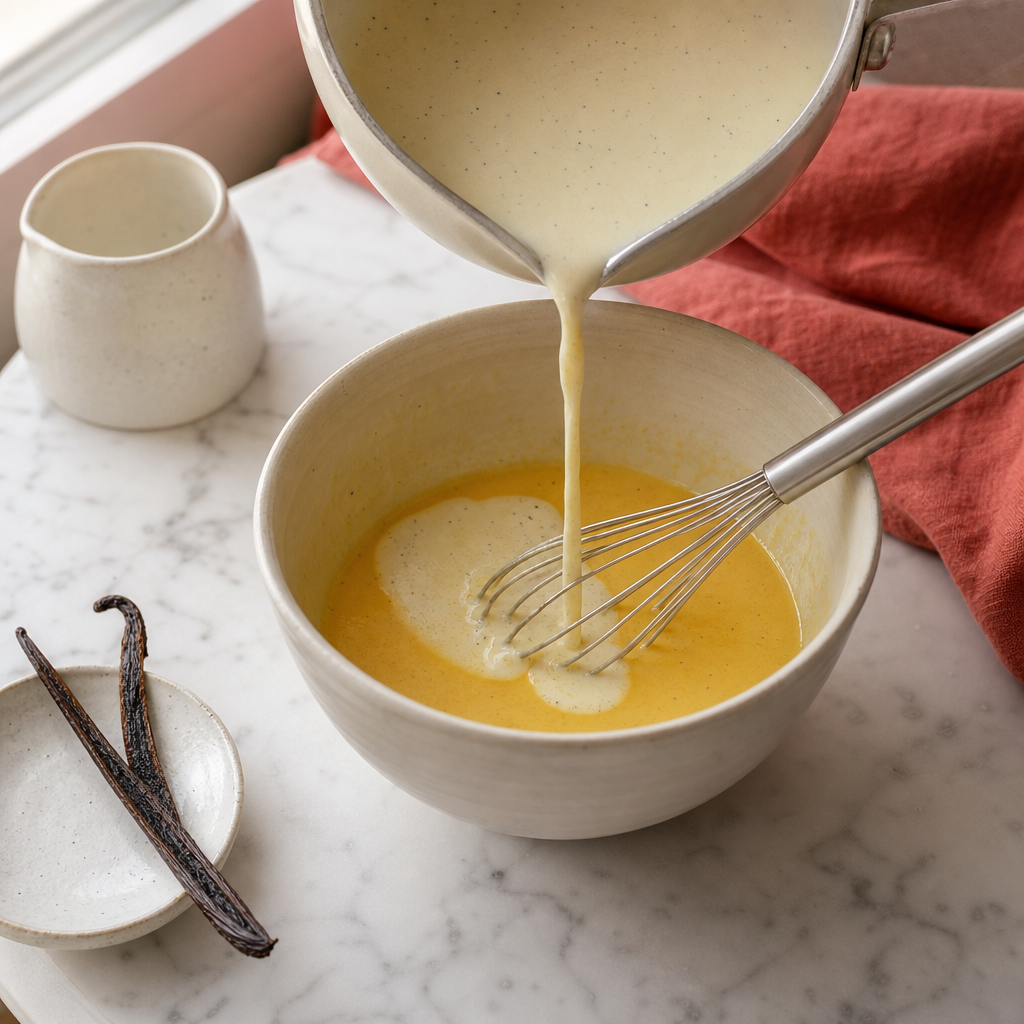
Remove the vanilla pod from the hot dairy. Whisk about one-third of the hot dairy into the yolk mixture in a steady stream, then whisk that mixture back into the saucepan.
Cook the custard
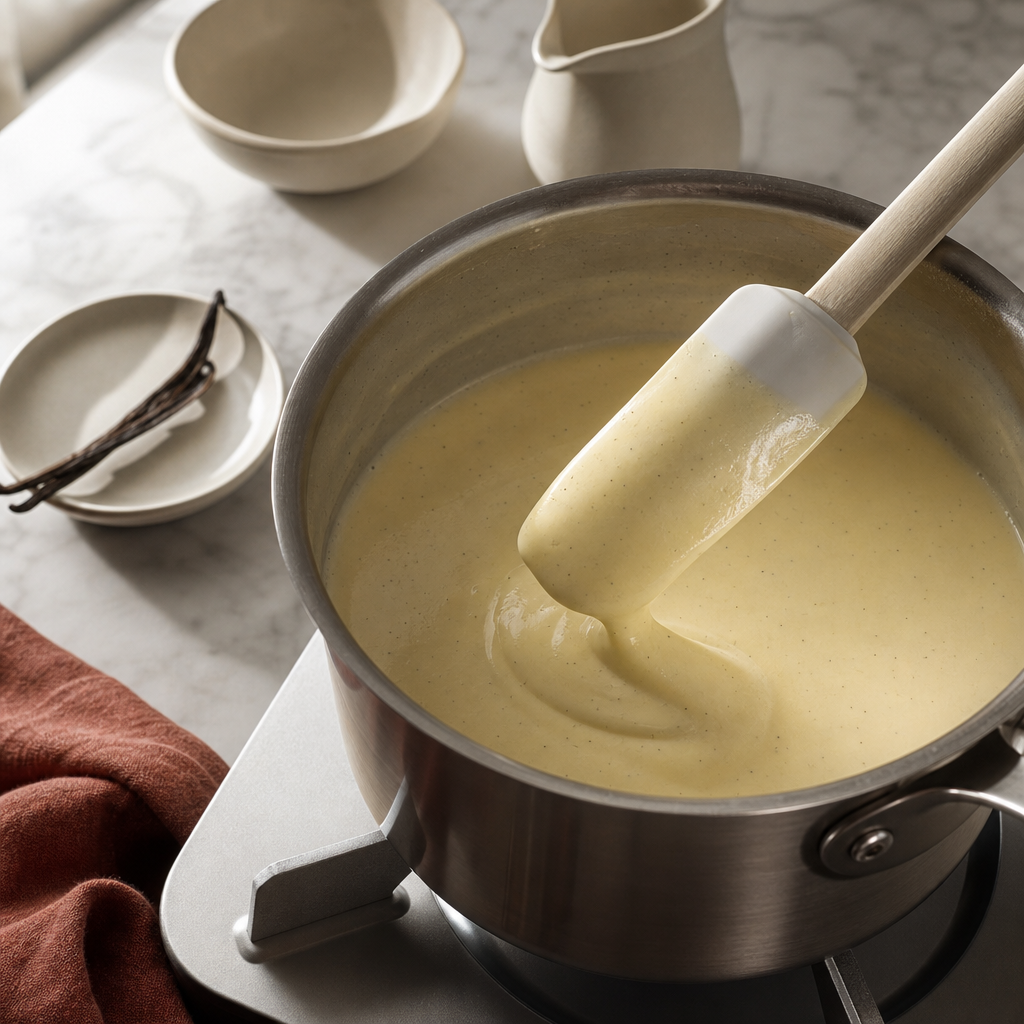
Cook over medium-low heat, stirring constantly with a spatula, until the base reaches 82-84°C and lightly coats the spatula. Hold it in that range for 60 seconds to fully hydrate the starch; do not let it boil.
Strain and chill hard
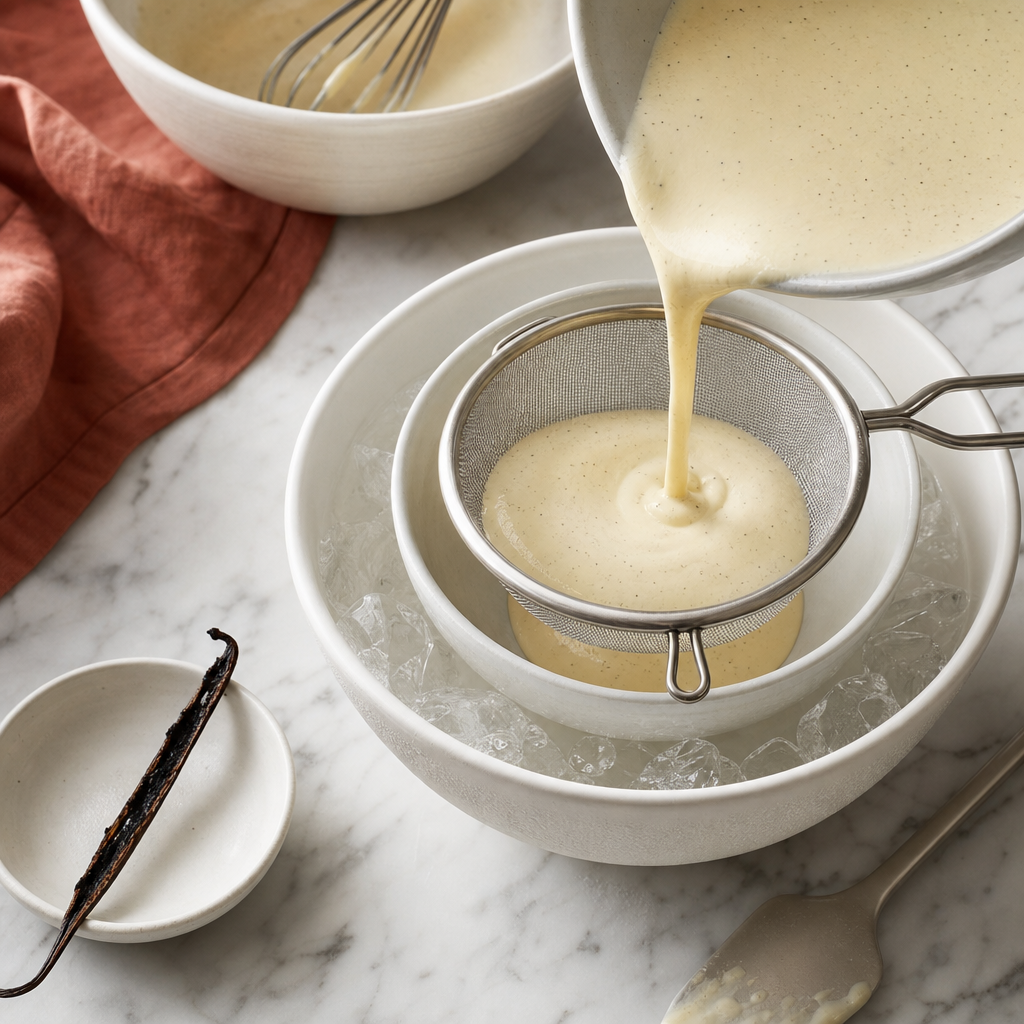
Strain the custard through a fine sieve into a clean bowl. Set the bowl over ice water and stir until below 20°C, then cover and refrigerate until 4°C or colder, at least 4 hours and preferably overnight.
Churn
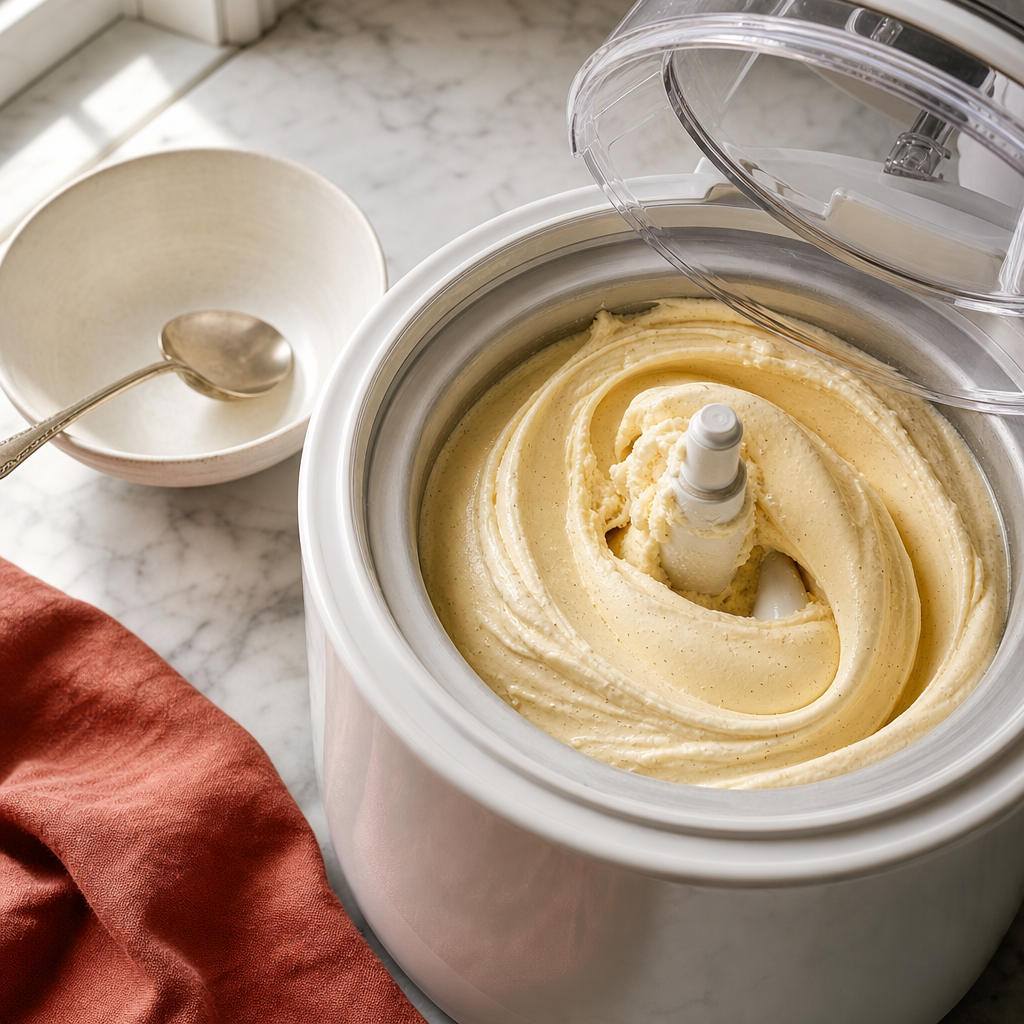
Churn the cold base in a pre-frozen ice-cream machine until it thickens to the texture of soft-serve, usually 20-30 minutes. Stop before it looks dry, crumbly, or overworked.
Harden and serve
Pack the gelato into a shallow container, press parchment or plastic directly against the surface, and freeze for 3-4 hours. Temper at room temperature for 8-12 minutes before scooping; it should bend under the scoop, not chip.
Common mistakes
- Using too much cream. Gelato alla vaniglia is milk-forward; excess cream makes it heavy and coats the palate like standard ice cream.
- Boiling the custard. Once bubbles break through the surface, the yolks are in danger and the dairy flavor turns cooked.
- Skipping the long chill. A warm base churns slowly, forms larger ice crystals, and gives a thin body.
- Reducing the sugar sharply. Sugar is part of the freezing structure, not decoration; low-sugar gelato freezes hard and icy.
- Serving straight from a very cold freezer. Gelato needs a warmer serving temperature to show its dense, elastic texture.
What does not belong
- Imitation vanilla does not belong. In a single-flavor gelato, artificial vanillin reads sharp and hollow.
- Large amounts of heavy cream do not belong. That turns the formula toward ice cream.
- Condensed milk does not belong. It brings cooked dairy and excess sweetness that flatten the vanilla.
- Yellow food coloring does not belong. The pale yellow should come from yolks, not dye.
- Whipped cream folded into the base does not belong. Gelato is dense; extra aeration works against the style.