Panna Cotta
The dish in context
Panna cotta means “cooked cream,” but the cooking is brief: the dairy is warmed only enough to dissolve sugar and gelatin. The dessert is strongly associated with Piedmont, where it is listed among traditional regional products, though similar milk-and-gelatin desserts existed elsewhere in Europe before the modern restaurant version settled into its current form. One often-cited modern milestone is chef Ettore Songia serving panna cotta in Cuneo in the 1960s. Caramel and fruit sauces are both traditional service paths; the core dish is the cream set, not the topping.
Method 8 steps · 270 min
Prepare the molds
Wipe six 120 ml ramekins or dariole molds with the thinnest film of neutral oil. If serving in glasses, skip the oil.
Bloom the gelatin
Pour 60 ml cold milk into a small bowl and sprinkle the powdered gelatin evenly over the surface. Let it stand until the granules look swollen and wet, 8-10 minutes.
Warm the dairy
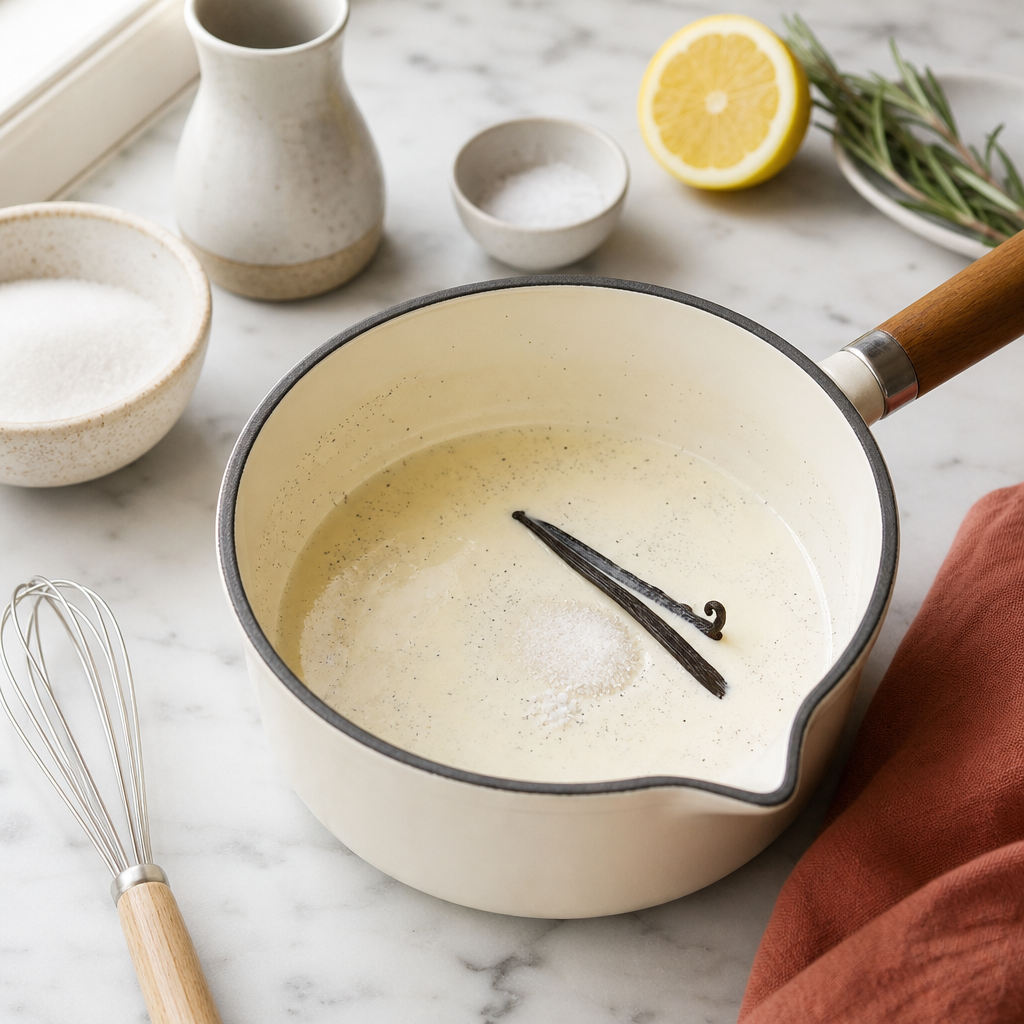
Combine the cream, remaining 190 ml milk, sugar, salt, vanilla seeds, and vanilla pod in a saucepan. Heat over medium-low, stirring, until the sugar dissolves and the liquid steams at the edges; do not boil.
Dissolve the gelatin
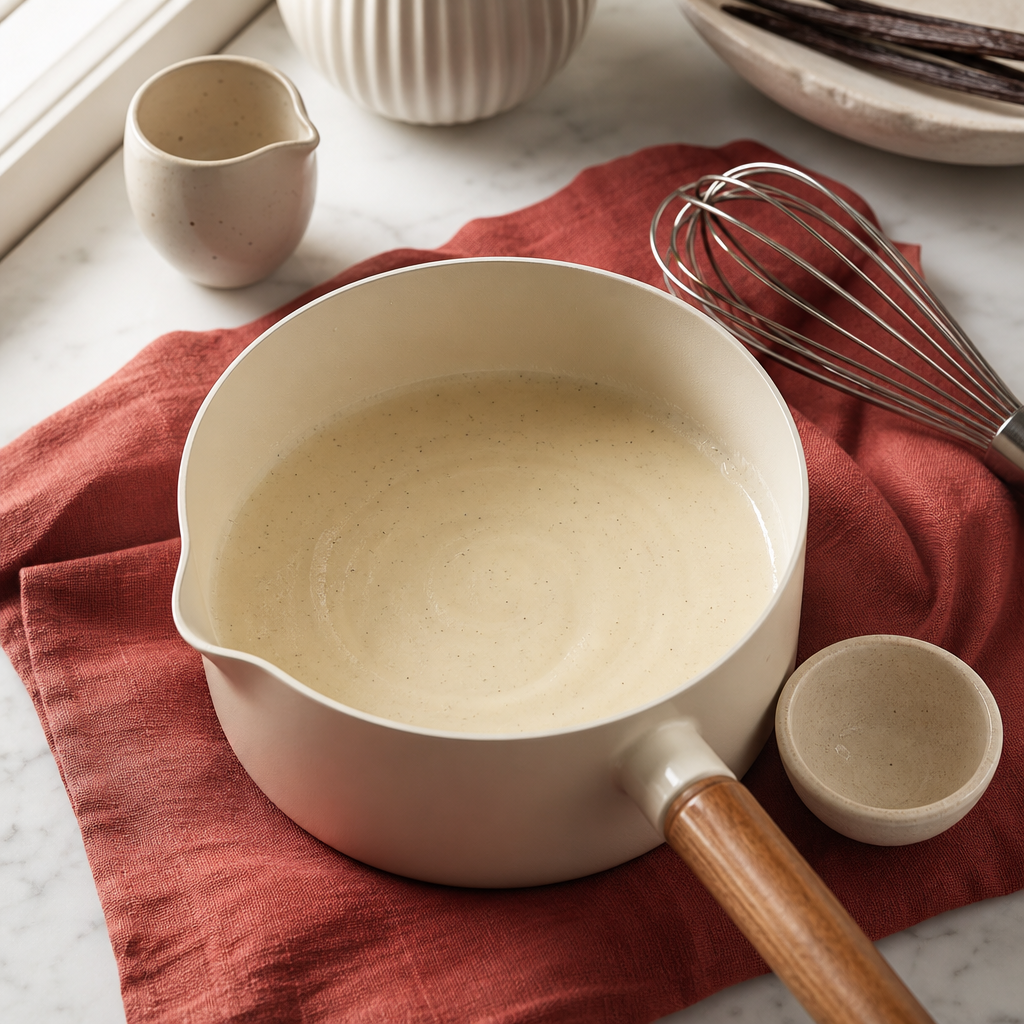
Remove the pan from the heat. Add the bloomed gelatin and stir until completely dissolved, then rub a drop of the mixture between two fingers; it should feel smooth, with no grains.
Strain and portion
Strain the mixture through a fine-mesh sieve into a jug. Divide it among the molds, skimming any surface foam with a spoon.
Chill until set
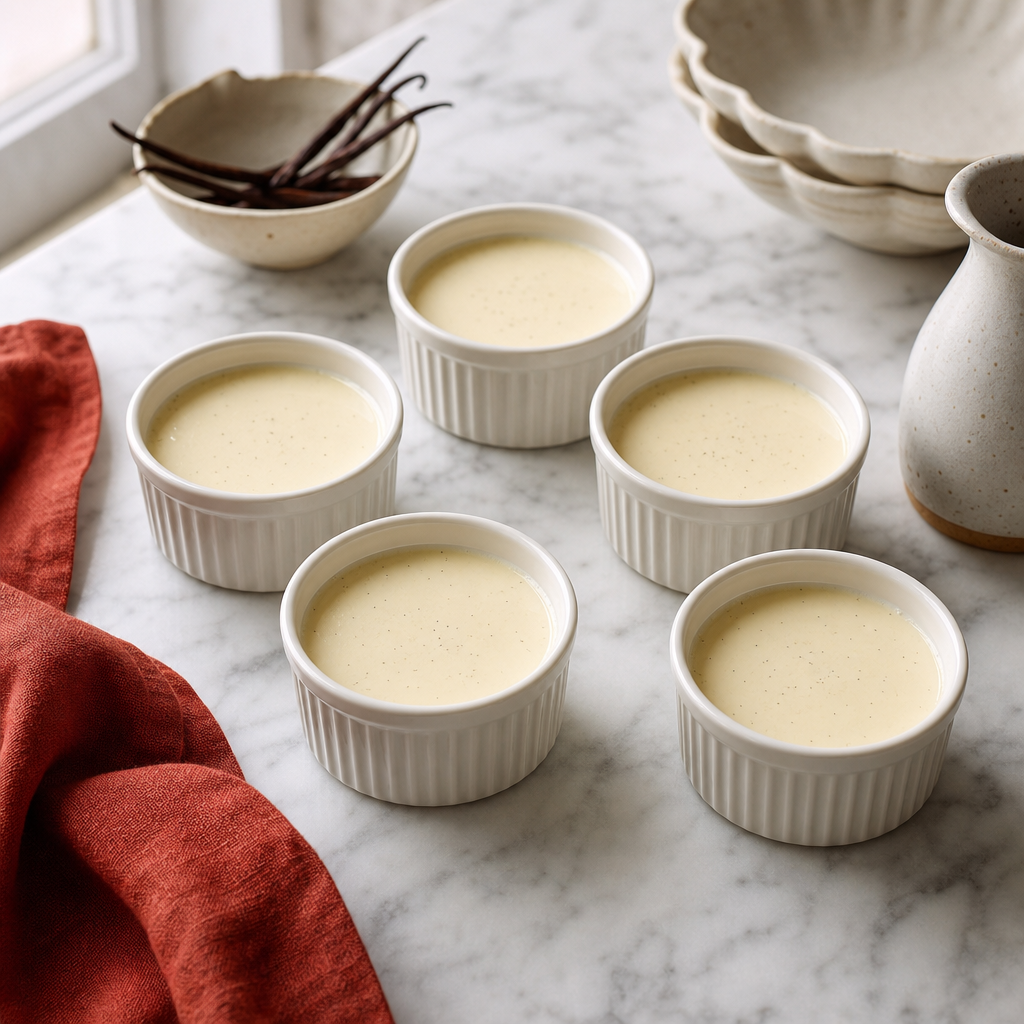
Refrigerate uncovered until cool, then cover. Chill until set, at least 4 hours and preferably 6-12 hours.
Unmold
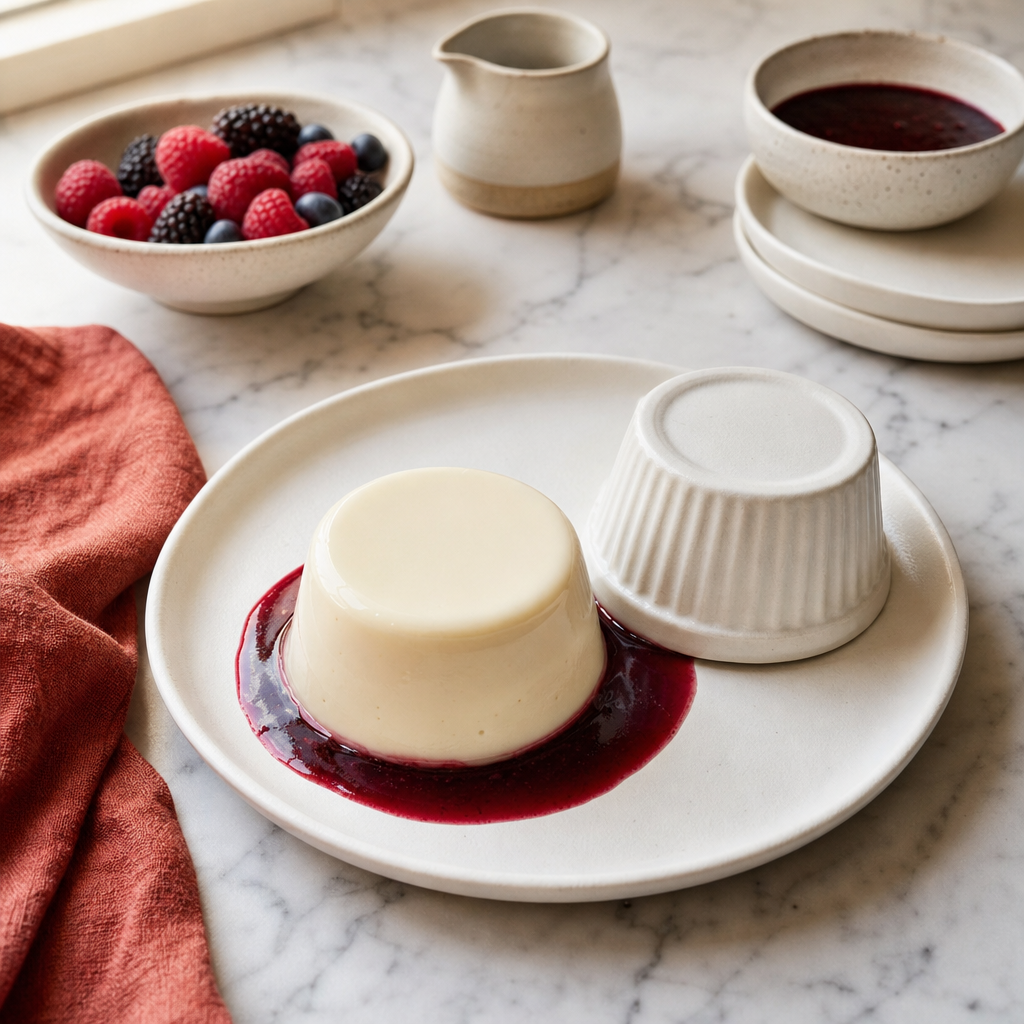
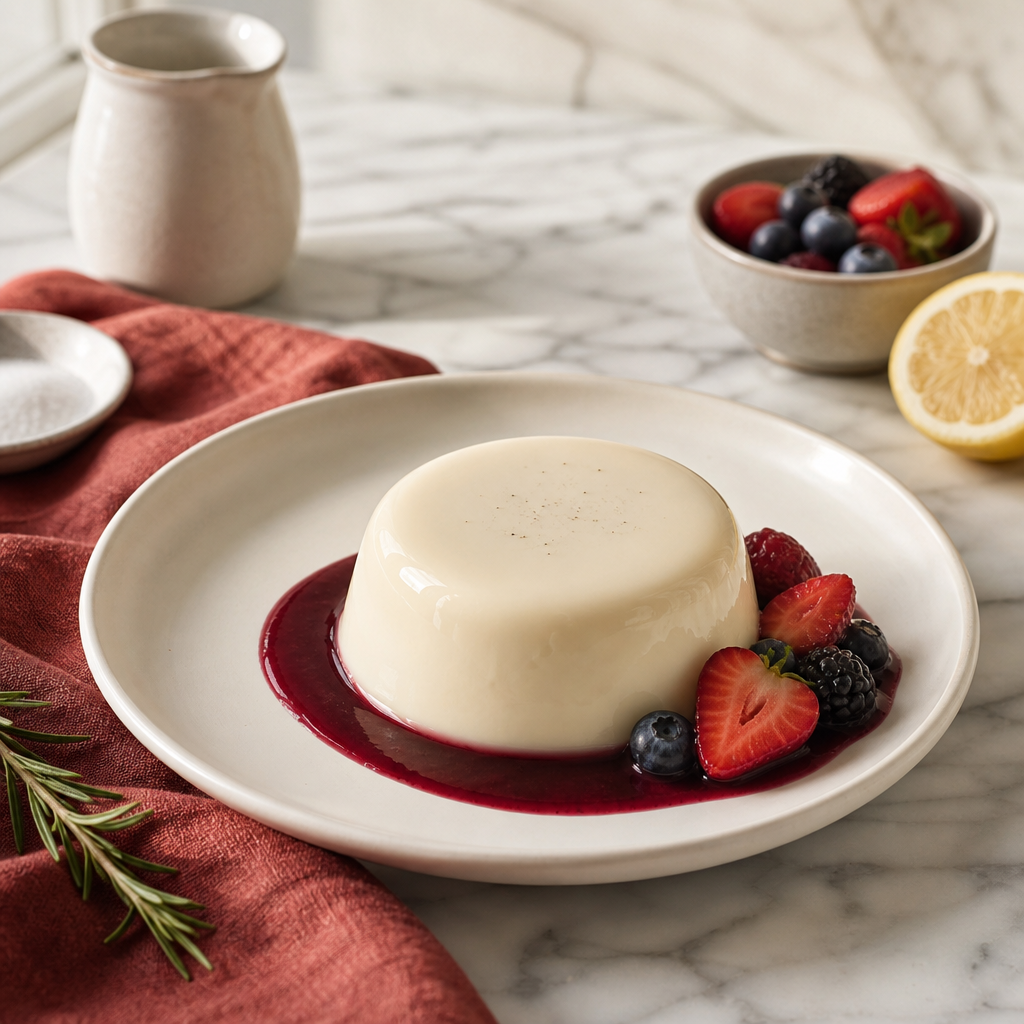
Run a thin knife just around the top edge of each mold. Dip the outside of the mold in warm water for 3-5 seconds, invert onto a plate, and lift straight up.
Serve
Serve cold with fresh fruit, a thin berry coulis, or caramel. Keep the topping around the base or spooned lightly over one side, not buried under sauce.
Common mistakes
- Using too much gelatin. The panna cotta should tremble; if it slices like firm jelly, the ratio is wrong.
- Boiling the cream. Heat only until steaming and the sugar dissolves; boiled dairy tastes flat and slightly cooked.
- Adding gelatin without blooming it first. Dry gelatin clumps into rubbery beads that a sieve may not fully catch.
- Skipping the strain. Even a few gelatin specks or bits of dairy skin break the smooth texture.
- Unmolding with hot water for too long. The sides melt before the center releases, leaving a slumped dome.
What does not belong
- Eggs do not belong in panna cotta. Eggs move the dessert toward crème caramel or custard.
- Cornstarch does not belong. A starch-thickened panna cotta tastes like milk pudding and lacks the clean gelatin wobble.
- Flour does not belong. It clouds the dairy and gives a pasty finish.
- Agar does not make the same dessert. It can set a vegan cream, but the texture is brittle and clean-cut rather than elastic and trembling.
- Whipped cream folded into the base does not belong in a traditional panna cotta. It traps bubbles and weakens the smooth molded structure.