Chocolate Gelato
The dish in context
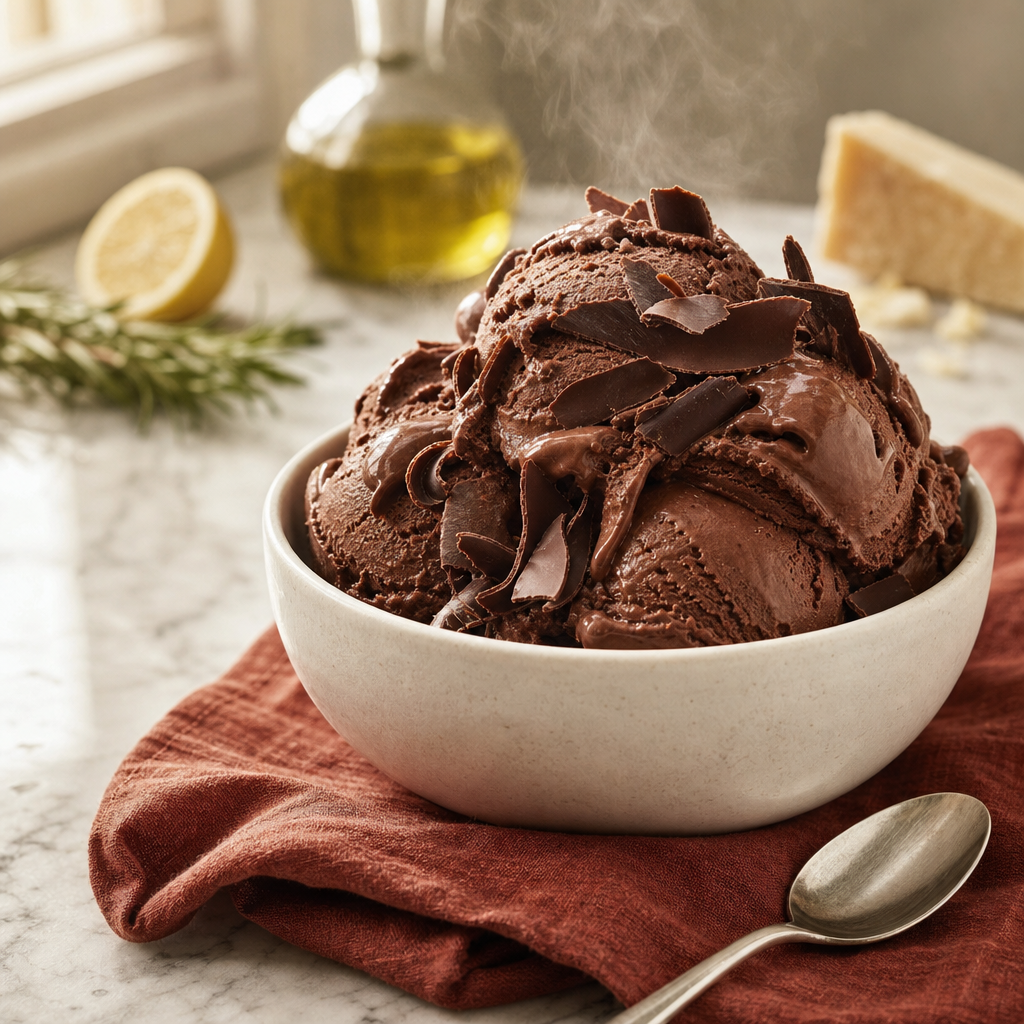
Chocolate was one of the earliest gelato flavors to enter the Italian frozen-dessert canon, helped by the spread of cacao through European court and café culture before vanilla became common. In Italy, gelato al cioccolato usually means a milk-forward frozen cream with a dense texture, not a high-fat American chocolate ice cream. Regional and shop styles vary: some use egg yolks, some use starch or stabilizers, and many professional gelaterie balance sugar types for scoopability. This home version uses egg yolks and milk powder for structure because they are easier to source than professional gelato stabilizer blends.
Method 9 steps · 600 min
Set the machine and chocolate
Freeze the ice-cream-maker bowl according to the manufacturer, usually 16-24 hours. Chop the chocolate finely so it melts on contact with the hot base rather than sitting in streaks.
Whisk the dry base
Whisk the sugar, milk powder, cocoa powder, and salt in a bowl until no cocoa lumps remain. Whisk the yolks in a second heatproof bowl until smooth.
Heat the dairy
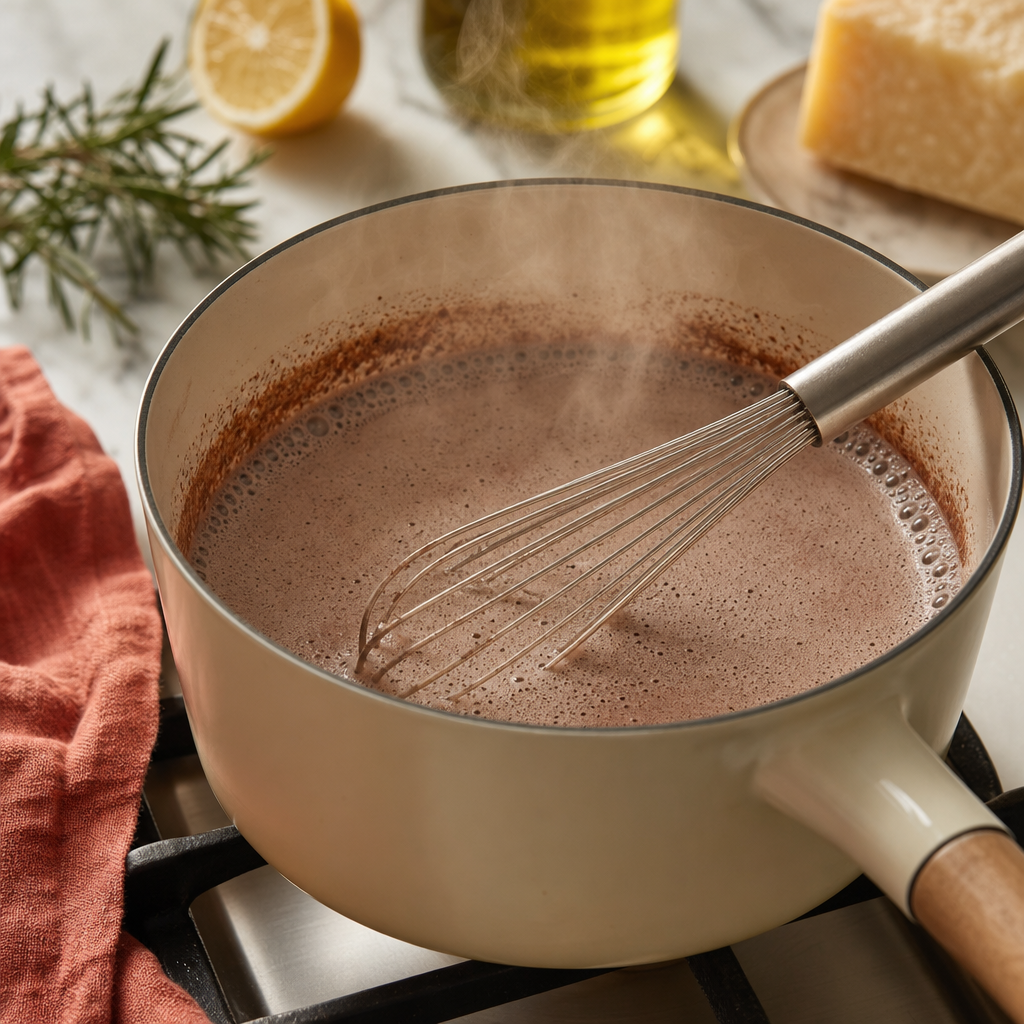
Heat the milk and cream in a saucepan over medium heat until steaming, 65-70°C, with small bubbles at the edge but no boil. Whisk in the dry cocoa mixture in a steady rain until the base looks glossy and dark.
Temper the yolks
Whisk about one-third of the hot chocolate dairy into the yolks in a thin stream. Pour the warmed yolk mixture back into the saucepan, whisking constantly.
Cook to custard thickness
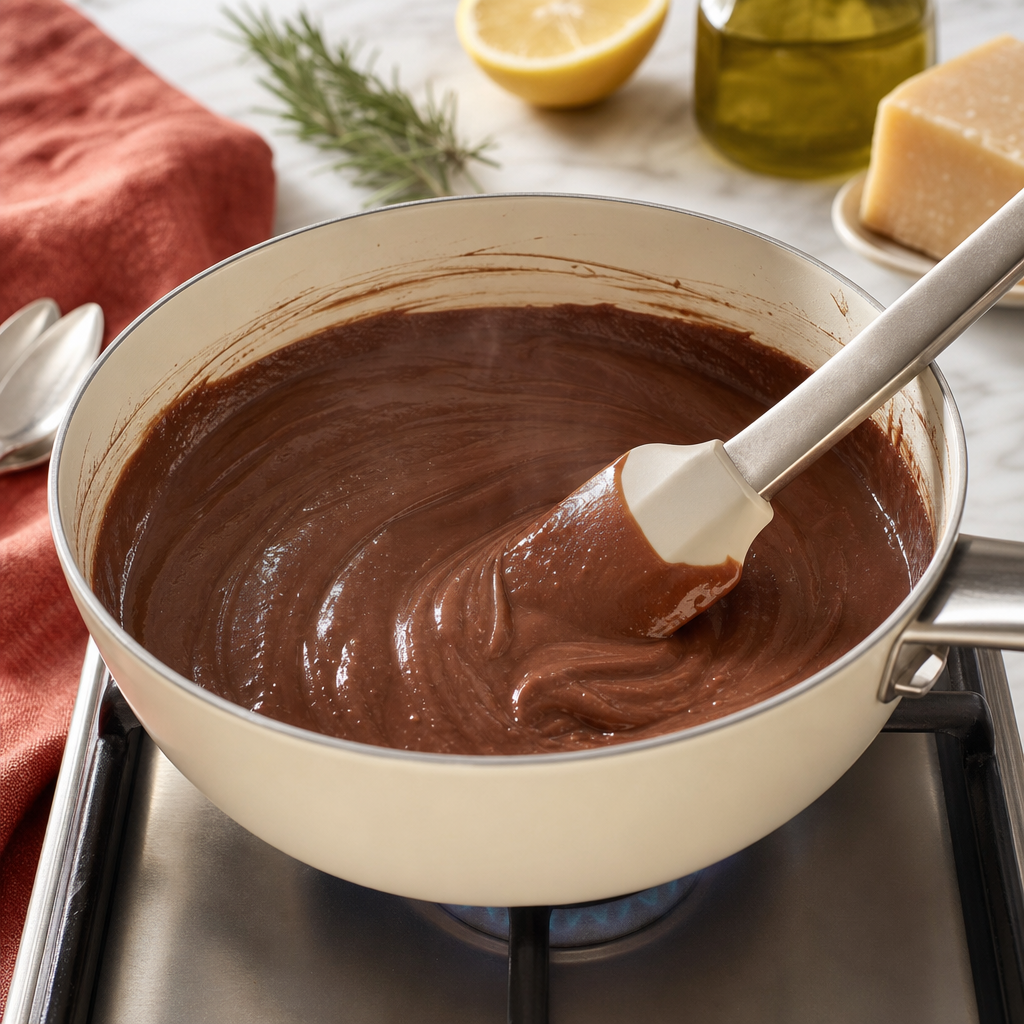
Cook over medium-low heat, stirring with a spatula, until the base reaches 82-84°C and lightly coats the spatula. Do not boil.
Melt and strain
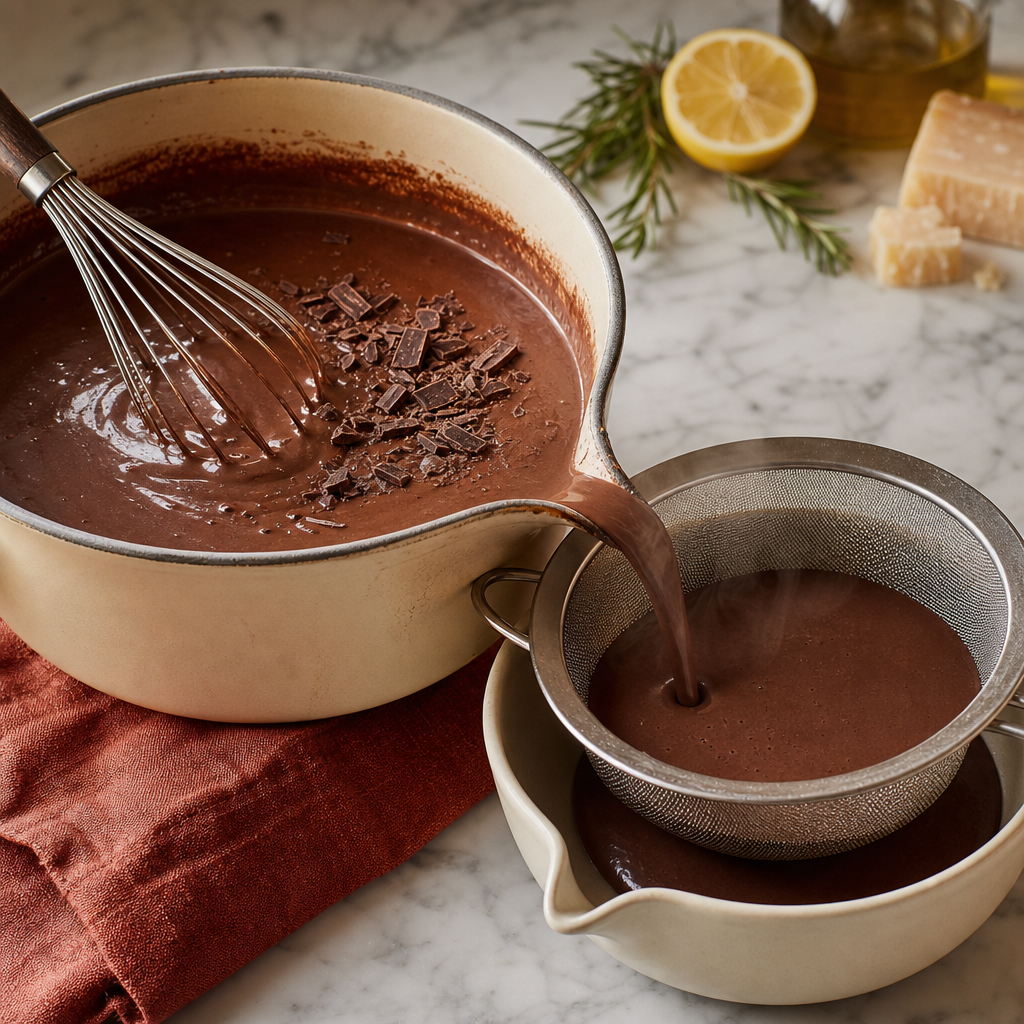
Remove from the heat and add the chopped dark chocolate. Wait 1 minute, then whisk until fully melted; strain through a fine sieve into a clean bowl.
Chill and age
Press plastic wrap or parchment directly on the surface and chill until below 4°C, at least 6 hours and preferably overnight. The base should be cold, thick, and pourable.
Churn
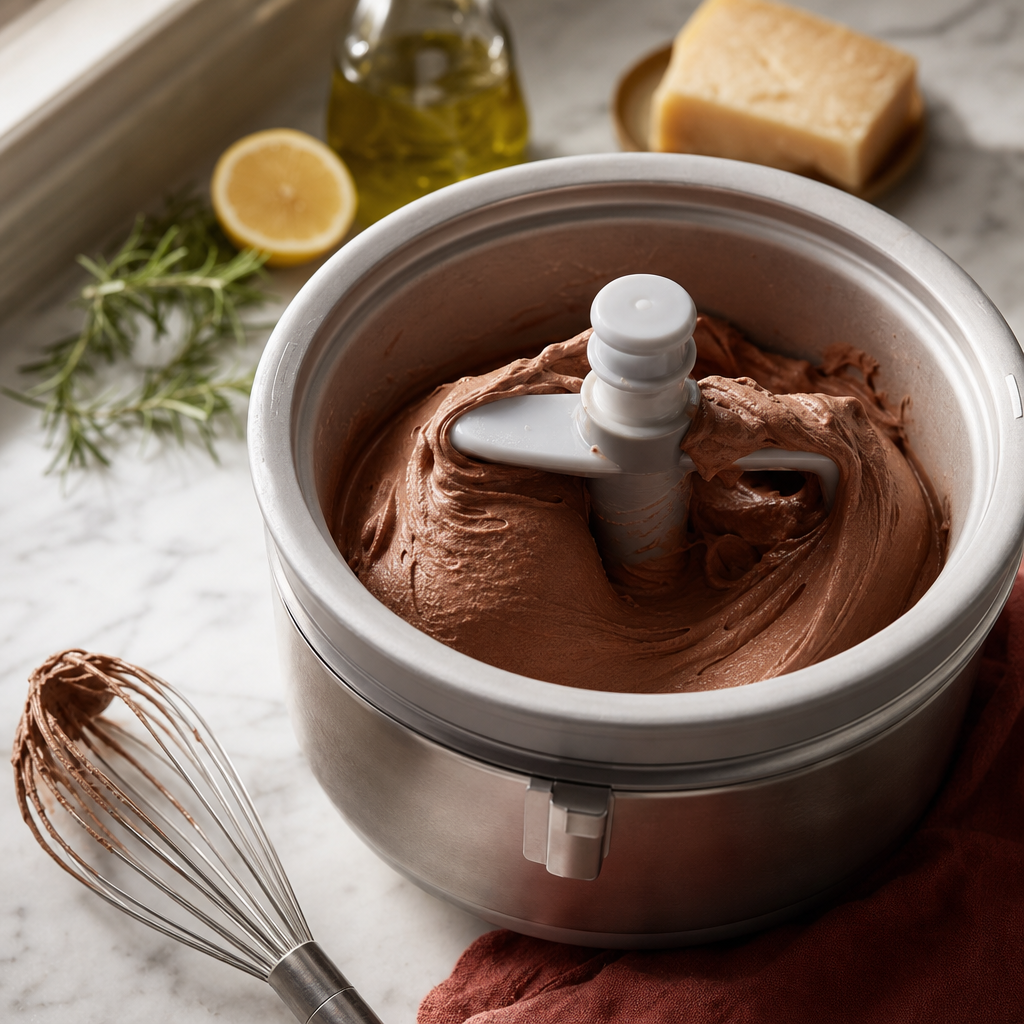
Whisk the cold base once, then churn until it looks like dense soft-serve and pulls away from the dasher, usually 20-30 minutes. Stop before it becomes crumbly at the edge of the bowl.
Harden and serve
Pack into a shallow airtight container, press parchment onto the surface, and freeze 2-4 hours to firm. Serve at about -12 to -14°C; if frozen solid, rest it in the refrigerator for 20-30 minutes before scooping.
Common mistakes
- {'mistake': 'Using too much cream', 'fix': 'Keep the cream modest. High butterfat makes a heavy American-style chocolate ice cream, not gelato.'}
- {'mistake': 'Boiling the custard', 'fix': 'Cook to 82-84°C and stop. Boiled yolks leave sulfur notes and tiny curds that remain visible after churning.'}
- {'mistake': 'Skipping the overnight chill', 'fix': 'Age the base until very cold. Churning warm base is the direct path to icy gelato.'}
- {'mistake': 'Using weak cocoa or sweet chocolate', 'fix': 'Use bitter cocoa and 65-75% dark chocolate. Sugar-heavy chocolate makes the gelato flat and soft.'}
- {'mistake': 'Serving straight from a very cold freezer', 'fix': 'Temper before scooping. Chocolate gelato needs a slightly warmer serving temperature so it bends under the scoop instead of cracking.'}
What does not belong
- {'item': 'Condensed milk', 'reason': 'Condensed milk makes a no-churn frozen dessert. It does not give the clean dairy balance of gelato al cioccolato.'}
- {'item': 'Chocolate chips', 'reason': 'Frozen chips turn hard and waxy. If texture is wanted, make a separate stracciatella-style variant with thin melted chocolate ribbons.'}
- {'item': 'Large amounts of cream', 'reason': 'Cream-heavy formulas dull cocoa bitterness and push the texture toward ice cream.'}
- {'item': 'Nutella', 'reason': 'Nutella brings hazelnut oil, palm oil, and a different identity. That is gianduja territory, not plain cioccolato.'}
- {'item': 'Instant pudding mix', 'reason': 'It gives a boxed-starch flavor and masks the chocolate. Stabilization is not the same as thickening at any cost.'}