Torta della Nonna
The dish in context
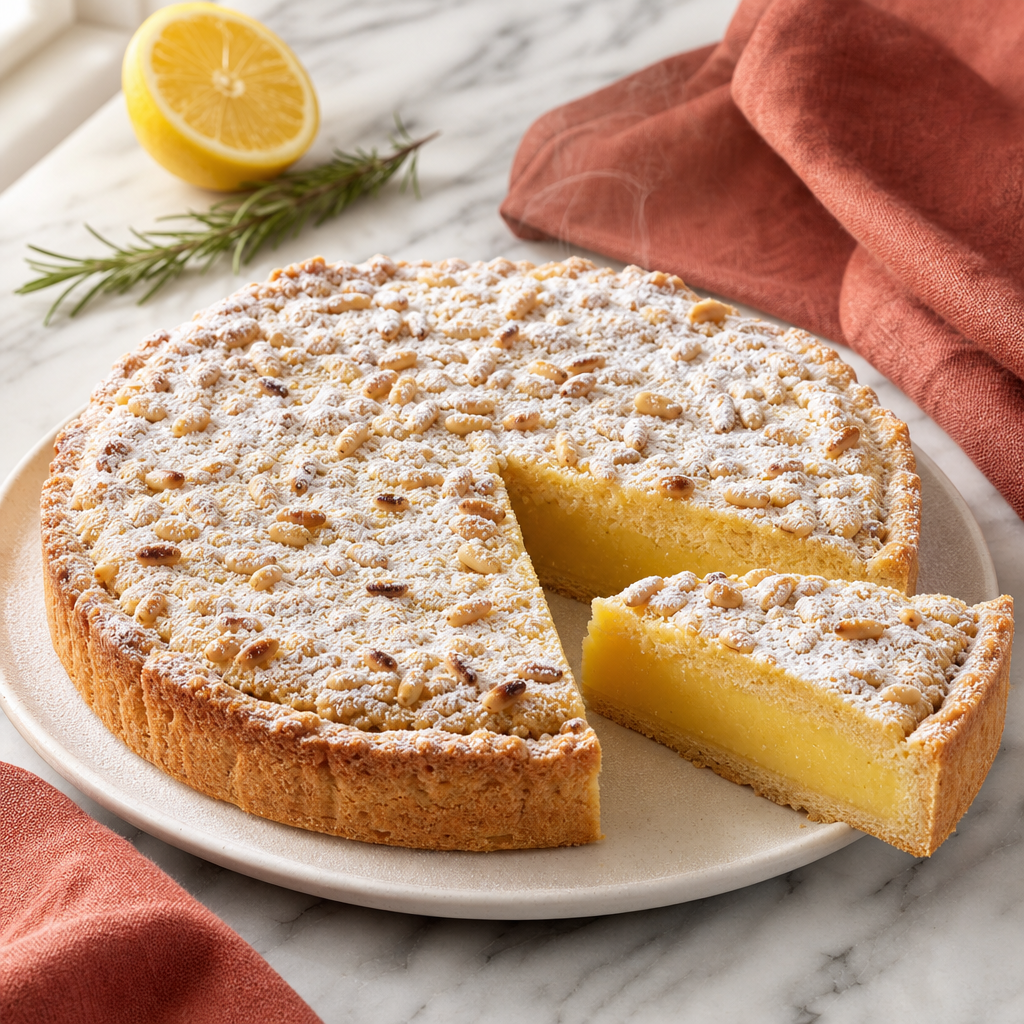
Torta della nonna is a Tuscan pastry now found across Italy, built from pasta frolla, crema pasticcera, pine nuts, and powdered sugar. Its exact origin is disputed between older Tuscan practice and a Florentine restaurant story, but the structure predates modern internet-standard recipes. The name means “grandmother’s cake,” but that does not make it a loose pantry cake; the identity is the custard enclosed in short pastry with pine nuts on top. Chocolate versions and cherry additions exist, but they are variants, not the baseline Tuscan form.
Method 8 steps · 210 min
Make the pasta frolla
Rub or pulse the flour, cold butter, sugar, salt, and lemon zest until the mixture looks like coarse sand with a few pea-size butter pieces. Add the whole egg and yolk, then mix only until the dough clumps when pressed. Flatten into two discs, one slightly larger than the other, wrap, and chill for 45 minutes.
Infuse the milk
Heat the milk with the vanilla bean and lemon peel until steam rises and small bubbles collect at the edge of the pan. Remove from the heat, cover, and steep for 10 minutes. Lift out the lemon peel and vanilla pod.
Cook the crema pasticcera
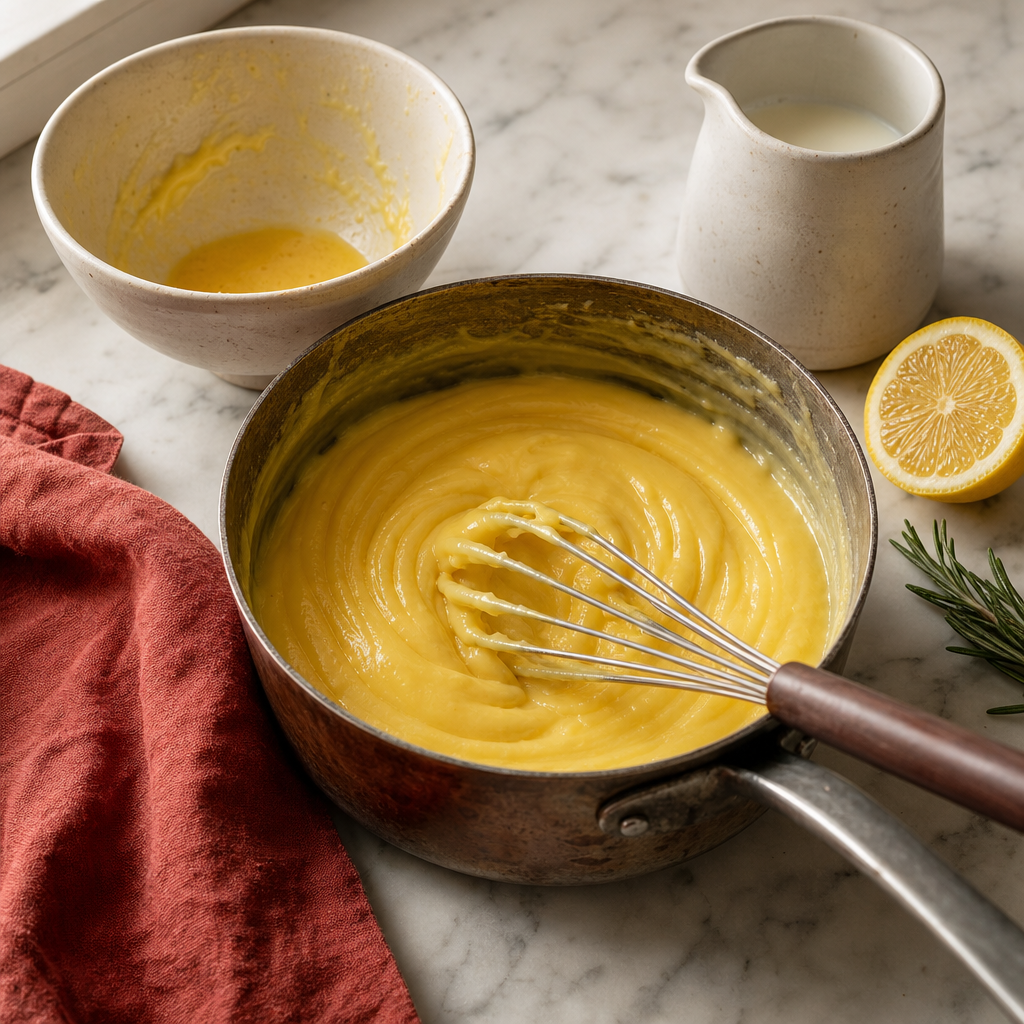
Whisk the yolks, sugar, and cornstarch until pale and thick. Whisk in the warm milk in a steady stream, return everything to the pan, and cook over medium-low heat, whisking constantly, until the custard turns glossy and holds firm tracks from the whisk, 3 to 5 minutes after it begins to bubble. Scrape into a shallow dish, press film or parchment directly onto the surface, and cool until warm, not hot.
Roll the base
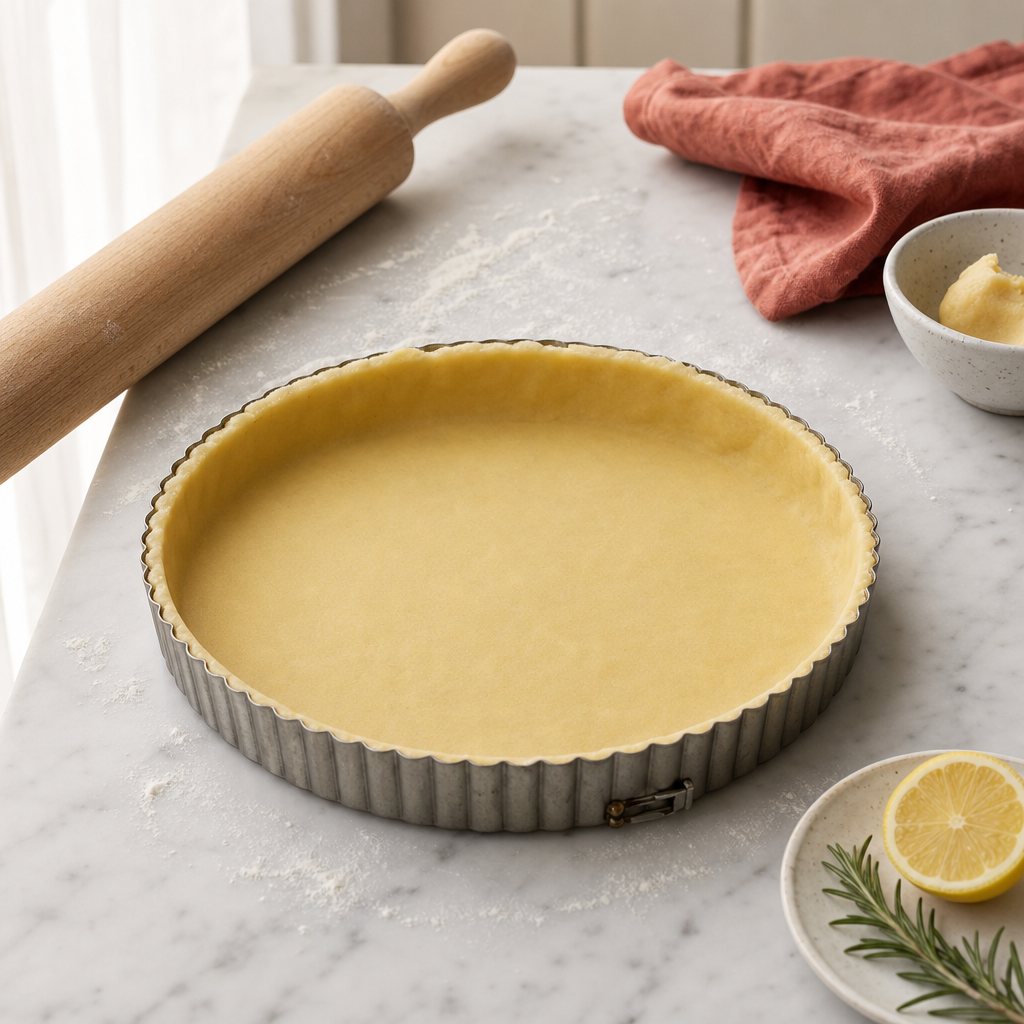
Heat the oven to 175°C. Roll the larger dough disc to about 3 mm thick and line a 24 cm tart tin or springform pan, leaving a 2 cm wall. Prick the base lightly with a fork and chill the lined tin for 15 minutes.
Fill and close the tart
Spread the cooled custard into the shell in an even layer. Roll the smaller dough disc to 3 mm thick, lay it over the custard, and seal the edge by pressing the two pastry layers together. Trim excess dough and prick the top 5 or 6 times with a skewer.
Add the pine nuts
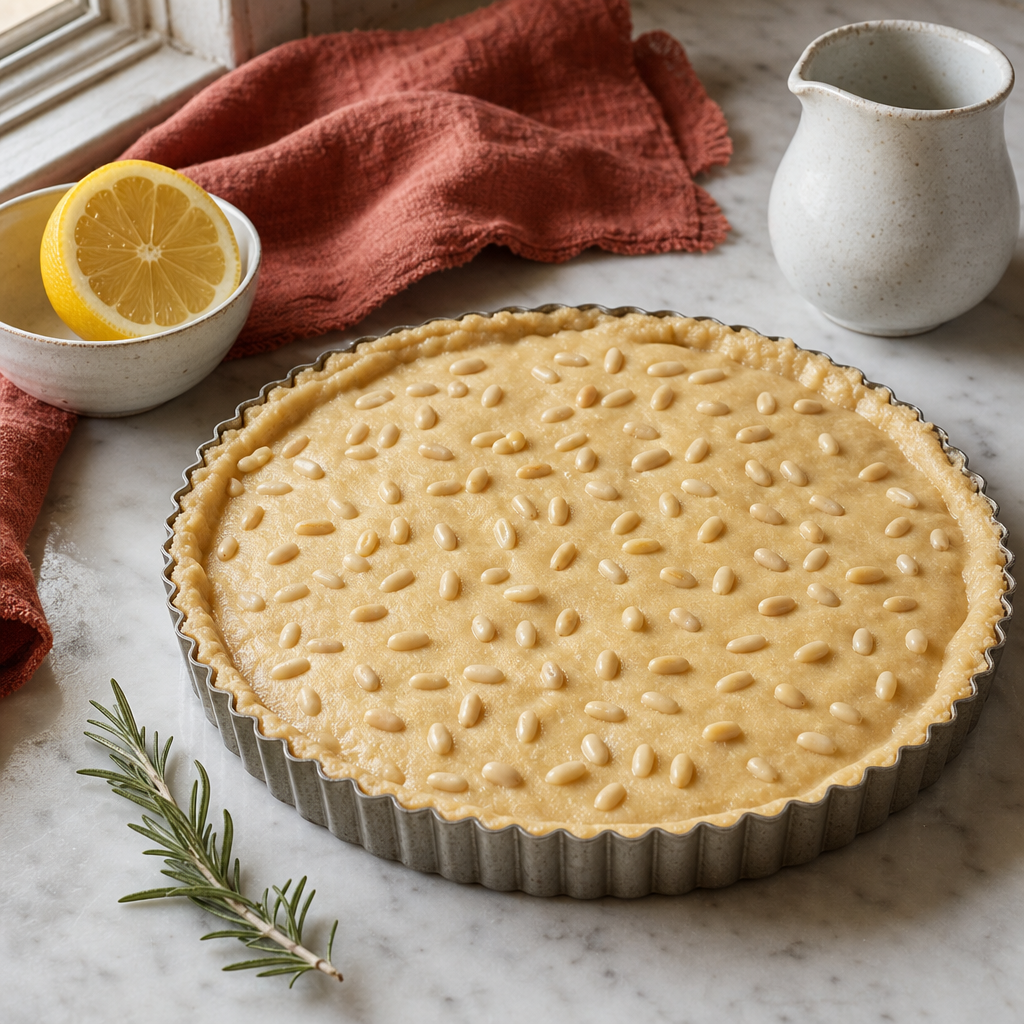
Soak the pine nuts in cold water for 5 minutes, drain well, and scatter them over the top crust. Press them lightly so they adhere without being buried in the dough.
Bake
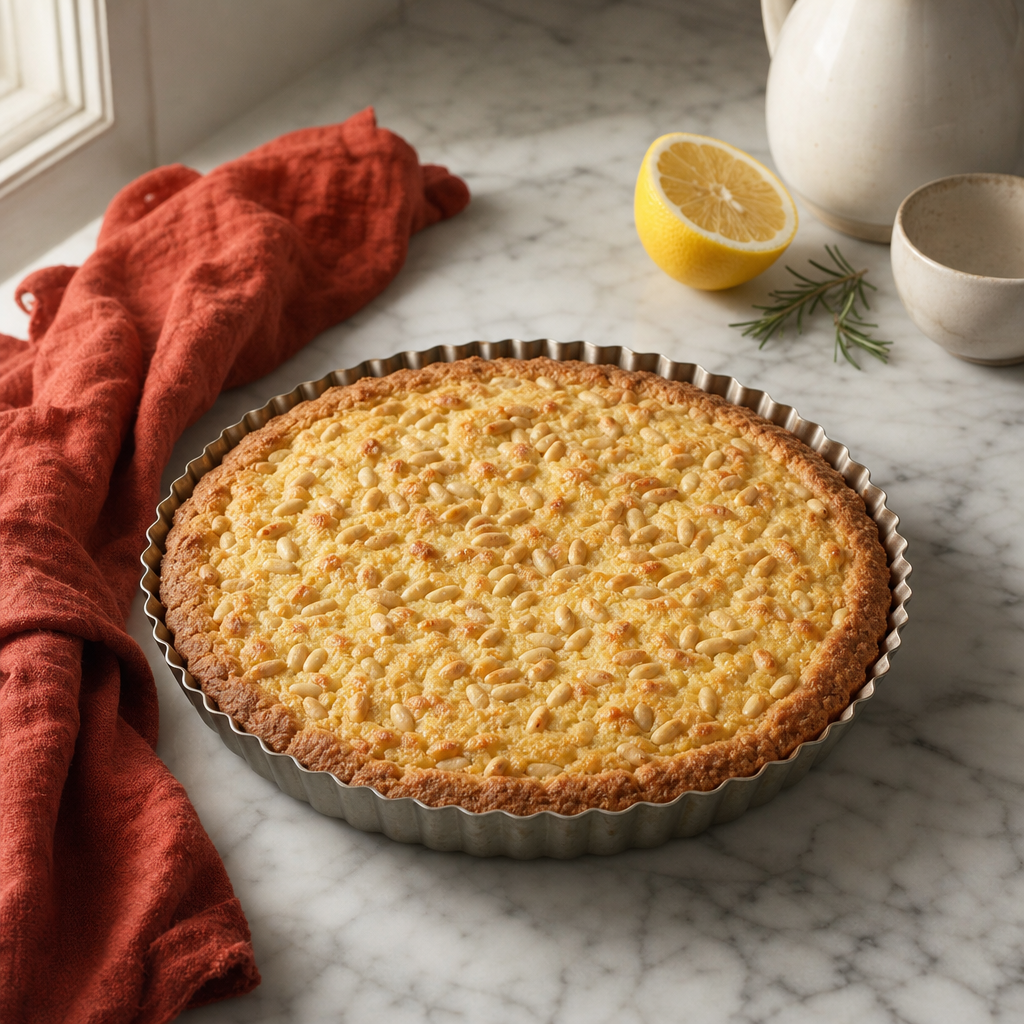
Bake on the lower-middle rack until the pastry is matte golden at the edges and the center no longer looks raw, 38 to 45 minutes. If the pine nuts darken before the crust is done, lay a loose sheet of foil over the tart. Cool in the tin for 30 minutes, then unmold and cool completely.
Finish
Dust lightly with powdered sugar once the tart is fully cool. Serve at room temperature, or chill and bring back toward room temperature before slicing.
Common mistakes
- Using loose custard. Crema pasticcera for this tart must be thick before baking; the oven is not the primary thickener.
- Skipping the chill on the dough. Warm pasta frolla smears, shrinks, and bakes greasy.
- Browning the pine nuts too hard. Dark brown pine nuts taste bitter before the pastry tastes done.
- Adding lemon juice to the custard. Lemon peel belongs; lemon juice does not.
- Serving it warm from the oven. The slice needs time to set into clean pastry-custard layers.
What does not belong
- Chocolate does not belong in the baseline torta della nonna; that is torta del nonno or a modern variant.
- Ricotta does not belong in the custard. This is crema pasticcera, not a cheesecake filling.
- Almond extract does not belong. Pine nuts provide the nut character without turning the tart into an almond pastry.
- Whipped cream does not belong in the filling. It lightens the custard and weakens the slice.
- Jam or fresh berries do not belong in the traditional Tuscan structure.