Crostata Marmellata
The dish in context
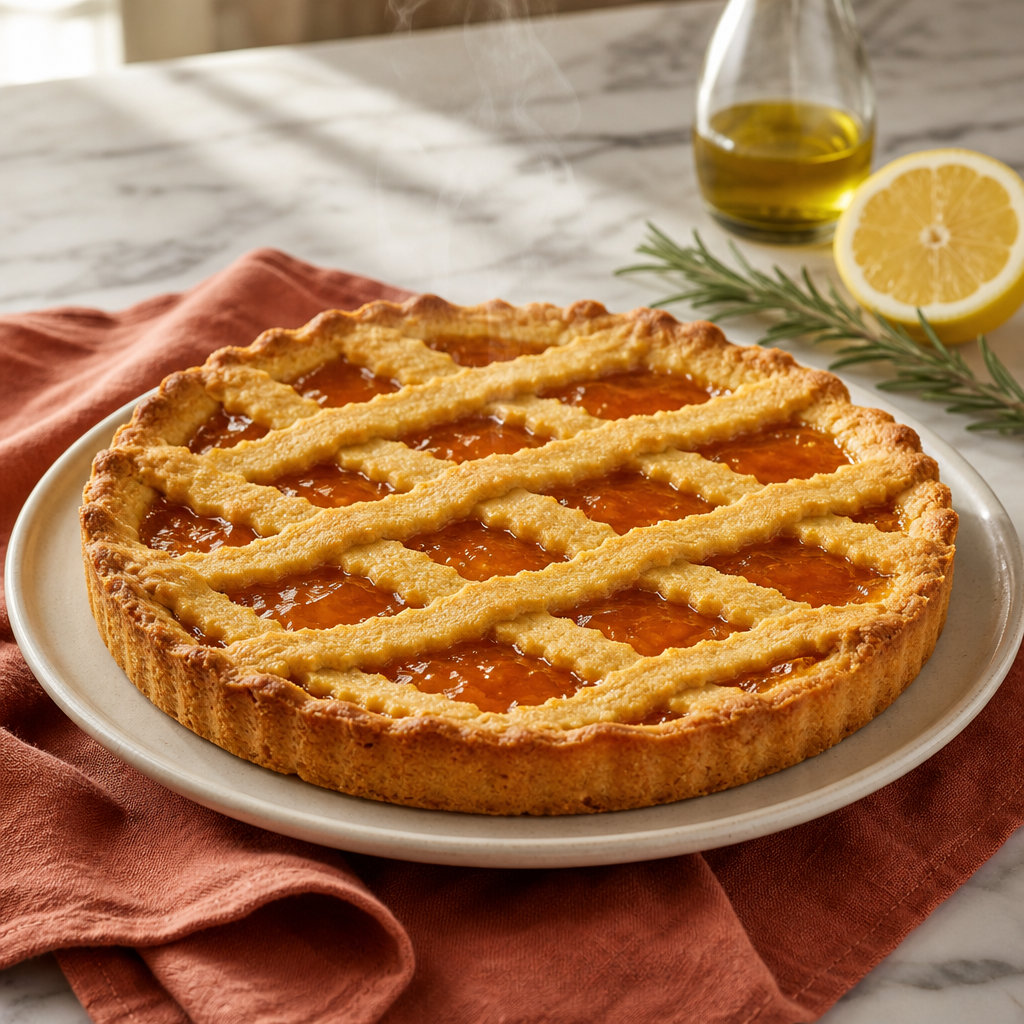
Crostata di marmellata is one of the standard home and bakery sweets across Italy: a pasta frolla base, fruit preserve, and a lattice top. In strict Italian food labeling, marmellata refers to citrus marmalade and confettura refers to other fruit preserves, but household speech often uses marmellata broadly for jam. Apricot, raspberry, strawberry, cherry, and plum are all common; the structure matters more than one mandated fruit. The tart sits between dessert, breakfast sweet, and afternoon snack, which is why many Italian versions are less sugary than pastry-shop tarts built for display.
Method 8 steps · 135 min
Cut the butter into the flour
Combine flour, sugar, salt, and lemon zest in a bowl. Rub in the cold butter with fingertips or pulse in a food processor until the mixture looks like coarse sand with a few pea-sized butter pieces.
Bind the dough
Add the whole egg and yolk. Mix only until the dough clumps when pressed; if dry flour remains, add cold water 1 teaspoon at a time, stopping as soon as it holds together.
Chill the dough
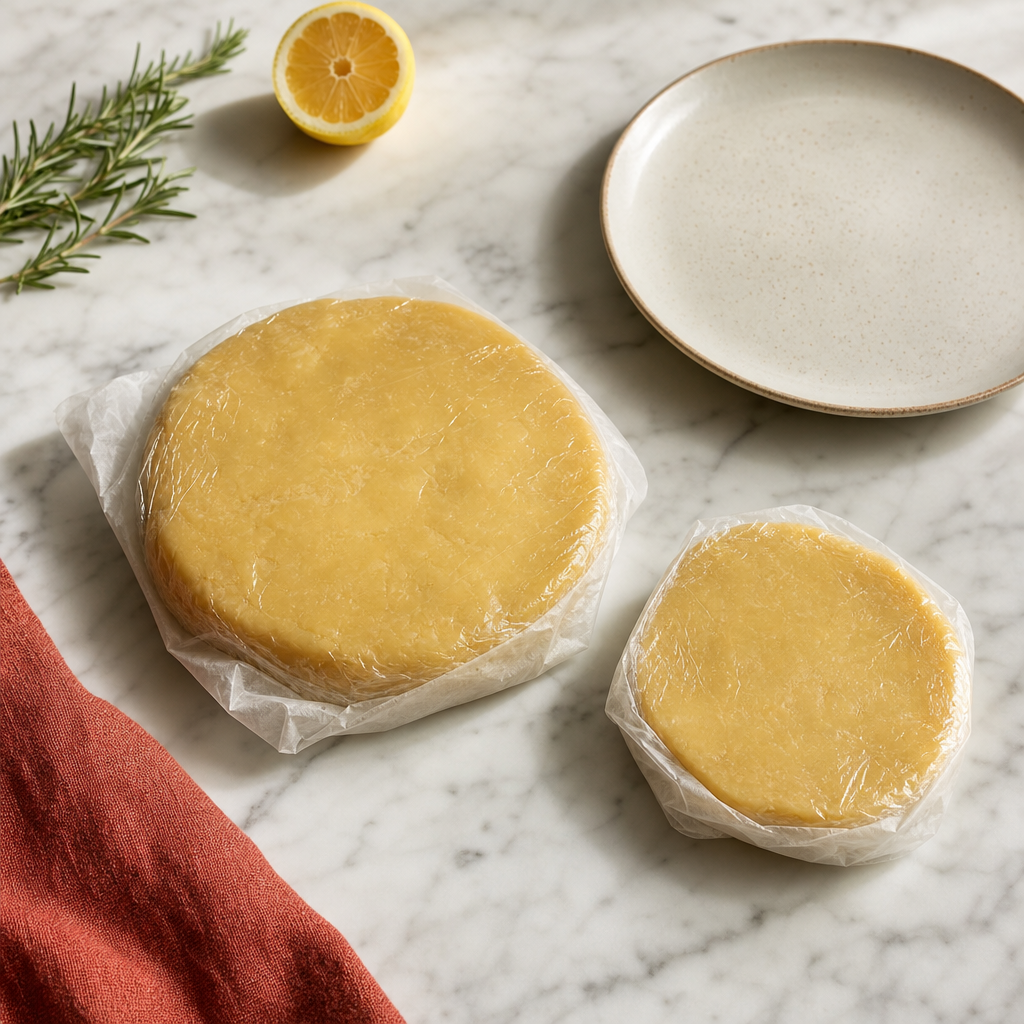
Divide the dough into two pieces: two-thirds for the base and one-third for the lattice. Flatten both into discs, wrap, and chill until firm, at least 45 minutes.
Line the tart pan
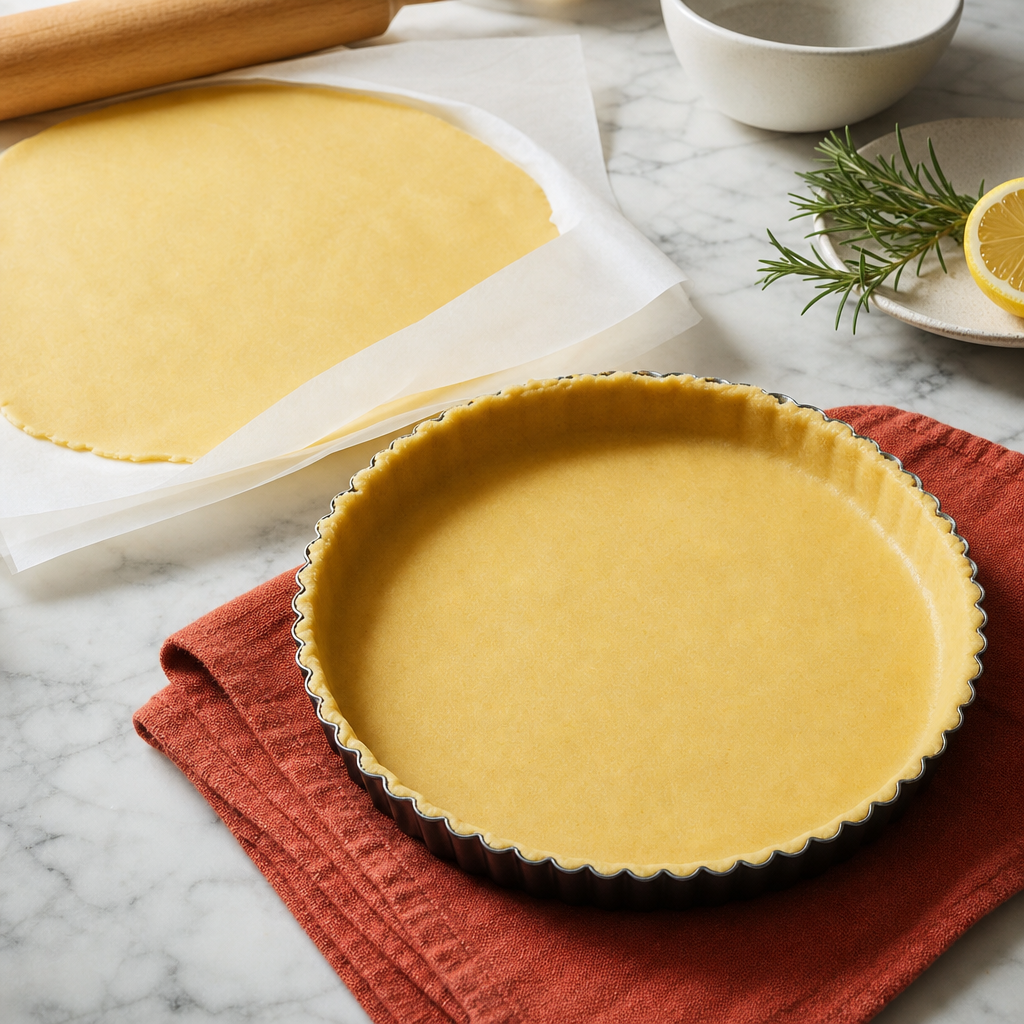
Heat the oven to 180°C / 350°F. Roll the larger dough disc between two sheets of parchment to a 3–4 mm thickness, then fit it into a 24 cm tart pan and trim the edge flush.
Add the jam
Stir the jam until spreadable. Spread it over the base in an even 5–7 mm layer, stopping just below the rim.
Cut and place the lattice
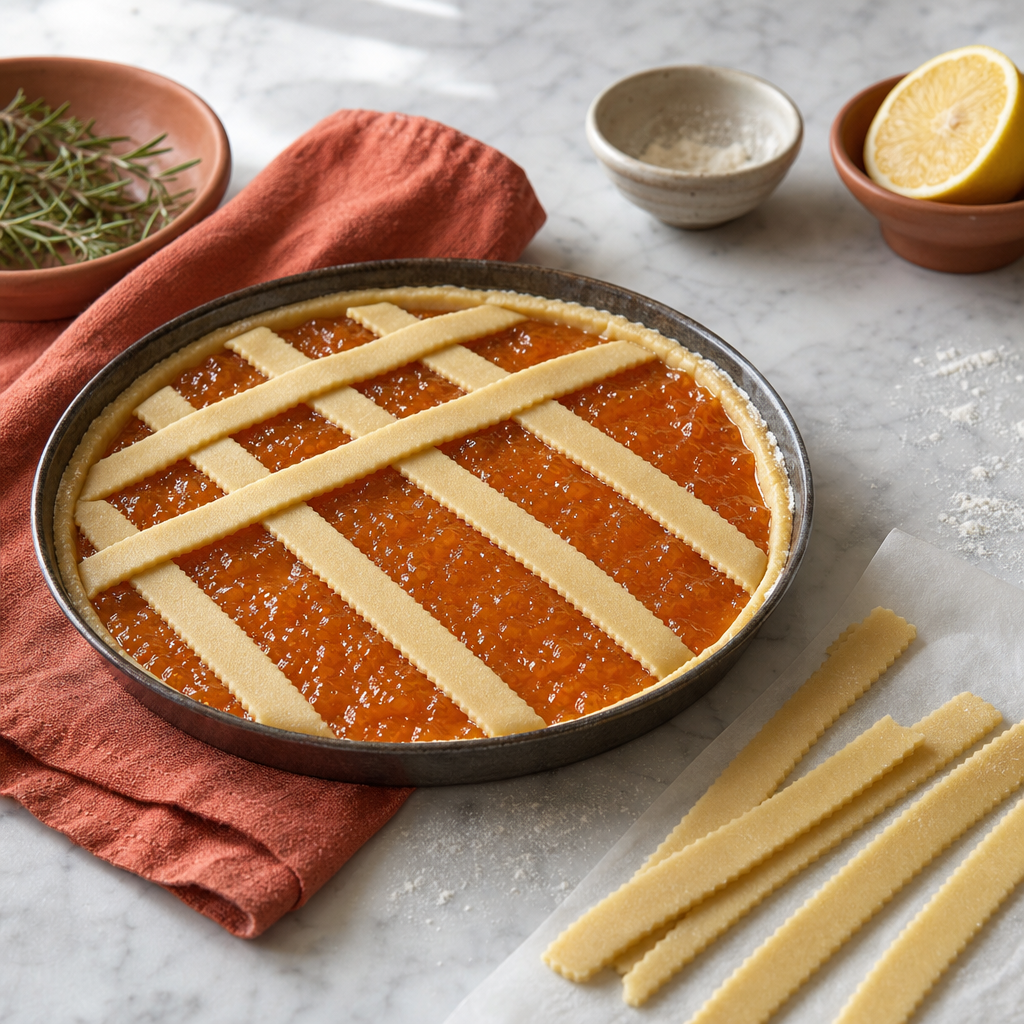
Roll the smaller dough disc to 3–4 mm thickness and cut it into 1.5–2 cm strips. Lay the strips over the jam in a diagonal lattice, pressing the ends into the edge to anchor them.
Glaze and bake
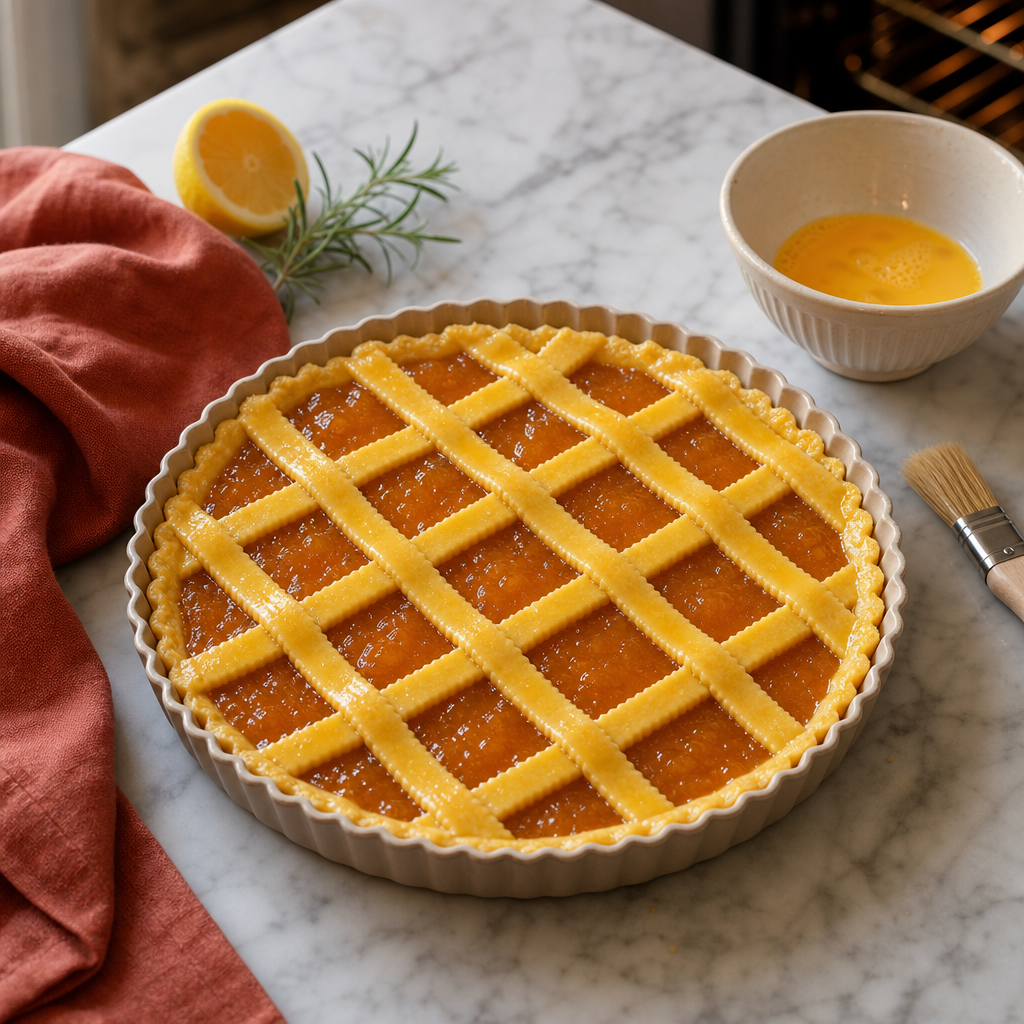
Beat the egg with the water and brush a thin coat over the lattice and rim. Bake on the middle rack for 35–40 minutes, until the pastry is golden at the edges and the jam bubbles slowly in the openings.
Cool before slicing
Cool the crostata in the pan for at least 45 minutes before removing the ring and slicing. Serve at room temperature.
Common mistakes
- {'mistake': 'Using pourable jam', 'fix': 'Use thick preserves. If the jam is too stiff, warm it briefly with 1–2 teaspoons water, then cool it before filling the tart.'}
- {'mistake': 'Working warm dough', 'fix': 'Chill the dough again whenever it bends, smears, or sticks to the parchment. Cold frolla cuts sharp and bakes clean.'}
- {'mistake': 'Rolling the base too thick', 'fix': 'Keep the base at 3–4 mm. A thick base bakes pale under the jam and eats like a cookie slab.'}
- {'mistake': 'Overmixing after the eggs go in', 'fix': 'Stop when the dough holds together under pressure. Smooth, stretchy dough means gluten has already been built.'}
- {'mistake': 'Slicing while hot', 'fix': 'Wait until the jam no longer moves when the pan is tilted. Hot slices collapse at the point.'}
What does not belong
- {'item': 'Custard', 'reason': 'Custard makes crostata con crema, a different tart. It does not belong in crostata di marmellata.'}
- {'item': 'Cream cheese', 'reason': 'Cream cheese turns the filling into an Italian-American bakery variant. It does not belong in the standard jam crostata.'}
- {'item': 'A deep layer of fruit filling', 'reason': 'This is not pie. The jam layer should be shallow enough for the base to bake dry.'}
- {'item': 'Cinnamon-heavy spice blend', 'reason': 'A whisper of zest is traditional; a spice-cake profile does not belong in this tart.'}
- {'item': 'Oil in place of butter without changing the formula', 'reason': 'Oil does not behave like solid butter in pasta frolla. It produces a different crust and needs a separate recipe.'}