Ciabatta Bread
The dish in context
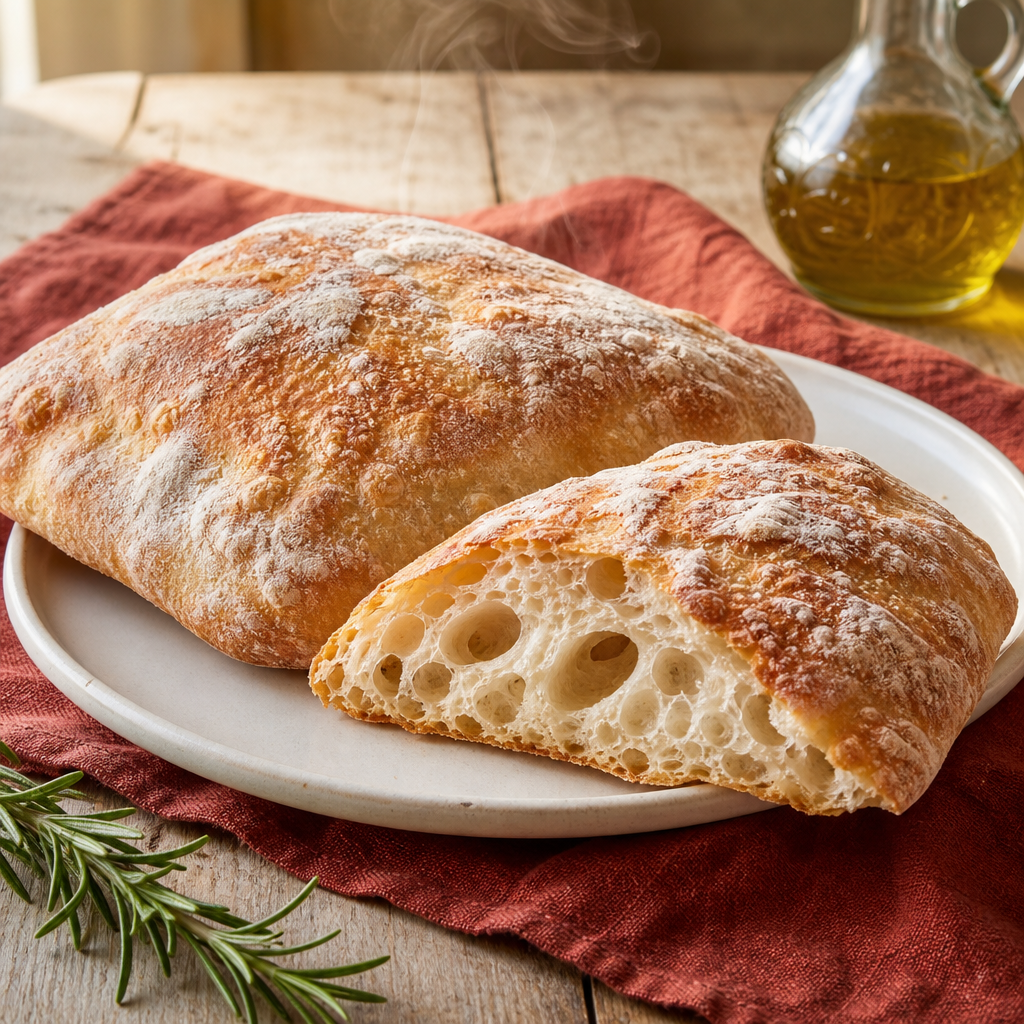
Ciabatta is a modern Italian bread, created in the early 1980s in Adria, Veneto, and associated with baker Arnaldo Cavallari. Its name means “slipper,” a practical reference to the loaf’s flattened, elongated shape. The bread became internationally recognizable because it worked for panini: thin crust, open crumb, and a shape that sliced cleanly for sandwiches. Regional and bakery versions vary in hydration, starter method, and whether a small amount of oil appears, but the core grammar is strong flour, wet dough, minimal shaping, and a broad loaf.
Method 10 steps · 1080 min
Mix the wet biga-style preferment
Stir the biga flour, cool water, and 0.5 g yeast until no dry flour remains. Cover and leave at cool room temperature until bubbly, domed, and beginning to recede at the edges, 12-16 hours.
Build the final dough
Add the final dough water to the biga and tear the biga apart with wet fingers or a dough whisk. Add the remaining flour and yeast, mix until shaggy, then rest 20 minutes before adding the salt.
Add salt and strengthen the dough
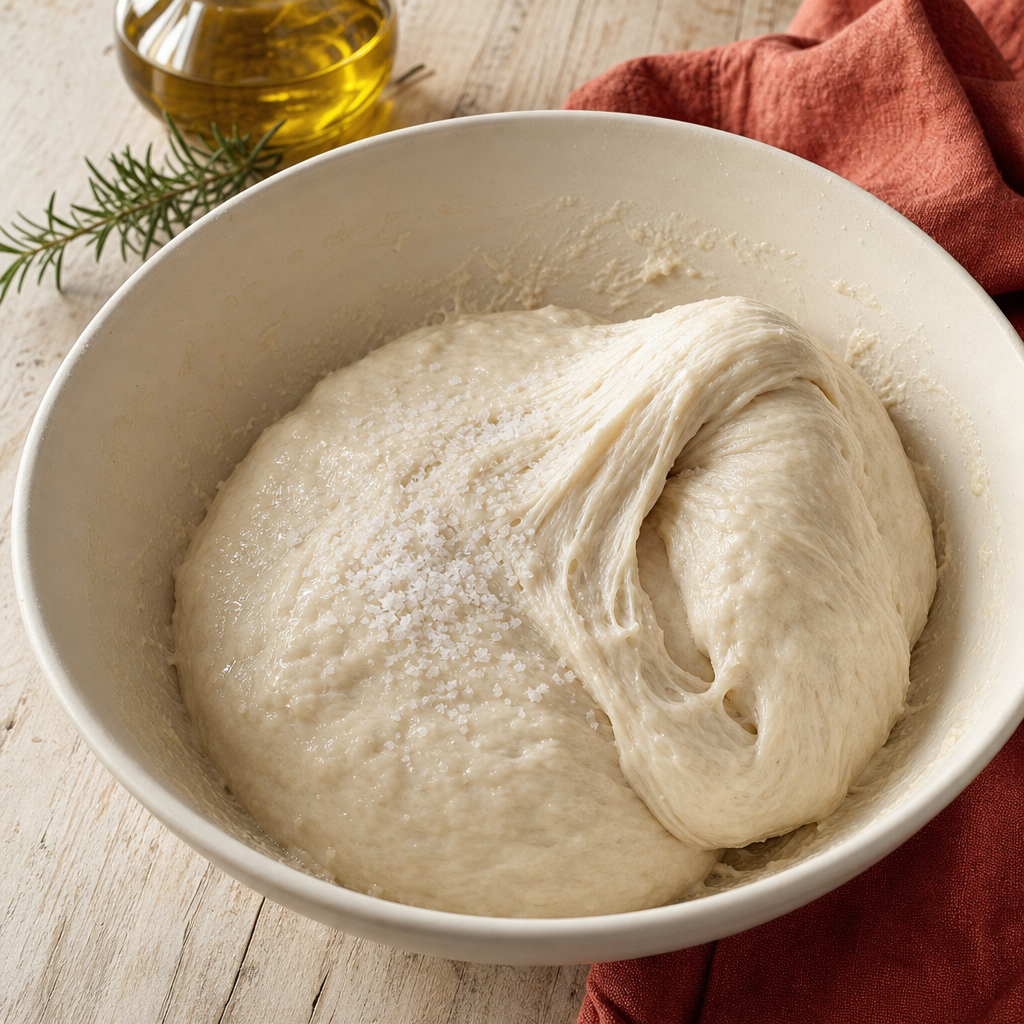
Sprinkle in the salt and mix by pinching and folding until the dough turns smoother and slightly elastic, 3-5 minutes. It should still cling to the bowl and stretch like thick batter.
Fold during bulk fermentation
Cover and ferment for 2 1/2 to 3 hours, giving the dough three folds at 30-minute intervals. For each fold, wet a hand, lift one edge until it stretches, fold it over itself, rotate the bowl, and repeat four times.
Prepare the oven
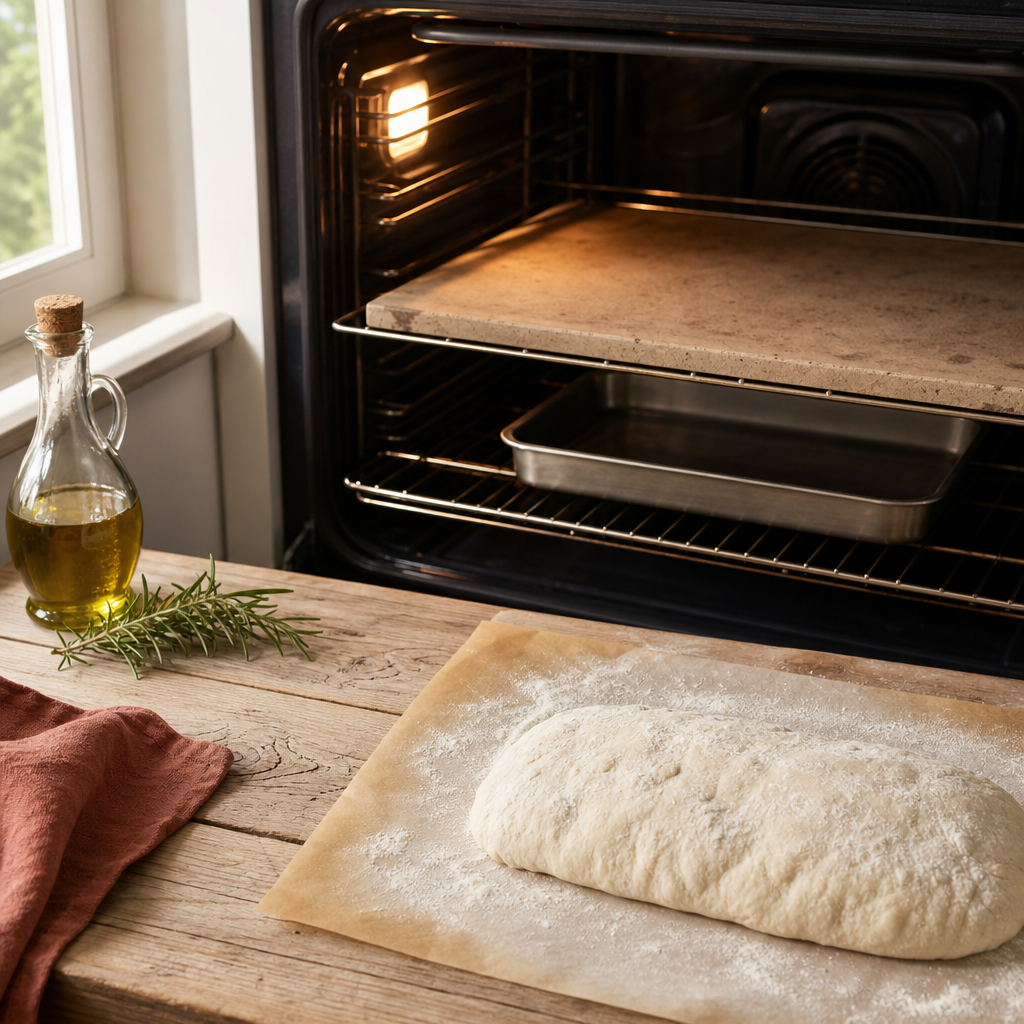
Place a baking stone or heavy baking sheet on the middle rack and a metal pan on the lower rack. Heat the oven to 245°C / 475°F for at least 45 minutes.
Turn out the dough
Heavily flour the work surface, then scrape the dough out in one piece without punching it down. Dust the top with flour and pat it gently into a rough rectangle about 3 cm thick.
Divide and shape
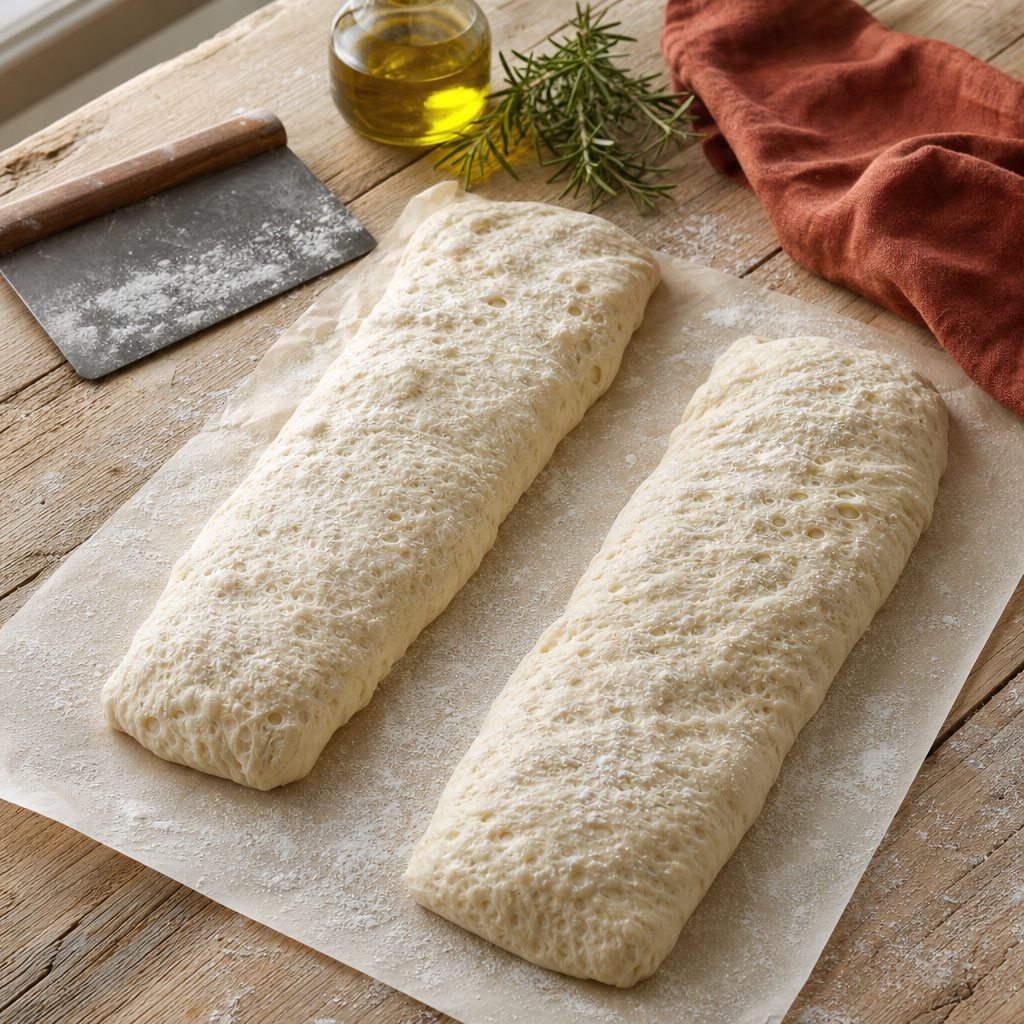
Cut the dough into 2 long rectangles with a bench scraper. Lift each piece from both ends, stretch it slightly, and set it on floured parchment with the rough cut sides exposed.
Proof briefly
Cover with a floured towel and proof until puffy and visibly aerated, 30-45 minutes. The dough should wobble when the parchment is nudged but should not collapse.
Bake with steam
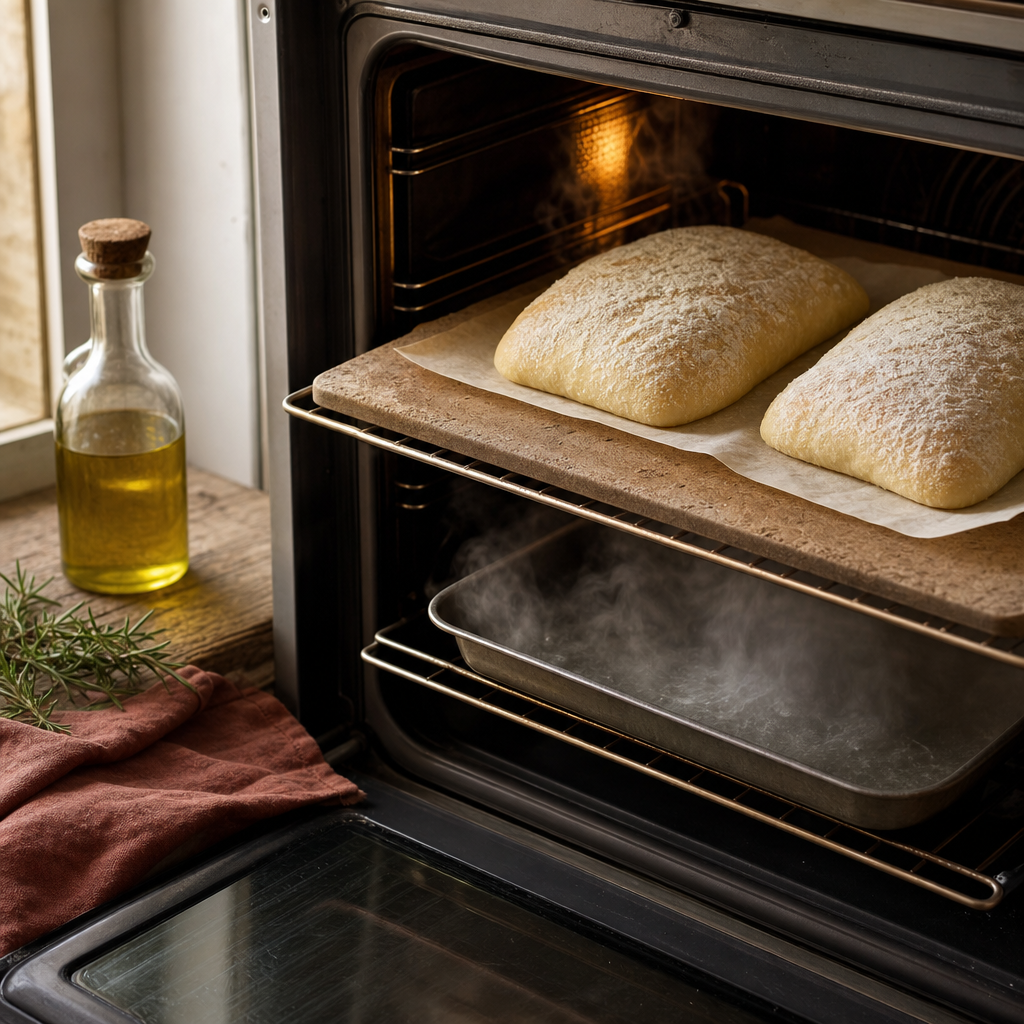
Slide the loaves with their parchment onto the hot stone or sheet. Pour 240 ml hot water into the lower metal pan, close the door, and bake 15 minutes.
Finish the bake
Remove the steam pan, lower the oven to 220°C / 425°F, and bake 10-15 minutes more until the crust is golden, dry, and hollow-sounding underneath. Cool on a rack at least 45 minutes before slicing.
Common mistakes
- {'mistake': 'Adding flour until the dough feels manageable.', 'correction': 'Keep the dough wet. Use wet hands, a scraper, and flour only on the outside during dividing.'}
- {'mistake': 'Punching down the dough before shaping.', 'correction': 'Turn it out gently and preserve the gas. Ciabatta is divided more than it is shaped.'}
- {'mistake': 'Using weak all-purpose flour.', 'correction': 'Use strong bread flour. High hydration needs gluten strength or the loaf spreads before it rises.'}
- {'mistake': 'Baking on a cold tray.', 'correction': 'Preheat the stone or sheet thoroughly. The wet dough needs immediate bottom heat.'}
- {'mistake': 'Slicing while hot.', 'correction': 'Wait until the loaf is warm, not steaming. A hot crumb tears and turns gummy under the knife.'}
What does not belong
- {'item': 'sugar', 'reason': 'Sugar does not belong in this lean ciabatta formula. Fermentation supplies the mild sweetness and crust color.'}
- {'item': 'milk', 'reason': 'Milk makes a softer enriched bread. That is not the thin-crusted, open-crumb structure of standard ciabatta.'}
- {'item': 'eggs', 'reason': 'Eggs push the dough toward an enriched loaf and close the crumb.'}
- {'item': 'butter', 'reason': 'Butter tenderizes and shortens the dough. Ciabatta needs chew and extensibility, not brioche behavior.'}
- {'item': 'heavy scoring', 'reason': 'Ciabatta is not a boule or baguette. Deep cuts deflate the shallow loaf and interrupt the natural rustic surface.'}
Adaptations
This lean formula contains flour, water, salt, and yeast.
No alcohol, pork, or animal-derived ingredients are used.
Gluten-free ciabatta is a separate formula built on starches, hydrocolloids, and different hydration behavior. Swapping in gluten-free flour 1:1 does not produce ciabatta.
No milk, butter, or cheese belongs in this formula.
No shellfish ingredients are present.