Focaccia Barese
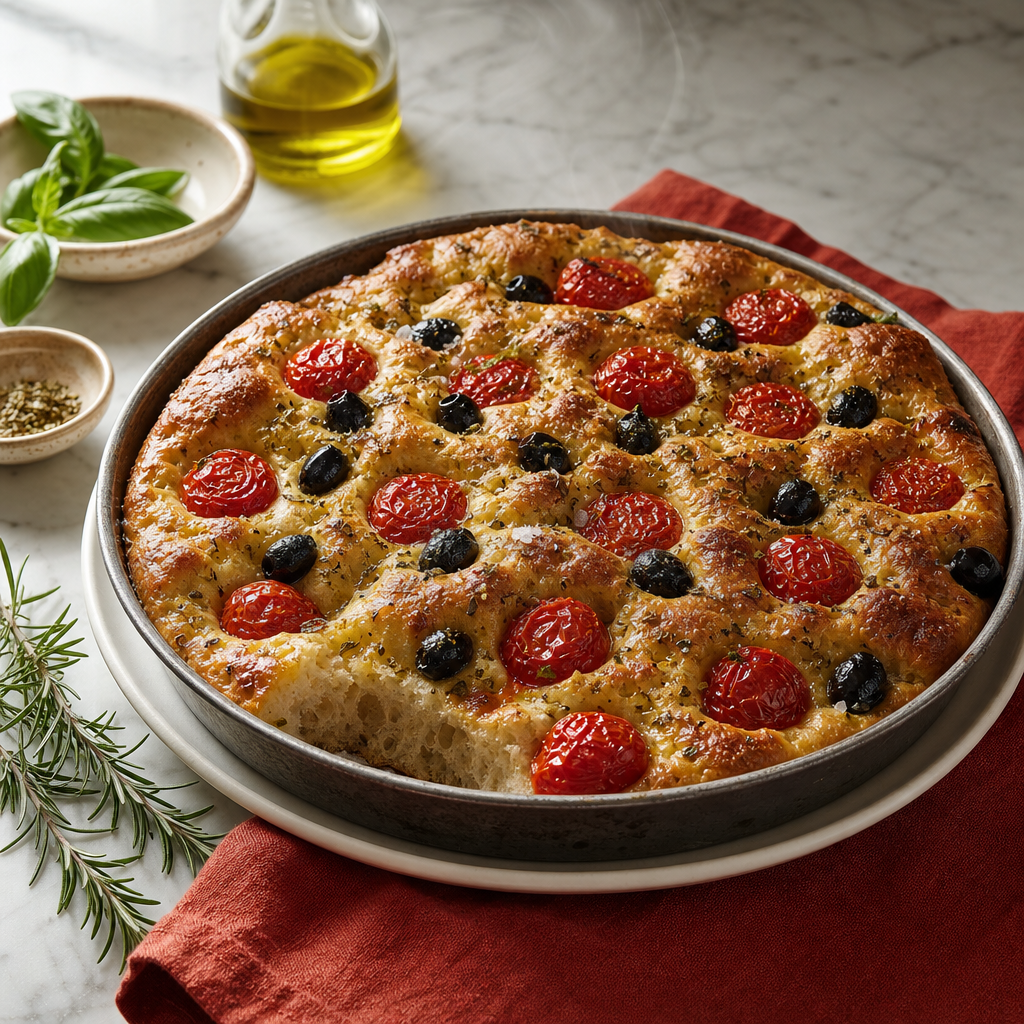
The dish in context
Focaccia barese is the focaccia of Bari and the surrounding Puglian baking culture, sold by weight in bakeries and eaten as street food, table bread, or a mid-morning snack. Its defining grammar is not garlic or rosemary but a soft potato-enriched dough, durum wheat semolina, heavy olive oil, tomatoes pressed into the surface, and olives. Many Puglian sources connect the style to bakery practice: dough baked while the oven was coming to temperature or between bread batches, using local oil and durum wheat. Family and bakery formulas vary in flour ratio, hydration, and whether the pan is round or rectangular, but potato, tomato, olive oil, and a burnished oily base are the center of the dish.
Method 9 steps · 245 min
Cook and mash the potato
Boil the potato in its skin until a knife passes through without resistance, 25-35 minutes depending on size. Peel while warm, mash until smooth, and cool to lukewarm before mixing with the flour.
Mix the dough
Combine the bread flour, semolina, yeast, and fine salt in a large bowl. Add the mashed potato, water, and 30 ml olive oil, then mix by hand or with a dough hook until no dry flour remains and the dough looks sticky, shaggy, and elastic at the edges.
Develop the dough
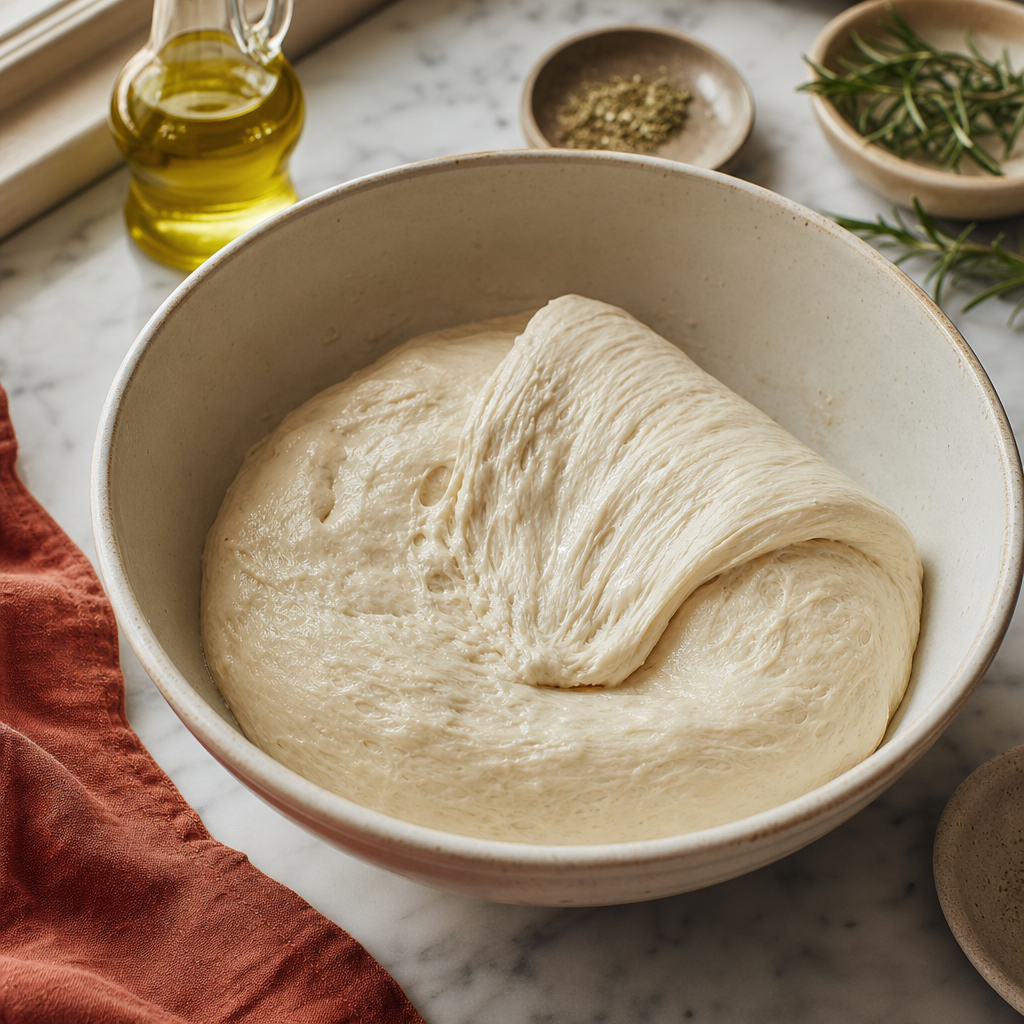
Rest the dough for 15 minutes, then perform 3 rounds of stretch-and-folds in the bowl at 15-minute intervals. Lift one edge, stretch it upward, fold it over the center, and rotate the bowl until the dough tightens.
Bulk ferment
Cover the bowl and let the dough rise at room temperature until swollen and roughly doubled, 90-120 minutes. The surface should show small bubbles and wobble when the bowl is moved.
Oil the pan and spread the dough
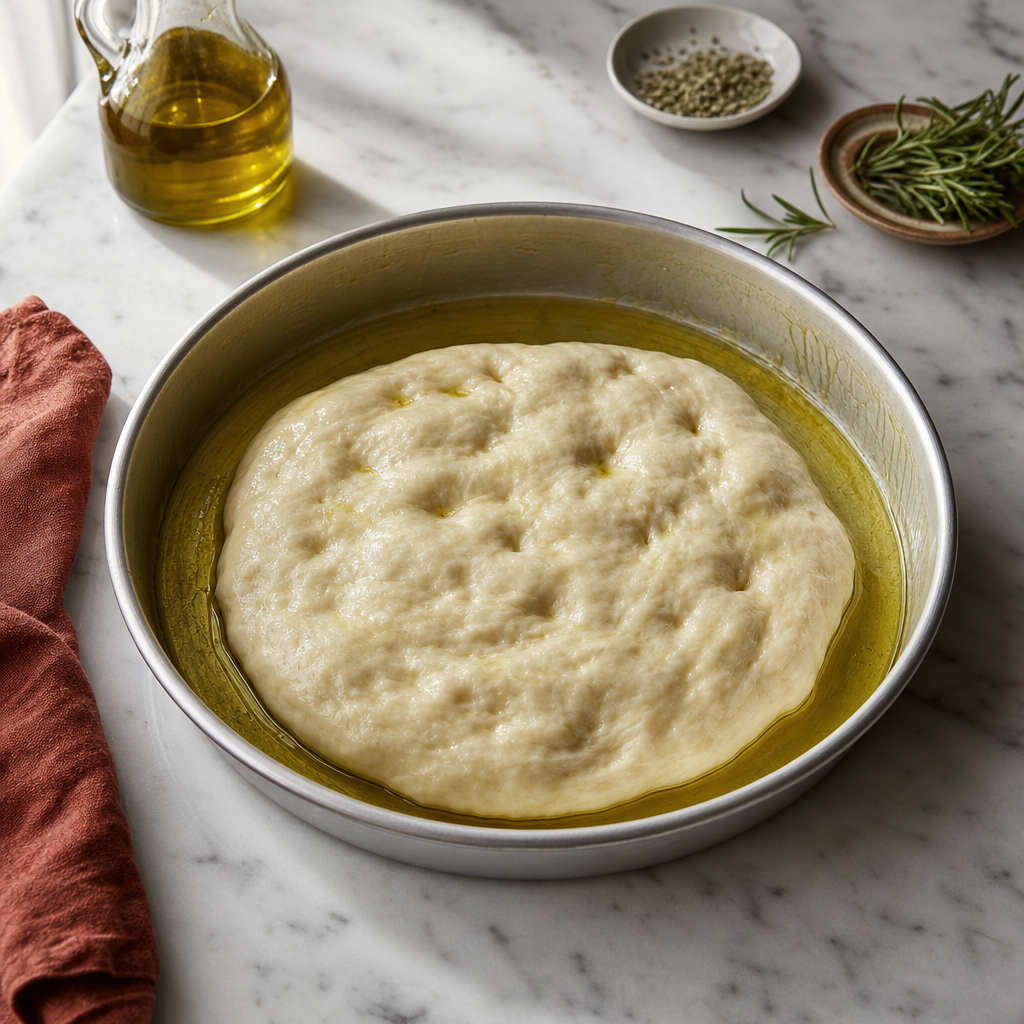
Pour about 45 ml of the topping oil into the pan and coat the base and sides. Turn in the dough, flip it once so both sides are oiled, then press it outward with oiled fingers until it mostly fills the pan. Stop if it springs back hard; rest 10 minutes and continue.
Proof in the pan
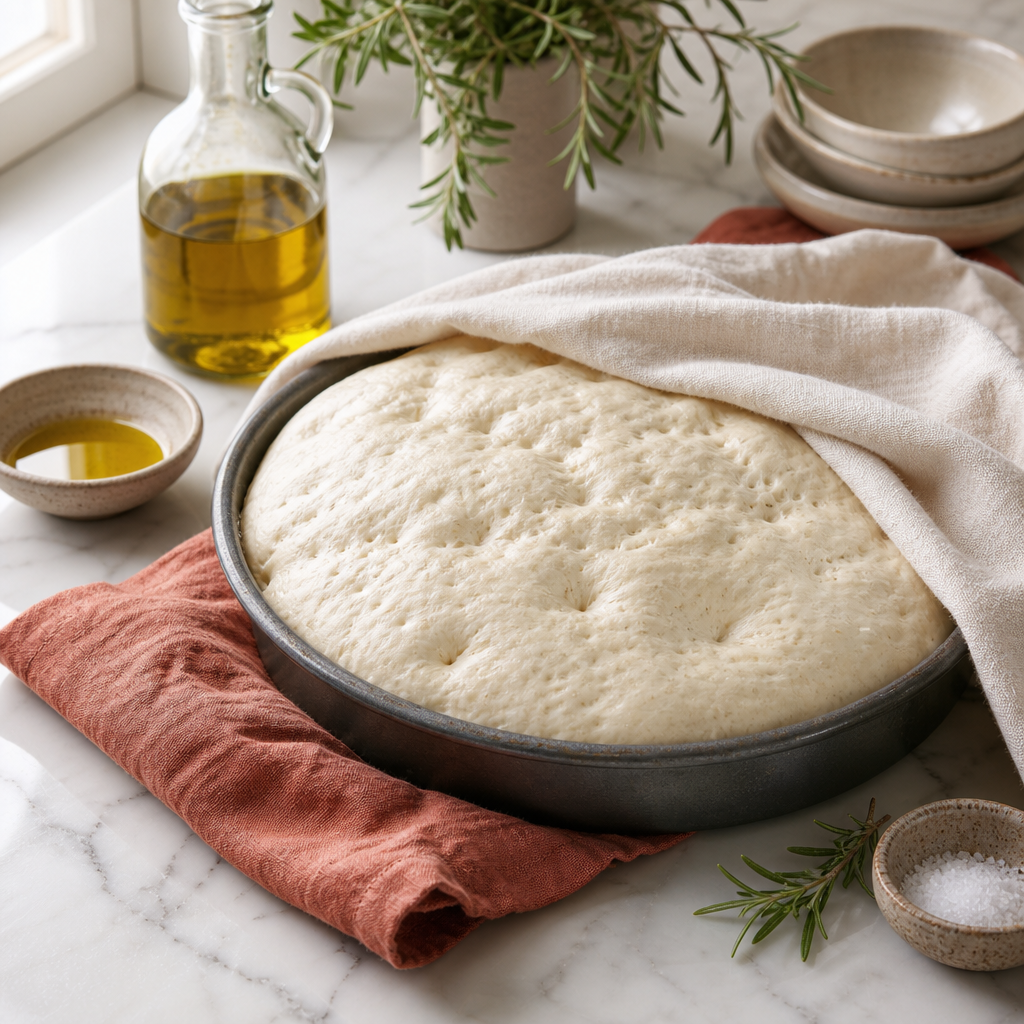
Cover the pan and proof until the dough is puffy and close to the rim, 45-75 minutes. Heat the oven to 240°C with a rack in the lower third during the final 30 minutes.
Top like Bari, not like a pizza
Press the tomato halves cut-side down into the dough, squeezing each slightly so juice runs into the dimples. Scatter the olives, oregano, coarse salt, and the remaining olive oil over the surface.
Bake hard
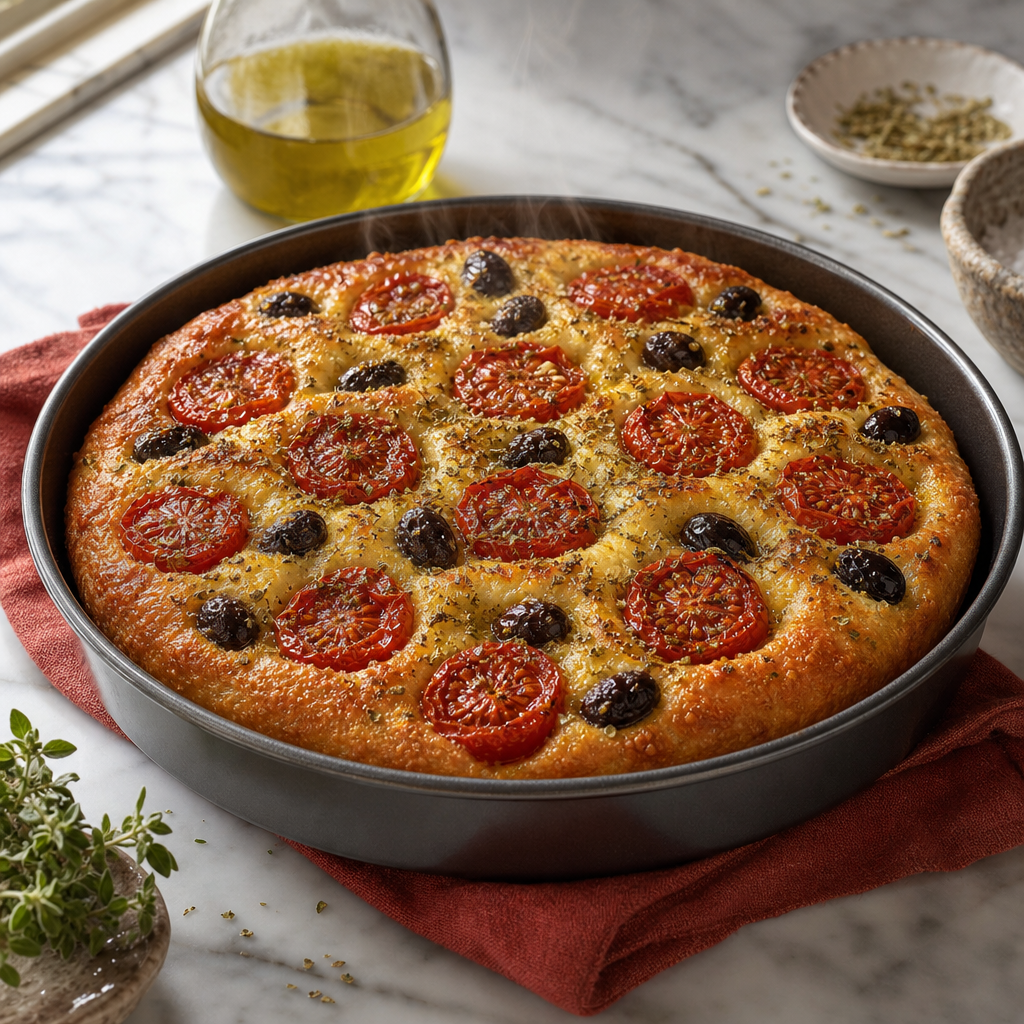
Bake on the lower rack at 240°C for 18-22 minutes, until the bottom is deep golden and the edges pull slightly from the pan. Move to the upper rack for 3-6 minutes if the top needs more color.
Cool before cutting
Rest in the pan for 5 minutes, then transfer to a rack. Cut warm, not steaming hot, so the crumb sets instead of smearing under the knife.
Common mistakes
- {'mistake': 'Adding flour until the dough feels dry and kneadable.', 'fix': 'Keep the dough sticky and use oiled hands. A dry dough bakes like sandwich bread, not focaccia barese.'}
- {'mistake': 'Using tomato sauce instead of fresh tomatoes.', 'fix': 'Press halved cherry tomatoes into the dough. Sauce sits on top and prevents the dimpled, oil-stained surface from forming.'}
- {'mistake': 'Skimping on oil in the pan.', 'fix': 'Use a visible slick of olive oil. The bottom crust should fry lightly against the metal.'}
- {'mistake': 'Baking in glass or ceramic.', 'fix': 'Use metal. Glass and ceramic heat too slowly for the browned oily underside.'}
- {'mistake': 'Treating it as rosemary focaccia.', 'fix': 'Use oregano, tomatoes, and olives. Rosemary belongs to other focaccia traditions, not the core Barese profile.'}
What does not belong
- {'item': 'Tomato sauce', 'reason': 'Focaccia barese uses fresh tomatoes pressed into the dough. Sauce turns it into a pizza-adjacent bread and changes the bake.'}
- {'item': 'Mozzarella or other cheese', 'reason': 'Cheese does not belong in the canonical topping. It traps moisture and masks the tomato-olive-oil structure.'}
- {'item': 'Garlic butter', 'reason': 'Garlic butter is an Italian-American focaccia riff, not Bari. Olive oil is the fat here.'}
- {'item': 'Rosemary as the main herb', 'reason': 'Rosemary points to Ligurian and broader focaccia styles. Oregano is the Barese signal.'}
- {'item': 'Sugar in the dough', 'reason': 'The dough should ferment from flour and yeast, not taste sweet. Sugar is unnecessary and pushes the crust toward a different bread.'}
Adaptations
The standard formula contains no animal products.
The standard formula contains no alcohol or pork. Check packaged olives for wine vinegar if strict certification is required.
Gluten-free focaccia can be made, but it will not reproduce the semolina-and-wheat chew of focaccia barese. A separate gluten-free bread formula is more honest than a direct substitution.
No dairy belongs in the traditional topping or dough.
No shellfish is used.