Bruschetta Pomodoro
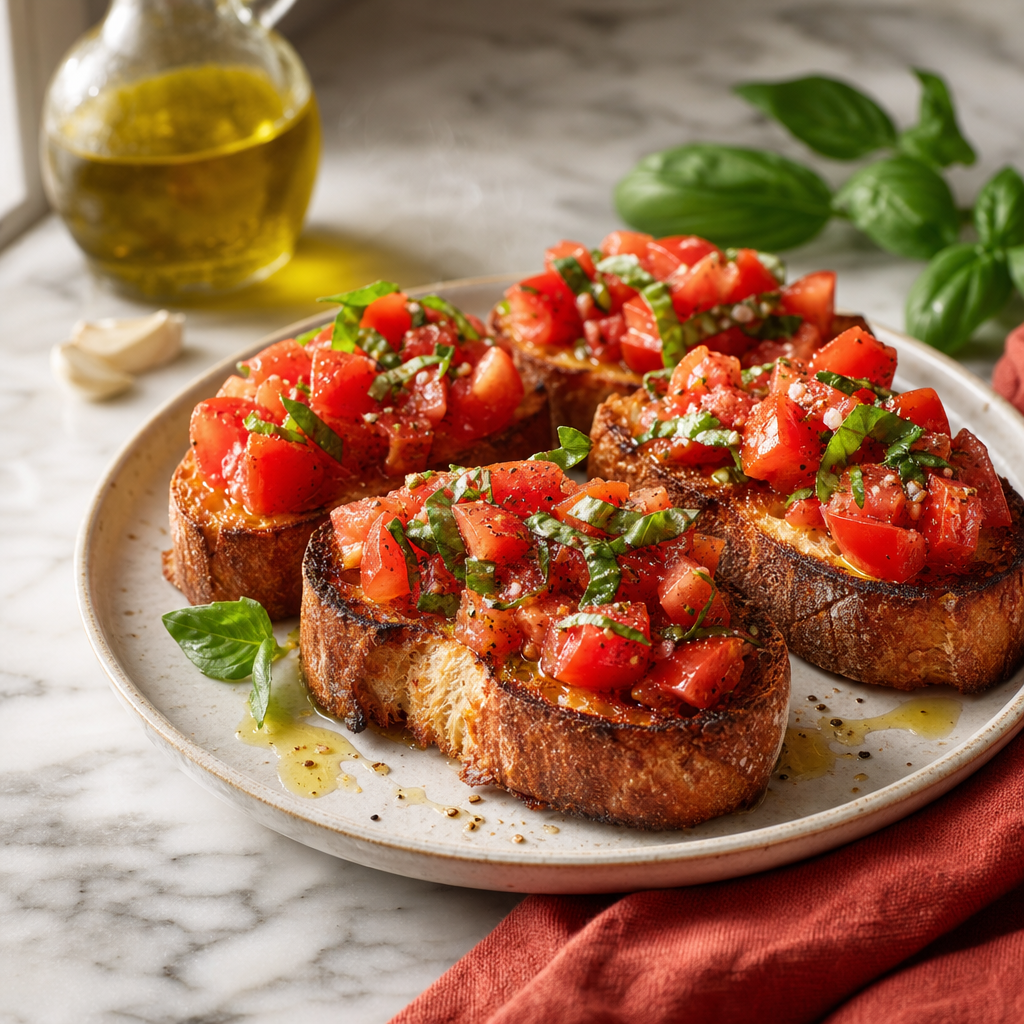
The dish in context
Bruschetta comes from central Italian cucina povera: stale or day-old bread revived over embers, rubbed with garlic, and dressed with oil. The word is tied to bruscare, to toast or char, which matters because the bread is not a neutral cracker; it is the structure of the dish. Tomato-topped bruschetta became the best-known version abroad, but the older form could be as spare as bread, garlic, salt, and new olive oil. Regional versions vary, especially across Tuscany, Umbria, Lazio, and Puglia, but bruschetta al pomodoro lives or dies on bread with bite, ripe tomatoes, and raw extra-virgin olive oil.
Method 6 steps · 25 min
Salt and drain the tomatoes
Combine the diced tomatoes with the fine sea salt in a bowl. Let stand 10 minutes, then tip off the watery juice that collects at the bottom without crushing the tomatoes.
Dress the topping
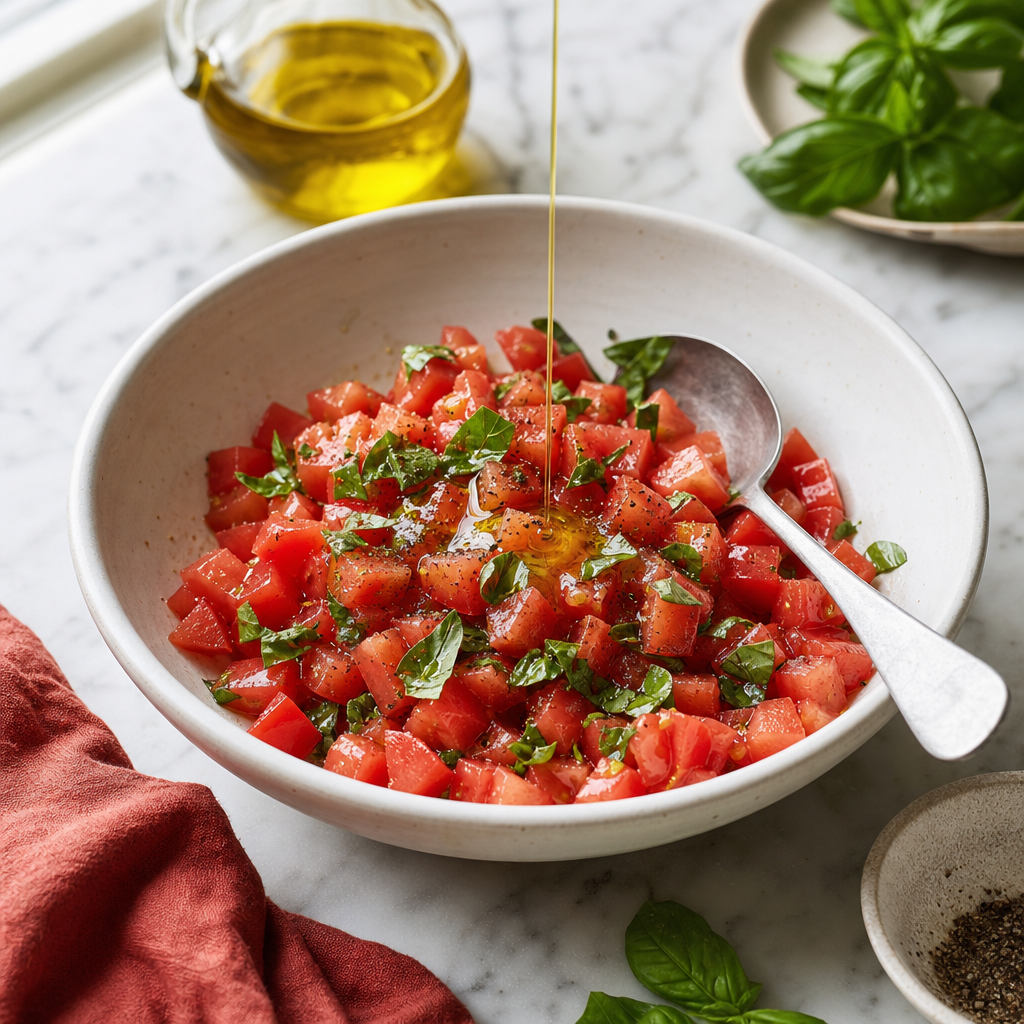
Add the extra-virgin olive oil, torn basil, and black pepper to the drained tomatoes. Fold with a spoon until the tomato surfaces look glossy, not flooded.
Toast the bread hard
Grill, broil, or toast the bread until both faces are dry and golden with darker edges, 2-4 minutes per side depending on heat. The center should sound crisp when tapped but still have chew inside.
Rub with garlic while hot
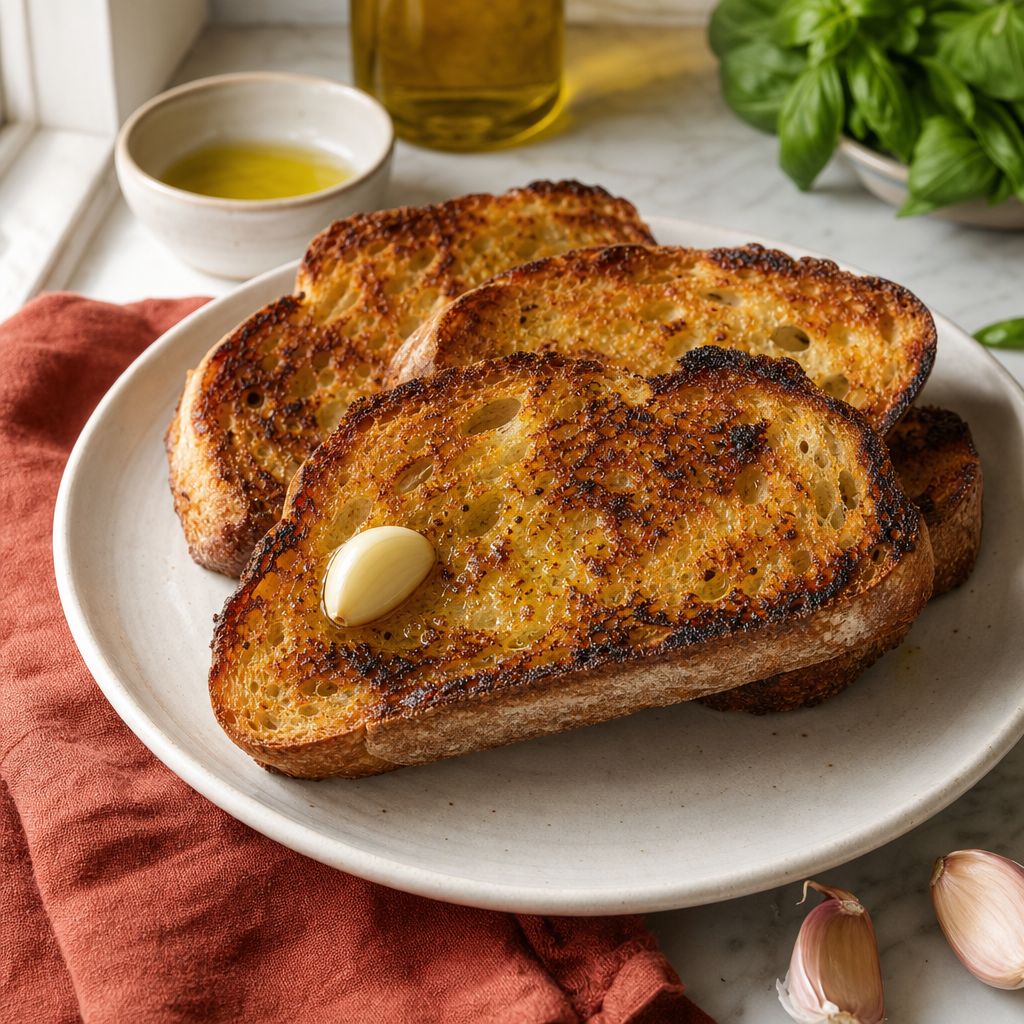
Rub one side of each hot slice with the whole garlic cloves, using 2-4 passes per slice. Stop when the surface catches slightly and smells sharp.
Assemble at the last moment
Spoon the tomato mixture onto the garlic-rubbed side of each toast. Finish with a thin thread of extra-virgin olive oil and a few grains of flaky salt if using.
Serve before the bread softens
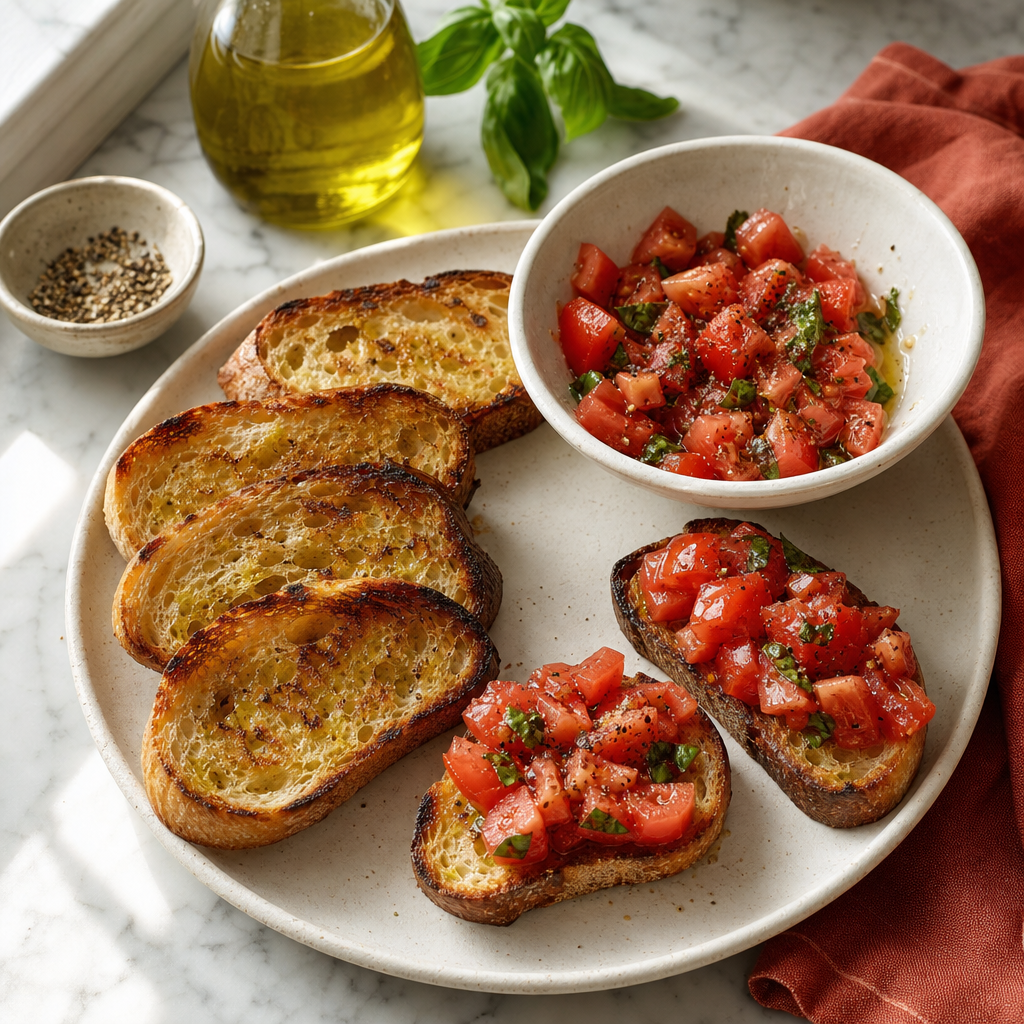
Serve within 10 minutes of assembly. For a larger table, keep the tomato mixture in a bowl and top the bread in waves.
Common mistakes
- {'mistake': 'Using soft bread', 'fix': 'Use rustic bread sliced thick and toasted until the surface is dry. Soft sandwich bread does not belong.'}
- {'mistake': 'Skipping the drain', 'fix': 'Salt the tomatoes and pour off the first watery release before adding oil.'}
- {'mistake': 'Assembling too early', 'fix': 'Top the bread right before serving. Hold tomato and toast separately for anything longer than 10 minutes.'}
- {'mistake': 'Overloading with garlic', 'fix': 'Rub the toast with whole garlic. Do not bury minced raw garlic in the tomato unless sharp allium heat is the goal.'}
- {'mistake': 'Refrigerating the finished topping for hours', 'fix': 'Tomatoes taste flat when cold. If the topping must be made ahead, hold it at cool room temperature for up to 1 hour or refrigerate briefly and bring it back before serving.'}
What does not belong
- {'item': 'Balsamic glaze', 'reason': 'Sweet syrup turns bruschetta al pomodoro into a restaurant garnish. It covers weak tomatoes rather than fixing them.'}
- {'item': 'Mozzarella', 'reason': 'Mozzarella moves the dish toward caprese on toast. That is a valid variant, not bruschetta al pomodoro.'}
- {'item': 'Dried oregano as the main herb', 'reason': 'Oregano pushes the profile toward pizza sauce. Fresh basil is the clean tomato pairing here.'}
- {'item': 'Canned tomatoes', 'reason': 'Canned tomatoes are cooked and wet. Bruschetta needs raw tomato texture.'}
- {'item': 'Butter', 'reason': 'Butter dulls the raw olive-oil character that defines the dish.'}
Adaptations
The dish contains no animal products.
The base recipe contains no alcohol, pork, or animal-derived ingredients.
Use a firm gluten-free country-style loaf and toast it harder than wheat bread. Many gluten-free breads soften faster under tomato juice, so assemble in smaller batches.
No dairy belongs in the base recipe.
The dish contains no shellfish.