Calzone Napoletano
The dish in context
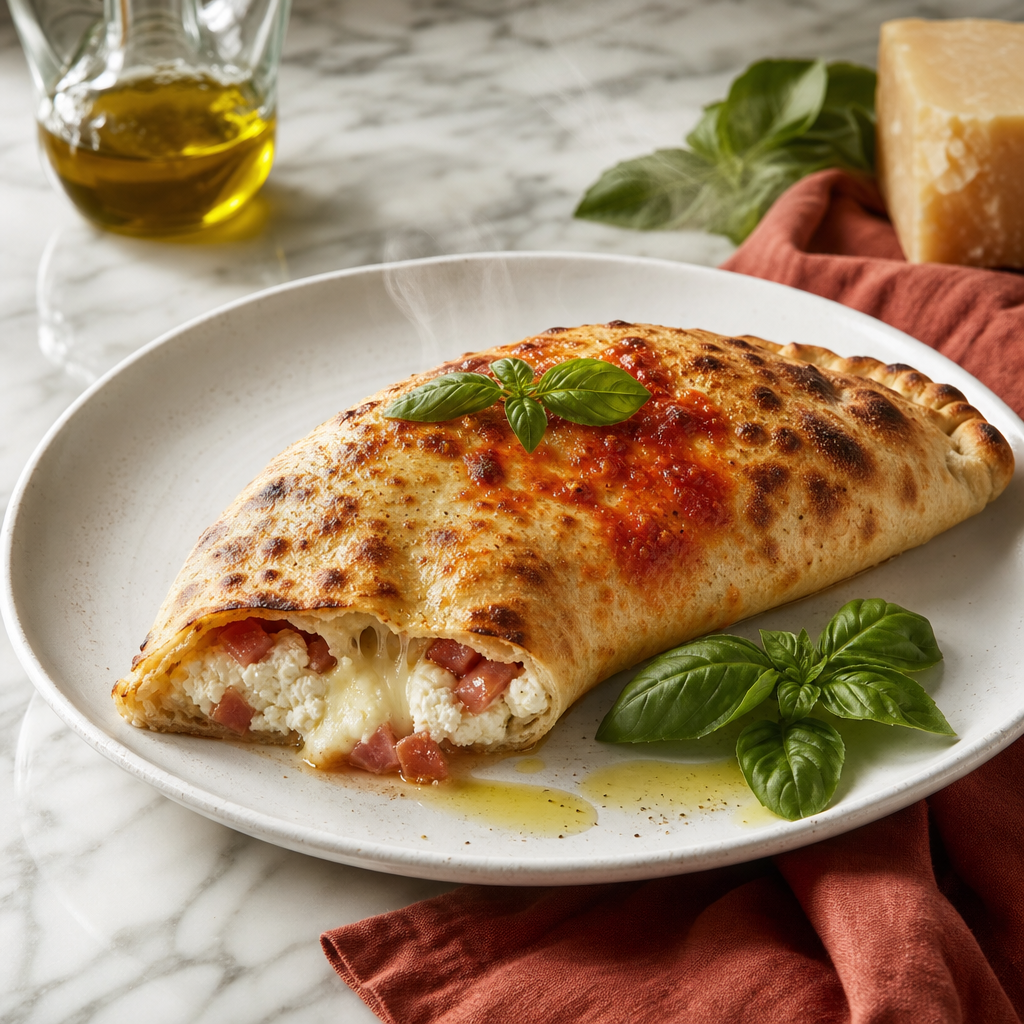
Calzone Napoletano belongs to the same Neapolitan pizza grammar as pizza al forno: soft high-hydration dough, fast heat, dairy, and cured pork folded into a portable form. In Naples the baked calzone is distinct from pizza fritta and panzerotto; frying changes the dish. The common filling is ricotta with fior di latte or provola and salame napoletano, sometimes finished with tomato on the outside rather than hidden inside. Regional and pizzeria versions vary, but the crescent fold and sealed edge are non-negotiable.
Method 10 steps · 540 min
Mix the dough
Dissolve the yeast in the water. Add the flour and mix until no dry patches remain, then rest 20 minutes. Add the salt and knead 8-10 minutes by hand or 5-6 minutes in a mixer on low speed, until the dough is smooth and elastic.
Ferment and divide
Cover the dough and ferment at room temperature for 6 hours, until expanded and gassy but not collapsed. Divide into 4 balls of about 250 g each, tighten the surface, and rest covered for 90-120 minutes.
Drain the dairy
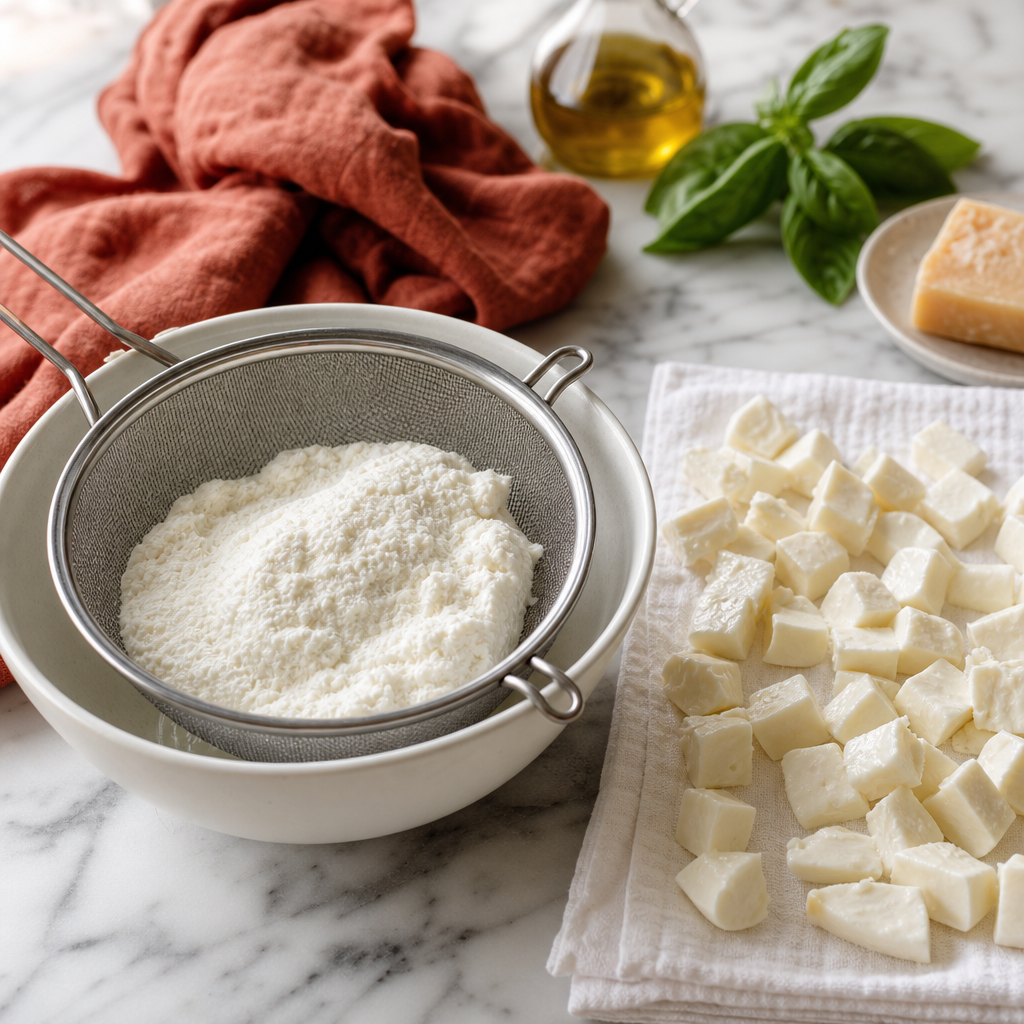
Set the ricotta in a fine sieve for at least 1 hour. Dice the fior di latte and drain it on towels until the surface no longer weeps. If the mozzarella is packed in brine, start draining while the dough ferments.
Make the filling
Combine the drained ricotta, drained fior di latte, salame, Pecorino, and black pepper. Taste for salt only after the salame and Pecorino are mixed in. Keep the filling cold until shaping.
Heat the oven hard
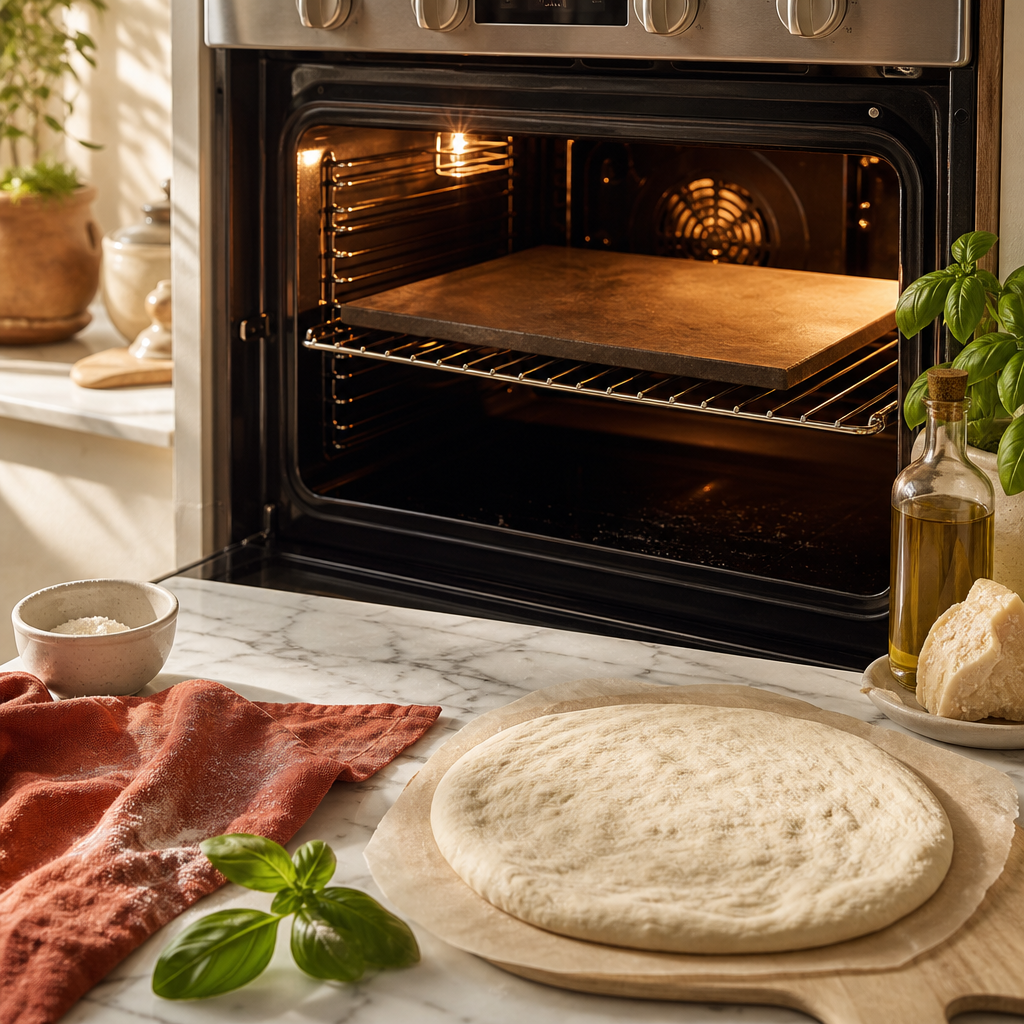
Place a baking steel or pizza stone on the upper-middle rack and heat the oven to its maximum setting, ideally 275-290°C, for at least 45 minutes. If using convection, use it; if using a broiler, switch it on for the final 2-3 minutes of preheating.
Stretch one round
Dust the bench lightly with semolina or flour. Press one dough ball from the center outward into a 24-26 cm round, leaving a slightly thicker rim. Do not use a rolling pin.
Fill and seal
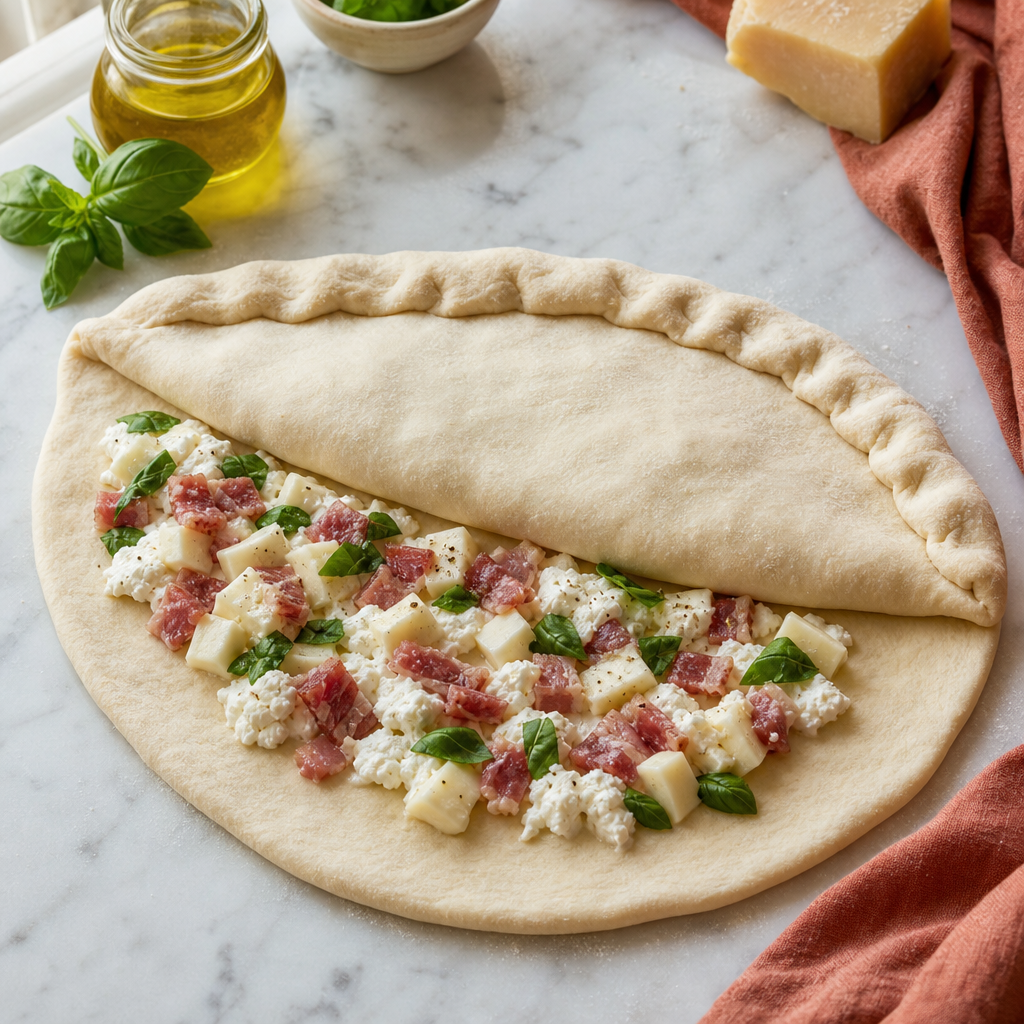
Place one quarter of the filling on the lower half of the round, leaving a 2 cm clean border. Add basil if using. Fold the top half over, press out trapped air around the mound, then crimp the edge firmly with fingertips or fold the rim back over itself.
Dress the outside
Move the calzone to a floured peel. Spread about 40 g tomato over the top if using, keeping the sealed edge mostly bare, then drizzle with a small thread of olive oil.
Bake
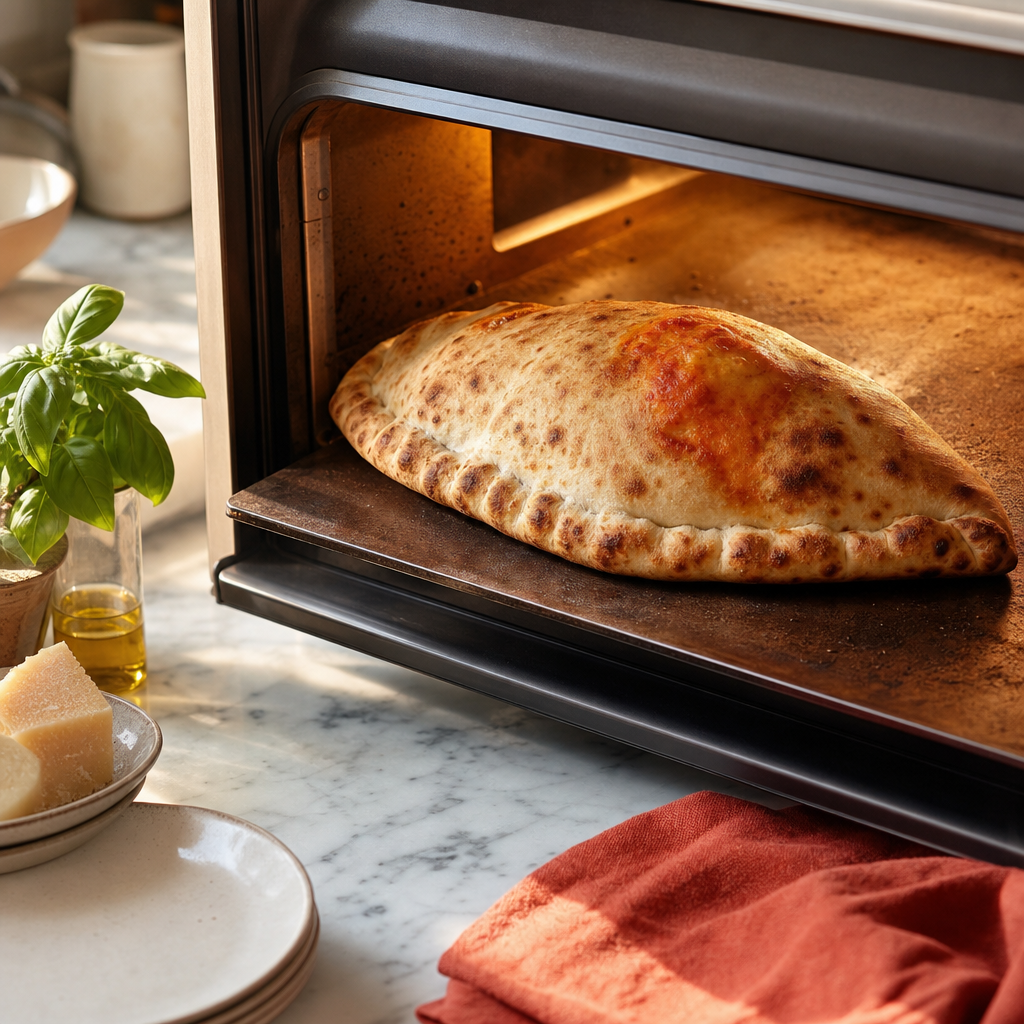
Launch onto the hot steel or stone and bake 7-10 minutes, rotating once, until the calzone is puffed, blistered, and browned in spots. The seam should look dry and set, not pale and swollen. Repeat with the remaining dough balls.
Rest briefly
Rest each calzone 3-5 minutes before cutting. Serve whole or split once through the center.
Common mistakes
- {'mistake': 'Frying it and still calling it Calzone Napoletano', 'fix': 'Bake it. The fried Neapolitan relative is pizza fritta; panzerotto is another fried stuffed form, especially associated with Puglia.'}
- {'mistake': 'Using wet mozzarella straight from brine', 'fix': 'Dice and drain it on towels. Low-moisture mozzarella is less traditional but safer than brined cheese used wet.'}
- {'mistake': 'Rolling the dough flat', 'fix': 'Stretch by hand. The gas in the dough is part of the crust structure.'}
- {'mistake': 'Overfilling the pocket', 'fix': 'Use about 210-230 g filling per 250 g dough ball. More filling increases rupture risk before it improves the calzone.'}
- {'mistake': 'Sealing over ricotta or oil', 'fix': 'Keep a clean 2 cm border and press out air before crimping.'}
- {'mistake': 'Cooking tomato sauce for the topping', 'fix': 'Use uncooked crushed tomato or passata, lightly salted. Cooked sauce tastes heavier and pushes the dish toward a different pizza style.'}
What does not belong
- {'item': 'deep-frying oil', 'reason': 'Fried stuffed dough is pizza fritta or panzerotto territory. It does not belong in baked Calzone Napoletano.'}
- {'item': 'pepperoni', 'reason': 'American pepperoni reads as American pizzeria filling. Use salame napoletano, prosciutto cotto, cicoli, or provola.'}
- {'item': 'raw vegetables with high water content', 'reason': 'Mushrooms, peppers, and spinach release water inside the sealed dough unless cooked and dried first. They are not part of the canonical Neapolitan filling.'}
- {'item': 'sugar in the dough', 'reason': 'Neapolitan-style dough does not need sweetness. Sugar accelerates browning in a home oven but changes the crust profile.'}
- {'item': 'garlic butter on the crust', 'reason': 'That is American stuffed-bread logic, not Neapolitan calzone logic.'}
- {'item': 'marinara dip as the defining sauce', 'reason': 'A side sauce is an Italian-American habit. The Neapolitan structure uses tomato sparingly, often on the outside.'}