Spinach and Ricotta Ravioli
The dish in context
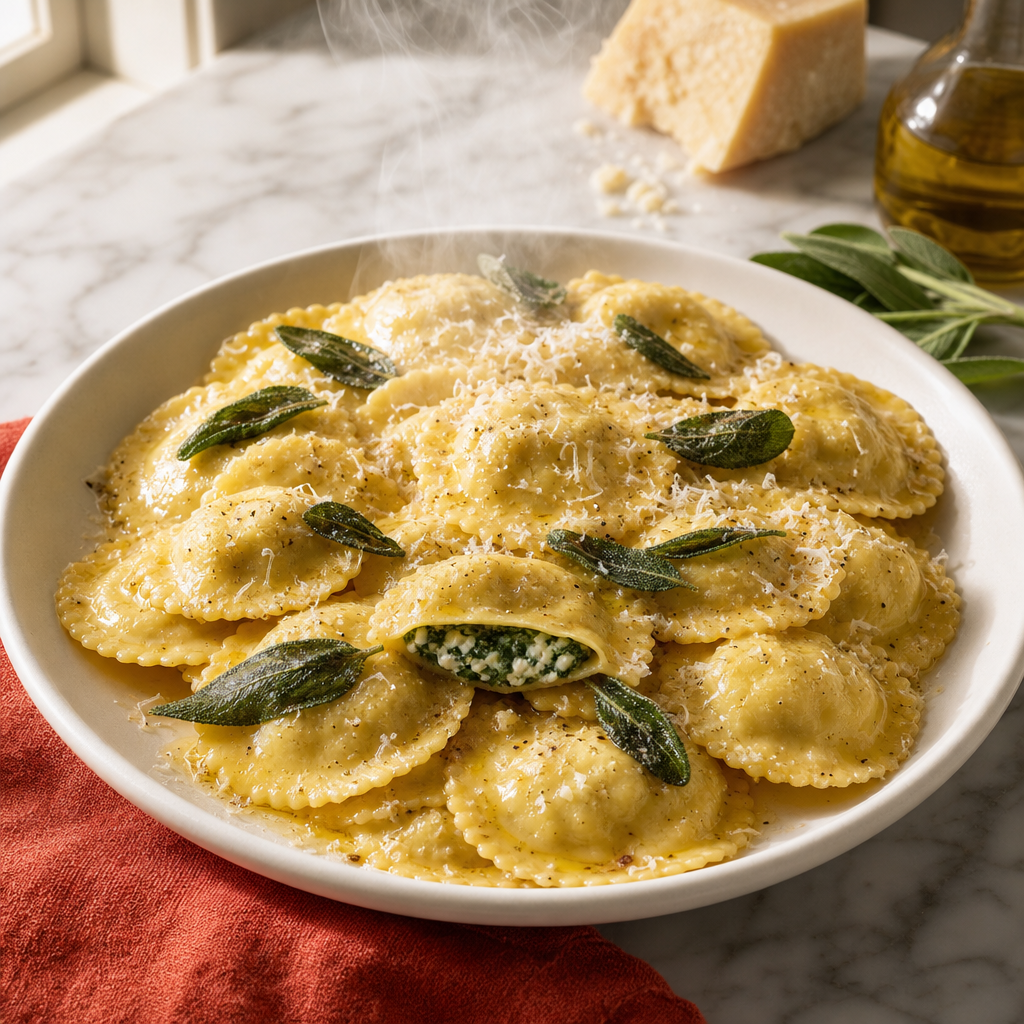
Ravioli are documented in Italian cooking from the late medieval period, with filled pasta appearing across regional traditions rather than belonging to one city. Ricotta-and-spinach filling is especially associated with central Italian and broader household pasta practice, where fresh cheese, greens, nutmeg, and grated hard cheese form a lean meatless filling. The shape varies: square ravioli are common, but round stamps and half-moons do not make the dish less Italian. Butter and sage keeps the filling visible; tomato sauce is also common, but heavy cream turns the dish into a different, duller pasta plate.
Method 10 steps · 135 min
Mix the pasta dough
Mound the flour on the bench or use a wide bowl. Add the eggs, yolk, and 3 g salt to the center, then work flour inward until a shaggy dough forms. Knead 8-10 minutes until smooth, firm, and slightly elastic.
Rest the dough
Wrap the dough tightly and rest at room temperature for 30 minutes. If the kitchen is hot, refrigerate it and return it to room temperature for 10 minutes before rolling.
Cook and dry the spinach
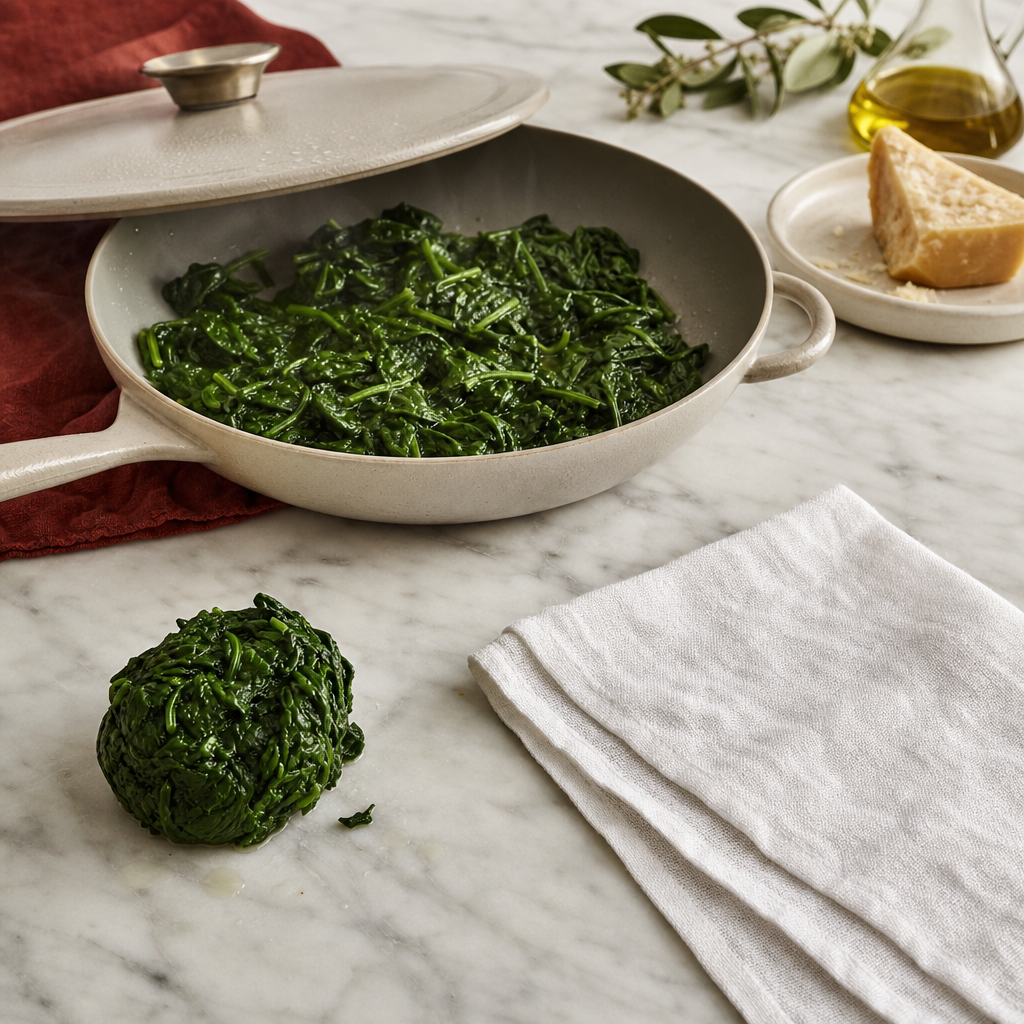
Wilt the spinach in a covered pan with the water clinging to the leaves, 2-3 minutes. Cool, squeeze hard by hand, then wrap in a clean towel and squeeze again until no liquid streams out. Chop fine.
Make the filling
Mix chopped spinach, ricotta, 50 g Parmigiano-Reggiano, nutmeg, pepper, and 4 g salt. The filling should hold a soft mound on a spoon without weeping. Transfer to a piping bag or cover and chill.
Roll the pasta sheets
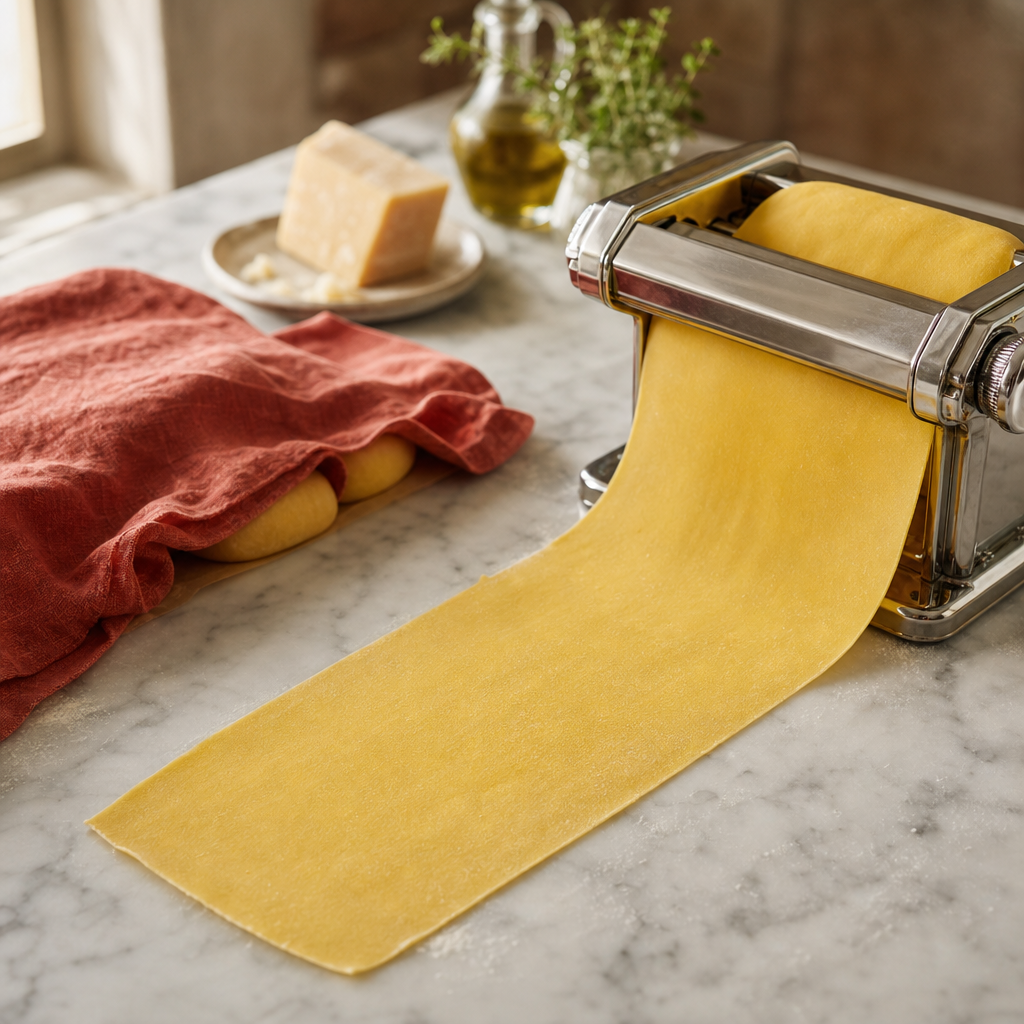
Divide the dough into 4 pieces and keep covered. Roll one piece through a pasta machine from the widest setting down to about 1 mm thick, usually the second-thinnest setting. Dust lightly only when tacky.
Fill and seal
Pipe or spoon 12-15 g filling portions onto one sheet, spaced 4-5 cm apart. Brush around the filling with the barest film of water if the pasta feels dry, cover with a second sheet, and press from the filling outward to expel air. Seal firmly and cut into squares or rounds.
Hold the ravioli
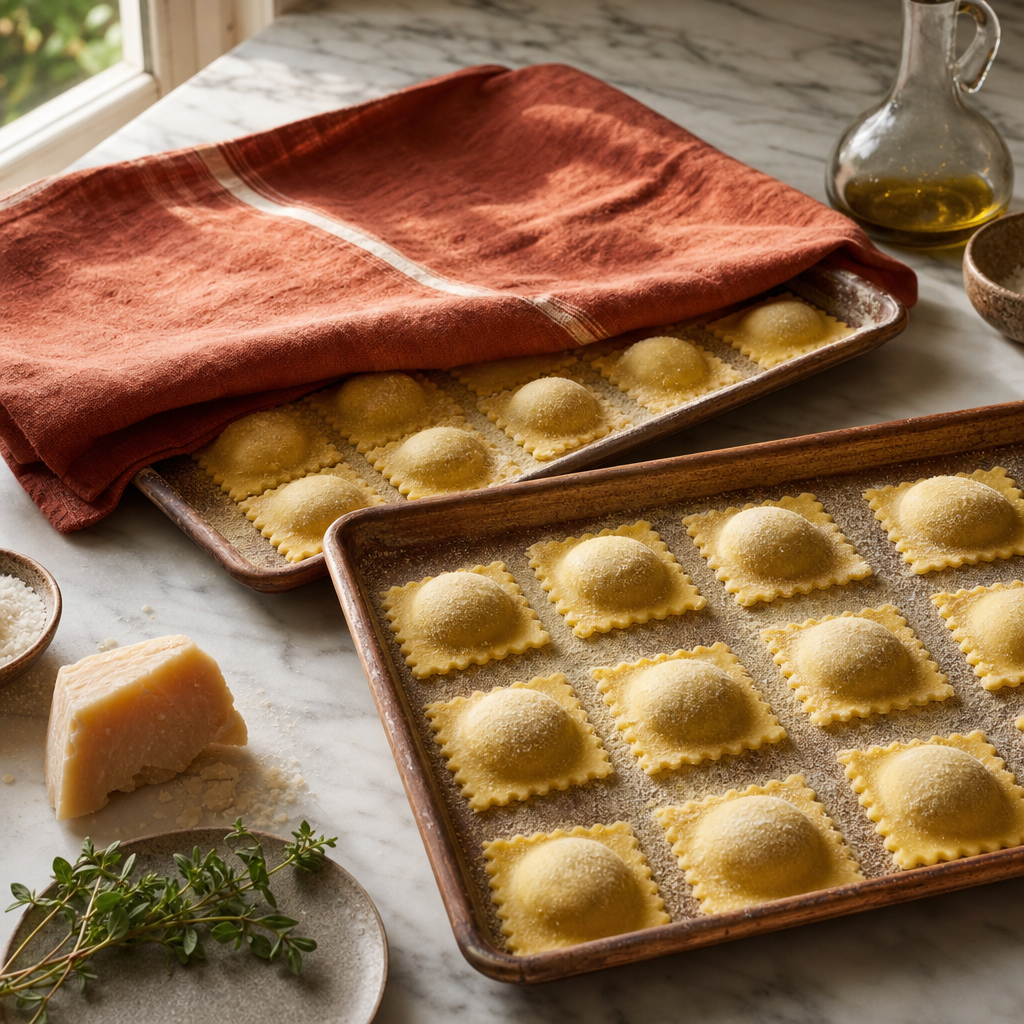
Set shaped ravioli on semolina-dusted trays in a single layer. Cover with a towel if cooking within 30 minutes, or freeze uncovered until hard and bag for later.
Cook the ravioli
Bring about 3 L water for 4 servings to a lively simmer, not a violent boil, using roughly 10 g coarse salt per liter. If scaling up, cook in multiple batches or pots so the ravioli have room to move. Cook until they float and the pasta edge tastes tender, 2-4 minutes for fresh, 4-6 minutes from frozen. Lift with a spider; do not dump them through a colander.
Brown the butter and sage
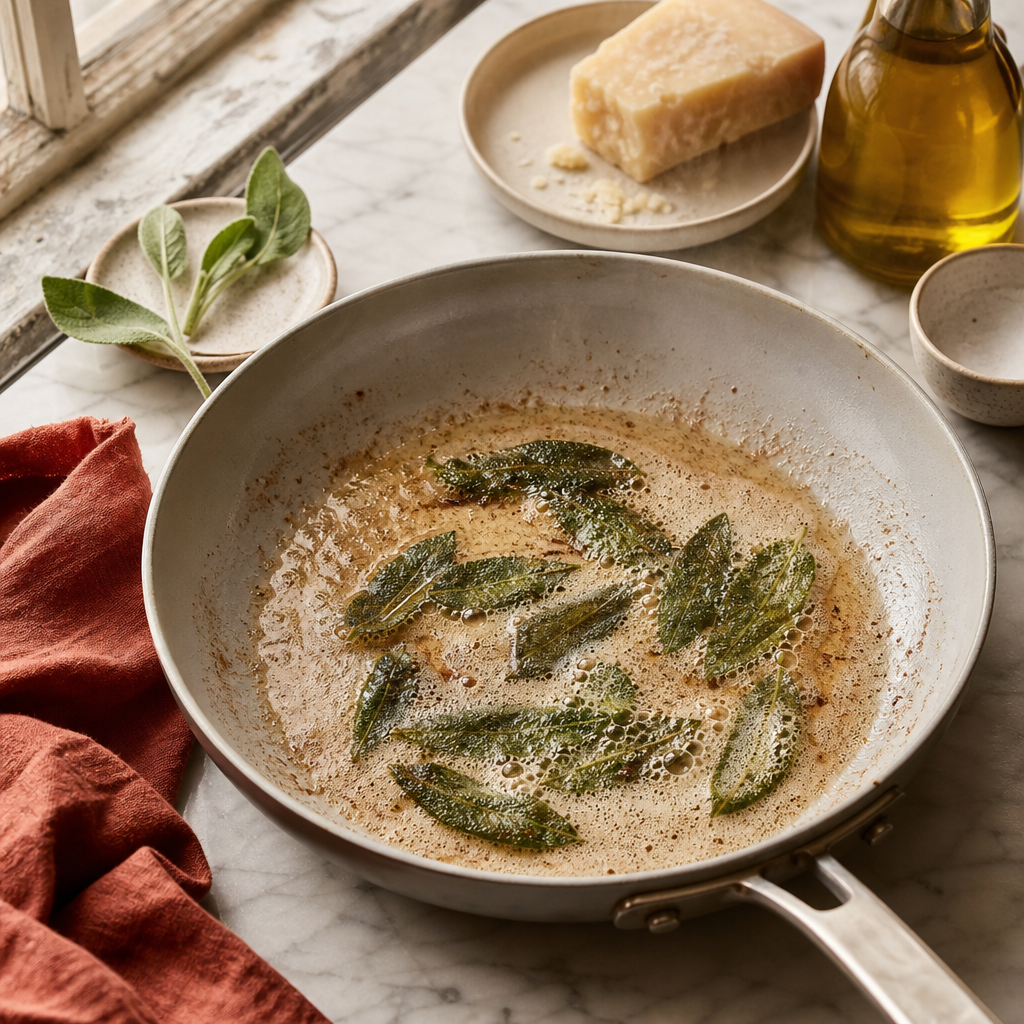
Melt the butter in a wide skillet over medium heat with the sage leaves. Cook until the milk solids turn hazelnut-brown and the foam smells nutty, then add 80-120 ml pasta water to stop the browning. Swirl until glossy.
Coat and serve
Transfer the ravioli into the skillet and turn gently for 30-45 seconds. Plate immediately with the remaining Parmigiano-Reggiano. The ravioli should be glossed, not submerged.
Common mistakes
- {'mistake': 'Leaving spinach wet', 'fix': 'Squeeze twice: once by hand, once in a towel. If the towel becomes soaked, the filling is not ready.'}
- {'mistake': 'Using watery ricotta straight from the tub', 'fix': 'Drain wet ricotta in a sieve lined with cloth for 1-2 hours. The filling should mound, not spread.'}
- {'mistake': 'Rolling pasta too thick', 'fix': 'Roll to about 1 mm. The sealed edge has two layers; thick sheets make heavy, chewy corners.'}
- {'mistake': 'Trapping air around the filling', 'fix': 'Press from the mound outward before cutting. Air pockets show as pale bubbles under the top sheet.'}
- {'mistake': 'Boiling ravioli violently', 'fix': 'Use a lively simmer. Filled pasta needs movement, not turbulence.'}
What does not belong
- {'item': 'mozzarella in the filling', 'reason': 'Mozzarella stretches and leaks; it blurs the clean ricotta-spinach structure.'}
- {'item': 'cream sauce', 'reason': 'Cream dulls the dairy filling and hides the pasta work. Butter, sage, pasta water, and cheese are enough.'}
- {'item': 'garlic-heavy filling', 'reason': 'Raw or aggressive garlic takes over ricotta and spinach. It does not belong in this restrained filling.'}
- {'item': 'bread crumbs as a default binder', 'reason': 'Bread crumbs are a repair for wet filling, not a target. Fix moisture at the spinach and ricotta.'}
- {'item': 'rinsing cooked ravioli', 'reason': 'Rinsing strips starch from the pasta surface and prevents the butter sauce from clinging.'}