Osso Buco Milanese
The dish in context
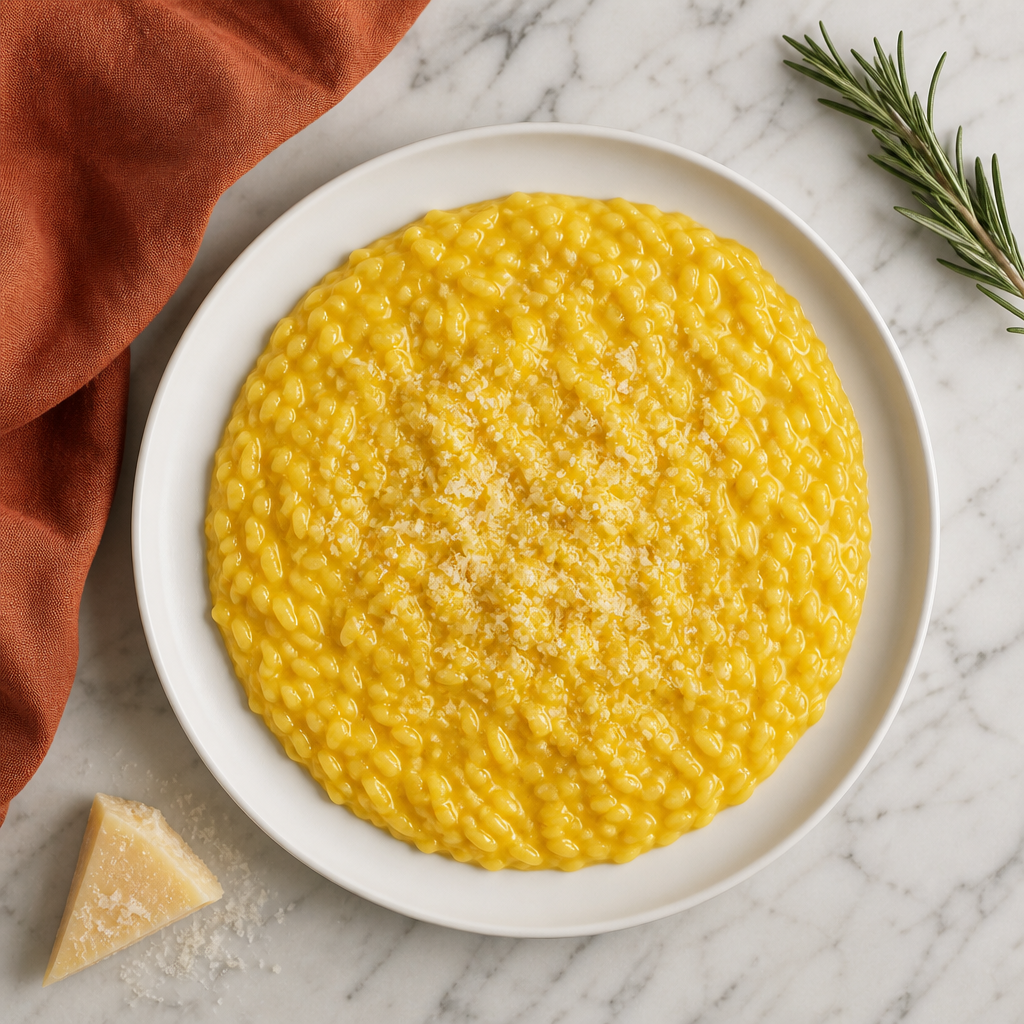
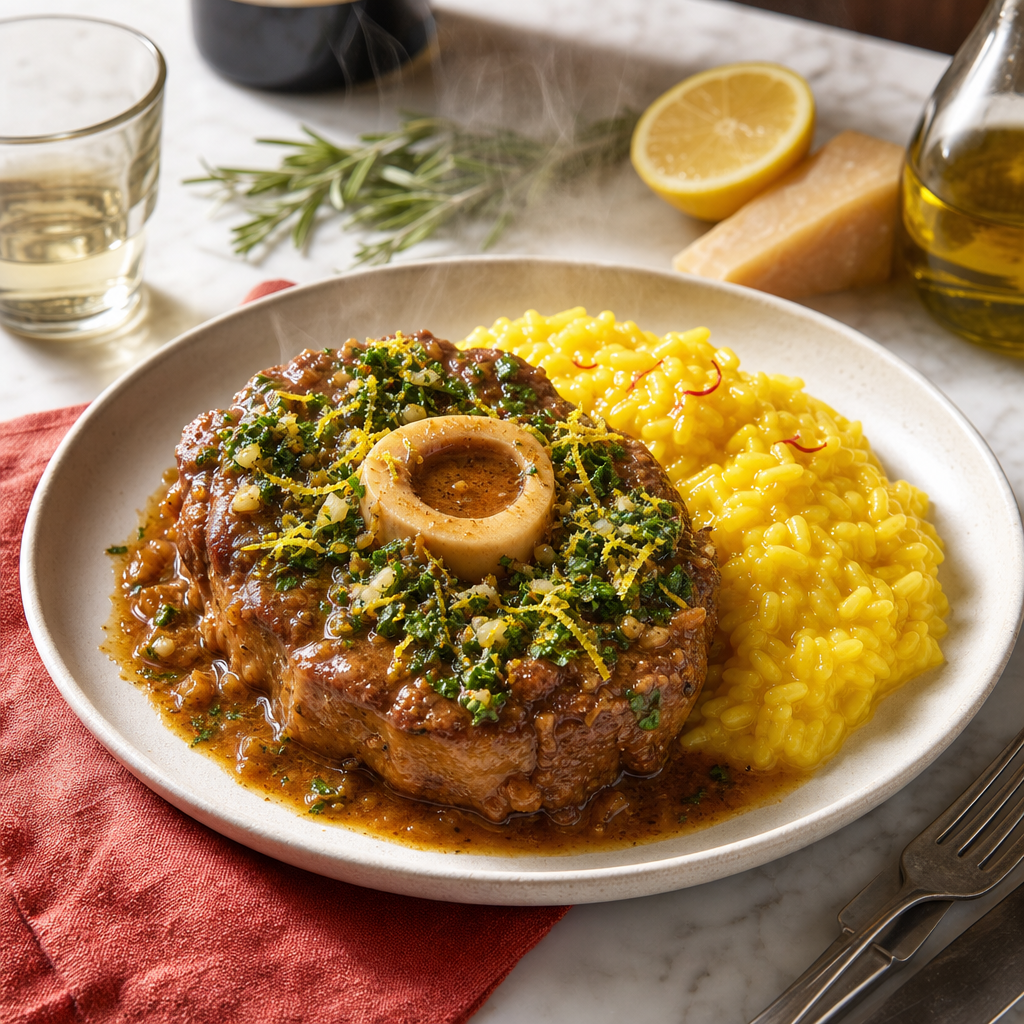
Ossobuco alla Milanese belongs to Lombard cooking, where cross-cut veal shank is valued for the marrow-filled bone at its center. The name means "bone with a hole," and the marrow is not decorative; it is the defining fat and gelatin source of the dish. Older Milanese versions are often cooked in bianco with white wine, broth, aromatics, and gremolada, while later tomato-leaning versions became common in broader Italian and restaurant cooking. Risotto alla Milanese is the canonical partner in Milan, both for regional identity and because saffron rice catches the reduced braising juices without turning the plate soupy.
Method 14 steps · 210 min
Tie and season the shanks
Tie each veal shank once around its circumference with butcher's twine. Season all sides with salt and pepper, then rest at room temperature for 30 minutes.
Dust lightly with flour
Pat the shanks dry. Dust with flour on both cut faces and the edges, then knock off the excess until the surface looks matte, not white.
Brown the veal
Heat the butter and olive oil in a wide Dutch oven over medium-high heat. Brown the shanks in one layer for 3-4 minutes per cut side, then brown the edges briefly and transfer to a tray.
Build the soffritto
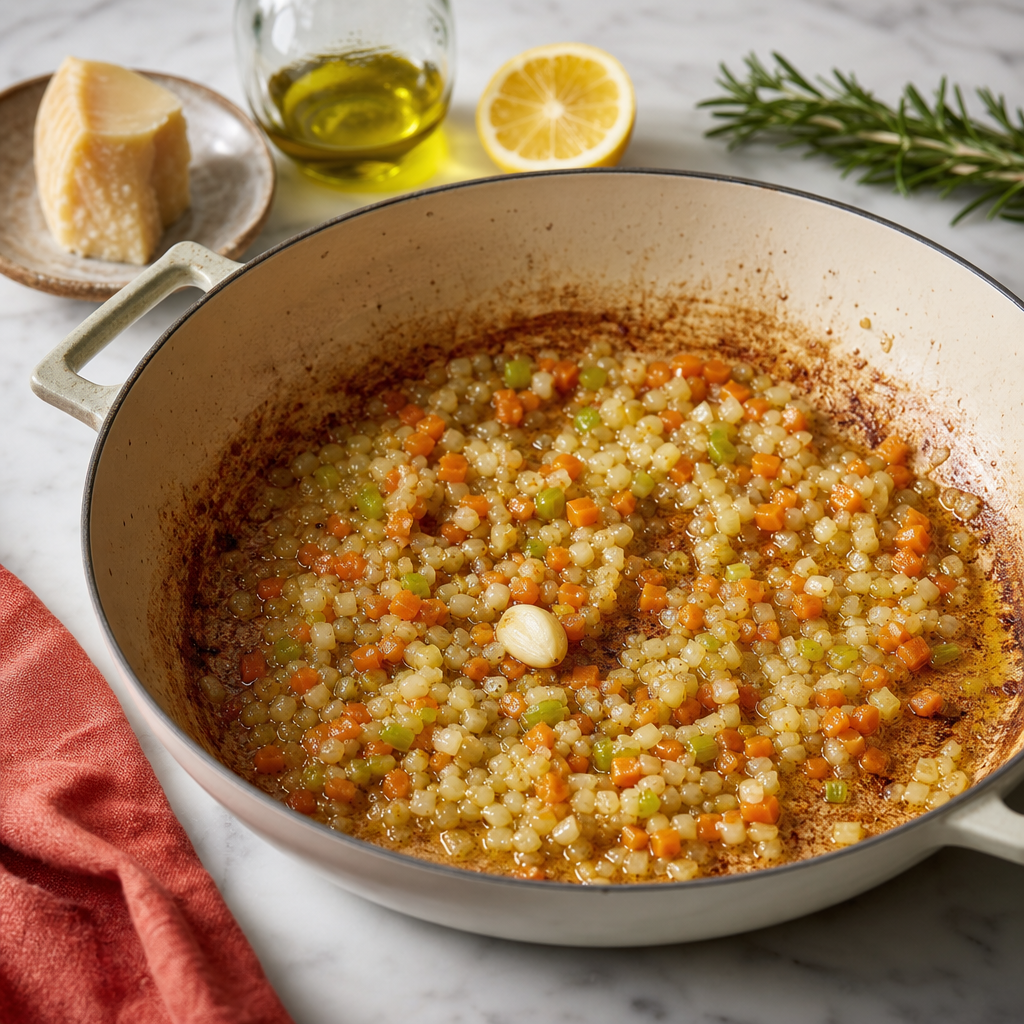
Lower the heat to medium. Add onion, carrot, celery, and the crushed garlic clove, then cook 8-10 minutes until the vegetables soften and leave a light golden film on the pan.
Cook the tomato paste lightly
Add the tomato paste, if using, and smear it through the soffritto for 60-90 seconds. Stop before it darkens to brick red.
Deglaze with white wine
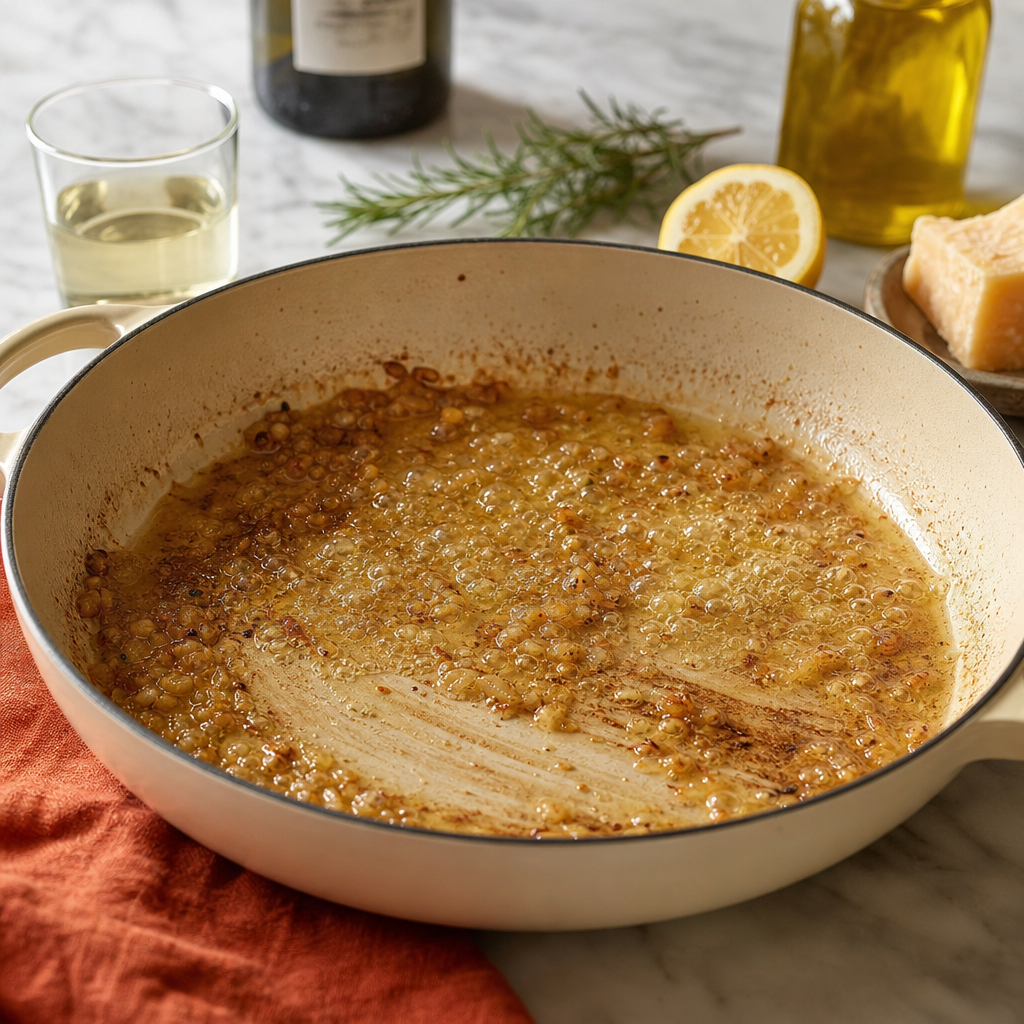
Pour in the white wine and scrape the pan clean. Boil 3-4 minutes, until the wine smells rounded rather than sharp and the liquid is reduced by about half.
Braise gently
Return the shanks to the pan in one layer. Add hot stock to come halfway up the meat, add the bay leaf, cover with a parchment round and lid, and braise at a bare simmer for 90 minutes.
Turn and finish the braise
Turn the shanks with a wide spatula and spoon. Continue braising 45-60 minutes, until a skewer slides into the meat with little resistance but the slices still hold their shape.
Make the gremolata
Mix parsley, lemon zest, and minced garlic. Chop once more together on the board so the oils stain the herbs, then hold at room temperature.
Start the saffron risotto
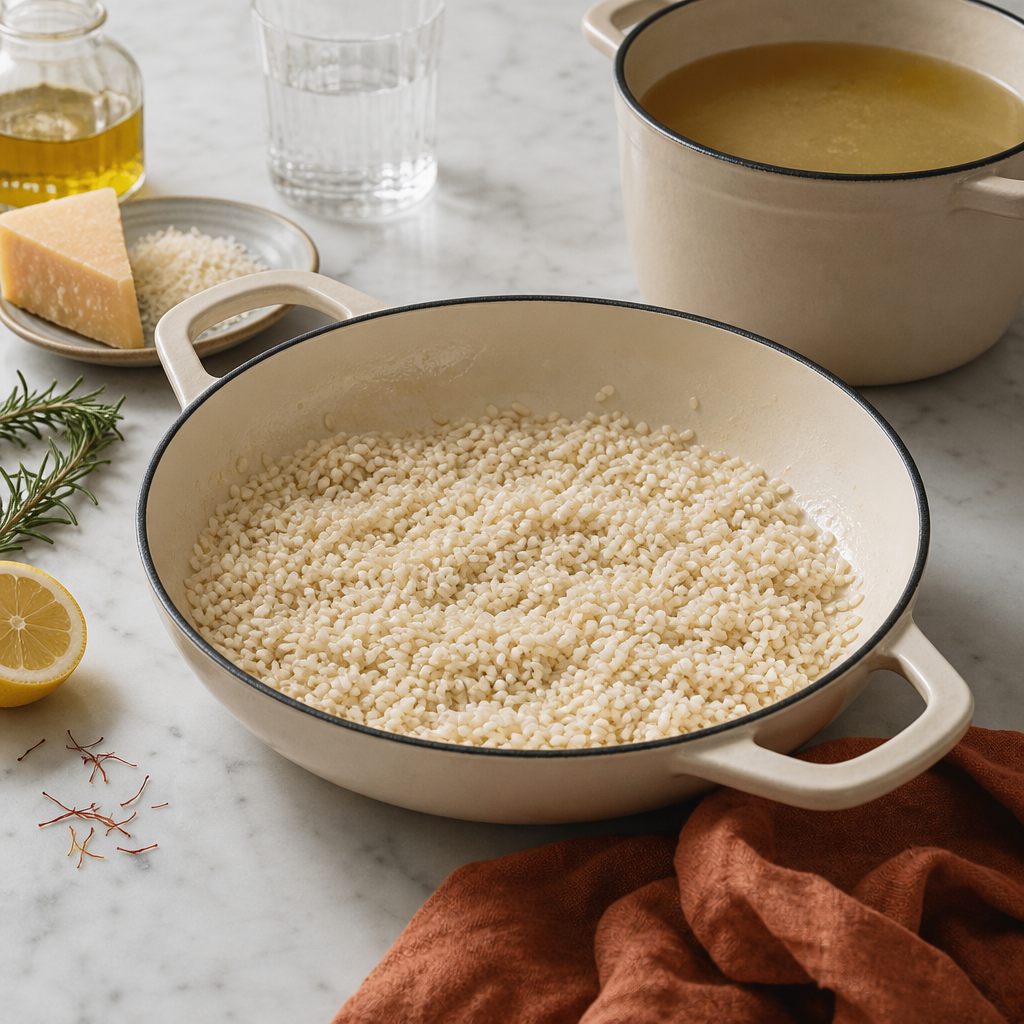
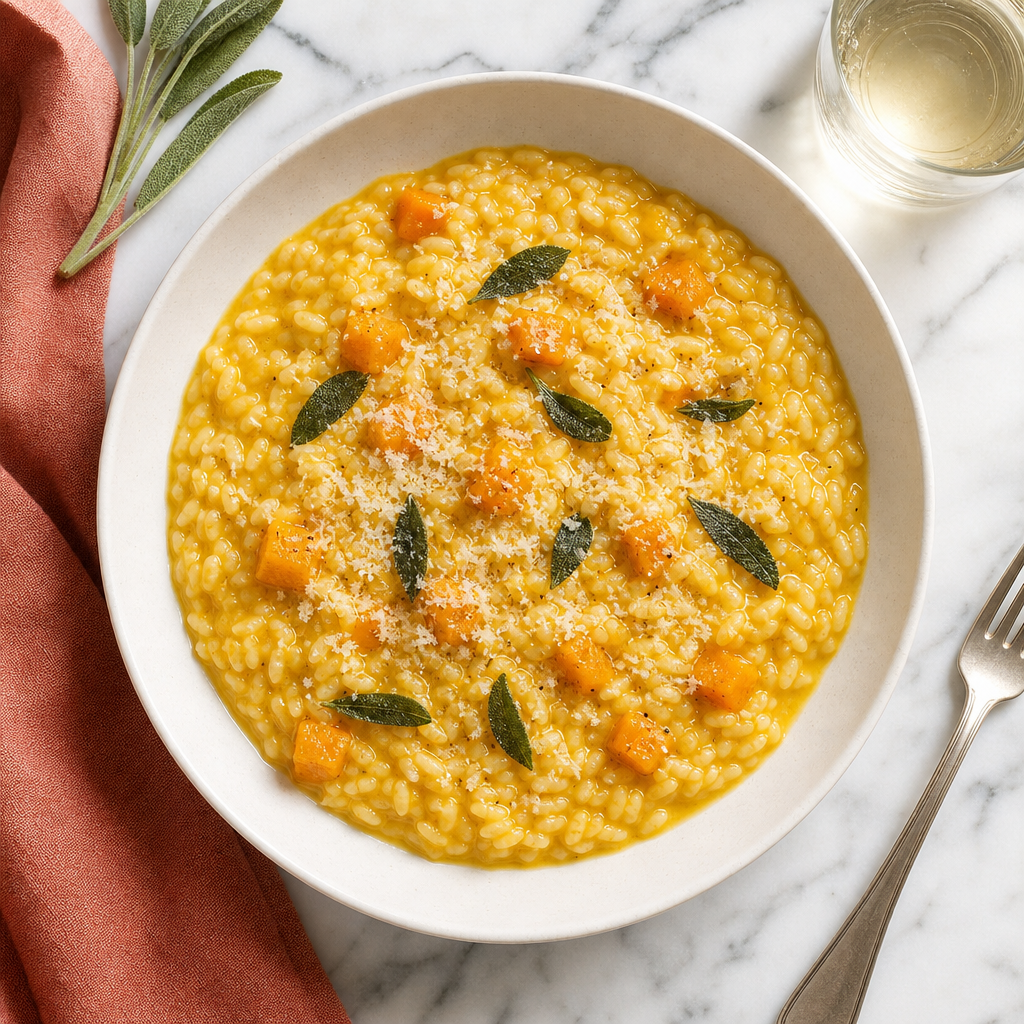
While the veal finishes, keep the risotto stock hot. Toast the Carnaroli rice dry in a wide pan over medium heat until the grains feel hot to the touch and sound faintly glassy, about 2 minutes.
Cook the risotto all'onda
Add hot stock one ladle at a time, stirring constantly and adding more only when the previous ladle is mostly absorbed. After about 12 minutes, add the steeped saffron; continue until the rice is al dente, usually 16-18 minutes total.
Mantecare off heat
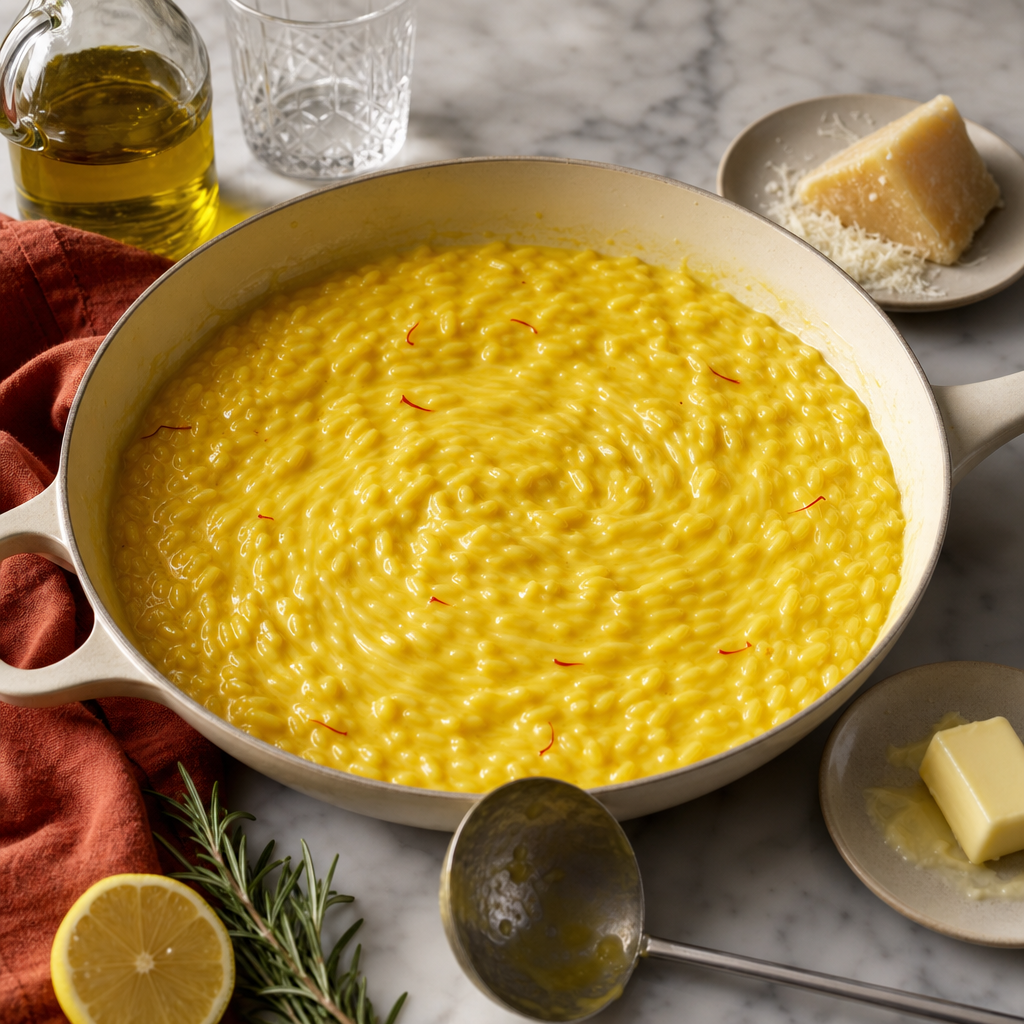
Remove the risotto from heat. Beat in the cold butter and Parmigiano-Reggiano, then adjust with hot stock until the risotto ripples when the pan is tilted.
Reduce and correct the sauce
Lift the shanks to a warm tray. Simmer the braising liquid uncovered until glossy and spoon-coating, then taste for salt; strain only if a cleaner restaurant finish is wanted.
Plate with marrow intact
Spoon risotto onto warm plates. Set one shank beside or partly over the rice, nap with sauce, and finish with gremolata at the table or at the last second before serving.
Common mistakes
- {'mistake': 'Using boneless veal or stew meat', 'fix': 'Use cross-cut shank with the marrow bone. Without the bone, the dish loses its structure and its main source of gelatin-rich fat.'}
- {'mistake': 'Cutting the shanks too thin', 'fix': 'Keep them 3-4 cm thick. Thin slices curl, dry at the edges, and detach from the bone before the center becomes tender.'}
- {'mistake': 'Boiling the braise', 'fix': 'Hold a bare simmer. The surface should move lazily, with an occasional bubble at the edge.'}
- {'mistake': 'Letting the meat fall apart', 'fix': 'Stop when a skewer enters with little resistance. Osso buco should be spoon-tender but still recognizable as a shank.'}
- {'mistake': 'Cooking the gremolata', 'fix': 'Add it raw at the end. Heat flattens the lemon zest and makes the garlic taste cooked and blunt.'}
- {'mistake': 'Making risotto stiff', 'fix': 'Finish with hot stock until it moves like a wave. A mound that stands upright on the plate is over-reduced.'}
What does not belong
- {'item': 'Red wine', 'reason': 'Red wine does not belong in the Milanese profile. It makes a darker, heavier braise closer to beef-stew logic.'}
- {'item': 'Heavy tomato sauce', 'reason': 'A spoon of tomato paste is optional; passata-heavy sauce turns the dish into a tomato braise.'}
- {'item': 'Rosemary-heavy herb bundles', 'reason': 'Rosemary overwhelms the marrow and lemon. Bay is enough if an herb is used in the braise.'}
- {'item': 'Pesto', 'reason': 'Pesto does not belong on ossobuco alla Milanese. The required green finish is gremolata: parsley, lemon zest, and garlic.'}
- {'item': 'Long-grain rice for the risotto', 'reason': "Long-grain rice does not release the starch needed for risotto all'onda. Use Carnaroli, Arborio, or Vialone Nano."}
- {'item': 'Cream in the risotto', 'reason': 'Cream does not belong. The creamy texture comes from rice starch, butter, cheese, and correct mantecatura.'}