Risotto Milanese
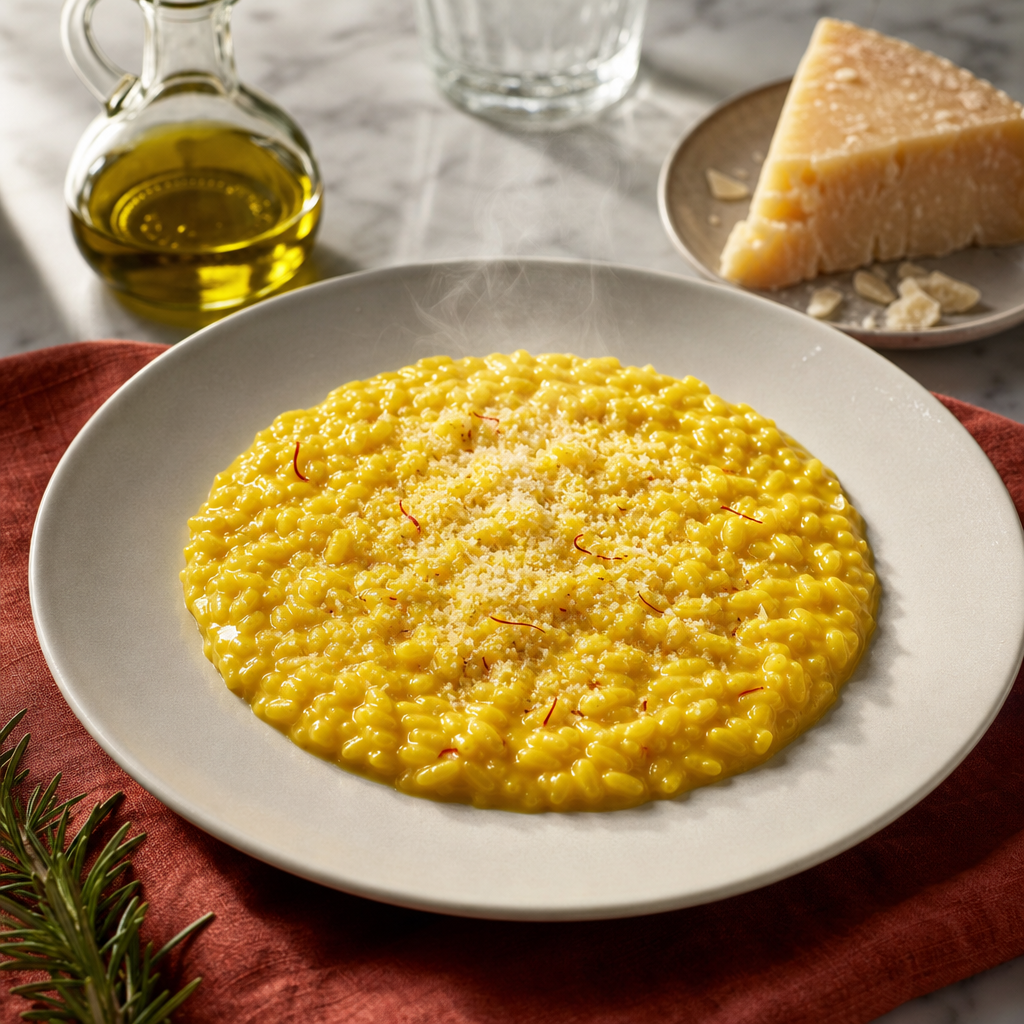
The dish in context
Risotto alla Milanese is the saffron risotto of Milan and Lombardy, traditionally served as a primo or alongside ossobuco alla Milanese. The common origin story links its yellow color to saffron used by glassworkers at Milan's Duomo, but the stronger culinary evidence is the long rice culture of the Po Valley and northern Italian broth-cooked rice preparations. Early identifiable versions combine rice, onion, butter, broth, saffron, and grated cheese; bone marrow appears in traditional Milanese versions but is often omitted in modern home cooking. The dish is not a generic yellow rice. Its identity depends on risotto texture: all'onda, loose enough to move like a wave.
Method 8 steps · 40 min
Bloom the saffron
Crumble the saffron threads into the white wine and let them steep while the stock heats. Keep the stock at a bare simmer in a separate saucepan.
Cook the onion without browning
Melt 30 g butter in a wide heavy pan over medium-low heat. Add the onion, marrow if using, and a pinch of salt; cook until the onion is translucent and soft, 5-7 minutes, with no brown edges.
Toast the rice
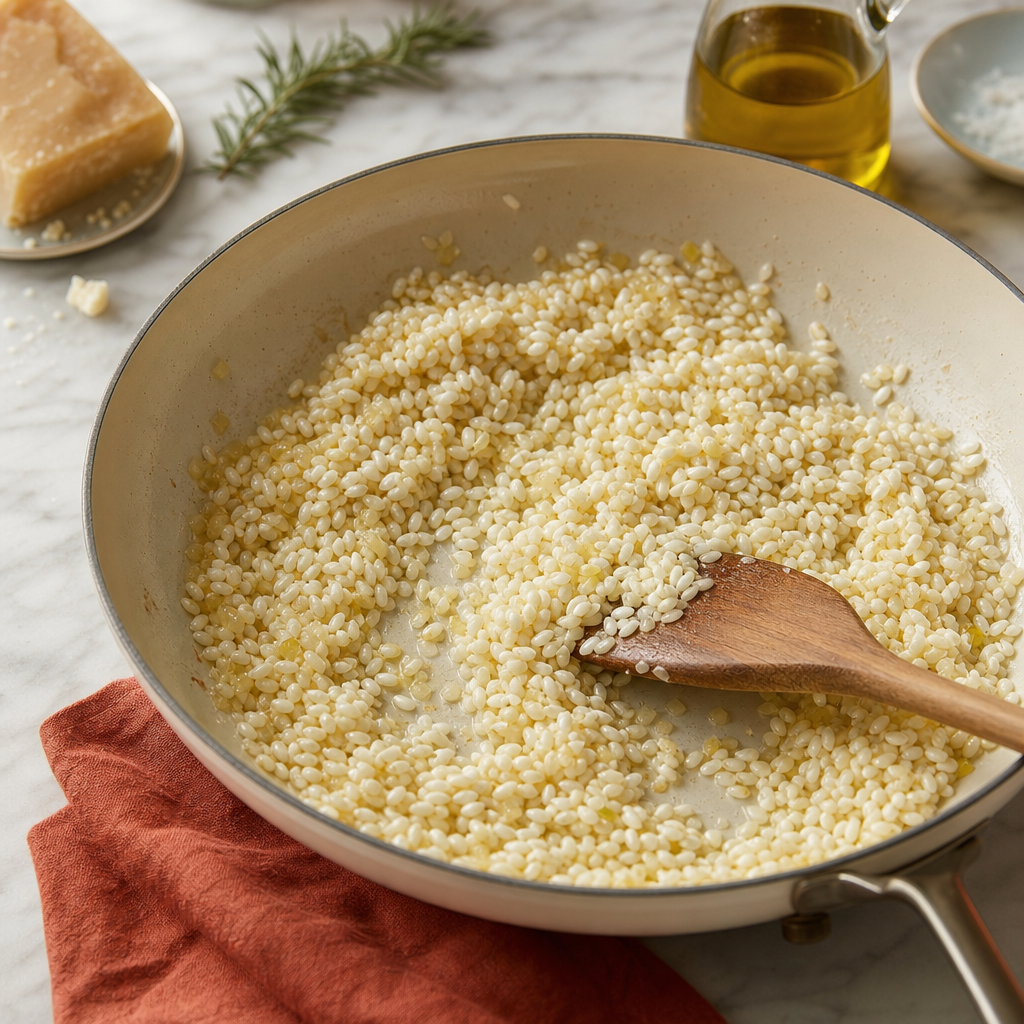
Add the rice and stir for 2 minutes, until the grains feel hot and look slightly translucent at the edges while the centers remain chalky white. Do not wash the rice.
Add saffron wine
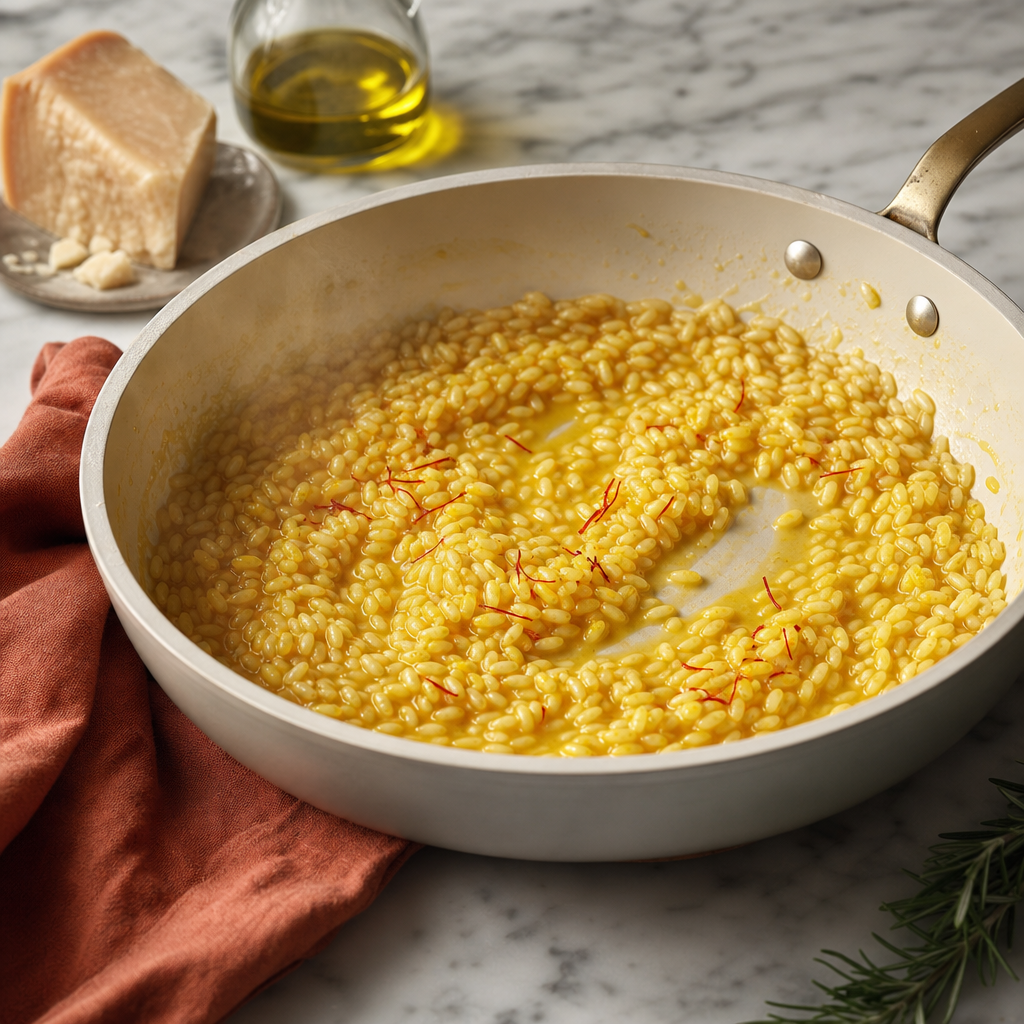
Pour in the saffron-infused wine. Stir until the pan is nearly dry and the sharp alcohol smell has lifted, about 1-2 minutes.
Build the risotto with hot stock
Add hot stock one ladle at a time, stirring constantly and waiting until the rice has absorbed most of each addition before adding the next. Keep the rice moving, but do not beat it. Cook 16-18 minutes total from the first stock addition.
Stop at al dente
Start tasting at 15 minutes. Stop when the rice is tender at the edge with a small firm core in the center and the pan still looks looser than the final texture.
Mantecare off heat
Remove the pan from the heat. Beat in the cold butter and Parmigiano-Reggiano, then adjust salt and pepper. Add a splash of hot stock if needed until the risotto flows slowly when the pan is shaken.
Serve all'onda
Spoon onto warm shallow plates immediately. Tap or tilt the plate; the risotto should spread into a soft wave, not stand as a mound.
Common mistakes
- {'mistake': 'Using long-grain rice', 'fix': 'Use Carnaroli, Arborio, or Vialone Nano. Basmati, jasmine, and standard long-grain rice do not release the starch needed for risotto.'}
- {'mistake': 'Letting the stock cool', 'fix': 'Keep the stock at a bare simmer. Cold liquid interrupts cooking and makes the rice chalky outside before the center softens.'}
- {'mistake': 'Browning the onion', 'fix': 'Cook the onion gently until translucent. Brown onion competes with saffron and darkens the yellow.'}
- {'mistake': 'Finishing over heat', 'fix': 'Add butter and cheese off heat. Heat breaks the emulsion and turns Parmigiano grainy.'}
- {'mistake': 'Serving it stiff', 'fix': 'Loosen with hot stock before plating. Correct Risotto alla Milanese moves like a slow wave.'}
What does not belong
- {'item': 'cream', 'reason': 'Cream does not belong in risotto. The creamy texture comes from rice starch, butter, cheese, and controlled liquid addition.'}
- {'item': 'turmeric', 'reason': 'Turmeric makes rice yellow but gives an earthy, blunt flavor. Saffron is the identity of the dish.'}
- {'item': 'garlic', 'reason': 'Garlic is not part of the canonical Milanese profile. It distracts from saffron and broth.'}
- {'item': 'tomato', 'reason': 'Tomato turns this into another rice dish. It does not belong in Risotto alla Milanese.'}
- {'item': 'herb garnish', 'reason': 'Parsley or basil on top reads as restaurant decoration, not Milanese structure. The plate should be yellow, glossy, and restrained.'}
- {'item': 'pre-grated cheese', 'reason': 'Pre-grated cheese carries starches and anti-caking agents that dull the emulsion. Grate Parmigiano-Reggiano finely at the moment of use.'}