Scaloppine Limone
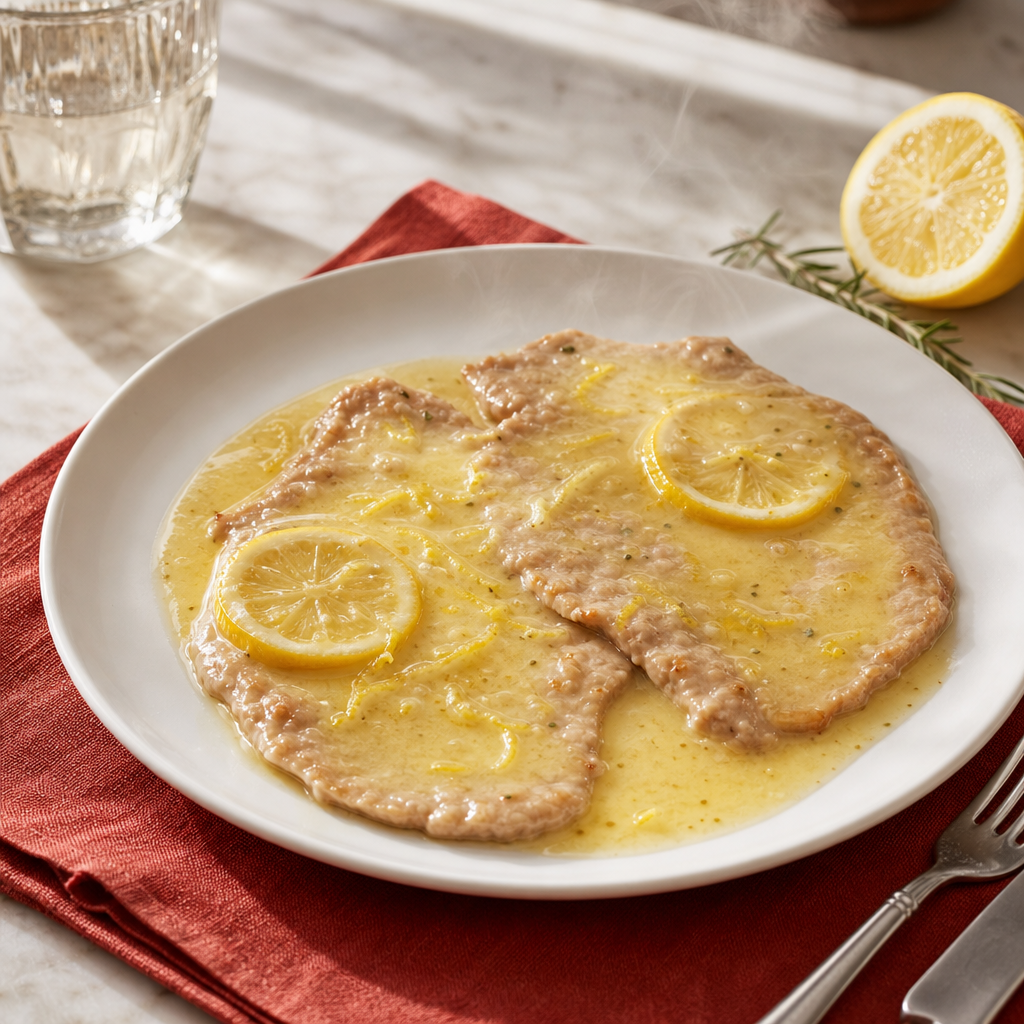
The dish in context
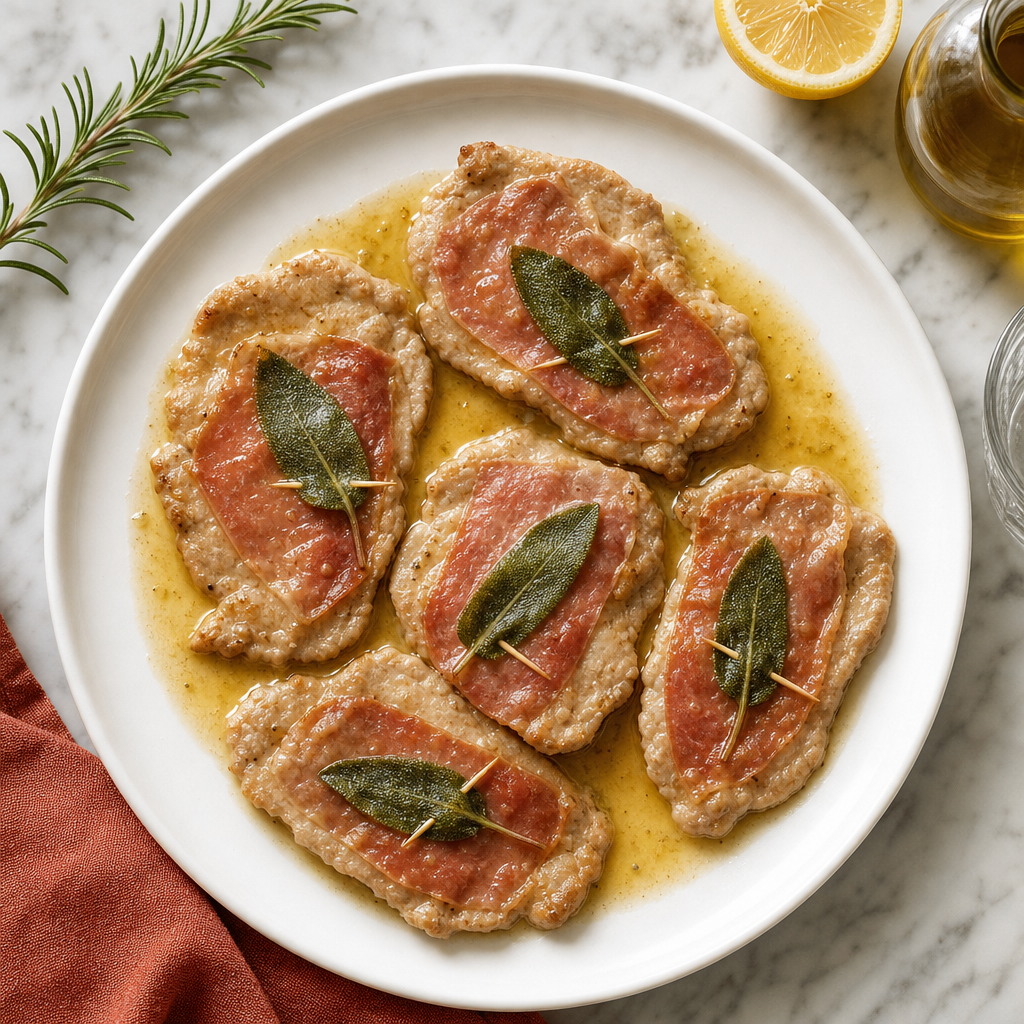
Scaloppine are an Italian secondo built around thin slices of meat cooked fast in a pan, then finished with a short pan sauce. The lemon version, Scaloppine al Limone, is one of the household-standard forms alongside Marsala, wine, mushroom, and pizzaiola versions. Veal is the canonical meat because it stays tender through a short sear; chicken and pork versions exist, but they change the texture and need more attention to avoid dryness. The dish is not a breaded cutlet and not piccata: flour is used as a light dusting to brown the surface and bind the sauce, not as a crust.
Method 7 steps · 20 min
Pound the veal
Lay the veal between sheets of parchment or plastic and pound to 3-4 mm thick. The pieces should be even, with no thick ridge in the center. Pat dry.
Season and dust
Season the veal on both sides with the salt and a little pepper. Dredge in flour, then shake hard so only a thin film remains. The surface should look matte, not caked.
Sear fast
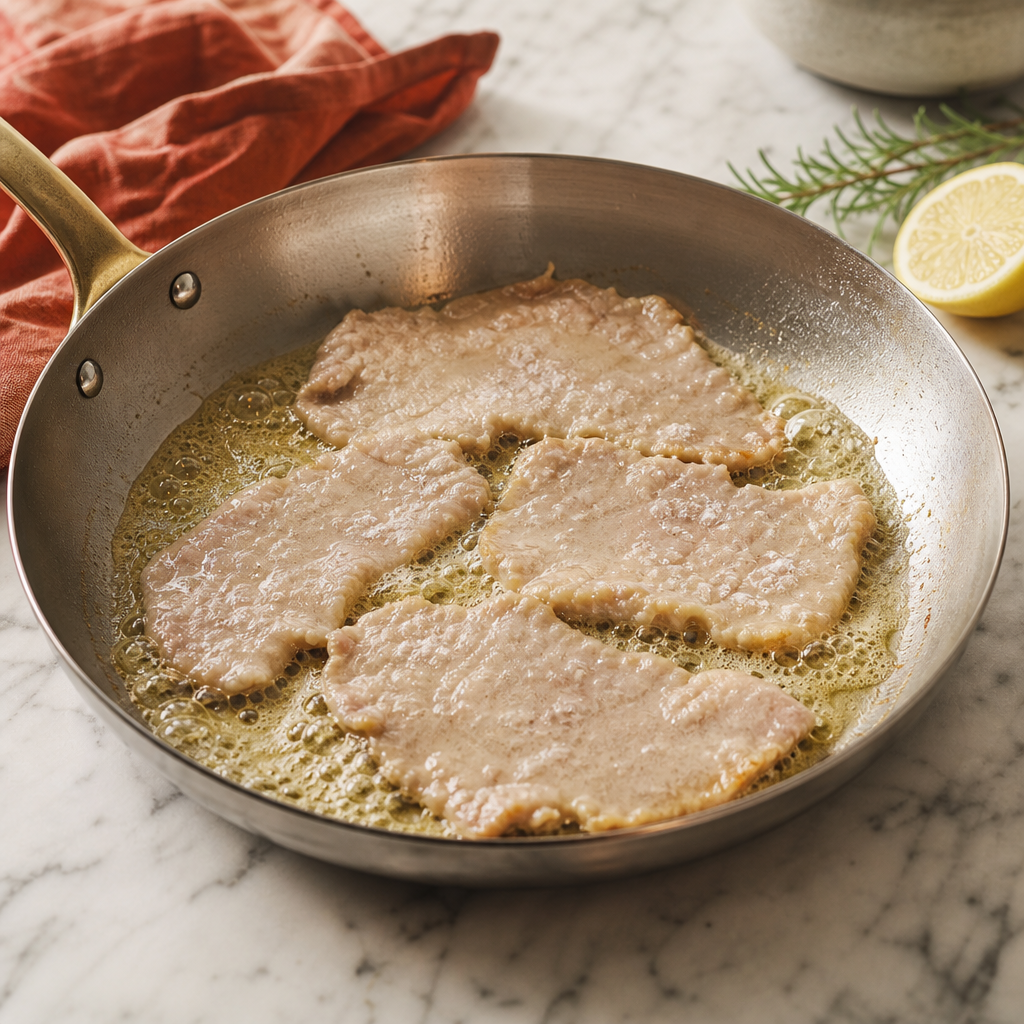
Heat the olive oil and 20 g of the butter in a wide skillet over medium-high heat until the butter foams and the foam begins to tighten. Sear the veal in one layer, 45-60 seconds per side, until pale golden spots form. Transfer to a warm plate; cook in batches if needed.
Deglaze the pan
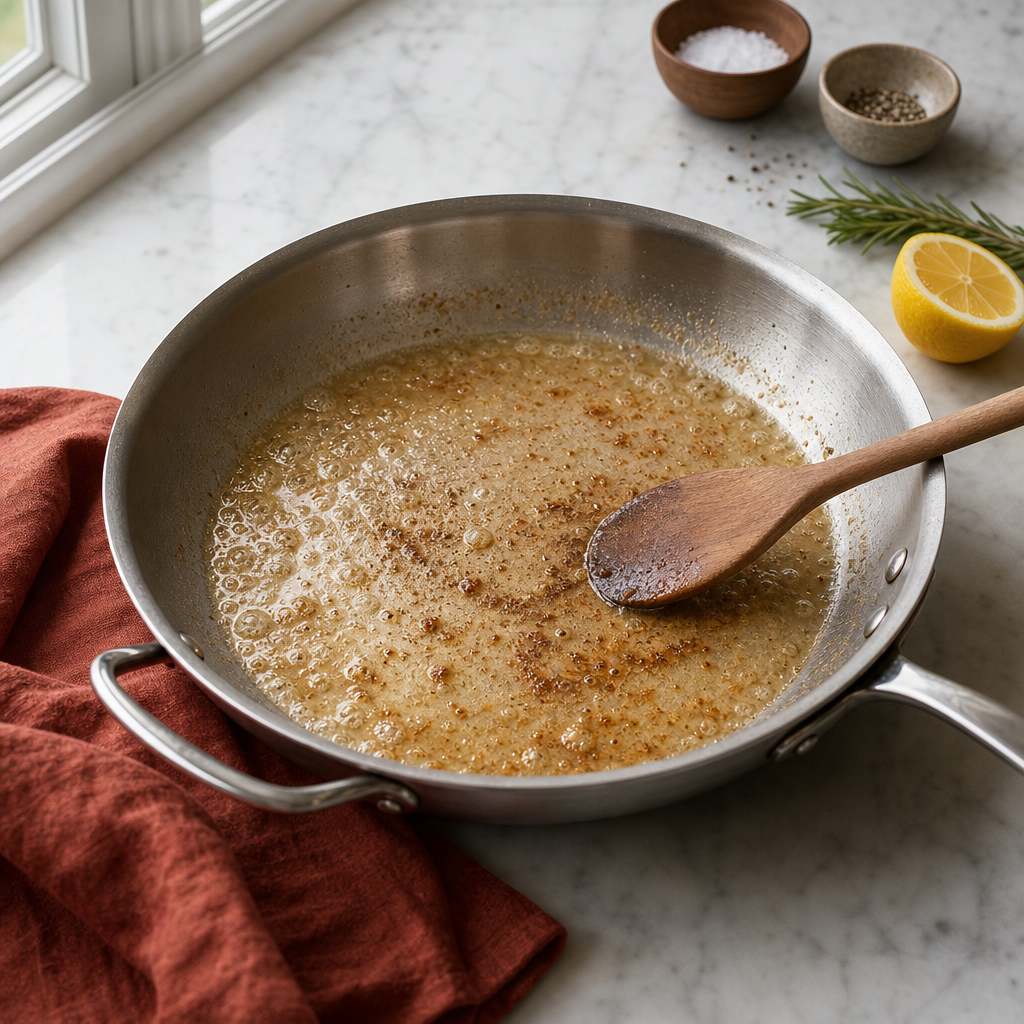
Pour off excess fat if the pan looks oily, leaving the browned floury film behind. Add the white wine and scrape the pan clean with a wooden spoon. Boil until reduced by about half and the alcohol smell is gone.
Build the lemon-butter sauce
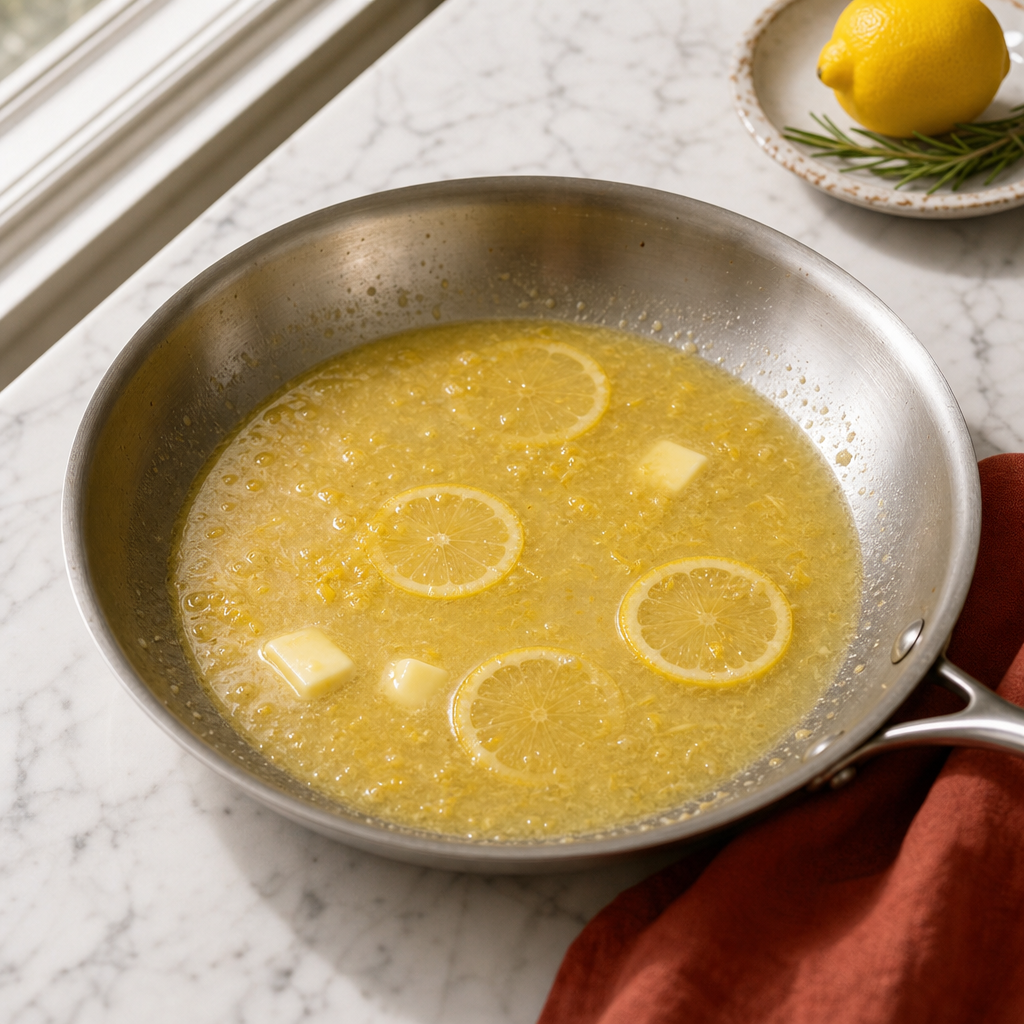
Lower the heat to medium-low. Add the lemon zest, lemon juice, lemon slices if using, and the remaining 40 g butter in small pieces, swirling the pan until the sauce turns glossy and lightly thickened. If it tightens too much, add 1-2 tablespoons water.
Return the veal
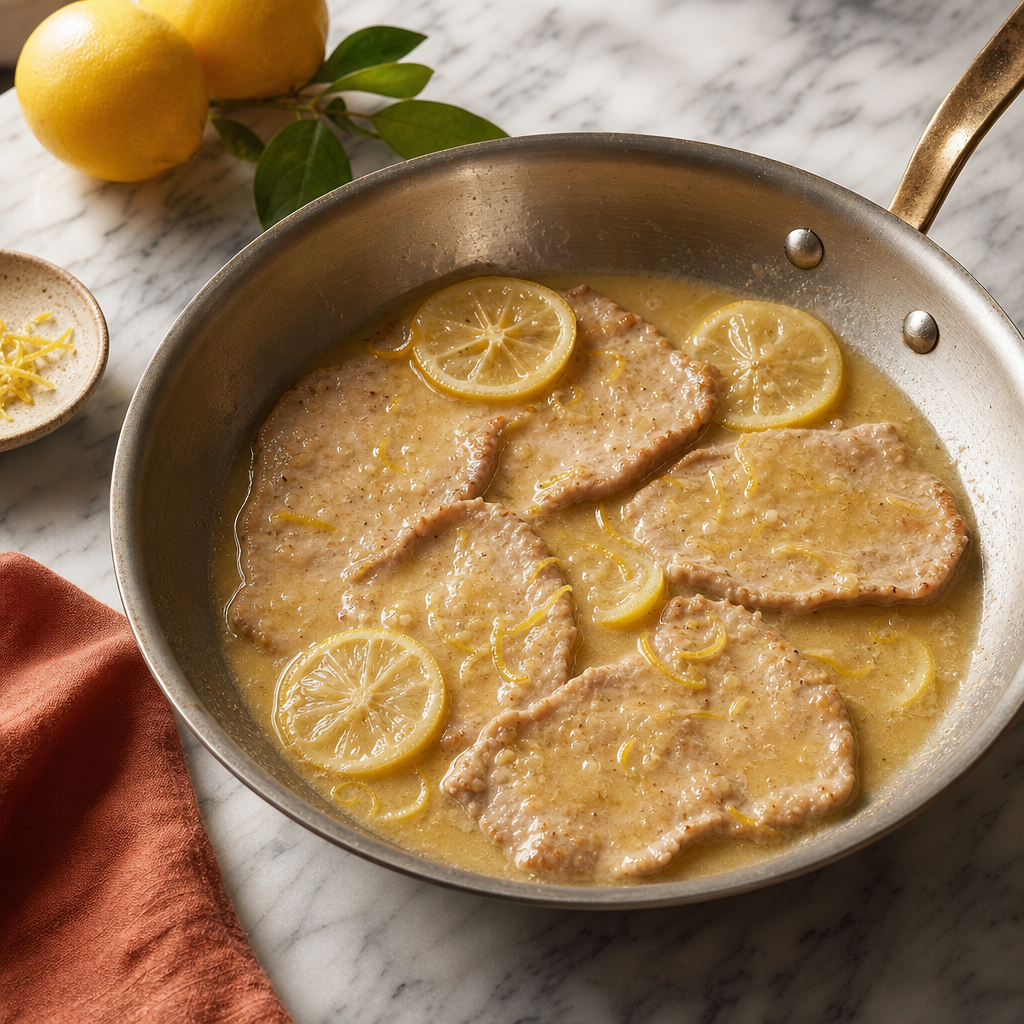
Return the veal and any plate juices to the pan. Turn each piece once in the sauce and warm for 30-45 seconds, then remove from the heat. The sauce should coat the back of a spoon in a thin yellow sheen.
Finish and serve
Taste the sauce and correct with a few drops of lemon juice or a pinch of salt if needed. Spoon sauce over the veal and finish with parsley if using. Serve immediately.
Common mistakes
- {'mistake': 'Leaving the veal too thick.', 'fix': 'Pound to 3-4 mm. Scaloppine are defined by thinness; thick cutlets need a different cooking method.'}
- {'mistake': 'Using a heavy flour coat.', 'fix': 'Shake off the flour until the meat looks dry and matte. Visible clumps become paste in the sauce.'}
- {'mistake': 'Crowding the skillet.', 'fix': 'Cook in batches. The pan should hiss immediately when the meat hits it.'}
- {'mistake': 'Boiling the lemon-butter sauce hard.', 'fix': 'Reduce the wine first, then lower the heat before adding lemon and butter. A split sauce looks greasy at the edges.'}
- {'mistake': 'Holding the finished meat in the pan.', 'fix': 'Sauce, coat, serve. Thin veal keeps cooking from residual heat.'}
What does not belong
- {'item': 'cream', 'reason': 'Cream mutes the lemon and turns a sharp pan sauce into a heavy dairy sauce. It does not belong in Scaloppine al Limone.'}
- {'item': 'capers', 'reason': 'Capers move the dish toward piccata. Piccata is a neighboring dish, not this one.'}
- {'item': 'breadcrumbs', 'reason': 'Breadcrumbs make a breaded cutlet. Scaloppine need a light flour dusting only.'}
- {'item': 'heavy garlic or onion', 'reason': 'The sauce has little cover. Garlic and onion dominate the lemon-butter structure and do not belong in this lean version.'}
- {'item': 'sugar', 'reason': 'The sauce should be bright and savory, not sweet-sour.'}