Beef Carpaccio
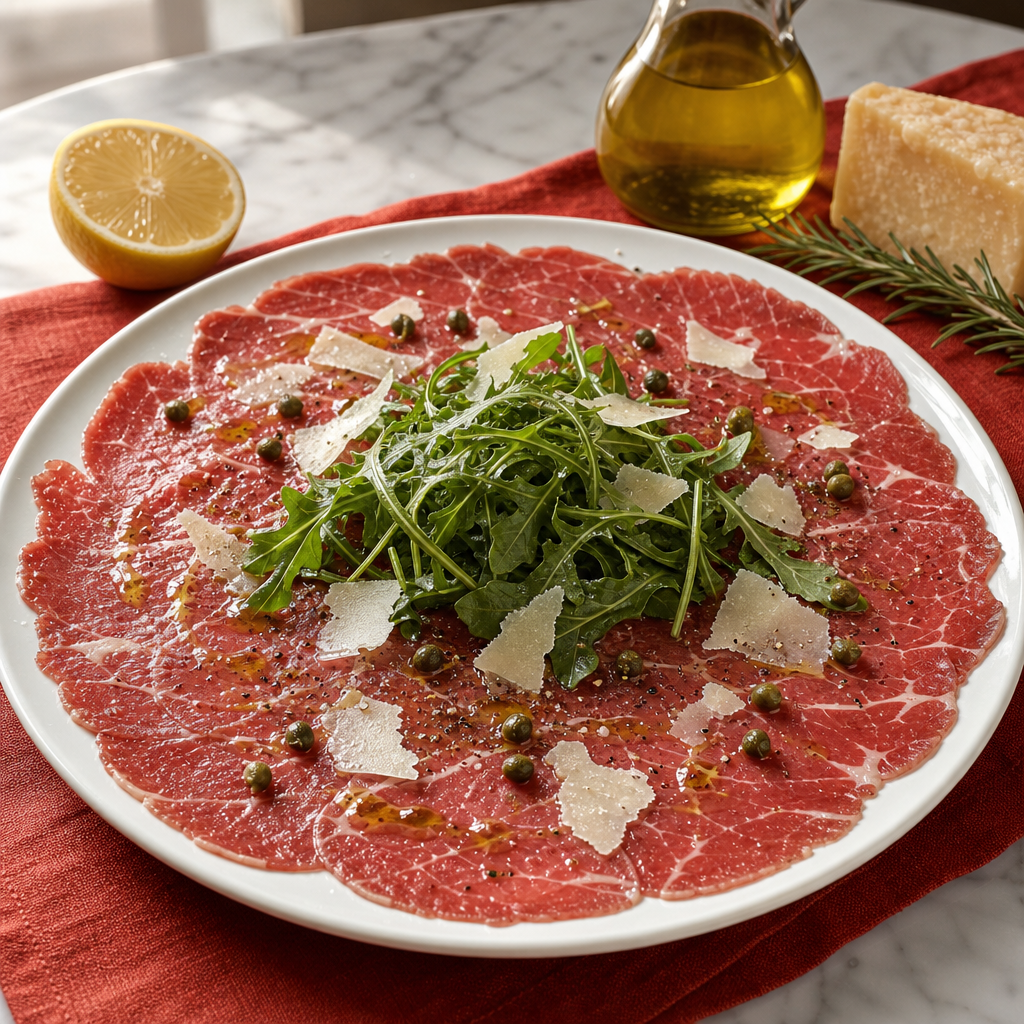
The dish in context
Carpaccio di manzo is tied to Venice and to Harry's Bar, where Giuseppe Cipriani created a raw beef dish in 1950 for Countess Amalia Nani Mocenigo, who had been advised to avoid cooked meat. The name refers to Vittore Carpaccio, the Venetian painter associated with strong red and white tones. The original service was lean: thin raw beef dressed with a pale house sauce, not a piled salad. Modern Italian restaurant versions often use arugula, Parmigiano-Reggiano, lemon, olive oil, and capers; that is the version documented here because it has become the common international reference while staying inside the dish's grammar.
Method 7 steps · 80 min
Trim the beef
Remove silverskin, dried edges, and any oxidized gray surface from the tenderloin. Shape it into a tight cylinder and wrap it firmly in plastic film.
Firm the meat
Freeze the wrapped beef until the outside is firm and the center is still sliceable, 45-60 minutes. Chill the serving plates at the same time.
Slice paper-thin
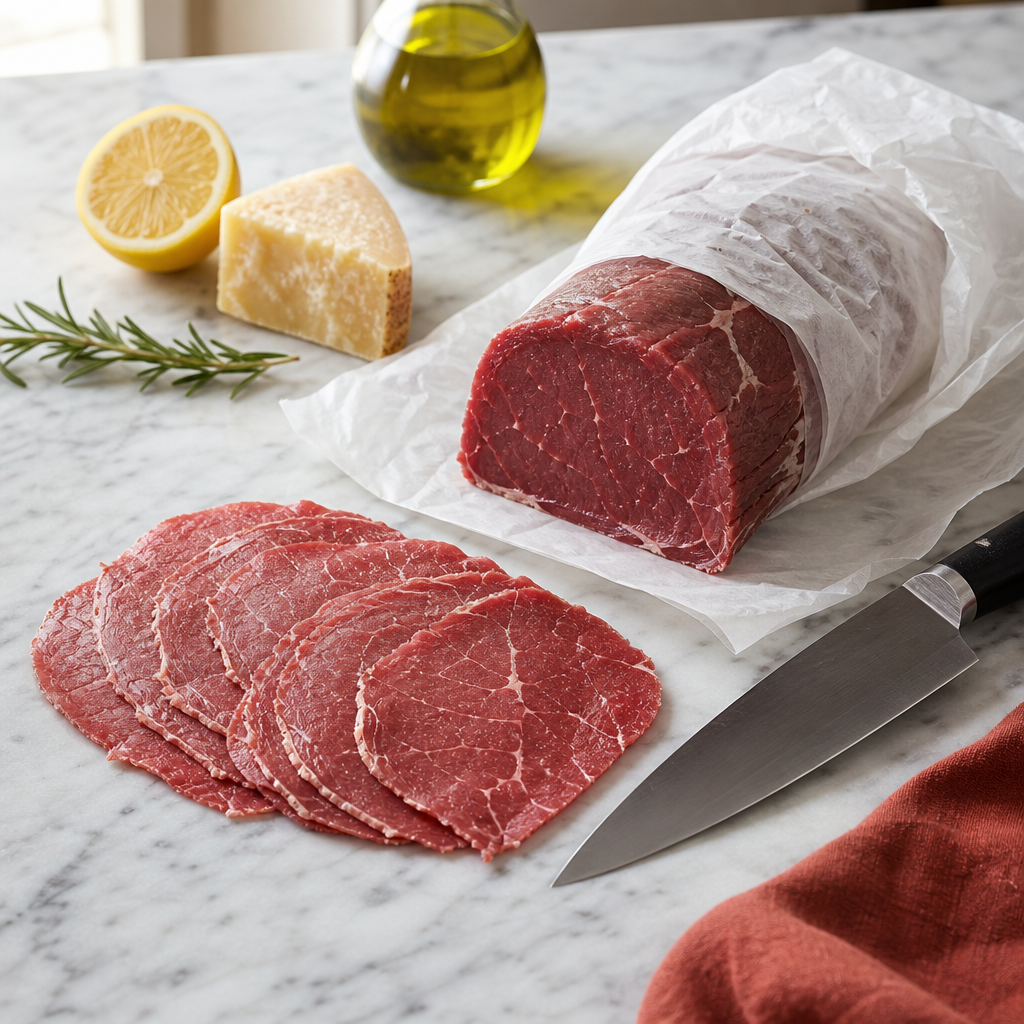
Unwrap the beef and slice across the grain with a very sharp knife into slices about 1-2 mm thick. Work in small batches and return the unsliced beef to the freezer if it softens.
Pound between film
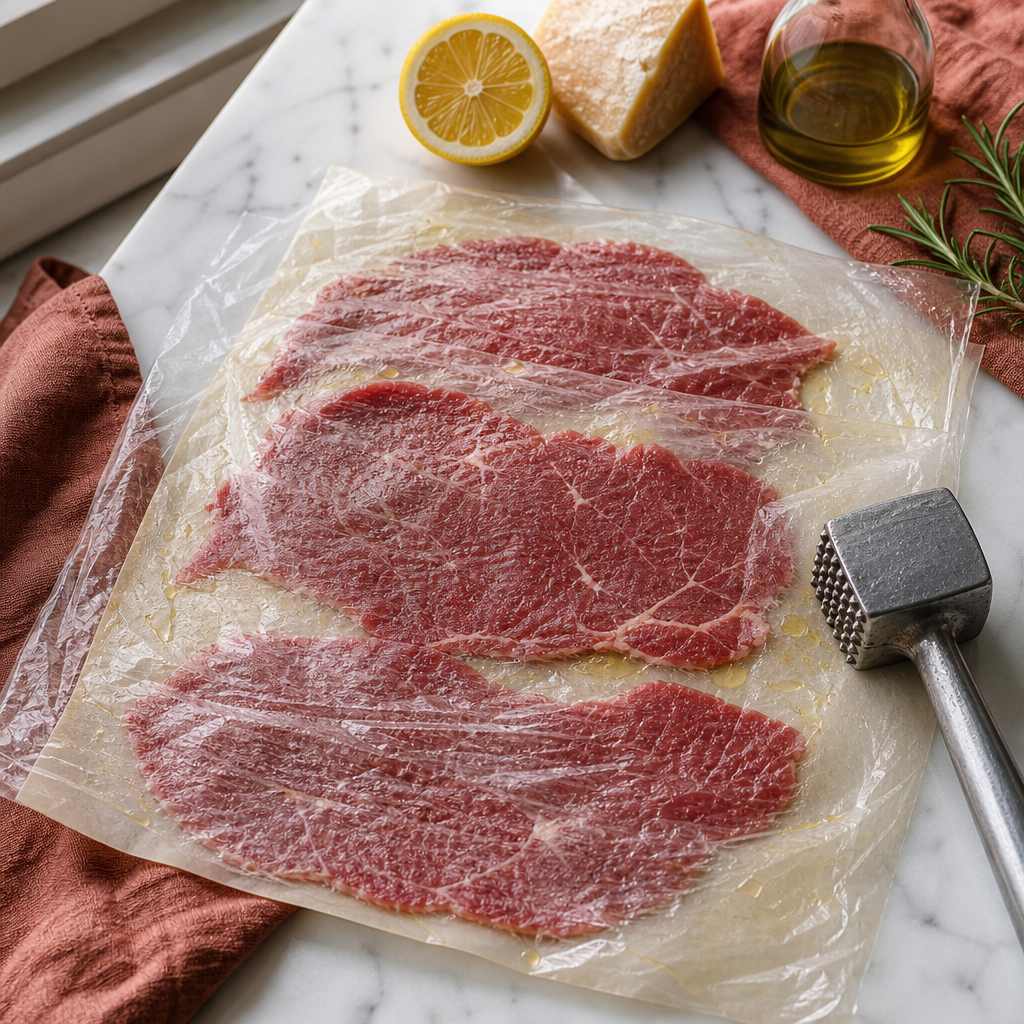
Lay the slices between two sheets of plastic film or parchment brushed with a little oil. Pound with the flat side of a meat mallet or the base of a small pan until the slices are thin enough to see the plate color through them.
Plate cold
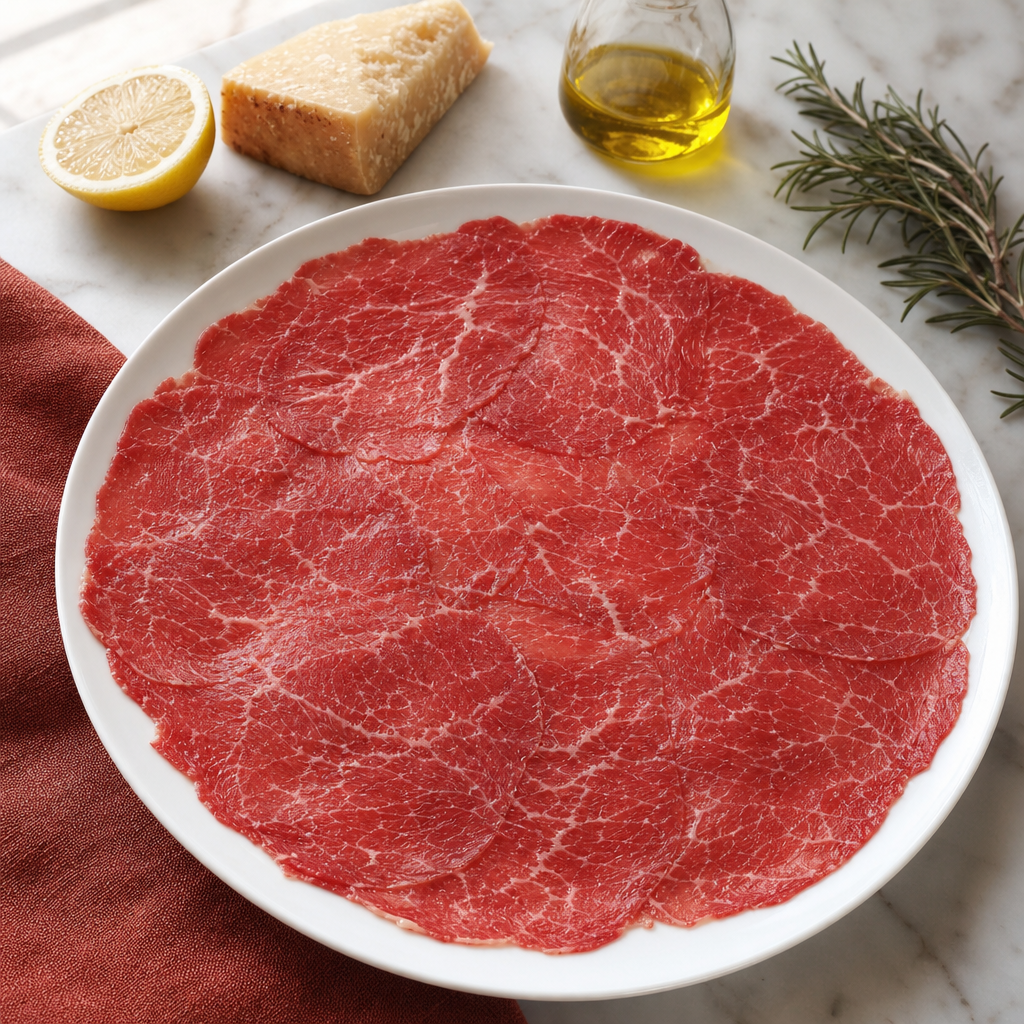
Arrange the beef in a single layer on chilled plates, slightly overlapping the edges. Do not stack it.
Dress the beef
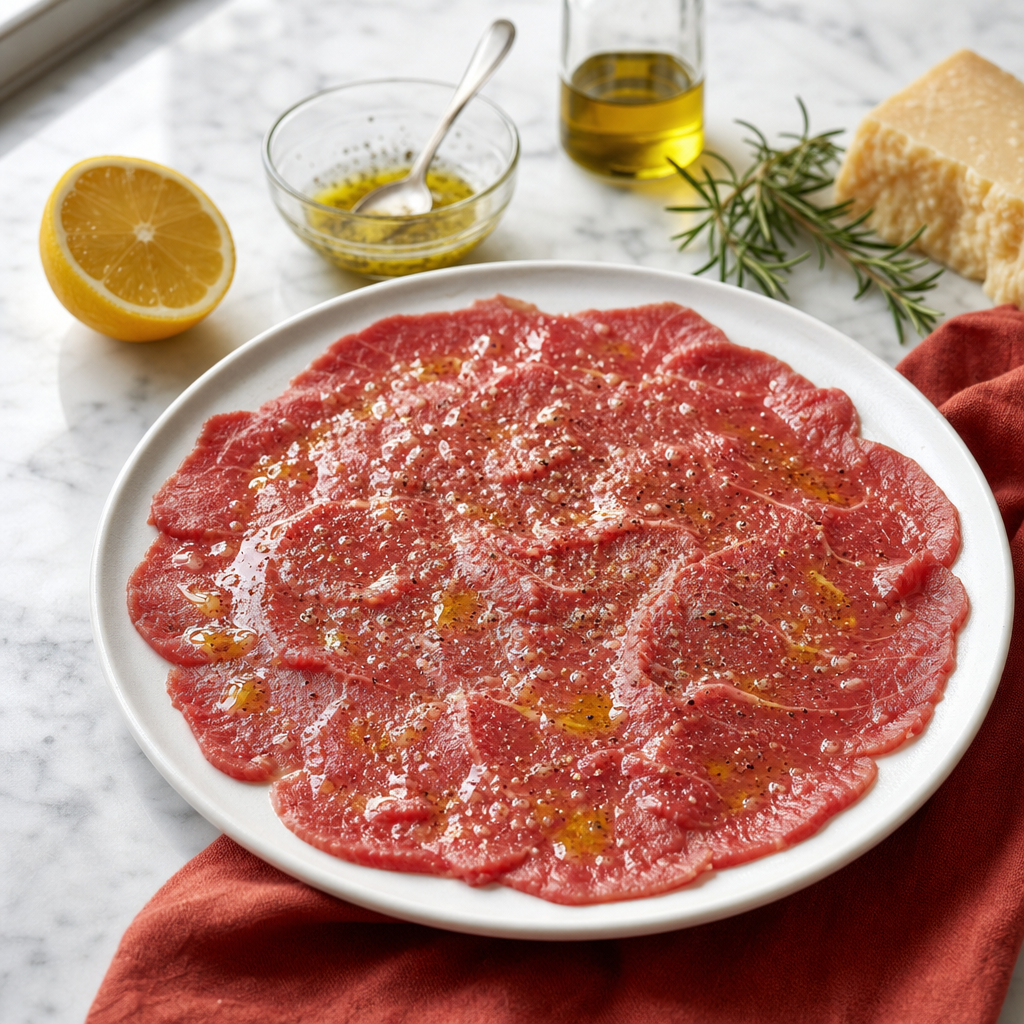
Whisk the olive oil, lemon juice, salt, and half the black pepper until glossy. Spoon or brush a thin layer over the beef; stop before liquid pools on the plate.
Finish the plate
Toss the arugula with a few drops of the dressing and place a loose mound in the center. Scatter Parmigiano-Reggiano shavings, capers, remaining pepper, and lemon zest if using. Serve immediately.
Common mistakes
- {'mistake': 'Using meat that was not bought for raw service.', 'fix': 'Use a whole trimmed piece from a trusted butcher who understands it will be served raw, keep it refrigerated, prepare it the same day, and avoid serving it to high-risk diners. Pre-sliced supermarket beef does not belong here.'}
- {'mistake': 'Slicing the beef warm.', 'fix': 'Firm it in the freezer until the knife passes cleanly and the slices hold their shape.'}
- {'mistake': 'Serving thick slices.', 'fix': 'Slice thin, then pound thinner. Carpaccio should be translucent; if it eats like tartare in sheets, it is too thick.'}
- {'mistake': 'Dressing too early.', 'fix': 'Dress at the last moment. Lemon and salt draw moisture and start curing the surface within minutes.'}
- {'mistake': 'Burying the beef under salad.', 'fix': 'Keep arugula in a small central mound. The beef is the plate, not a garnish for greens.'}
What does not belong
- {'item': 'Balsamic glaze', 'reason': 'Sticky sweetness flattens the raw beef and turns the plate into a modern salad-bar version. It does not belong in this Venetian structure.'}
- {'item': 'Truffle oil', 'reason': 'Synthetic truffle aroma dominates cold raw beef. Real shaved truffle is a different luxury variant; bottled truffle oil does not belong.'}
- {'item': 'Garlic', 'reason': 'Raw garlic hijacks the clean beef-lemon-olive oil profile. It does not belong in the dressing.'}
- {'item': 'Cooked steak strips', 'reason': 'Carpaccio is raw, thin, and cold. Cooked sliced steak is tagliata, a different dish.'}
- {'item': 'Heavy mayonnaise coating', 'reason': "Harry's Bar used a pale sauce, but the beef was not smothered. A thick mayo layer makes the plate taste of condiment before meat."}