Vitello Tonnato
The dish in context
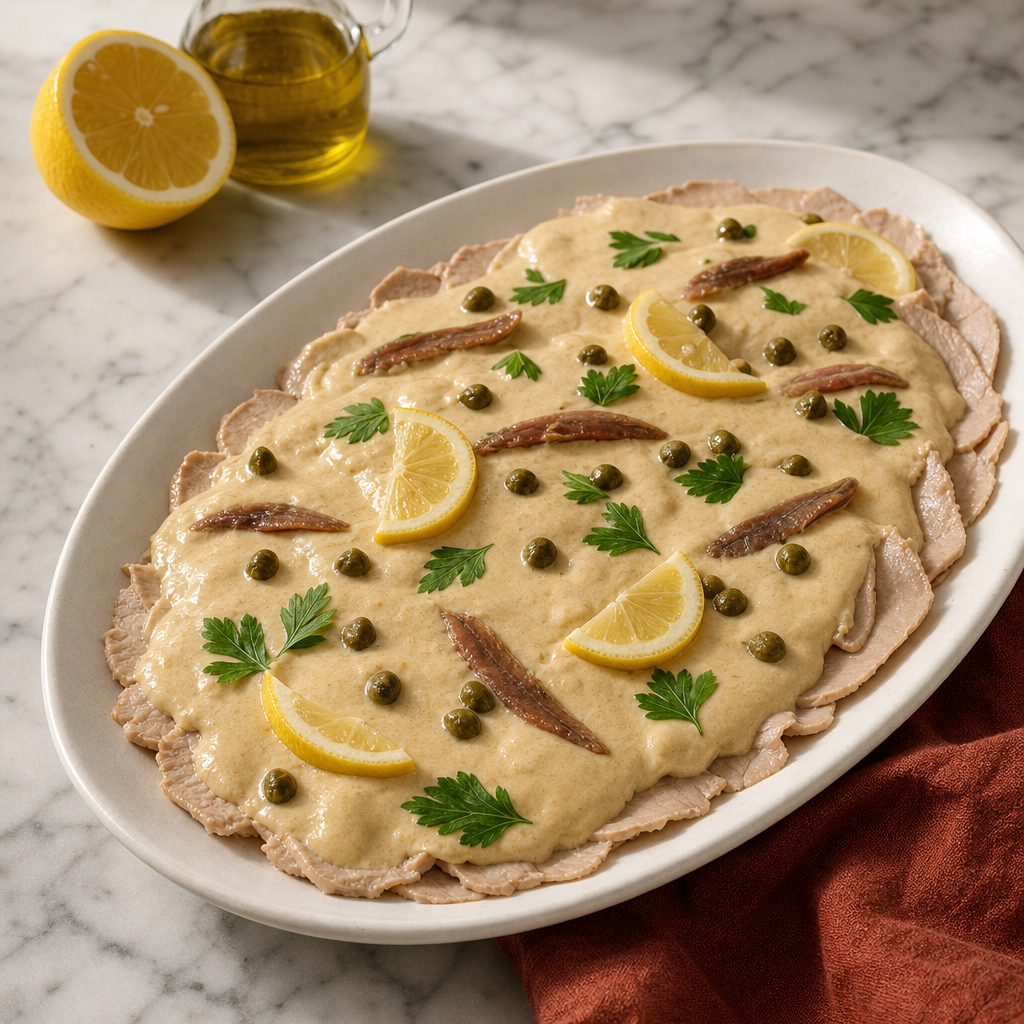
Vitello tonnato is a Piedmontese cold veal dish, traditionally served as an antipasto or second course rather than as a hot roast. The older grammar is veal from the hind leg, cooked gently with wine and aromatics, chilled, sliced thin, and covered with a tuna, anchovy, caper, egg, and oil sauce. Modern versions often use mayonnaise as a shortcut; it works mechanically, but it gives the sauce a commercial salad-dressing note unless the tuna and anchovy are strong enough to lead. The dish also traveled with Italian immigrants to Argentina, Uruguay, and Paraguay, where it remains a holiday table fixture under the name vitel toné.
Method 10 steps · 1560 min
Tie and season the veal
Tie the veal into a tight, even cylinder if the butcher has not done it. Rub with 10 g of the salt and refrigerate uncovered for 2-4 hours, or up to overnight.
Build the poaching liquid
Put the wine, water, carrot, celery, onion, bay leaf, parsley stems, peppercorns, and 5 g salt in a narrow pot. Bring to a bare simmer, then lower the heat until only small bubbles break at the edge.
Poach gently
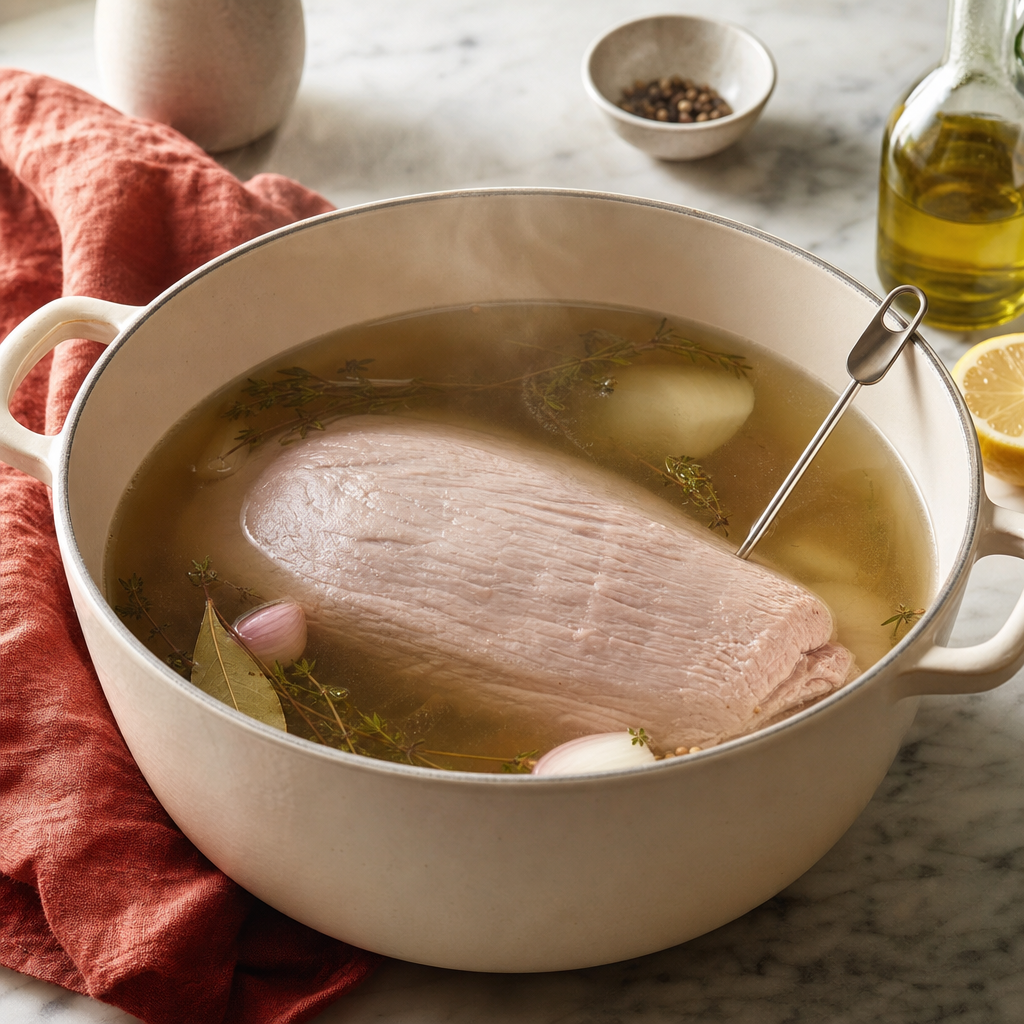
Lower in the veal. Keep the liquid between 80-85°C / 176-185°F and cook until the center reaches 58-60°C / 136-140°F for pale, slightly rosy veal, 45-70 minutes depending on thickness.
Cool in the broth
Turn off the heat and let the veal cool in the poaching liquid for 45 minutes. Lift it out, wrap tightly, and refrigerate until completely cold, at least 6 hours.
Strain and chill the broth
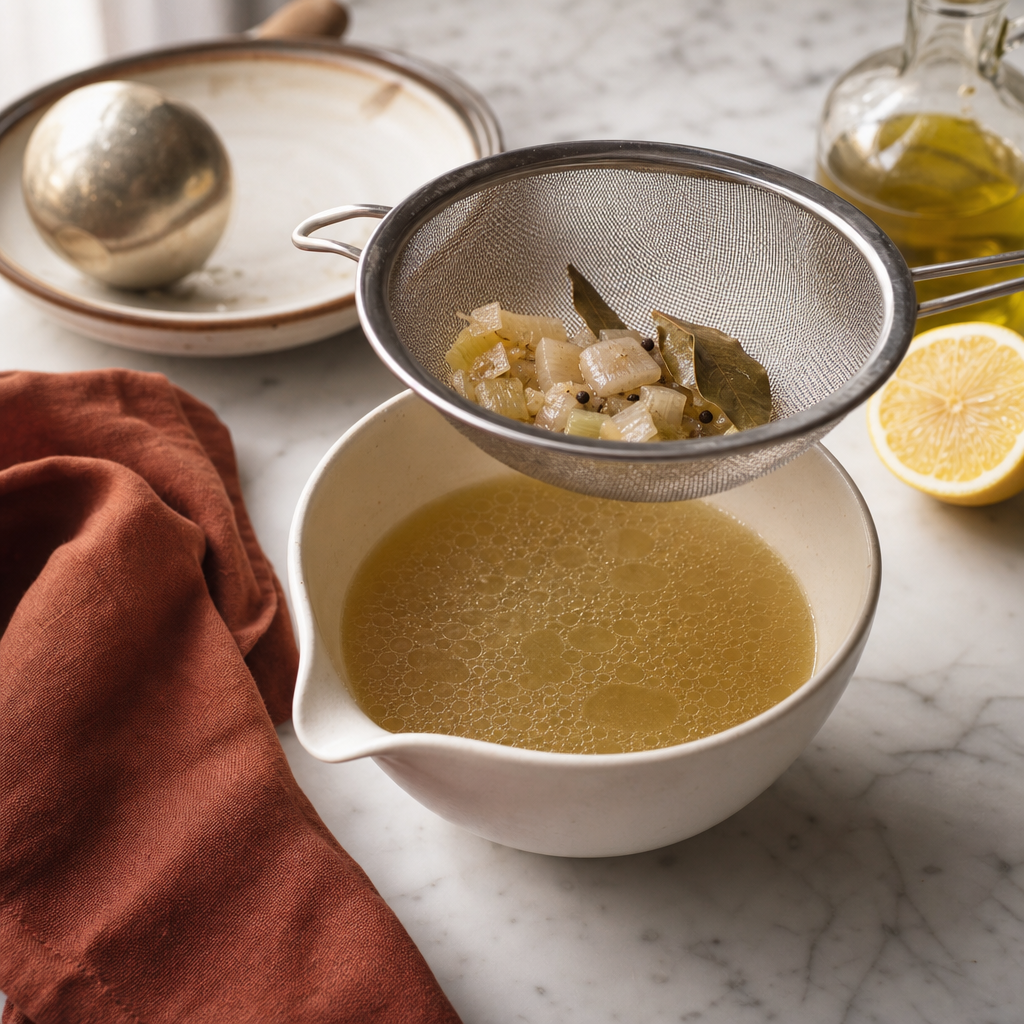
Strain the poaching liquid and reserve at least 250 ml. Chill it, then skim off any surface fat before making the sauce.
Blend the tonnato
Blend the tuna, anchovies, 25 g capers, egg yolks, lemon juice, remaining 3 g salt, and 80 ml cold poaching liquid until smooth. With the machine running, stream in the olive oil, then add more cold poaching liquid until the sauce falls from a spoon in thick ribbons.
Rest the sauce
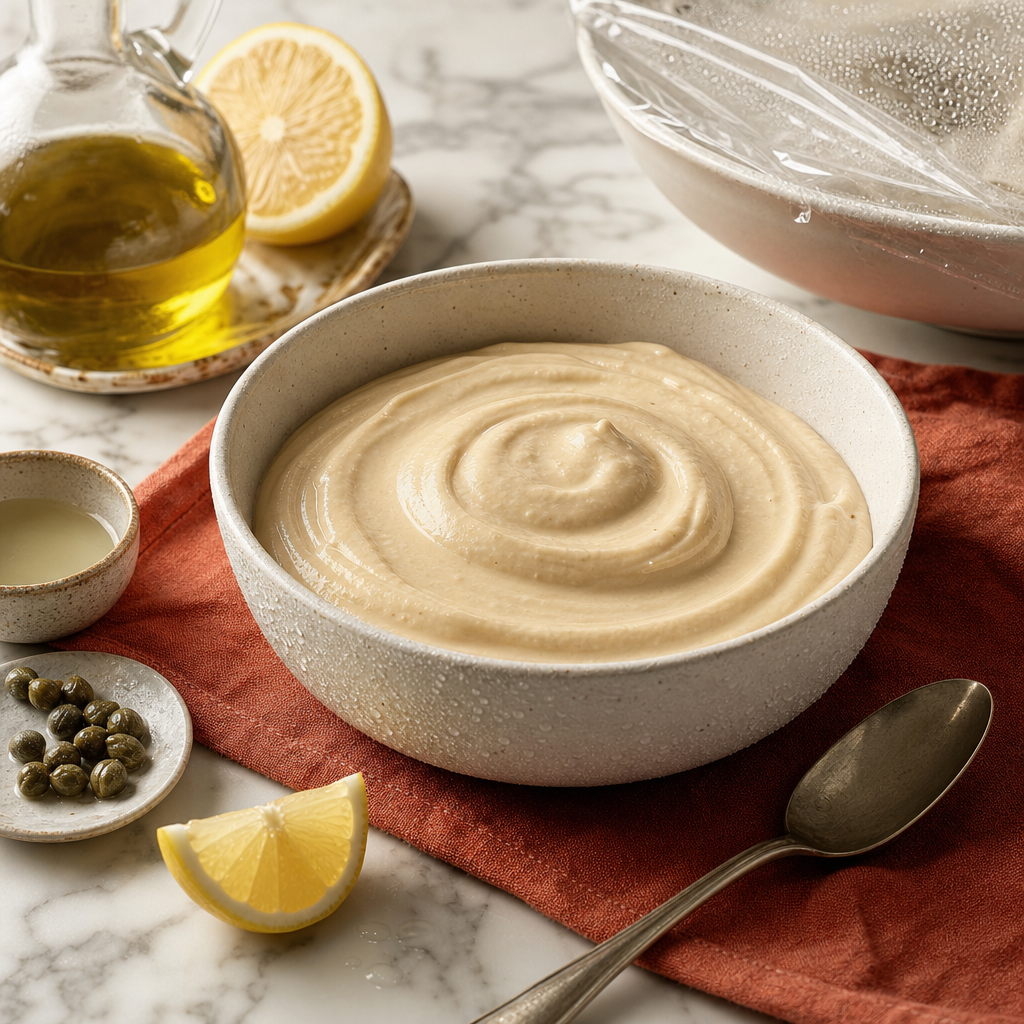
Refrigerate the sauce for 30 minutes, then taste. Correct with lemon, caper brine, salt, or broth in small increments.
Slice the veal
Remove the string and slice the veal across the grain 2-3 mm thick with a long sharp knife or slicer. Lay the slices in overlapping rows on a chilled platter.
Coat and mature
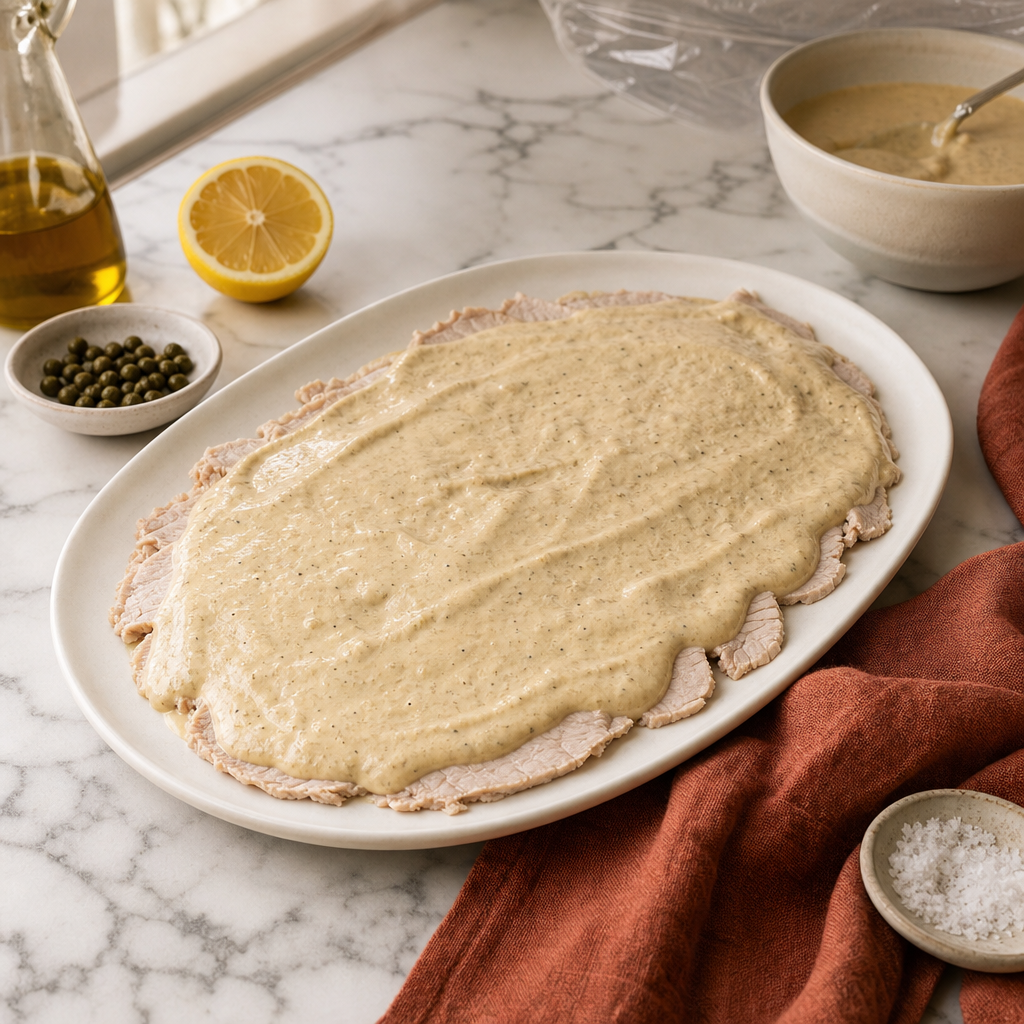
Spread a thin layer of sauce on the platter, arrange the veal, then cover with the remaining sauce. Cover and refrigerate at least 6 hours, preferably overnight.
Serve cool, not fridge-cold
Take the platter out 20-30 minutes before serving. Garnish with the remaining capers, parsley leaves, and thin lemon slices.
Common mistakes
- {'mistake': 'Boiling the veal', 'fix': 'Hold the poaching liquid at 80-85°C / 176-185°F. Violent bubbling makes the meat dry before the center is cooked.'}
- {'mistake': 'Slicing the meat warm', 'fix': 'Chill the veal hard before slicing. Warm veal tears, sheds juice, and produces thick ragged slices.'}
- {'mistake': 'Making a chunky tuna sauce', 'fix': 'Blend until fully smooth. Tonnato is a sauce, not tuna salad.'}
- {'mistake': 'Serving immediately after assembly', 'fix': 'Rest the coated veal at least 6 hours. The dish needs time for salt and sauce to penetrate the meat.'}
- {'mistake': 'Using too much lemon at the start', 'fix': 'Add lemon in measured amounts, then correct after chilling. Acid becomes sharper once the sauce sits.'}
What does not belong
- {'item': 'cream', 'reason': 'Cream does not belong. The sauce gets its body from tuna, egg yolk, olive oil, and poaching broth.'}
- {'item': 'garlic', 'reason': 'Garlic does not belong in the classic Piedmontese profile. It shouts over the veal and turns the sauce into a generic aioli.'}
- {'item': 'mustard', 'reason': 'Mustard belongs to some modern tonnato variants, not to this version. It pulls the sauce toward French mayonnaise.'}
- {'item': 'seared or roasted crust on the veal', 'reason': 'Browning does not belong here. A crust tastes roasted and breaks the cold, pale character of the dish.'}
- {'item': 'cheap tuna in water without correction', 'reason': 'Dry water-packed tuna makes a fibrous, metallic sauce. Oil-packed tuna is the standard.'}
- {'item': 'sweet pickle relish or chopped pickles', 'reason': 'Pickle relish does not belong. Capers supply the saline bite without turning the sauce sweet.'}