Saltimbocca Romana
The dish in context
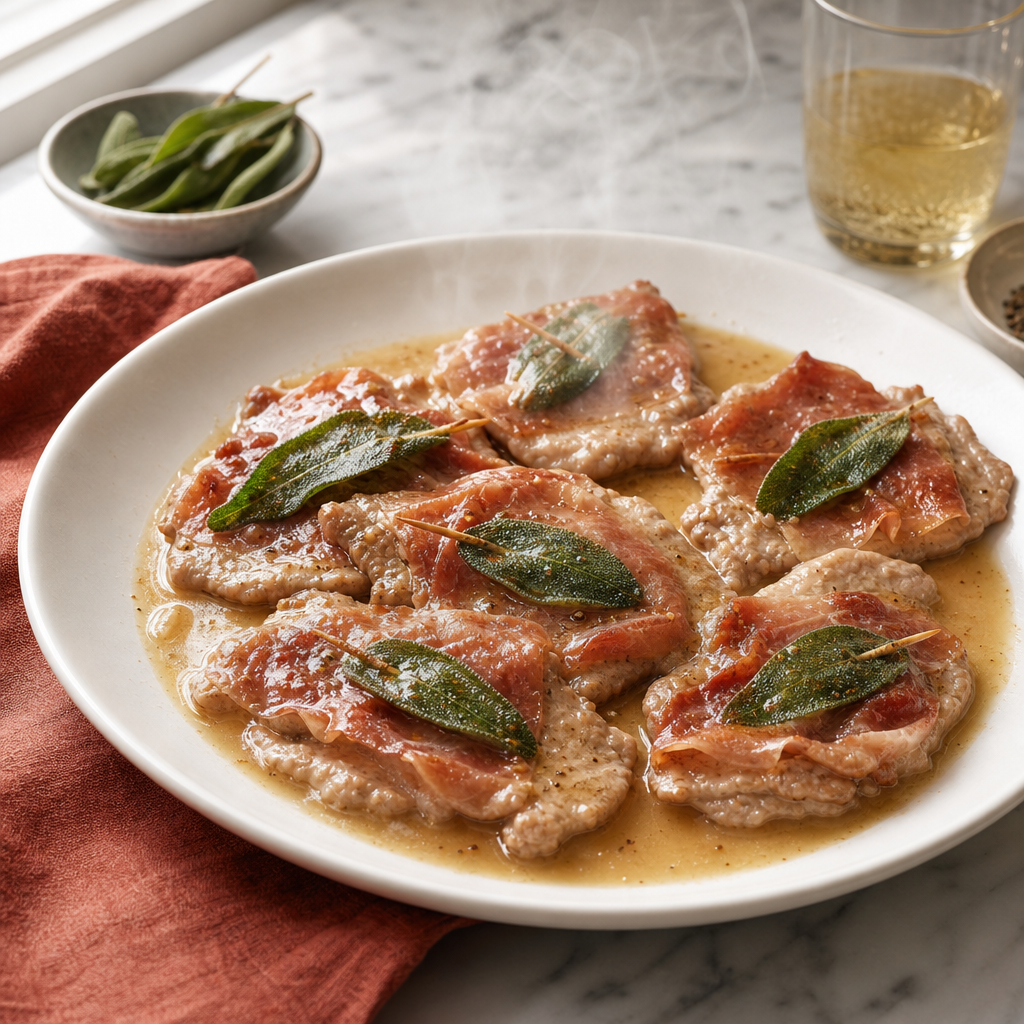
Saltimbocca alla Romana is a Lazio secondo built from three identity markers: thin veal, prosciutto crudo, and fresh sage. Italian sources disagree on whether older versions were rolled or left flat, but the flat Roman trattoria style is now the cleanest reference point: the sage and prosciutto stay visible, and the meat cooks in minutes. White wine and butter form the standard pan sauce; Marsala appears in some English-language and diaspora recipes, but it pushes the dish toward a sweeter restaurant style. Chicken, pork, pancetta, and mozzarella are variants, not the Roman dish.
Method 8 steps · 30 min
Pound the veal evenly
Lay the veal between two sheets of parchment or plastic and pound to 3-4 mm thick. Cut into 10-12 small scallops if the slices are large, trimming ragged edges that would burn.
Attach prosciutto and sage
Season only the exposed veal side with a trace of salt and pepper. Lay one thin piece of prosciutto on each scallop, place one sage leaf in the center, and pin through the sage with a toothpick.
Dust lightly with flour
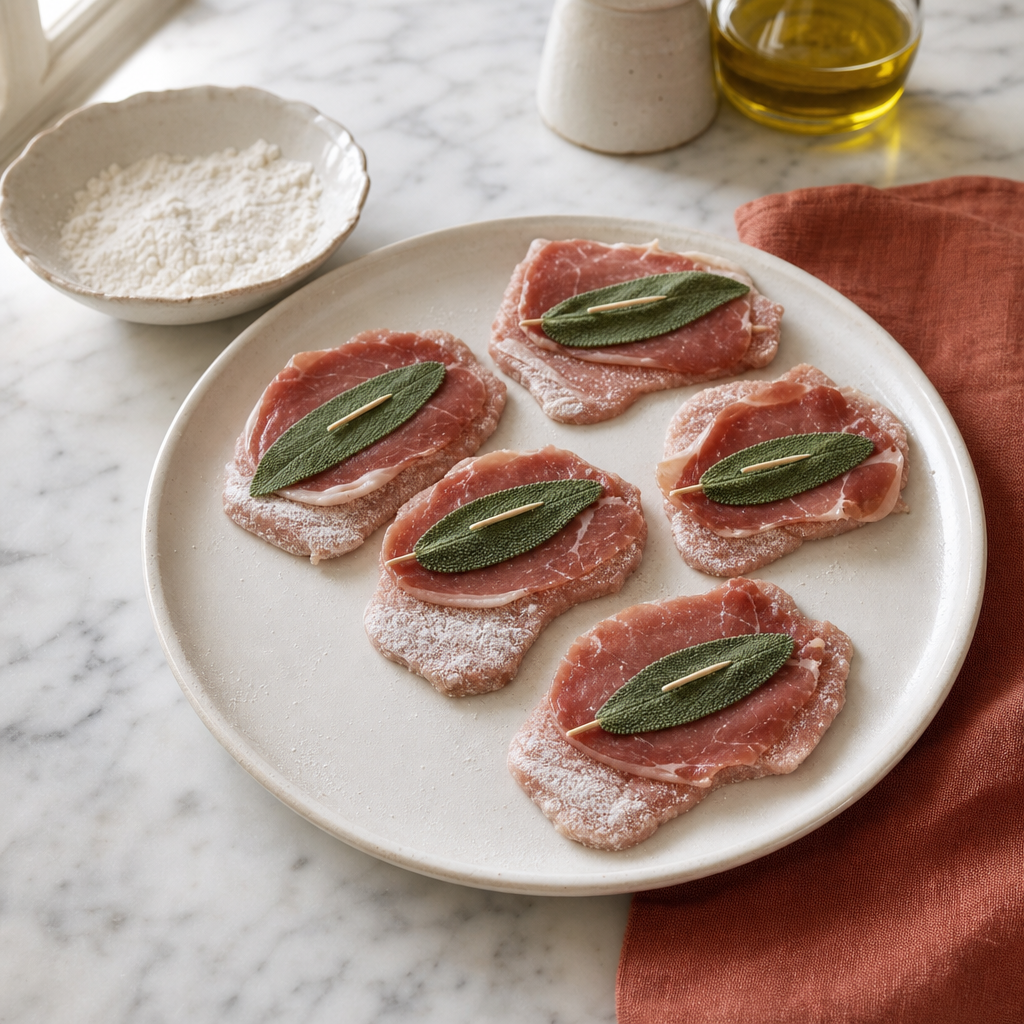
Dust the veal side and edges with flour, then shake off every visible excess patch. Keep the prosciutto side mostly clean.
Sear prosciutto-side first
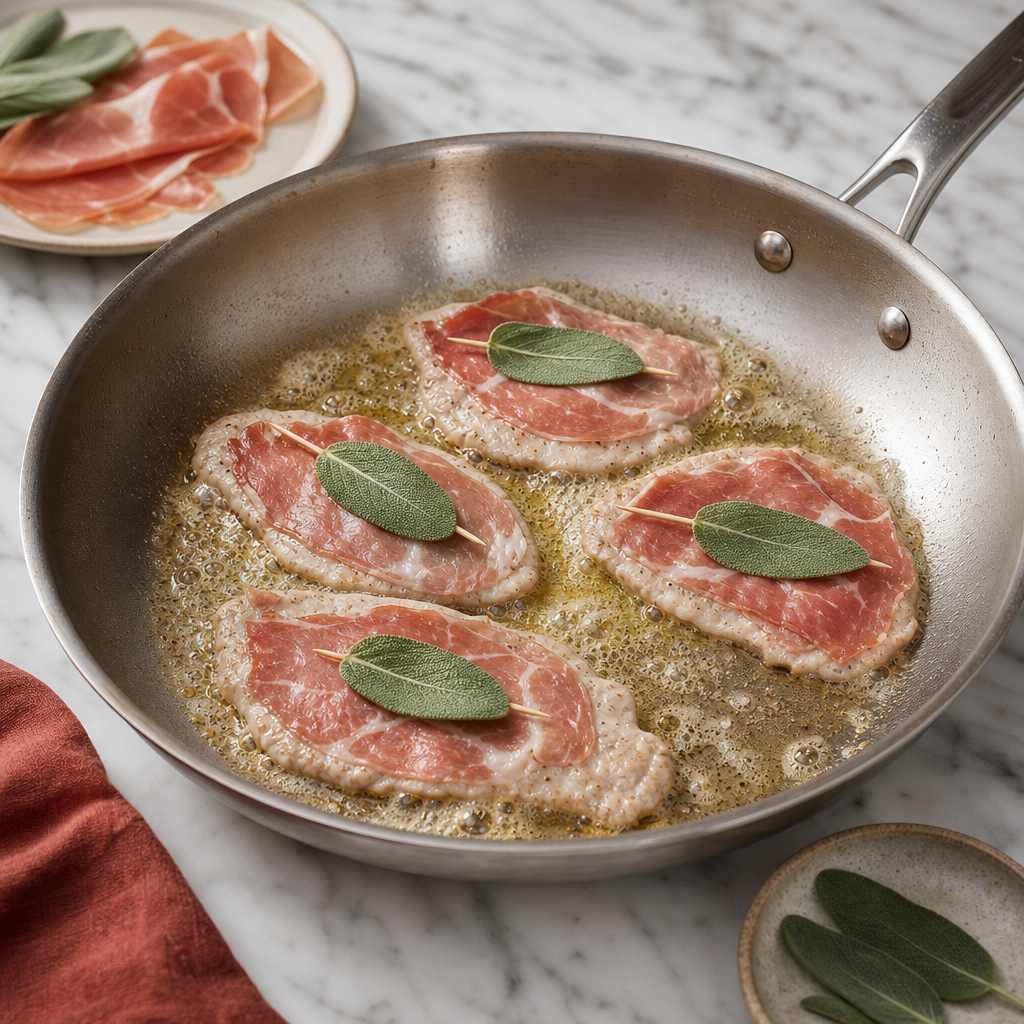
Heat half the butter with the olive oil in a large skillet over medium-high heat until the butter foams and smells nutty, not burnt. Add the cutlets prosciutto-side down in a single layer and cook 45-60 seconds, until the prosciutto darkens at the edges and the sage lies flat.
Turn and finish the veal
Turn with a thin spatula and cook the veal side for 45-75 seconds, depending on thickness. Transfer to a warm plate; do not stack tightly.
Deglaze with white wine
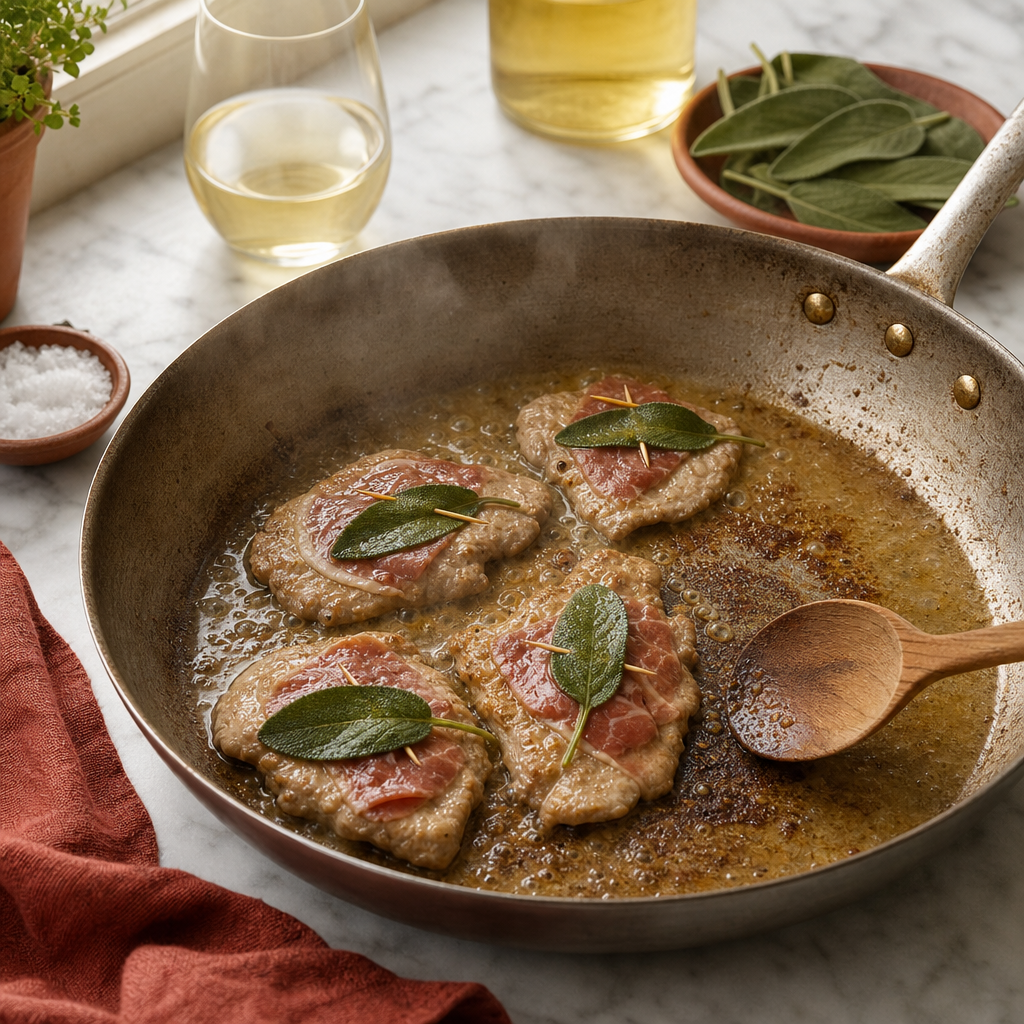
Pour off any scorched fat if the pan smells bitter. Add the white wine to the hot skillet and scrape the browned film with a wooden spoon, reducing until the bubbles look tight and syrupy, about 90 seconds.
Mount the sauce
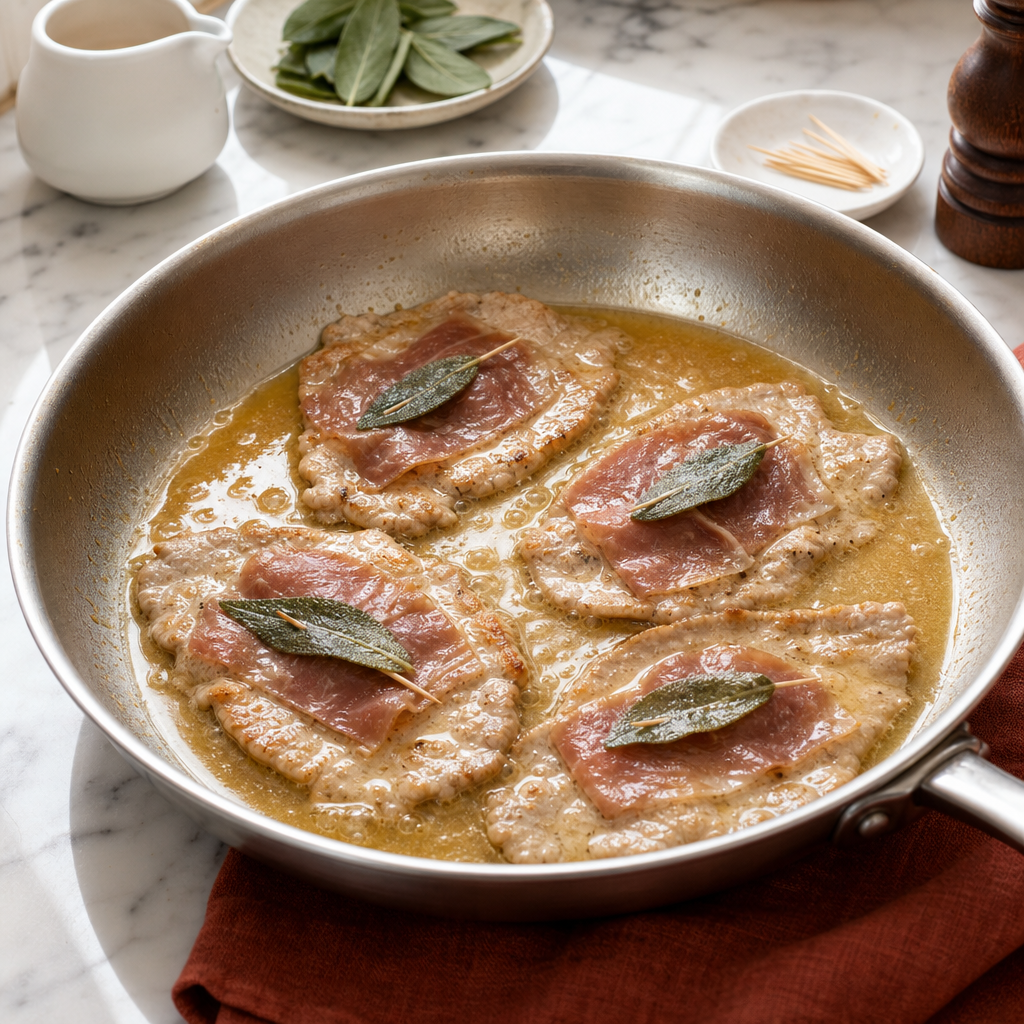
Lower the heat and swirl in the remaining butter until the sauce turns glossy and lightly thickened. Return the cutlets to the pan for 20-30 seconds only, spooning sauce over the veal side.
Serve flat
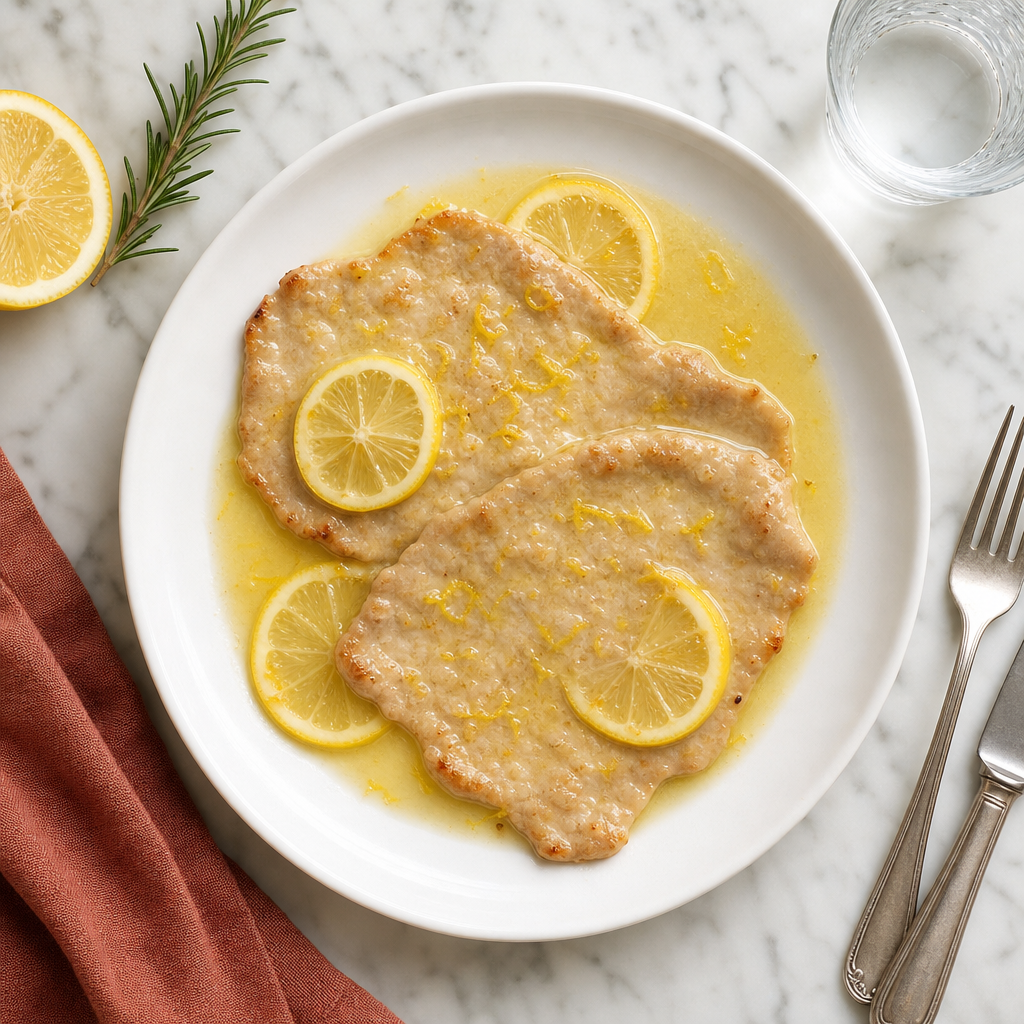
Remove the toothpicks or warn diners clearly. Plate the cutlets flat, prosciutto and sage visible, with the pan sauce spooned around and over the meat.
Common mistakes
- {'mistake': 'Using thick veal cutlets', 'fix': 'Pound to 3-4 mm. Thick veal forces a longer cook and turns the prosciutto tough.'}
- {'mistake': 'Adding too much salt', 'fix': 'Season the veal side lightly or not at all. Prosciutto is the main salt source.'}
- {'mistake': 'Crowding the skillet', 'fix': 'Cook in batches. The prosciutto should sizzle immediately, not release liquid into a cooling pan.'}
- {'mistake': 'Letting flour show on the surface', 'fix': 'Dust and shake hard. Visible flour becomes paste in the sauce and burns on the pan.'}
- {'mistake': 'Boiling the butter sauce hard', 'fix': 'Reduce the wine first, then lower the heat before swirling in butter. A broken sauce looks greasy and tastes sharp.'}
- {'mistake': 'Using dried sage', 'fix': 'Use fresh leaves. Dried sage does not fry into the fat; it reads dusty and bitter.'}
What does not belong
- {'item': 'Mozzarella', 'reason': 'Mozzarella turns this into a stuffed or restaurant variant. It does not belong in Saltimbocca alla Romana.'}
- {'item': 'Cream', 'reason': 'Cream dulls the wine reduction and covers the veal. Roman pan sauces here are wine, butter, and pan fond.'}
- {'item': 'Tomato sauce', 'reason': 'Tomato pulls the dish toward Italian-American veal plates. It does not belong in the Roman preparation.'}
- {'item': 'Garlic', 'reason': 'Garlic competes with sage and prosciutto. The dish is not a garlic-butter cutlet.'}
- {'item': 'Marsala as the default wine', 'reason': 'Marsala makes a sweeter, darker sauce common in some English-language versions. Dry white wine is the Roman baseline.'}
- {'item': 'Parmesan or Pecorino', 'reason': 'Cheese adds salt and graininess where the sauce should be glossy. It does not belong on the cutlets.'}