Stracciatella Brodo
The dish in context
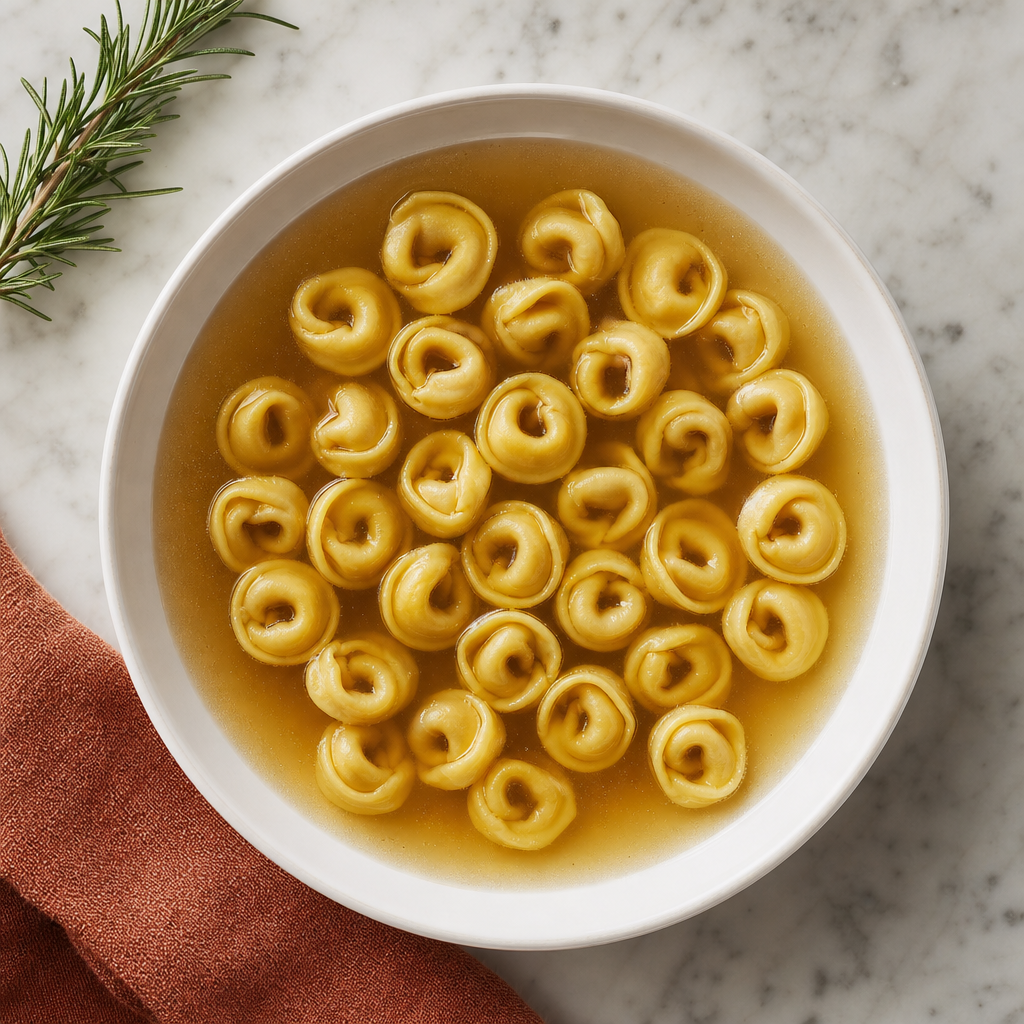
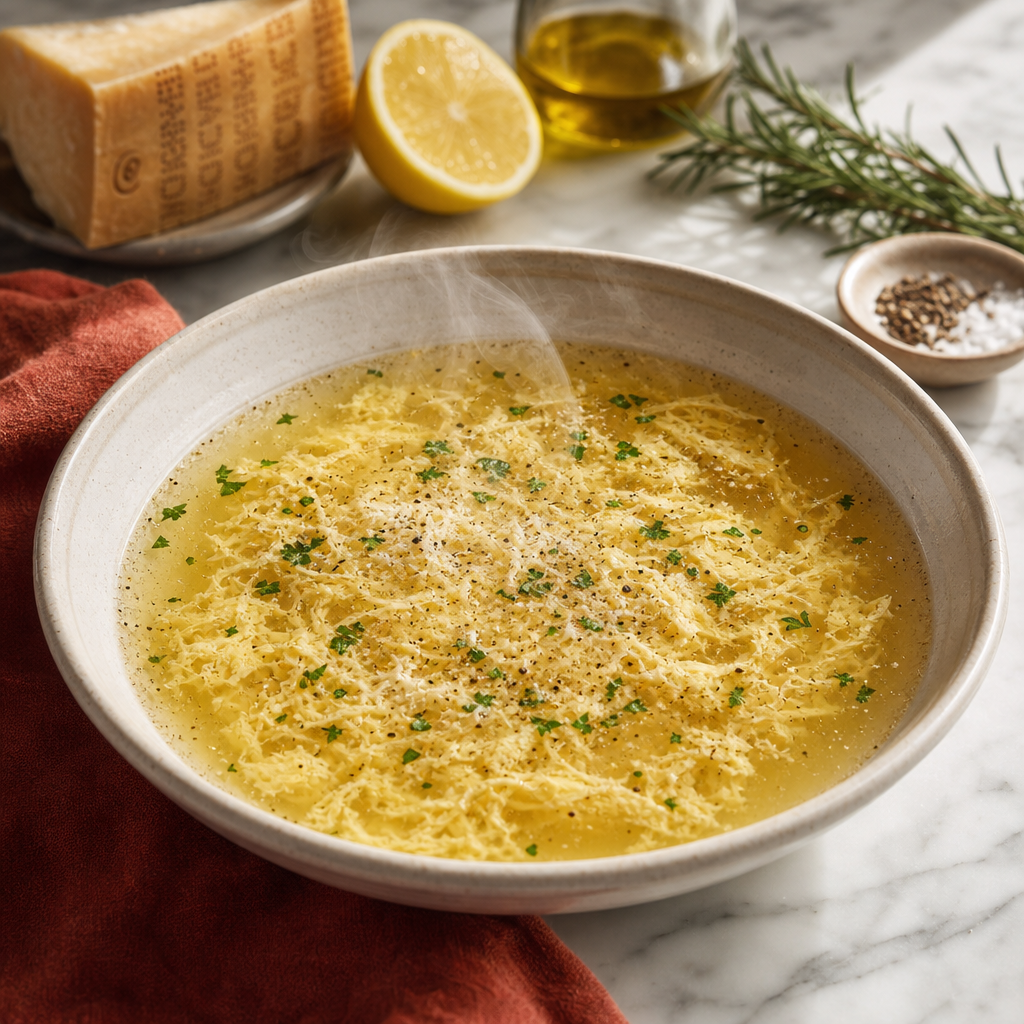
Stracciatella alla Romana is a Roman and central-Italian brodo soup built from three exposed elements: meat broth, eggs, and grated hard cheese. The name comes from stracciare, “to tear” or “shred,” referring to the ragged egg threads formed when the beaten mixture hits hot broth. It belongs to the cucina di casa logic of Lazio: a restorative primo made from good stock and pantry staples, not a restaurant construction. Regional versions in Marche, Abruzzo, and Emilia-Romagna may add breadcrumbs, semolina, or greens, but the Roman grammar stays lean.
Method 5 steps · 15 min
Heat the brodo
Pour the broth into a medium saucepan. Add the Parmigiano rind if using, bring to a simmer, then hold at a bare simmer for 5 minutes. Remove the rind and season the broth lightly with salt.
Whisk the eggs and cheese
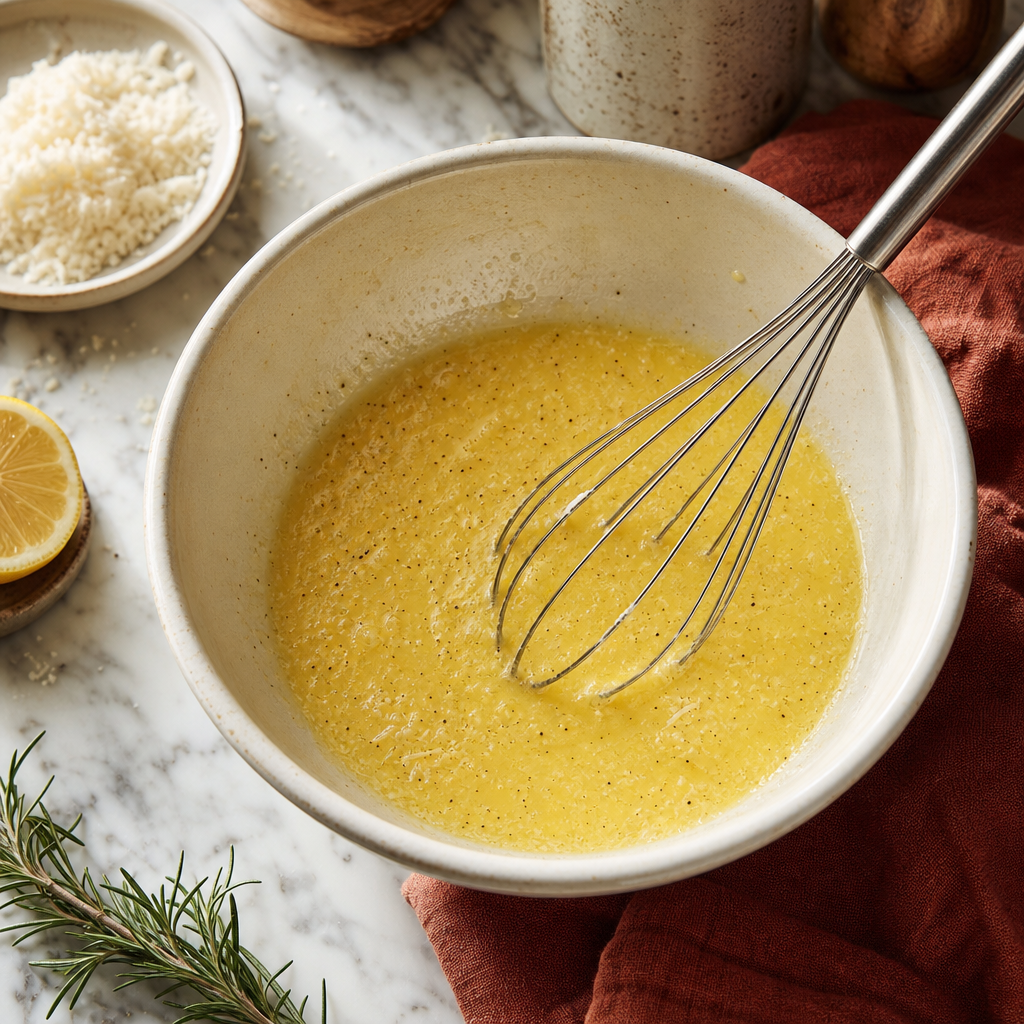
Whisk the eggs, Parmigiano-Reggiano, nutmeg, and a few grinds of black pepper until the whites disappear completely and the mixture looks uniform. Do not leave streaks of egg white.
Stream into a bare simmer
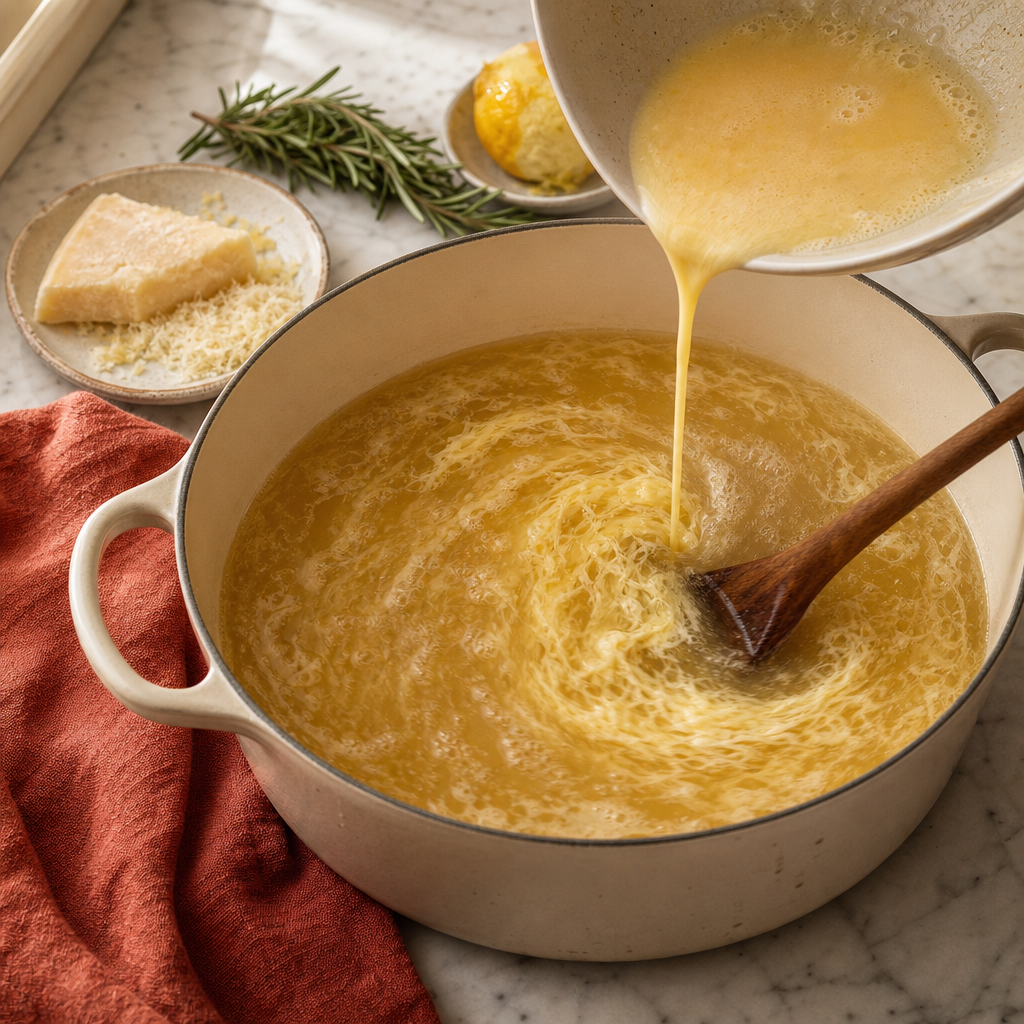
Lower the broth to a bare simmer. Stir the broth in one steady direction, then pour in the egg mixture in a thin stream over 20-30 seconds. Keep the stream narrow; dumping it in makes an omelet.
Set, then stop
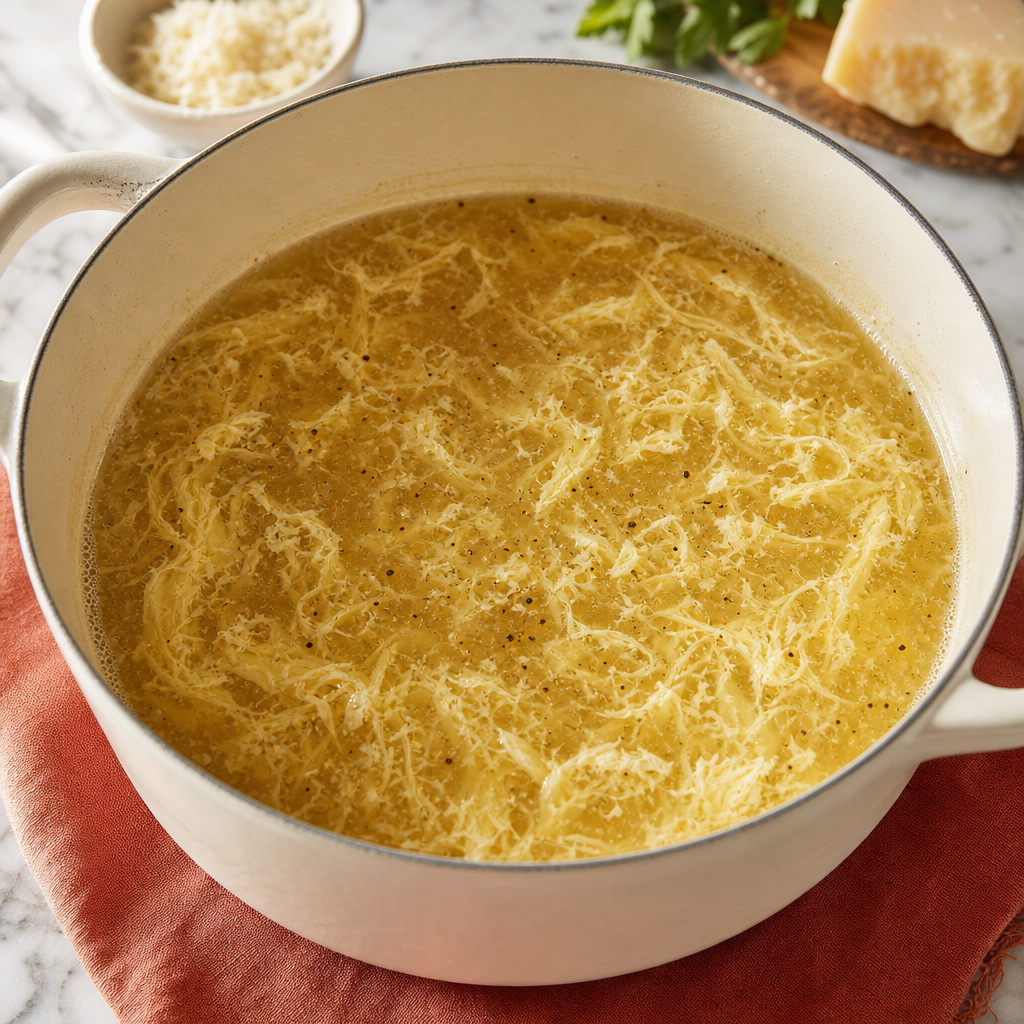
Let the soup return to the first small simmering bubbles, about 30-45 seconds, then remove it from the heat. The egg should be pale yellow and ragged, not browned, foamy, or firm.
Finish in the bowl
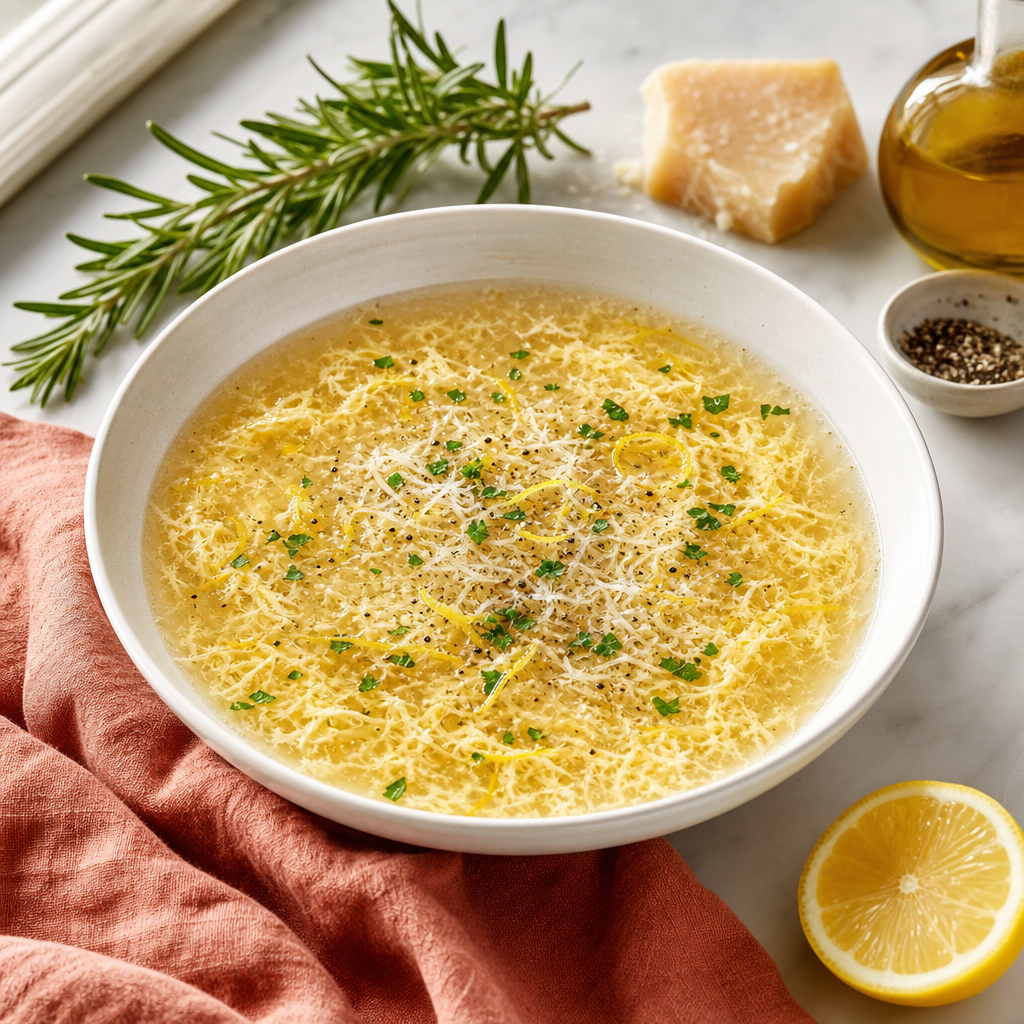
Ladle into warm bowls. Finish with lemon zest and parsley if using, plus a light grating of Parmigiano or pepper. Serve immediately.
Common mistakes
- {'mistake': 'Using weak boxed broth as the foundation.', 'fix': 'Use homemade chicken or beef brodo when possible. If using commercial stock, choose low-sodium, reduce it slightly, and reinforce with a Parmigiano rind.'}
- {'mistake': 'Boiling the broth while adding the eggs.', 'fix': 'Hold a bare simmer. The surface should tremble with small bubbles at the edge, not roll.'}
- {'mistake': 'Pouring the egg mixture all at once.', 'fix': 'Use a thin stream while stirring in one direction. The goal is torn ribbons, not a floating frittata.'}
- {'mistake': 'Under-whisking the eggs.', 'fix': 'Whisk until no clear albumen remains. Streaky egg whites become uneven sheets in the broth.'}
- {'mistake': 'Salting before accounting for the cheese.', 'fix': 'Season the broth lightly first, then correct after the Parmigiano has entered the soup.'}
What does not belong
- {'item': 'Stracciatella di burrata', 'reason': 'It does not belong. The name here refers to shredded egg in broth, not the creamy cheese filling used on pizza or in burrata.'}
- {'item': 'Cream or milk', 'reason': 'Cream turns a clear Roman brodo into a dairy soup. The body comes from egg and cheese, not added dairy.'}
- {'item': 'Pasta or rice', 'reason': 'Pasta and rice make a different soup. Stracciatella alla Romana is defined by egg shreds suspended in broth.'}
- {'item': 'Bouillon-heavy seasoning', 'reason': 'Bouillon cubes push the soup salty and metallic. There are too few ingredients here for that flavor to disappear.'}
- {'item': 'Garlic soffritto', 'reason': 'A fried aromatic base does not belong in the Roman brodo structure. It muddies the clean stock-and-egg profile.'}