Spaghetti Carbonara
The dish in context
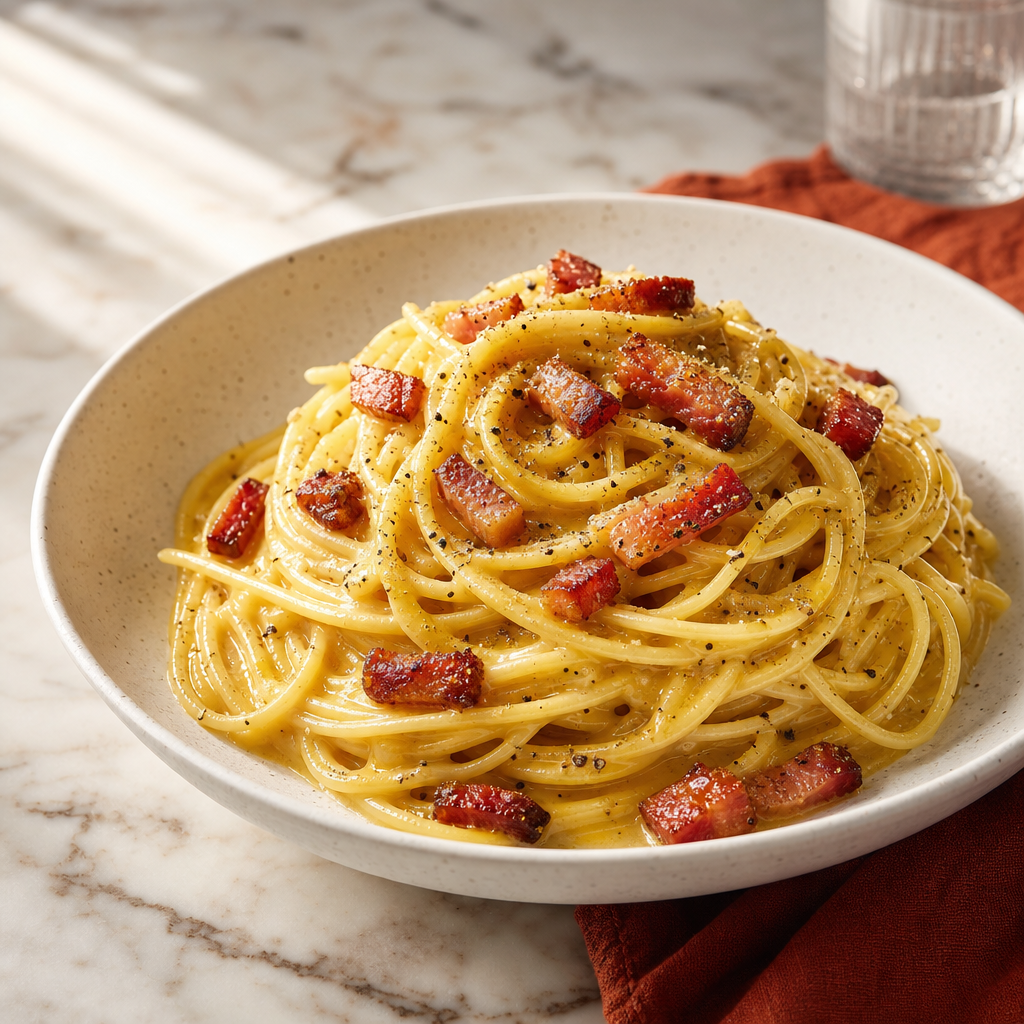
Carbonara is now one of Rome's defining pastas, built from the Lazio grammar of Pecorino Romano, black pepper, and cured pork. Its modern written record is relatively recent compared with older Roman pastas, and postwar explanations vary, but the current Roman standard is stable: pasta, guanciale, eggs, Pecorino Romano, pepper, and pasta water. Pancetta appears in many home and export versions because it is easier to find, but it is a fallback, not an equivalent. Cream is a restaurant shortcut outside the tradition and changes the dish into something else.
Method 7 steps · 25 min
Build the egg-cheese paste
Whisk the yolks, whole egg, finely grated Pecorino Romano, and 1 teaspoon of the black pepper in a heatproof bowl until thick and uniform. The mixture should look like a dense yellow paste, not a pourable custard.
Render the guanciale
Set the guanciale in a cold wide pan and cook over medium-low heat until the fat turns glassy, then continue until the edges are crisp and the lean parts are mahogany, 8-10 minutes. Turn off the heat and leave the rendered fat in the pan.
Boil the spaghetti
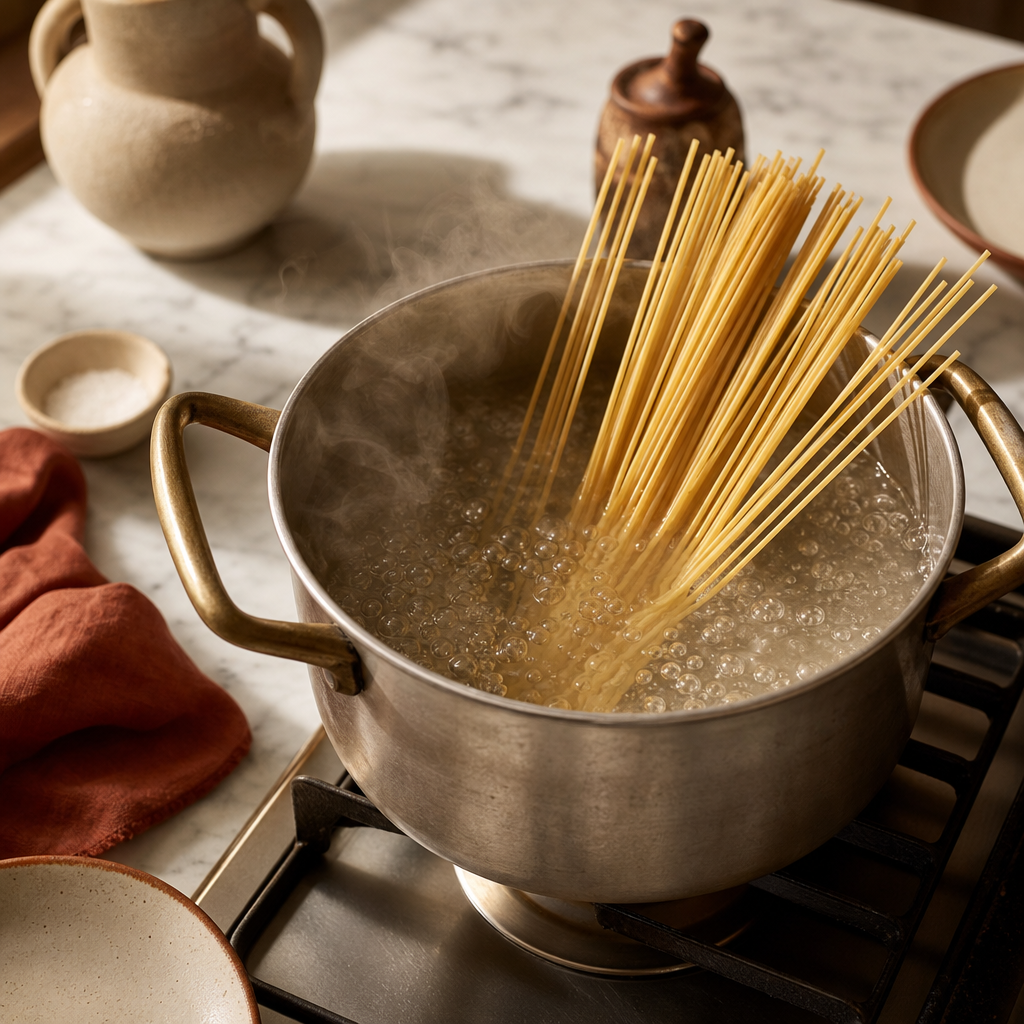
Bring the water to a strong boil, add the salt, then add the spaghetti without breaking it. Cook until 1 minute shy of al dente, stirring during the first minute so the strands do not fuse.
Bloom the pepper and coat the pasta
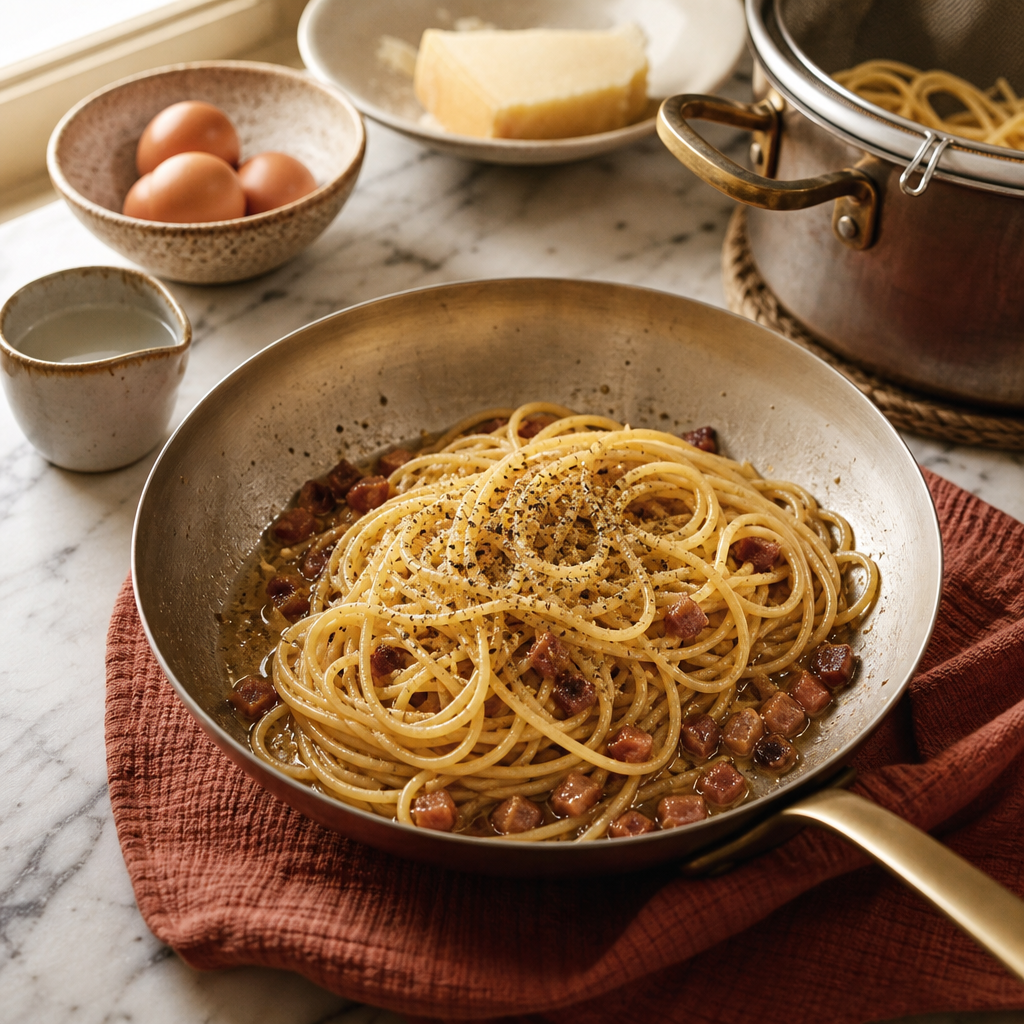
Reserve at least 250 ml pasta water. Add the remaining 1 teaspoon black pepper to the warm guanciale fat, then transfer the spaghetti directly into the pan with tongs and add 120 ml pasta water. Set over medium heat and toss for 45-60 seconds until the strands look glossy and the water has reduced slightly.
Temper off heat
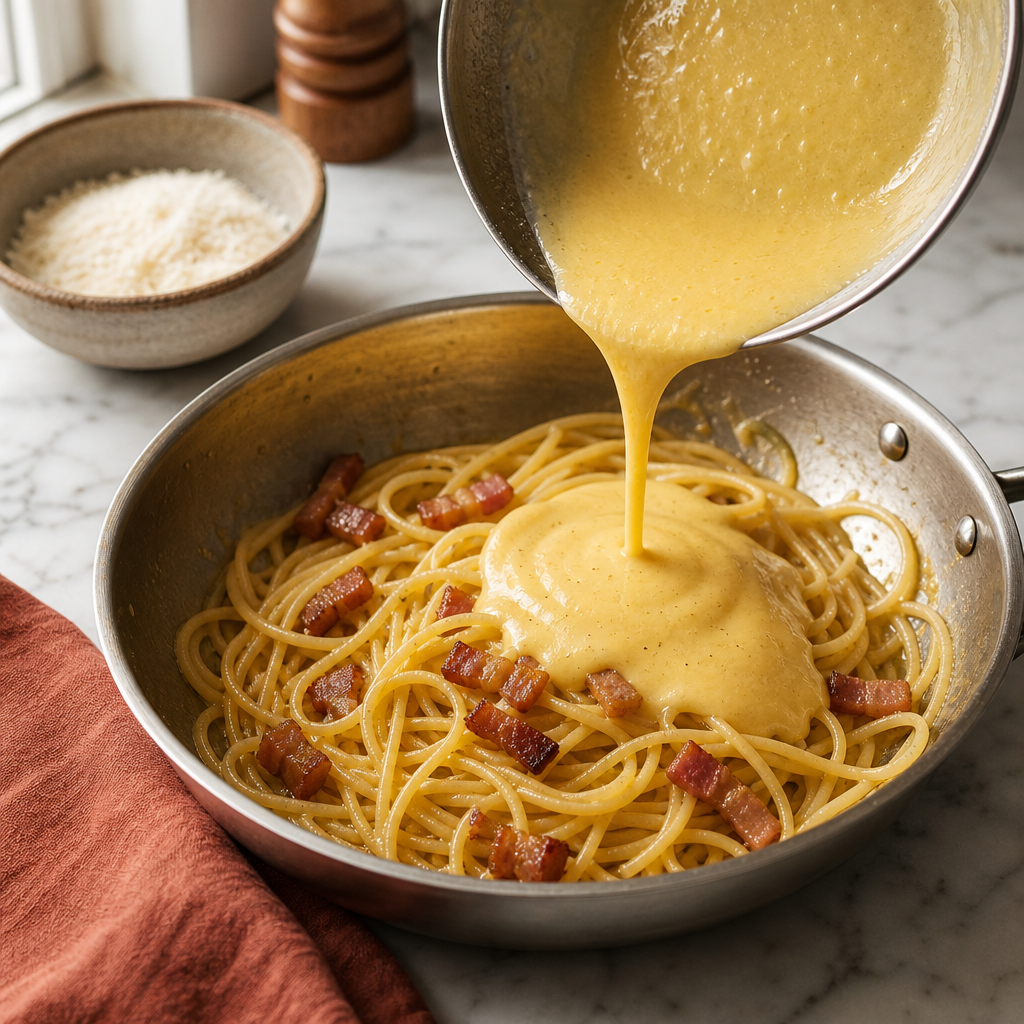
Turn off the heat and wait 20 seconds. Whisk 2 tablespoons hot pasta water into the egg-cheese paste, then pour the paste over the spaghetti while tossing constantly with tongs.
Make it glossy
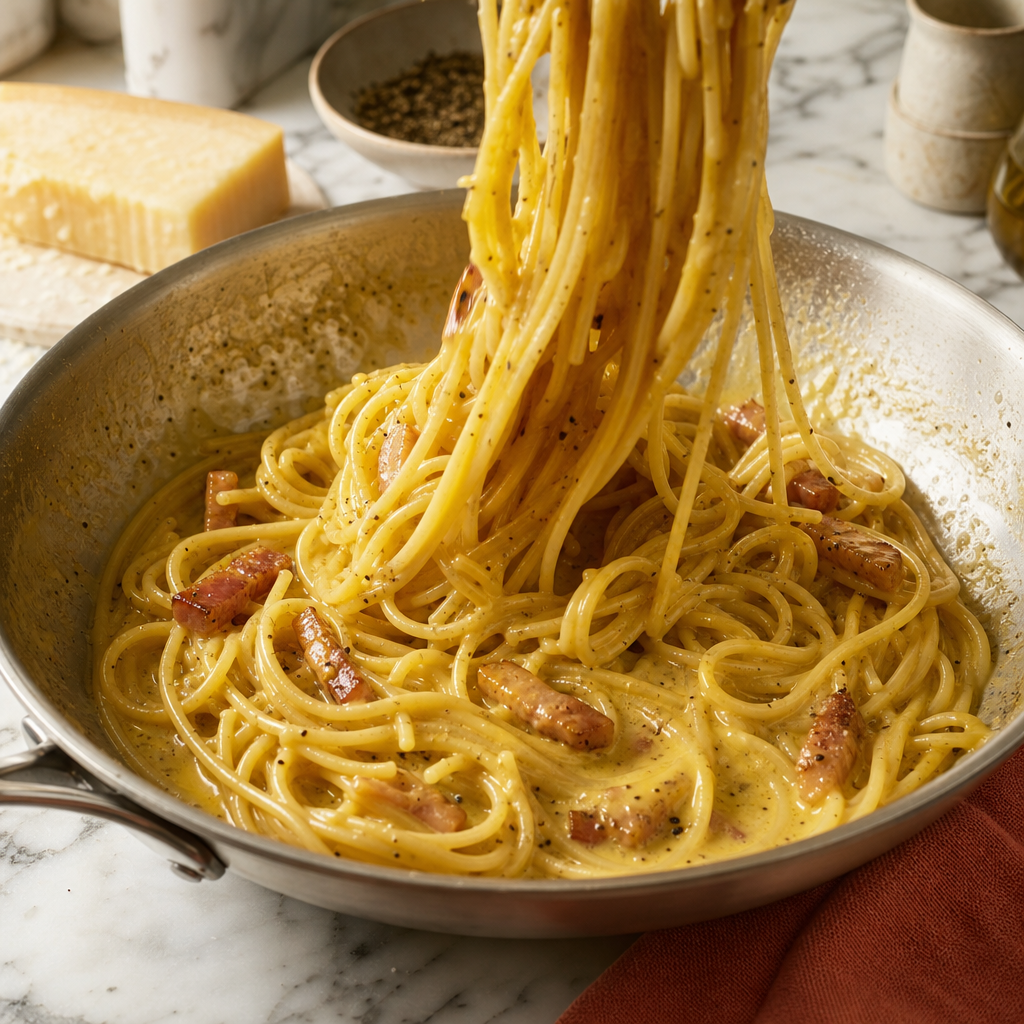
Toss hard for 60-90 seconds, adding reserved pasta water 1 tablespoon at a time until the sauce coats the spaghetti in a satin layer. If the sauce looks wet and thin, set the pan over the lowest heat for 5-second bursts while tossing; if it looks grainy or tight, add more pasta water immediately.
Serve without delay
Plate immediately. Finish with a little Pecorino Romano and a final crack of black pepper.
Common mistakes
- {'mistake': 'Adding cream', 'fix': "Use yolk, Pecorino, guanciale fat, and starchy pasta water. Cream makes a different sauce and dulls the pepper and sheep's-milk sharpness."}
- {'mistake': 'Pouring eggs into a hot pan over active heat', 'fix': 'Kill the heat before the egg mixture goes in. Use brief low-heat bursts only after the sauce is already moving.'}
- {'mistake': 'Using pre-grated cheese', 'fix': 'Grate Pecorino Romano finely from a block. Anti-caking starches and dry shreds make the sauce sandy.'}
- {'mistake': 'Using too much pasta water at once', 'fix': 'Add it by the tablespoon during the final toss. Carbonara goes from tight to watery fast.'}
- {'mistake': 'Cooking guanciale like bacon over high heat', 'fix': 'Start cold and render medium-low. The target is crisp edges with liquid fat in the pan, not dry chips.'}
- {'mistake': 'Rinsing the spaghetti', 'fix': 'Do not rinse pasta for carbonara. Surface starch is part of the sauce.'}
What does not belong
- {'item': 'cream', 'reason': 'Cream does not belong in carbonara. The creamy texture comes from egg, cheese, fat, and starch.'}
- {'item': 'milk', 'reason': 'Milk thins the sauce without adding the structure carbonara needs.'}
- {'item': 'garlic', 'reason': 'Garlic is not part of the Roman carbonara profile. It competes with the pepper and guanciale.'}
- {'item': 'onion', 'reason': 'Onion sweetness does not belong in carbonara.'}
- {'item': 'butter or olive oil', 'reason': 'Guanciale supplies the cooking fat. Extra fat makes the sauce greasy rather than emulsified.'}
- {'item': 'peas', 'reason': 'Peas are a separate pasta idea, not carbonara.'}
- {'item': 'chicken', 'reason': 'Chicken turns the dish into a cream-pasta template. It does not belong in carbonara.'}
- {'item': 'parsley', 'reason': 'Fresh herbs distract from the black pepper and Pecorino. Carbonara is not a green-garnish pasta.'}