Bucatini Amatriciana
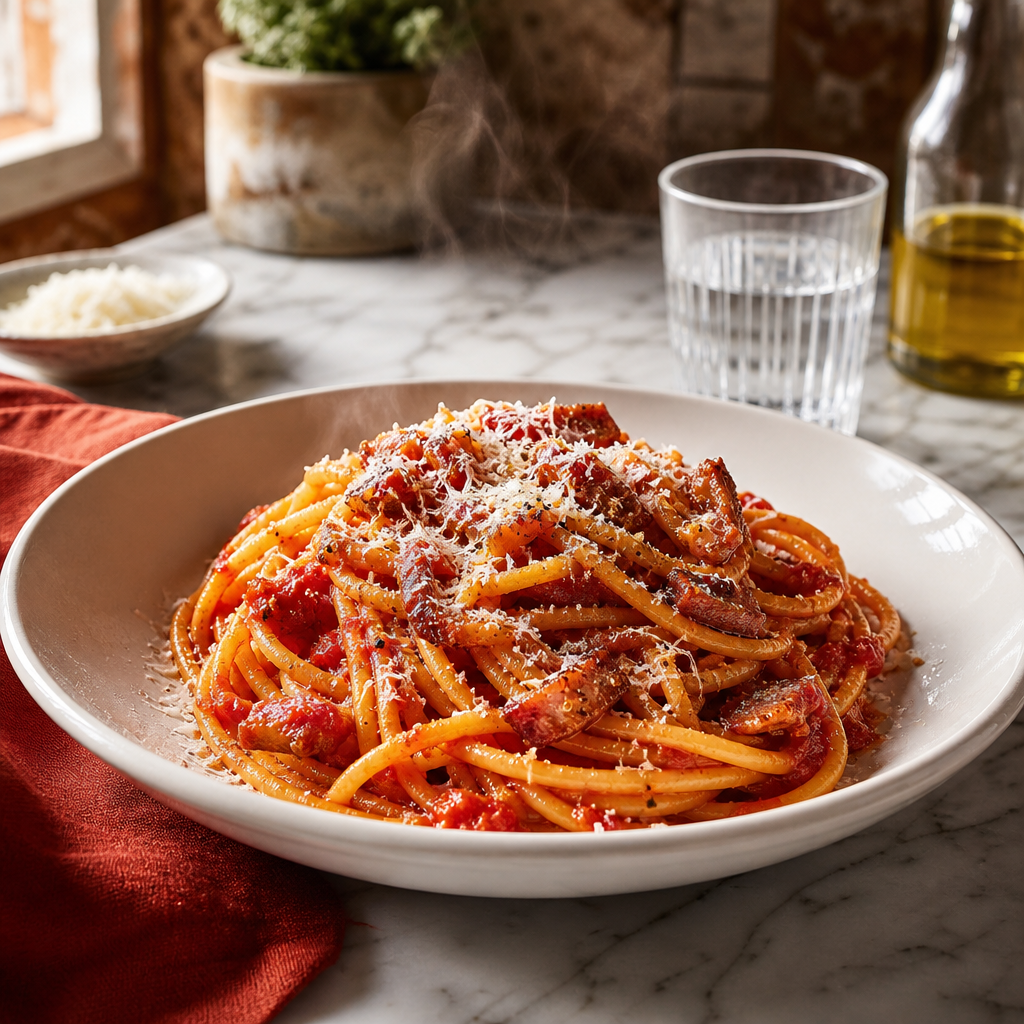
The dish in context
Amatriciana is tied to Amatrice in northern Lazio and to Rome, where it became one of the central dried-pasta sauces alongside gricia, carbonara, and cacio e pepe. The older gricia structure is guanciale, pecorino, and pasta water; tomato entered later and made amatriciana its own sauce. Sources disagree on white wine and chile, but the stable grammar is not in dispute: guanciale, tomato, Pecorino Romano, dried pasta. Onion and garlic are common restaurant and diaspora additions, but they are outside the canonical Amatrice/Roman line.
Method 7 steps · 35 min
Cut the guanciale
Remove any hard rind from the guanciale. Cut the fat and lean into 5 mm batons, not tiny dice; the pieces should render but still leave a chew.
Render the pork
Set the guanciale in a cold wide skillet and place over medium-low heat. Cook until the fat pools in the pan and the batons turn golden at the edges, 8-10 minutes. Lift out one-third of the guanciale for finishing if a crisper garnish is wanted.
Deglaze, or skip cleanly
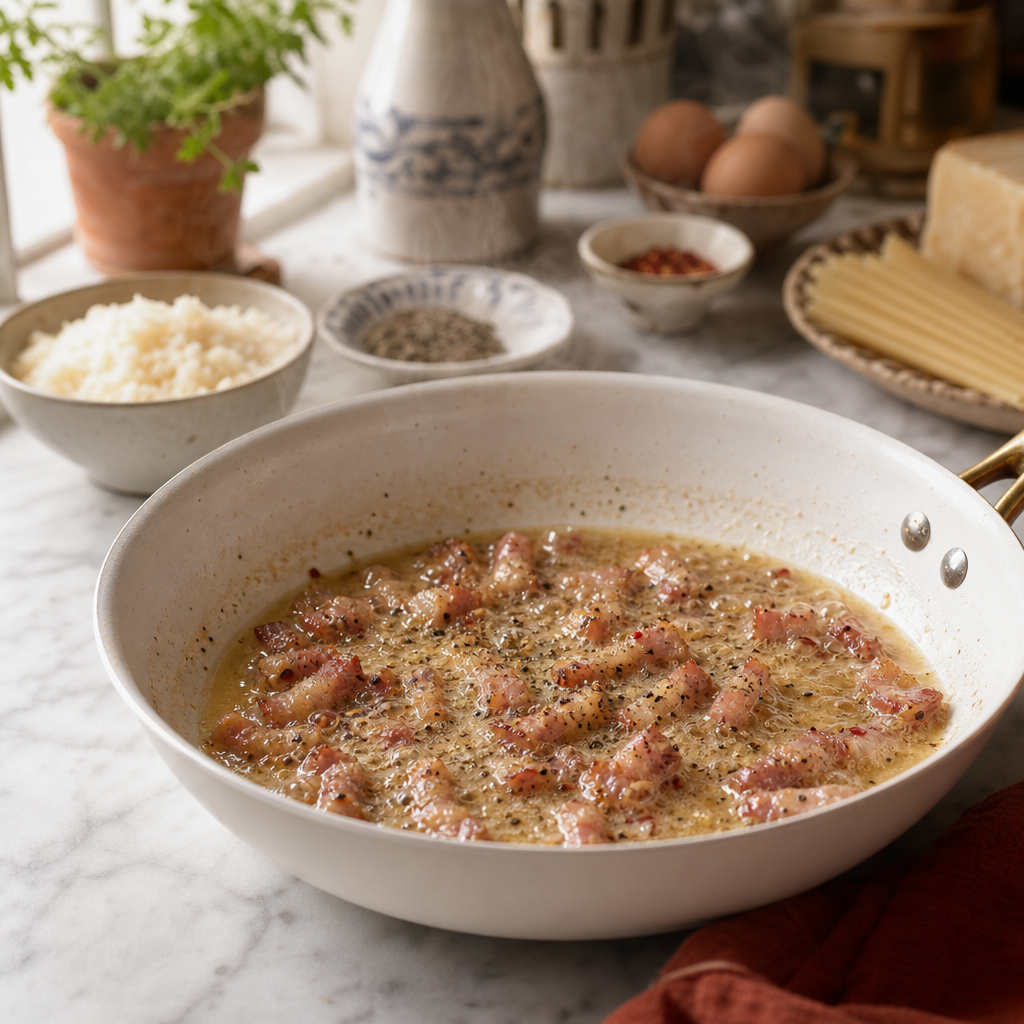
Add the peperoncino and black pepper to the rendered fat for 15 seconds. Add the white wine, if using, and simmer until the pan smells like pork and wine no longer smells raw, about 60-90 seconds.
Reduce the tomato
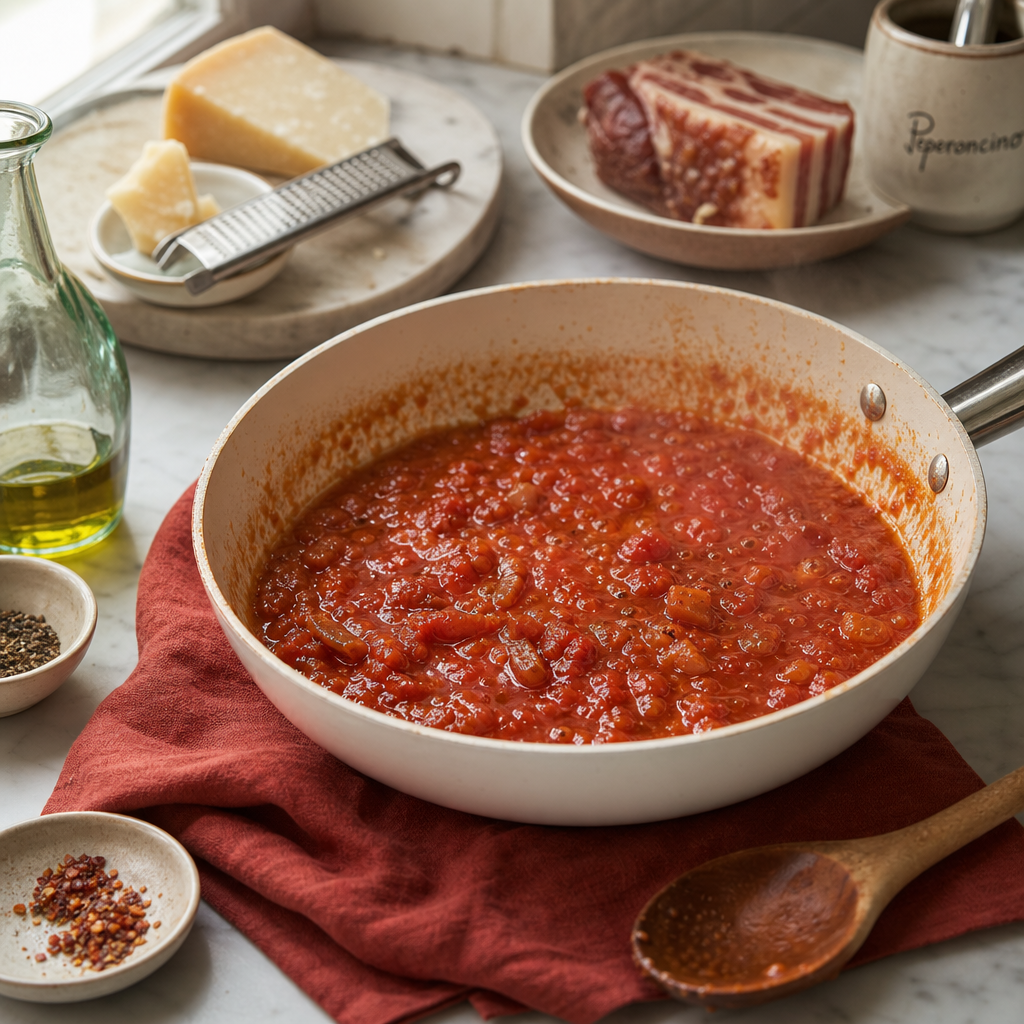
Add the hand-crushed tomatoes and stir through the guanciale fat. Simmer over medium-low heat until the sauce darkens slightly, thickens, and leaves a brief trail when scraped with a spoon, 12-15 minutes. Remove the whole peperoncino if using a large dried chile.
Boil the bucatini short of done
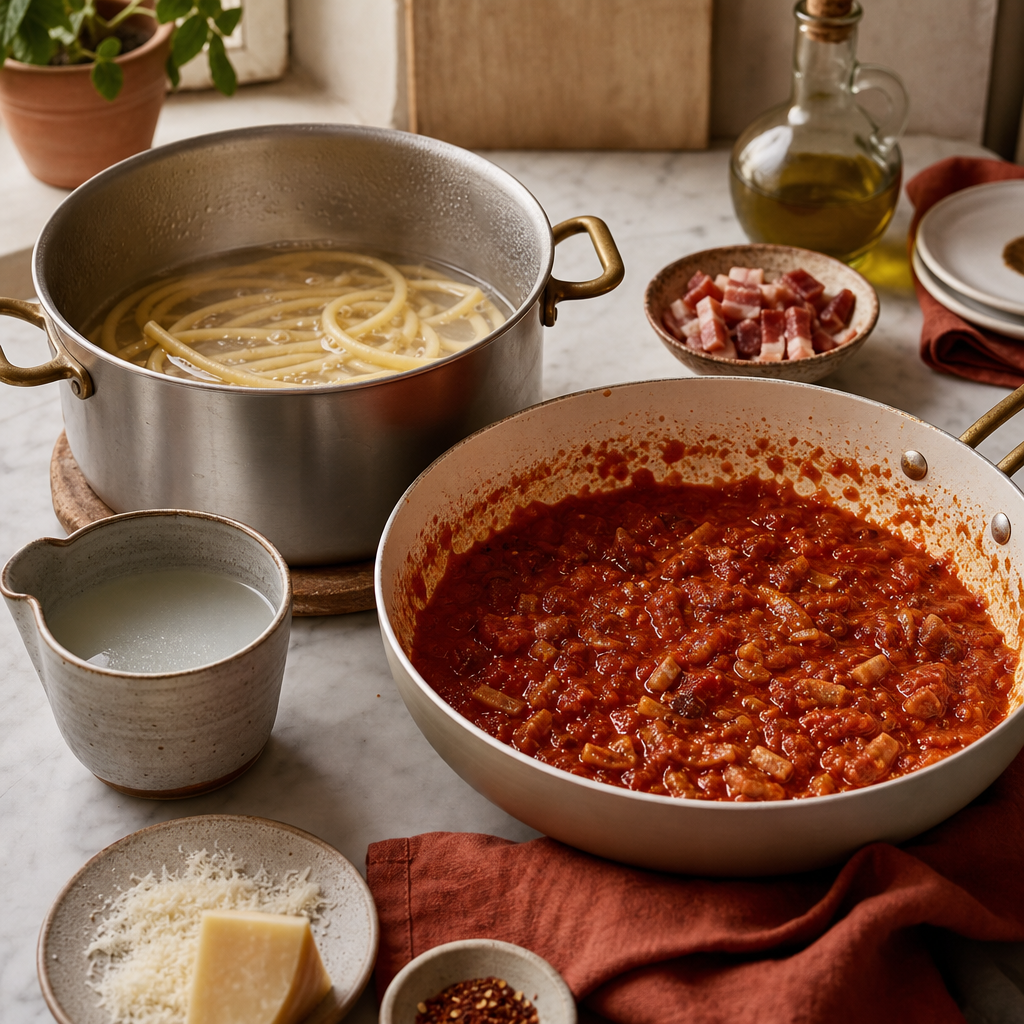
Boil the bucatini in well-salted water until 2 minutes shy of al dente. Reserve at least 250 ml pasta water, then transfer the pasta directly into the skillet.
Finish in the pan
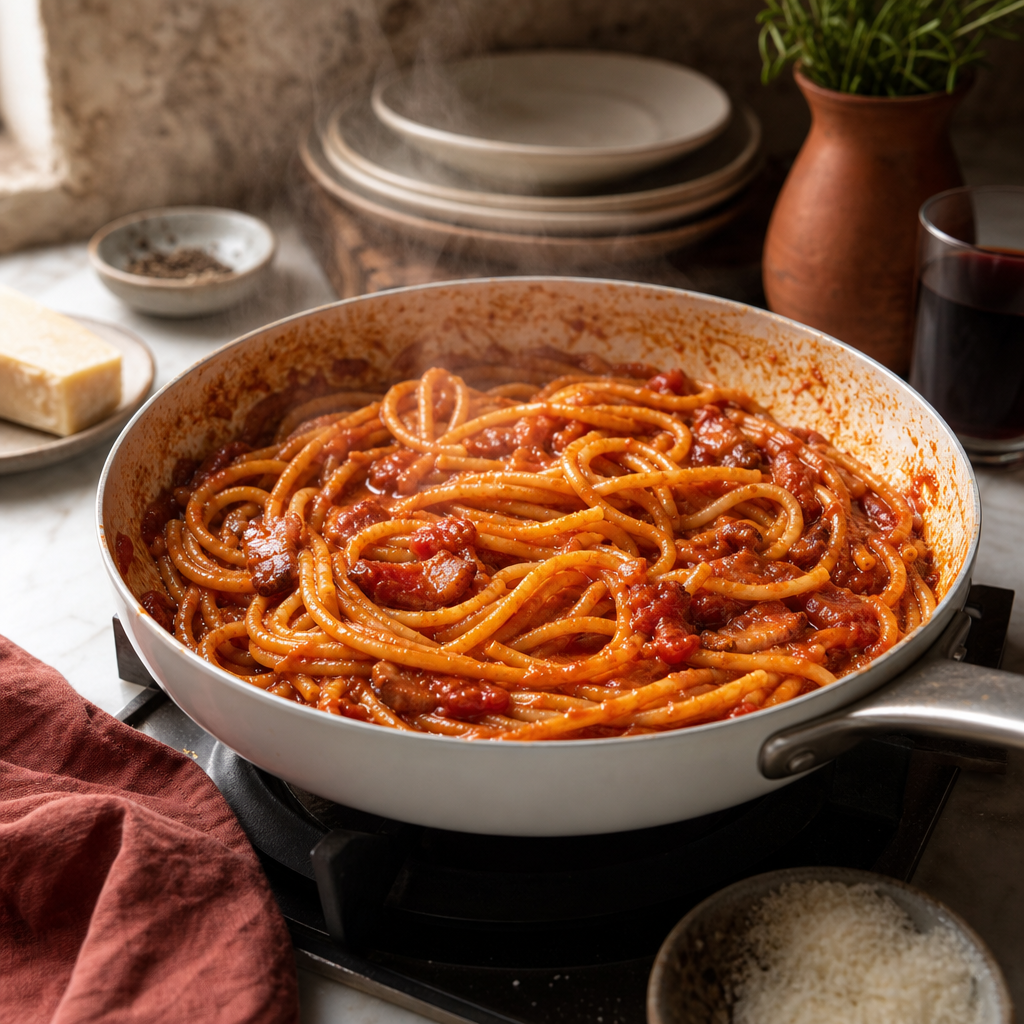
Toss the bucatini with the sauce over medium heat, adding 120-180 ml pasta water in splashes. Keep tossing until the sauce coats the strands and the pasta bends without a raw white core, about 2 minutes.
Add Pecorino off direct heat
Take the pan off the burner and wait 20 seconds. Add about two-thirds of the Pecorino Romano and toss hard, adding a small splash of pasta water only if the sauce tightens. Plate immediately and finish with the reserved guanciale and remaining Pecorino.
Common mistakes
- {'mistake': 'Starting the guanciale in a hot pan.', 'fix': 'Start cold over medium-low heat. The rendered fat is the sauce base.'}
- {'mistake': 'Boiling the pasta to full doneness before saucing.', 'fix': 'Pull it 2 minutes early and finish in the skillet.'}
- {'mistake': 'Using too much tomato.', 'fix': 'Use enough tomato to coat, not drown. Amatriciana should not eat like marinara with pork bits.'}
- {'mistake': 'Adding Pecorino over hard heat.', 'fix': 'Move the pan off the burner, then toss in the cheese with starchy water as needed.'}
- {'mistake': 'Treating pancetta or bacon as equal to guanciale.', 'fix': 'Use guanciale when the dish is being called Amatriciana. Pancetta is a fallback; smoked bacon does not belong.'}
What does not belong
- {'item': 'onion', 'reason': 'Onion does not belong in the canonical Amatrice/Roman structure. It sweetens and muddies a sauce that should be pork fat, tomato, and Pecorino.'}
- {'item': 'garlic', 'reason': 'Garlic does not belong here. It pulls the sauce toward a generic red sauce and covers the cured-pork aroma.'}
- {'item': 'cream', 'reason': 'Cream does not belong in Roman pasta sauces of this family. The body comes from rendered fat, tomato reduction, Pecorino, and pasta starch.'}
- {'item': 'Parmigiano-Reggiano or generic Parmesan', 'reason': 'Pecorino Romano is the cheese. Parmesan is nuttier and softer; it blunts the salty, sheep-milk edge the dish needs.'}
- {'item': 'basil or oregano', 'reason': 'Herbs do not belong in the canonical version. They make the sauce read as tomato pasta, not Amatriciana.'}
- {'item': 'sugar', 'reason': 'Sugar does not belong. If the tomatoes are harsh, reduce them properly or use better tomatoes.'}