Branzino al Sale
The dish in context
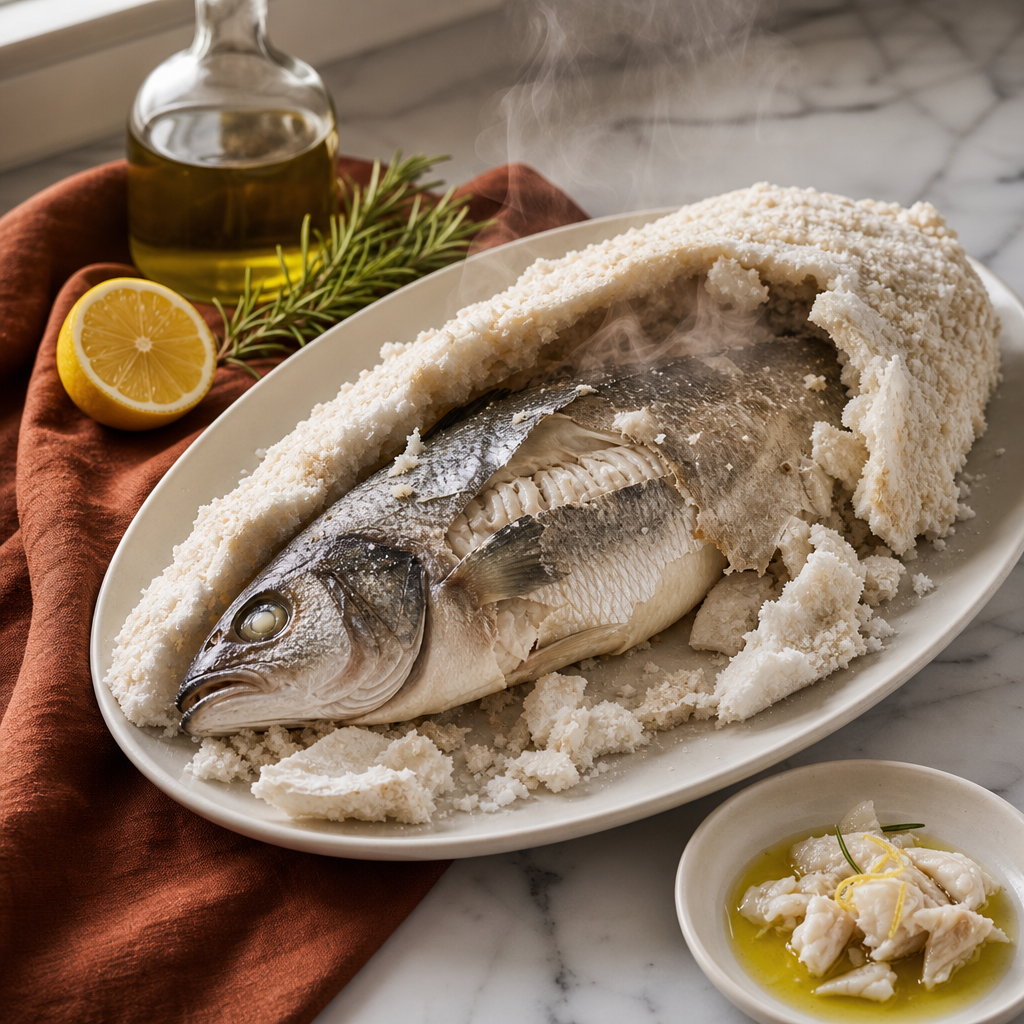
Cooking whole fish under a salt crust is a Mediterranean technique shared across coastal Italy, Spain, and southern France. In Italy, branzino al sale is treated as a second course built around freshness rather than sauce: whole fish, coarse salt, herbs, heat, restraint. The method is often described as baking, but the salt shell functions like a sealed chamber; the fish steams in its own moisture while staying protected from direct dry heat. Italian sources vary on whether to bind the salt with egg white or water, but the core grammar is stable: gutted whole fish, scales left on, coarse salt crust, minimal aromatics.
Method 9 steps · 45 min
Heat the oven
Heat the oven to 200°C / 400°F. Set a rack in the center position and use a rimmed baking sheet or roasting dish large enough to hold the fish without bending the tail hard against the edge.
Prepare the fish
Pat the branzino dry inside and out. Keep the scales on, check that the gills are removed, and fill the cavity with lemon slices, parsley, and garlic without overstuffing.
Bind the salt
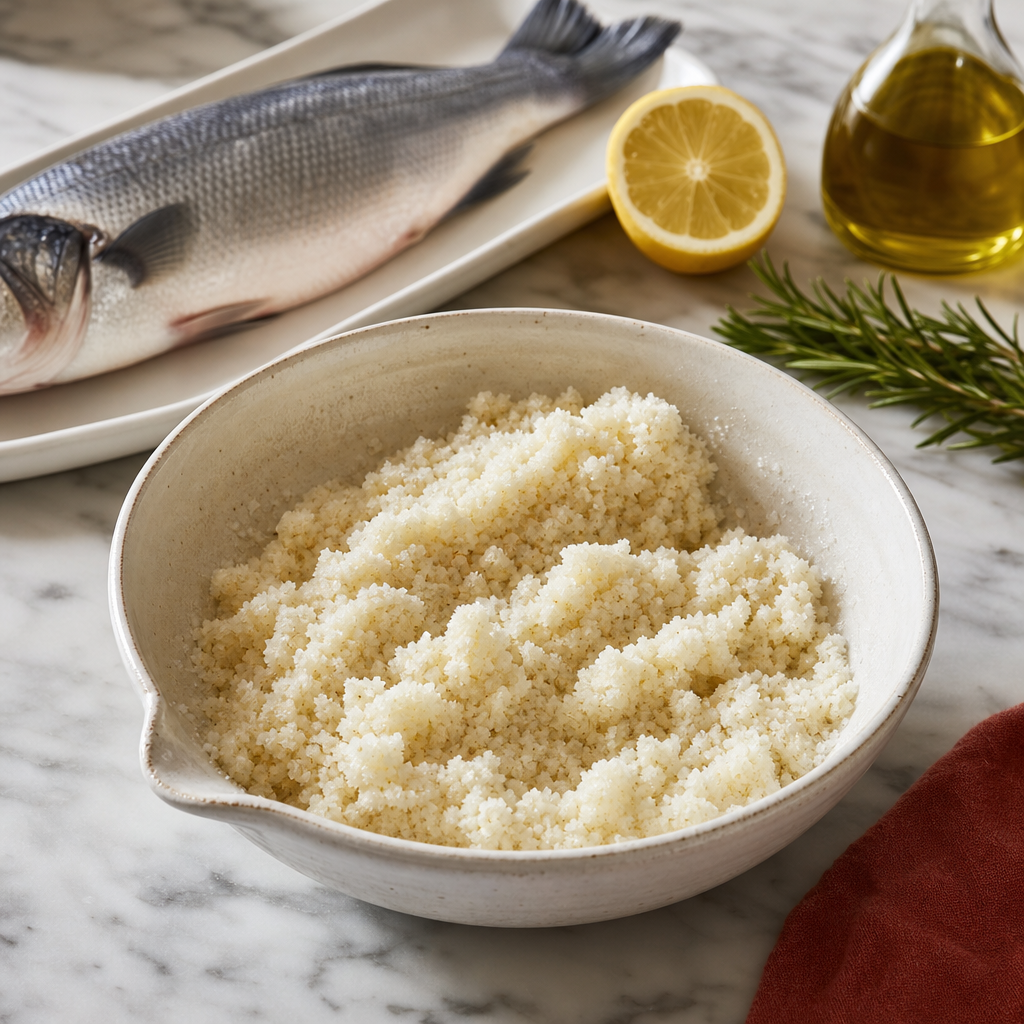
Mix the coarse salt with the beaten egg whites until the texture resembles wet sand that clumps when squeezed. If using water instead, add it gradually; stop as soon as the salt holds together.
Build the bottom layer
Spread one-third of the salt mixture on the baking sheet in the shape of the fish, about 1 cm thick. Set the branzino on top and tuck the belly closed so the cavity aromatics do not spill into the salt.
Seal the crust
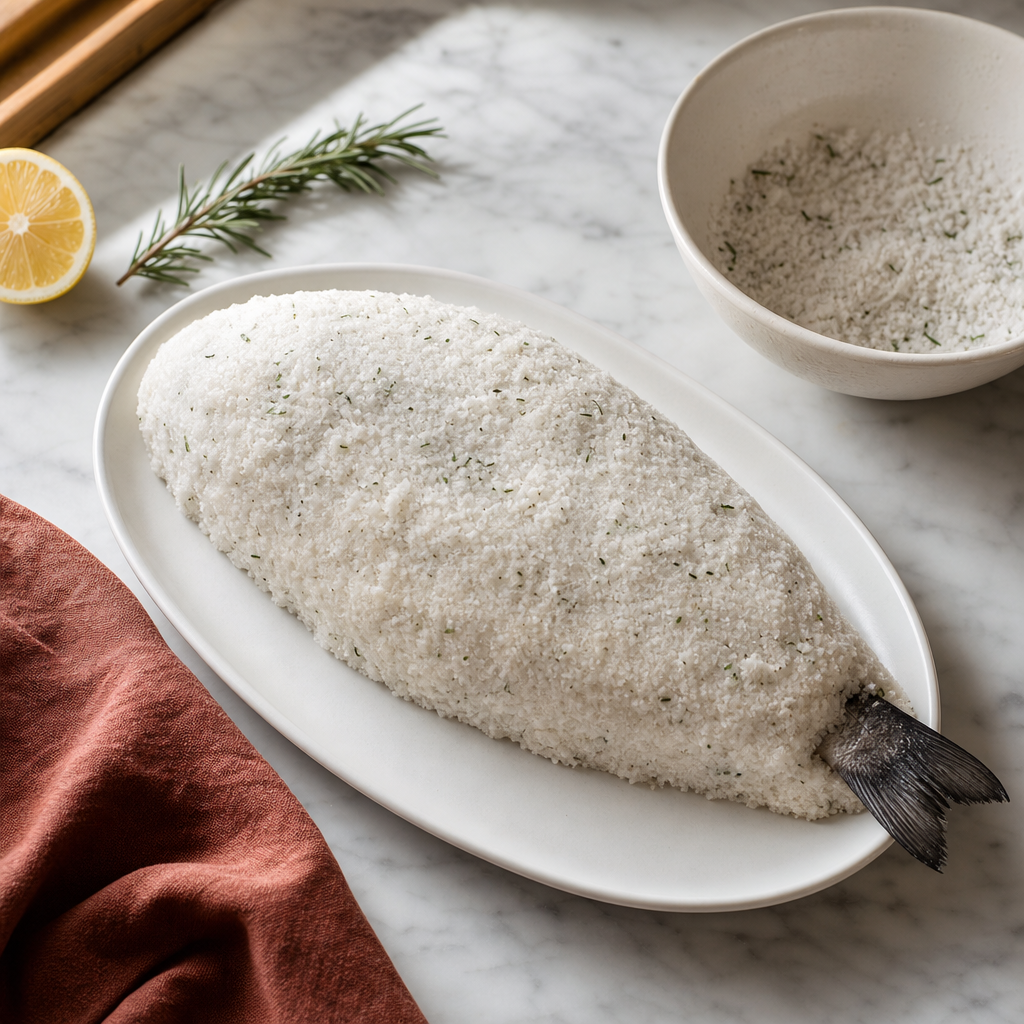
Pack the remaining salt over the fish in a 1-1.5 cm layer, leaving no gaps along the belly, head, or tail base. The tail fin may remain exposed if it is thin; do not leave flesh exposed.
Bake
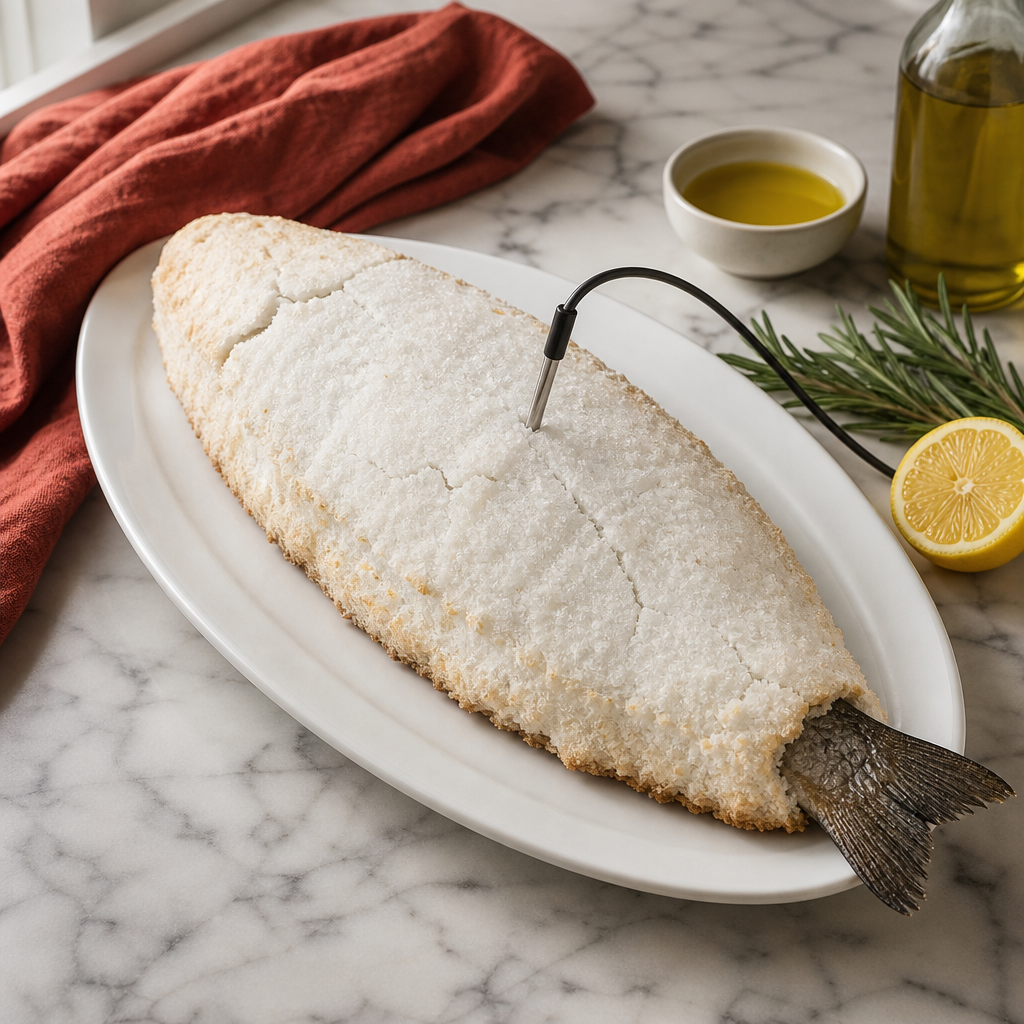
Bake until the crust is hard and lightly tan at the edges, 22-28 minutes for a 1 kg fish. For accuracy, slide a probe through the crust at the thickest part near the backbone; pull at 52-54°C / 126-129°F.
Rest briefly
Rest the fish in its crust for 5 minutes, not longer. Set a serving platter nearby before breaking the shell.
Crack and remove the salt
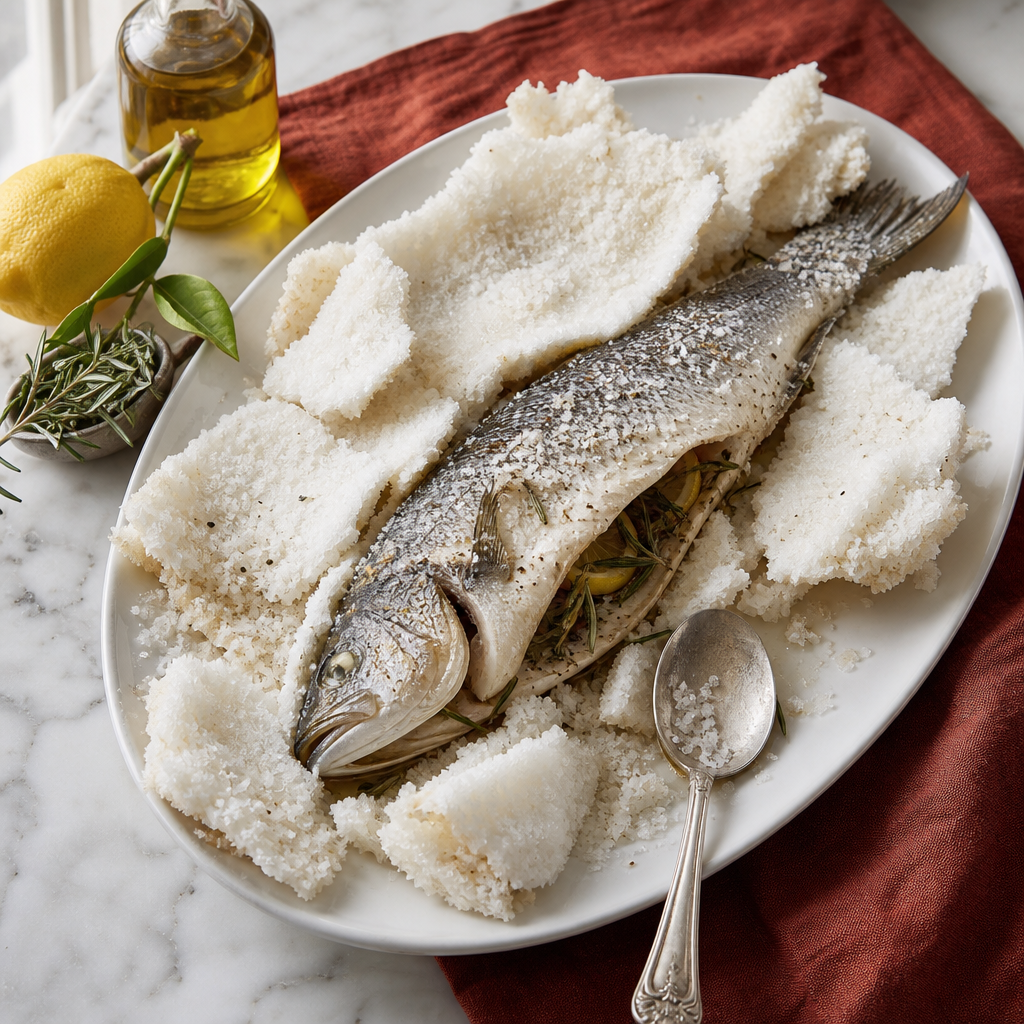
Tap the crust with the back of a spoon or the heel of a knife and lift it away in large pieces. Brush loose salt off the skin before opening the fish.
Fillet and dress
Peel away the top skin, lift the top fillet from the bones, remove the backbone, then lift the second fillet. Dress with extra virgin olive oil and lemon at the table.
Common mistakes
- {'mistake': 'Using fillets instead of a whole fish', 'fix': 'Use whole branzino with skin and scales intact. Fillets have no protective barrier and become oversalted before they cook through.'}
- {'mistake': 'Removing the scales', 'fix': 'Leave the scales on. They act like armor under the salt crust and come away with the skin after baking.'}
- {'mistake': 'Making the salt crust too thin', 'fix': 'Pack 1-1.5 cm of salt around the fish. Thin patches vent steam and create dry spots.'}
- {'mistake': 'Overstuffing the cavity', 'fix': 'Use a few aromatics, not a salad. A packed belly blocks heat and can leave the center undercooked.'}
- {'mistake': 'Resting too long in the crust', 'fix': 'Rest 5 minutes, then crack. The salt shell keeps cooking the fish after it leaves the oven.'}
- {'mistake': 'Letting loose salt touch the flesh', 'fix': 'Brush the crust fragments away before peeling back the skin. Granules on the fillet dissolve on contact.'}
What does not belong
- {'item': 'Sauce under the crust', 'reason': 'Tomato, wine, butter, or stock inside the salt shell turns the method from salt-baked fish into a leaking braise. Liquid does not belong.'}
- {'item': 'Cheese', 'reason': 'Cheese on this fish is not part of the Italian grammar of the dish. The finish is olive oil, lemon, and possibly herbs.'}
- {'item': 'Fine table salt as the full crust', 'reason': 'Fine salt packs too densely and seasons aggressively. Coarse salt is structural; table salt is not.'}
- {'item': 'Heavy spice rubs', 'reason': 'Paprika, cumin, curry powder, and mixed spice blends fight the point of branzino al sale. The technique is built to show clean fish, not crust seasoning.'}
- {'item': 'Butter sauce', 'reason': 'Brown butter or cream sauce belongs to another fish preparation. It masks the lean, steamed texture created by the salt crust.'}