Porchetta
The dish in context
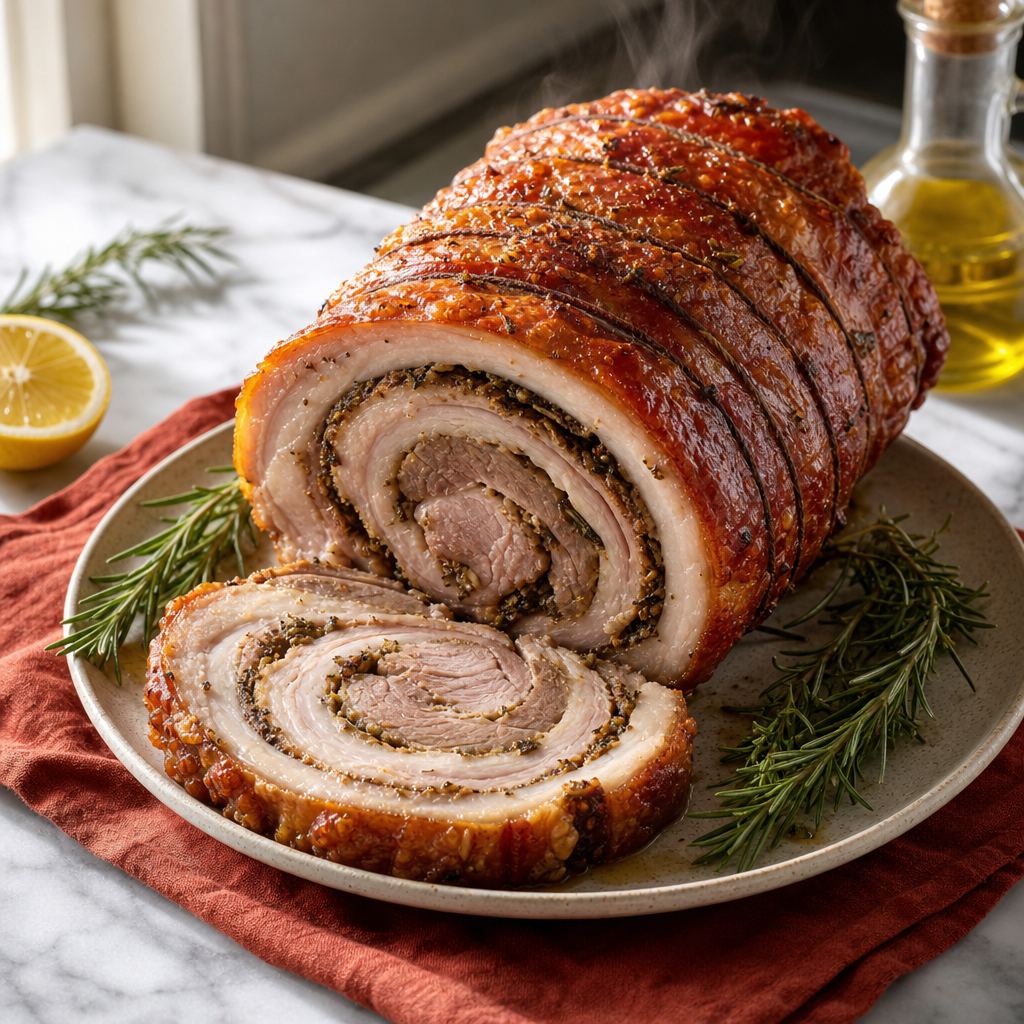
Porchetta belongs to central Italy, with Lazio's Ariccia especially associated with market-stall and festival porchetta. The older form is a whole deboned pig, heavily salted, seasoned inside, rolled around itself, and roasted until the skin becomes brittle crackling. Home versions usually reduce the animal to a skin-on belly, sometimes wrapped around a loin; that method is practical, but the lean loin can dry before the belly fully renders. This version follows the central-Italian grammar but uses an all-belly roll for better texture in a domestic oven. Fennel is common in many Italian and diaspora versions, but Lazio-style porchetta leans harder on rosemary, garlic, salt, and black pepper.
Method 12 steps · 3300 min
Square and thin the belly
Lay the pork belly skin-side down. Trim ragged edges into a rectangle and shave any meat that is much thicker than the rest, aiming for an even 3-4 cm thickness. Save trimmings for the center of the roll, not for the skin seam.
Score the meat side only
Keep the belly skin-side down and score the meat in a 2.5 cm crosshatch, cutting about 1 cm deep without reaching the skin. Do not slash through the rind.
Puncture the skin
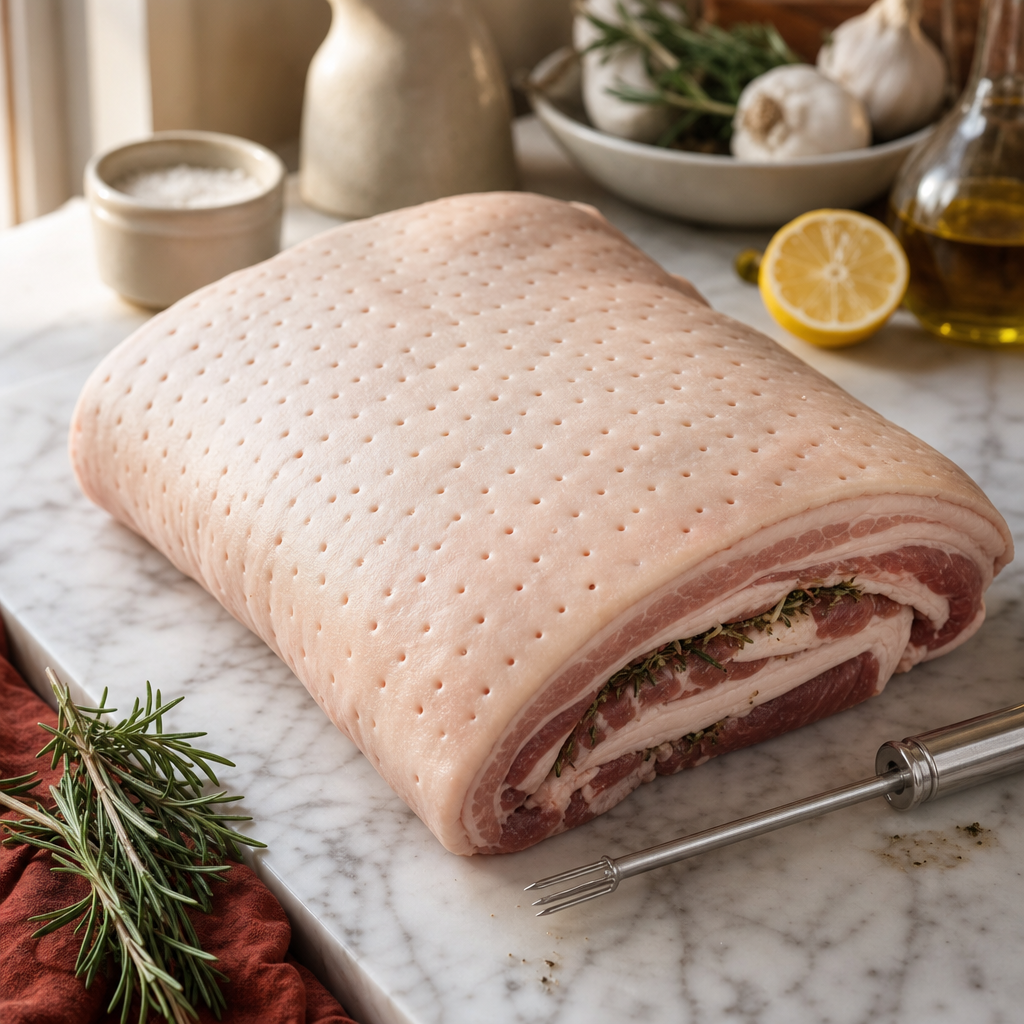
Turn the belly skin-side up. Prick the skin all over with a metal skewer or sausage pricker at 5-8 mm intervals, entering the skin and fat but not driving deep into the meat. Pat the skin dry.
Build the herb paste
Toast the fennel seed, if using, until fragrant, 60-90 seconds, then crush it coarsely. Mix the fennel with salt, pepper, rosemary, sage, garlic, lemon zest, red pepper flakes, and 20 ml olive oil into a rough paste.
Season the interior
Turn the belly skin-side down again. Rub the herb paste into the scored meat, pushing it into the cuts. Keep the skin clean; garlic and herbs on the outside burn before the crackling forms.
Roll under tension
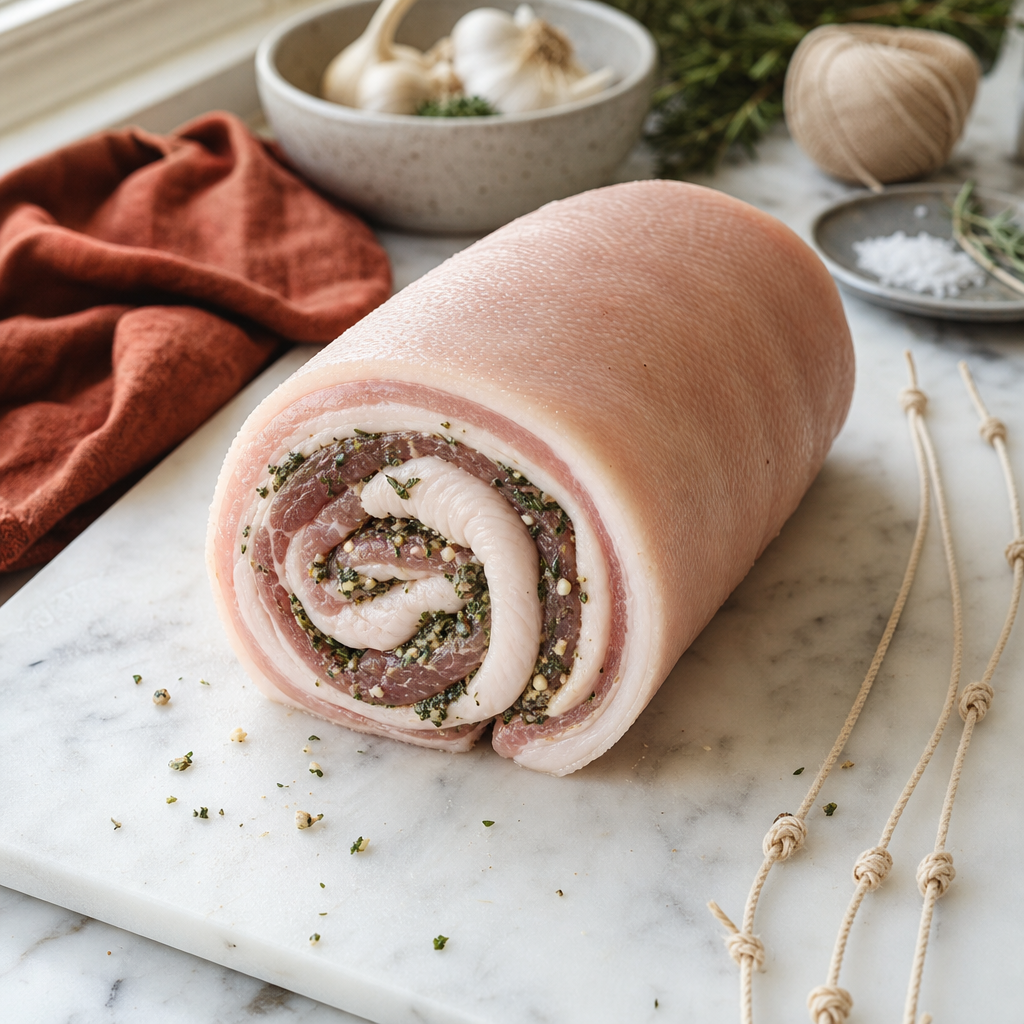
Roll the belly from the long side into a tight cylinder, keeping skin on the outside only. If skin tucks into the center, unroll and trim that strip away. Tie with butcher's twine every 2-2.5 cm, pulling each tie firm enough to hold the cylinder but not so tight that the meat bulges between strings.
Dry-cure uncovered
Set the tied roast on a wire rack over a tray. Refrigerate uncovered for 24-48 hours, turning once if the underside stays wet. Blot any surface moisture; do not wrap it.
Temper before roasting
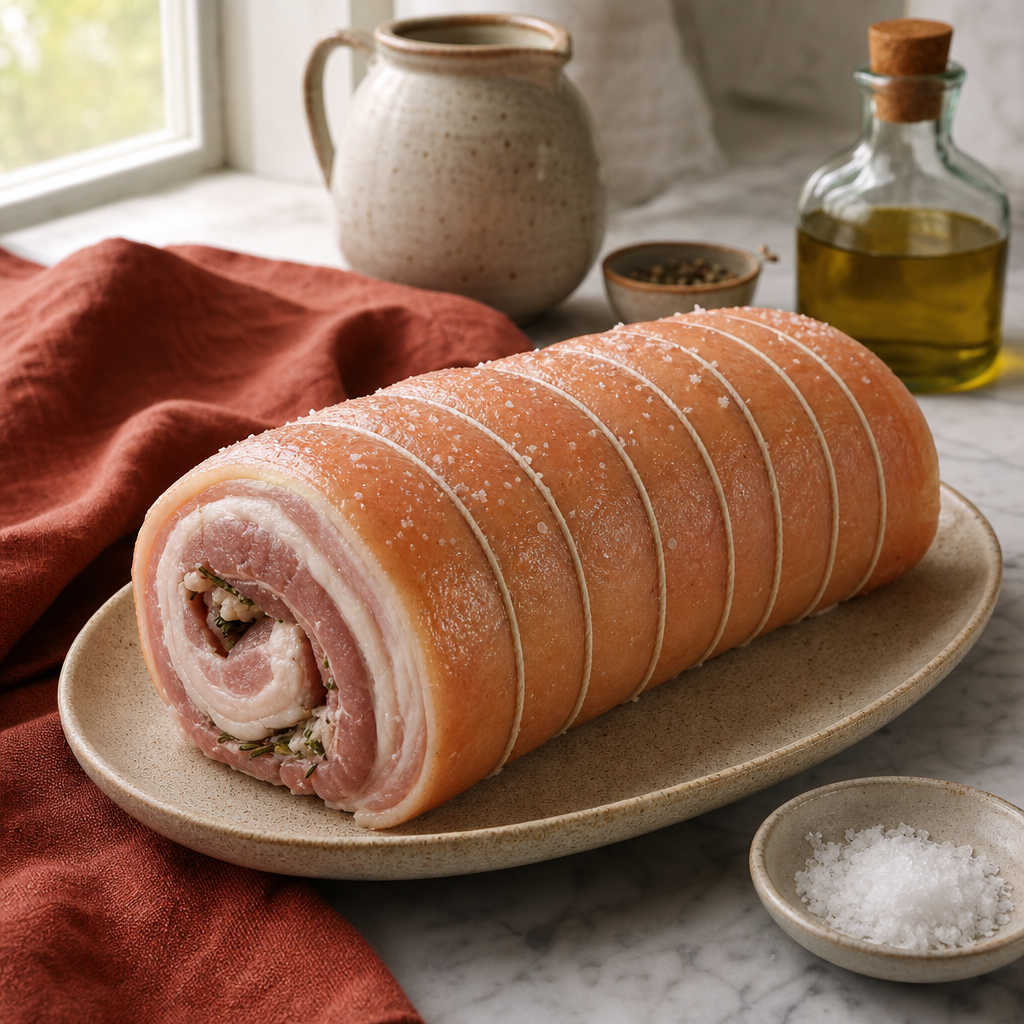
Remove the roast from the refrigerator 2 hours before cooking. Heat the oven to 230°C. Rub the skin with the remaining 10 ml olive oil and a final light pinch of salt.
Start hot
Place the porchetta seam-side down on a rack set over a rimmed roasting pan. Roast at 230°C for 35-45 minutes, rotating once, until the skin starts to blister and take on patchy gold. Add the wine to the pan after the first 15 minutes if the drippings threaten to scorch.
Render slowly
Lower the oven to 150°C and roast until the center reaches 82-88°C and a skewer slides through the belly with little resistance, about 3-4 hours. Rotate the pan every hour and spoon fat from the tray away if it climbs near the skin.
Finish the crackling
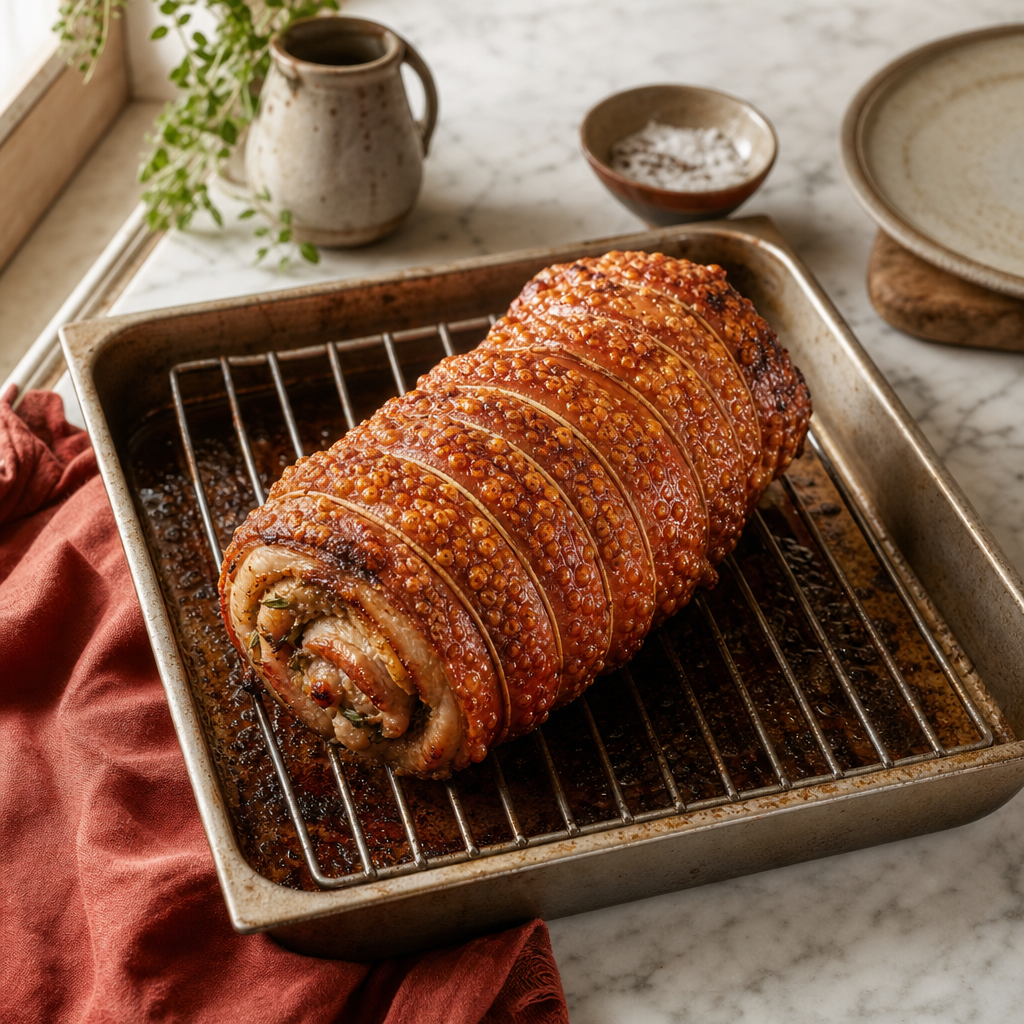
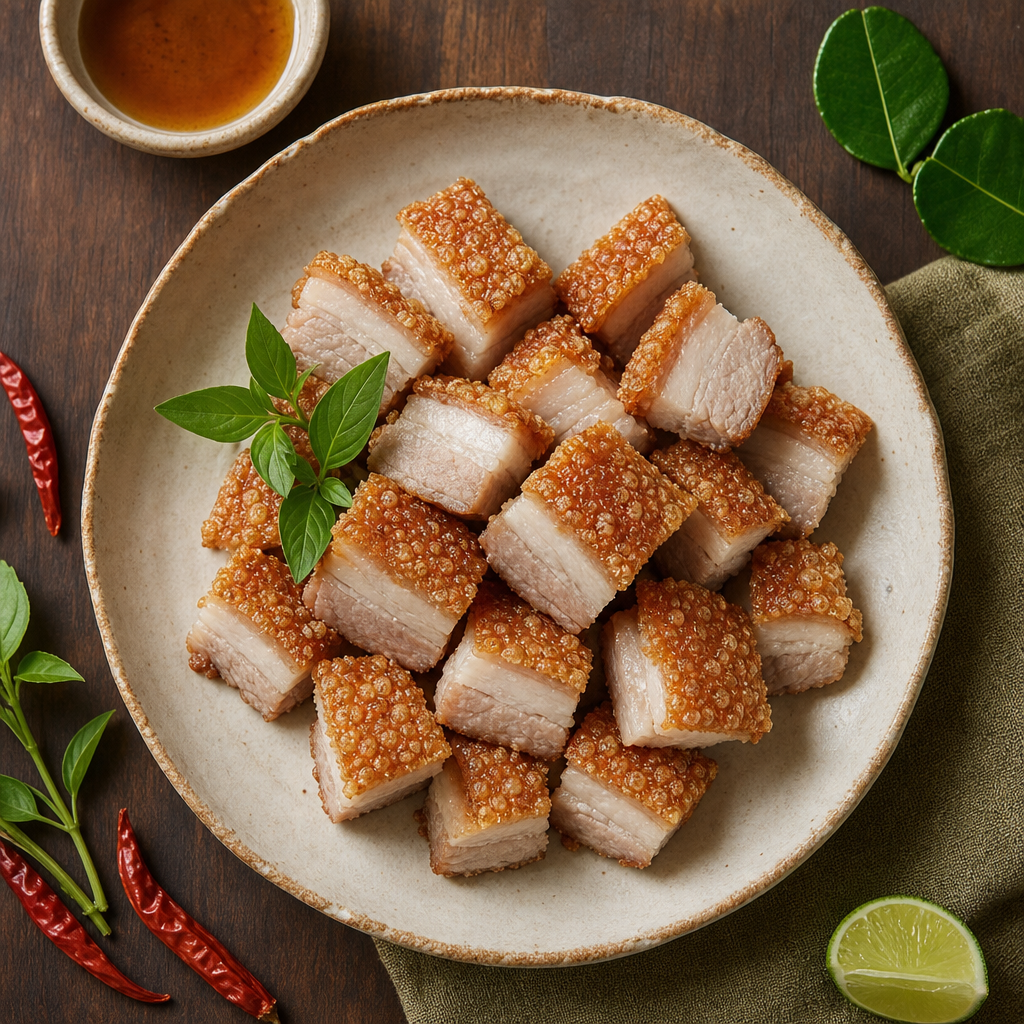
Raise the oven to 250°C or use convection at 240°C. Roast 10-20 minutes, watching through the door, until the skin is blistered, hard, and deep amber. Move or shield any section that darkens faster than the rest.
Rest and slice
Rest the porchetta uncovered for 30-45 minutes. Cut away the twine, then slice with a serrated knife into 1-1.5 cm rounds, using short sawing strokes through the crackling. Serve with bitter greens, roasted potatoes, or crusty bread for sandwiches.
Common mistakes
- Wrapping the roast during the refrigerator cure. Wrapped skin stays wet, and wet skin makes leathery rind.
- Putting herbs or garlic on the outside. They burn black before the skin has time to blister.
- Cooking only to lean-pork temperature. Belly needs higher internal heat and time for collagen and fat to render.
- Rolling skin into the center. Interior skin turns rubbery and interrupts the slice.
- Using a boneless pork loin alone. That is an herb-stuffed pork roast, not porchetta.
- Pouring wine, stock, or pan juices over the skin during roasting. Moisture is the enemy of crackling.
What does not belong
- Sugar does not belong. Porchetta is not a glazed roast and sugar burns before the rind crackles.
- Barbecue rub does not belong. Paprika-heavy, cumin-heavy, or brown-sugar rubs move the dish out of central Italy.
- Cheese does not belong inside the roll. It leaks, scorches, and fights the clean pork-fat structure.
- Bread stuffing does not belong. It absorbs rendered fat and turns the center pasty.
- Butter does not belong on the skin. Pork belly carries enough fat; butter solids burn.
- Liquid smoke does not belong. Traditional porchetta may be wood-roasted, but bottled smoke gives a blunt barbecue profile.