Moo Grob
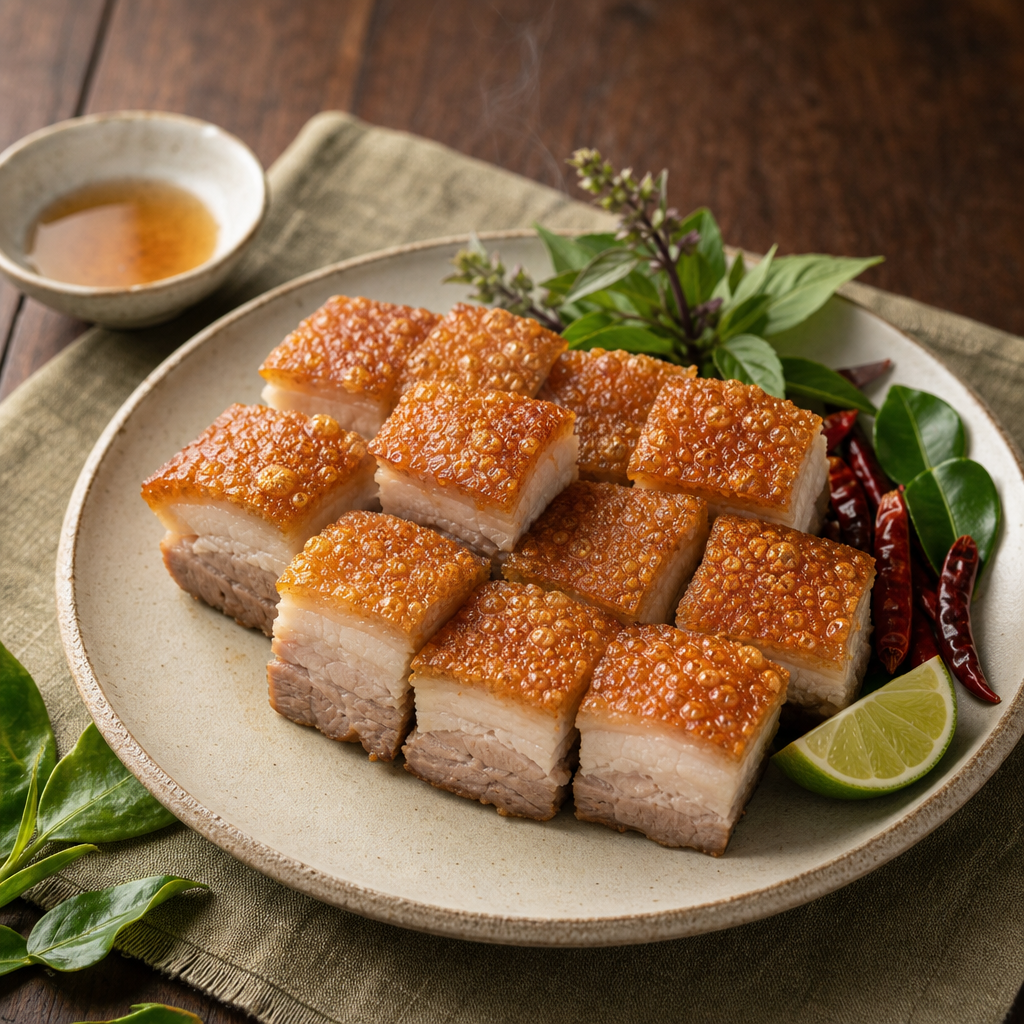
The dish in context
Moo grob (หมูกรอบ) sits in the Thai-Chinese part of central Thai food culture: roast-pork technique adapted into rice plates, noodle shops, khao moo daeng stalls, and made-to-order stir-fries. Bangkok and central Thai vendors treat it as both a finished meat and an ingredient, especially in pad kana moo grob (ผัดคะน้าหมูกรอบ) and pad kaphrao moo grob (ผัดกะเพราหมูกรอบ). The Thai version is usually seasoned narrowly — salt, sometimes vinegar, and pork — so it can absorb oyster sauce, fish sauce, garlic, and chilies later without tasting over-spiced. Chinese-style siu yuk can stand in, but five-spice-heavy roast pork reads different in Thai stir-fry.
Method 10 steps · 1560 min
Square the pork
Trim ragged edges and level any flap of loose meat. Keep the slab in one piece; do not cube it before cooking.
Blanch the belly
Put the pork in a pot with the water, 12 g of the salt, and 30 ml of the vinegar. Bring to a steady simmer and cook for 20 minutes, turning once halfway through.
Dry the surface, then prick the skin
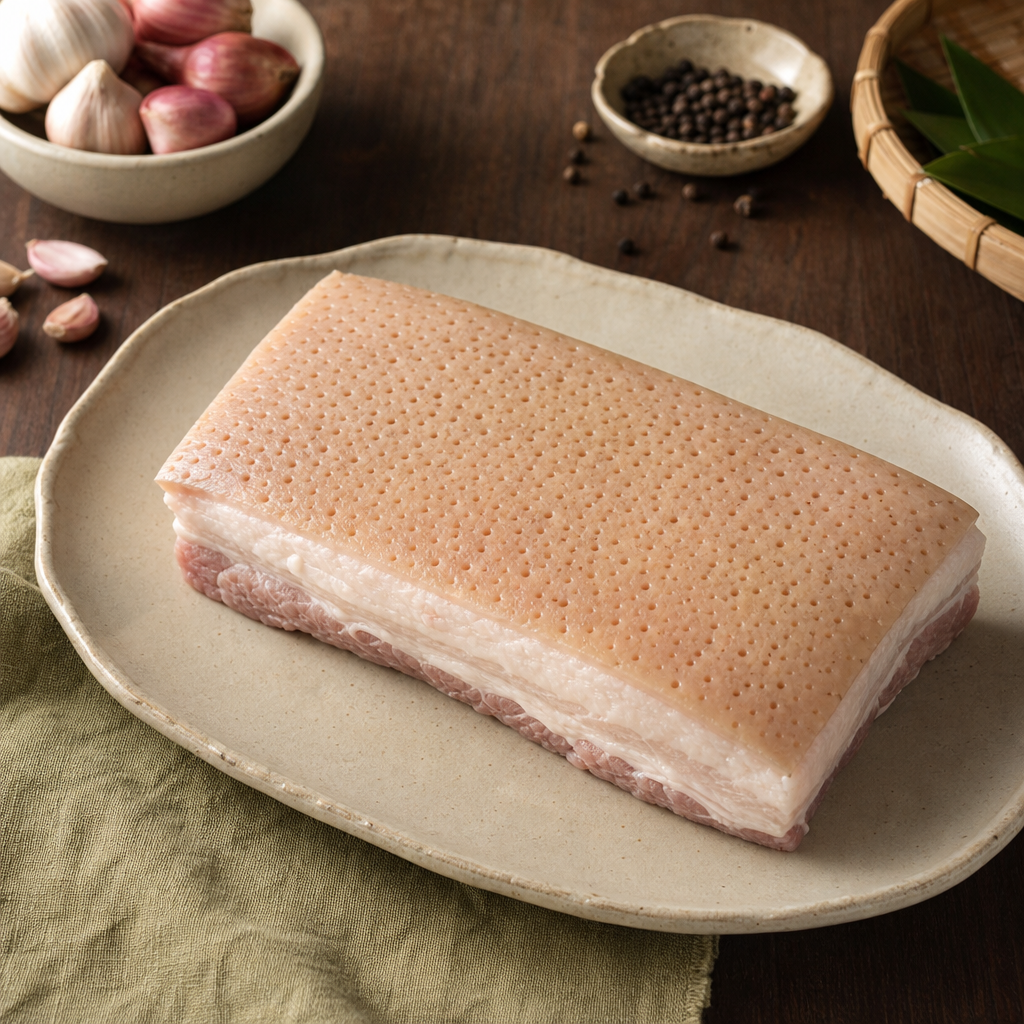
Lift the pork out and pat it dry. Use a skewer, meat needle, or fork to prick the skin densely, stopping before the needle drives deep into the fat and meat.
Score the meat side
Turn the slab meat-side up and cut shallow 1 cm-deep lines across the meat, spacing them 2-3 cm apart. Do not cut through the skin.
Salt and vinegar the slab
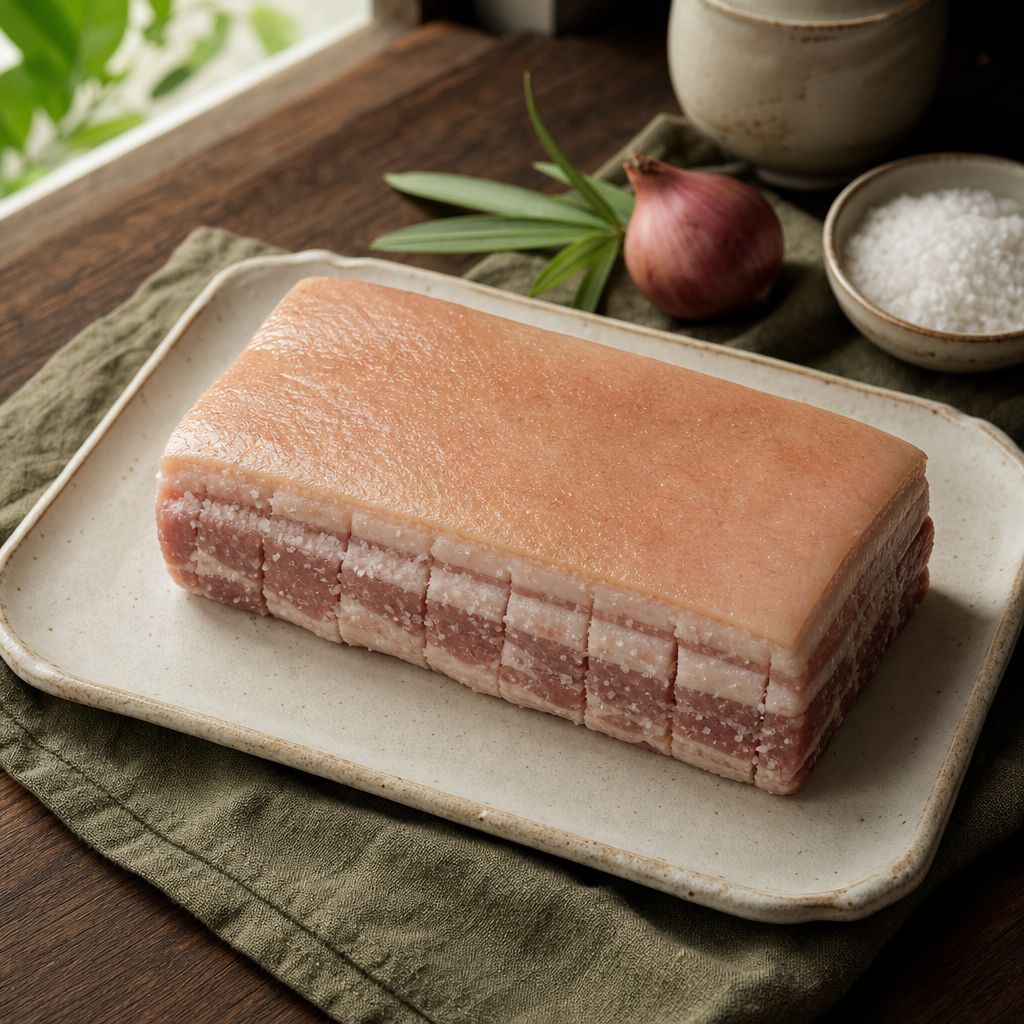
Rub the remaining 12 g salt into the meat side and the scored cuts. Brush the skin with the remaining 15 ml vinegar, then set the slab skin-side up on a rack.
Dry uncovered
Refrigerate the pork uncovered, skin-side up, for 12-24 hours. The skin should feel dry, slightly stiff, and no longer tacky.
Warm before frying
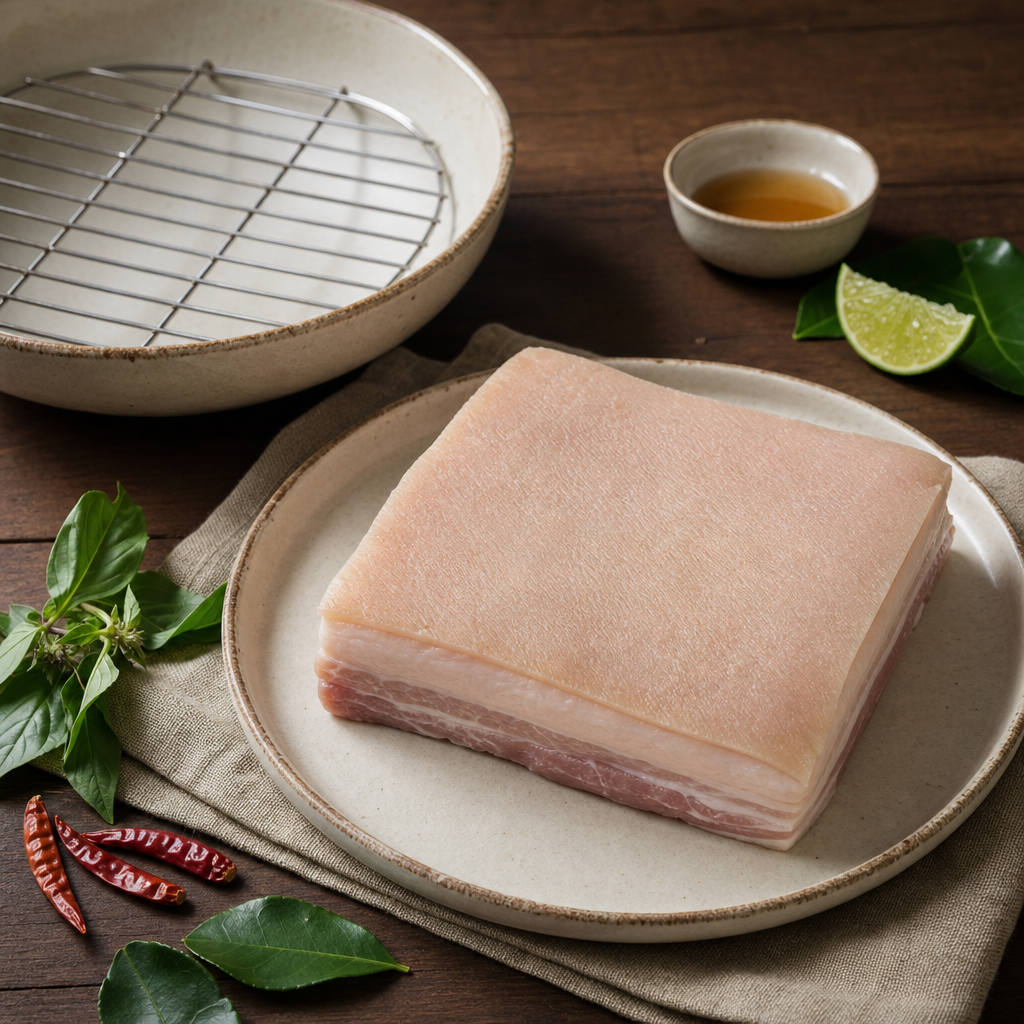
Rest the slab at room temperature for 45 minutes while heating the oil to 180°C. Pat the skin once more if any moisture has appeared.
Fry skin-side down
Lower the pork into the oil skin-side down. Fry at 175-185°C until the skin is deeply blistered and golden, 7-10 minutes; use a splatter screen, not a sealed lid.
Finish the meat side
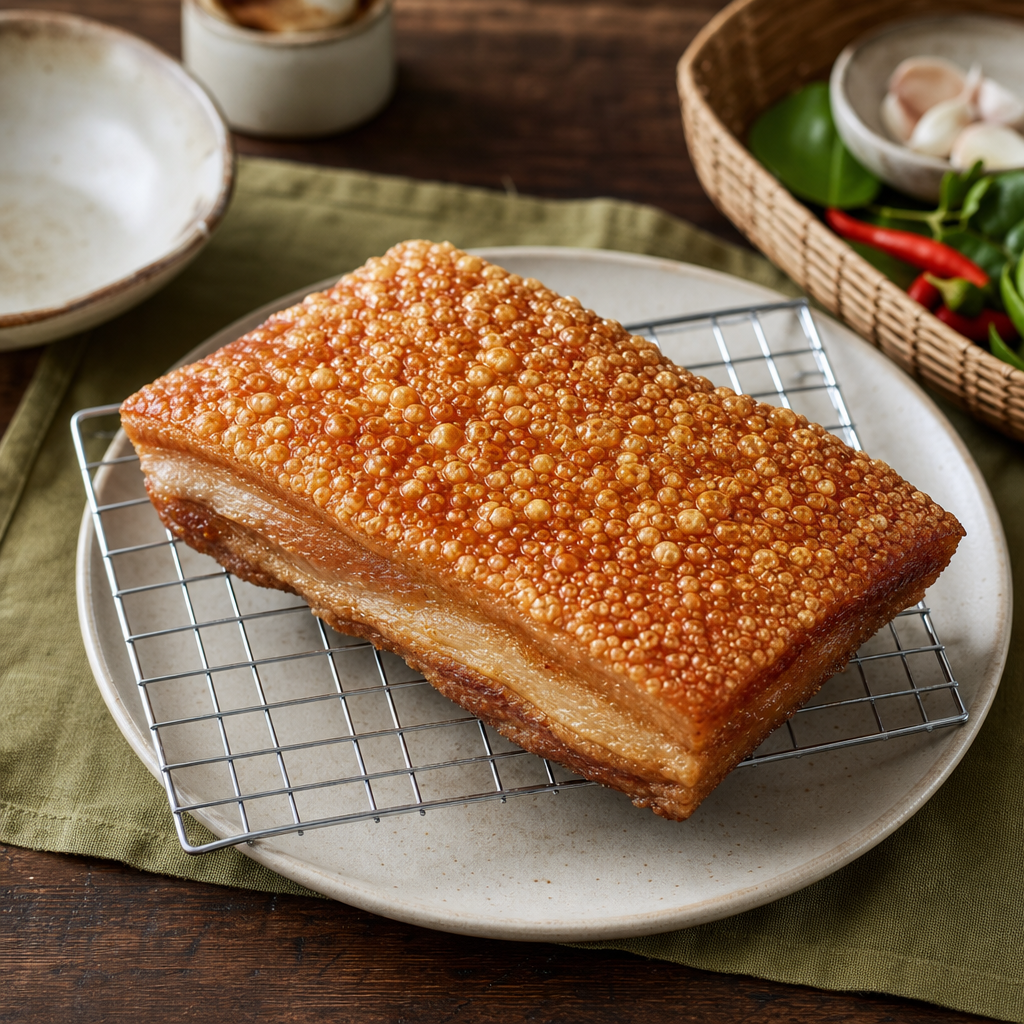
Turn the slab and fry the meat side for 3-5 minutes, until the edges are golden and the center of the meat is hot. Lift to a rack, skin-side up.
Rest and chop
Rest 10 minutes. Chop skin-side down with a heavy knife into 1.5-2 cm pieces, using firm single strokes rather than sawing.
Common mistakes
- {'mistake': 'Frying damp skin', 'fix': 'Dry uncovered overnight and pat dry before frying. If the skin feels cool and tacky, it is not ready.'}
- {'mistake': 'Pricking too deep', 'fix': 'Pierce the skin only. Deep holes leak fat and meat juices upward, which stains and softens the crackling.'}
- {'mistake': 'Cutting the pork into chunks before frying', 'fix': 'Cook the belly as a slab. Chop only after resting.'}
- {'mistake': 'Using a sealed lid during frying', 'fix': 'Use a splatter screen. A sealed lid traps steam, and trapped steam softens the skin.'}
- {'mistake': 'Seasoning it like char siu', 'fix': 'Keep moo grob salty and clean. Sweet red marinades fight the way Thai kitchens use crispy pork in stir-fries.'}
What does not belong
- {'item': 'five-spice powder', 'reason': 'Five-spice belongs to some Chinese roast-pork profiles. It does not belong in neutral Thai moo grob meant for khao moo daeng shops and stir-fries.'}
- {'item': 'sugar or honey on the skin', 'reason': 'Sugar burns before the skin blisters. Moo grob is not a glazed pork dish.'}
- {'item': 'baking soda paste', 'reason': 'It can blister skin, but it leaves an alkaline taste when handled badly. Salt, vinegar, drying, and hot oil are the cleaner Thai method.'}
- {'item': 'soy-sauce marinade on the skin', 'reason': 'Soy darkens fast in oil and blocks the visual cue for proper blistering. Season the meat side if needed; keep the skin dry and pale before frying.'}
- {'item': 'air-fryer-only shortcuts for this version', 'reason': 'Air fryers can crisp pork skin, but they do not reproduce the same rapid oil blistering. That is a different method, not this moo grob.'}