Khao Kha Moo
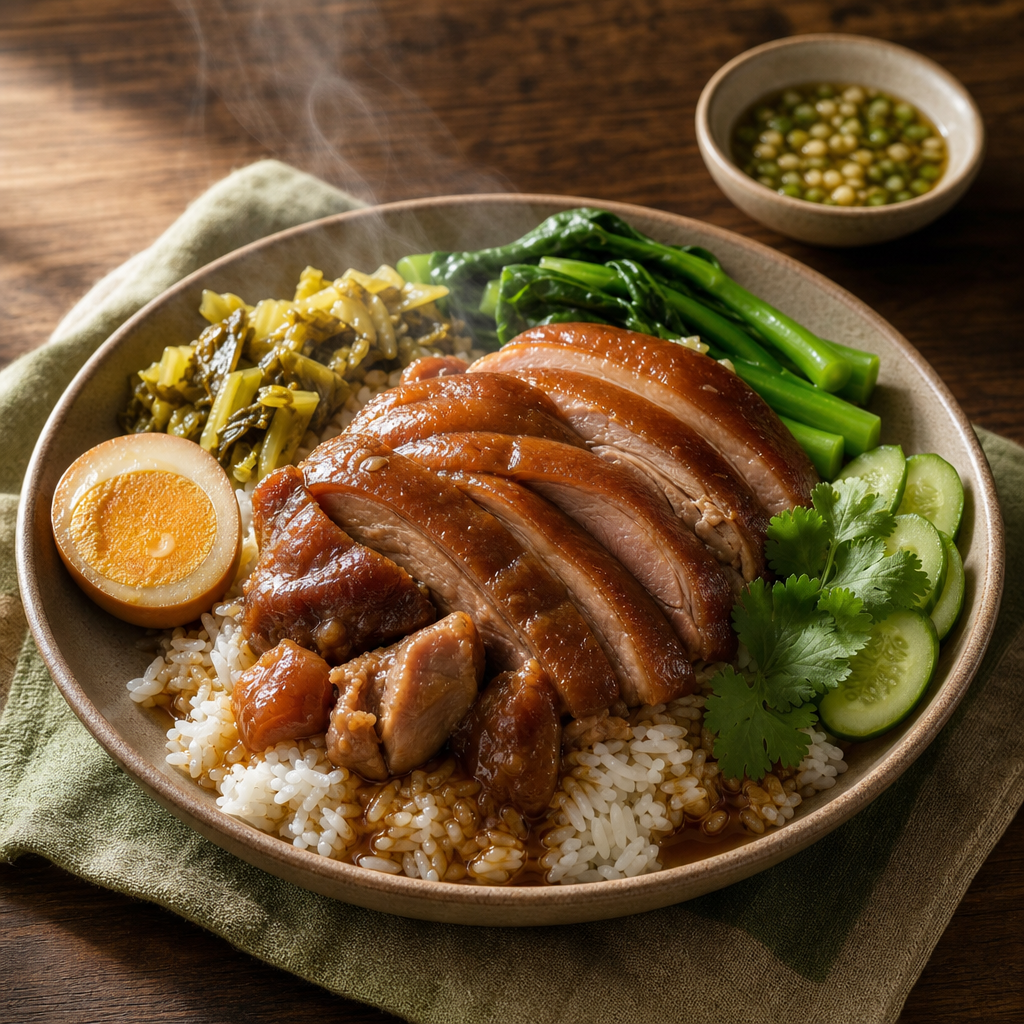
The dish in context
Khao kha moo (ข้าวขาหมู) is part of Thailand's Chinese-Thai rice-shop repertoire, especially linked to Teochew-style braising adapted into Thai street food. The structure is pork leg simmered in a dark soy, sugar, garlic, coriander-root, pepper, and warm-spice broth, then served over rice with pickled mustard greens and chili vinegar. Central Thai versions tend to be sweeter and darker than the leaner braised pork dishes found in some regional Chinese communities. The dish is now common in markets, mall food courts, and dedicated kha moo shops where the braising liquid is often maintained across service rather than made as a one-off pot.
Method 13 steps · 240 min
Clean and blanch the pork
Cover the pork leg pieces with cold water in a pot, bring to a hard boil, and boil for 5 minutes. Drain, rinse the pork under running water, and scrape away coagulated blood or bone fragments.
Pound the Thai aromatic paste
Pound garlic, coriander roots, and white peppercorns to a coarse paste. Stop when the pepper is cracked and the coriander root fibers are broken; a smooth curry paste texture is unnecessary.
Toast the spices
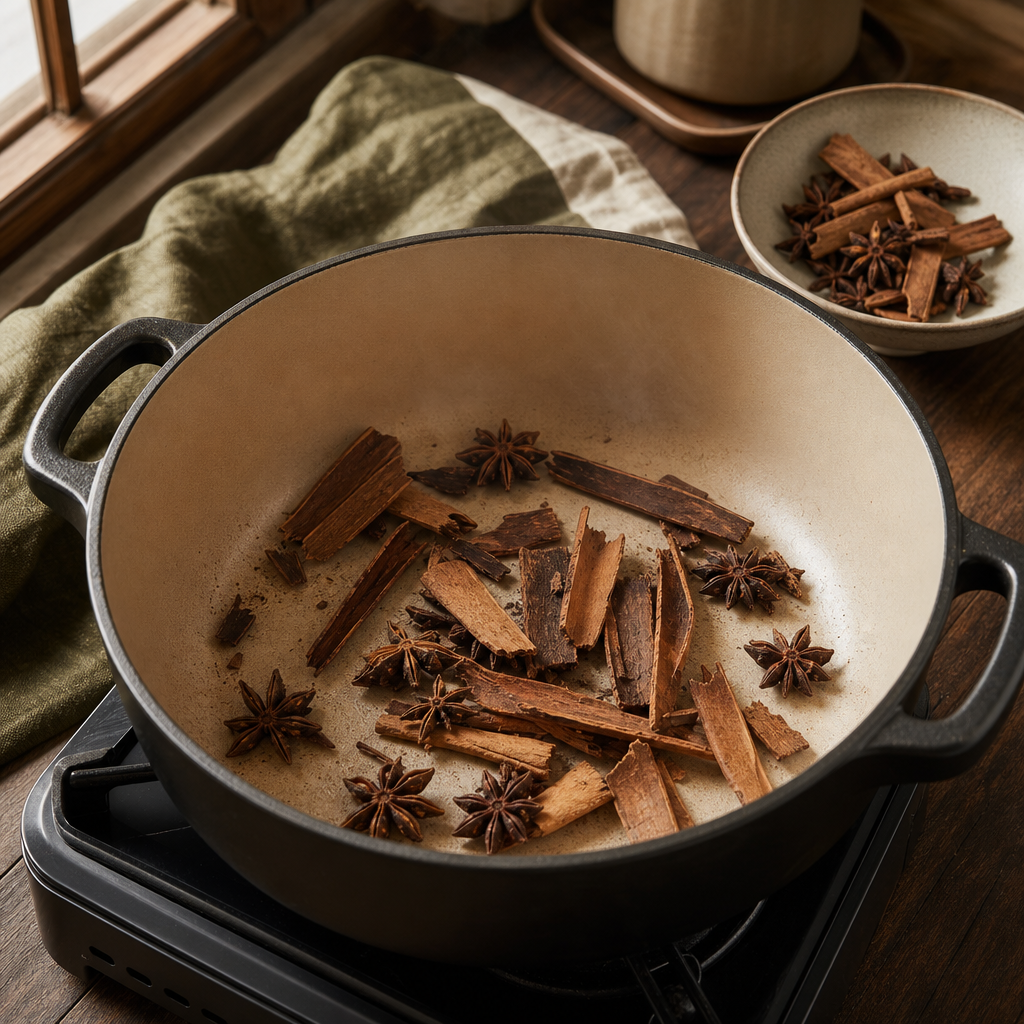
Toast cassia and star anise in the dry braising pot over medium heat for 60-90 seconds, until the surface smells warm and woody. Remove them before they scorch.
Fry the paste and sugar
Add oil to the pot, then fry the garlic-coriander-pepper paste over medium heat for 2 minutes. Add palm sugar and cook until it melts and darkens one shade, then add five-spice powder and stir for 20 seconds.
Build the braising liquid
Add light soy sauce, dark soy sauce, oyster sauce, fish sauce, sweet black soy if using, and 2500 ml water. Scrape the bottom of the pot until no caramel is stuck, then return the toasted cassia and star anise.
Braise the pork gently
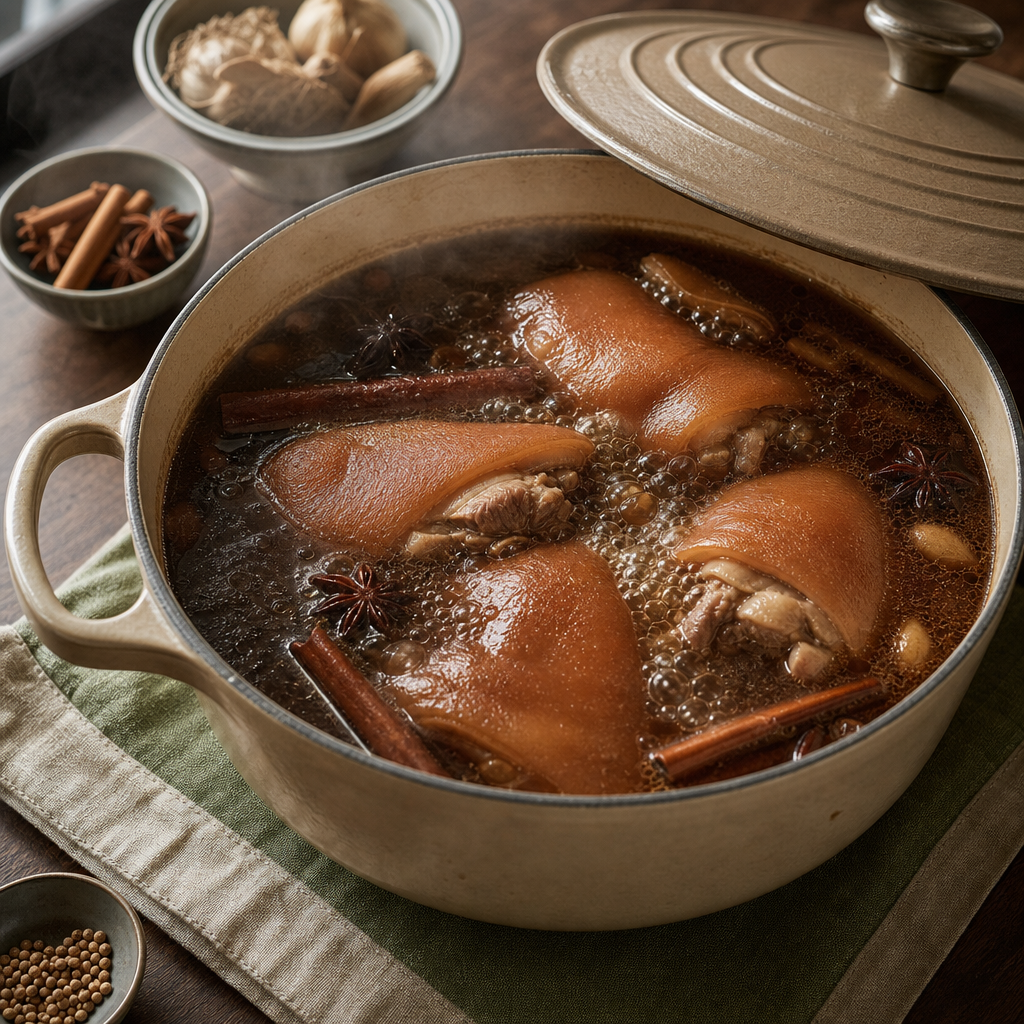
Add the blanched pork, bring to a low boil, then reduce to a bare simmer. Cover with the lid slightly ajar and cook for 2 1/2 to 3 hours, turning the pieces every 45 minutes, until a chopstick slides through the skin with little resistance.
Braise the eggs
Add the peeled hard-boiled eggs during the final 45 minutes of braising. Turn them once or twice so the soy color stains evenly.
Prepare the chili vinegar
Pound or blend green chilies, garlic, vinegar, salt, and sugar to a loose sauce. Let it stand at least 15 minutes before serving.
Cook the pickled greens
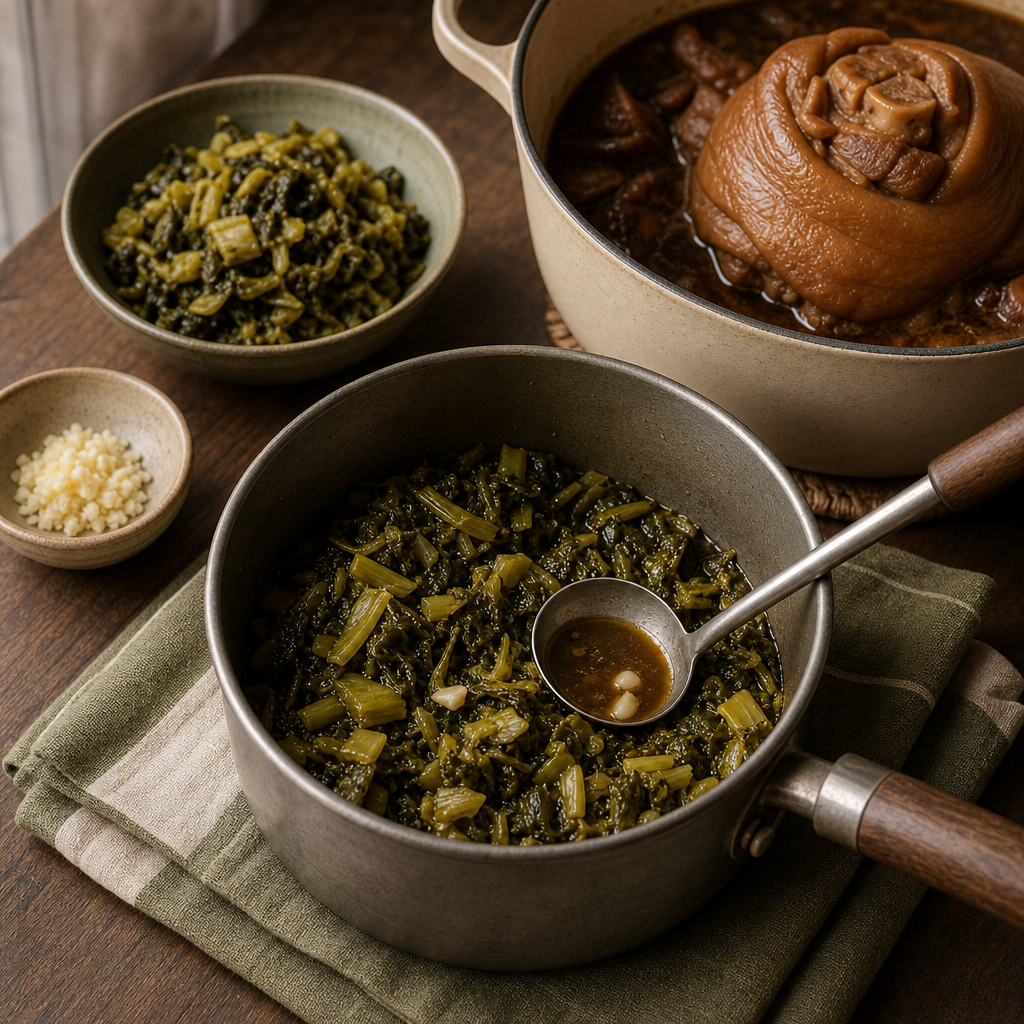
Taste the pickled mustard greens. If very salty, soak them in water for 10 minutes, then drain. Simmer them in a ladle of braising liquid plus enough water to cover for 10 minutes.
Blanch the Chinese broccoli
Blanch Chinese broccoli in salted boiling water for 45-60 seconds, then drain. The stems should stay green with a light crunch.
Rest and portion the pork
Lift the pork from the pot and rest it for 10 minutes. Slice lean sections across the grain and cut skin-fat sections into bite-size pieces; keep the pieces intact rather than shredding them.
Adjust the sauce
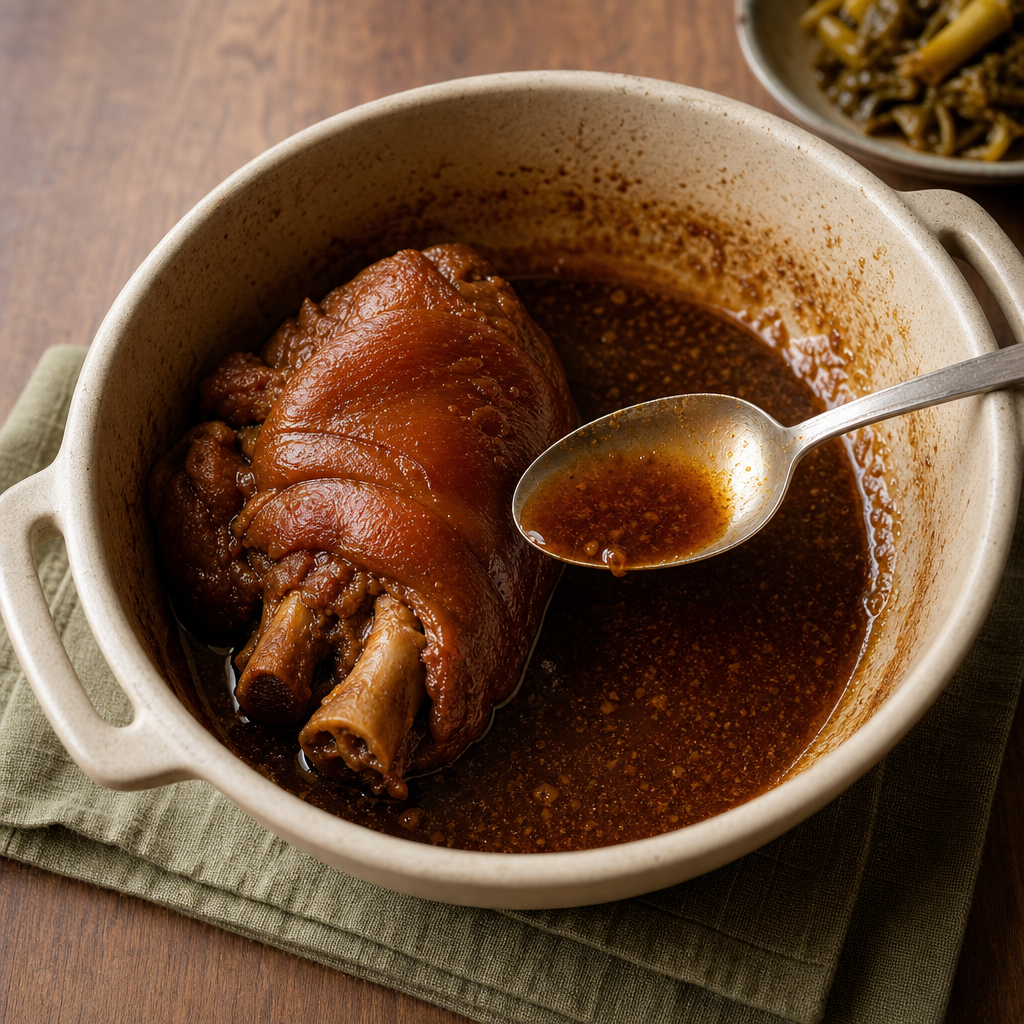
Skim excess fat if the surface is more than lightly glossy. Simmer the braising liquid uncovered until it lightly coats a spoon, then adjust with light soy for salt or palm sugar for roundness.
Plate
Spoon jasmine rice onto plates. Lay pork over the rice, add egg, pickled mustard greens, Chinese broccoli, cucumber, and cilantro, then spoon hot braising sauce over the pork and rice. Serve chili vinegar on the side.
Common mistakes
- {'mistake': 'Hard-boiling the pork for hours.', 'fix': 'Hold a bare simmer. The surface should tremble with occasional bubbles, not roll.'}
- {'mistake': 'Using skinless pork shoulder alone.', 'fix': 'Use skin-on pork leg or add hocks. The gelatinous skin is structural, not garnish.'}
- {'mistake': 'Making the sauce sugary before it is salty.', 'fix': 'Balance soy first, then sugar. Sweetness should round the braise, not make it taste like syrup.'}
- {'mistake': 'Skipping the chili vinegar.', 'fix': 'Serve a sharp green chili-garlic vinegar. Pickles alone do not provide enough acid.'}
- {'mistake': 'Reducing the braising liquid to a thick glaze.', 'fix': 'Stop when it lightly coats a spoon. Khao kha moo sauce must soak rice.'}
What does not belong
- {'item': 'Coconut milk', 'reason': 'Coconut milk does not belong in kha moo. This is a soy-spice braise, not a curry.'}
- {'item': 'Tomato ketchup', 'reason': 'Ketchup turns the sauce sweet-sour and red. The correct color comes from dark soy, caramelized sugar, and long braising.'}
- {'item': 'Western barbecue sauce', 'reason': 'Smoke, vinegar, and tomato move the dish out of Thai-Chinese braised pork territory.'}
- {'item': 'Boneless skinless pork loin', 'reason': 'Pork loin dries out before the sauce gains body. It has neither the collagen nor the skin required for the dish.'}
- {'item': 'Spinach as the main green', 'reason': 'Spinach collapses and turns wet. Use gai lan, Chinese broccoli, or omit the green.'}