Khao Moo Daeng (Thai Red BBQ Pork over Rice)
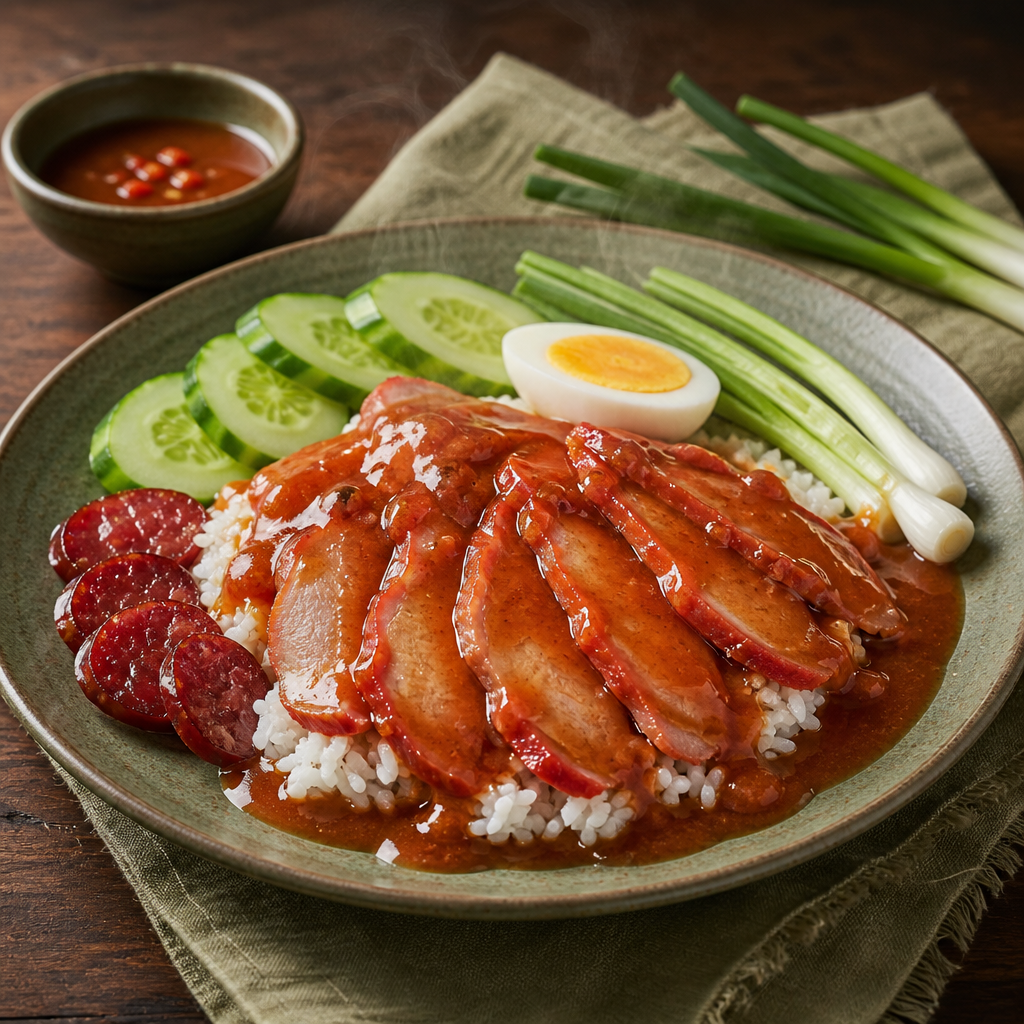
The dish in context
Khao moo daeng is a Thai-Chinese rice plate descended from Cantonese char siu rice, then rebuilt around Thai seasonings, jasmine rice, and a pourable gravy. Nakhon Pathom is the reference point most Thai sources return to; the province’s version was registered by Thailand’s Department of Cultural Promotion as intangible cultural wisdom in 2023. The city’s pork economy, Teochew-Chinese communities, and long-running shop culture shaped the dish into a central Thai standard: roast red pork, rice, Chinese sausage, egg, cucumber, scallion, and a thick red-brown sauce. Shop versions vary in whether they add crispy pork, but the red pork and sauce are not negotiable.
Method 9 steps · 270 min
Pound the aromatic paste
Pound coriander roots, garlic, and white pepper to a rough paste. Crush the red fermented tofu into the paste with its brine, then stir in thin soy sauce, oyster sauce, dark sweet soy, palm sugar, five-spice, sesame oil, and red coloring if using.
Marinate the pork
Coat the pork strips thoroughly and refrigerate for at least 3 hours, preferably overnight. Turn the strips once if marinating longer than 4 hours.
Roast with moisture below
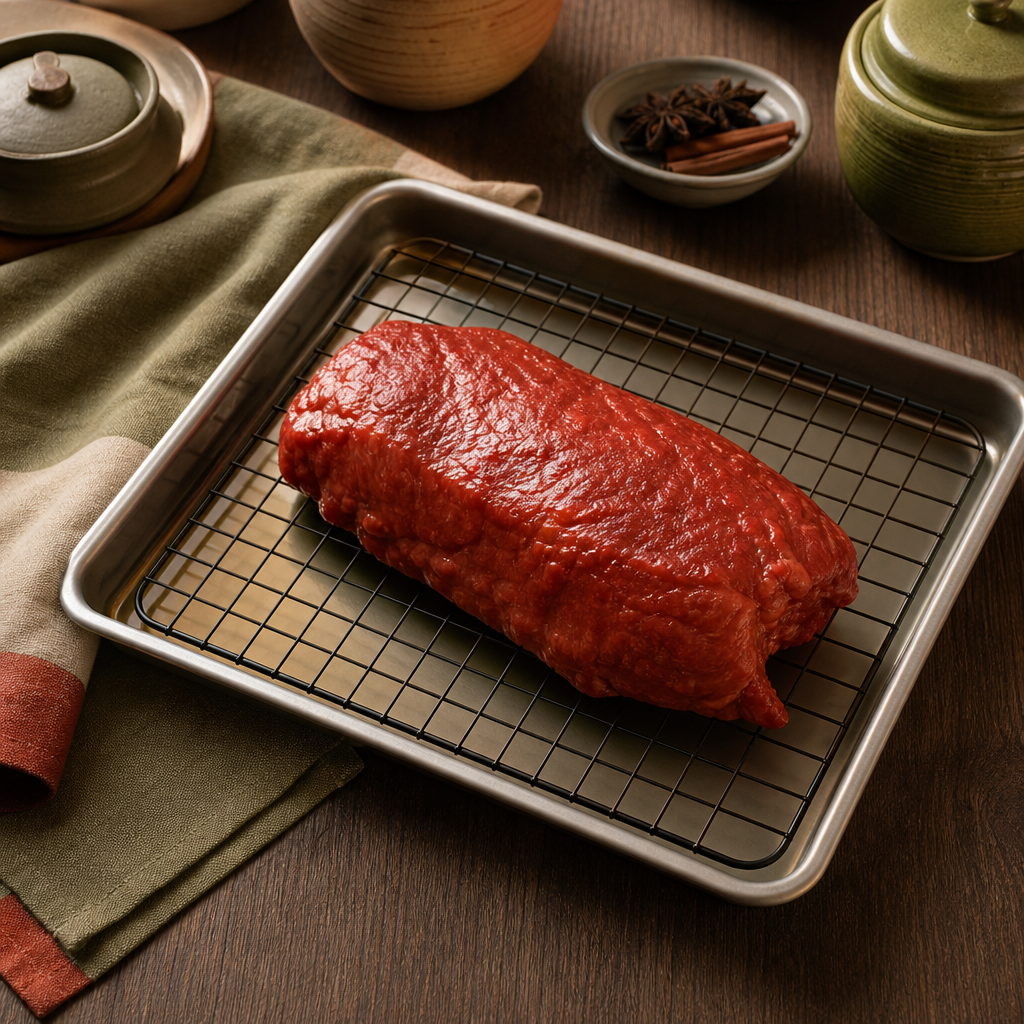
Heat the oven to 200°C. Place the pork on a rack over a rimmed tray, pour 180 ml water into the tray, and roast for 20 minutes. Reserve any leftover marinade.
Glaze and finish the pork
Brush the pork with reserved marinade, turn the strips, and roast 12-18 minutes more, until the edges darken and the center reaches 68-72°C for shoulder or collar. Rest 15 minutes before slicing thinly across the grain.
Collect the drippings
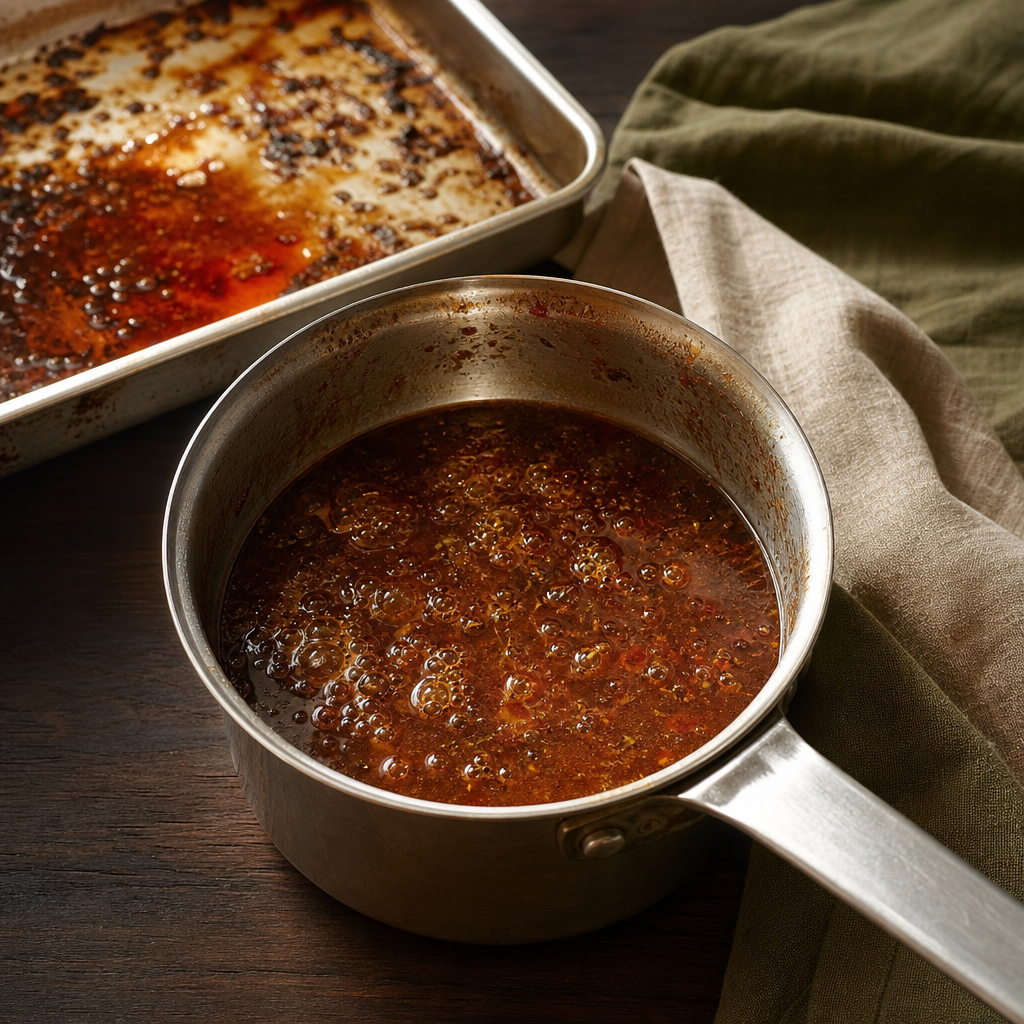
Scrape the tray liquid and browned bits into a saucepan. Add the stock and any remaining marinade, bring to a full simmer, and cook for at least 5 minutes.
Build the gravy
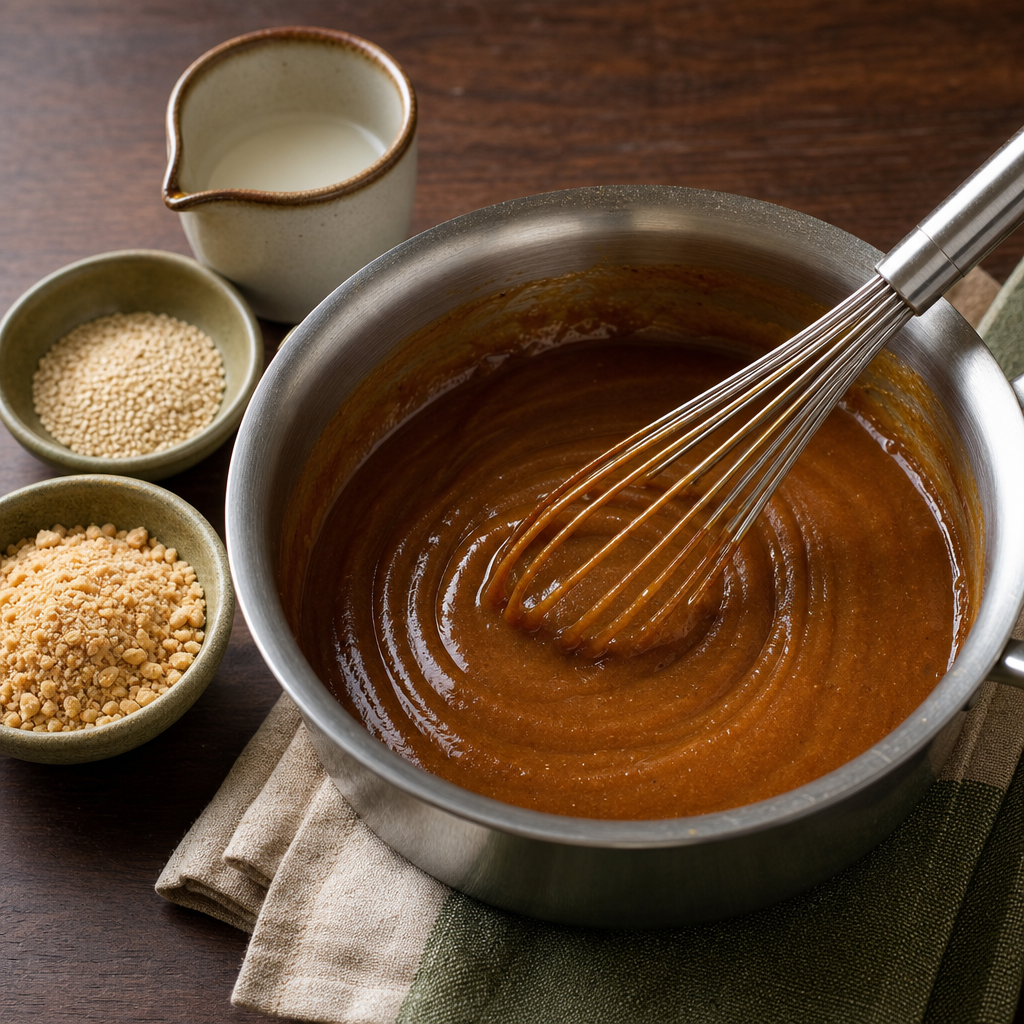
Whisk in ground sesame and ground peanuts if using. Simmer 3 minutes, then stream in the tapioca slurry while stirring until the sauce turns glossy and coats the back of a spoon.
Correct the sauce
Taste the gravy. Adjust with thin soy sauce for salt, palm sugar for roundness, or a splash of hot water if it lands too thick; it should pour in a ribbon, not fall in clumps.
Prepare the plate components
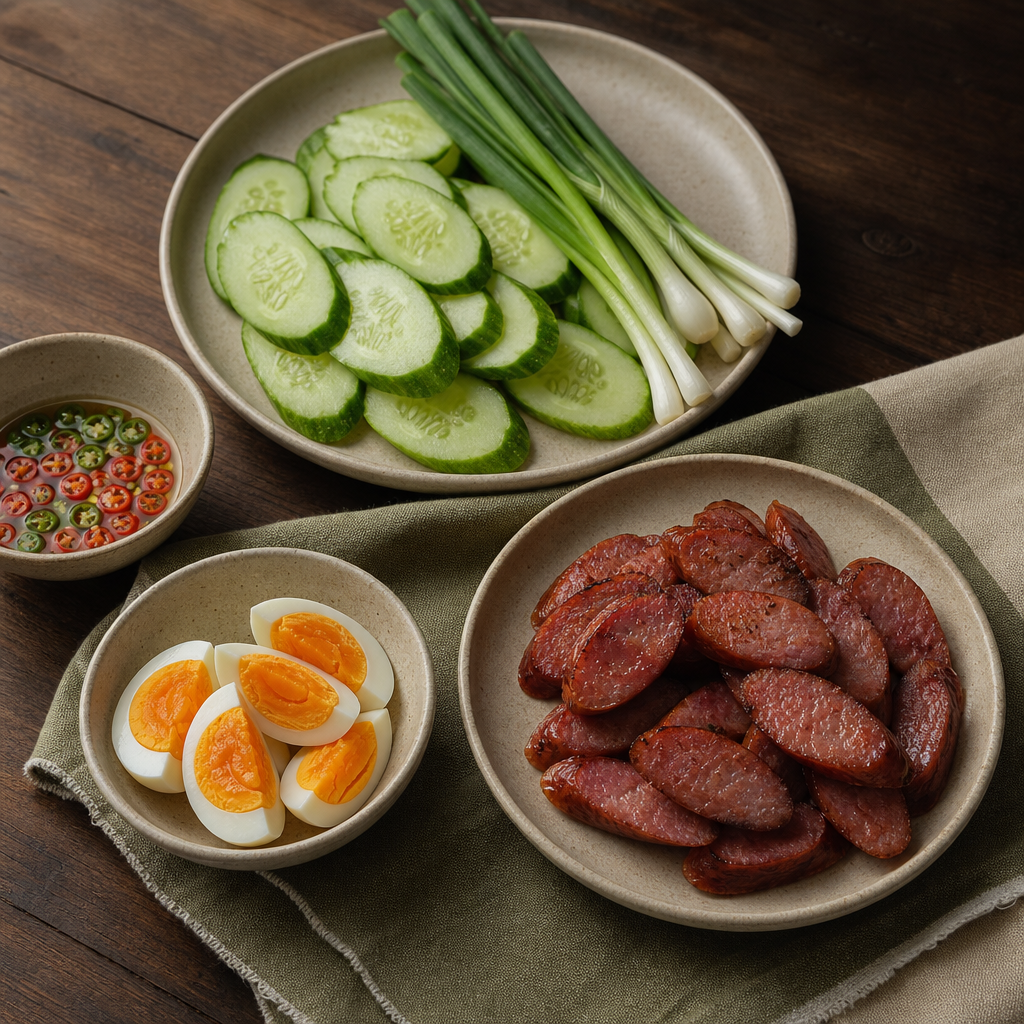
Warm the Chinese sausage and slice it on a bias. Halve or quarter the boiled eggs, slice the cucumber, and set whole scallions and chili vinegar on the side.
Assemble
Mound hot jasmine rice on each plate. Lay thin pork slices over the rice, add Chinese sausage and egg if using, spoon the hot gravy over the pork and rice, and serve with cucumber, whole scallions, and chili vinegar.
Common mistakes
- {'mistake': 'Using barbecue sauce as the glaze', 'fix': 'Barbecue sauce does not belong. Use fermented tofu, soy, palm sugar, five-spice, coriander root, garlic, and roast drippings.'}
- {'mistake': 'Making the gravy too sweet', 'fix': 'Khao moo daeng sauce is sweet-savory, not dessert-sweet. Correct with thin soy sauce and stock before adding more starch.'}
- {'mistake': 'Skipping the tray drippings', 'fix': 'The sauce loses its pork backbone without drippings. Keep water in the roasting tray so the sugars dissolve instead of burn.'}
- {'mistake': 'Slicing the pork thick', 'fix': 'Slice thinly across the grain after resting. Thick slices read as roast pork dinner, not ข้าวหมูแดง.'}
- {'mistake': 'Over-thickening with starch', 'fix': 'Add slurry gradually and stop when the sauce coats a spoon. A gluey sauce turns the rice heavy and hides the pork.'}
What does not belong
- {'item': 'coconut milk', 'reason': 'Coconut milk does not belong in khao moo daeng sauce. It dulls the soy-fermented tofu profile and turns the gravy into a different dish.'}
- {'item': 'ketchup', 'reason': 'Ketchup does not belong. The red color comes from fermented red tofu and optional food coloring, not tomato sweetness.'}
- {'item': 'Western barbecue sauce', 'reason': 'Smoke-sweet barbecue sauce flattens the Thai-Chinese seasoning and overwhelms five-spice and coriander root.'}
- {'item': 'ginger-heavy marinade', 'reason': 'Ginger is not the backbone of this dish. Coriander root, garlic, white pepper, and fermented tofu do the work.'}
- {'item': 'lettuce salad as the side', 'reason': 'Raw lettuce does not replace cucumber, whole scallion, and chili vinegar. The side should cut richness, not bulk out the plate.'}