Pumpkin Risotto
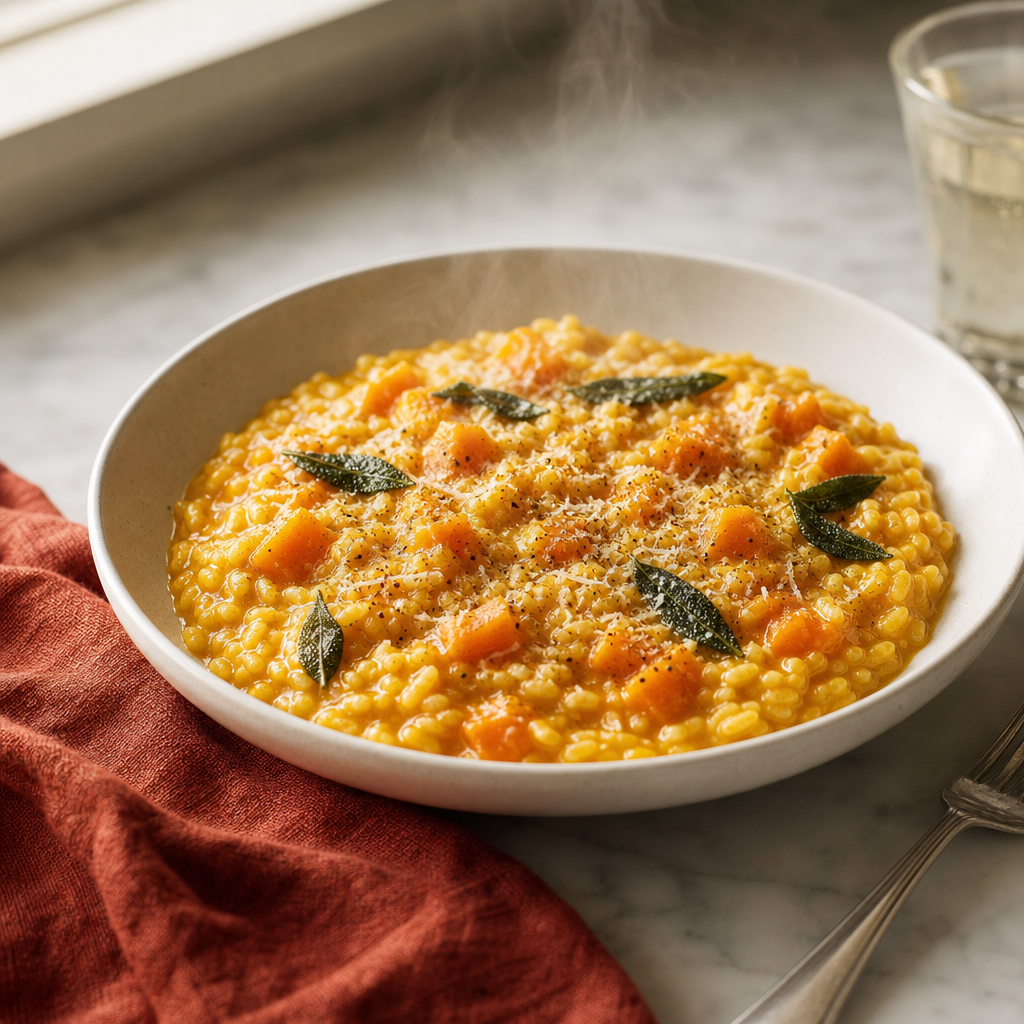
The dish in context
Risotto is a northern Italian rice technique tied to the rice-growing plains of the Po Valley, especially Lombardy, Veneto, and Piedmont. Risotto alla zucca belongs to that same cold-season grammar: short-grain rice, hot broth, winter squash or pumpkin, and a final mantecatura of butter and hard cheese. Sources vary between diced squash, squash purée, or a mix of both; the stable point is that the squash must integrate into the rice rather than sit on top as a garnish. The dish is often associated with Lombardy and the wider Po Valley, where both rice and winter squash are part of the regional pantry.
Method 8 steps · 50 min
Heat the stock
Bring the vegetable stock to a bare simmer in a small pot, then keep it hot. Do not add cold stock to risotto.
Cook the squash base
Melt 30 g butter with the olive oil in a wide pan over medium heat. Add the onion and cook until translucent, 5-7 minutes, then add the squash and a pinch of salt and cook until the edges soften and the pan smells sweet, 6-8 minutes.
Toast the rice
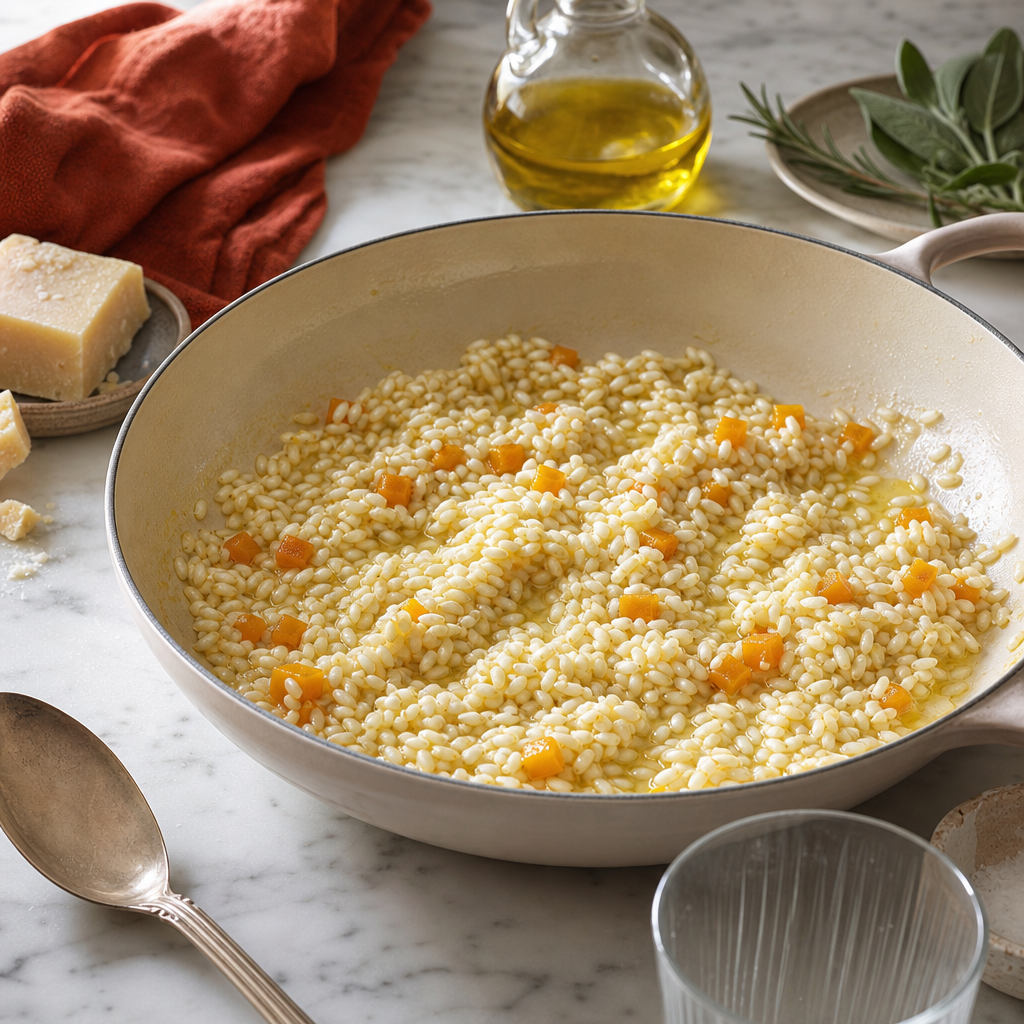
Add the rice and stir for 2 minutes, coating every grain in fat. The grains should look glossy with a small opaque white core still visible.
Deglaze with wine
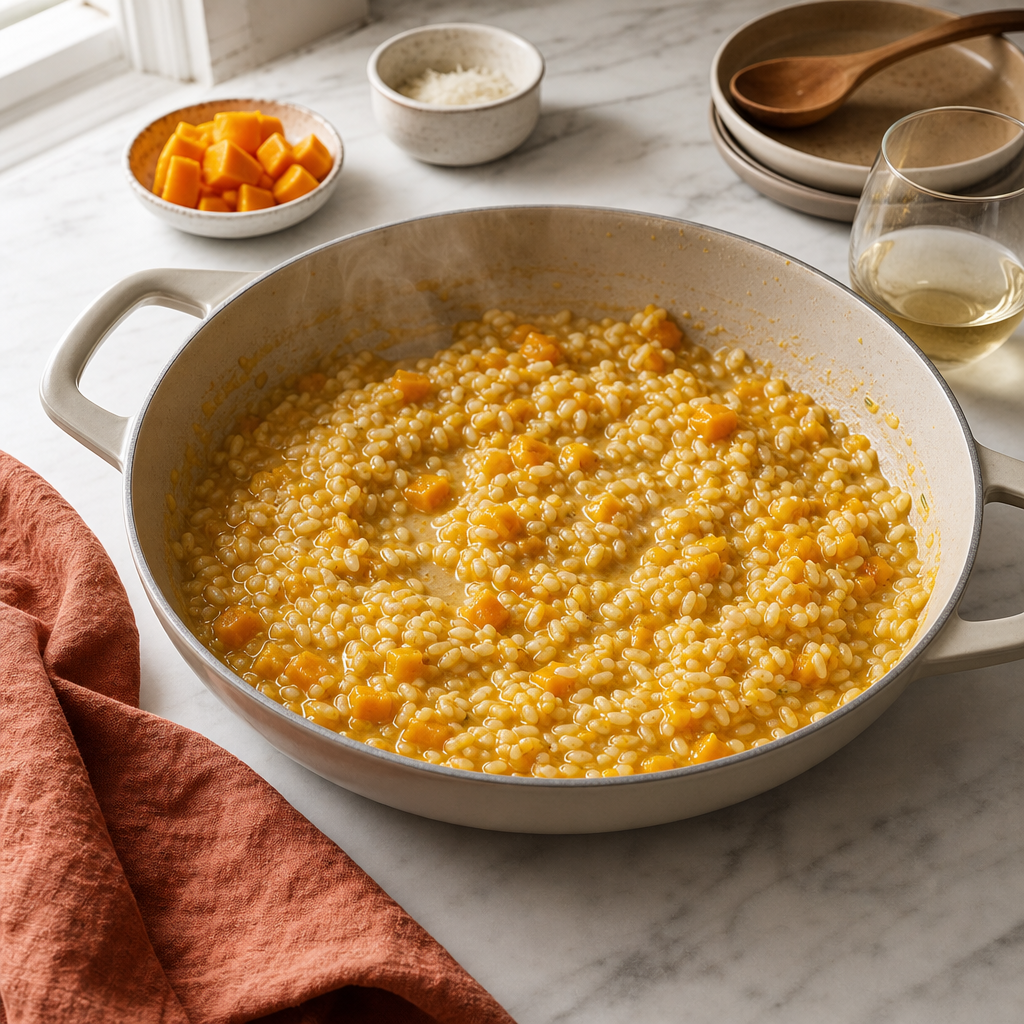
Add the white wine and stir until the pan is almost dry and the sharp alcohol smell has left, about 2 minutes.
Build the risotto
Add hot stock one ladle at a time, stirring constantly and waiting until the rice has absorbed most of each addition before adding the next. Press a few squash cubes against the side of the pan as they soften so they dissolve into the liquid. Continue until the rice is al dente and suspended in a loose, creamy sauce, 16-20 minutes.
Season the rice
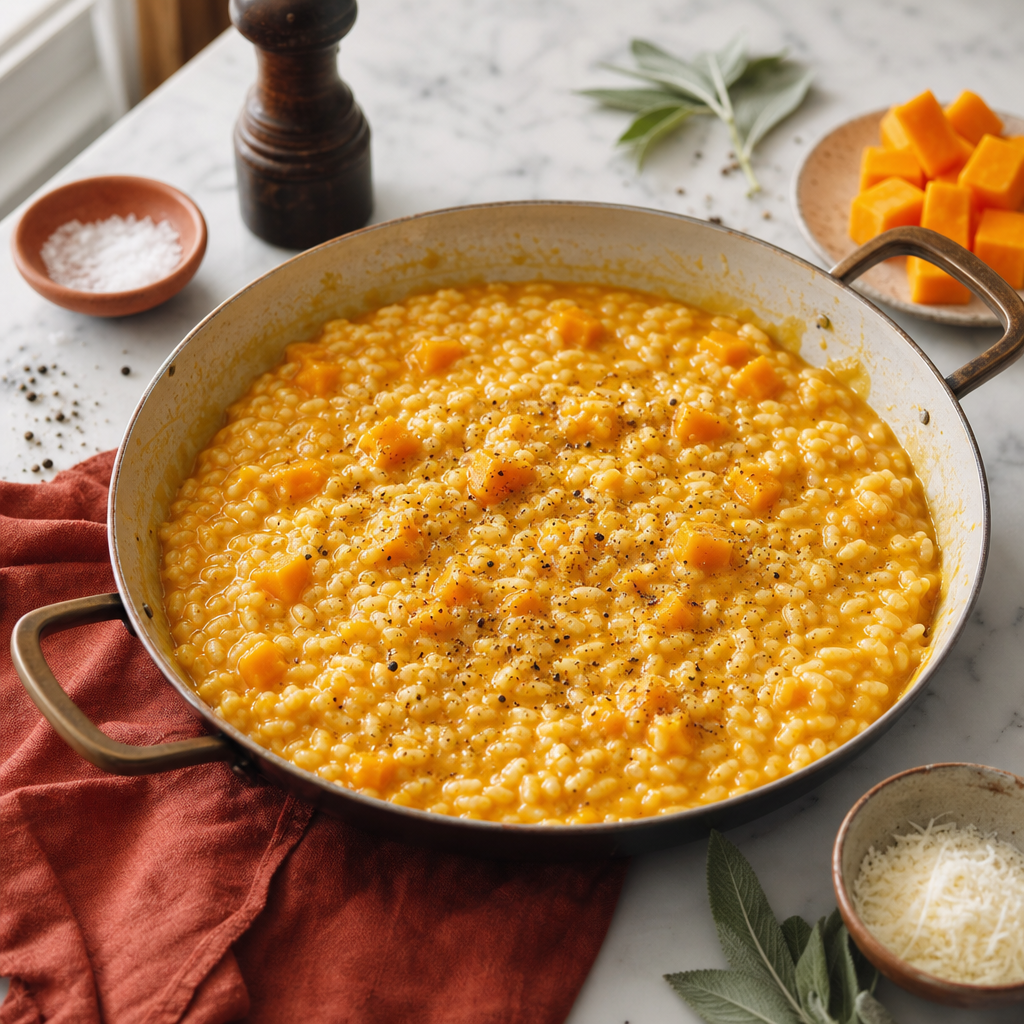
Taste the rice when it is nearly done. Add salt only after accounting for the stock and the Parmigiano-Reggiano still to come; add black pepper and nutmeg if using.
Finish off heat
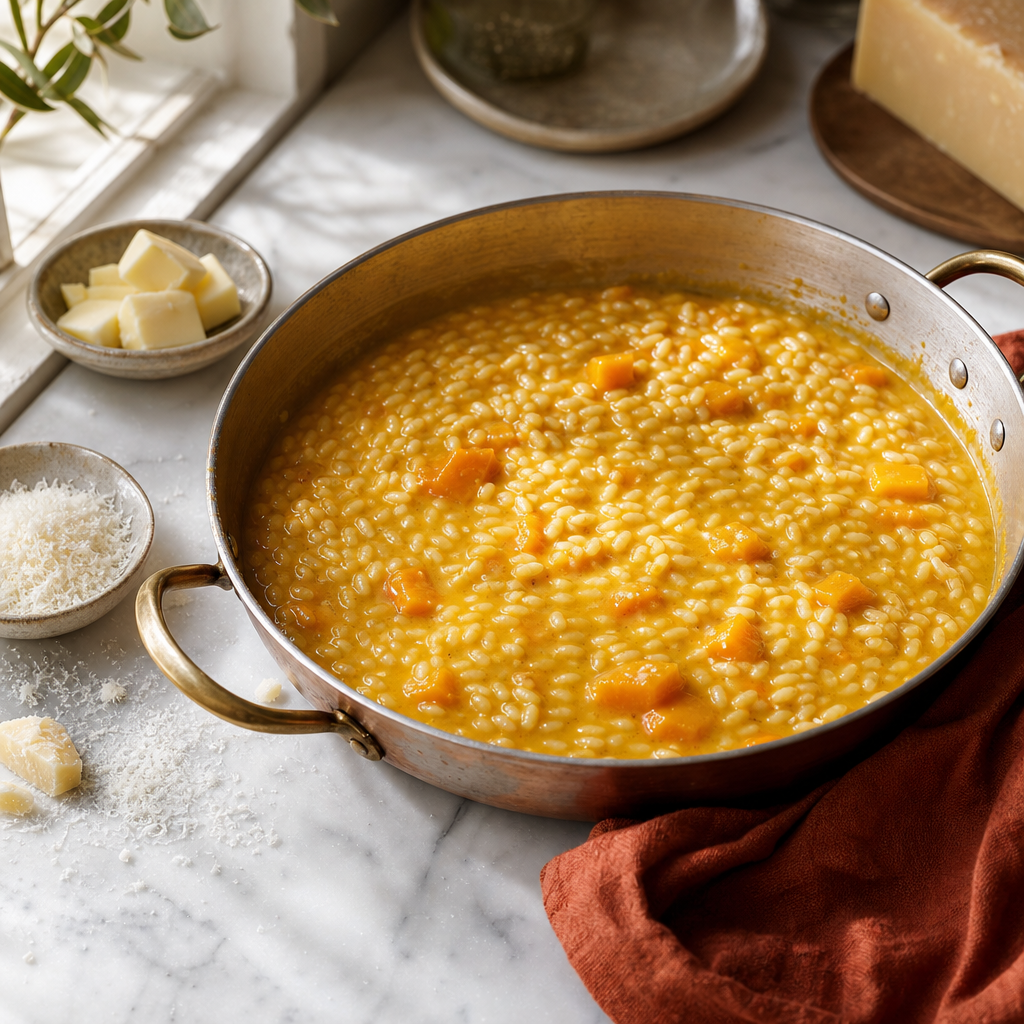
Remove the pan from the heat. Add the cold butter and Parmigiano-Reggiano, then stir and shake the pan until the risotto turns glossy and flows in a slow wave. Rest 1 minute before serving.
Serve all'onda
Spoon the risotto into shallow bowls or plates immediately. It should spread slightly when tapped from below; if it sits upright like mashed potatoes, loosen it with a splash of hot stock before plating.
Common mistakes
- {'mistake': 'Using long-grain rice', 'fix': 'Use Carnaroli, Arborio, or Vialone Nano. Long-grain rice does not release the right starch and will not produce risotto texture.'}
- {'mistake': 'Adding all the stock at once', 'fix': 'Add hot stock gradually. The rice needs repeated agitation and controlled hydration to form a creamy emulsion.'}
- {'mistake': 'Cooking the risotto until it stands in a mound', 'fix': 'Stop while it is still loose. The final texture should ripple, not hold a shape.'}
- {'mistake': 'Finishing cheese over active heat', 'fix': 'Remove the pan from the burner before adding butter and Parmigiano-Reggiano. Direct heat makes the cheese grainy and sticky.'}
- {'mistake': 'Using watery pumpkin', 'fix': 'Use dense orange-fleshed squash. Watery pumpkin dilutes the stock and leaves stringy fibers in the rice.'}
What does not belong
- {'item': 'cream', 'reason': 'Cream does not belong in risotto alla zucca. The creamy texture comes from rice starch, butter, and Parmigiano-Reggiano.'}
- {'item': 'long-grain rice, basmati, or jasmine rice', 'reason': 'These grains stay separate by design. That is the opposite of risotto.'}
- {'item': 'pre-grated shelf-stable cheese', 'reason': 'Anti-caking starches and dry cheese dust make the mantecatura dull and pasty.'}
- {'item': 'heavy garlic', 'reason': 'Garlic does not define this dish and can flatten the sweet squash base. Onion is enough.'}
- {'item': 'large amounts of herbs', 'reason': 'Sage or rosemary can be used with restraint. A handful of herbs turns the risotto resinous and obscures the squash.'}