Zabaglione
The dish in context
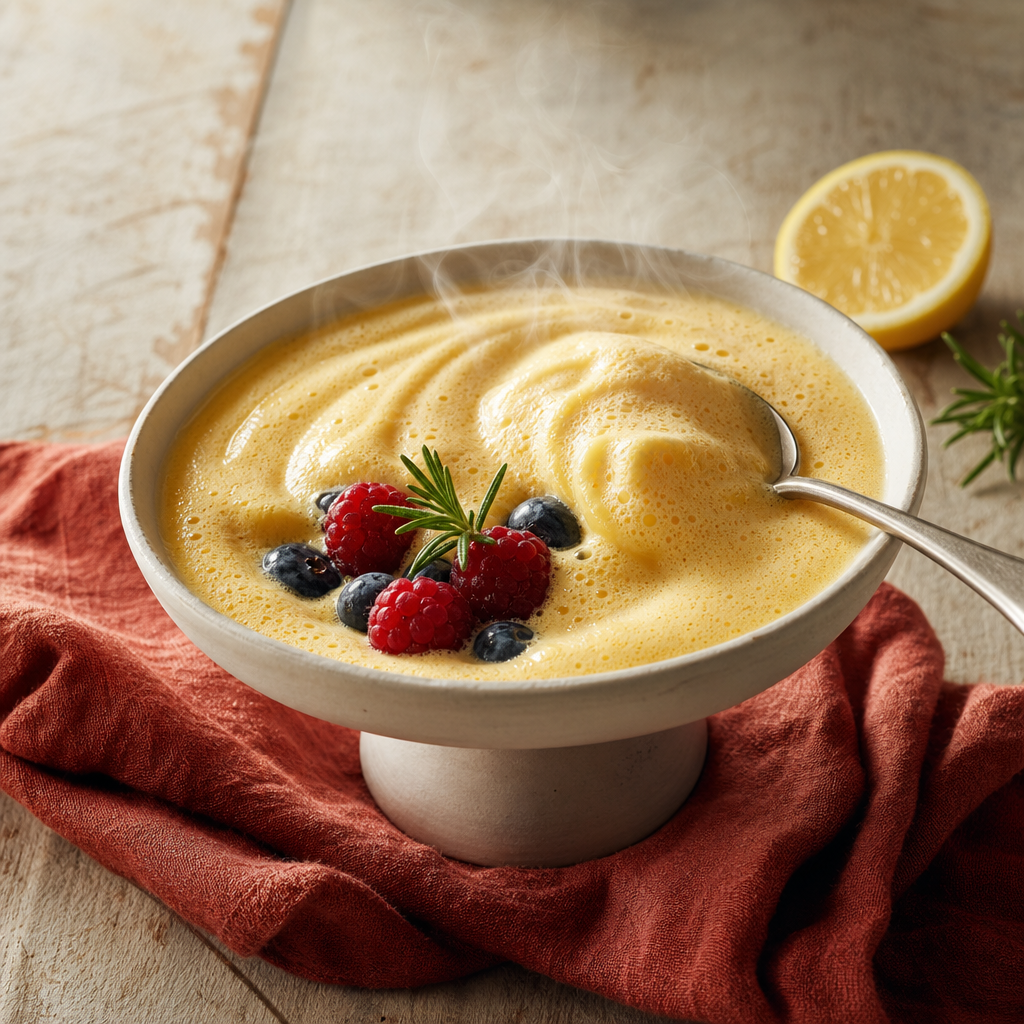
Zabaione is strongly associated with Piedmont, though the dessert spread across Italy under the names zabaione, zabaglione, and, in French kitchens, sabayon. The classic structure is narrow: egg yolks, sugar, and wine cooked over gentle heat while whisking. Marsala became the familiar restaurant version abroad, but Piedmontese versions often use local sweet or sparkling wines such as Moscato d'Asti or Brachetto d'Acqui. The dish sits between sauce and dessert: served warm on its own, spooned over fruit, or paired with dry biscuits such as savoiardi or amaretti.
Method 5 steps · 15 min
Set the water bath
Bring 3-4 cm water to a bare simmer in a saucepan. Set a heatproof bowl over the pan and check that the bottom of the bowl does not touch the water, then remove the bowl while preparing the yolks.
Whisk yolks and sugar
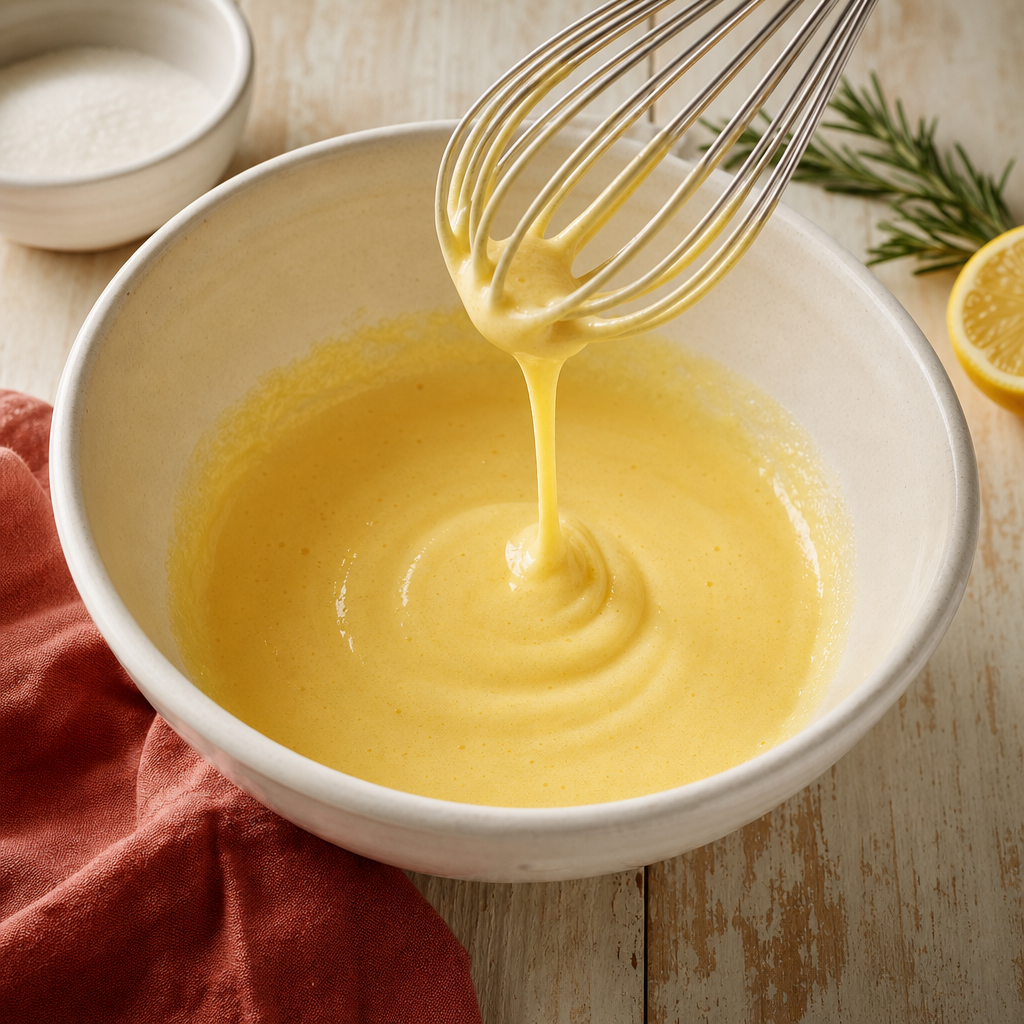
Add the egg yolks, sugar, and salt to the bowl. Whisk until the mixture is thicker, paler, and falls from the whisk in a slow stream, about 60-90 seconds.
Add the wine
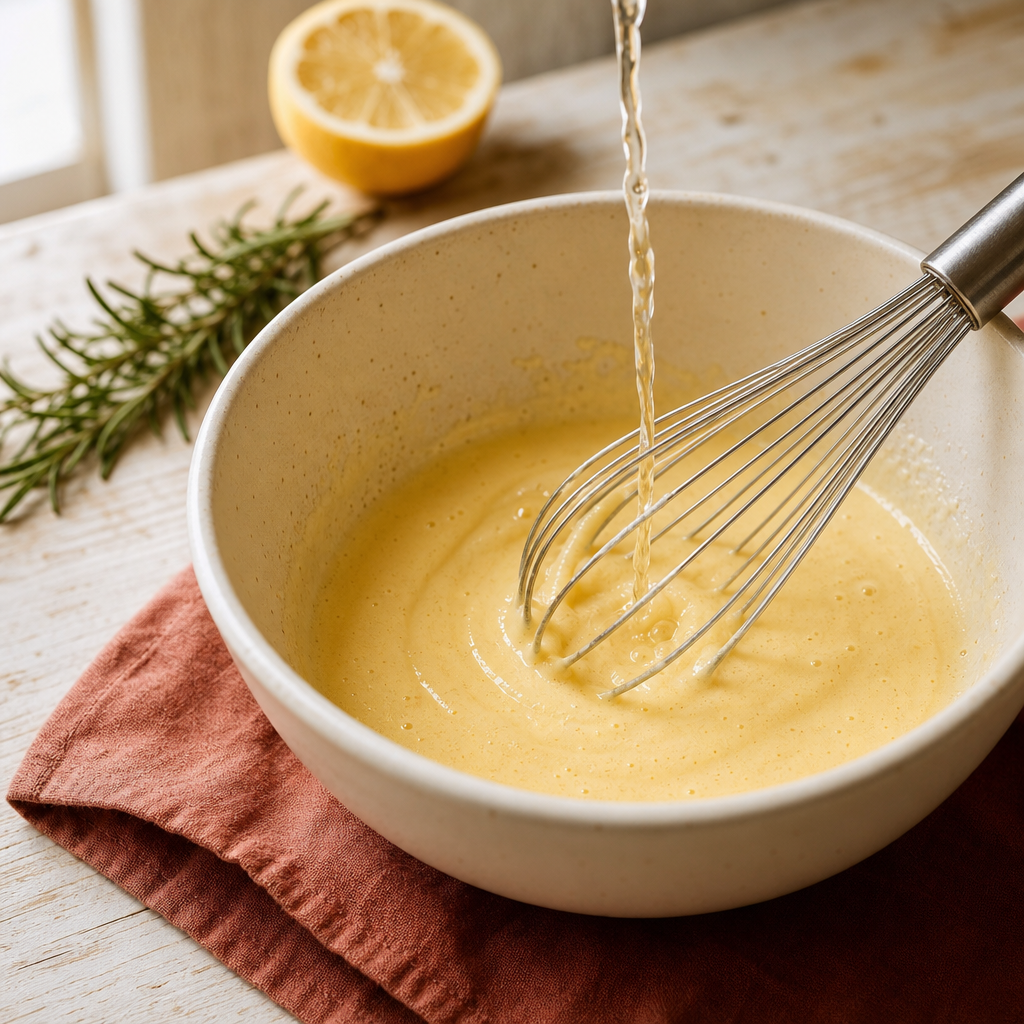
Whisk in the Moscato d'Asti in a thin stream. Keep the mixture moving until no loose liquid sits around the edge of the bowl.
Cook over steam
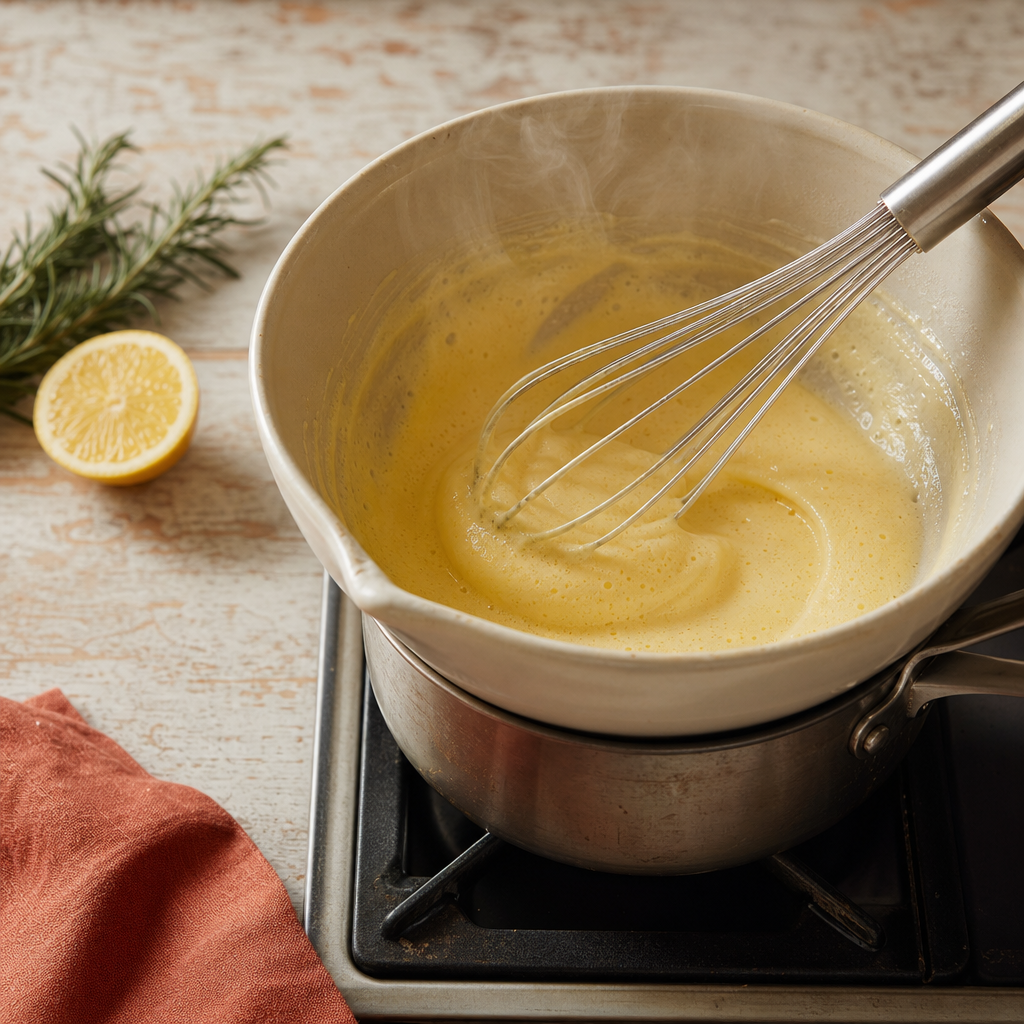
Set the bowl over the simmering water and whisk constantly, scraping the sides and base of the bowl. Cook until the zabaglione is pale yellow, warm, doubled in volume, and thick enough that a ribbon from the whisk sits on the surface for 2-3 seconds, about 6-8 minutes.
Correct and serve
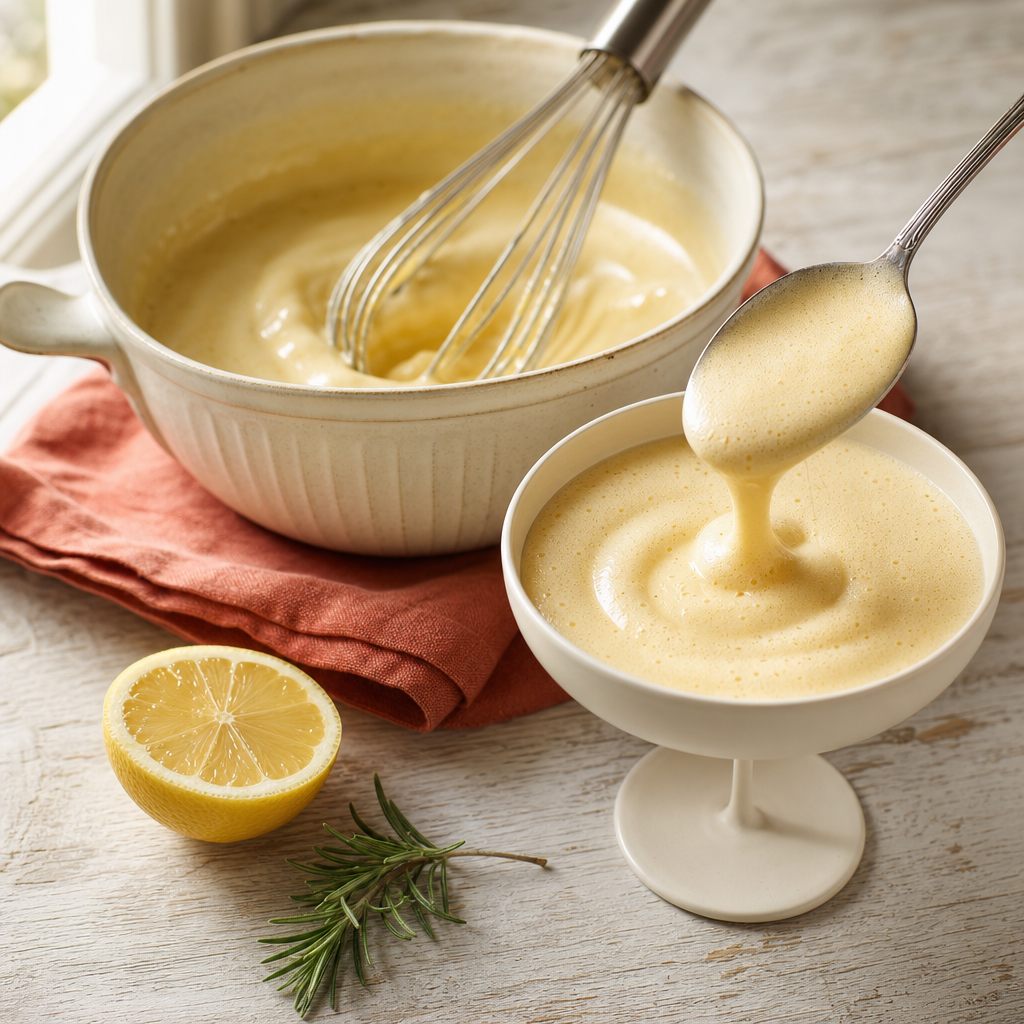
Remove the bowl from the heat. Whisk for 20-30 seconds to cool the base slightly, then add lemon juice only if the wine tastes heavy or syrupy. Spoon immediately into warm glasses or over fruit.
Common mistakes
- {'mistake': 'Letting the bowl touch the water', 'fix': 'Keep the bowl above the simmering water, not in it. The heat source should be steam.'}
- {'mistake': 'Stopping the whisk', 'fix': 'Whisk without pauses once the bowl is over heat. Still spots at the edge become cooked egg flecks.'}
- {'mistake': 'Using a narrow bowl', 'fix': 'Use a wide bowl with enough room for the whisk to sweep the base. A narrow bowl traps dense yolk in the corners.'}
- {'mistake': 'Cooking until stiff', 'fix': 'Stop at a soft ribbon. Zabaglione should be spoonable and foamy, not thick like pastry cream.'}
- {'mistake': 'Using harsh cooking wine', 'fix': 'Use wine that tastes balanced in the glass. There are only three main ingredients; bad wine has nowhere to hide.'}
What does not belong
- {'item': 'cream', 'reason': 'Cream does not belong in classic zabaglione. The body comes from yolk foam, not dairy fat.'}
- {'item': 'cornstarch or flour', 'reason': 'Starch turns the dessert into a thickened custard. Zabaglione should be airy and warm, not set.'}
- {'item': 'whole eggs as the default', 'reason': 'Whole eggs make a lighter but less rich foam and are not the classic base. Use yolks for the standard structure.'}
- {'item': 'high direct heat', 'reason': 'Direct heat is for cooks with a copper pan and practiced timing. For a home kitchen, it is the fastest route to scrambled eggs.'}
- {'item': 'vanilla as the main flavor', 'reason': 'Vanilla flattens the wine character. If the wine needs covering, the wine is wrong.'}