Thong Yip (Golden Egg-Yolk Sweets)
The dish in context
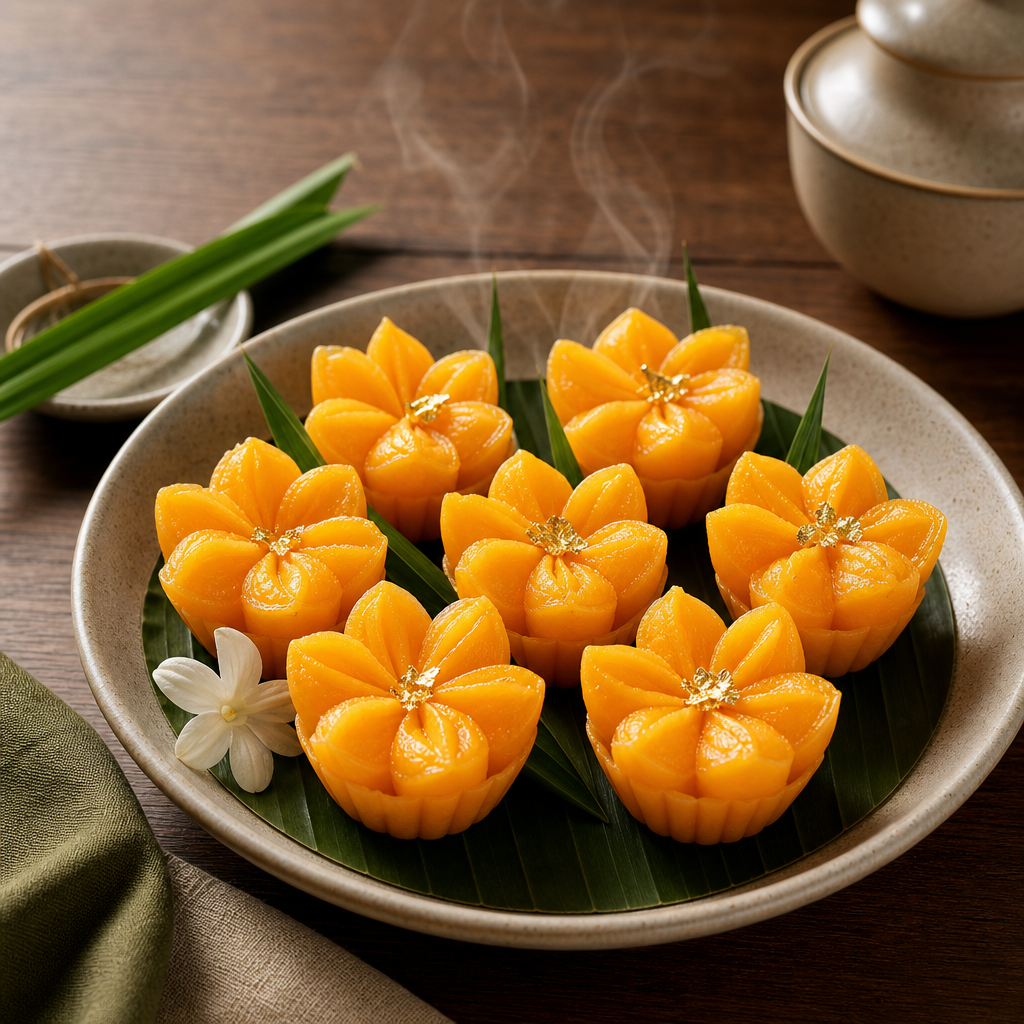
Thong Yip (ทองหยิบ) belongs to the Thai khanom wan group often called the golden desserts, served at weddings, ordinations, house blessings, and other auspicious events. Its name combines thong, gold, with yip, to pick up or take, so the dessert carries the idea of grasping wealth and prosperity. Culinary-school and academic Thai sources describe the correct form as a golden flower made from egg yolk cooked in syrup, then pinched while warm. Central Thai production traditions emphasize duck yolk, controlled syrup density, and hand shaping; the dish is technique more than ingredient list.
Method 10 steps · 105 min
Make the light soaking syrup
Combine 300 g sugar and 600 ml water in a small saucepan. Bring to a brief simmer, stir until clear, then remove from heat and add jasmine water if using. Cool to room temperature.
Prepare the yolks
Separate the duck and chicken yolks without breaking them into the whites. Pinch and discard the outer yolk membranes, then pass the yolks through fine muslin or a very fine sieve into a clean bowl.
Beat to a thick ribbon
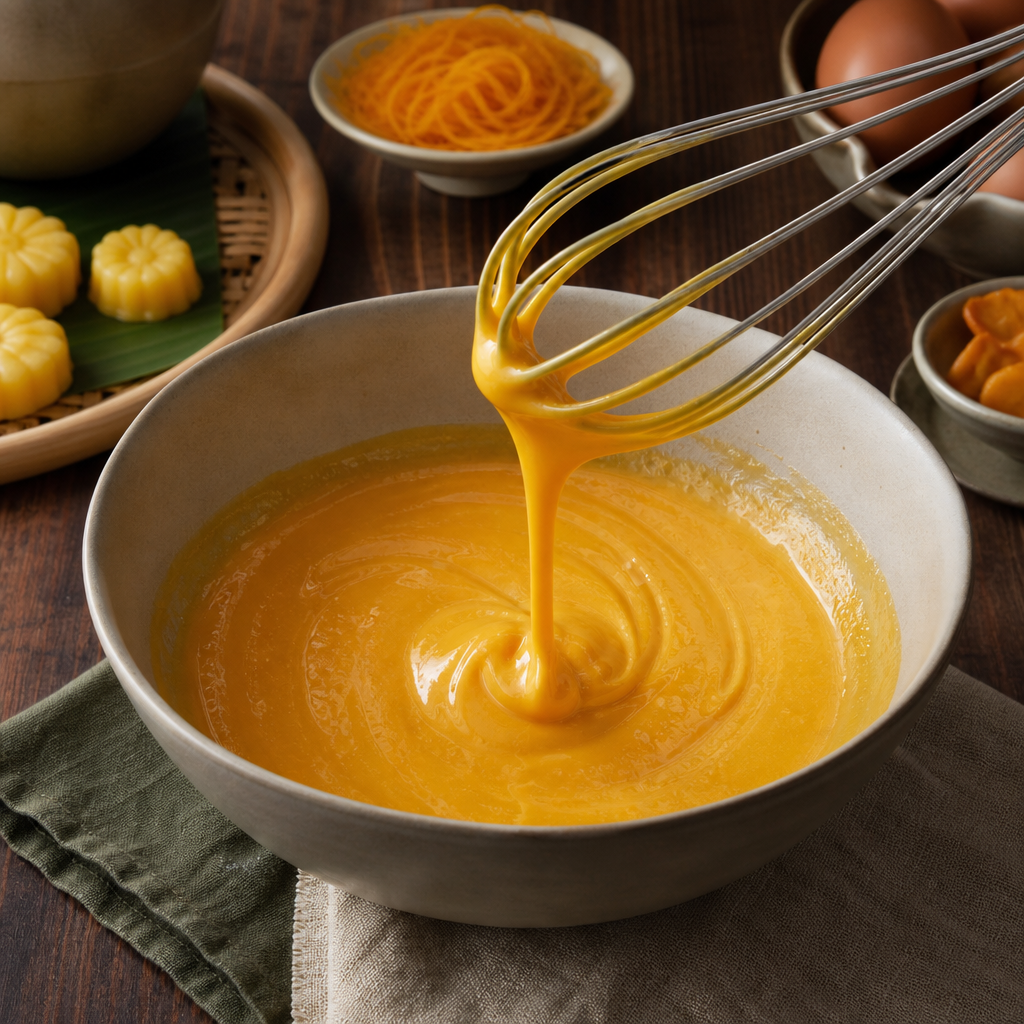
Beat the strained yolks until slightly lighter, thicker, and able to fall from the whisk in a slow ribbon. Do not beat to a dry foam.
Cook the main syrup
Combine 900 g sugar and 600 ml water in a brass wok or wide shallow pan. Heat gently until dissolved, then boil without stirring until the syrup reaches 106-108°C, or until a drop between fingers feels heavy and sticky once cooled. Skim foam from the surface.
Condition the syrup
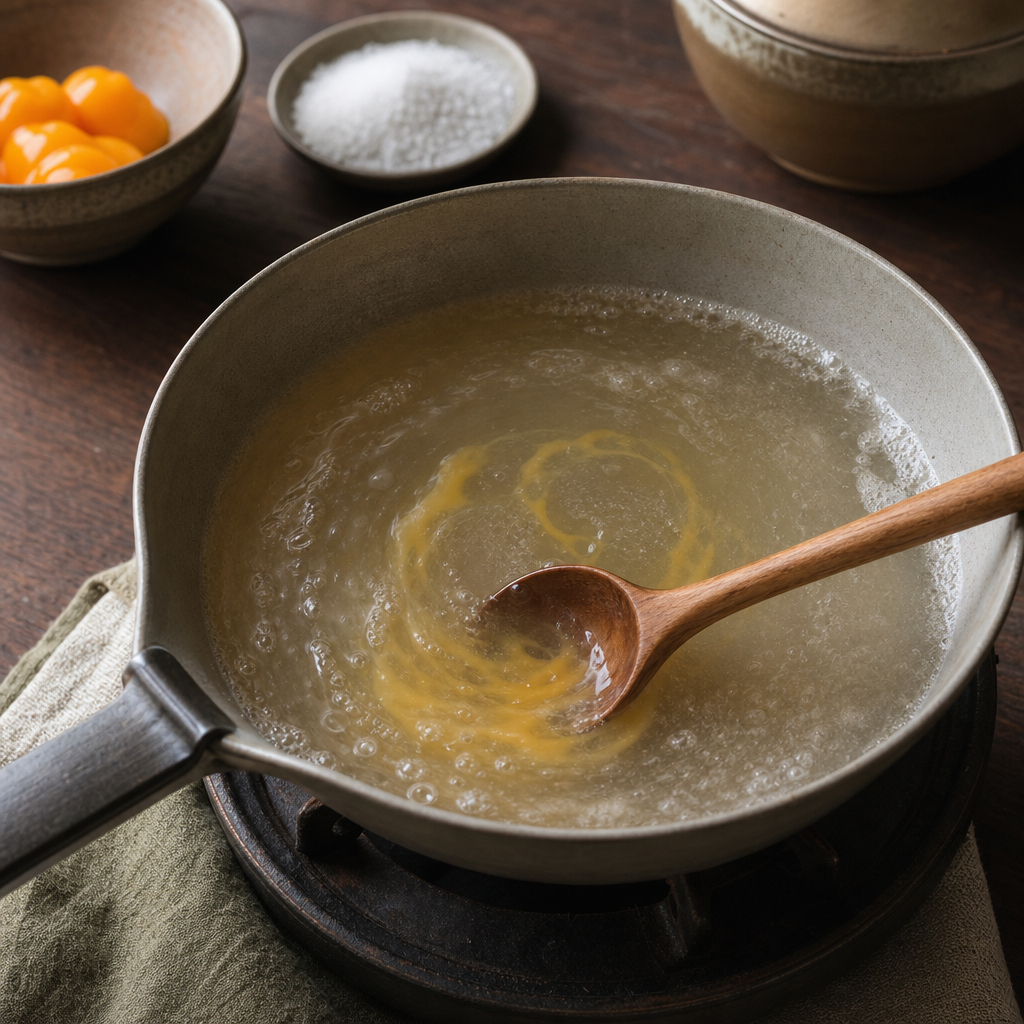
Lower the heat until the syrup barely trembles, not a rolling boil. Stir in 30 ml of beaten yolk-water mixture if using, then skim again after the syrup clouds slightly.
Poach the yolk discs
Drop 1 tablespoon beaten yolk from just above the syrup surface; it should spread into a round disc about 7-8 cm wide. Cook until the edge sets and the center turns opaque, about 35-45 seconds, then flip once and cook 15-20 seconds more. Work with 3-4 discs at a time.
Transfer while warm
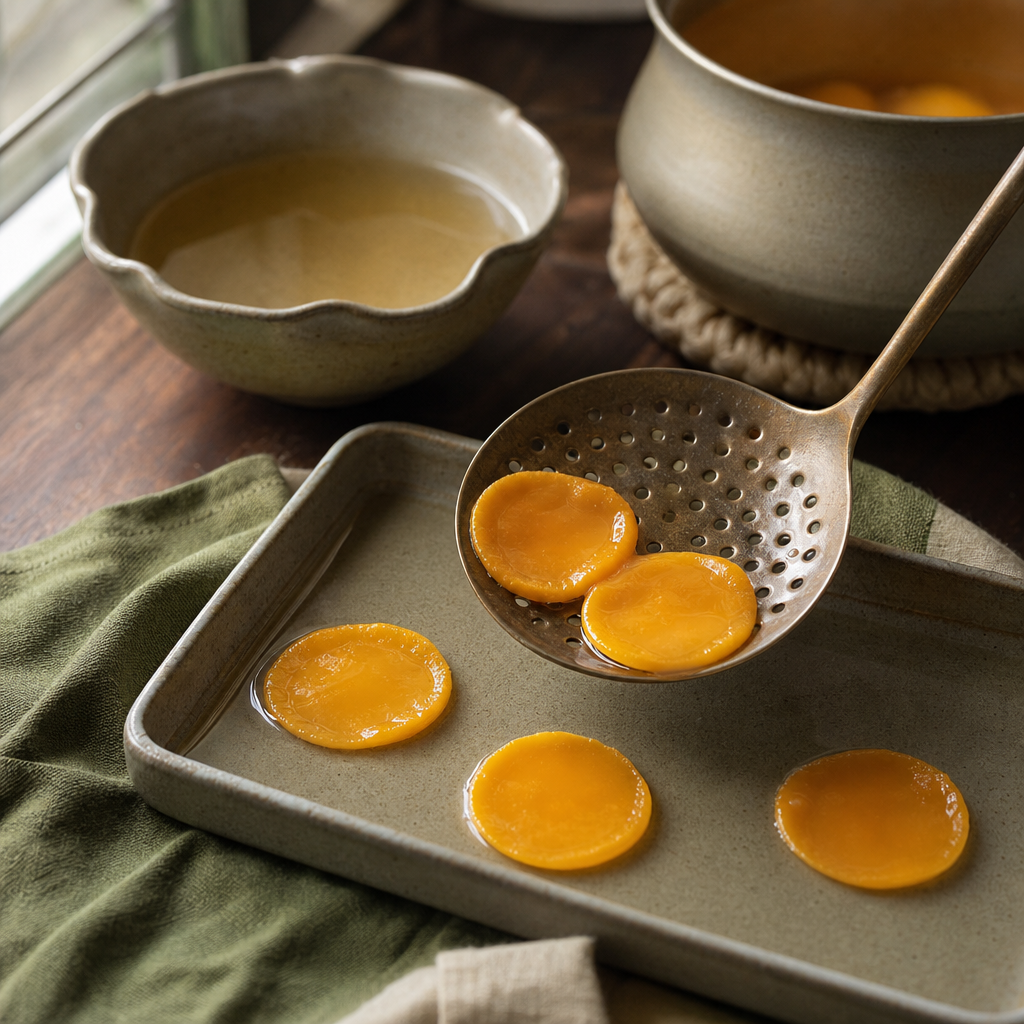
Lift each disc with a thin slotted spoon and lay it briefly on a syrup-wet tray or spoon. Do not stack the discs.
Pinch into five petals
While the disc is still warm, gather the edge into five evenly spaced pleats with thumb and forefinger. Pinch the base firmly and place it into a small cup or mold so the pleats stand upright like a flower.
Set in light syrup
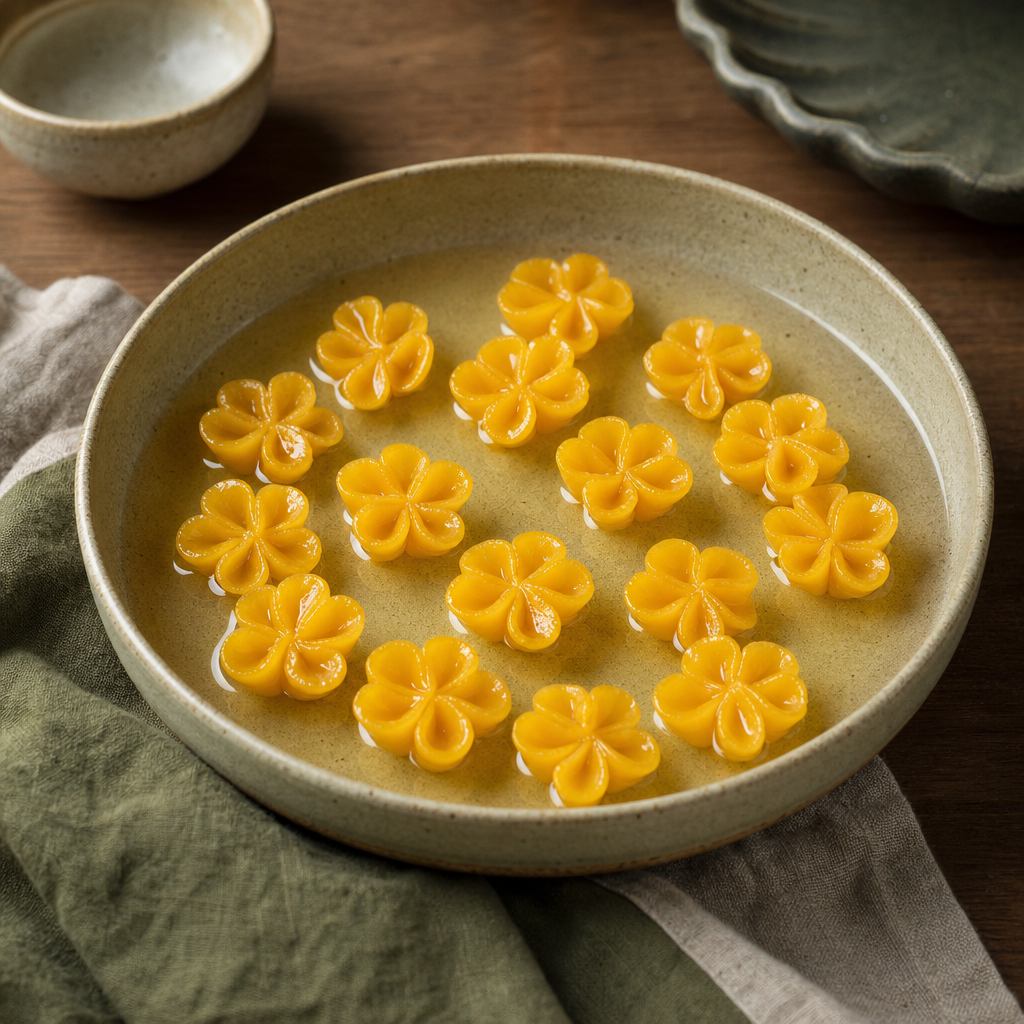
After 5-10 minutes in the mold, transfer the shaped flowers to the cooled light syrup. Rest at least 20 minutes before serving so the folds relax and the surface turns glossy.
Serve upright
Lift each Thong Yip from the syrup and let excess syrup drip back into the bowl. Serve upright in small cups or on a shallow plate with the pleated side visible.
Common mistakes
- {'mistake': 'Using whole eggs.', 'fix': 'Use yolks only. Whites make the discs tough, pale, and foamy.'}
- {'mistake': 'Leaving yolk membranes in the mixture.', 'fix': 'Remove membranes and strain the yolks through muslin. Streaks in the batter become rubbery streaks in the finished sweet.'}
- {'mistake': 'Boiling the syrup hard while poaching.', 'fix': 'Hold the syrup at a bare tremble. Rolling bubbles shred the discs and make lacy edges instead of clean rounds.'}
- {'mistake': 'Shaping after the discs cool.', 'fix': 'Pinch each disc while warm. Once the sugar sets, the edge cracks rather than pleats.'}
- {'mistake': 'Making the syrup thin.', 'fix': 'Cook the main syrup to 106-108°C or a heavy sticky thread. Thin syrup gives flat, fragile discs that absorb water and tear.'}
- {'mistake': 'Overbeating the yolks into foam.', 'fix': 'Stop at a thick ribbon. Foam creates bubbles, holes, and uneven thickness.'}
What does not belong
- {'item': 'coconut milk', 'reason': 'Coconut milk does not belong in Thong Yip. This is an egg-yolk and sugar-syrup sweet, not a coconut custard.'}
- {'item': 'flour or starch', 'reason': 'Flour turns the texture cakey and opaque. The structure should come from yolk proteins setting in syrup.'}
- {'item': 'baking powder', 'reason': 'Leavening does not belong. Expansion would distort the thin disc and blur the pleats.'}
- {'item': 'food coloring as the main color', 'reason': 'The gold color should come from yolks, especially duck yolks. Dye can correct a pale batch, but it cannot replace yolk richness.'}
- {'item': 'butter or oil in the syrup', 'reason': 'Fat on the syrup surface interferes with even poaching and leaves greasy patches on the flowers.'}