Takoyaki
The dish in context
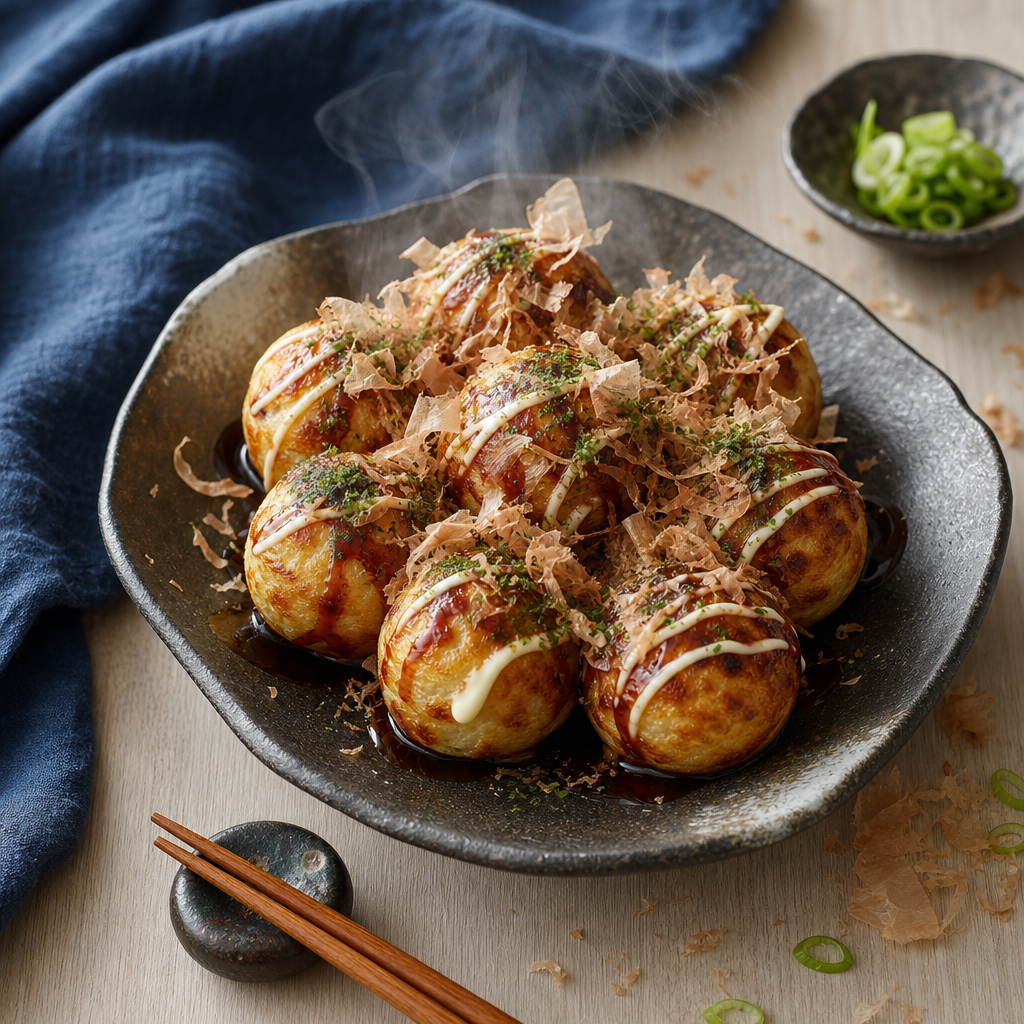
Takoyaki is Osaka's defining konamono (粉もの), the flour-based griddle food culture that also includes okonomiyaki. Government and Osaka reference sources trace it through choboyaki and radio-yaki, earlier griddled snacks made in small molds with ingredients such as konnyaku, scallion, and tenkasu. The accepted origin point for modern takoyaki is 1930s Osaka, when octopus replaced earlier fillings and the round form became the standard. Early takoyaki was often seasoned in the batter and eaten without the heavy sauce finish; the postwar style with thick sauce, aonori, katsuobushi, and mayonnaise became the national street-food image.
Method 7 steps · 45 min
Make a thin batter
Whisk the eggs, cold dashi, shoyu, and salt in a large bowl. Add the flour and whisk only until no dry pockets remain; small lumps are acceptable. Rest the batter 15 minutes, then stir from the bottom before cooking.
Prepare the fillings
Cut the boiled octopus into roughly 1.5 cm pieces, one piece per takoyaki. Set the tenkasu, beni shoga, and scallions within reach of the pan.
Heat and oil the takoyaki pan
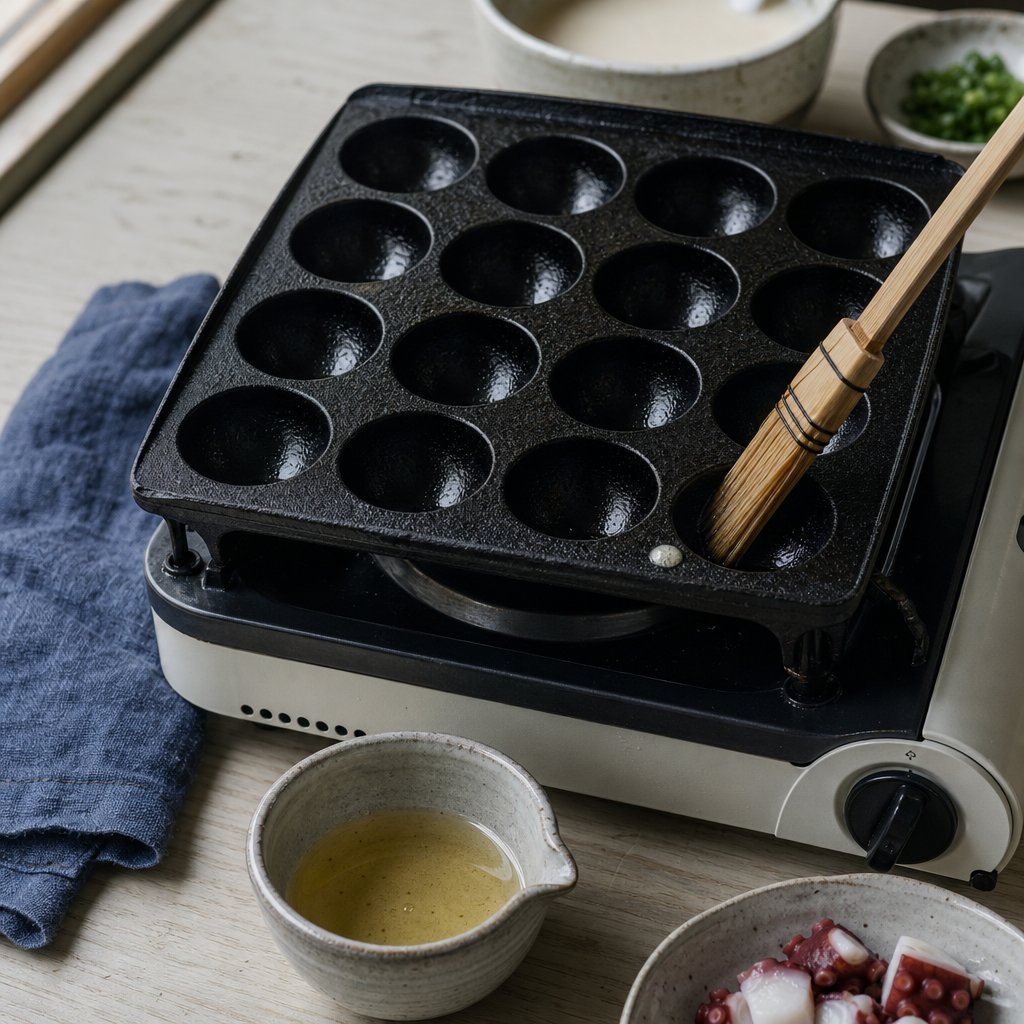
Heat the takoyaki pan to about 220°C, or medium-high on a stovetop pan, until a drop of batter sizzles immediately. Brush oil into every well and across the raised surface between wells; the pan should look glossy, not dry.
Fill the wells past the rim
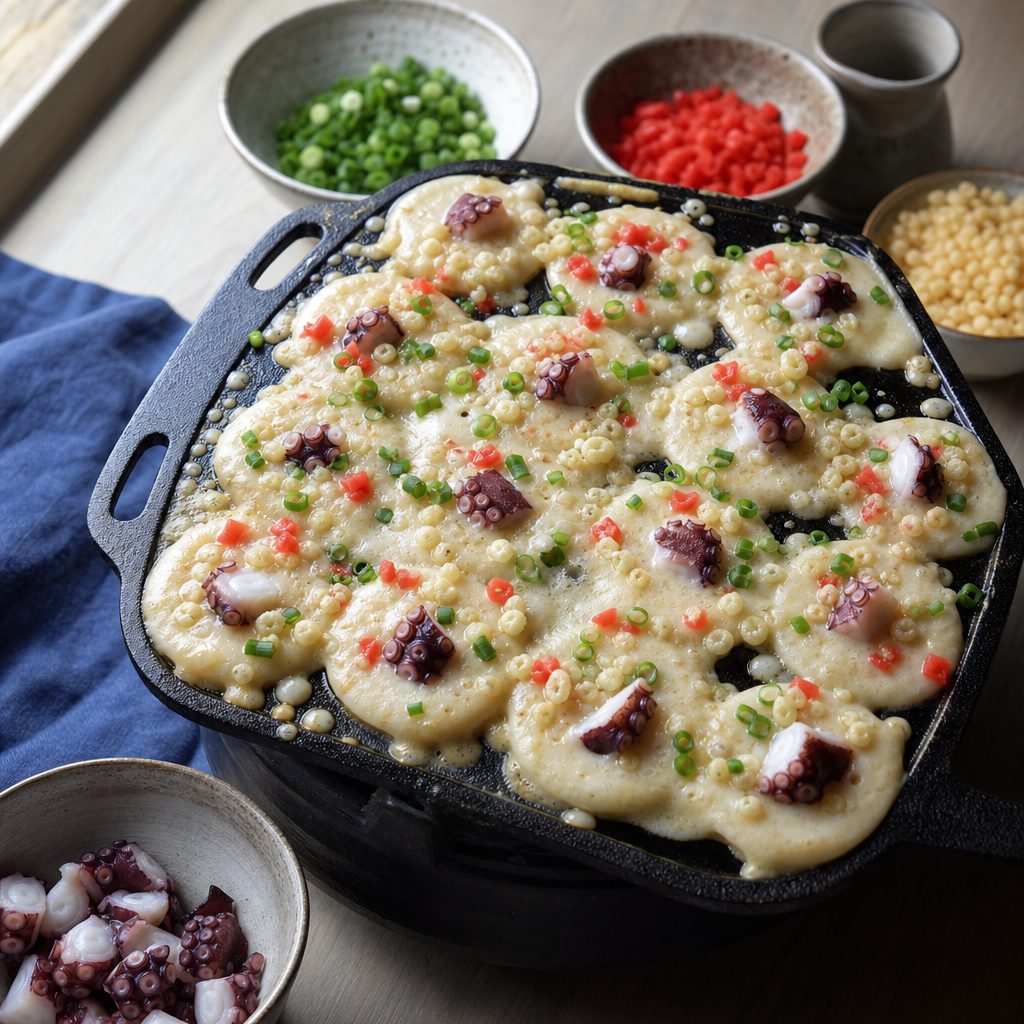
Pour batter into the wells until they overflow slightly across the top plate. Add one octopus piece to each well, then scatter tenkasu, beni shoga, and scallions over the whole surface.
Turn in stages
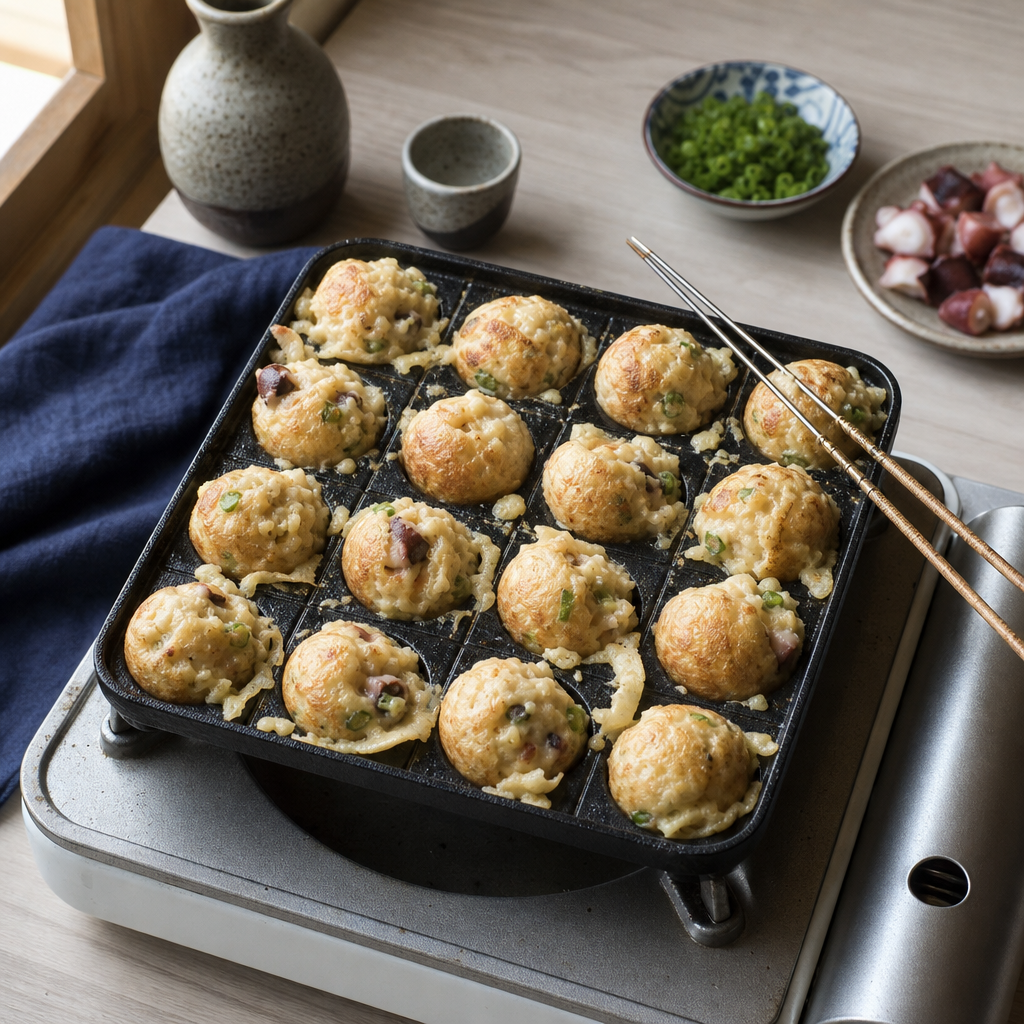
When the edges look set and the surface around each well has changed from wet shine to matte, cut the grid lines with skewers. Turn each piece about 90 degrees, tuck loose batter into the well, then wait 30-45 seconds and turn again until round.
Brown the outside
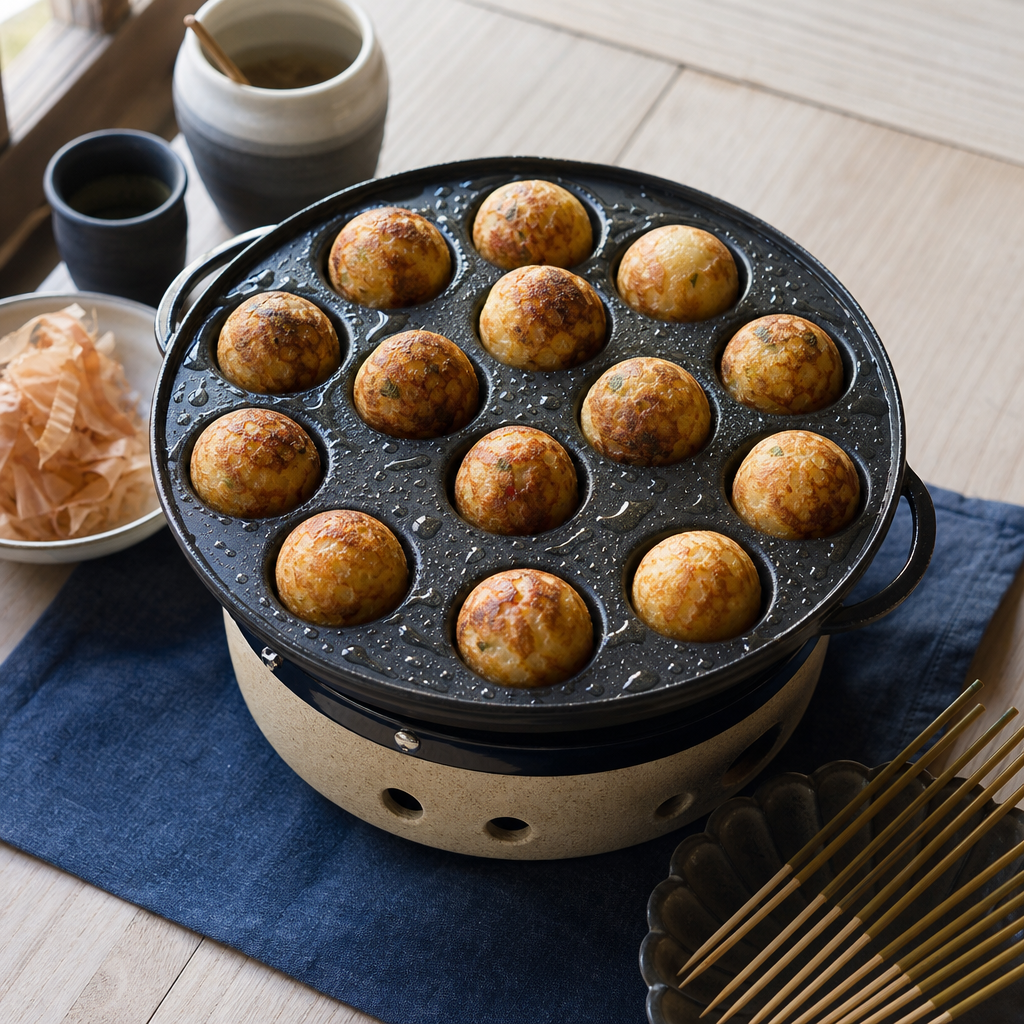
Keep rotating the balls with skewers until they move freely and show browned patches all around, 4-6 minutes after the first turn. Add a few drops of oil around the edges if the pan looks dry.
Sauce and finish
Transfer the takoyaki to a plate or wooden boat. Brush with takoyaki sauce, stripe with Japanese mayonnaise, then finish with aonori and katsuobushi while still hot.
Common mistakes
- {'mistake': 'Using pancake-thick batter', 'fix': 'Use the full amount of dashi. Thick batter produces bread balls with octopus inside, not takoyaki.'}
- {'mistake': 'Under-oiling the pan', 'fix': 'Brush both the wells and the flat top between them. The exterior needs oil to release and brown.'}
- {'mistake': 'Turning before the rim sets', 'fix': 'Wait until the edge is matte and can be lifted with a skewer. Wet batter cannot hold a turn.'}
- {'mistake': 'Boiling kombu when making dashi', 'fix': 'Remove kombu before the water boils. Boiled kombu brings slime and bitterness into a batter with nowhere to hide.'}
- {'mistake': 'Adding sauce during cooking', 'fix': 'Sauce goes on after the balls leave the pan. Sugar-heavy sauce scorches on cast iron and electric plates.'}
What does not belong
- {'item': 'Cheese inside the canonical Osaka version', 'reason': 'Cheese belongs to modern shop variants, not the standard octopus-and-dashi structure.'}
- {'item': 'Barbecue sauce', 'reason': 'Smoke, tomato, and heavy sugar do not read as takoyaki sauce. Use takoyaki or okonomiyaki sauce.'}
- {'item': 'Pancake mix', 'reason': 'Sugar, leavening, and vanilla-adjacent aromas are wrong here. Takoyaki batter is savory dashi batter.'}
- {'item': 'Raw octopus', 'reason': 'The cooking time is for setting batter, not tenderizing octopus. Use boiled octopus.'}
- {'item': 'Long-grain rice flour as the main flour', 'reason': 'It gives a brittle, sandy shell. Wheat flour is the standard structure.'}