Hiroshima-Style Okonomiyaki
The dish in context
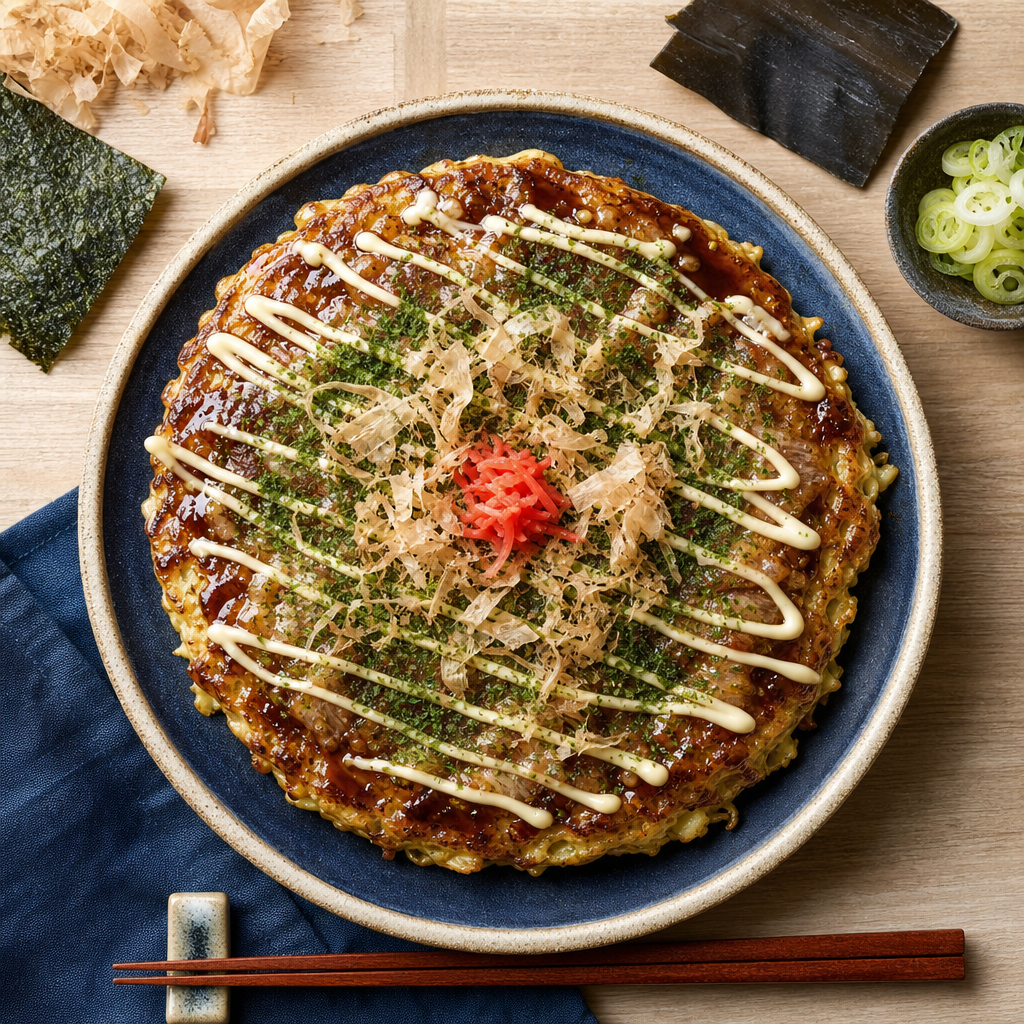
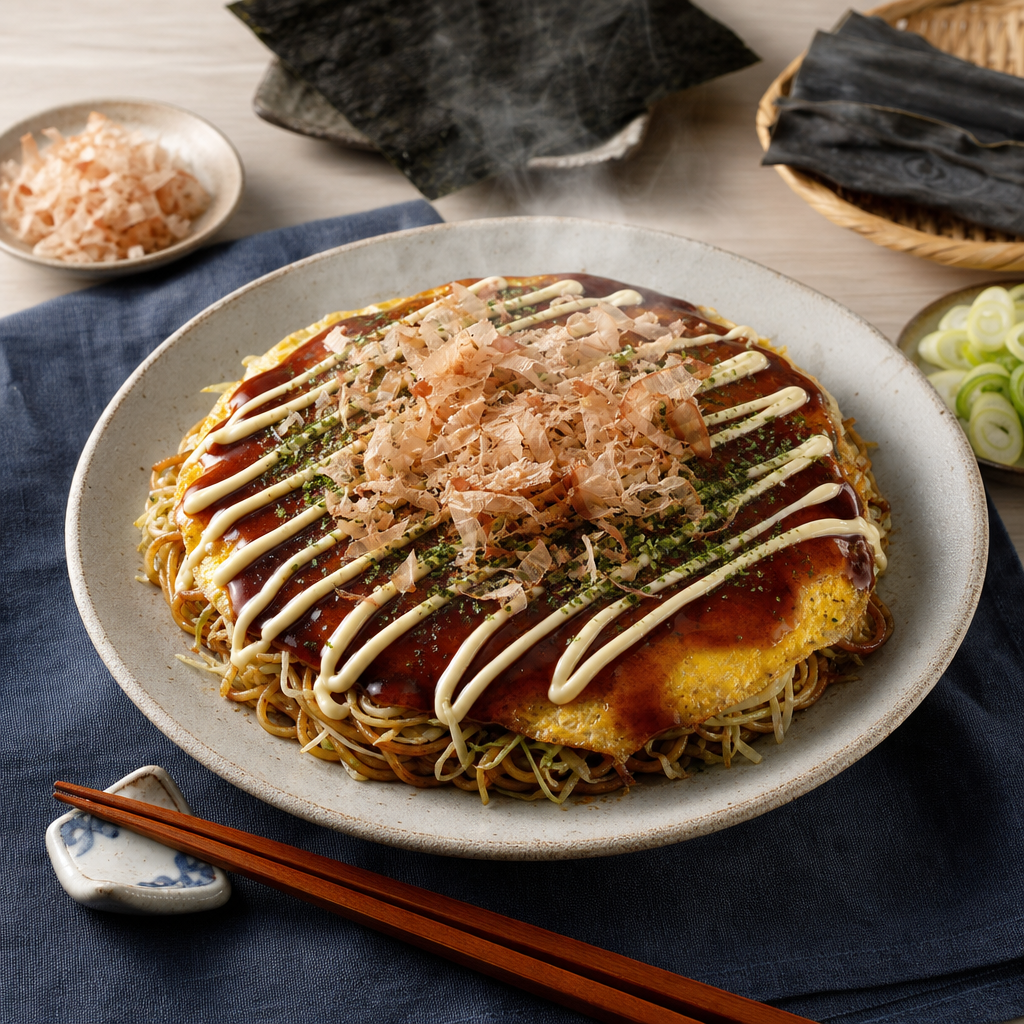
Hiroshima-style okonomiyaki is the layered branch of okonomiyaki: batter is spread thin like a crepe, then cabbage, bean sprouts, pork, noodles, and egg are stacked and cooked on a teppan. MAFF describes it as a Hiroshima prefecture dish built from flour batter, cabbage, pork, yakisoba, egg, sauce, and aonori, with a thick sweet sauce as the finish. Its modern form grew in the postwar period, when flour, cabbage, and noodles could make a filling one-plate meal from limited ingredients. The key distinction from Osaka-style okonomiyaki is structural: Osaka mixes cabbage into batter; Hiroshima stacks the components and steams them under pork. Mixing the cabbage into the batter does not make Hiroshima-style okonomiyaki.
Method 11 steps · 55 min
Make a thin batter
Whisk flour, cold dashi, mirin, and salt until no dry pockets remain. Stop while the batter still looks loose and pourable, like thin crepe batter. Rest 10 minutes while cutting the cabbage.
Prepare the layers
Slice cabbage into fine 2-3 mm shreds and drain the bean sprouts until dry to the touch. Separate pork slices, loosen the noodles by hand, and set every topping within reach of the griddle.
Heat the cooking surface
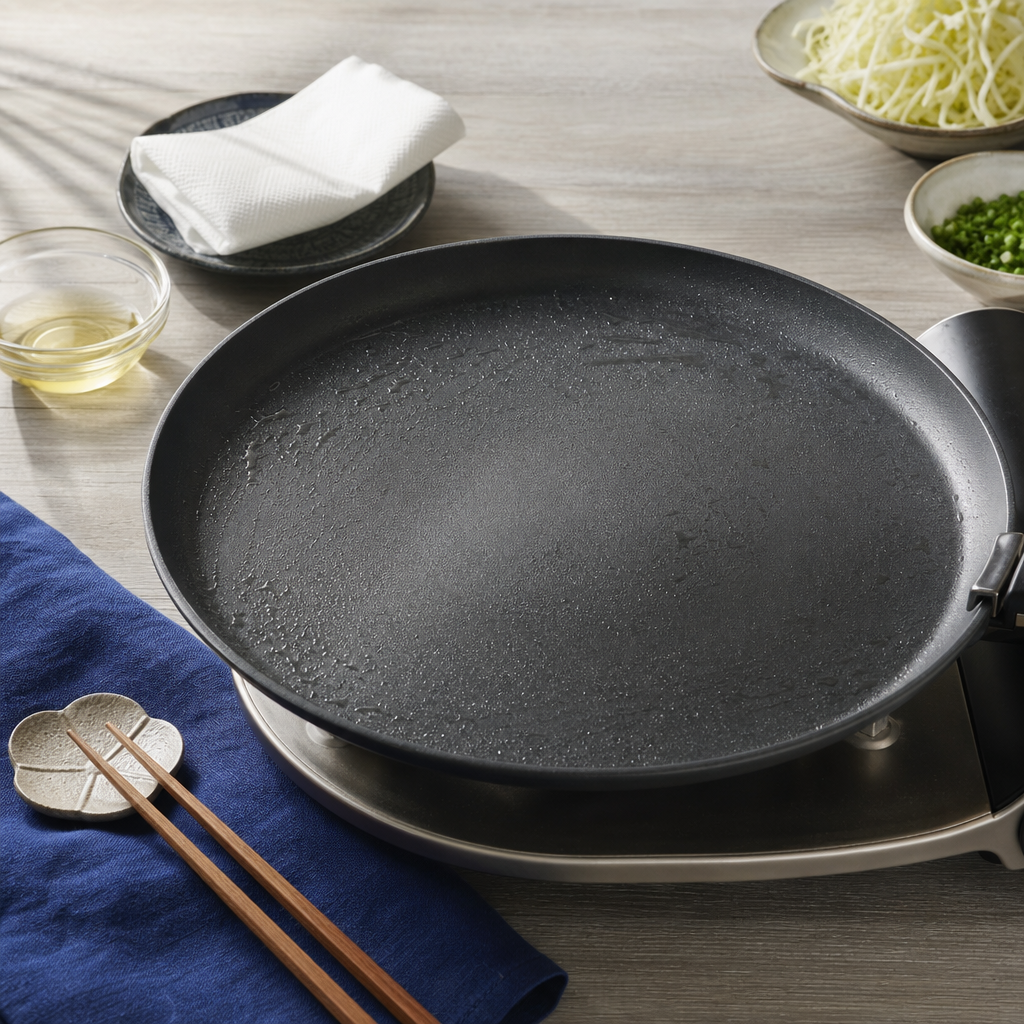
Heat a flat griddle or 28 cm nonstick skillet to medium, about 180-190°C if using an electric griddle. Film the surface with oil, then wipe it thin so the batter spreads instead of frying at the edges.
Spread the crepe
For each okonomiyaki, ladle enough batter onto the griddle to make a very thin 18-20 cm circle, using about half to two thirds of the batter total and reserving the rest for drizzling over the cabbage. Spread with the back of the ladle. Scatter half the bonito powder over the wet surfaces.
Build the cabbage mound
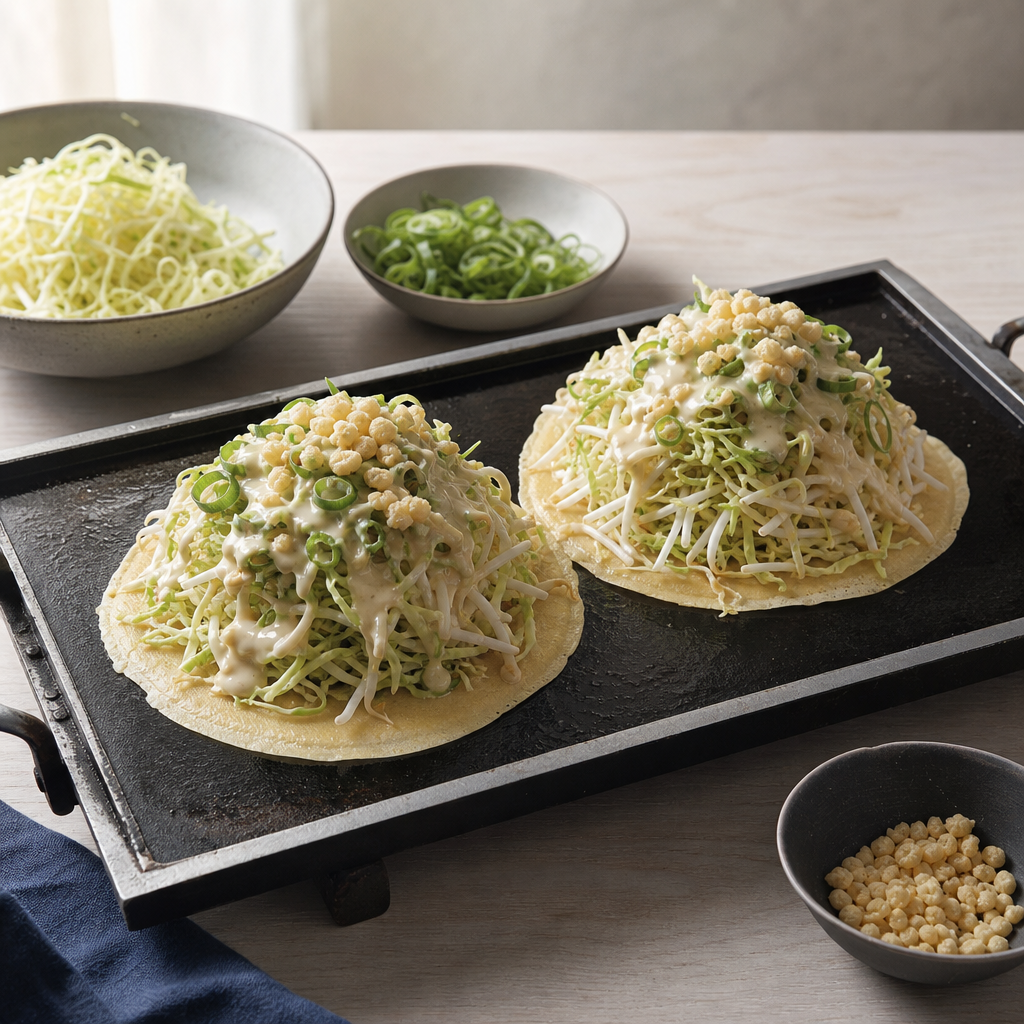
Pile half the cabbage onto each crepe in a high mound, then add bean sprouts, green onion, and tenkasu. Drizzle a spoonful of reserved batter over the top, then lay pork belly slices across the mound in a single overlapping layer. Season the pork with a light pinch of salt if the slices are unseasoned.
Flip onto the pork side
Slide two wide spatulas under the crepe layer, lift decisively, and turn the whole stack pork-side down. Tuck in escaped cabbage with the spatulas. Do not press hard yet.
Steam and render
Cook pork-side down for 5-6 minutes over medium heat. The pork should brown at the edges and the cabbage mound should sink by roughly one third. If the underside scorches before the cabbage softens, lower the heat and cover for 1 minute.
Brown the noodles
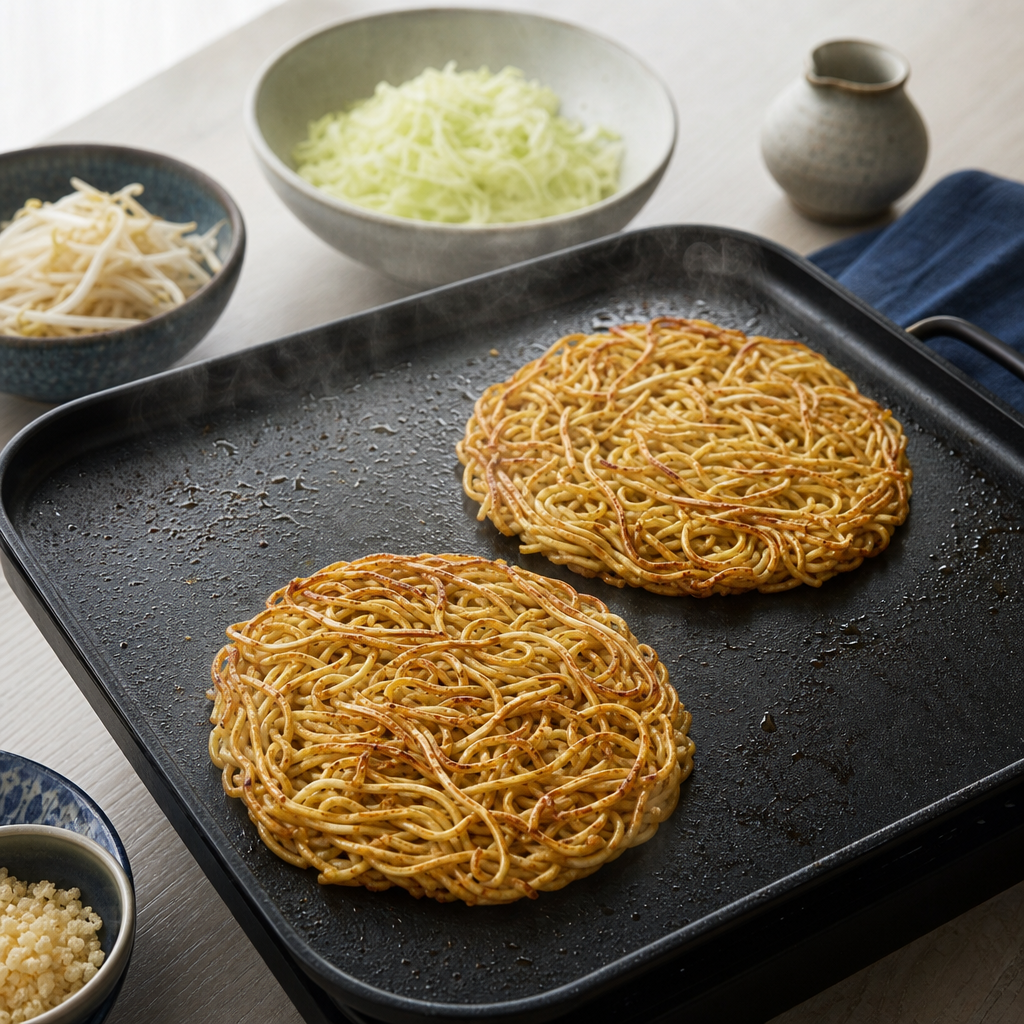
On a free section of the griddle, oil lightly and spread the yakisoba noodles into two rounds the same size as the okonomiyaki. Season each with a thin coating of chuno sauce or okonomi sauce and cook until the underside has browned strands, 2-3 minutes.
Set the stack onto noodles
Lift each cabbage-pork stack onto a noodle round, keeping the pork side down and the crepe side up. Press firmly with two spatulas for 10-15 seconds, then cook 2 minutes more.
Add the egg sheet
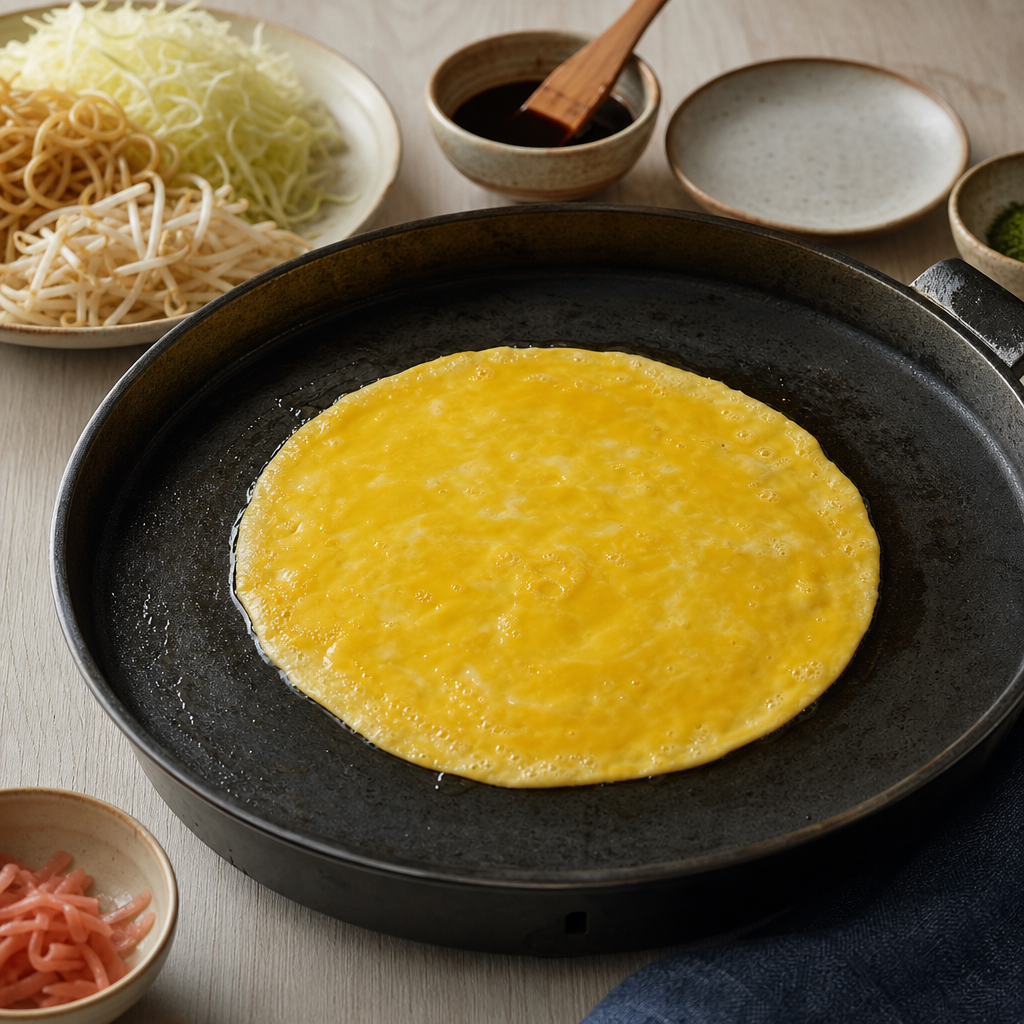
Oil a clean patch of griddle and crack one egg onto it. Break the yolk and spread the egg into a thin circle the size of the okonomiyaki. Before the egg fully sets, place the whole stack onto the egg, then flip so the egg becomes the top.
Sauce and finish
Brush the egg top with okonomi sauce while hot. Add mayonnaise in thin lines if using, then dust with aonori and katsuobushi. Serve with beni shoga on the side or in a small pile at the edge.
Common mistakes
- {'mistake': 'Mixing the cabbage into the batter.', 'fix': 'That is Osaka-style structure. For Hiroshima-style, spread a thin crepe first and stack the cabbage above it.'}
- {'mistake': 'Using a thick pancake batter.', 'fix': 'Thin the batter until it spreads with the back of a ladle. The crepe should bend, not puff.'}
- {'mistake': 'Pressing hard immediately after the flip.', 'fix': 'Let the pork render and cabbage steam first. Press only after the stack sits on the noodles.'}
- {'mistake': 'Cooking the noodles as a wet tangle.', 'fix': 'Spread them into a flat round and brown one side. Steam-soft noodles slide out of the stack.'}
- {'mistake': 'Using a small pan for two portions.', 'fix': 'Cook one at a time. Hiroshima-style okonomiyaki needs empty surface area for noodles and egg.'}
What does not belong
- {'item': 'Spaghetti', 'reason': 'Spaghetti does not belong. Hiroshima-style uses yakisoba or alkaline wheat noodles with chew and surface browning.'}
- {'item': 'American barbecue sauce', 'reason': 'Barbecue sauce does not belong. Smoke, tomato, and heavy sugar push the dish away from okonomi sauce.'}
- {'item': 'Cheddar as a default layer', 'reason': 'Cheese variants exist, but cheddar is not the baseline Hiroshima build. It smears the cabbage layer and dominates the sauce.'}
- {'item': 'Cream or dairy sauce', 'reason': 'Cream does not belong. The richness comes from pork belly, egg, mayonnaise if used, and sauce.'}
- {'item': 'Raw salad greens as filler', 'reason': 'Lettuce and mixed greens collapse into water. Cabbage is the structural vegetable.'}