Okonomiyaki Osaka
The dish in context
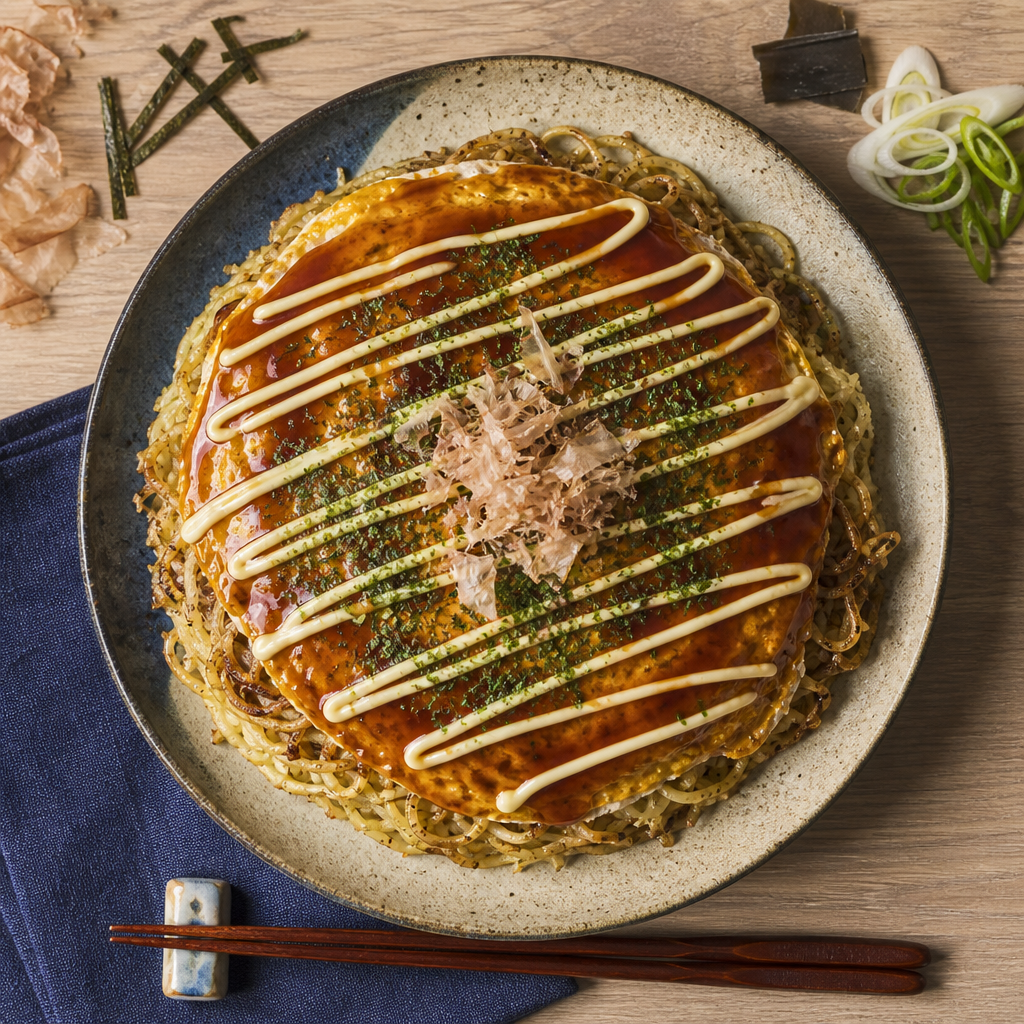
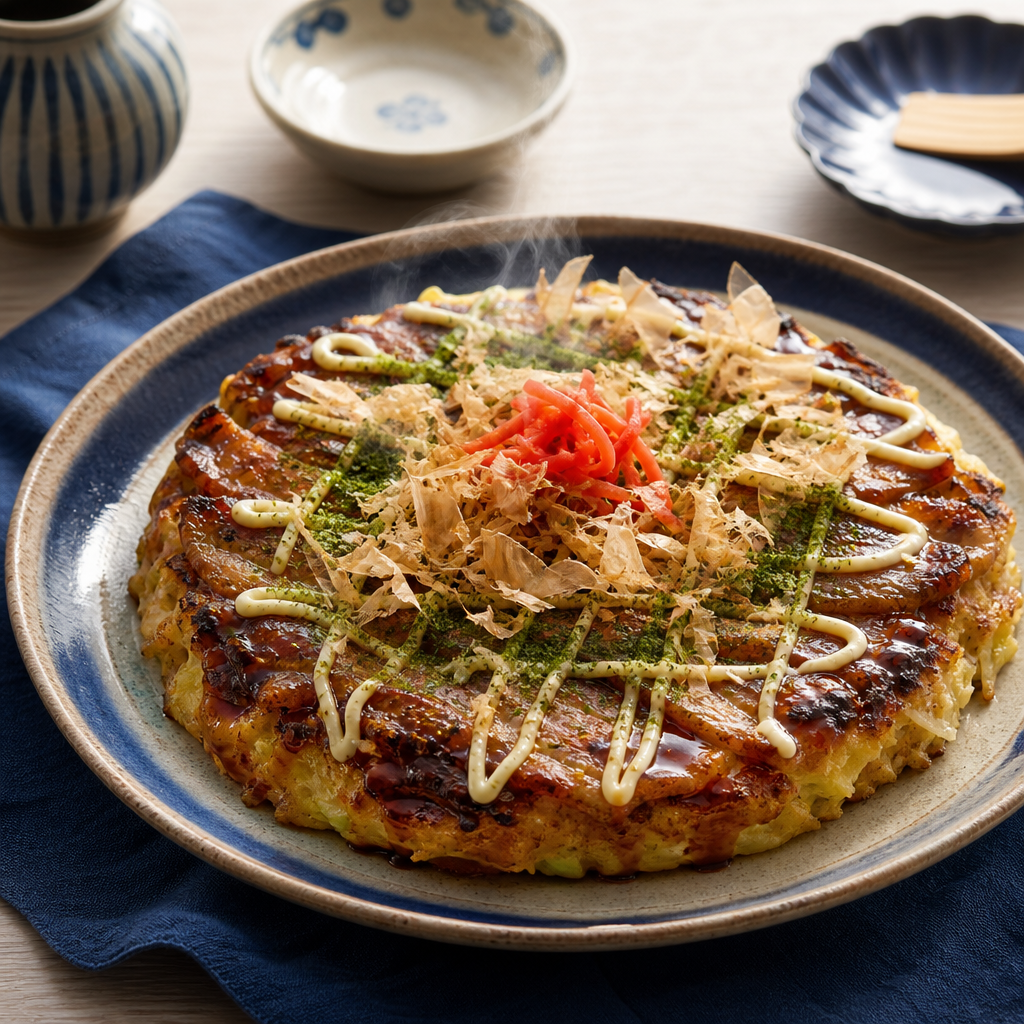
Osaka okonomiyaki is part of Kansai's konamon(粉もん)culture: wheat-flour foods built around dashi, cabbage, and a hot iron plate. Japanese government food-culture sources describe the Osaka form as maze-yaki(混ぜ焼き)— batter and chopped cabbage mixed together before cooking — in contrast to layered Hiroshima-style okonomiyaki. The modern dish grew out of earlier griddled flour foods and became strongly associated with Osaka after the postwar period, when wheat, cabbage, sauce, and inexpensive meats made a filling urban meal. Restaurants vary the mix-ins, but the Osaka grammar is stable: dashi batter, cabbage, egg, tenkasu, pork belly, sauce, aonori, and katsuobushi.
Method 8 steps · 35 min
Make a thick dashi batter
Whisk the flour, cold dashi, grated nagaimo, and salt until no dry flour remains. Stop when the batter looks loose and slightly stretchy; do not whip air into it.
Mix one pancake at a time
For each pancake, combine half the cabbage, 1 egg, half the tenkasu, half the green onion, half the beni shoga, and half the batter in a bowl. Fold for 20-30 seconds until the cabbage is coated but still loose.
Shape the pancake
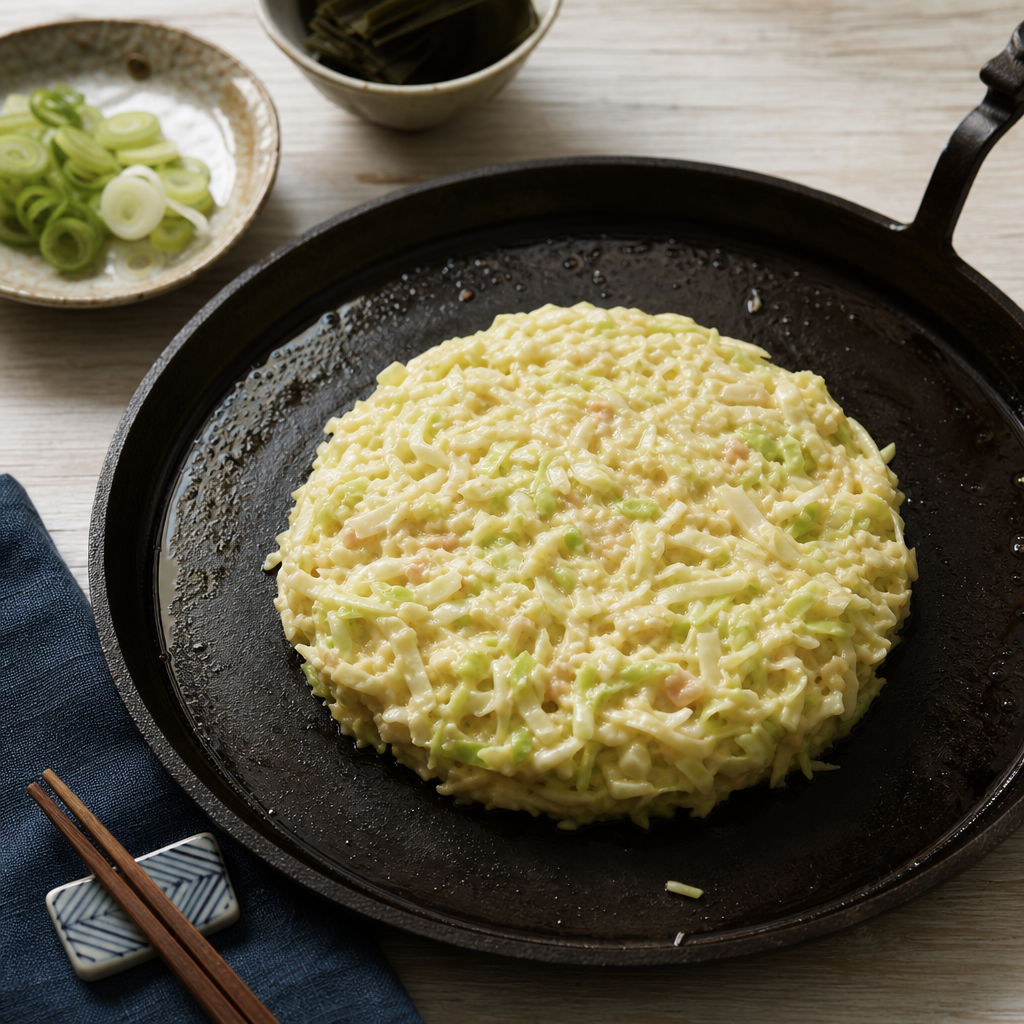
Heat a lightly oiled skillet or griddle over medium heat, about 190-200°C if using an electric plate. Mound the mixture into an 18-20 cm round, 2-3 cm thick, and tuck in loose cabbage at the edges.
Lay on the pork
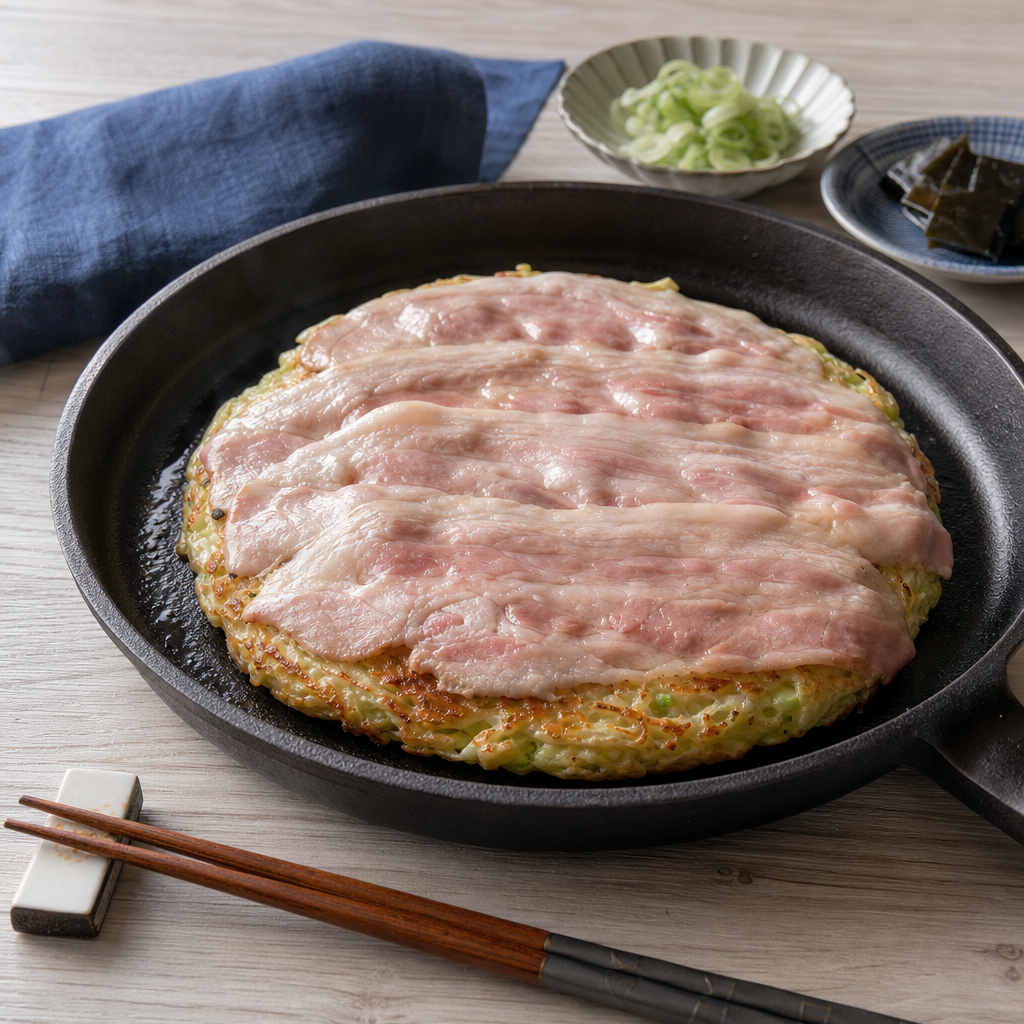
Place half the pork belly slices across the top in a single layer, slightly overlapping. Cook the first side until the bottom is deep golden and the edges hold together, 4-5 minutes.
Flip without pressing
Slide a wide spatula under the pancake, support the top with a second spatula or plate, and flip in one motion so the pork side faces down. Cook 5-6 minutes until the pork is browned and the center springs back lightly.
Finish the first side again
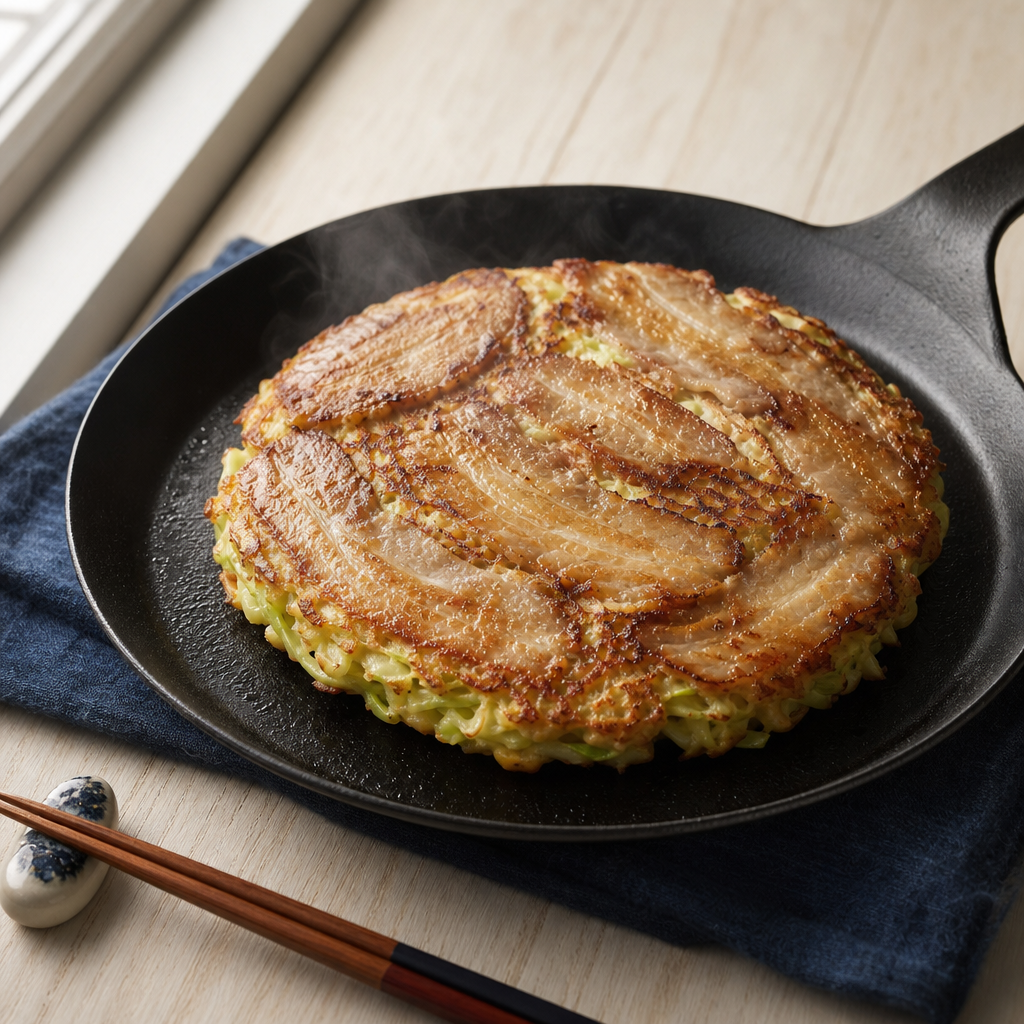
Flip once more so the pork side faces up. Cook 1-2 minutes to re-crisp the bottom and drive off surface moisture.
Sauce and garnish hot
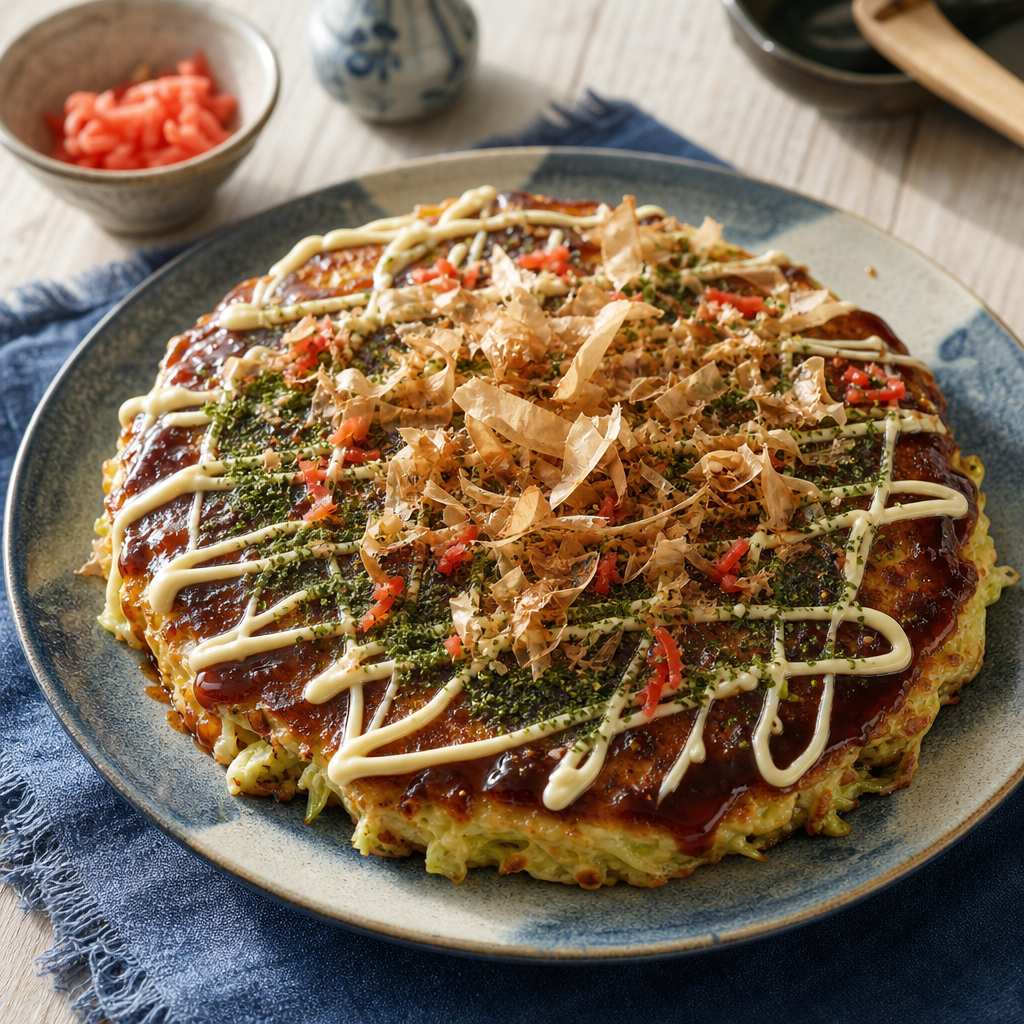
Transfer to a plate or serve on the griddle. Brush with okonomiyaki sauce, stripe with Japanese mayonnaise, dust with aonori, and cover with katsuobushi while the surface is still hot.
Repeat for the second pancake
Wipe out any burnt sauce or stray cabbage, re-oil lightly, and cook the second pancake the same way. Serve each pancake whole or cut into wedges with a small spatula.
Common mistakes
- {'mistake': 'Using too much flour', 'correction': 'The batter should coat cabbage, not drown it. If the bowl looks like pancake batter with cabbage suspended in it, the ratio is wrong.'}
- {'mistake': 'Shredding the cabbage too fine', 'correction': 'Use rough 5 mm dice or short shreds. Fine coleslaw-cut cabbage collapses and leaks water, giving a gummy center.'}
- {'mistake': 'Mixing the full batch and letting it wait', 'correction': 'Mix one pancake at a time. Cabbage sheds water as soon as it meets salt and batter.'}
- {'mistake': 'Pressing the pancake with a spatula', 'correction': 'Do not press. The center sets by steam; compression makes it dense and wet.'}
- {'mistake': 'Cooking over high heat', 'correction': 'Use medium heat or a 190-200°C griddle. High heat burns the pork before the egg and cabbage set.'}
- {'mistake': 'Treating Hiroshima-style and Osaka-style as the same dish', 'correction': 'Osaka-style is mixed before cooking. Hiroshima-style is layered and often includes noodles.'}
What does not belong
- {'item': 'Noodles in the batter', 'reason': 'Noodles do not belong in standard Osaka okonomiyaki. That moves the dish toward modern-yaki or Hiroshima-style structure.'}
- {'item': 'Sweet American pancake batter', 'reason': 'Sugar-forward breakfast batter does not belong. Okonomiyaki batter is dashi-based and savory.'}
- {'item': 'Thick bottled teriyaki sauce', 'reason': 'Teriyaki sauce does not belong on okonomiyaki. Use okonomiyaki sauce; it is fruitier, tangier, and built for the cabbage-pork base.'}
- {'item': 'Cream or milk', 'reason': 'Dairy does not belong in the batter. It dulls the dashi and pushes the texture toward Western griddle cakes.'}
- {'item': 'Raw seafood chunks in a thick home skillet version without adjustment', 'reason': 'Seafood must be small or pre-cooked. Large raw pieces shed water and undercook inside the cabbage mass.'}