Insalata Rinforzo
The dish in context
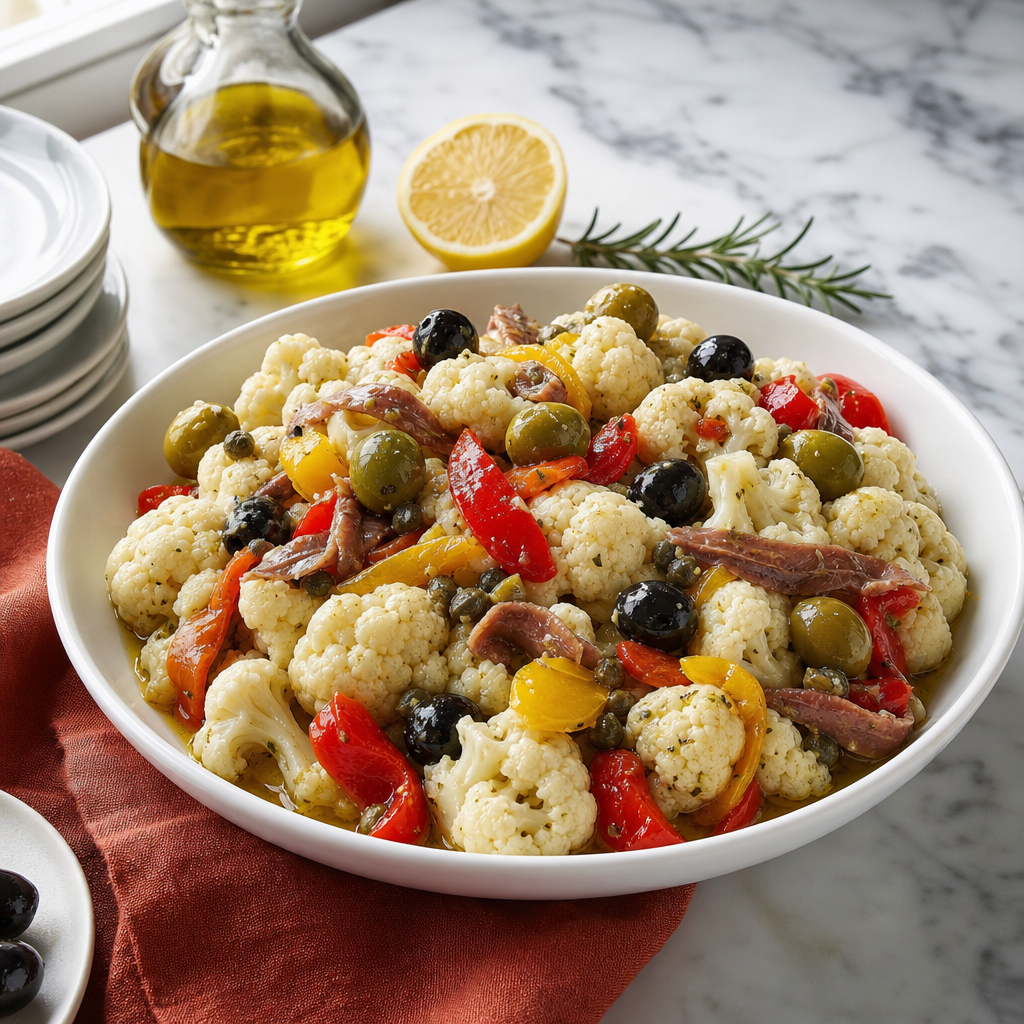
Insalata di rinforzo belongs to the Neapolitan Christmas table, especially the lean meal of la Vigilia, Christmas Eve. The name is usually explained through practice rather than a single fixed origin: the salad is “reinforced” over the holiday period with more cauliflower, pickles, olives, anchovies, and vinegar as the bowl is replenished. The core Campanian structure is boiled cauliflower plus papaccelle, olives, capers, anchovies, vinegar, and olive oil. Household versions vary: some add giardiniera, escarole, or extra sottaceti, but mayonnaise pushes the dish into another category entirely.
Method 5 steps · 95 min
Boil the cauliflower firm
Bring the water and salt to a full boil. Add the cauliflower and cook 5-7 minutes, until a knife enters the stem with resistance and the florets still hold their shape. Drain immediately.
Cool and dry
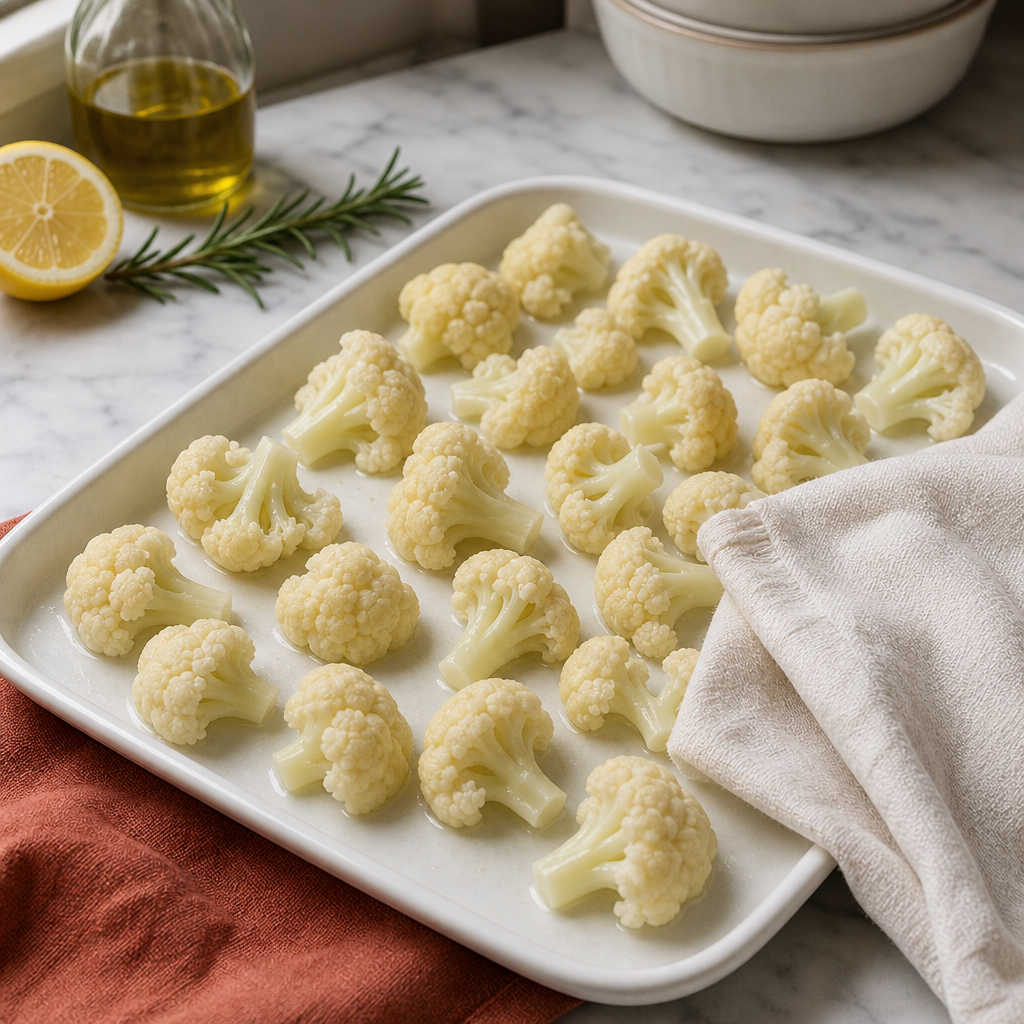
Spread the cauliflower on a tray in one layer. Let it cool until barely warm, then blot away surface water.
Build the preserved base
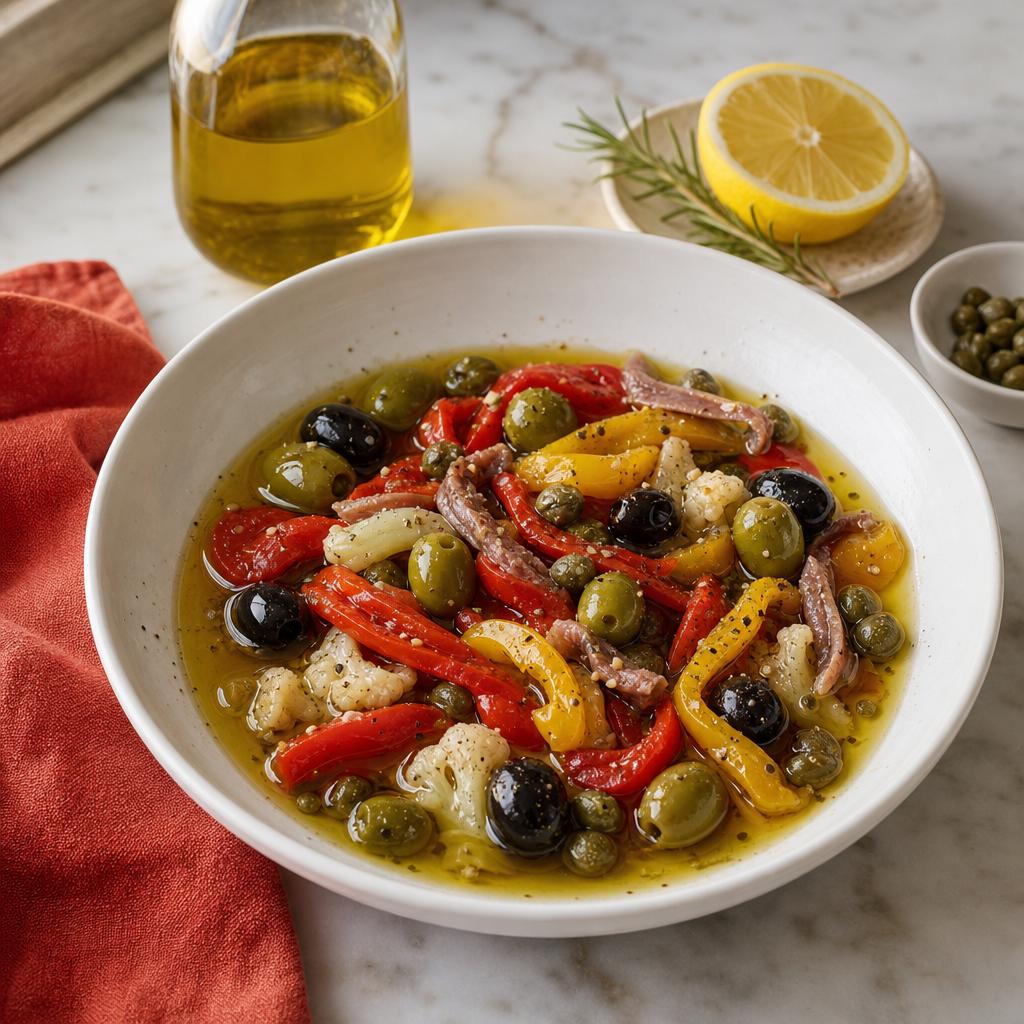
Combine the papaccelle, green olives, black olives, giardiniera, capers, and anchovies in a wide bowl. Add the vinegar, olive oil, and black pepper.
Fold without breaking
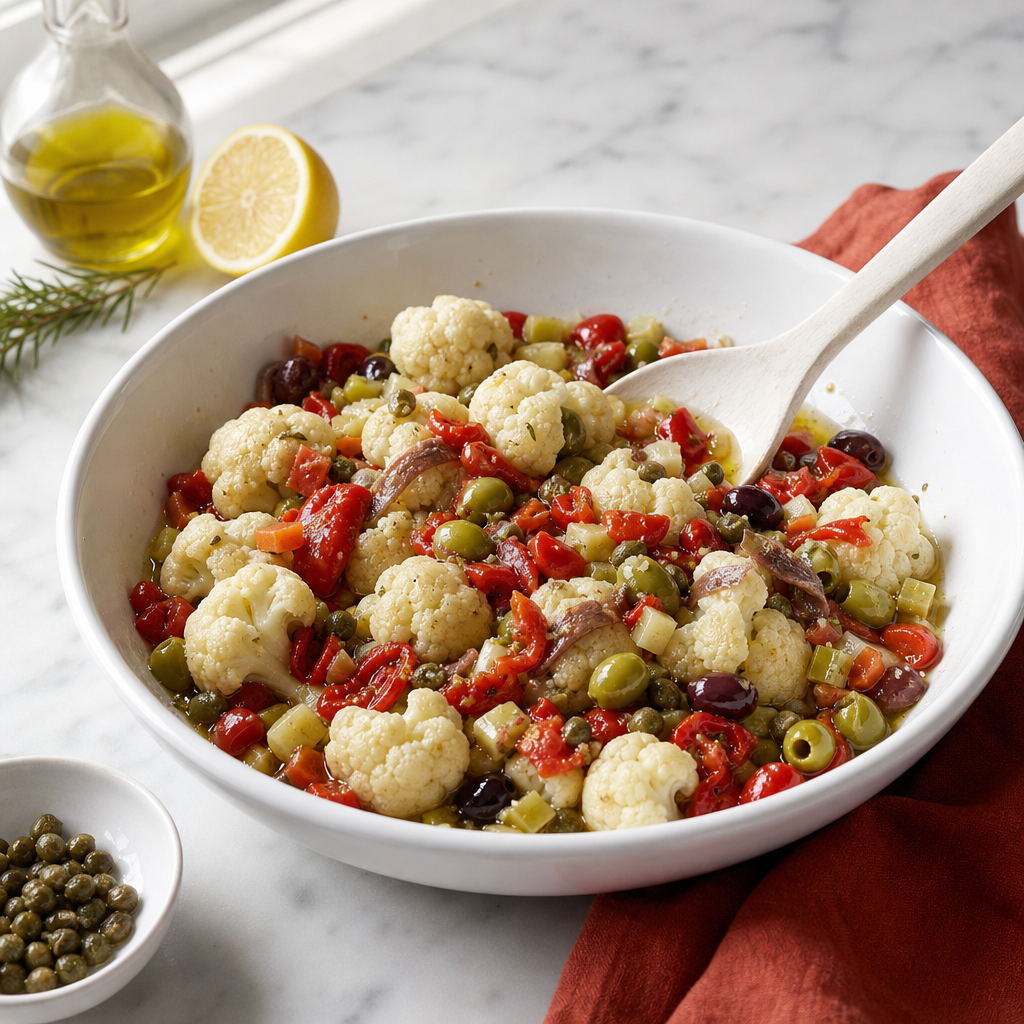
Add the cooled cauliflower. Fold with a wide spoon until the florets are coated and the peppers and olives are distributed through the bowl.
Rest, then correct the acid
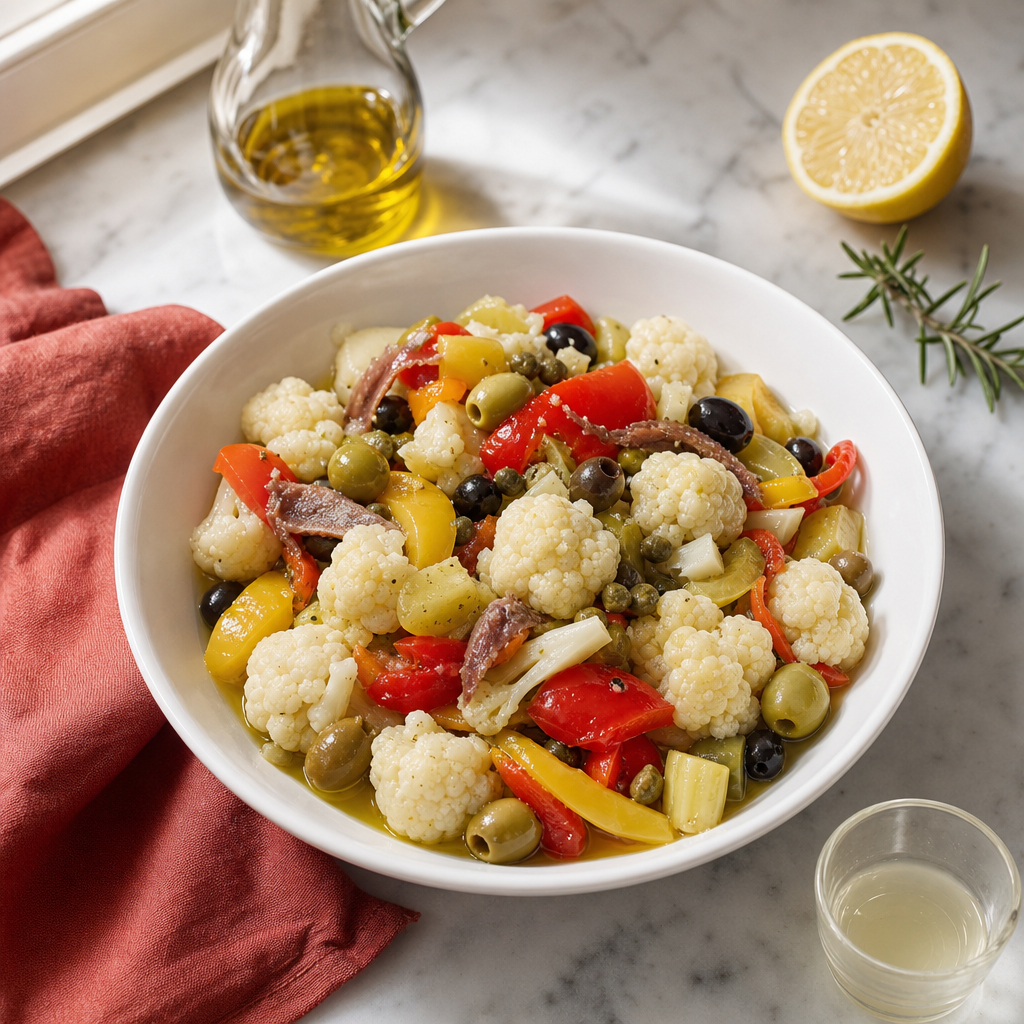
Rest at room temperature for 30 minutes, or refrigerate up to 24 hours and bring back toward room temperature before serving. Taste the dressing pooled at the bottom and adjust with a small splash of vinegar or olive oil if needed.
Common mistakes
- {'mistake': 'Cooking the cauliflower until soft.', 'fix': 'Stop while the stem still resists a knife. Carryover heat and the acidic dressing will continue to soften it.'}
- {'mistake': 'Dressing wet cauliflower.', 'fix': 'Drain on a tray and blot. Surface water makes the salad taste washed out within minutes.'}
- {'mistake': 'Using fresh bell peppers in place of papaccelle.', 'fix': 'Use vinegar-preserved peppers. Fresh pepper has sweetness and crunch, but it lacks the brined structure of the dish.'}
- {'mistake': 'Serving it refrigerator-cold.', 'fix': 'Let the salad stand out until the oil loosens and the anchovy aroma returns. Cold olive oil tastes dull and waxy.'}
- {'mistake': 'Adding all the vinegar before tasting the preserved ingredients.', 'fix': 'Start with the listed amount, rest, then correct. Some giardiniera is already aggressive.'}
What does not belong
- {'item': 'mayonnaise', 'reason': 'Mayonnaise does not belong. It turns the dish toward insalata russa and covers the vinegar-brined profile.'}
- {'item': 'potatoes, peas, or boiled eggs', 'reason': 'Those ingredients point to other composed salads. Insalata di rinforzo is built on cauliflower and preserved vegetables.'}
- {'item': 'balsamic vinegar', 'reason': 'Balsamic does not belong here. Its sweetness and dark color flatten the clean white-wine-vinegar bite.'}
- {'item': 'cheese', 'reason': 'Cheese does not belong. The salty depth comes from anchovies, olives, and capers.'}
- {'item': 'sugar', 'reason': 'Sugar does not belong. The balance should come from cauliflower sweetness against vinegar and salt, not from a sweet dressing.'}
Adaptations
Omit anchovies and increase capers slightly. The salad remains structurally coherent, but the marine salinity of the traditional version is gone.
Use anchovies and pickled vegetables without wine-derived additives if required by the diner. White wine vinegar is generally treated differently from wine, but certification rules vary.
The core dish contains no gluten. Check commercial giardiniera and pickled peppers for processing additives.
No dairy is used.
Anchovies are fish, not shellfish. For fish-free cooking, use the vegan adaptation.