Thai Mixed Vegetable Stir-Fry
The dish in context
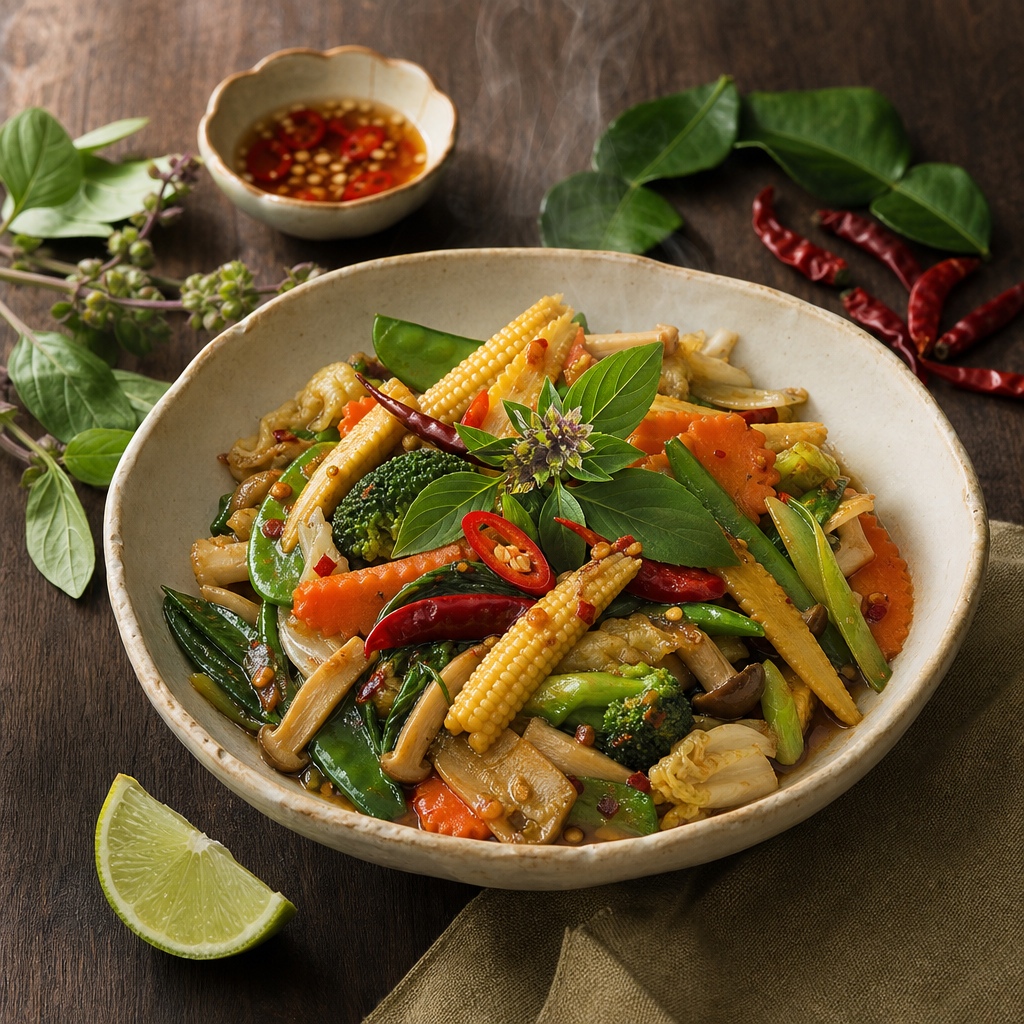
ผัดผักรวมมิตร is a central Thai household and cafeteria standard shaped by Thai-Chinese wok cooking: high heat, garlic, mixed vegetables, and a glossy oyster-soy sauce. The name means mixed vegetables, so the vegetable set is not fixed; broccoli, cauliflower, carrot, cabbage, baby corn, mushrooms, and snow peas are common because they hold texture and color in a hot pan. Thai school-lunch and nutrition sources often treat it as a practical main dish because it delivers vegetables without heavy coconut milk or curry paste. Restaurant versions may add chicken, pork, shrimp, or tofu, but the vegetable stir-fry itself is the structure.
Method 7 steps · 20 min
Cut by cooking time
Cut broccoli, cauliflower, carrot, and baby corn small enough to cook in 2 minutes. Keep cabbage, snow peas, and mushrooms separate because they soften faster.
Mix the sauce
Stir oyster sauce, light soy sauce, fish sauce if using, sugar, white pepper, and water or stock in a small bowl.
Fry the garlic
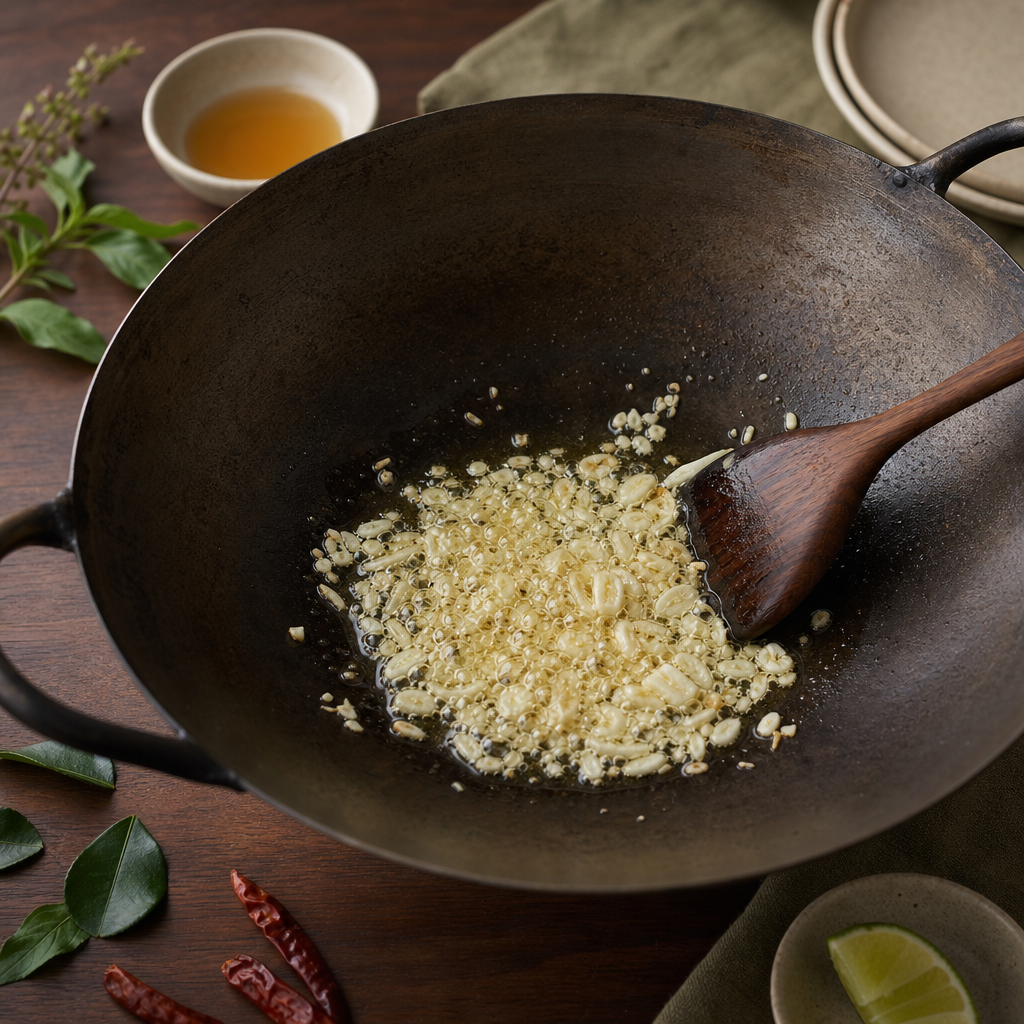
Heat a wok or large skillet over high heat until a drop of water skitters and disappears. Add oil, then garlic, and stir for 10-15 seconds until fragrant and pale gold.
Start the hard vegetables
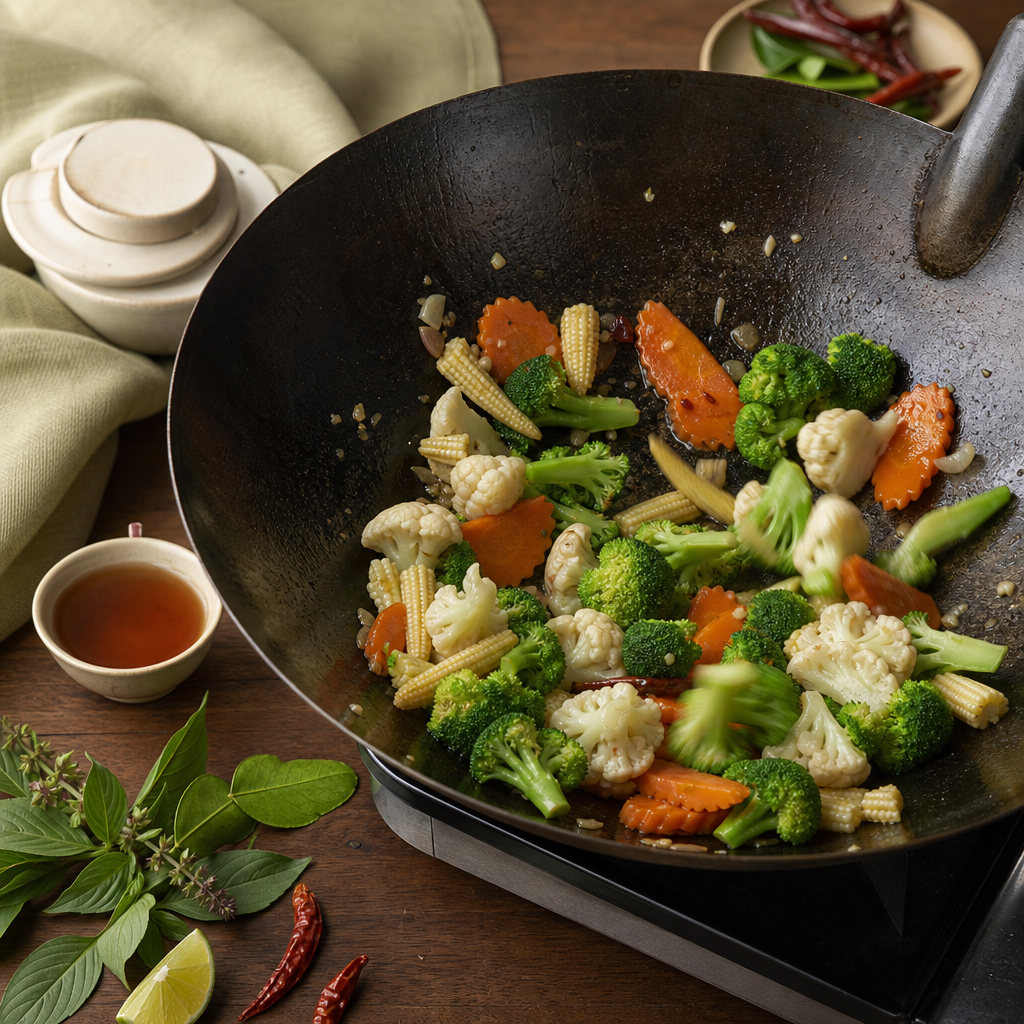
Add broccoli, cauliflower, carrot, and baby corn. Stir-fry for 60 seconds, keeping the vegetables moving through the hot oil.
Steam-glaze briefly
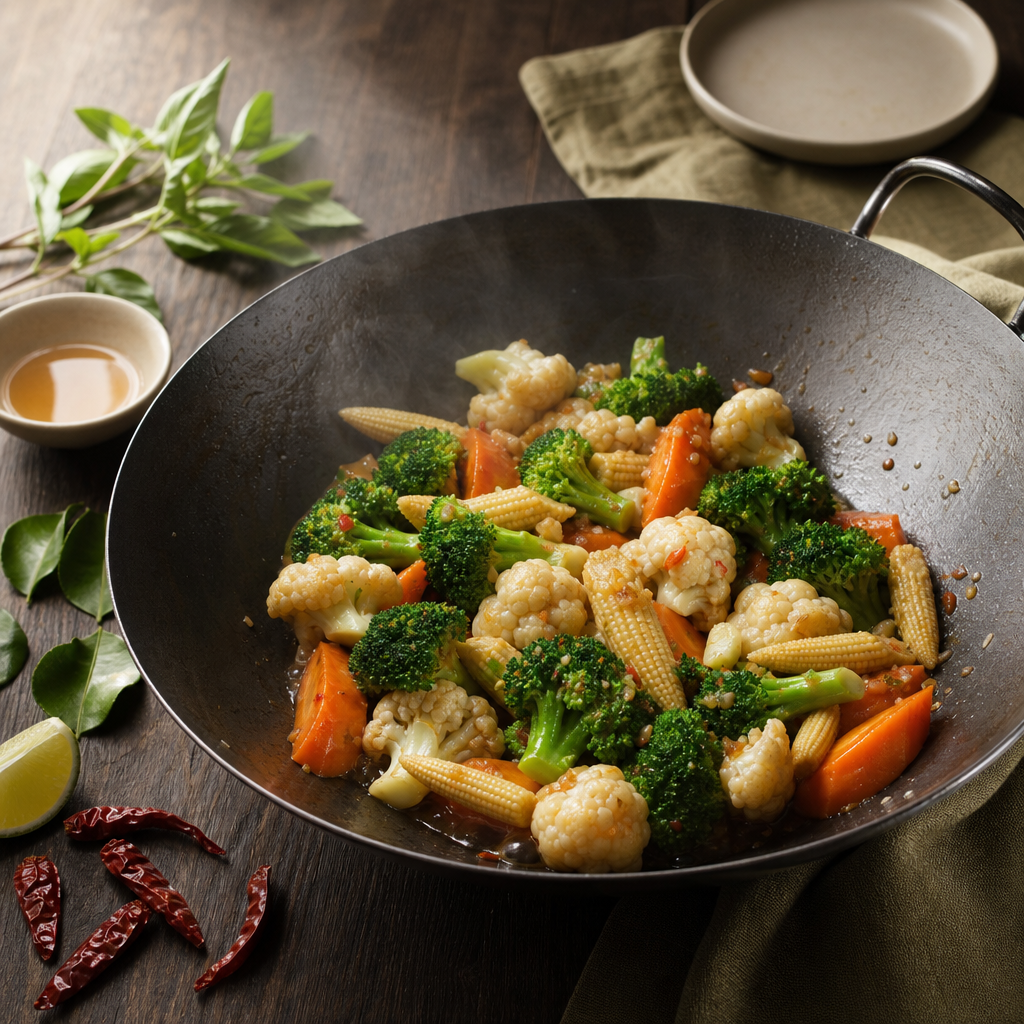
Pour in the sauce mixture. Toss and stir for 90-120 seconds, until broccoli turns bright green and carrot bends slightly but still snaps.
Add tender vegetables
Add cabbage, snow peas, and mushrooms. Stir-fry for 60-90 seconds until the cabbage edges wilt, the snow peas stay bright, and the sauce clings lightly.
Finish dry, not soupy
Stop when the vegetables are glossy and only 1-2 tablespoons of sauce remain in the bottom of the wok. Serve immediately with plain jasmine rice.
Common mistakes
- Adding all vegetables at once. Carrot and cauliflower need more time than cabbage and snow peas.
- Crowding the pan. A home burner cannot evaporate water from a mountain of vegetables fast enough.
- Using too much sauce. The vegetables should look lacquered, not submerged.
- Burning the garlic before the vegetables go in. Once garlic is dark brown, the bitter edge stays in the oil.
- Cooking until soft. The target is crisp-tender: bright color, slight bend, audible bite.
What does not belong
- Coconut milk does not belong in pad pak ruam.
- Curry paste does not belong; this is not a curry stir-fry.
- Thai sweet chili sauce does not belong. It makes the dish sticky and sweet.
- Lime juice does not belong in the wok sauce. This is not a sour Thai salad or tom yum.
- Holy basil or Thai basil does not belong unless making a different stir-fry.
- A heavy cornstarch slurry does not belong. Pad pak ruam should be glossy, not restaurant-gravy thick.
Adaptations
Use vegetarian mushroom stir-fry sauce instead of oyster sauce, omit fish sauce, and use water or light vegetable stock. Do not replace oyster sauce with only soy sauce; the dish loses body and gloss.
Use halal-certified oyster sauce and soy sauce, and use water or halal chicken stock. No pork products are needed.
Use gluten-free oyster-style sauce and gluten-free tamari. Standard Thai soy sauce and many oyster sauces contain wheat.
The dish contains no dairy. Butter does not belong in the wok.
Oyster sauce is made from oyster extract, a shellfish allergen. Use vegetarian mushroom stir-fry sauce instead and verify labels.