Yum Woon Sen (Thai Glass Noodle Salad)
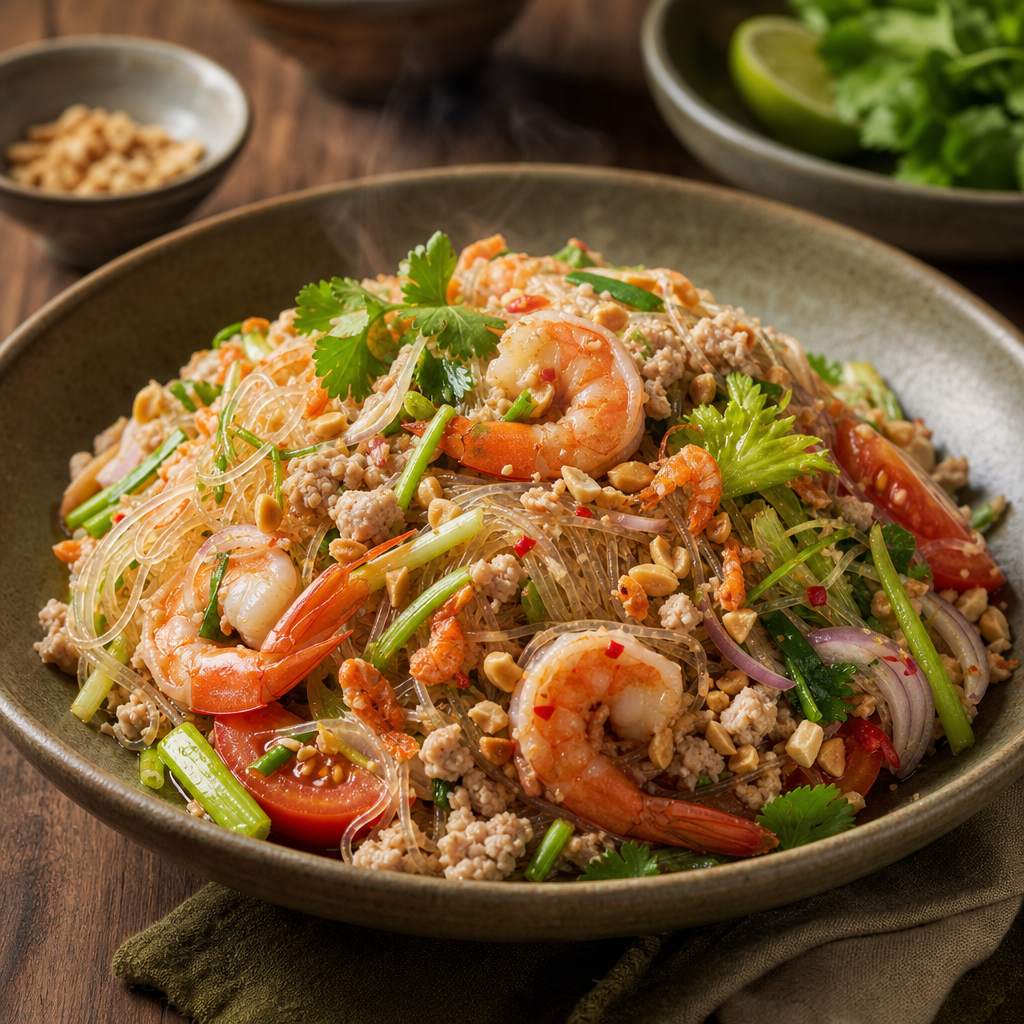
The dish in context
Yum woon sen is part of the Thai yam family: mixed salads dressed with lime juice, fish sauce, fresh chile, and a little sugar rather than oil. It is common across central Thai homes, restaurants, and drinking-food tables, with versions ranging from lean shrimp-and-pork salads to older-style plates with dried shrimp, roasted peanuts, pickled garlic brine, and more shallot. Glass noodles are the exception to the usual Thai noodle pattern; here they are treated as a salad ingredient rather than a one-bowl noodle meal. The dish is eaten at room temperature, not chilled like a Western pasta salad.
Method 8 steps · 30 min
Soak the noodles
Cover the dried glass noodles with room-temperature water and soak until pliable, 8-10 minutes. Drain and cut once or twice with kitchen shears so the strands are liftable, not rope-long.
Pound the dressing base
Pound the garlic, cilantro root, and Thai chiles to a coarse paste. Stir in the sugar, fish sauce, lime juice, and pickled garlic brine if using until the sugar dissolves.
Poach the shrimp
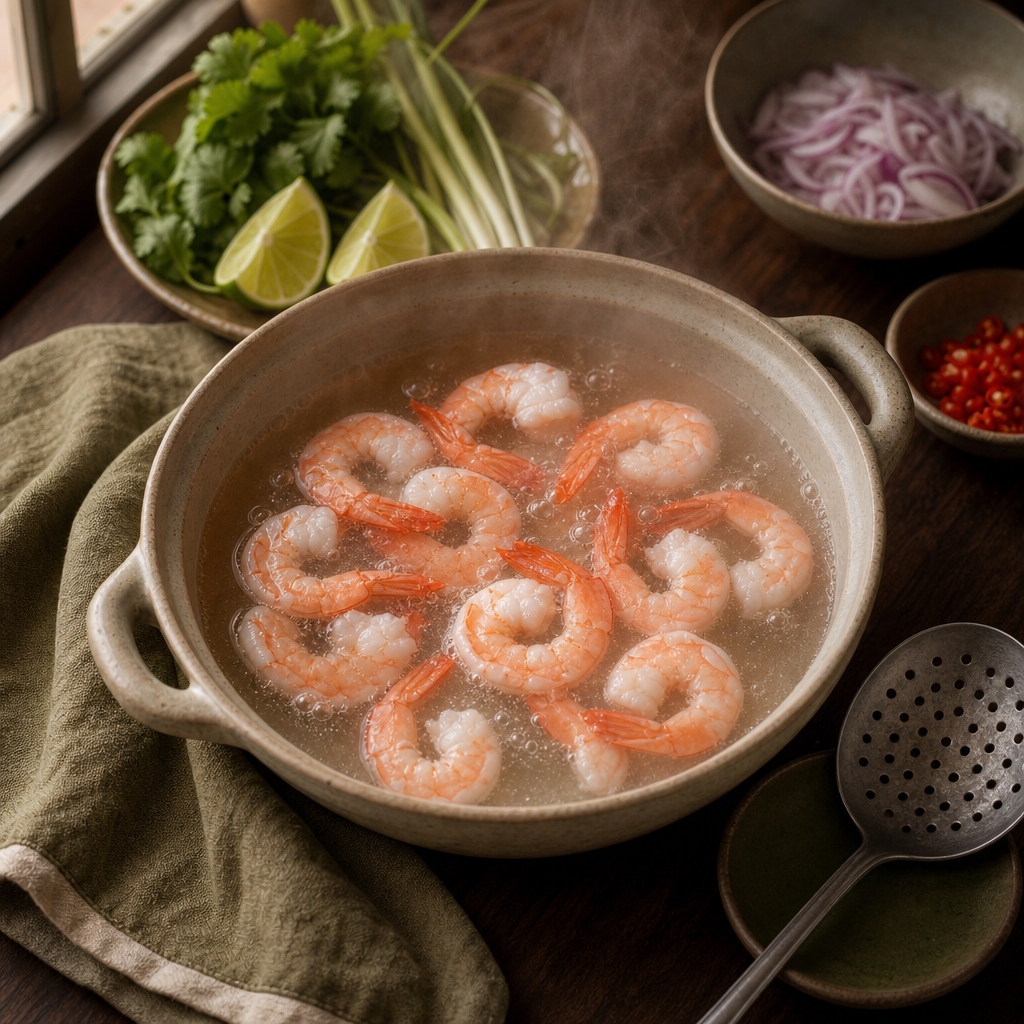
Bring the poaching water to a gentle simmer. Add the shrimp and pull them as soon as they turn opaque and curl into a loose comma, 45-75 seconds depending on size. Transfer to the mixing bowl.
Cook the pork in the same water
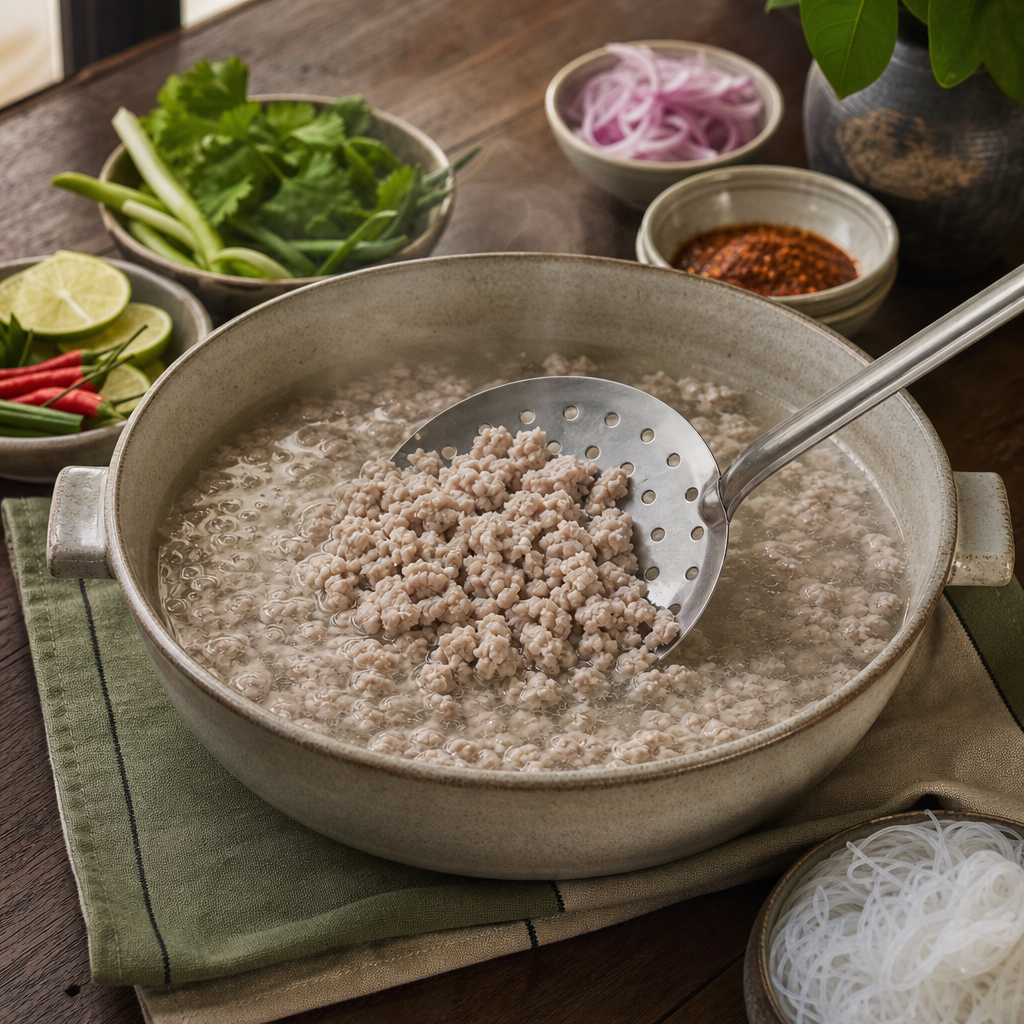
Add the ground pork to the simmering water and break it into small pieces. Cook until no pink remains, about 90 seconds, then lift it out with a slotted spoon and add it to the shrimp.
Cook the noodles briefly
Add the soaked noodles to the same simmering water and cook until clear and springy, 45-60 seconds. Drain hard; do not rinse.
Dress the warm noodles first
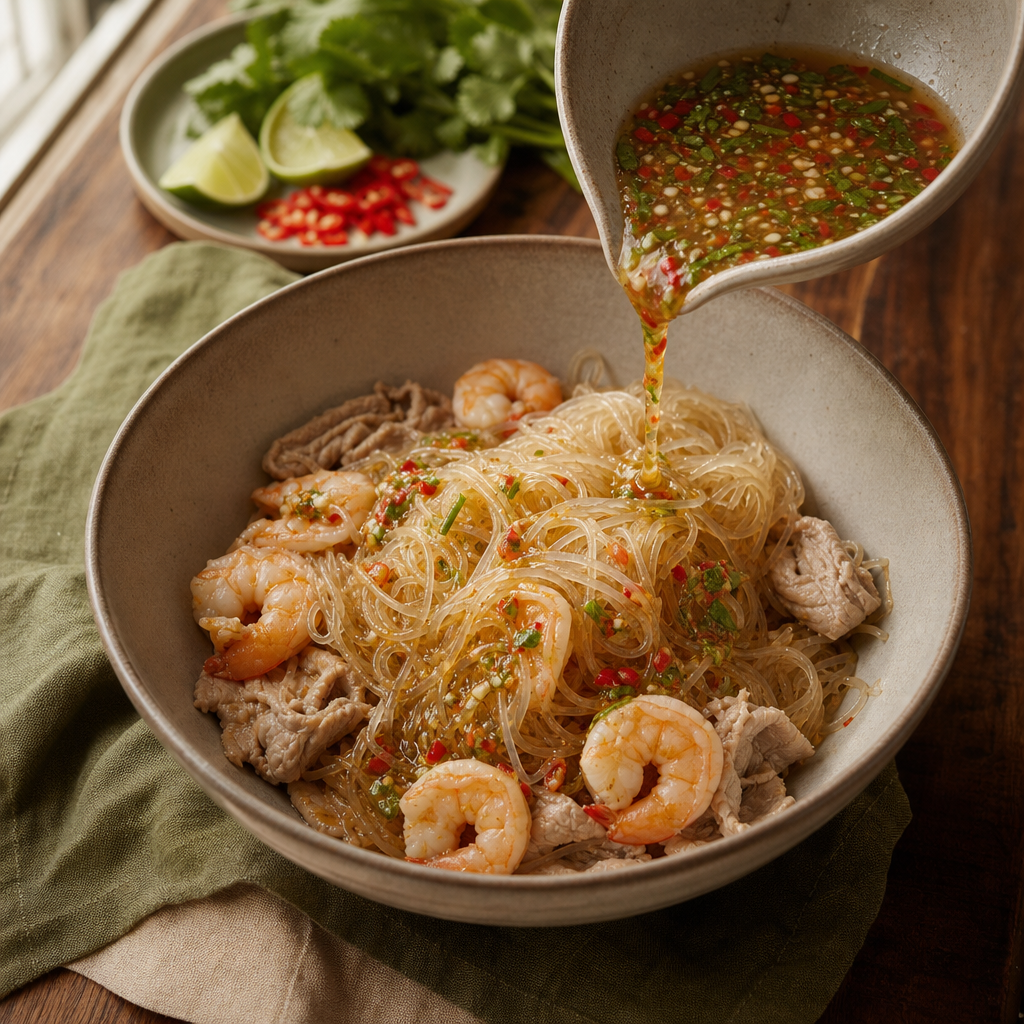
Add the hot drained noodles to the bowl with the shrimp and pork. Pour over about three-quarters of the dressing and toss until the noodles take on the seasoning, then add more dressing as needed.
Add the vegetables and herbs
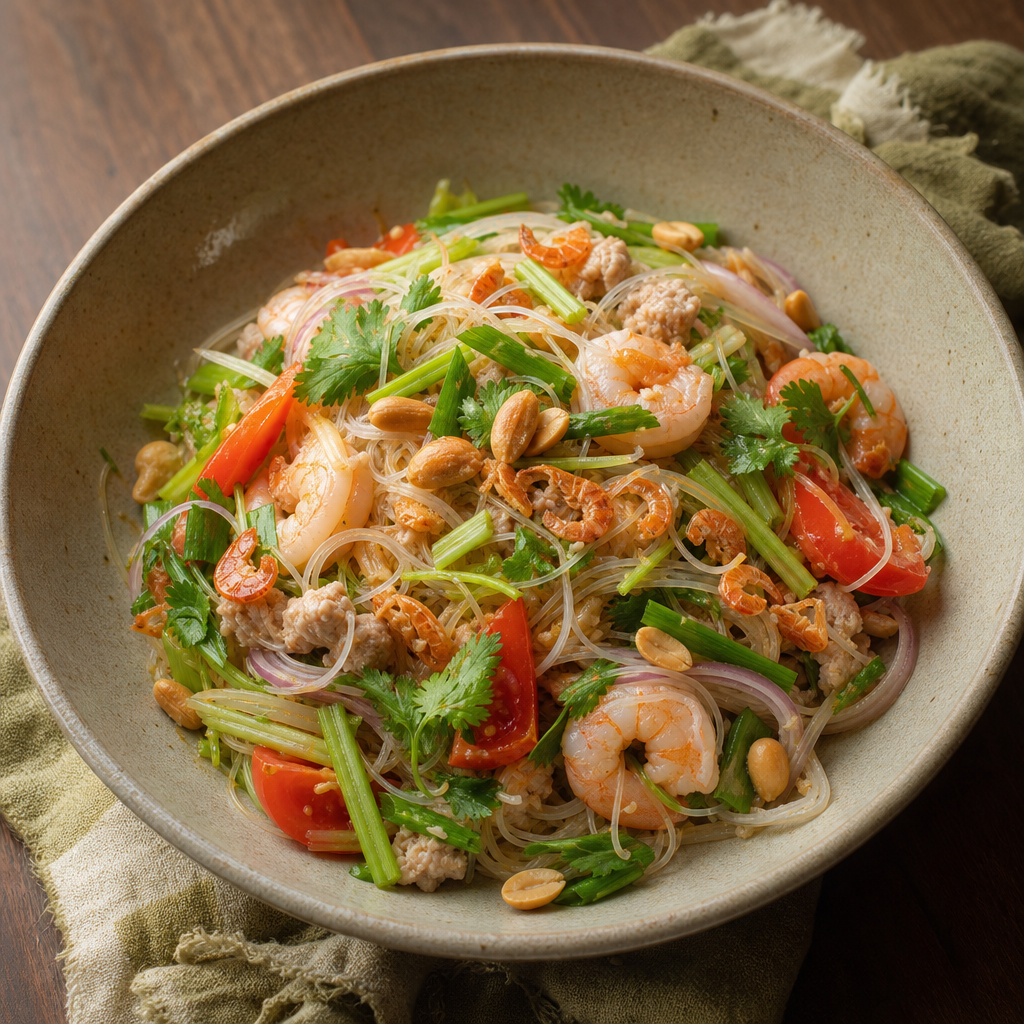
Add the shallots, tomato, Chinese celery, green onion, cilantro, dried shrimp, and peanuts. Toss lightly, then let the salad stand 2 minutes and check the balance: sour, salty, hot, with only a small sweet back note.
Serve at room temperature
Transfer to a shallow plate and spoon any dressing from the bowl over the top. Serve immediately, before the noodles swell and the herbs darken.
Common mistakes
- {'mistake': 'Boiling the noodles hard for several minutes.', 'fix': 'Soak first, then simmer briefly until translucent and springy. The noodles should not look bloated.'}
- {'mistake': 'Rinsing the cooked noodles cold.', 'fix': 'Drain hard and dress warm. Cold rinsing makes the dressing slide off.'}
- {'mistake': 'Making the dressing sweet.', 'fix': 'Use sugar as a buffer, not a dominant flavor. The profile is sour-salty-hot with a small rounded finish.'}
- {'mistake': 'Adding herbs before the noodles are seasoned.', 'fix': 'Dress the warm noodles first, then fold in celery, cilantro, and green onion at the end.'}
- {'mistake': 'Serving it refrigerator-cold.', 'fix': 'Serve freshly mixed at room temperature. Chilling hardens the noodles and dulls the lime.'}
What does not belong
- {'item': 'coconut milk', 'reason': 'Coconut milk does not belong in yum woon sen. This is a lime-and-fish-sauce yam, not a coconut salad.'}
- {'item': 'sesame oil', 'reason': 'Sesame oil pulls the dish into a Chinese or Korean noodle-salad register and coats the glass noodles too heavily.'}
- {'item': 'mayonnaise', 'reason': 'Mayonnaise turns the dressing creamy and hides the lime-fish-sauce balance. It does not belong.'}
- {'item': 'rice vermicelli', 'reason': 'Rice vermicelli is not woon sen. It absorbs and breaks differently, changing the dish.'}
- {'item': 'lemon as the main acid', 'reason': 'Lemon is a fallback only in a kitchen with no lime. Its aroma is flatter and the salad reads immediately non-Thai.'}
- {'item': 'soy sauce as the main seasoning', 'reason': 'Soy sauce makes the dressing dark and grainy-salty. Fish sauce is the backbone.'}
Adaptations
Soy sauce alone is not an adequate replacement. Add salt only after the vegan fish sauce is in place.
The structure survives well with poultry because the dressing carries the dish.
Most traditional versions contain no wheat, but check noodle labels and bottled sauces.
Dairy does not belong in the dish.
If all seafood is excluded, use vegan fish sauce and expect a less briny finish.