Bagna Cauda
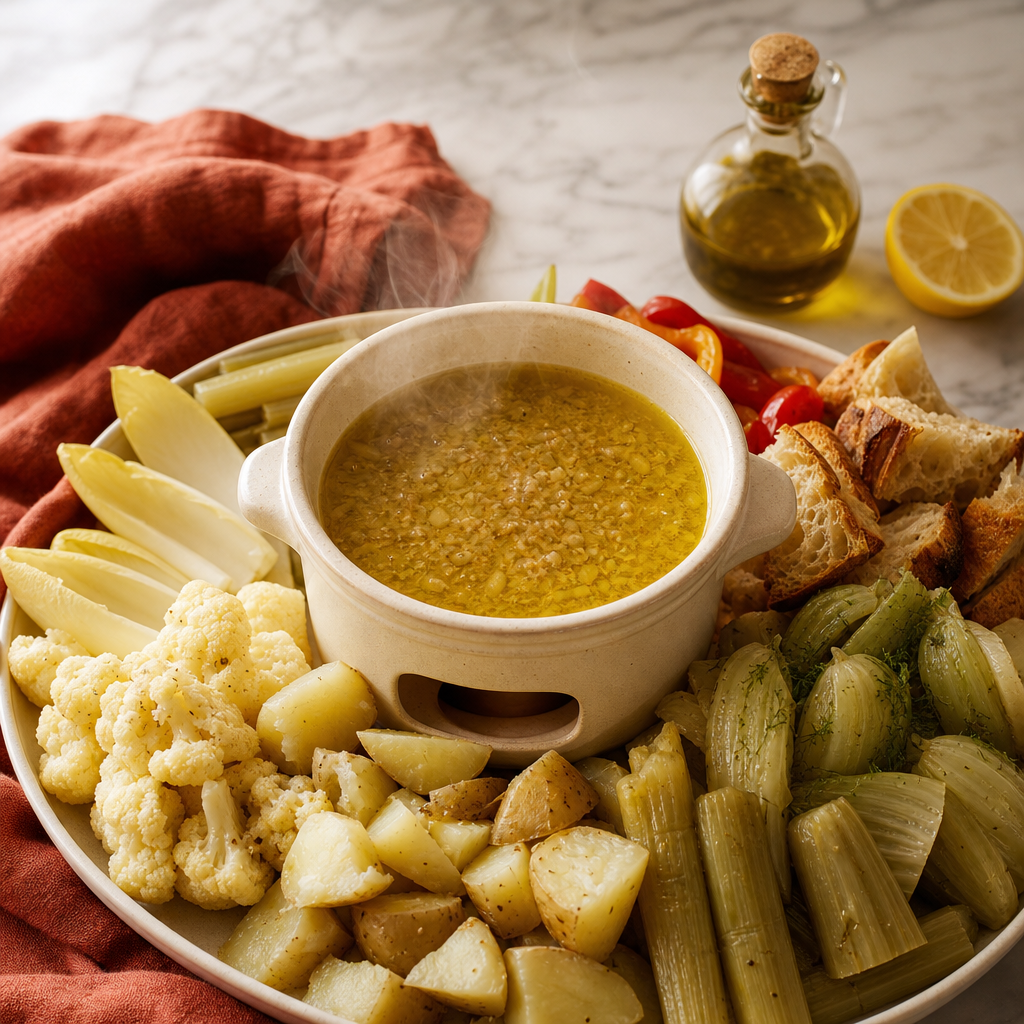
The dish in context
Bagna càuda is a Piedmontese table sauce whose name means roughly “hot bath,” because vegetables are dipped into the warm anchovy-garlic oil. Its anchovy base makes sense in landlocked Piedmont because salted anchovies historically traveled inland along salt routes from Liguria and Provence. The dish is strongly tied to autumn and winter, especially the period after the grape harvest, when cardoons, peppers, cabbage-family vegetables, and new olive oil meet at the table. Traditional versions vary on butter, milk-poached garlic, and exact ratios, but the core grammar does not move: anchovies, garlic, olive oil, heat, and vegetables.
Method 6 steps · 55 min
Poach the garlic
Put the garlic in a small saucepan and cover with the milk. Bring to the barest simmer, then cook until the cloves crush easily with a spoon, 18-25 minutes. Drain, reserving 2 tablespoons of the milk if using butter for a softer finish.
Start the oil bath
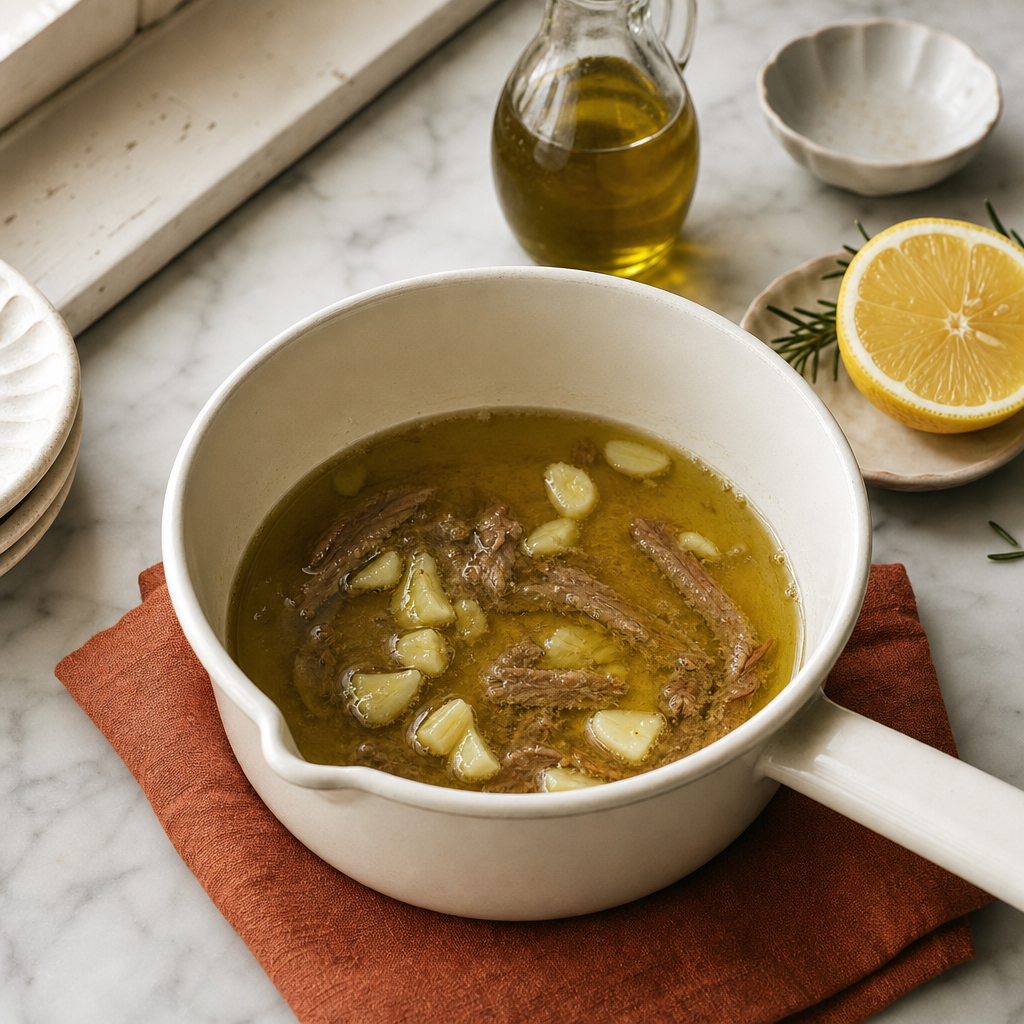
Wipe the saucepan clean. Add the olive oil, anchovies, and poached garlic, then set over the lowest heat available. The oil should tremble at the edges, not fry.
Melt the anchovies
Cook gently for 20-30 minutes, pressing the garlic and anchovies with a wooden spoon every few minutes. Stop when the garlic is pulpy and the anchovies have mostly disappeared into tan flecks.
Finish the sauce
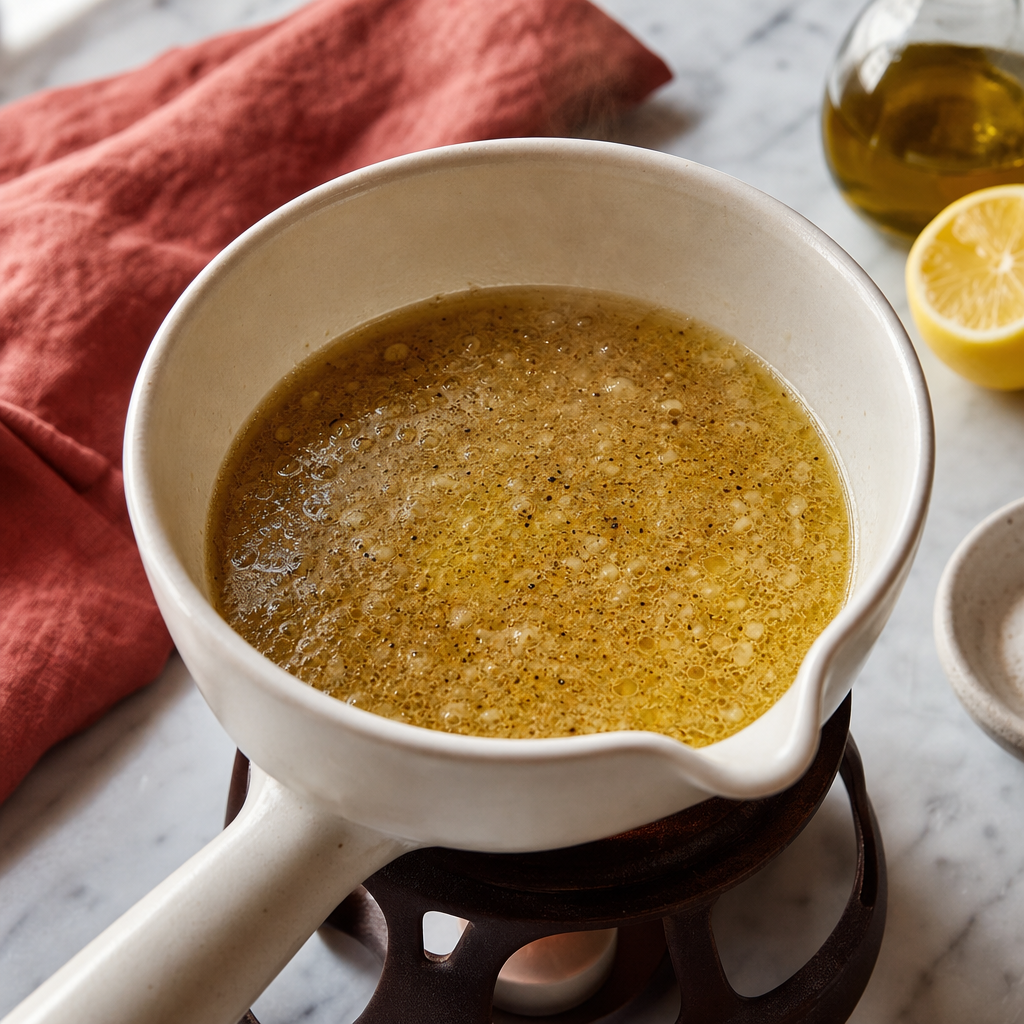
Stir in the butter, if using, and 1-2 tablespoons reserved garlic milk only if the sauce tastes too sharp. Add black pepper. Do not salt until after the anchovies have fully melted.
Hold it hot
Transfer the sauce to a bagna cauda warmer, small fondue pot, or heatproof bowl set over a tea light. Keep it hot enough to stay fluid but not bubbling hard.
Serve with vegetables
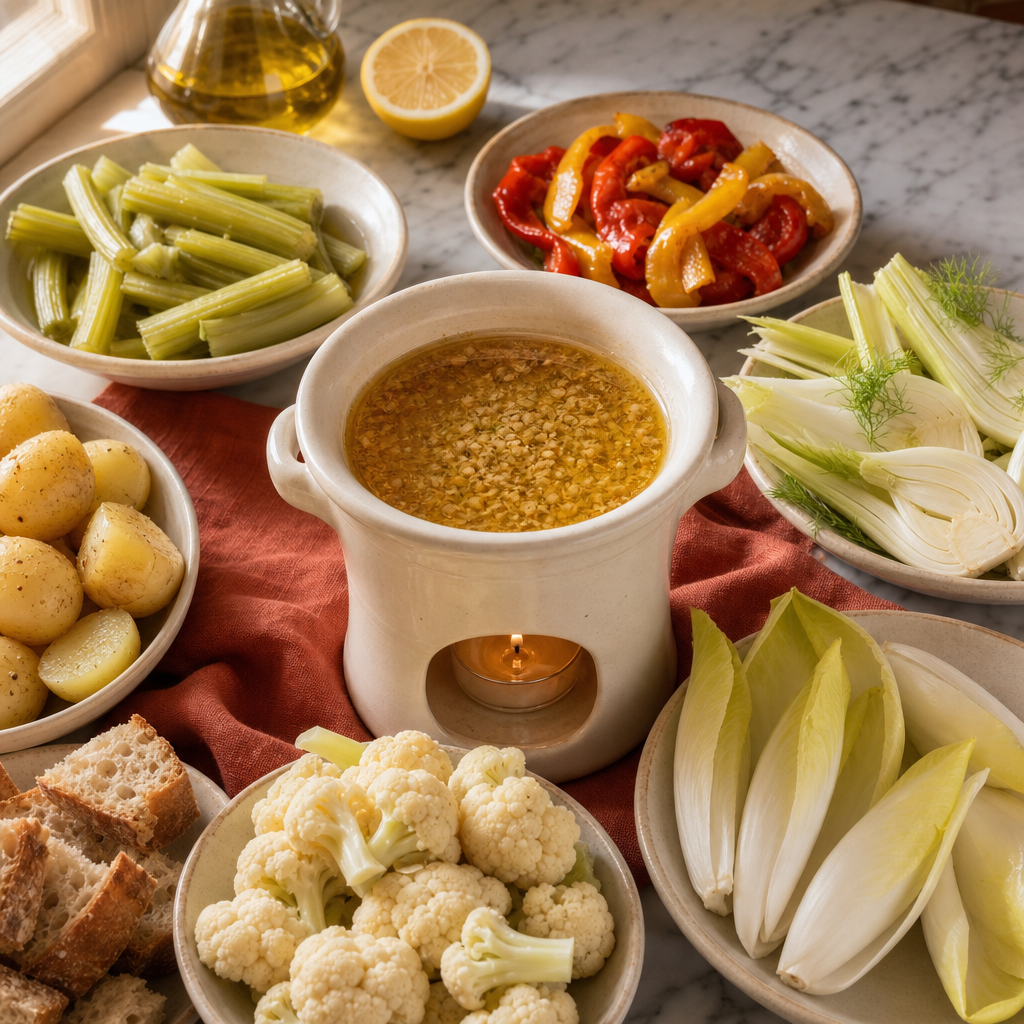
Arrange the raw and cooked vegetables around the warm sauce. Dip vegetables into the oil, stirring the pot occasionally so the garlic-anchovy solids come up from the bottom.
Common mistakes
- Frying the garlic. The sauce should stay pale gold to tan; brown edges mean the heat is too high.
- Trying to emulsify it into a smooth dip. Bagna cauda separates, and that separation is normal.
- Using cheap harsh anchovies. There is nowhere to hide; the anchovy is the seasoning and the body.
- Serving it lukewarm. The oil thickens and the anchovy tastes heavy when the sauce cools.
- Adding salt before tasting. Anchovies vary wildly in salinity, especially salt-packed ones.
- Serving only bread. Vegetables are not garnish here; they are the structure of the meal.
What does not belong
- Cream does not belong in traditional bagna cauda. It turns a hot anchovy oil into a dairy dip.
- Mayonnaise does not belong. The sauce is warm oil, garlic, and anchovy, not a cold spread.
- Cheese does not belong. It muddies the anchovy and makes the sauce heavier without improving its structure.
- Chili flakes do not belong in the Piedmontese standard. Heat distracts from the garlic-anchovy balance.
- Lemon juice does not belong in the pot. If the vegetables need brightness, choose bitter greens or raw fennel instead.
- Wine in the sauce is not the common modern Piedmontese baseline. Serve wine beside it; do not use it to thin the dip.