Zucchini Carbonara
The dish in context
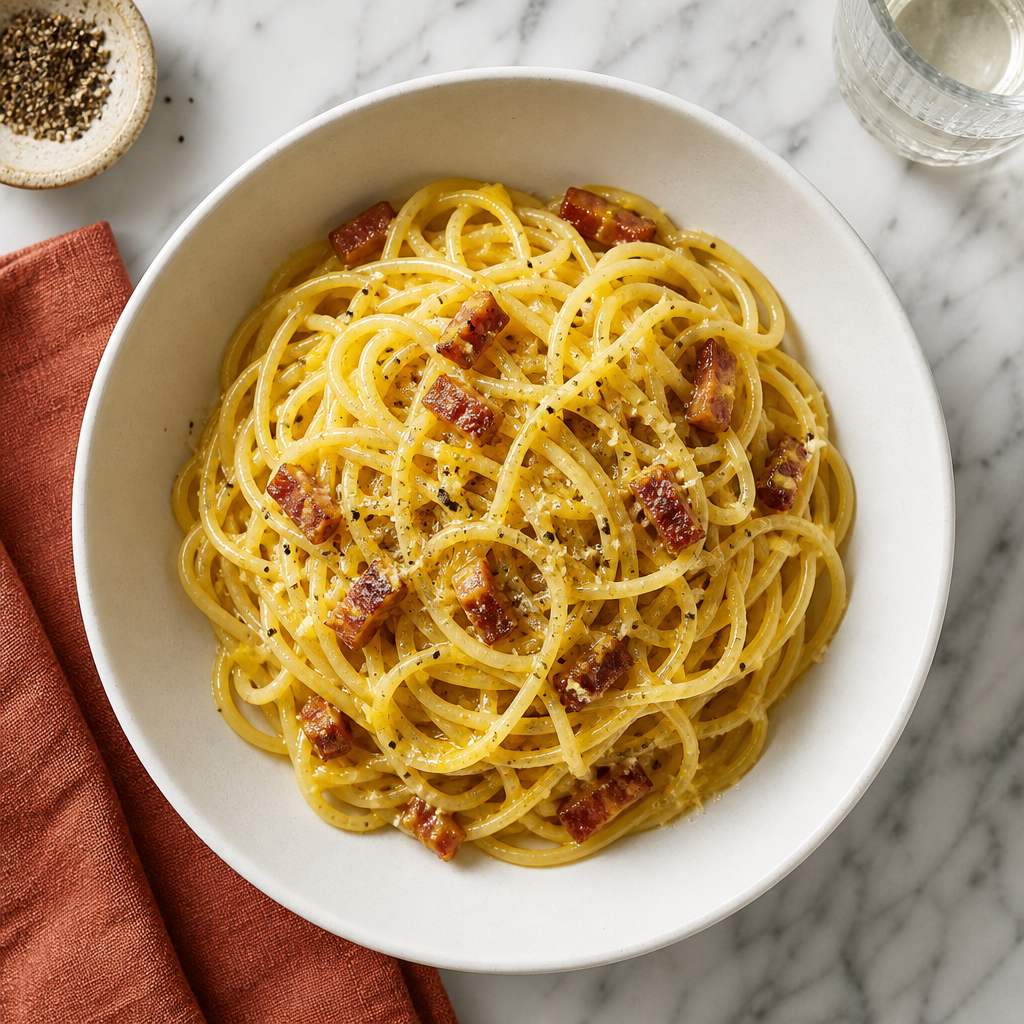
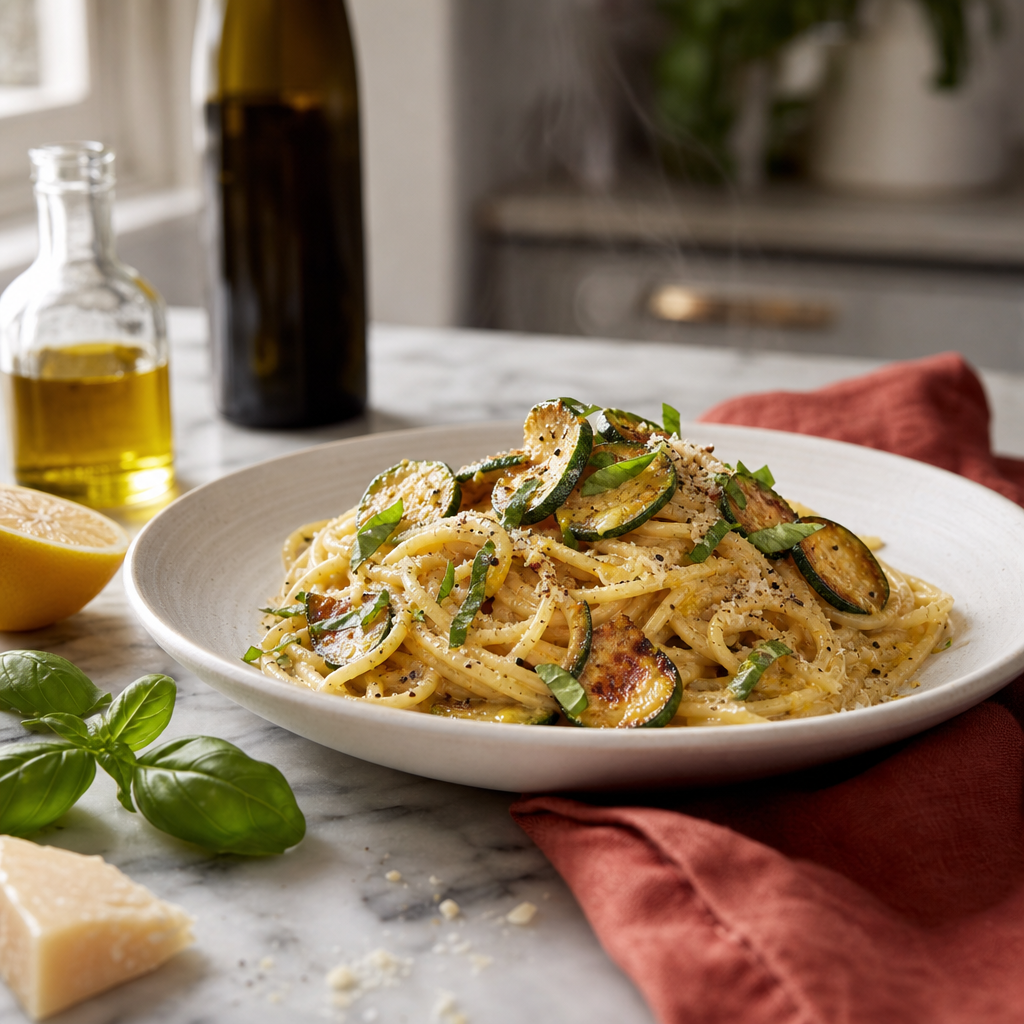
Carbonara belongs to Rome and Lazio; spaghetti alla Nerano belongs to the Sorrento coast in Campania. This dish sits between them: fried or deeply sautéed zucchini from the Nerano grammar, bound with the egg-and-cheese emulsion of carbonara. It is not the canonical Roman dish, because the guanciale is absent. It is also not strict Nerano, because eggs enter the sauce. The useful name is Zucchini Carbonara because that is how international cooks search for the technique, but the structure should still respect Italian pasta rules: no cream, no milk, no garlic, and no scrambled eggs.
Method 6 steps · 45 min
Brown the zucchini
Heat the oil in a wide skillet over medium-high heat. Add the zucchini in batches so the coins lie mostly flat, salt lightly, and cook until the edges wrinkle and bronze spots form, 3-5 minutes per batch. Transfer to a plate; keep the oil in the pan.
Make the egg-cheese paste
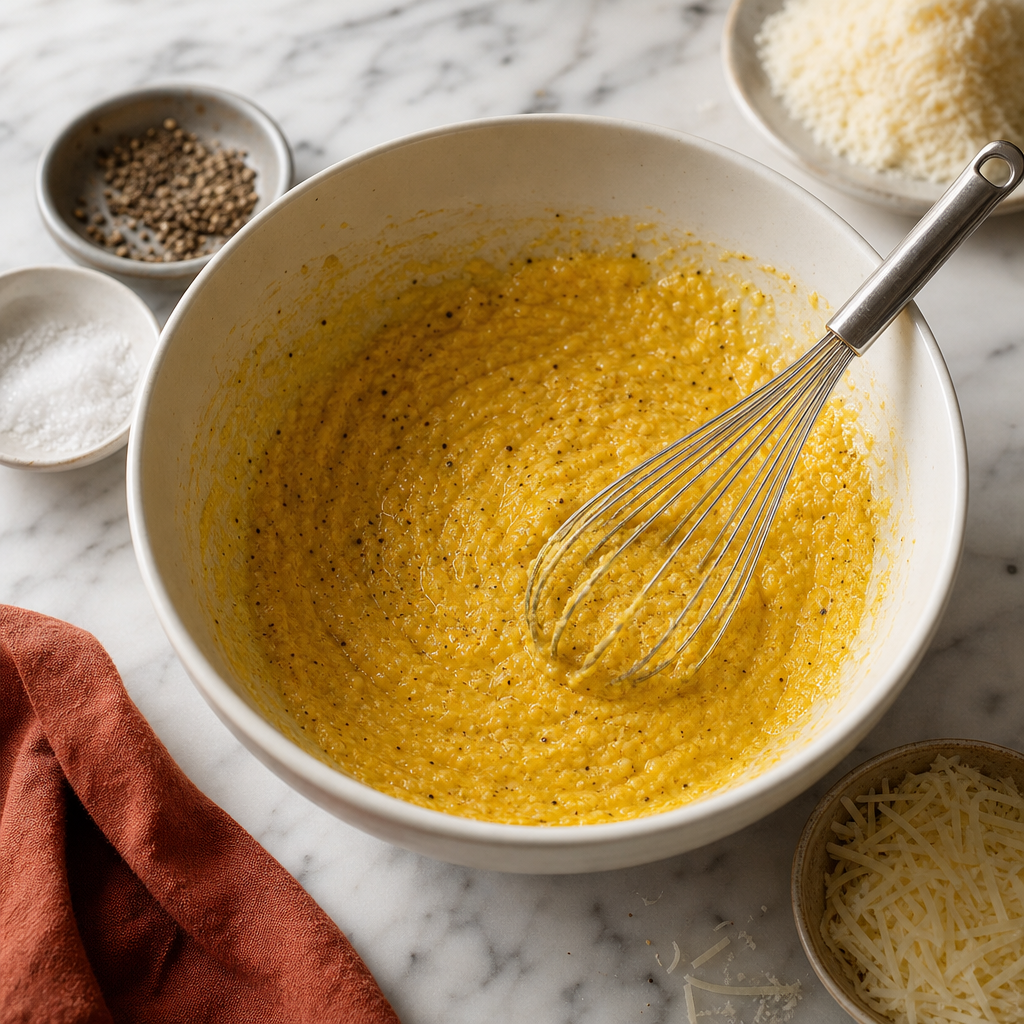
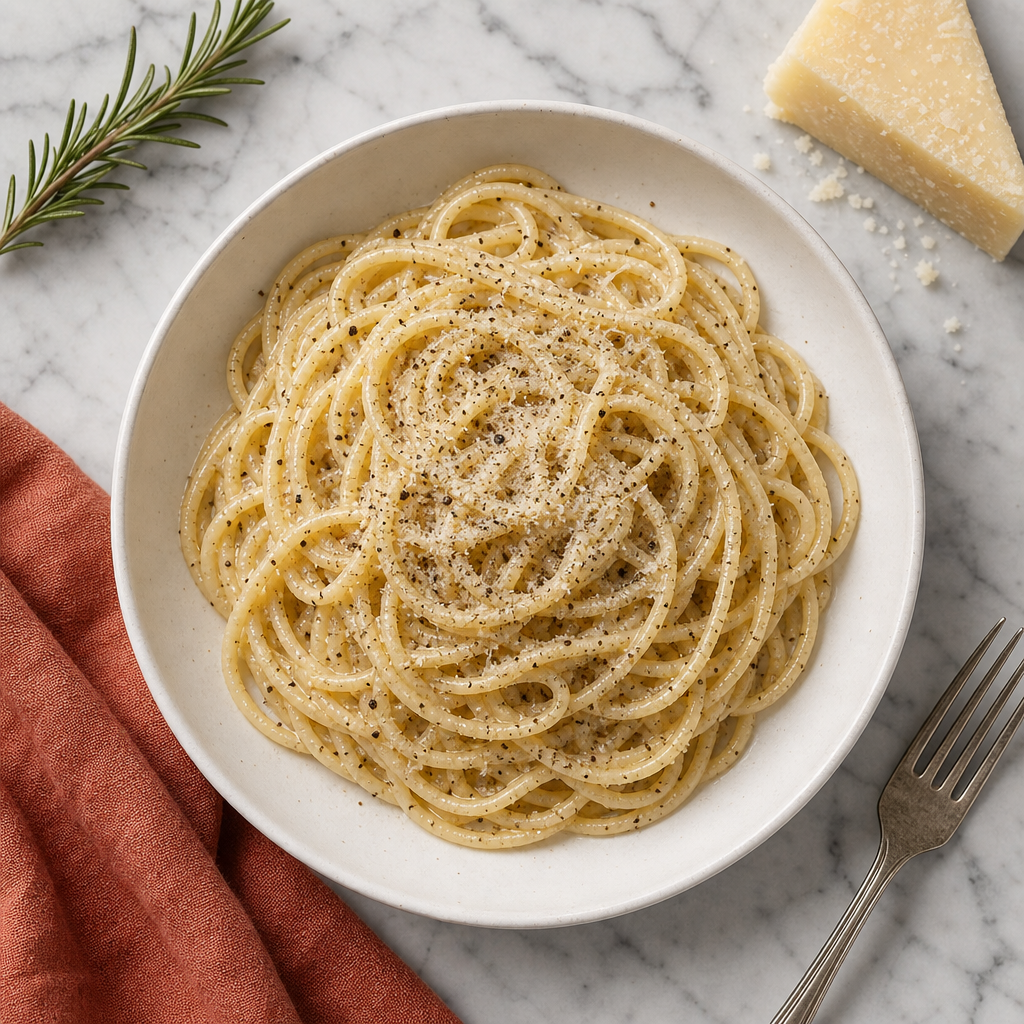
Whisk the yolks, whole egg if using, Pecorino, Provolone del Monaco, and black pepper in a large heatproof bowl until thick and grainy. Add 2 tablespoons of warm water if the mixture is too stiff to stir.
Cook the pasta
Boil the spaghetti in well-salted water until 1 minute shy of al dente. Reserve at least 240 ml pasta water before draining.
Coat the pasta with zucchini oil
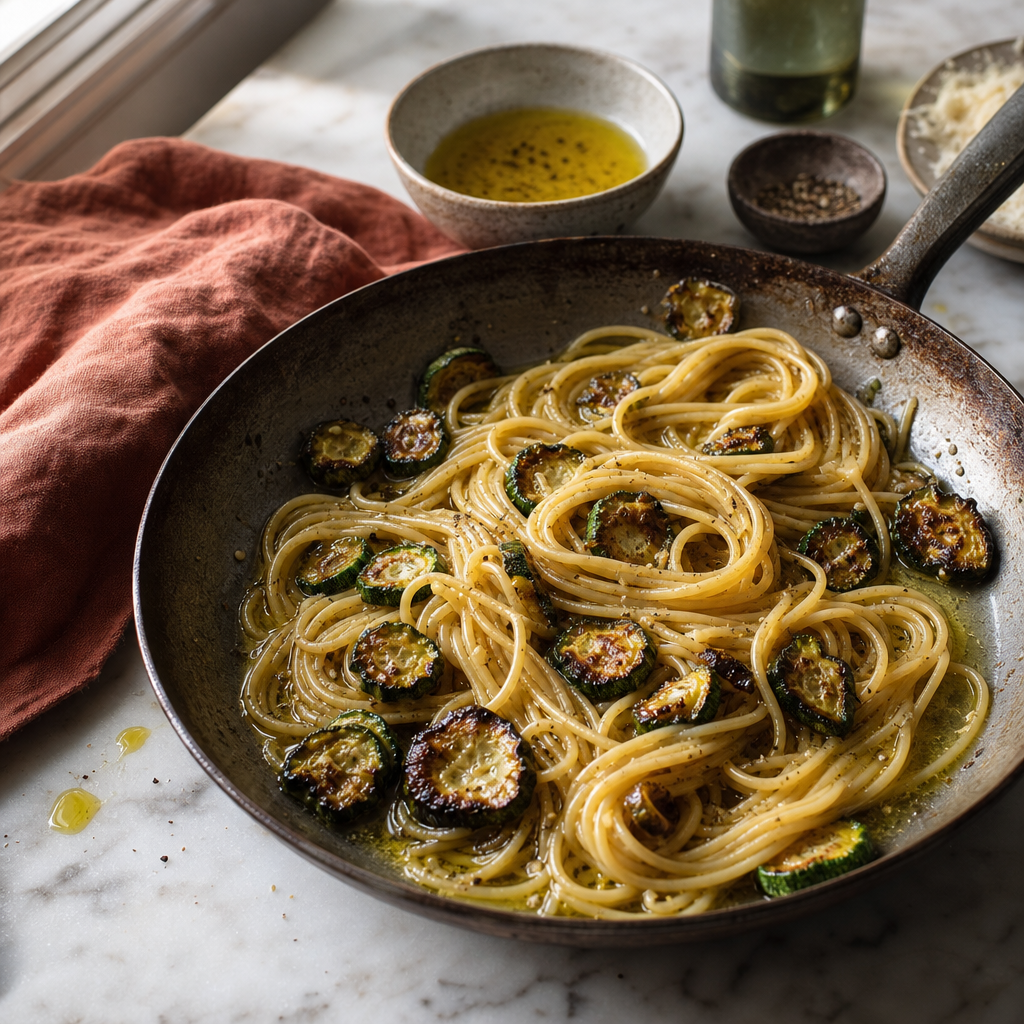
Return the skillet with the zucchini oil to medium heat. Add the drained pasta, the browned zucchini, and 120 ml pasta water; toss until the spaghetti is glossy and the water has reduced by about half, 45-60 seconds.
Emulsify off heat
Move the skillet off the heat and wait 20 seconds. Pour in the egg-cheese paste and toss fast, adding pasta water 1 tablespoon at a time until the sauce coats the spaghetti in a yellow, satin layer. If the sauce is loose, set the bowl or pan over the steaming pasta pot for 10-second bursts while tossing; do not put it back over direct heat.
Finish with basil and pepper
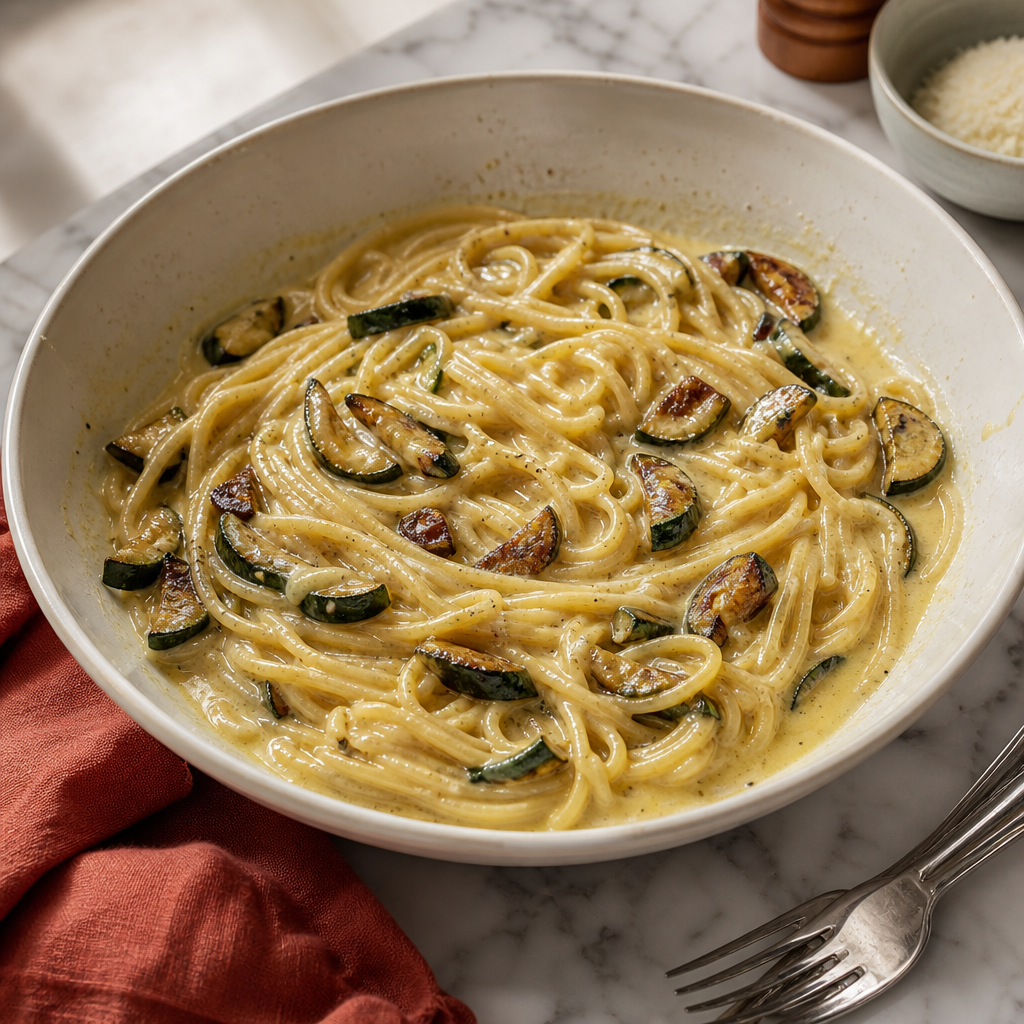
Fold in the torn basil. Serve immediately with more black pepper and a small amount of Pecorino if needed.
Common mistakes
- {'mistake': 'Adding the egg mixture over direct heat.', 'fix': 'Move the pan off heat before the eggs go in. If more thickening is needed, use residual heat or a brief steam-bath, not the burner.'}
- {'mistake': 'Cooking the zucchini until soft but not browned.', 'fix': 'Use a wide pan and batches. The target is wrinkled edges and bronze spots, not pale green tenderness.'}
- {'mistake': 'Using grated cheese that is too coarse.', 'fix': 'Grate the cheese finely. Large shreds melt unevenly and pull the sauce into strings.'}
- {'mistake': 'Oversalting before the cheese is added.', 'fix': 'Salt the zucchini lightly and let Pecorino do much of the work. Final seasoning happens after emulsification.'}
- {'mistake': 'Letting the pasta wait.', 'fix': 'Carbonara-style sauces tighten as they sit. Serve as soon as the sauce turns glossy.'}
What does not belong
- {'item': 'Cream', 'reason': 'Cream does not belong in carbonara. The texture comes from yolk, cheese, starch, and controlled heat.'}
- {'item': 'Milk', 'reason': 'Milk thins the sauce without adding the emulsifying strength needed here.'}
- {'item': 'Garlic', 'reason': 'Garlic does not belong in this version. It pushes the dish toward generic zucchini pasta and muddies the egg-cheese profile.'}
- {'item': 'Bacon', 'reason': 'Smoked bacon is not a neutral substitute for guanciale and does not fit this meatless zucchini version. Smoke dominates the zucchini.'}
- {'item': 'Broken spaghetti', 'reason': 'Broken spaghetti cooks unevenly and destroys the long twirl that holds the sauce.'}
- {'item': 'Rinsed pasta', 'reason': 'Rinsing strips the starch needed for the sauce to bind.'}