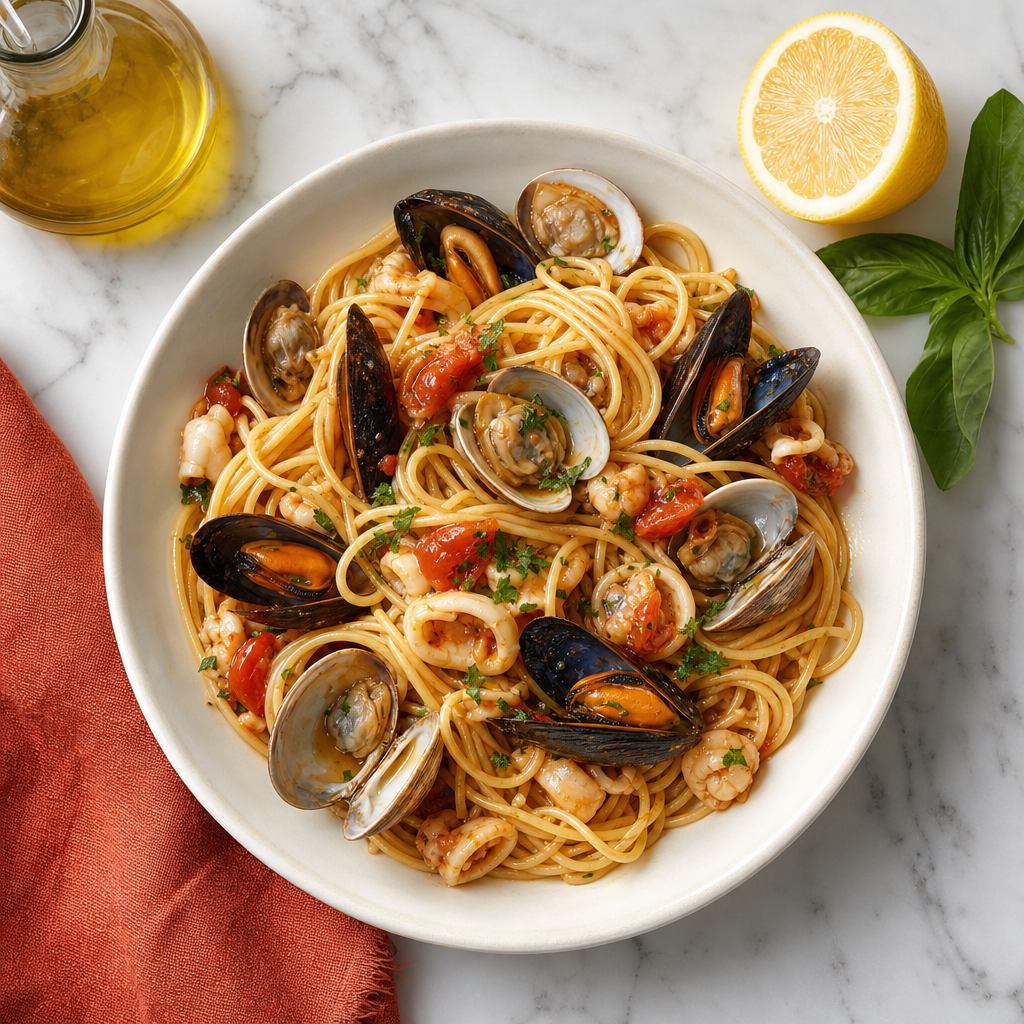
Spaghetti Burro Acciughe
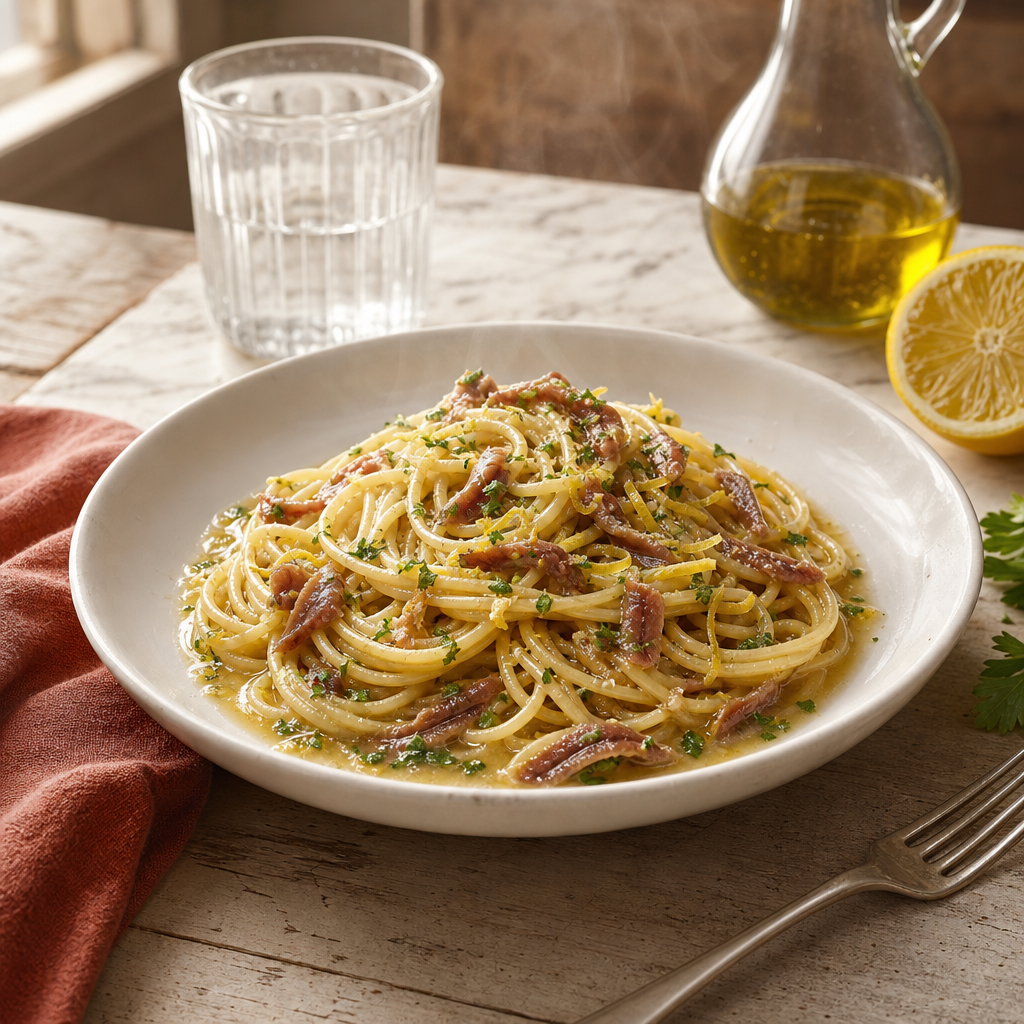
The dish in context
Butter-and-anchovy pasta sits in the Italian pantry-pasta family: few ingredients, short cooking, and no tomato to dilute the anchovy. It is not one of the tightly codified regional pastas like carbonara or cacio e pepe; sources frame it as a household and trattoria-style preparation with variants that add lemon zest, toasted breadcrumbs, or herbs. The anchovy-butter pairing also appears in crostini, compound butter, and northern Italian cooking where butter is a normal fat rather than an exception. The core technique is stable across versions: dissolve anchovies gently into fat, bind with starchy pasta water, and keep the sauce glossy rather than oily.
Method 6 steps · 20 min
Boil the pasta water
Bring 4 L water to a rolling boil and salt it with 28 g salt. Add the spaghetti without breaking it; bend the strands into the pot as they soften.
Start the spaghetti
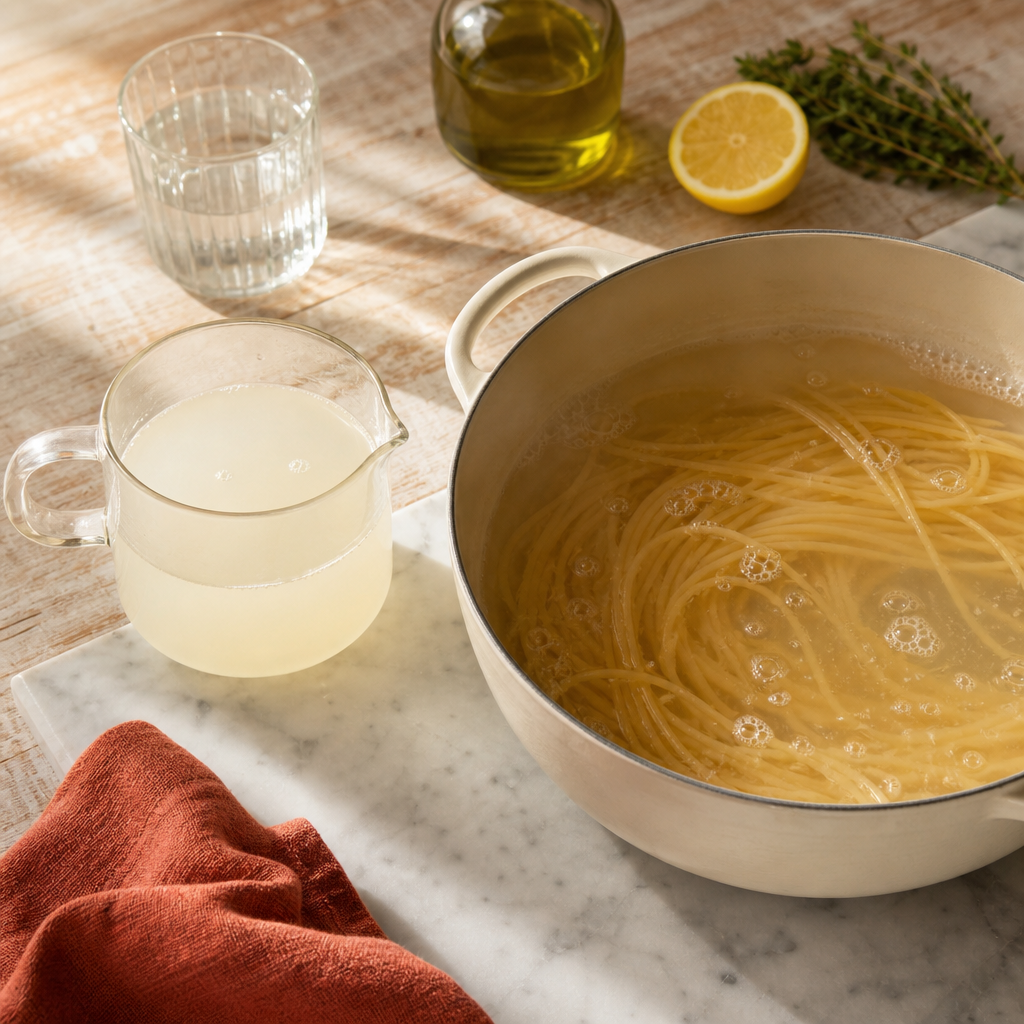
Cook the spaghetti until 2 minutes shy of the package's al dente time. Before draining, reserve at least 300 ml of cloudy pasta water.
Dissolve the anchovies
While the pasta cooks, set a wide skillet over low heat. Add 50 g of the butter and the anchovy fillets, then press and stir until the anchovies collapse into the melted butter, 2-3 minutes. Do not let the butter brown.
Build the emulsion
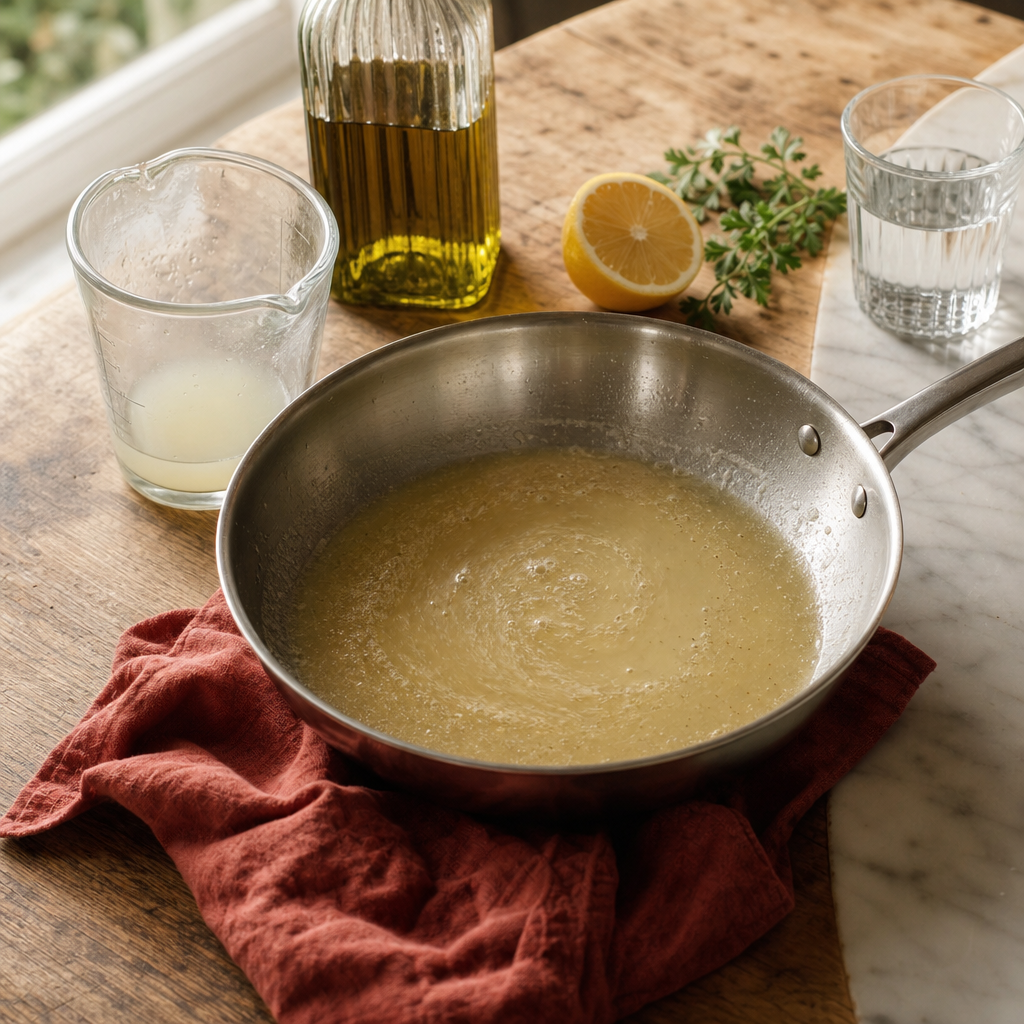
Add 120 ml reserved pasta water to the skillet and swirl until the butter looks cloudy and unified. Transfer the undercooked spaghetti directly into the pan and toss over medium-low heat for 1-2 minutes, adding more pasta water in small splashes as needed.
Finish off heat
Take the skillet off the heat. Add the remaining 40 g cold butter and toss until the strands are glossy and the sauce clings without pooling. Add black pepper, lemon zest, and parsley if using.
Serve immediately
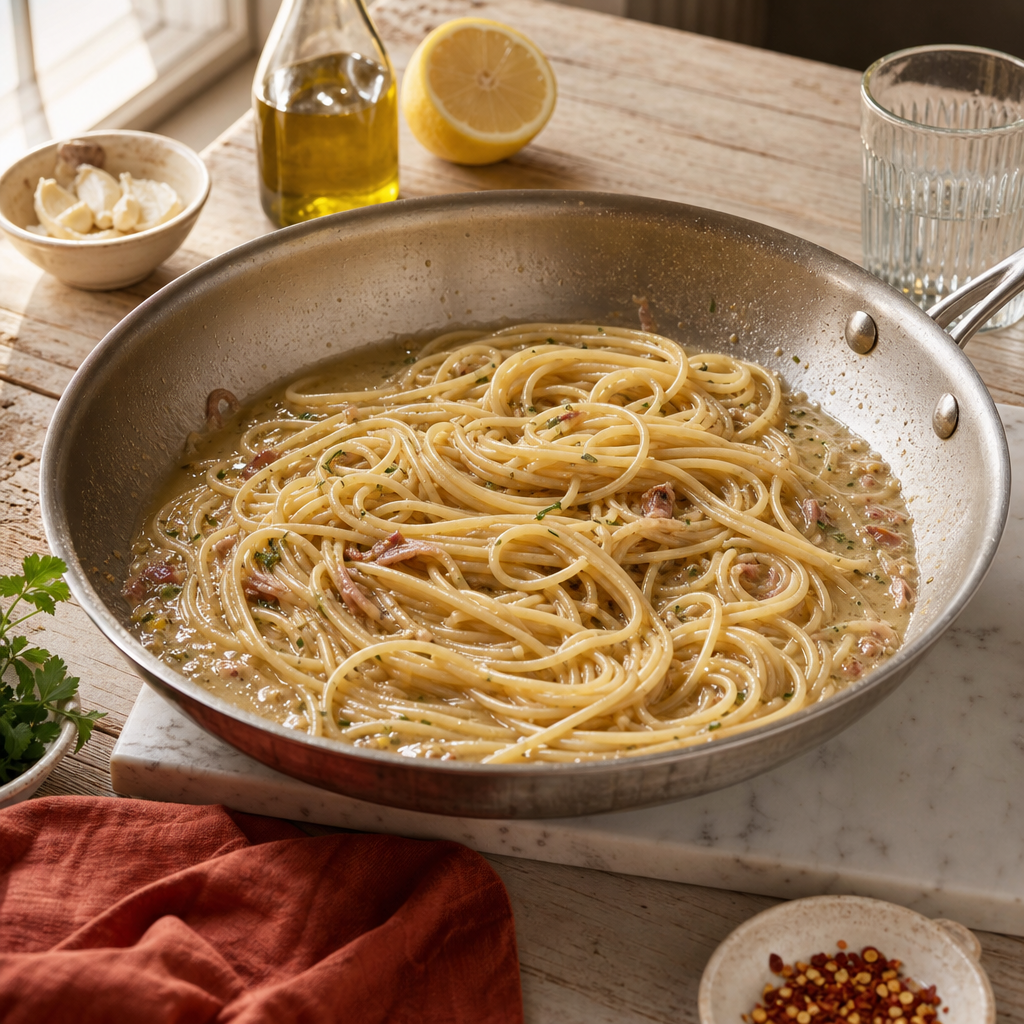
Plate in warm shallow bowls. If the pasta tightens before serving, loosen it with 1-2 tbsp hot pasta water and toss again.
Common mistakes
- {'mistake': 'Browning the butter.', 'fix': 'Keep the anchovy pan on low heat. Brown butter competes with the anchovy and makes the finish taste scorched rather than marine and buttery.'}
- {'mistake': 'Using full-strength pasta-water salt.', 'fix': 'Use about 7 g salt per liter, not 10 g. Anchovies reduce the margin for error.'}
- {'mistake': 'Draining the pasta completely.', 'fix': 'Reserve more cooking water than seems necessary. The sauce cannot bind without starch and water.'}
- {'mistake': 'Adding the final butter over high heat.', 'fix': 'Mount the last butter off heat. High heat breaks the emulsion into shiny fat at the bottom of the bowl.'}
- {'mistake': 'Trying to hold the pasta in the pan.', 'fix': 'Serve as soon as the sauce clings. Butter-and-starch sauces thicken as they stand.'}
What does not belong
- {'item': 'cream', 'reason': 'Cream does not belong. The sauce is an emulsion of butter, anchovy, and pasta water; cream dulls the salt and turns the dish into a different pasta.'}
- {'item': 'Parmesan or Pecorino', 'reason': 'Grated cheese does not belong in the core version. Anchovy and butter already provide salt and body; cheese muddies the seafood profile.'}
- {'item': 'tomato', 'reason': 'Tomato does not belong. It moves the dish toward a southern anchovy-tomato pasta and away from burro e acciughe.'}
- {'item': 'garlic', 'reason': 'Garlic does not belong in this butter-emulsion version. Garlic-anchovy-oil pasta is a valid dish, but it is not this one.'}
- {'item': 'chili flakes', 'reason': 'Chili does not belong in the canonical butter-anchovy structure. Heat pulls attention from the anchovy and makes the sauce read like aglio, olio e peperoncino.'}
- {'item': 'rinsing the pasta', 'reason': 'Rinsed spaghetti does not belong in any sauce-bound Italian pasta. The surface starch is the tool that makes the butter cling.'}