Spaghetti Aglio e Olio
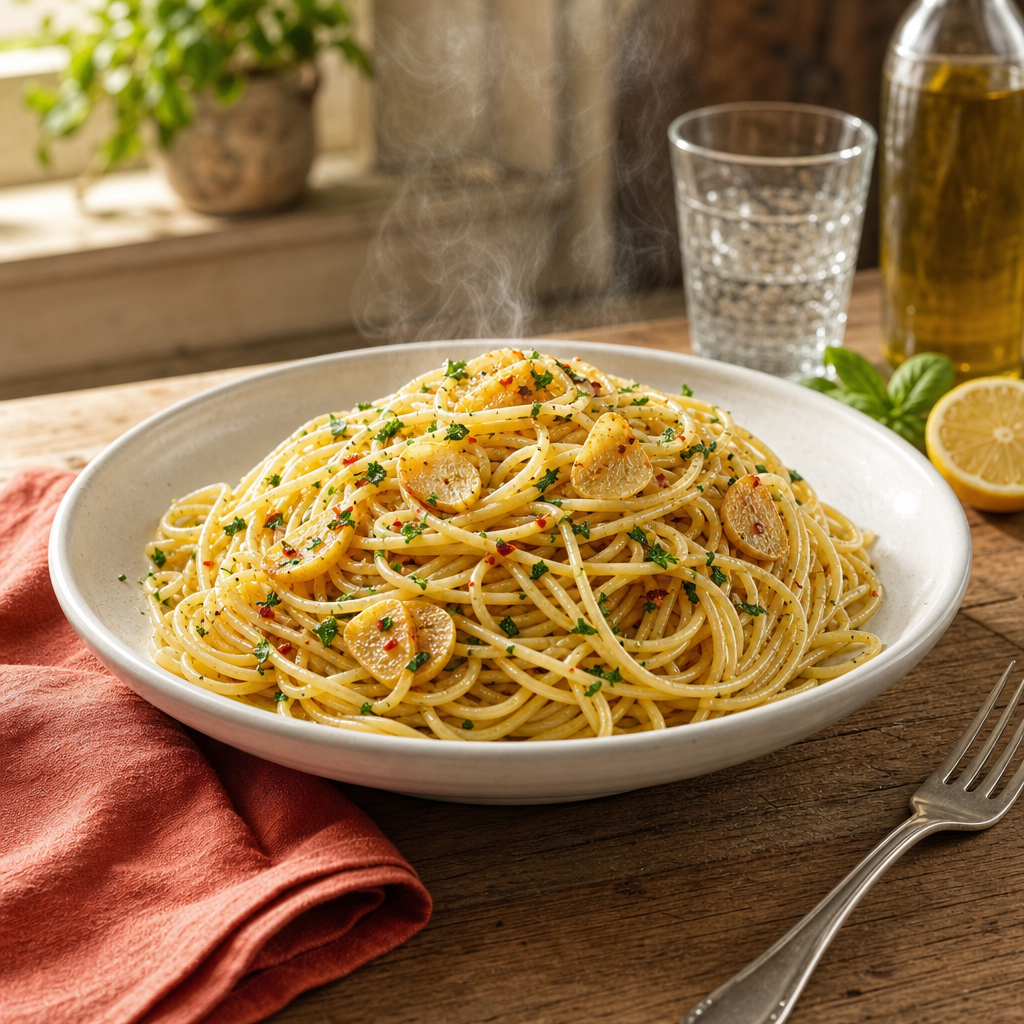
The dish in context
Spaghetti aglio e olio is associated most strongly with Naples and the wider Campanian home-cooking repertoire. The structure is cucina povera: dried pasta, garlic, olive oil, salt, and often peperoncino when the dish is named aglio, olio e peperoncino. Parsley is common but not structural; cheese appears in some modern and diaspora versions, but it is not the baseline grammar of the dish. The dish survives because the technique is exposed: undercooked garlic tastes raw, browned garlic tastes bitter, and unbound oil slides off the pasta.
Method 6 steps · 20 min
Salt the water and start the pasta
Bring 3 L water to a rolling boil and add 24 g kosher salt. Add the spaghetti without breaking it; bend it into the pot as the submerged ends soften. Cook 2 minutes less than the package time.
Warm the garlic in oil
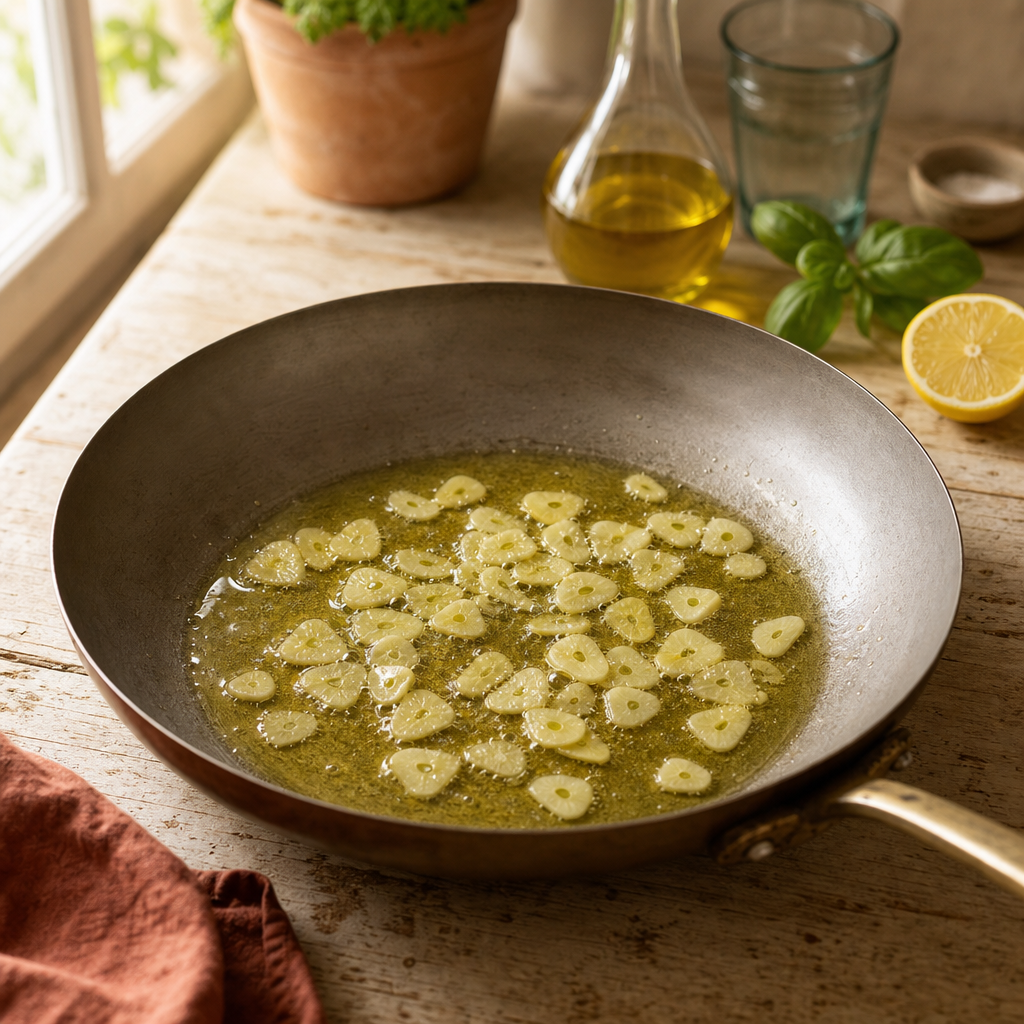
Combine the olive oil and sliced garlic in a wide skillet off heat, then set over medium-low heat. Cook until the garlic is pale gold at the edges and the oil smells clearly of garlic, 4-6 minutes. Do not let the garlic turn chestnut brown.
Bloom the chile
Add the chile flakes to the garlic oil for the final 20-30 seconds. If the garlic is already coloring fast, pull the skillet off heat before adding the chile.
Move the pasta wet
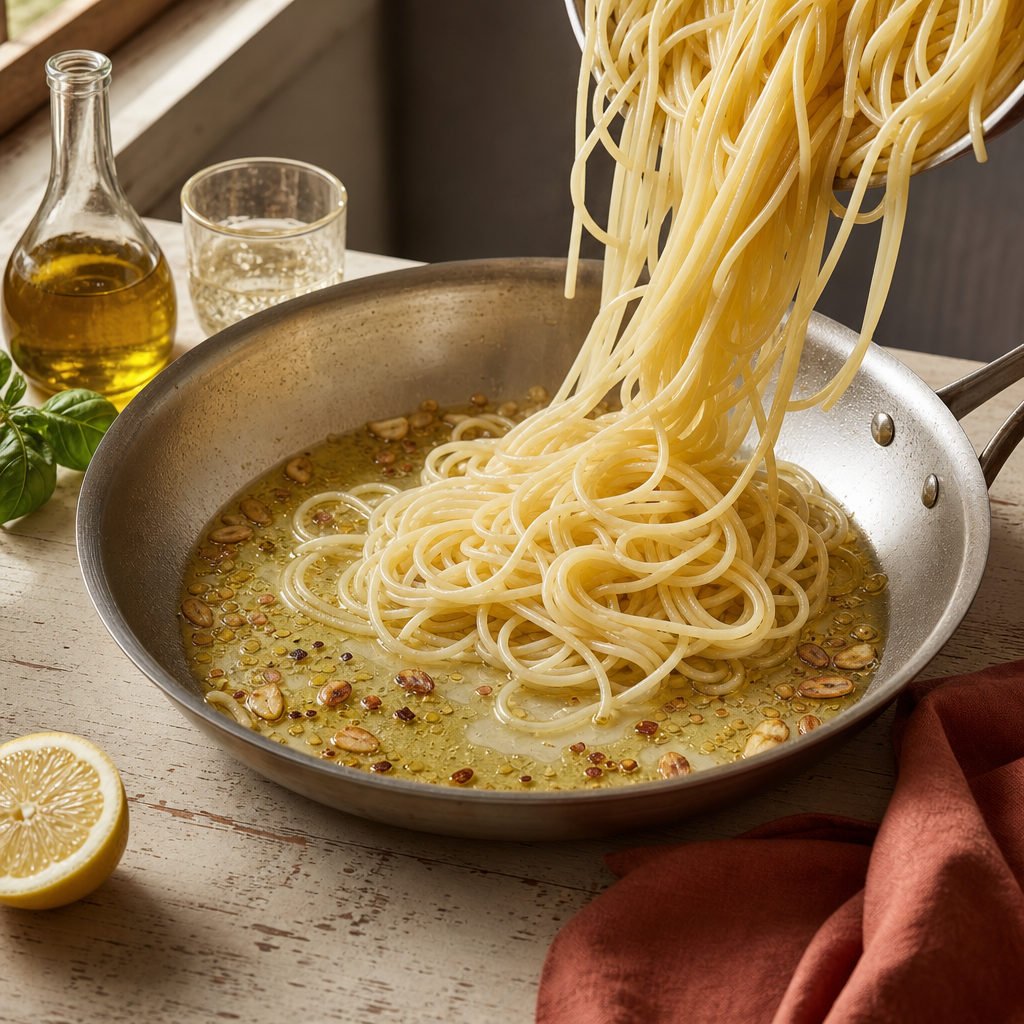
Reserve at least 180 ml pasta water. Transfer the spaghetti directly into the skillet with tongs, carrying some surface water with it. Add 90 ml reserved pasta water to start.
Finish by tossing
Set the skillet over medium heat and toss hard for 1-2 minutes, adding pasta water 1 tablespoon at a time if the pan looks dry. Stop when the spaghetti is al dente and glossy, with no puddle of loose oil. The sauce should coat the strands, not sit separately.
Finish off heat
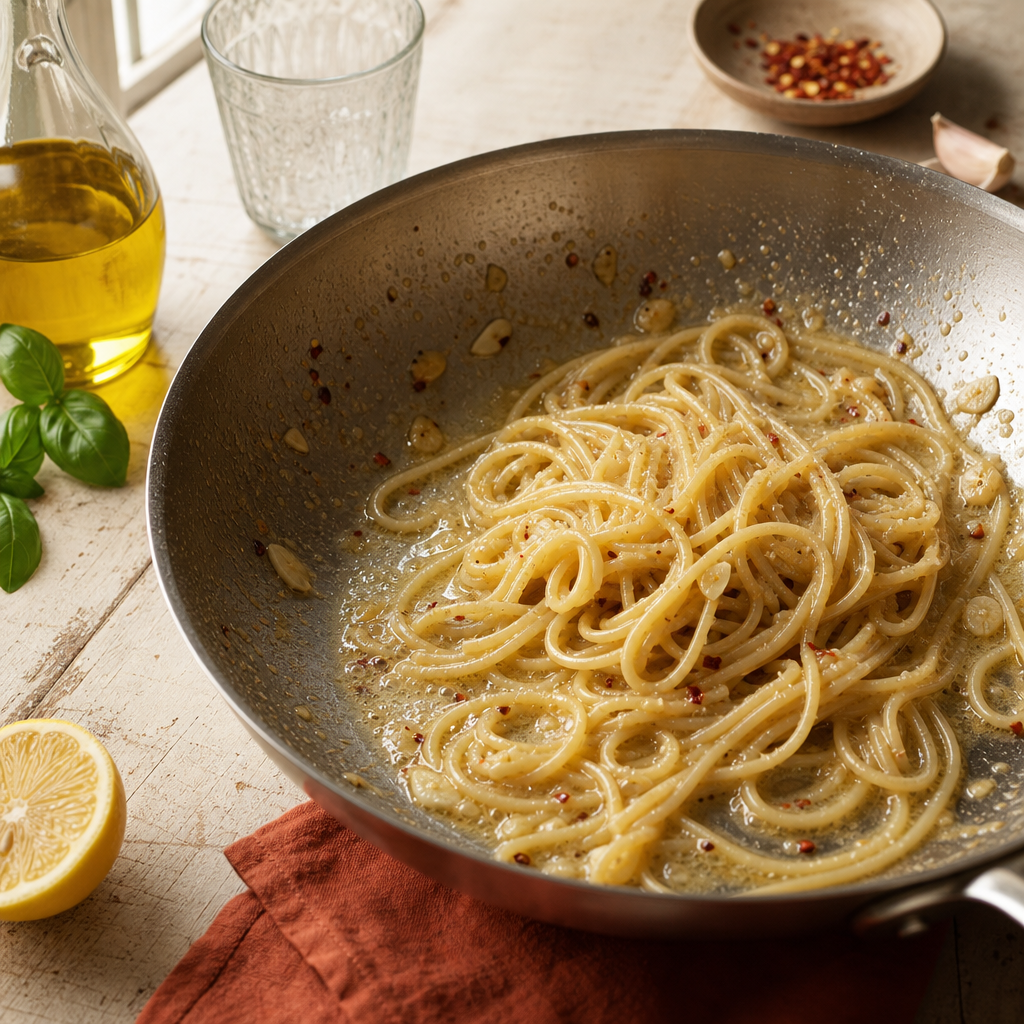
Remove from heat and fold in the parsley, if using. Taste one strand; add a few drops of olive oil only if the pasta feels dry, or a spoon of pasta water if it feels tight. Serve immediately on warm plates.
Common mistakes
- {'mistake': 'Browning the garlic hard.', 'fix': 'Keep the heat medium-low and pull the pan when the garlic is pale gold. Carryover heat will keep cooking it.'}
- {'mistake': 'Draining the pasta completely.', 'fix': 'Move the spaghetti with tongs and reserve pasta water before draining anything. The starch is the sauce structure.'}
- {'mistake': 'Using too much oil.', 'fix': 'Oil should gloss the strands after emulsifying with water. A visible pool in the pan means the sauce is broken or over-oiled.'}
- {'mistake': 'Cooking the pasta fully before it reaches the skillet.', 'fix': 'Pull it 2 minutes shy of package time. The final texture is set during tossing, not in the pot.'}
- {'mistake': 'Adding grated cheese by reflex.', 'fix': 'Cheese is a modern variation, not the lean Campanian baseline. If used, it changes the dish toward a different, richer pasta.'}
What does not belong
- {'item': 'Butter', 'reason': 'Butter turns the sauce dairy-rich and round. Aglio e olio is built on olive oil, garlic, and starch.'}
- {'item': 'Cream', 'reason': 'Cream does not belong. It hides the garlic-oil emulsion instead of making one.'}
- {'item': 'Chicken, shrimp, or bacon', 'reason': 'Protein additions make a different pasta. This dish is intentionally spare.'}
- {'item': 'Oyster sauce, soy sauce, or fish sauce', 'reason': 'Umami condiments erase the clean olive oil and garlic profile. They belong to fusion variations, not spaghetti aglio e olio.'}
- {'item': 'Broken spaghetti', 'reason': 'Do not snap the pasta. Long strands are functional: they help the emulsion coat evenly when tossed.'}
- {'item': 'Rinsed pasta', 'reason': 'Rinsing washes off the starch needed to bind the oil.'}
Adaptations
The base recipe contains no animal products.
The base recipe contains no alcohol or pork. Verify the pasta contains only durum wheat and water if strict certification is required.
Use a high-quality gluten-free spaghetti and reduce the final pan time; many gluten-free pastas shed starch fast, then break. Reserve extra cooking water because the emulsion may thicken suddenly.
No cheese, butter, or cream is used in the base recipe.
The base recipe contains no shellfish.